SANITARY ASSOCIATIONS DURING THE
FRANCO-GERMAN WAR
OF 1870-1871.
VOL. I

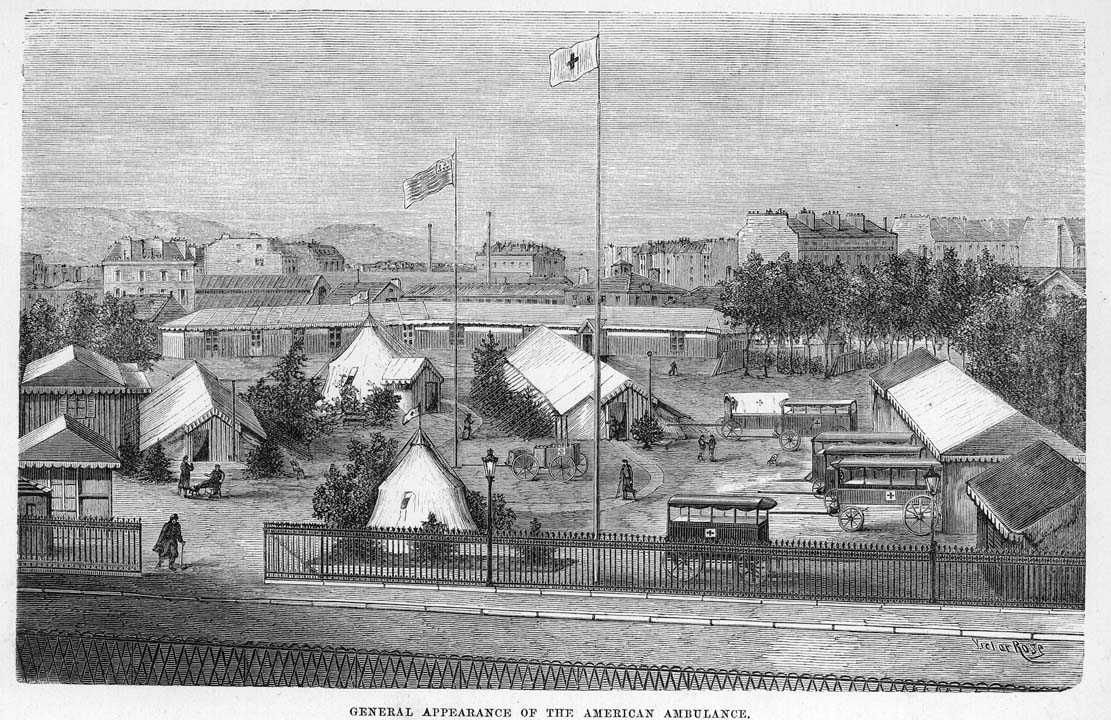
 GENERAL APPEARANCE OF THE AMERICAN
AMBULANCE
HISTORY
GENERAL APPEARANCE OF THE AMERICAN
AMBULANCE
HISTORY
OF
THE AMERICAN.
AMBULANCE
ESTABLISHED IN
PARIS DURING
THE
SIEGE
OF
1870-71,
TOGETHER
WITH THE
DETAILS OF
ITS METHODS
AND ITS WORK
BY
THOMAS W. EVANS,
M.D., D.D.S., Ph.D.
PRESIDENT OF THE AMERICAN
INTERNATIONAL SANITARY
COMMITTEE, COMMANDER
OF THE LEGION OF HONOUR, GRAND -
CROIX OF THE ORDER OF
ST. STANISLAS OF RUSSIA, AND
COMMANDER, OFFICER,
AND MEMBER OF VARIOUS ORDERS
Author of "La Commission Sanitaire des États
Unis---son Origine, son Organisation, et ses Résultats,"
"Les Institutions Sanitaires pendant le Conflit Austro-Prussien-Italien,"
"The History and Description of an Ambulance Waggon,"
&c., c., c
 LONDON:
PRINTED FOR THE AUTHOR AT
THE CHISWICK PRESS,
AND
PUBLISHED
BY
SAMPSON LOW,
MARSTON, LOW.
AND SEARLE,
CROWN
BUILDINGS,
FLEET
STREET
1873
[All rights reserved.]
Entered according to Act of Congress in the year 1873,
in the Clerk's Office of the District Court of New York
AMERICAN INTERNATIONAL SANITARY
COMMITTEE OF PARIS.
THOMAS W. EVANS, M.D.---President.
EDWARD A. CRANE, M.D.---Secretary.
COL. JAMES MCKAYE.
ALBERT LEE WARD.
JAMES W. TUCKER. |
 PREFACE
 RANCE and Prussia had signed the
Treaty of Geneva in 1864. During the two years that followed,
this treaty, for the amelioration of the condition of wounded
soldiers, had been accepted by nearly all the Governments of Europe,
and national relief societies had been organized in each State
in accordance with its terms
RANCE and Prussia had signed the
Treaty of Geneva in 1864. During the two years that followed,
this treaty, for the amelioration of the condition of wounded
soldiers, had been accepted by nearly all the Governments of Europe,
and national relief societies had been organized in each State
in accordance with its terms
The Austro-Prussian War of 1866 afforded to several of these
societies the first opportunity for active work. The character
and value of the services rendered to sick and wounded soldiers
by voluntary associations during that war, I have myself endeavoured
to show in a work entitled "Sanitary Institutions during
the Austro-Prussian Conflict." The experience gained during
the war of 1866 was moreover of great service to the voluntary
societies. The field within which their action might be beneficial
was more clearly marked out, and their position as institutions
of public utility definitively established. In certain States
the organization of the societies was modified and improved---in
all it was invigorated and strengthened
The great war of 1870-71 was a fearful contest between the
two wealthy and powerful nations which had first given in their
adhesion to the Treaty of Geneva, and in which the principle of
creating popular aid for the wounded in war had been most generally
accepted, and the organization of the relief societies was most
complete. The circumstances under which the action of these societies
was then tested were not only rich in opportunities of usefulness,
but seemed to offer the most favourable conditions for the practice
of voluntary relief in behalf of the victims of battle-fields.
During the war the popular sympathy for the wounded was intense,
and the liveliest interest was taken in the movements and operations
of the French and German societies. Since the close of the war
the friends of charity and beneficence in every quarter of the
world have been anxious to learn, to the fullest extent, the character
of their services and the practical results of their labours
Conscious, therefore, of the desirableness as well as the utility
of assembling the facts concerning the action of the volunteer
relief societies during this war, so classified that they might
be easily compared, and so presented that they might clearly teach
the lessons to be derived from them, I proposed before the close
of the war to prepare a full and complete history of the labours
of these societies. Such a work, however, could not be written
until data covering a very wide field of operations had been collected,
nor before the reports of the principal associations had been
made public. The difficulties in the way of obtaining from official
sources the necessary information have made it impossible for
me to finish this work within the time originally proposed
While, however, the relief societies founded upon the Treaty
of Geneva were national in their organization, as also in their
more immediate and specific purposes, they were the representatives
of a common cause, and were closely affiliated in action as well
as in sympathy
The Franco-German War of 1870-71, in opening out a vast and
comparatively new field for organized patriotic benevolence, offered
also the first great occasion for the exercise of international
sympathy and assistance. The occasion was not unheeded. If armies
were never before more abundantly supplied by national voluntary
effort---never before in human history have belligerents received
from foreign and neutral States such generous aid. The action
of the French and German societies for battle-field relief was
largely sustained by foreign contributions, and the sufferings
incident to the war assuaged by the liberalities of aliens. Foreign
charities, however, were generally distributed through local organizations,
and lost their national character in the process of distribution
The American International Sanitary Committee of Paris was
formed almost immediately after the declaration of war in 1870,
for the purpose of being a direct agent of American charity in
behalf of the victims of the war. It was, moreover, the only foreign
association created for the general succour of the wounded that
succeeded in preserving throughout the war, on belligerent territory,
a complete independence in the direction of its operations and
in the immediate distribution of its assistance. The committee
began its labours by organizing an ambulance, or field hospital,
at Paris
Few organizations for the relief of the wounded during the
late war, acquired a more noble celebrity than the American ambulance.
As an expression of international goodwill, it at the time secured
for itself the gratitude of the French people. As an expression
of earnest personal effort, of the courage and generous devotion
of compatriots, it cannot soon be forgotten by Americans. As an
expression of modern sanitary science, however, it has been chiefly
valued, and probably will be longest remembered, by all.(1)
Its mission was significant-its work was one of usefulness. To
commemorate, therefore, the services of those who laboured in
the American ambulance, or contributed to its success, and to
preserve a record of its acts and methods, are duties equally
imposed
This volume contains the history of that ambulance
It was my original intention to publish it together with, and
as a part of, my general history of voluntary effort in behalf
of the sick and wounded during the late war. The causes mentioned
have held in abeyance the publication of that work. But as most
of the material which appears in this volume has been a long time
ready for the press, it has not seemed to me expedient to retain
it any longer. I accordingly now issue the "History of the
American Ambulance," complete, in a single volume, which
will form also the first volume of my general history of "Sanitary
Associations during the Franco-German War of 1870-1871."
I have endeavoured to present in it a clear statement of the
purposes of the American International Sanitary Committee, of
the difficulties they encountered, of the labours they accomplished,
and of the successes which finally crowned their undertaking.
The admirable reports of the gentlemen who were especially entrusted
with the administrative and executive work of the Committee---treating
upon those subjects which are more particularly scientific and
technical---complete the history of the ambulance
The report prepared by Dr. Edward A. Crane is an exhaustive
essay in which the writer has not only stated the essential facts
connected with the material organization of the American ambulance,
but has discussed at length the principles in accordance with
which army hospitals have been, and should be, established, and
the general character and qualities of temporary and portable
shelter
The surgical and medical histories of the ambulance will be
read, I believe, with great interest by that portion of the public
to which they are now more particularly addressed. Dr. Swinburne's
cases are fully and concisely stated, as are also the peculiar
difficulties under which he contended while treating them. Dr.
Johnson's report, if brief, is nevertheless instructive
In presenting this volume to the world I shall solicit a generous
criticism not only in my own behalf, but in behalf of those who
have laboured with me in its preparation. Verbal errors, and mistakes
even in fact, may doubtless be found. These, as every one knows,
are more or less unavoidable, especially in a work, parts of which
have been edited for absent writers, and all of which has been
hurried through the press in the midst of numerous personal pre-occupations.
I believe, however, that while the special subject of the volume
may commend it to the favour of many, the facts it presents in
connection with the general history of army hospitals will render
it a valuable contribution to the medico-military literature of
the day
THOMAS W. EVANS.
PARIS,
Avenue de l'Impératrice, No. 41.
July 11th, 1873. |

 GENERAL SUBJECT HEADINGS

 CONTENTS
|
AN ACCOUNT OF THE FORMATION OF THE AMERICAN
INTERNATIONAL SANITARY COMMITTEE OF PARIS
TOGETHER WITH THE HISTORY OF THE AMERICAN AMBULANCE
MOTIVE
for issuing a call for a meeting of American citizens resident
in Paris on the 18th of July, 1870
A
statement of the object of the meeting
Resolution
passed, committee appointed, appeal to citizens of the United
States
Letters
of the secretary to the president of the "American Association
for the Relief of the Misery of Battlefields"
Letter
received in reply by the secretary
Purport
of this letter---remarkable for certain misconceptions
Reply
of Dr. Elisha Harris to a letter addressed to him by the committee
Prompt
and generous action of the United States Government contrasted
with the indifference of the American Association
Efforts
of the committee to obtain funds and carry, out its programme
Attempt
made to organize a "Ladies' Branch Committee"
The
work undertaken by the committee gradually assumes a definite
form
Faults
of the French ambulance system
The
committee determines to retain its independence and to find a
suitable locality for the establishment of its hospital
Not
easy to find such a locality
Discussion
of the question, "Shall we go or shall we stay?"
The
question put to a vote
Opinion
thereon of Col. James McKaye
The
divergence of opinion how settled
The
committee proceed to the organization of an ambulance in Paris
The
4th of September
The
Empress finds a temporary refuge in the house of the president
of the committee, who subsequently conducts Her Majesty to England
Effect
upon the committee of the sudden and unexplained absence of both
president and secretary
Scandalous
imputations as to the motives of the president's mysterious departure
Action
of the committee restored to its former vigour
A
long absence from Paris not anticipated by the president
Causes
which rendered such an absence finally necessary
Unavailing
efforts made by the president to guarantee the Paris ambulance
against any crippling of its energies through lack of funds
Resolutions
passed by the Paris committee in the attempt to enlist the sympathy
of their countrymen in their work
Letter
from the secretary to Dr. Elisha Harris
Straitened
pecuniary circumstances of the committee
Letter
addressed by Dr. Elisha Harris to the president
Appeal
prepared for publication in the American press
Pecuniary
history of the American ambulance
Certain
characteristics of the ambulance
Gratuitous
character of the services rendered
Visitors
at the ambulance
One
of the most eminently popular of the properties of the American
ambulance
Patients
treated with a success which rendered evident the superiority
of the system pursued
Aim
which the organizers of the ambulance had mainly in view completely
attained
What
was said of the ambulance corps by the " Electeur Libre"
What
was said of the ambulance corps by "Le Réveil"
What
was said of the ambulance corps by " L'Univers"
The
ambulance the subject of a special notice
The
ambulance gives the best results in the curing of wounds
The
ambulance the object of numerous official visits
The
Archbishop of Paris visits the ambulance
The
ambulance as described by the "Constitutionnel"
"A
Visit to the American Ambulance," from the "Official
Journal" of the French Republic
"Le
National" gives its opinion of the American ambulance
"La
Liberté" pronounces everything to have been in the
most perfect order
M.
Gustave Lafarge writes about "L'Ambulance américaine"
Fifty
or one hundred encampments after the manner of the American ambulance
advised by "La Défense Nationale"
"That
ambulance where the fewest wounded die."---"La Patrie"
The
general value of medical and scientific notices in popular French
journals
The
opinions of the physicians and surgeons of Paris
What
M. Francisque Sarcey writes about the American ambulance
What
Dr. Dusart says about the ambulance
What
the "Gazette Médicale" reports of the prompt
and efficient services of the corps of aids-volunteer
What
Dr. de Ranse thought of the ambulance
How
the "Union Médicale" speaks of the ambulance
The
opinion of M. Gustave Monsnereau
Why
the American ambulance merits the special attention of the public
and of the press, as stated by the "Gazette Hebdomadaire
de Médecine et de Chirurgie"
Opinions
of M. Nélaton and Baron Larrey
The
committee greatly indebted to the medical gentlemen of Paris
for constant kindly encouragement
The
system employed for heating the tents attracts great attention
Paper
prepared by M. Charles Joly upon the subjet
Communication
thereon addressed to the secretary by M. Delpierre
Plans
and sketches of all the details prepared by General Morin for
the "Conservatoire des Arts et Métiers "
An
account of the waggons used by the transport corps of the ambulance
The
model subsequently adopted by the French Société
de Secours aux Blessés
The
French Government adopts the stretcher used by the transport
corps of the ambulance
The
American ambulance largely instrumental in popularizing the use
of oakum as a substitute for charpie
General
Wolf, the Intendant-General of the Army of the Defence, recognizes
the services rendered by the American ambulance
The
letter addressed to the committee by Alfred Doucet
An
article which appeared in "La Vérité"
Honours
conferred by the French Government upon persons for services
rendered at the American ambulance
The
committee under great obligations to the Government for the uniform
kindness and courtesy of all its agents
The
success of the ambulance largely owing to the personal interest
taken in the work by each member of the corps
The
services rendered by the members of the committee
Dr.
Swinburne and his surgical staff
Of
the captains of the squads for the transport service---Mr. Joseph
K. Riggs
M.
Ranzi
M.
Rillet, Messrs. Gunther and Dreyer, and Majors Hutton and O'Flinn
Of
the ladies who served in the ambulance
Miss
Bewick, Mrs. McFarlane, Mrs. Koch, Miss Chandon, the Marquise
de Bethisy, Mrs. Conklin and the Misses Castri
A
remarkable fact concerning all these ladies
Letter
addressed to the Queen of Prussia
Letter
received in reply from Her Majesty
Communication
from the Central Committee for the care of the wounded of the
German Army
Visit
of the president to the seat of military operations in Eastern
France
Organization
of the "Society for Clothing the French Prisoners"
The
labours of the president in this special field only a part of
the general work upon which the American International Sanitary-
Committee originally proposed to enter
REPORT ON THE ORGANIZATION OF THE
AMERICAN AMBULANCE
PART I
ON THE ESTABLISHMENT OF ARMY HOSPITALS
LETTER
to Dr. Thomas W. Evans
Silence
of the most ancient records with regard to the care extended
to the sick and wounded of armies
The
earliest allusions to army surgeons in Greek writings
Statement
of Herodotus (note)
Silence
of Greek writers concerning measures to succour the wounded.
Statement of Diodorus Siculus (note)
Equal
silence of Latin writers upon the same subject
Subjects
which have usually not interested historical writers, modern
as well as ancient (note)
Passages
cited to show that care was sometimes given to the sick and wounded
in Roman armies
Official
position of the Medici in the military hierarchy (note)
Popular
charity among the Romans in behalf of the victims of war; instances
in which it is said to have been exhibited
A
remarkable example of voluntary effort in behalf of the wounded
Claims
of sick and wounded soldiers upon the State practically unrecognized
Hospitals
of all kinds unknown to the Romans
A
passage in Velleius Paterculus (note)
Sickness
rates in Greek and Roman armies; reasons why they may have been
low
An
ingenious suggestion (note)
The
slaughter on ancient battle-fields. Character of the wounds received
in battle
Reasons
why an ambulance service was less needed in ancient than in modern
times
Physicians
and surgeons under the Byzantine Empire
No
mention made of hospitals before the eleventh century
Care
of the sick among the ancient Hindoos (note)
Xenodochia
Primary
object of the establishment of hospitals in Europe
Hospitals
for the sick
Special
hospitals for the sick and wounded during the crusades
Care
taken of the sick poor in the middle ages (note)
Hospitals
without physicians---maintained by the clergy as a source of
revenue and profit
Scandals
arising from the mismanagement of these institutions
Le
droit d'oblat
The
beneficence of the middle ages
Measures
adopted during the middle ages to secure immediate assistance
for those wounded in battle
The
armies of the crusaders unattended by physicians and surgeons
The
practice of surgery held in general disrepute
Care
taken of the sick soldiers in camp during the fifteenth and sixteenth
centuries
Army
surgeons in France until the reign of Louis XIII
Army
surgeons in Germany in the time of Charles V
English
army medical and surgical service in the fifteenth century
The
expedition to St. Quintin
Instructions
to Sir Thomas Leighton
Medical
and surgical science during the middle ages
One
of the causes which retarded the efficient organization of the
health service in European armies (note)
The
medical department---a result of the establishment of permanent
armies
The
first military hospitals established in Europe
Le
siège de velours (note)
Ordonnance
authorizing these hospitals
Hospital
service during the reign of Louis XIV
Royal
edict of 1662
The
Hôtels-Dieu and communal hospital establishments of France
The
Hôtel des Invalides
French
military hospitals during the early part of the eighteenth century
Permanent
military hospitals in the middle of the eighteenth century
Defective
management of these hospitals
The
Hôtels-Dieu at Paris during the eighteenth century (note)
Suppression
of the permanent military hospitals in France in 1788
Re-organization
of French military hospitals in 1793
Establishment
of permanent military hospitals in England
How
the sick in English armies had been taken care of previously
to the creation of these hospitals
Evelyn's
project for the establishment of an "infermerie"
English
permanent military hospitals during the eighteenth century
Cost
of constructing permanent military hospitals in France in the
eighteenth century
Character
of the buildings
The
hospital at Lille
General
plan of these establishments
The
material organization of the civil hospitals or Hôtels-Dieu
Their
limited capacity
Ecclesiastical
character of the foundations
The
monastic infirmary (note)
Light
and ventilation little regarded in the construction of monastic
hospitals
Administration
of permanent military hospitals in France
Administration
of civil hospitals in France
Radical
vice in the administration of French hospitals
Surgeons-major
of camps and armies first recognized in the French service in
the reign of Louis XIII
Regimental
surgeons in the Swedish army
Regimental
surgeons in the English army
Qualifications
and duties of a military surgeon in the reign of Queen Elizabeth
Clowes'
opinion of his professional contemporaries
Provisions
made for an army of 30,000 men in 1620
Number
of surgeons attached to armies during the sixteenth and seventeenth
centuries (note)
First
reference to the ambulance or field temporary hospital
Article
in the "Ordonnance" of January, 1629
Establishment
of 1638
The
field hospital service during the reign of Louis XIV
Personnel
of the field service according to the royal edict of January,
1708
Military
hospitals first established by the French Service de Santé
during the reign of Louis XV
"Instruction"
prepared by D'Argenson in 1746
"Order"
issued by Marshal de Belle-Isle in 1759
Former
organization of corps for field service
Organization
of the Service de Santé since 1792 (note)
French
ambulance system scarcely improved since the beginning of the
century
Personal
composition of an ambulance organized by the French Société
de Secours aux Blessés in 1870
Impracticability
of the organization
Re-organization
adopted in October, 1870
Its
defects
Field
service of the British army from 1750 to 1815
More
importance attached to the duties of the army medical officer
Over-sensitiveness
of the medical profession in matters relating to military rank
(note)
Medical
officer better educated
Medical
and surgical stores more abundantly furnished
Control
of the army medical service
Personal
composition of the British army medical service before the Crimean
War
Influence
of more enlightened views upon sanitary subjects
The
regimental hospital
The
general hospital
Special
hospitals for the wounded
Dispositions
for the field service now observed in the British army
Principal
defect of the English organization
The
convalescent hospital
Medical
field service in the United States army
Act
of Congress passed in March, 1804
English,
French, and American organizations compared
Decree
of the French Minister of War of January 4th, 1871
The
initiation of a much-needed reform
Radical
difference between the French and the English and American organizations
Dependence
of the medical service upon the quarter-master's department
Functions
of the officier de santé and of the intendant officially
defined
Ordonnance
issued May 3rd, 1832
The
diet list and medicines limited to certain formulæ
Personal
independence of the surgeon subject to the assumptions of the
intendant
Result
of these restrictions and assumptions
Rôle
of the French sanitary associations
Poverty
of the Service de Santé with regard to the material
means for hospitalizing the sick
Qualifications
of the Société de Secours aux Blessés
for the direction of the ambulance service of an army
Offers
of the society
Consequences
of the false position it occupied
History
of the eighth ambulance
History
of the first ambulance
History
of the second ambulance
History
of other ambulances
Results
of the assumption of this society to direct the field ambulance
service
Selfish
motives which prompted the opening of ambulances
Little
popular interest shown for the sick
The
rôle of the doctor
The
name Société de Secours aux Blessés
unfortunate
Evidence
of the inefficiency of the volunteer system as applied in France
Inferences
from the facts stated
How
the offer of the Société de Secours aux Blessés
came to be accepted
Who
was responsible for the confusion in the administration of the
health service
Basis
on which the French army hospital service was established during
the late war
Necessity
of official and personal responsibility
The
true province of voluntary effort misconceived by the French
society
Causes
which led to the formation of the United States Sanitary Commission
One
of the glories of the United States Sanitary Commission
Purpose
for which the army medical service has been created
If
inefficient, the cause should be ascertained and removed
The
mission of volunteer associations for the relief of the misery
of battlefields
MOST
remarkable facts in the history of the hospitalization of sick
and wounded soldiers
Reforms
in army sanitation to be obtained only by the united efforts
of many inquirers
Question
whose solution appeared to the American International Sanitary
Committee most important
MILITARY
hospitals
Sedentary
hospitals
Ambulant
hospitals
Hospitals
established from reasons of convenience
The
primary idea to be attached to the word hospital
The
object to be accomplished in building a hospital
An
accepted fact of sanitary science
Mortality
rates in the first hospitals for the sick
The
suppression of hospitals advocated
A
curious fact
State
of things in the early military hospitals
Causes
to which the mortality existing in hospitals was attributed
A
fact which could not escape notice
That
air once respired was unfit for respiration---a fact not generally
known
Earliest
recognitions of the importance of pure air
History
of ventilation in France
Different
plans for obtaining a fresh air supply suggested during the eighteenth
century
Too
much importance ascribed to cubic space
Ventilation---its
principal object
Why
crowded habitations are unhealthy
The
salubrity of all hospitals to be estimated by the degree of atmospheric
purity maintained within them
PLANS
adopted in the construction of permanent military hospitals
Military
hospital at Vincennes
Military
hospital at Bayonne
The
chief faults of nearly all permanent hospitals
Objects
to be kept in view in constructing a hospital
Hospitals
not to be erected as monuments of architectural skill
Temporary
hospitals indispensable in time of war
Principal
reason for the construction of temporary establishments for the
sick of armies
The
idea of barrack hospitals a modern one (note)
The
earliest wise conclusions concerning the relative fitness of
buildings to serve as hospitals
The
Crimean experience and its results
General
character of the sedentary hospitals recently especially constructed
to receive the sick of armies
The
American ward-pavilion
A
ridiculous statement (note)
The
English model hospital-barrack
Crimean
huts
Experimental
barrack erected by Dr. Esse in 1867 at Berlin
German
barrack hospitals during the Franco-German War
Prussian
ward-barrack for thirty patients
Süvern's
mixture (note)
Minden
barracks
French
barrack hospitals
Barracks
of the Luxembourg and of the Garden of Plants
Barrack
hospital at Passy
Barrack
hospital constructed by the Société de Secours
aux Blessés
Barrack
hospital at Metz
Characteristics
of the German barrack hospitals
One
of the chief faults of the typical American pavilion
The
use of paper in converting summer barracks into winter hospitals
MIXED
hospitals respond only partially to the necessities of an active
army
Means
should exist for creating hospital accommodation within the army
itself
Defective
condition of the ambulance service in European armies
A
want especially felt in each army
Sick
and wounded soldiers crowded together in such buildings as chance
offers
Consequences
of the practice
Proof
that no systematic effort has been made to procure suitable shelter
for the sick and wounded of active armies
Why
we find no accounts of the kind of shelter employed for the ambulances.
The
employment of public and private buildings for ambulance purposes
possesses certain advantages
Its
disadvantages
Larrey's
account of the condition of the wounded after the battle of Eylau
Gama's
account
Gama's
account of the character of the hospitals during the Russian
campaign
Evacuation
of the wounded, and its consequences
Vaidy's
proposition
Suffering
in the Crimean War from a want of shelter
Forced
evacuations of the wounded
Hospitals
at Solferino
Hospitals
at Langensalza
Field
hospitals during the late war
Hospitals
at Sedan
Hospitals
at Metz
Hospitals
in the army of the Loire
Object
of the citations
Is
it not possible to improve the hospitalization of active armies?
Objections
to the employment of portable shelter
Economic
motive to the employment of such shelter
Claims
of the soldiers to profit by our science
Want
often wastes an army more than fighting
A
certain number of tent-hospitals should be established in each
army
Advantages
which they possess
Pure
air of more consequence than shelter itself
Illustrations
of the influence of the open air upon the sick
Tents
afford all the shelter necessary
A
great evil for which a remedy must be found
Dr.
Sutherland's opinion
Baron
Larrey's opinion
The
transportation of the sick and wounded
Its
advantages
Its
disadvantages
Classes
of sick and wounded not transportable
German
system of evacuating battle-fields
Disastrous
consequences of hurried evacuations
Opinion
of Dr. John A. Lidell
The
remedy

PART II
ON TENTS AND TENT-BARRACKS
MOTIVES
which induced the writer to treat these subjects at length in
his report
TENTS
used in the earliest ages
Tents
now used among primitive and nomadic tribes
Tents
used by the English during the Peninsular campaign
First
real improvements in the construction of temporary shelter
Tents
of the Israelites
Arab
tents
Tents
used within the walls of cities
The
use of tents in the East, in the summer
Tents
upon wheels
An
Oriental story (note)
Atkinson's
description of a Kirgis yourt
TENTS
at the siege of Troy
Tents
in Persian camps
The
word σκηνὴ (note)
Xenophon's
allusions to the use of tents in the Greek armies
Splendid
tents---their origin
A
description from Athenæus
Time
when tents were adopted in the Roman army
Qualities
of early Roman tents
Allusions
to Roman tents by Livy
Tabernaculum
and tentorium (note)
Cæsar's
account of the shelter used by his troops
Allusion
to Roman tents by other writers
Camp
shelter among the Germans and Gauls
Carthaginian
encampments
The
use of cabins in Roman armies
Roman
winter quarters
The
bas-reliefs on the column of Trajan
Tabernacula---huts
Difference
between the tabernaculum and the tentorium
The
tentorium---tent
The
papilio---pavilion
The
prœtorium (note)
Why
certain tents were called papiliones
Difference
between papilio and tentorium (note)
Covering
employed for the papilio
Woven
stuff not mentioned as a covering for Roman tents before the
second century
The
conopeum (note)
Weaving
an Eastern art
Roman
commerce with the East---a probable result
Form
of the papilio
A
mistake explained (note)
Splendid
tents not used by the Romans
Interior
arrangement of the Roman soldier's tent
THE
use of tents in the armies of the Eastern Empire
The
use of tents among the Goths and Huns
Tents
in the armies of the Merovingian and Carlovingian kings
Tents
among the Anglo-Saxons
Tents
in the armies of the Crusaders
Camp
of King Edward II
Froissart's
allusions to the use of tents
Statements
of French chroniclers
Huts
preferred in sieges
Troops
occasionally encamped in tents
Tents
used by the Hungarians and Tartars
Remarkable
accounts of Spanish camps and camp life
Tent-making
a special service in armies
Ostentatious
rivalry among the knights of the middle ages
Camp
before Grenada
The
splendid camp equipage of Charles the Bold
Magnificence
of Philip the Hardy
The
splendid tent of Conradine
The
"Field of Cloth of Gold"
The
tent of Nadir Shah
An
encampment in the time of the Sultan Mahomet IV
Love
of display during the middle ages
Brilliant
effects of colour in mediaeval encampments
Tent
of a French knight of the fourteenth century
Means
existing in the middle ages for magnificent displays
Existing
customs derived from the usages of mediæeval camp life
AMBROISE
PARE'S sketch of the imperial encampment before Metz
Disposition
of a German camp according to Fronsperger
Hungarian
encampment at the close of the sixteenth century
Camps
of Maurice of Nassau
Use
of tents at Oppenheim
Camps
regularly laid out before the use of tents became general
Use
of tents in the Imperial armies
Tents
in the Levant
Old
Turkish conical tent
The
Turkish marquee
Turkish
camping material
Tents
first issued to the troops of modern armies
Use
of "baraques and hutts " in English armies
Lodgings
provided for the household of Henry VIII. (note)
Soldiers'
quarters in the time of Elizabeth
Soldiers'
quarters in 1649
What
Orrery says of the hutting of troops
What
Evelyn says of the camp at Hounslow
Soldiers'
tents in the Prussian service
The
cannonière
The
tente d'ancien modèle
German
tents anterior to the reign of Frederick the Great
Wedge-tents
Chinese
tents
The
cortine
The
marquee
Origin
of the word marquee (note)
Tents
rarely employed during the winter months
Colombier's
observations concerning encampments
Use
of tents under the First Empire
Use
of tents in the English army
Use
of tents in the United States army
Use
of tents during the Franco-German War
Interior
of tents, how furnished
Floor-cloth
Criticisms
Observations
of Jourdan Le Comte and Colombier
Instructions
of Frederick the Great (note)
TENTS
as a means of hospitalizing the sick
Sick
treated in their quarters by the Greeks
Sick
treated in their quarters by the Romans
The
valetudinarium
Contubernales
(note)
Reported
establishment of a tent-hospital in the sixteenth century
Fray
Antonio Agapida (note)
Subject
of hospitalizing the sick of armies little thought about in the
sixteenth and seventeenth centuries
A
passage from Bombelles
Infrequent
references to tents by medico-military writers
Munro
one of the earliest writers who refer to the use of tents for
hospital purposes
M.
Bégue de Presle's allusion to tents
Tents
first recommended in the organization of hospitals
Decree
of the French Government
Terms
of the decree seldom acted upon
Larrey's
allusions to tents
Tent-hospitals
in the British service
CAUSES
for differences in the construction of tents
Why
the roof of the Western tent has a sharp pitch
Why
Turkish tents are flat-roofed
Material
of which modern tent coverings have been made
Classification
of tents proposed by MM. Lévy and Boisseau
The
classification of tents difficult
THE
British "marquee"
The
British "bell-tent"
Edgington's
"three-poled tent"
Major
Rhodes' tents
Turner's
tent
Shelter-tents
in the British army
Shelter-tents
used in ancient times
Account
of the use of shelter-tents by the Scots in 1547
French
account of the origin of the tente-abri
The
French tente-abri
Tentes-abri
of MM. Waldéjo and Barbe
The
shelter-tent cannot be dispensed with
The
French tente nouveau modèle
The
French tente elliptique
The
French tente conique
The
French marquise
The
French tente de conseil du nouveau modèle
"Surgeons'
tent" of the Société de Secours aux Blessés
Model
tent of M. de Moulnier
Model
tent of M. Couette
The
manteau d'armes (note)
Tents
now in use in the Turkish army
The
Prussian "troop-tent "
The
Prussian " hospital tent "
A
model Prussian "hospital tent"
Prussian
"field hospital tent for twelve beds"
Prussian
"tent for the treatment of contagious diseases"
Austrian
and Italian "long tent"
Capt.
Theurekauf's tent
Austrian
"marching-tent"
Italian
"shelter-teat"
Italian
"conical tent"
Russian
tents
United
States " wedge-tent"
United
States "shelter-tent"
The
"half-faced camp"
A
Comanche "lodge"
The
"Sibley tent "
United
States "hospital tent"
Certain
advantages of the "fly"
The
American "hospital tent " a component part of a large
tent or pavilion
Some
of the defects of this tent
Le
Fort's tent
Le
Fort's modified field hospital tent
Le
Fort's tent as modified by the Sociéte de Secours aux
Blessés
THE
coverings of modern tents
French
Government tent canvas
English
Government tent canvas
Austrian
Government tent canvas
Certain
characteristics of flax tissues
United
States Government tent canvas
Italian
Government tent canvas
Certain
characteristics of cotton tissues
The
respective merits of cotton and linen tissues
How
tents are destroyed
Wear
from ordinary use and handling
Damage
from exposure to the weather
Damage
from mildew
Preservative
preparations
Process
of the house Husson
Of
the greater strength of linen tissues
The
question of cost
Cost
of raw flax and of raw cotton in the French market
Waste
in the manufacture of flax
Waste
in the conversion of cotton into tent-duck
Prices
of linen and cotton tent tissues in different countries
A
conclusion
Relative
merits and demerits of tissues of cotton and flax as tent coverings
Greater
permeability of linen tissues
Linen
tents hotter in the summer and colder in the winter than those
of cotton
Results
of the hygrometricity of linen
Relative
capacity of tissues to hold water by interposition
Linen
canvas easily saturated
Shrinkage
of linen tissues
An
objection made to the use of cotton canvas
Conclusion
THE
qualities a hospital tent should possess
Importance
of using the best materials in the construction of hospital tents
On
the choice of a location for a tent
A
location under trees objectionable
Points
to be observed in pitching a tent
TENT-barracks
Their
principal advantage;
Their
principal disadvantages
An
opinion of competent judges
Tent-barracks
used during the Austro-Prussian War of 1866
The
tent-barracks of the ambulance at St. Cloud
The
tent-barrack of the Hospital Cochin
The
tent-barrack of the Charity Hospital at Berlin
Tent-barracks
of two kinds or types
The
expedient plan
Points
to be observed in constructing a tent for a special service
Defects
of the tent-barrack of the Hospital Cochin
Tent
designed by Dr. Thomas W. Evans
PART III
ON THE SPECIAL ORGANIZATION OF THE
AMERICAN AMBULANCE
A
LAW of sanitary science
Opinions
entertained by the American International Sanitary Committee
Resolutions
passed
Development
of the original plan
THE
first impression of the visitor
The
tents
Furniture
Tent-barracks
Pavilion
No. 7
Pavilion
No. 8
Pavilion
No. 10
Other
constructions
The
American ambulance, how composed
Essentially
a sedentary ambulance
THE
American ambulance represented a new system
The
tent-hospital at Varna
The
use of tent-hospitals limited to the summer months
The
opinion in France upon this subject
Recent
European opinion upon this subject
English
opinion upon this subject
Conclusions
derived from the use of tents as hospitals during the late war
Conclusions
of MM. Demoget and Brossard
Opinion
of M. Grellois
Report
of M. Leplat
Conclusions
of M. Grellois
Tent
ambulances of the Société de Secours aux Blessés
The
practice among the Germans during the late war
Statement
of Captain Galton
Statement
of Miss Lees
The
"Woolwich ambulance"
Hospital
tents in the United States army
Attempts
to treat the wounded under tents in the winter
American
opinion concerning tent-hospitals
THE
use of tent-hospitals not limited to the summer months
The
results of our experiment
Results
obtained at Varna
Opinions
of Quesnay and Pirogoff
Statement
of Kraus
Statement
of Dr. Hammond
Results
obtained by Boerwindt
Remarks
of Chantreuil
Facts
to be considered in comparing results
Statistics
vitiated by evacuations from one hospital to another
Statistics
of the ambulance at the "Corps Législatif"
Statistics
of the American ambulance
Results
obtained at the ambulance "Rothschild"
Results
obtained at the ambulance in the École des Ponts et Chaussées
Results
obtained in other ambulances at Paris
Results
obtained by the "first ambulance" at Metz
Results
obtained in the civil hospital at Strasbourg
Results
obtained in the ambulance of the "Petit Séminaire
" at Strasbourg
Statement
of Dr. Gordon
Recoveries
most frequent in the American ambulance
WHY
tent-hospitals furnish the most satisfactory results
The
sanitary influence of light
Conditions
under which the wounded were treated at the American ambulance
SANITARY
state of Paris
Causes
of the great mortality existing during the siege
Quality
of the bread issued
Suffering
from want of food less than generally supposed
How
Paris was able to feed its population for five months or more
(note)
A
tabular statement of the deaths in Paris
Remarkable
exemption of certain classes from disease
The
mortality from small-pox
The
influence of cold weather upon the mortality rates
Incident
mentioned by Dr. Gordon (note)
Diseases
of the respiratory organs
Typhoid
fever
Diarrhoea
and dysentery
Influence
of the sanitary state of Paris upon the wounded
Mortuary
statistics of the siege (note)
Mortality
table
Temperature
table
Location---character
of the grounds
The
tents---how arranged
Tent-barracks
Lighting
Furniture.
iron bedsteads
System
for warming and ventilating the tents
The
general practice in camps
Custom
prevalent during the eighteenth century
Difficulties
of heating tents
Methods
of warming tents at different times suggested
The
fireplace and chimney
How
to warm tents---a difficult problem
A
solution suggested
A
practice in the English army before Sebastopol
The
"California stove"
A
method of applying the system
A
second method of applying the system
The
arrangement adopted at the American ambulance
Statement
of M. Bréhan
Statement
of M. Joly
Report
of M. Cottard
A
difficulty---its cause and its remedies
How
uniformity of temperature was obtained
How
the rate of the heat supply was regulated
Another
advantage of the system
The
relation between heating and ventilation
Natural
ventilation
Artificial
ventilation
Inefficiency
of mechanical devices
The
evil of draughts
The
cheminée d 'appel
The
tents at the American ambulance ventilated by natural forces
Canvas
full of natural openings
Why
the air in tents becomes close
How
the air escapes from a tent
Outlets
and inlets should be numerous
Important
condition in the ventilation of tents
"How
do you know your tents are well ventilated?
Conclusion
Cost
of the apparatus
Water
supply
Amount
of water distributed in Paris in August and December, 1870
The
composition of Seine water
Quality
of Seine water
Kitchen
Wine
room.
Provision
store
Linen
room
Store
room
Knapsack
room
Operating
room
Dormitory
Transport
service
Baths
Sinks
Latrines
Trenches
Fresh
earth as a deodorant and disinfectant
Cabinets
Urinals
Importance
of separating the urinal from the cabinet
A
grave abuse
How
it can be prevented
Cabinets
d'aisance a source of specific disease
Latrines
how policed
Dead-house
TRANSPORTABILITY
an important point in constructing an ambulance
Special
advantage possessed by an ambulant hospital
Our
tents subjected to an unusual test
The
question of cost
Cost
of a tent-hospital containing fifty beds
Cost
of permanent constructions
Conclusion
ON THE SURGICAL HISTORY OF THE AMERICAN AMBULANCE
INTRODUCTION
RÉSUMÉ
of the general treatment of wounds in the ambulance
General
surgical treatment of compound fractures
Injuries
which necessitate amputation
Fractures
of the shaft or joints which are to be treated by conservation
The
transportation of the wounded
The
treatment of fractures by extension and counter-extension
GENERAL
facts in the surgical history of the ambulance
Table
of fractures
Fractures
of the thigh
Case
3
Case
4
Case
134
Report
of the Surgeon-General of the United States
Report
of Professor Legouest
Conclusions
Amputations
of the thigh
Case
5
Case
9
Case
23
Excisions,
amputations, and conservations of the shoulder-joint
Case
32
Case
56
Case
166
Shoulder-joint
operations
Fractures
of the tibia and fibula
Case
36
Case
244
Fractures
of the arm
Case
130
Case
225
Case
31
Case
18
Case
115
Case
14
Fractures
of the tarsus and ankle-joint
Case
41
Case
45
Fractures
of the scapula
Case
43
Case
6
Fractures
of the carpus
Case
191
Case
29
Fractures
of the maxillaries
Case
62
Case
65
Case
73
Case
129
Case
145
Case
179
Case
200
Wounds
of the abdomen
Case
239
Penetrating
wounds of the chest
Case
13
Case
55
Case
64
Case
68
Wounds
of the nerves
Case
108
Case
128
HISTORY
of each surgical case which terminated fatally
Case
7
Case
8
Case
10
Case
53
Case
54
Case
58
Case
59
Case
63
Case
72
Case
82
Case
83
Case
85
Case
96
Case
105
Case
106
Case
109
Case
116
Case
117
Case
120
Case
122
Case
126
Case
127
Case
131
Case
132
Case
133
Case
135
Case
147
Case
148
Case
150
Case
153
Case
155
Case
156
Case
162
Case
164
Case
168
Case
169
Case
178
Case
184
Case
188
Case
189
Case
204
Case
205
Case
222
Case
223
Case
229
Case
240
SPECIAL
points
Causes
influencing the surgical results
Cause
of erysipelas, &e
Conditions
existing at the American ambulance
Case
106
Opinion
of Mr. Erichsen upon blood-poisoning
Did
anyone treated at the ambulance suffer from blood- or pus-poisoning?
Origin
and character of the conditions observed
THE
medical and surgical staff
Conclusion
TABLE
of surgical cases admitted to the American ambulance
ON THE MEDICAL HISTORY OF THE AMERICAN AMBULANCE
CONDITIONS
influencing the public health
Temporary
immunity from disease
Later
history of the ambulance
Conclusions
TABLE
of medical cases admitted to the American ambulance

APPENDIX
LIST
of the persons who served in the American ambulance
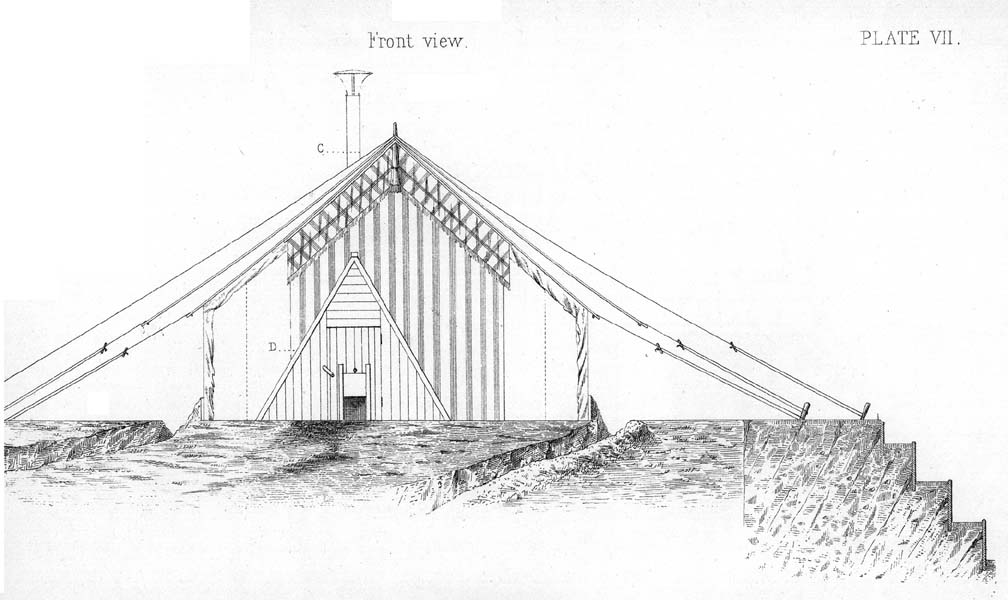
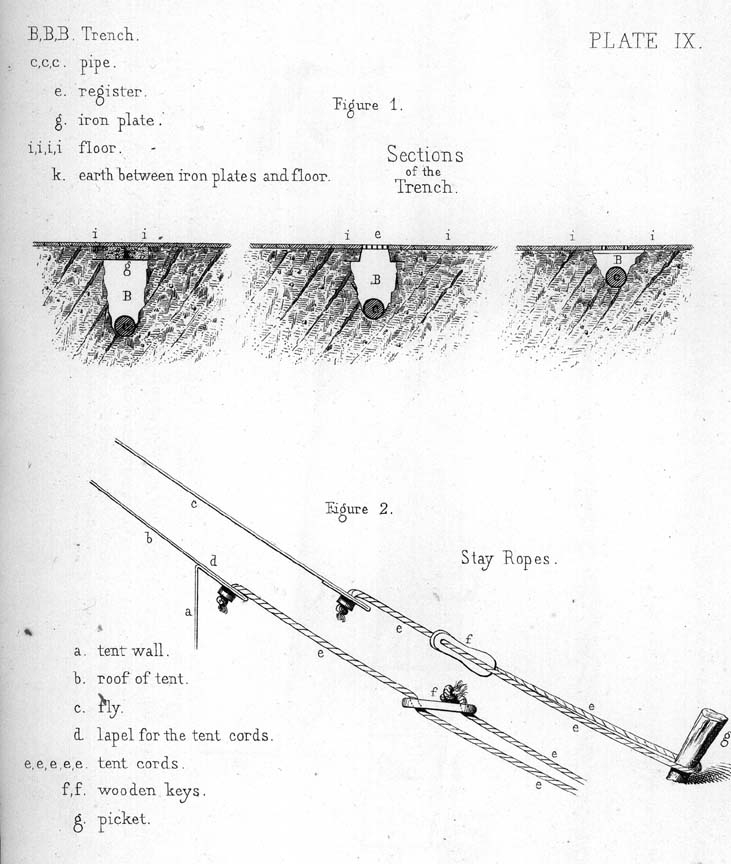
PLATES
|
History of the American Ambulance