
WHILE it must be confessed, not only that the general provisions now made for the care of the sick and wounded of armies are greatly superior to those which were formerly made, but that army hospital accommodations have been increased and improved as well, the increase and improvement have been almost entirely limited to those military hospitals called in English "general hospitals," and which, if temporary, are at least at the same time immovable or "fixed." It is evident that such establishments can respond only partially to the necessities of an active army. It is difficult to determine where to establish them. It requires time to create them, often so much that the necessity for such hospitals ceases before they are in a condition to render any service. Armies often move away from these hospitals such distances, as to make it only possible to profit by them, by the transportation of the sick over long lines of transit, at great cost and embarrassment to the administration, and with fatigue and loss of life to the sick. Whatever advantages may be derived from the organization of special hospitals for the sick and disabled of armies in time of war, it is perfectly evident, that so long as these establishments are fixed, they can only meet in a partial way those needs for which they are nominally created. To complete the hospital organization of an army, something more is therefore required. It is necessary that the means should exist for creating, within the lines of the army itself, rapidly and whenever the occasion may demand it, hospital accommodation for a large number of men. The need for such accommodation is especially felt after engagements, which it is often quite impossible to foresee, at least in so far as their locality and importance are concerned. After great battles thousands of wounded often become the subjects of our care; to transport all these unfortunates back to the general hospitals in the rear is commonly a physical impossibility. The consequence is that large numbers of wounded must receive what care may be given to them, at least for a time, in the immediate vicinity of the spot where they may have been wounded.
This fact has been, as we have seen, so far recognized as to have resulted in the establishment in all modern armies of a service corresponding more or less completely with that known in the French army as the ambulance service, and which has in charge the organization and direction of the ambulant or field hospitals.
While, however, military hospitals, both permanent and sedentary, have been all the while steadily improving---indeed, have been so far perfected in their material organization, as to fairly represent at the present time the most enlightened opinions which have been advanced concerning the general subject of hospitalization,---this can scarcely be said of the service which has been created for the more immediate care of the wounded upon the field. Its personal organization has generally been sadly defective and insufficient for its office. Created to respond to no well-defined idea of the true mission of such a service, it has rarely exhibited any plan other than one which may have had its origin in reasons of temporary and immediate expediency; remote and contingent needs have seldom been considered, or if once felt have been speedily forgotten. The consequence has been, that those upon whom it has fallen to discharge the functions of this service have too frequently been few in number, in proportion to the work to be done, as well as feeble in authority in view of its importance. There has been a want alike of men, authority, and material; and this want still exists. The surgeons, assistants, and stretcher-bearers for field duty, are not more numerous or better disciplined in the French army to-day than they were a hundred years ago ; and the material at the disposition of a French ambulance corps is now scarcely greater than it then was; nor have the resources of the field sanitary service attached to any European army been in many important respects perceptibly increased since a date equally remote. These defects, however, are general, in so far as they are the results of a constitution radically vicious; and I wish in this place to direct your attention more particularly to a want which has been especially felt by all---the want of shelter sufficient for the sick and wounded---who cannot, or ought not, to be transported a long distance---and so established, as to realize the conditions which experience has taught us were most favourable to health, as well as recovery from disease or wounds.
Not only have few attempts been made to improve the constructions occupied by the field hospitals attached to European armies, but few attempts have ever been made even to provide special constructions suitable and sufficient for the requirements of these most important establishments. We have seen what the practice was in France, in the reign of Louis XIV., and how according to the "Instruction" of D'Argenson "one was almost always obliged to have recourse to barns." The methods adopted in those days for hospitalizing the sick in the immediate vicinity of armies, are those still most frequently practised.
Sick and wounded soldiers have been almost always crowded together in such buildings as chance might offer in the immediate vicinity of the camp or of the field of battle---in buildings not only generally insusceptible of proper ventilation, but often located in places unsuitable, as well from the presence of innumerable morbific agencies, as from the absence of the first conditions of salubrity. Wounded soldiers who fall upon a European battle-field are treated to-day almost precisely as they were a hundred years ago---excepting only certain details of medical and surgical treatment; and I am sorry to say that they are not only treated in the same way, but that they die in the same way, in nearly the same proportion, from the same causes---typhus, gangrene, and purulent infection.
If the statistics of modern European field-surgery show results somewhat better than those obtained during the seventeenth and eighteenth centuries, it must be attributed principally to the fact, that both private and public buildings are better constructed than formerly, as well as more carefully kept, while at the same time the soldier himself is better clothed and fed; in a word, to the generally improved conditions of living among all classes of people at the present day.
Perhaps the most conclusive proof I could offer, that up to the present time no systematic effort has been made to procure suitable shelter for the sick and wounded of active armies in the field, is the fact that the word ambulance itself, now so well known to all the world, does not suggest to those who most frequently use it a building or even a shelter. It is a term which has been generally employed to indicate a service. On consulting the classical "Medical Dictionary" of Littré and Robin, we find that an ambulance is "a temporary hospital establishment (établissement hospitalier) near an army corps"---that its personnel numbers thirty-four surgeons, assistants, and nurses, and that its matériel is carried upon five waggons. What this matériel is, we are not informed, although told that it is generally placed in "dépôt" in a sheltered spot, and "in the neighbourhood of water." Legouest, however, in his "Traité de Chirurgie d'Armée," informs us what this matériel may be, which "is necessary to the service of the sick and wounded. In the first place: the medicines, material for dressings, surgical instruments, and various utensils; in the next place: the means of transport." In sixty pages, of the twenty-second chapter of this book, entitled "On the Medical Service in the Field," the medicines, and the bandages, and the surgical instruments, and the utensils, are enumerated with a detail that is almost painful; but scarcely a word is to be found there which throws any light upon the character of the installation of the ambulance itself. So, in the voluminous reports of Chenu, upon the ambulances and military hospitals established by the French during the Crimean War, and in Italy, during the war of 1859, while the movements of the armies, and the personal organization of the service de santé, and the statistical results of wounds, are given in many respects with the most satisfactory minuteness, I am unable to find any detailed account of the dispositions which may have been taken to secure for the sick and wounded the shelter they must have required at the field ambulances, volantes and sédentaires.
The failure to allude to a subject of such importance in the works I have referred to, would certainly seem very singular, except it be presumed that the kind of shelter generally employed for the ambulance was too well known to make any description of it necessary. This presumption was undoubtedly entertained by these writers, as---in my belief---it had been previously by nearly all their predecessors. The fact is simply this---from the earliest times down to the present time, rarely, if ever, have systematic measures been taken to provide a special and sufficient shelter for the wounded, in the immediate neighbourhood of armies, engaged in active hostilities---the wounded have nearly always been carried from the field to such convents, churches, private houses, or huts as may have been nearest or most easy of access; and under such cover as these constructions may have afforded, the ambulances, both volantes and sédentaires, have generally been established. Such having been the conventional method. among all armies of obtaining a locale for the ambulance, and a shelter for the wounded, it has been evidently impossible to give the details of an installation, the peculiarities of which must always have been determined by the circumstances of time and place.
This method of obtaining shelter for the wounded possesses, at least in Europe, certain advantages which are unfortunately so evident as to conceal to a great extent the disadvantages inherent to the system. Armies in Europe are seldom far distant from cities and villages, where public and private buildings may not be obtained to give shelter to considerable numbers of wounded. The employment of such buildings for hospital purposes saves to the State, not only the cost of constructions for the ambulances, but also the cost and encombrement which their transportation in the train of the army would inevitably occasion. The immediate advantages to be derived by adopting the custom of relying upon the country itself in which the war may be conducted, for the shelter necessary for the wounded, are therefore obvious; so much so, that unless we could show that the system was attended by disadvantages, so serious as to be more than commensurate, we should be ready to give it our sanction as the best which could be adopted---one which, if it did not entirely respond to the necessities of the individual soldier, at least most completely protected the larger and more general interests of the State.
A careful investigation of this system, however, will make evident its many and great disadvantages. In the first place: it subjects the medical department in the army to various conditions which it alone should always be able to control. Such conditions as the absence of dampness, cleanliness, isolation from places which may prove centres of infection, the supply of water, of light, and, more than all, of air in proper quantities, are of altogether too much consequence in the installation of an ambulance to be determined by mere chance---the chance of their presence in the constructions which may be found near the field of battle. Indeed, it is very seldom that the surgeon is so fortunate as to secure a building in which he can establish his ambulance, so located and so arranged as to be entirely unobjectionable. In the next place: such buildings are generally small and deficient in number. It becomes as difficult to adapt them to meet the requirements of sanitary science, as it does finally and almost inevitably to prevent their becoming overcrowded and infected.
The inconvenience, the suffering, and the loss of life, which have been sustained by armies from the insufficiency of the shelter provided for the wounded are almost incredible. Larrey, speaking of the condition of the wounded after the battle of Eylau, says:---
"I had in the morning established an ambulance in some barns on the left side of the road entering the town, but unfortunately they were open on all sides, the straw which had covered them having been taken off for the horses. We were forced to lay our wounded upon what was left of this straw sprinkled with snow, and a large number both from the guard and the line were brought together under this miserable cover . . . . The cold was so intense that the instruments dropped frequently from the hands of my aides . . . . A great part of the soldiers of the army had been operated upon, and had had their wounds dressed within the first twelve hours; it was only then that we were able to take a little repose. We passed the rest of the night upon the frozen snow around the bivouac fire of the ambulance. Never had I passed so painful a day---never had my soul been so deeply moved. I had been unable to repress my tears at moments when I sought to sustain the courage of my wounded. I was unhappily compelled to see a number of these unfortunates die because of the pitiful circumstances of our position---the excessive cold and the want of a locale. The impossibility of bringing together all the wounded French, as well as those of the enemy, in that little town (Eylau), where the whole état-major of the army and of the imperial guard were lodged; the danger of witnessing the outbreak of an epidemic, from the piling together of these unfortunates, and the abundant suppuration which must take place after the third day; and, finally, our extreme penury, in an open country covered with snow, abandoned by its inhabitants, and stripped of every resource,---these were so many reasons which imperatively demanded an evacuation."(177)
"Six days after the battle of Eylau the wounded who had gone themselves or been carried to Thorn, five leagues distant, were in a condition as deplorable as during the first hours after the battle. I had assigned me, as chief of service, nearly eight hundred of these people, whom I found in a great house, lying on dung rather than straw, crowded together one against the other, shrieking, weeping, and complaining of having been abandoned---asking for death even; for in the midst of these tortures existence was no longer a benefit. I succeeded after a few days, assisted only by two or three sub-aides, in giving to this place an aspect somewhat less disgusting---in alleviating in a measure these great sufferings---in creating an atmosphere less corrupt than that, which had been infected by the emanations arising from purulent matter and the ordure in which those poor soldiers who were unable to move were lying. Without the assistance of the économe, who had been replaced by a clerk, only charged, as it appeared, with the accounts---with but two or three infermiers, unacquainted with their duties---not a place where broth could be made, for more than twenty-five men---without boilers, which could be used out of doors---without vessels, in which drinks might be served to the men, tormented by an inextinguishable thirst from the fever of their wounds---destitute of assistance, destitute of means---unable to find a person with whom I might concert some plan for getting out of the difficulty---forced to make use of the fragments of ambulance caissons for dressings, and even these insufficient,---such were the arrangements made for the care of the soldiers of Napoleon!"(178)
In speaking of the Russian campaign, the same writer says:---
"As for the help which is demanded after battles, and which the overwhelming fatigues of long marches render equally necessary, where were the hospitals which the administration took care to establish---even to trace out at long distances the line of evacuation, which was so necessary, up to the Prussian frontier? There was not one. The hospital at Wilna, and those of Moscow, where the sick and wounded French were received, did not belong to the army; and, although M. Larrey may call 'hospitals,' the houses and barracks where he left sick men and surgeons, when going as well as returning, this name cannot be applied to them. A place where everything is wanting, sometimes even water, where surgeons, after having used their own under-clothing, are obliged to take that of the wounded for dressings; where one is compelled to think himself fortunate in being able to procure old paper, pieces of parchment, and carpeting, to be used for compresses and fracture bandages, is not a hospital, it is only a miserable sink in which the wounded are heaped up to die. The administration was unmoved by these pressing necessities; it did not even occupy itself with them, except, perhaps, when everything was quiet and its aid came too late. On the retreat it left behind the surgeons, among soldiers overwhelmed with grief; and it left them to console their patients as best they might, without means and without other resources than those which their ingenuity might discover in the most indescribable things which fell into their hands, as also, exhausted--- worn out with fatigue, and pushing to the end what was left of presence of mind, of activity, and courage---to die in their turn." (179)
Indeed, scarcely a great battle occurred during the history of the Consulate and the First Empire which was not followed by scenes of wretchedness, arising from the complete inadequacy of the available shelter, in no respect less painful than those which furnished the occasion for these graphic sketches.
The only possible remedy was an evacuation of the wounded upon the towns and cities most accessible, but often quite distant, and which never could be effected without seriously compromising the chances of recovery in every case where a severe wound had been received. A decree(180) regulating the French ambulance service had directed the immediate transfer of the wounded from the place of first dressing ("ambulance volante"), to the "dépôt d'ambulance" (head-quarters of the "ambulance volante "), established just behind the centre of the army; from this place they were to be sent on as rapidly as possible to the first "hôpital sédentaire ;" from which, to prevent overcrowding, a sufficient number were to be evacuated on to the sedentary hospital next farthest removed, and so on back, if necessary, to the first permanent military hospital. The wounded were therefore theoretically constantly en route. From the enormous burdens of such a service upon the transportation of an army, it is evident that it must have been, generally, most inefficiently accomplished. These evacuations of the wounded from the immediate neighbourhood of the field of battle, accordingly, seldom failed to occasion their accumulation in such numbers, at what were considered the most favourable points, as to produce the outbreak of pyohemic epidemics, often of a formidable character; as, for example, at Brünn, a city upon which the wounded at Austerlitz were evacuated, where the epidemic assumed such violence as to extend to the civil population of the city, and finally to invade the whole line of evacuation quite back to France.
The cruel results of over-crowding and long transportation---typhus and hospital gangrene---induced Vaidy, a surgeon of the First Empire, to propose the treatment of the wounded in provisional barracks established in the open air. In an article published in 1818 in the "Dictionnaire des Sciences Médicales," he says:---
"Since in those large gatherings of men, such as armies occasion, it is physically impossible to respect all the rules of hygiene, it is the duty of those charged to watch over the health of their fellow-citizens, to remedy the evils which necessarily result from these dangerous gatherings. Inasmuch, therefore, as they are productive of a great deal of sickness, instead of crowding the sick together in the hospitals of towns, where they may carry with them the germs of a fatal contagion, it would be expedient to create establishments large and well aired in the open country. These building should be constructed of wood, boarded up on the outside, and lined on the inside with fresh straw---to be frequently renewed. Such barracks would serve very advantageously as asylums for the sick coming from the army, while they would be for the people upon whom the scourge of the war might fall, a happy guarantee that they should not see typhus, one of the most deadly diseases which men have to fear, developed among them."
Vaidy was induced to make this suggestion principally by a desire to avoid, or at least mitigate, the several evils incident to long transportations. By the establishment of special hospitals in the rear of the army, not far removed from it, these objects could be in a certain measure secured. But, at the time he wrote, the importance of making any special provision for the shelter of either sick or wounded was rarely entertained, and thus, the wise and humane suggestions of Vaidy were for a long time unheeded.
At the outbreak of the Crimean War, one of the first military movements being into the Dobrudscha, a country of arid plains, steppes, and marshes, inhabited only by a few shepherds, and destitute of all resources, the Russian and Turkish armies suffered severely from a mortality among their sick, occasioned as much from the absence of cover as from a want of food. And the French themselves very shortly after suffered even more severely from a similar cause.
"We established," says Chenu, "at Gallipoli (April 5, 1854) a provisional hospital in some Turkish houses---no better place could be found---although the hospitalization was so bad as to render it necessary to abandon the place as the weather grew warm."(181) The cholera broke out here early in July:---
"That infected mass of houses in the midst of filth of every kind, which the indolence of the people of the country had left to fester at the corners of the streets, and on the door-sills of the dwellings, seemed an audacious defiance thrown at the epidemic. The hospitals filled up, and graves were dug in silence around the camps. The living of to-day were the dead of to-morrow."(182)
The disastrous consequences to the allied armies during the Crimean campaign, from having neglected to procure suitable and sufficient shelter for the sick, independent of such as might be found in the country in which they were to operate, were not limited to the period of the cholera epidemic at Gallipoli and at Varna. On landing at Eupatoria in September, the English troops bivouacked without cover and without fire; and, exposed the first night to a rain which poured in torrents, were compelled to re-embark immediately, on shipboard, fifteen hundred of their sick.(183) At the Alma the same want was severely felt, as it was, perhaps, even still more severely during the whole of the terrible first winter before Sebastopol. For quite two months after a landing in the Crimea had been effected, the only means possessed by a large number of regiments for sheltering their sick and wounded were those afforded by "a single bell-tent." It has rarely happened that an army has entered upon an autumnal campaign so completely destitute of suitable shelter, and if the complaints of those upon whom the responsibility of caring for the sick principally fell were frequent and bitter, the suffering from cold, rain, and exposure, as the season advanced, was almost incredible. On the 1st of January, 1855, Chenu said of the English army:---"It numbered at the commencement of this campaign 54,000 men, its strength to-day is but 27,000, and half this number are on the sick list."(184) The mortality in the English army was, indeed, so fearful at this time as not only to profoundly impress public opinion in Great Britain, but to cause the government at once to resolve upon energetic and effective measures of relief. A few months after, the English army was well supplied with clothing and food, while the sick were sheltered in comfortable framed barracks, which had been sent out from England,---instead of half buried in the earth in the taupinières which the country alone furnished.
But if the English field hospitals were well established and maintained, during the middle and latter periods of the siege, the same could hardly be said of many of the French ambulances. Whoever may have been at Sebastopol, can hardly fail to remember the troglodytic caves everywhere to be seen along the line of the naked rocky hills which shut in that city. These afforded during the siege a convenient cover to the Russian and allied tirailleurs; they were used, however, for other purposes.
"Two of these grottoes," says Baudens, "taken from the Russians in the ravine of the Carénage, and the Karabelnaïa, served as ambulances for the trenches on the right. They were out of the reach of shot fired in a direct line, but more than one bomb came rolling into the ravine, to burst and make victims at the entrances of these pitiful retreats of misery. The uncertain light, which entered by the crooked galleries, rendered surgical operations difficult. During the night, that the enemy's attention might not be drawn to us, we were contented with one little lamp suspended overhead. The continual dull roar of the cannonade was, at intervals, dominated by screams of birds of prey, who, disturbed in their peaceful haunts, sailed down from the rocks above to carry back with them shreds of human flesh. After the fall of Sebastopol, it was a pious custom to visit these grottoes, full of sad souvenirs ; there was shown the straw bedding, still bloody, where the surgeon had kneeled down to extract a ball or stop a hemorrhage. Who shall ever tell all the sad and touching scenes which passed there? In these ambulances the open wounds, and broken limbs, received the first dressing; the blood which flowed in abundance was checked by hasty expedients ; many entered only to die after cruel suffering with heroic courage; the others were carried into the division ambulances."(185)
The division ambulance which received most of the wounded from the place just described, was established at the entry of the ravine of the Carénage, under the shelter of some barracks and tents; but the barracks were by no means well constructed, while the tents, made of loosely woven stuff, permitted the rain to sift through, and unprovided with any suitable heating apparatus, became so thoroughly uncomfortable, when the weather grew cold, as to be abandoned as fast as it was possible to replace them with barracks.
We find, moreover, that recourse was constantly had, in the Crimea, to those forced evacuations of the wounded, from both ambulances and hospitals, to which I have already alluded, and which have been one of the curses of the French ambulance system, since the time of its adoption---what they always have been, and always will be, to every system which abandons the sheltering of those who may fall wounded upon the field to the caprice of chance. Says Chenu:---
"Even after the establishment of these hospitals, (at Constantinople and in its vicinity, in 1855-6,) it was necessary to have recourse to an extreme measure, but one demanded by the circumstances, that of evacuating the inmates of these hospitals, from one to the other, back to France. The result was---our hospitals served scarcely any other purpose than that of hotels, where the sick stopped for a few days, more or less, before a similar repose at Gallipoli, and afterwards at Nagara, and so on to France. This measure, considered indispensable, had its good side, but it is suggestive of many serious reflections. If it may be employed in the case of certain diseases, in a word, for the sick who are really transportable, it is not the same for most of the wounded, the recently amputated, and those exhausted by the incessant calls of diarrhoea and dysentery. Nevertheless, it was necessary to face these necessities, and if I must say it, we did all we could, although we did very badly."(186)
M. Dunant informs us that at Solferino, in 1859, just before the commencement of the battle,
"the ambulances volantes had been established in the private houses, granges, churches, and convents in the neighbourhood, or even under the trees in the open air. From these places the wounded were sent to the nearest villages or hamlets. In these little country towns, churches, convents, houses, public places, courts, streets, and promenades---all, were occupied as provisional ambulances. . . At Castiglione, the hospital, the cloister, the caserne San Luigi, the caserne of the gendarmes, as well as the churches Maggiore, San Giuseppe, and Santa Rosalia were filled with the wounded, crowded together and lying only on straw. Straw had also been put in the streets, courts, and squares, wherever, here and there, under boards or awnings, a cover had been set up to protect against the sun the wounded who were coming in, all at once, from every side. The private houses even were soon filled up. What were the agonies and sufferings of those days---the 25th, 26th, and 27th of June? The wounds inflamed by the heat, dust, and the want of water, as well as of care, became more painful, and the air grew corrupt from mephitic exhalations, in spite of the praiseworthy efforts of the intendance to maintain proper sanitary conditions, in the places which had been transformed into ambulances. Upon the flagstones of the churches and hospitals of Castiglione, had been placed side by side men of all nations, French, Arabs, Germans, and Sclaves. Some, who had been provisionally pushed down to the lower ends of the chapels, had lost all power of moving, or were unable to move, on account of the narrowness of the place they occupied. The vaults of these sanctuaries rang with oaths, blasphemies, and cries, which no words can express. Certain soldiers, imagining that the cold water which was poured upon their wounds, already purulent, caused maggots, refused to have their bandages moistened, others, who had been fortunate enough to have had their wounds dressed upon the field, were not cared for, during their forced detention at Castiglione, and the dressings tightened by the jolting of transportation, neither removed nor loosened even, were productive of veritable tortures . . . . At one of these churches more than 500 soldiers lay in heaps, and there were at least quite 100, in addition, stretched upon the straw in front of the church, and under some awnings which had been set up to keep the sun off."(187)
At Langensalza in 1866, "no one was prepared," says Dr. Evans, "for so terrible a carnage ; the hospital service was wanting not only in nurses, but, strange to say, it did not even possess the necessary material for arranging a single ambulant hospital; so the wounded Hanoverians and Prussians were placed upon such straw as could be hastily procured; some even were laying upon the ground; few were they to whom a bed furnished with a straw mattress had been given."(188)
The sufferings of the wounded during the recent war, at Sédan and at Metz, and on the Loire, are almost too well known to make them the occasion for a special notice. The French army was in no way prepared to take the field when war was declared in July, 1870. The intendance was consequently at once overwhelmed with multitudinous orders, which concerned rather the equipment of the troops and their maintenance in the field, than an enlargement of the resources to be placed at the disposition of the service de santé. Time, moreover, was wanting, as the work of weeks and months had to be crowded into days. Something also was expected from the different associations which had been organized since several years, with a view to co-operate with the service de santé in the work of battle-field relief. To what extent these circumstances may have led to the insufficiency of the material and the means of caring for the sick and wounded in the French army, during the late war, it is not necessary here to inquire. The only fact which now concerns us is this: wherever a large number of wounded had to be taken care of, they had to be taken care of in the old way, under such cover as was most available. An English surgeon, writing from Sédan, Sept. 5, says:---"Here in the hospital, within one hundred yards of the battle-field, we are in a bad way; what we want are tents and beds." An agent of the English Aid Society, writing from Arlon on the 6th of the same month, says:---"The condition of things at the front is very bad, not only are there wounded in enormous numbers without bedding, but without even sufficient nourishment, there is also dysentery, diarrhoea, and fever." Another writer says:---"The villages of Rémilly and Douzy are crammed with wounded, one small chateau outside the latter village has 900 wounded in it, and all the other houses are proportionally full. It is sad to think of the hundreds who might be saved with a little care."
Is it surprising that under such circumstances, pyæmia and typhus should have soon broken out, in almost all these villages, with a violence such as has seldom been witnessed except in the records of ancient surgery? At Metz the state of things was, if possible, even worse. The whole city became a vast ambulance after the battles of the 14th, 16th, 17th and 18th of August. Notwithstanding almost every building, public and. private, had been filled with the sick and wounded, places for them were still wanting, and hundreds of these unfortunates were finally crowded into the cars of cattle trains, which were brought into the "Place Royale" to be organized into an ambulance. The sanitary condition of the city was most deplorable, long before it had suffered from the privations incident to the siege.
M. Gallard, inspector of the transportation service for the sick and wounded of the army of the Loire, says:---
"The morning after the first occupation of Orleans by the Prussians . . . . I went with three of my assistants to Vierzon, where I thought of organizing a system of caring for the wounded, in anticipation of the military events which seemed imminent in Sologne. As the resources of the city were very limited, it seemed to me quite natural to ask the intendance to assist me in establishing a fixed ambulance or temporary hospital, the creation of which appeared to me indispensable. Feeling authorized as I did to make this demand, from the instructions I had received from the International Society and the intendant-en-chef of the army of the Loire, the short and categorical refusal which I received surprised me very much, I must confess; but what surprised me more, were the reasons assigned for the refusal. The principal one was, that there was no need of thinking about preparing ambulances in view of eventualities which might never occur; that even should there be a great battle, such ambulances would be much less useful than I supposed, for it would only be necessary to take one of the car houses at the railway station, and throw 200 bundles of straw on the ground, to be able to receive all the wounded, who would there find themselves perfectly well provided for."
M. Gallard was naturally very indignant, that anyone should coolly propose such a system for treating those who might fall wounded in defending their country; and obtaining the aid of a citizen of the town, he established there a small ambulance of thirty beds:---
"But this was indeed very little, for the hospital being filled up and the private houses invaded, we found, according to the wish of my interlocutor, more than 200 sick lying upon the straw. This crowding together had been occasioned, not by the wounded, for there had been no serious fighting in the neighbourhood, but by the sick, of whom we never think enough, although experience has shown that in all long campaigns, there are at least nine times as many sick as wounded. There were in this place unfortunates down with small-pox in the suppurative stage, those sick with typhoid and dysentery in its worst forms, and who could not be undressed from a want of sheets and blankets. How many died in the midst of this rottenness, I do not wish to find out; I will only say that if the ambulances, which were refused me, had been organized, if the transport service had worked regularly and orderly, all these sick would have received in season the care which they failed to get, and which, in spite of the devotion of the inhabitants of Vierzon, it was impossible to give them, from the want of sufficient material resources."(189)
And during this same campaign some English gentlemen attached to the fifth ambulance (of the "Société de Secours aux Blessés") speak of the wounded having been lodged in school houses, the outbuildings of farms, and private houses:---
"At L'Echelles many were in barns, where at night sheep or cattle were driven in to the adjoining sheds, to keep the patients as warm as we could. They almost buried themselves in the straw during the very cold weather. We had great difficulty in keeping good ventilation," &c.(190)
If I have been induced to make these citations it has been for the purpose of furnishing you with the unequivocal evidence of the truth of my assertion---that since a century there has been on the part of the principal European States, no augmentation of the means wherewith to furnish shelter to the sick and wounded, within the lines of their armies---that as formerly, so now, armies are sent into the field unprovided with the material necessary for the establishment of ambulances, although such an establishment may be imperatively required, either from the absence of buildings near the field of battle, or their unsuitableness, or complete insufficiency, for the shelter of the multitudes who may have been suddenly stricken down in the fearful collisions of a great battle. I have also wished to represent to you, in the words of those who themselves have witnessed the scenes they have described, the pitiful and often heartrending consequences of this secular official improvidence.
Few are the persons who, familiar with the hardships the soldier has to face, and with the death-rate in the ambulances, far exceeding that common in our civil hospitals,(191) although the soldier has in his favour the vigour of his age, may not have often asked if there was no remedy for this scourge---if it was not possible to modify and improve the hospitalization of active armies? These questions, as we have seen, have been almost always answered practically in the negative. Public and private buildings have not only been constantly used for the shelter of the sick, but they have almost universally been considered as the best places in which to establish ambulances or temporary hospitals, whenever or wherever they could be obtained. If at any time provisions may have been made to provide the service de santé with shelter for the wounded, other than this, it has been for the purpose of meeting the possible contingency of the absence of buildings at the seat of war, rather than for the purpose of establishing a hospitalization which might respond more completely to the requirements of modern hygiene; and such provisional shelter has generally not only been considered inferior to that furnished by permanent constructions, but its transportation has always been regarded as a heavy burden, to be abandoned, either wholly or partially, on every possible occasion. Although, since the beginning of this century, the common roads of Europe have been replaced by McAdam highways---uniting all the important strategic points---which have more recently been superseded by lines of railway, along which armies may be transported in a few days such distances as, formerly, could only be traversed in weeks or even months, the word impedimenta still disturbs the repose of a European quartermaster, as much as it did in ancient times that of a Roman quæstor making ready for a campaign into Germany or Africa. I know that it is almost useless to represent the advantages to be derived by supplying an army with any system of portable hospitals, as we are very sure to be informed that the system is impracticable, that the baggage of an army is already an excessive burden upon it, and that any increase in its means of transportation would be most prejudicial. But whatever may be the inconveniences of transporting the material necessary for the construction of field hospitals, it is perfectly evident that they are much less than those resulting from the constant decimation of armies insufficiently provisioned in this respect. For example, one third of the whole French army in the Crimea was destroyed each year by disease alone; to maintain its full strength, nearly seventy thousand men had to be taken annually from France, each man representing a portion of the wealth of the country, each drawing upon the public treasury for his support, and each one to be transported to the seat of war, at a cost of not less than --- francs. Suppose a proper outfit for the hospital department at the opening of the campaign had enabled it to reduce the mortality twenty-five per cent, which is a very modest supposition, would the cost and impediment of such an outfit have been an equivalent for the expense and loss to the State occasioned by the annual expedition of a new force of nearly twenty thousand men? The humanitarian arguments in favour of my proposition I leave purposely out of view, as it is generally useless to bring before the tribunal of sentiment those questions which always have been, and always will be, settled in such a way as may seem to accord best with the interests of the administration, rather than with those of the individual.
It is certainly remarkable that the impracticability of reforming the hospitalization of active armies should still be entertained, at a time when the value of human life was never more highly estimated, and when the laws of sanitary science as applied to the health of civil populations, were never more carefully considered or more universally respected. Moreover, the civil population is only occasionally or partially subjected to the evils arising from an insufficient shelter, or the imperfect ventilation of hospitals---dangers to which armies are constantly exposed; dangers which, if alike in kind to each class of the population, are certainly not alike in degree; while the claims of the soldier to profit by all the ameliorations which science or humanity may discover, to prevent disease and death, are as much greater than those which can be presented in behalf of the civilian, as the peril he must meet is greater and the cause he serves more sacred.
Unfortunately, certain facts valuable in their relations to science, to humanity-in the broadest sense of that word---seem destined to remain for ever sterile. They appear never to have known the fertile touch of some strong conviction of their worth and excellence, which might quicken the life within them, and force it to contribute to the general movement and the welfare of the world. How important it is to do this or that thing---to avoid this or that peril, may even be admitted; but the thing is neither done nor the peril avoided. If it be asked why, no one is able to give a satisfactory answer.
The dangers which an army, entering upon a campaign, incurs by being imperfectly equipped and provisioned, have often been pointed out. It was a maxim, even among the Romans, that a want often wastes an army more than fighting---"Sæpius enim penuria quam pugna consumit exercitum."(192) And in modern times scarcely a campaign has been lost, rarely has a great military disaster occurred, which could not be attributed in a measure to the inadequacy of the supplies, or which may not have been greatly aggravated by the insufficiency of the means for preserving the health of the soldier. Indeed, of all the wants which ever may have imperilled the force of an army, the most frequently occurring, as well as the greatest one, has been the want of suitable means of shelter, and more particularly for those who have been worn and exhausted by the fatigues of active service.
If such have been the uniformly fatal consequences of an insufficient provision for the organization of field hospitals, the question must continually recur---Is it not possible to make a larger and more complete provision? The answer which I should most unhesitatingly now give is---Yes. An arrangement should and could be made, in every army, for the establishment of a certain number of field tent-hospitals, and the number should be sufficient for the treatment of all the sick and severely wounded, who cannot safely be transported long distances. Whatever may be the good qualities of barracks, even those most hastily constructed often require too much time for their construction to be of service, and finally, and principally, they are non-portable. If armies are to be followed by hospitals, such hospitals must be established under tents. Tents are portable, are neither heavy nor bulky, and can be carried in the train of an army without encumbering it. A single waggon can easily carry the shelter required for a tent-hospital of eighty or a hundred beds. Such a hospital can be put up in an hour, in the most suitable and best place, and exactly when as well as where it is needed. Tent shelter costs less than most kinds of special shelter for the sick. In short, it is not more expensive than other kinds of shelter, while it is the only special shelter which can be employed for ambulant hospitals. Fortunately it happens that it is precisely that kind of shelter, which experience has proved to be better than any other for the organization of temporary hospitals, from a strictly sanitary point of view; it exposes the smallest amount of material to infection, and is capable of the completest and most constant ventilation.
I have elsewhere spoken at length of the great importance of pure air in the treatment of the sick, and have endeavoured to show how necessary it is, that measures be taken that the air of apartments occupied by the sick may be kept fresh by an ample ventilation. I have also spoken of some of the special means which at different times have been taken to maintain a fair degree of atmospheric purity within hospitals. I then had occasion to state, that one of the great advantages which temporary constructions possess over permanent constructions, is the facility with which systems of natural ventilation can be applied to them. If they afford a less perfect shelter against the inclemency of the weather---rain and frost, this apparent defect is usually more than compensated for, by the advantage here alluded to. Pure air is even of more consequence than shelter itself, so that by exchanging a certain amount of shelter for certain amount of fresh air, oftentimes a most profitable exchange can be made. Indeed, the amount of shelter which can often be dispensed with, advantageously, is vastly greater than is eve now generally supposed. I have already mentioned certain instances in which the sick have been forced to occupy quarters which were supposed at the time to be quite unfit to receive them, on account of their imperfect and shattered condition, but where it was found that the proportion of recoveries was much greater, than among those treated within the shelter of substantial walls. Occasionally, the sick have been compelled to pass a considerable portion of the day quite unprotected by any shelter, and yet so far from having suffered, in mild seasons and climates, they appear to have been almost, uniformly benefited by the seeming exposure. Thus, it is said that:---" In 1782, early in the summer following the surrender of Yorktown, the French army left Southern Virginia, where the heat had become insupportable. The sick conveyed upon the waggons of the ambulance train, continuing on the march and halting with the army, had nearly all got well on their arrival in Pennsylvania, a few only remained, and these were convalescents. And this experience," the writer intelligently observes, "was not at that time sufficiently taken into consideration, but was soon forgotten."(193)
At a meeting of the Académie des Sciences, held in June, 1871, General Morin read an extract from a letter which he had received a few days before from General L'Hériller, in which that officer referred to a remarkable instance, which came within his own knowledge, of the good effects of the open air upon the sick.
During the Mexican expedition, twelve soldiers fell sick with typhus contracted by occupying a house just abandoned by the Liberals, who were being decimated by that disease; as it was impossible to leave these soldiers behind, they were placed on litters and put on the backs of mules, and thus followed the movements of the command. Au bivouac, they were put under tents, quite in the open air. Instead of growing more ill, every one of these patients recovered, and not a new case was declared. And General L'Hériller very justly concludes as follows:---
"In my opinion the only way to avoid typhus in hospitals, and in large armies, is to make use of provisional hospitals alone. . . I may add, in support of what I have just said, that in the Crimea we were obliged, from the number who fell sick with typhus, to put them under tents. These tents were almost constantly open. The rain, snow, and frost, penetrated within them; the men lay on rugs in their clothes. Well ! in spite of these conditions, certainly to be deplored, we lost proportionally less sick thus sheltered, than in the wooden barracks, which were literally infected, I might almost say injected, with putrid miasms."(194)
But were I to introduce here the results of recent experience, I might multiply these observations almost indefinitely.
If there is a principle of sanitary science well established at the present time, it is that no shelter can be considered as suitable for the sick, which, while affording a sufficient protection against the inclemency of the weather, is not susceptible of a constant and abundant aëration. Facts which I shall present in another part of this Report have proved, I think, quite beyond question, that tents afford to the sick all the protection against unfavourable atmospheric influences which is necessary, not only in the summer, but also in the winter in temperate climates. Facts, no less conclusive, have shown that it is much easier to assure a sufficient and unfailing supply of fresh air to the inmates of tents than to those dwelling in ordinary constructions.
In the hospitalization of the sick of armies, we have certainly made great progress, we have improved our permanent military hospitals; we have multiplied and improved our sedentary temporary hospitals. We have still, however, a great evil for which to find a remedy, the suffering and waste of life occasioned by the enormous accumulations of sick and wounded in camps, and on fields of battle---in houses and hovels, and buildings totally unfit to serve as hospitals---with the alternative and consequence of a hurried evacuation or transportation to far distant hospitals of men seriously ill with painful diseases, or who may have been grievously wounded. And these transportations are often absolutely forced by the absence of all means of hospitalization within the army itself.
"But while admitting that large buildings may be improved if there be time for doing so, it must be stated that no more disastrous idea can take possession of men's minds than that sick and maimed people ought, on grounds of humanity, to be packed into churches, barracks, and other unprepared buildings, with as little delay as possible. This error has slain its tens of thousands in all wars. Even in specially constructed and well managed civil surgical hospitals, every surgeon knows how difficult it is, with all his care, to prevent the invasion of hospital diseases. In extemporized war hospitals they have been too often invited to enter.
"It is time that more rational ideas on subjects of this importance should prevail, and it would well become aid societies to turn their attention not only to improved ambulances (waggons), but to simpler methods of obtaining wholesome shelter for wounded men, at a safe and convenient distance from battle-fields, until their wounds have progressed so far as to admit of the sufferers being removed into properly appointed hospitals at a distance. . .
"There is evidence that during the late war agglomerations of wounded into what is called 'a hospital' have been as destructive of life as ever. It would be far better and safer to place wounded men, as a rule, in detached dwelling houses, or under a canvas roof, or any similar shelter, sloping from a barrack or church wall, rather than to take them inside."(195)
Baron Larrey has recently observed:---
"The question of employing tents and tent-barracks is of much importance, and it seems to have been judged to-day, by an experimental trial, the most complete as well as the most favourable. We have seen, especially in these recent times of disaster, what services have been rendered by the numerous ambulances attached to the hospitals, and we have seen how important it was, in the presence of a constantly increasing affluence of sick and wounded, to prevent over-crowding and infection, by dissemination and increasing the number of our provisional asylums."(196)
Would that these opinions might have their just weight among those who have the power to organize reform!
Says Dr. Sutherland:---
"What appears to be most required now-a-days in field work, is ingenuity in turning everything to account for affording shelter and comfort to wounded men at a safe distance from (near) the battle-field. Sufficient has been stated to show an absolute necessity for some understanding being come to regarding improvements in the hygiene of belligerent military hospitals."(197)
I have frequently had occasion to allude to the evil consequences of an indiscriminate evacuation of the sick and wounded upon remote hospitals, but the evacuation of the sick is often a salutary measure, and one so immediately connected with every system of army hospital organization as to demand a more serious consideration in this connection.
It is generally believed, and the belief is a result of experience, that most of the seriously sick as well as a large proportion of the wounded, can with safety, and perhaps even with advantage to themselves, be conveyed to hospitals situated far in the rear of the army. It is well known, that one of the most powerful and effective restorative agencies, when disease exists, is found in a complete change of air, climate, and surroundings. And among the sick of armies, in a vast multitude of cases, the benefits to be derived from such a change have been found to more than counterbalance the evils incident to the transport. By the dispersion of the sick, foci of pestilence and death are often broken up; while the sick, disseminated through the country, are thereby less exposed to invasions of hospitalism in any of its forms. Moreover, at points distant from the army, the hospital service, as a whole, can always be established on a more perfect footing than within the army itself. The sick can be made more comfortable in a material point of view, can be better supplied with general and special food, and become the subjects of more direct personal attention. These facts are well known, and when conjoined with the advantages to be derived from disencumbering the army of its sick and disabled, we are led to affirm that, as a rule, whether a greater or a lesser number of sick are transported, or are transported a longer or a shorter distance, will depend largely upon the material means of transportation possessed by the administration, as also conversely, that the transport material will usually be increased quite in proportion as the advantages to be derived from transporting and evacuating the sick, appear to be real and important.
If the medical history of the American War of the Rebellion is valuable from the confirmation which it has given to certain principles of hospital construction, it is certainly scarcely less so, from having shown what immense services might be rendered by a large dispersion of the sick through the country, and by a transport service organized upon a scale wholly unprecedented in the military history of any State. Convoys of sick were constantly being sent from every military department, by steamboats and railways, to be disseminated amongst the general hospitals of the Northern States, from which, after a few weeks, the majority of the sick were returned to their regiments "fit for duty." The total number of those thus sent back and returned to the army, during the war, was enormous; and no fact is more universally believed by army medical officers in the United States, than that had the sick not thus been sent out of the "field," "post," and "departmental" general hospitals, at times almost en masse, the mortality rates in those hospitals would have often attained proportions as formidable as any which have existed in military hospitals during this century.
A large proportion, nearly all, of the seriously sick bear transportations very well when properly conducted ; and so also do a majority of the wounded. Provisions should accordingly be made for the treatment of most of the seriously sick, and many of the wounded, neither in the camp nor on the battle-field, but at points more or less remote, yet easy of access from the army by direct lines of communication. Such transportation as is necessary to convey the soldier to these points is a transportation of expediency, it is the best service which can be rendered to the disabled soldier himself, and at the same time it is a service to the army.
Still these general evacuations of the sick have their disadvantages; they involve a heavy loss of time, a large outlay of money and material, and often result in encumbering the approaches to an army, to a degree which may prove disastrous. Moreover, "nothing," says Dr. Letterman, "so disheartens troops and causes home sickness among those who are well, as sending the sick to the hospitals outside the army to which they belong ; such was the experience of the armies in the Crimea, and it is that of all armies."(198) Whatever the good results finally secured, by sending the sick from an army, the immediate moral effect of such evacuations upon the army itself is unquestionably bad.
A large number of soldiers must always be treated within the army to which they belong; and I will mention first, those who are not seriously ill, but need care, attention, and nursing, to prevent their becoming so. The number of this class is always large, as it is almost certain to include for a time nearly all the seriously sick. To make no special provision in the field for the proper treatment of this class, would result in the transference to remote hospitals of large numbers of soldiers, who would have been saved to the army by a few days' treatment near by, and whose transportation in any event might have been needless, had suitable provisional regimental and corps hospitals been provided.
But there are special classes of sick and wounded; there are those who have been stricken with sharp attacks of acute and painful diseases, and those who have been severely wounded---by missiles or thrusts, which have penetrated the cavities of the head, chest, and abdomen---wounding and compromising the integrity of organs essential to life---by the fracture of the joints and great bones of the limbs---including nearly all those cases of wounds, in which so-called capital operations are required, or are dispensed with only in the hope that conservative surgery may record a new triumph. These classes---those sick with short and violent diseases, and those severely wounded---and the number of the latter is large after every great battle---are not transportable, in the sense of being able to sustain an evacuation on to a distant hospital. As a rule the least transportation is an injury to them, and they should be conveyed as quickly and as gently as possible to the nearest hospital, and that hospital should be in the camp or on or near the field of battle. To attempt to send such people in horse litters and ambulance waggons over miles of road, to be transferred to railway carriages, to be re-transferred from carriage to carriage, during perhaps two or three days, is a barbarism---is little less than a homicide. I know of no circumstance which can serve as a pretext even for such a procedure, except it be the retreat and defeat of an army, and even then it would be a hundred times better, except perhaps in a war with savages, to leave the unfortunate sufferers to the mercy of the enemy, than to thus torture them and destroy pretty nearly every chance of life by a cruel kindness.
During the late war the Germans made in some respects a greater use of railway transportation than did the Americans during the War of the Rebellion. Throughout the whole war incessant streams of sick and wounded, coming from every army operating in France, were pouring into the interior of Germany. Had these sick and wounded belonged exclusively to the classes able to bear transportation and evacuation, the course pursued might have been praiseworthy; but so far from this having been the case, the number of untransportable soldiers who were hurried off by rail, to be tortured on the way, and finally to die in distant hospitals, was immense. I know there are persons who admire this German wholesale system of evacuating battlefields and hospitals. I must confess I do not. It is useless to commend to me the excellence of plaster-of-paris and straw splints, as instruments for holding in their places the fragments of a shattered femur, and it would be equally useless to tell me how comfortably a man with a bullet in his lungs can be borne in a suspended litter in a railway-carriage. The torture incident to these transportations is alone a sufficient cause for condemning them altogether; but the accidents of every kind to which they give rise, and the diminished chances of recovery which they entail, involve those who direct them, governments as well as surgeons, in the gravest responsibilities.
Where these hurried evacuations are resorted to, conservative surgery has but a poor chance; by the joltings in vehicles, and the disturbance incident to removals from beds to stretchers and from stretchers to beds, the positions of the fragments of the shattered bone are changed---these are detached from their connections, and thrust into the surrounding flesh; inflammation results, the periosteum is destroyed, the bone dies, and immense suppurations follow, with burrowing abscesses; the patient begins to sink; the limb is amputated, and shortly after the patient dies---and the conclusion is, that it would have been better to have amputated the limb at first, and that the attempt to save it was a mistake. No! the mistake---a mistake in such a case nothing less than a crime---was the sending of the wounded man to a distant hospital; he should have been treated in a provisional hospital on the field.
Says Dr. John A. Lidell, in an able paper on the "Traumatic Lesions of Bone:"---
"Again, clinical observation and reflection have convinced me that the transportation of our wounded during the late war exerted an important influence in the production of osteomyelitis.(199) My attention was first directed to this subject about the middle of June, 1863, when a considerable number of patients who had sustained gunshot fractures of the lower extremities were brought to the Stanton United States Army General Hospital, from the Depot Field Hospital of the army of the Potomac at Potomac Creek, where they had been under treatment since the battle of Chancellorsville---a period of about six weeks, and progressing favourably up to the time of their removal from that place. Now, all these patients were rendered very much worse by the transportation; those having fractured thighs suffered most. Several of these patients died of what I now know was osteo-myelitis; and there was good reason for believing that most of these fatal cases would have recovered if the exigencies of the military service had not rendered the evacuation of Potomac Creek a matter of necessity . . . . My attention was again called to the same subject in the summer of 1864. It was observed in some of the Army General Hospitals at Washington, and, I believe, in all of them, that osteo-myelitis and kindred disorders were met with much more frequently among the wounded brought directly from the army of the Potomac in the campaign of 1864, which extended from the Rapidan to the James River, than in the campaign of 1862 and 1863 upon the Rapidan and the Rappahannock."
At first Dr. Lidell thought the difference might have arisen from other causes, but, after a careful inquiry into the antecedent history of the cases, the comparatively long transportation in ambulances and army waggons over rough roads, to which great numbers of those wounded in the battles between the Wilderness and Cold Harbour inclusive, in 1864, had been subjected,
"stood out in bold relief; and I am thoroughly satisfied," says he, "that this affords the true explanation of the prevalence of osteo-myelitis among the wounded brought from those battles . . . . And I am strengthened in that opinion by the statement of Dr. Moses, that osteo-myelitis was more frequently seen in the Confederate hospital at Charlottesville, among the wounded in the Maryland and Pennsylvania campaigns, than among those wounded at nearer and more accessible places; and also by the statement of Surgeon Henry Janes, U. S. Vols., that but comparatively few cases of this disease occurred among the wounded at Gettysburg, who were treated near the field of conflict."(200)
But I will not dwell longer on this subject; enough has been said to point out the disastrous consequences which may follow an indiscriminate transportation of the wounded. The only remedy is to be found in the establishment of field hospitals or ambulances, in sufficient number for the treatment of all the non-transportable wounded who may fall in battle.
Indeed, I can hardly believe that any one well acquainted with the radical defects, and with the inevitably disastrous consequences, of the traditional method of hospitalizing armies in the field, can be unwilling to admit that the necessity for a reform is most urgent---or in brief, that each army or expeditionary corps should be furnished with shelter for its sick and wounded, sufficient to render it independent of such resources as may be furnished by the country within which it is to operate, or so far independent as to enable it to organize all its field hospitals---its ambulances---in such a manner as that the evils of exposure, bad ventilation, and a pernicious and unnecessary transportation may be avoided; nor do I believe that any one can contend that such provisional shelter should not realize in the largest degree possible all those special hygienic conditions now considered as essential in the establishment of hospitals for the civil population.
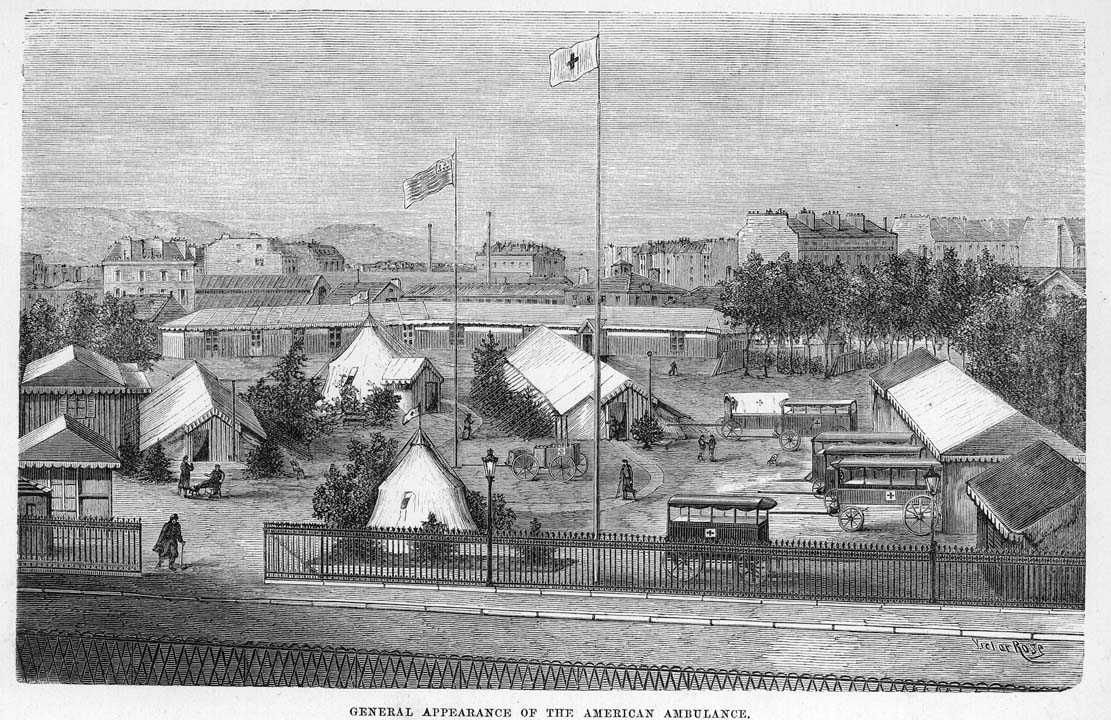
If the American ambulance was established at Paris, it was for the purpose of showing by a practical example how these objects might be accomplished.