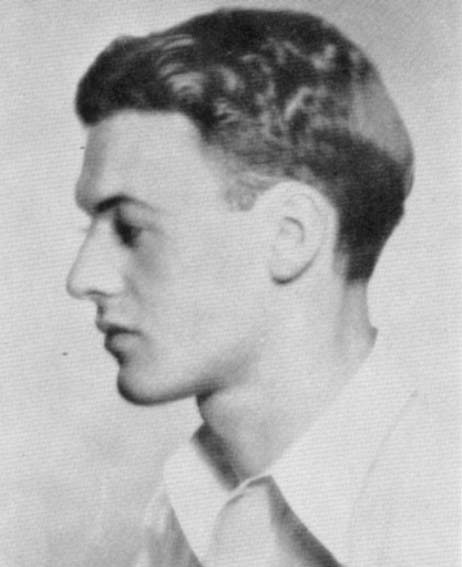
| These are the letters Caleb Milne wrote to his mother while in the American Field Service. In May of 1943, he, with a small group of American Field Service men, responded to a call for volunteers to help the French. These Fighting French, under General Leclerc, had joined General Montgomery's 8th Army after that epic march from Lake Chad in Central Africa to Tunisia. Early the morning of May 11th, Caleb Milne was giving aid to a wounded Legionnaire when he was struck by a mortar shell. His wounds proved fatal and he died around 4:30 that afternoon. These letters, though very personal, are published with the thought that their message might reach beyond one mother. As Marjorie Kinnan Rawlings has said in her introduction: "This collection of his letters seems to me of permanent value, far beyond their satisfying of our avidity for news of the working of the minds of men who are fighting, for us, our battle. They reveal a rare soul, who passes on to us his own sensitive perceptions of the beauty and glory of living; and they are written in the style of true Belles-Lettres." In tribute to Caleb Milne, who wrote to him on the meaning of music to a soldier, Deems Taylor, noted author and composer, said:
Caleb Milne was educated at the Germantown Academy in Philadelphia. From there he won a scholarship to the University of Pennsylvania. It was the time of the great depression and, leaving school, he struggled through various jobs. There was one happy interlude when he was chosen as an Apprentice at the Civic Repertory Theatre under Eva Le Gallienne. He also played in summer stock companies at Cohasset, Onteora and Woodstock. These experiences did not lead to anything permanent and in the next few years he touched the depths of despair. The turning point came on a long trip by freighter to South America when fresh experiences led him to writing. He wrote several short stories and also did some ghost-writing for a radio program. The impact of the war created an upheaval in his mind which ground to pieces most of his previous concepts of human beings. In the end he decided to volunteer for service although he hated everything military. Due to poor eyesight he was rejected. Later he tried to join the Free French Forces, and eventually volunteered as an ambulance driver with the American Field Services. Since his death letters have come from young men from all over the world attesting to the extraordinary impression he had made upon them. These grave, beautiful letters reflect a personality that has not lived in vain. |
 Introduction
| 1. May, 1942 | 17. El Agheila |
| 2. June, 1942 |
18. |
| 3. August, 1942 |
19. Christmas
1942 |
| 4. Cairo | 20. Received January 26th,
1943 |
| 5. Alexandria | 21. El Chebir |
| 6. In Search of
Sandy | 22. Tripoli |
| 7. | 23. Received February 1st,
1943. |
| 8. | 24. Tripoli |
| 9. Received November 9th,
1942 | 25. Received March 26th, 1943 |
| 10. Received November
30th, 1942 | 26. Received April 30th, 1943 |
| 11. | 27. April 17th,
1943 |
| 12. | 28. The Khamseen |
| 13. Received December 12th,
1942. | 29. Gabes |
| 14. Barce | 30. Received May
15th, 1943. |
| 15. | 31. Received May 23rd, 1943 |
| 16. | 32. |
Introduction