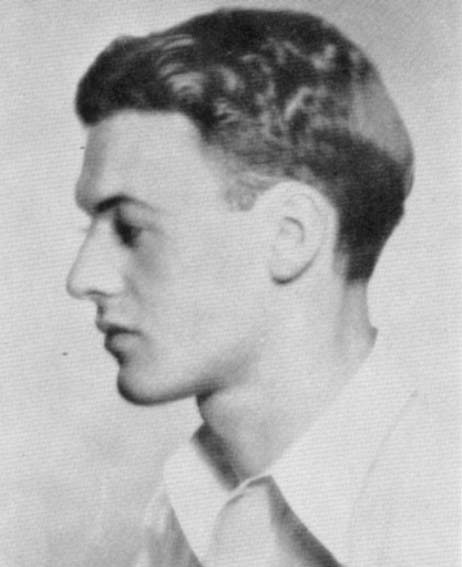
I HAVEN'T WRITTEN you for nigh on three weeks, which is a remarkable fact; but life has been so higgledy-piggledy that letters were impossible. It is also out of the question to give you, in a letter, the whole picture of the past fortnight so I will jump to the present, January 24th, and announce that I am sitting in the 'Ospodale Coloniale in Tripoli, where I am aide to one Colonel Beamish, of the British Army! My first day of this assignment, too. In between my letter from the Wadi el Chebir on January 4th, and now there has been a steady, dizzy stream of sudden advances from Pilastrina through the Wadi Zem-Zem, through the defiles and mines in the pass. The old ruins with daisies on the mouldering stones, break-downs, flights by night, days without much food and, beginning a week ago, the loveliness of the Tripolitanian towns. From the eternal, hard monotony of the Libyan desert, we drifted, or rather drove, into rich grass-lands, mountains coming nearer and nearer. Then the Arabian-Nights' town of Beni-Ulid complete with rose-red cliff houses, palms against the blazing moonlight, Arab horses with red saddles.
Two days later (I was then tagging along with our HQ. caravan, having a broken spring and they never stopping long enough to have time to set up shop). By the end of a few more days---I am still so whirling with impressions and sights I cannot sort them out!---we pulled up about twenty kilometers from Tripoli. Nelson Bridger appeared in a jeep with Field cashier-funds for the various units, and we have had enormous fun together flying around this Tuscan-like coast. Since my car was out of commission I was unable to return to my unit for a time.
Finally the AFS HQ. entered Tripoli, late yesterday afternoon. A request had come in from the Director of Medical Service for a car and driver so, my vehicle now being mended, I am in a huge, square hospital, sitting in the Scotch sergeant's room by the main door, at the beck and call of the Colonel. I have meals, hot showers!!, and a desk here and, when needed I drive the Old Boy all over Tripoli and the suburbs.
The town is very old, the name of course means three cities. There is a modern quarter of white plaster, plaza, hotels, colonnades of shops, fountains and Monte Carlo houses: the Jewish quarter, crowded with rabbis, dull robes, ear-locks, squatting shopkeepers and brass-makers, and the native quarter, all noise, donkeys, screams, red and raspberry fezzes, smells and bazaars. There were signs on the street reading:
"Penalty for looting is two years!
Behave yourself in town!
Watch out for booby traps.
Remember---two years.
You have been warned."
I have seen so little of the city that I cannot describe more than this general impression now.
Our HQ. is in a great sprawling barracks, still unfinished, a mile or so from the center of town. The buildings are arranged in a vast square with mammoth garages, machine shops, wards, rooms, mess halls and gates. The enclosed area is cut up into tank-pits, shelters, bomb holes and hillocks of targets. The great enclosed corridors are cool and gloomy but we at last are under a roof, which is novel and exciting. The radio is set up in one hall and we hear broadcasts from all over the world.
I often wonder if it is the loneliness of the deserts that makes any town so impressive to me now? Whatever it is, the luxuries, the wrought iron and gardens, the paved roads and walled patios seem to be a veritable Eden in my eyes. Last evening after "tea" at five-thirty, Nelson and I drove in the open jeep a mile or two to pay a visit to Tony Stewart's unit. They were with a New Zealand Medical Group parked in the loveliest possible nursery gardens. While Nelson dispensed Italian lira, Egyptian piastres, and British Military Authority monies to the fellows, I wandered off down long allées of feathery eucalyptus, branching off on paved walks, mossy and dim in the sunset. There were superbly cultivated beds of great red strawberries, rows of broccoli in the distance, green whorls of cabbage, and a heavy sweetness indicated the glossy depth of old orange trees. The green-houses were smothered in red and violet bougainvillea, geraniums were huge and strong-scented. One house, cool and dark, was towering with ferns, maidenhair and hardier kinds, a deep pool gurgling in a wall-basin. Another deserted house, all glass and vines, was devoted to the most fantastic cacti ranged in tiny pots and gradually assuming gargantuan proportions. It was a magnificent collection, even I could see, and seemed to be quite unhurt. The weather is curious for it is really too cold to have roses in bloom and vines flaming with color. I had ice on my windshield a week ago, but the desert was sprinkled with flowers coming into bud.
I wish you could see the jars, the flower-pots, the wine casks and the bottles that are in common usage all along our route. You'd grow dizzy with envy: though, of course, the natives become equally faint over a can opener or an empty petrol tin!
Later in the day.
Have just returned after touring from one HQ. to an other in Tripoli. The Colonel is very nice and pleasant. Had hospital lunch of beans and macaroni, cauliflower and meat, brown rolls and "Dago red."
The populace seems actually relieved to have the Germans out and a more lenient conqueror on the premises. The Italians seem so talkative yet indolent. The Arabs are quite charming here with a fine sense of humor and more polish, naturally, than the desert ones or the occasional farmers.
I have never realized so acutely the excellence of American comfort as I do now. The most luxurious places here are clumsy and uncomfortable from our point of view. The people all seem so little! Vitamins and bathrooms certainly do leave their mark, no matter what one thinks. The flaming colors and the cheap pleasures almost compensate for the backwardness. The wines are delicious and within a few days the authorities will allow the shops to open again.
Your tin box of Nescafé has been a rare treasure, how many times I've blessed you for it on cold nights and wet dawns. Everybody keeps sending me news of rationing which leaves me quite unmoved! But no news of Errol Flynn, the Manpower Act or the home Front?
Next Day:
This morning I drove two Italian dottores and four Arab servants to the half demolished supply stores, set in the midst of a lovely tropical garden. Much Mussolini colonnading in rose colored stucco, flights of steps and soaring ceilings. Whole wings were powdered by the English bombs of the past fortnight. In the cellars, knee-deep in broken glass and spilt serums was a magnificent supply of medical equipment. It seemed the natives looted it during the siege and, not knowing how to read, ripped open everything. The medicines were worth over a million lira but some portion can be salvaged.
One of the doctors gave me a flacon of oil of bergamot. There were long cabinets full of cellophaned herbs and dried mixtures, bandages by the barrel, surgical equipment rusted from the seeping fluids.
The situation here is so strange in its complete naturalness! It seems impossible that four days ago one side killed the other. Now all is serene, business goes on, traffic moves, I learn Italian, they learn English, the wash-girls giggle and crowd in my room to watch me shave, we joke and scream Viva Mussolini at each other. What is it all about? I knew it before but I can see it now; people, as such, have no hate. It is the official point-of-view that creates trouble. That is a very trite statement but I am completely unable to visualize war: especially this one---so full of traffic and business, and, transport problems and conferences. What is the motivation? I suppose it has exhausted itself after four years.
HOW I WISHED you had been here yesterday! It was Saturday, the Jewish Sabbath, and a poor time to wander through the Citta Vecchio, or the old city: but I had two hours off at lunch time and the day was warm and sunny. I disappeared through the huge mediaeval portals of the great wall down by the harbor, into a narrow, ancient honeycomb of lanes, lined with tiny shops, hardly more than a heavy, iron barred door in a plaster wall. One steps over a wooden portal-board onto hard, tramped earth flooring, the one room smelly and somehow evil-looking. In one a young Jew sells vials of oily perfume---I bought "gramma d'ambra" for one shilling, in another an old Arab unrolls thick sheep and red fox skins for your inspection. The service is very oriental and desultory, a complete poker-face being just the job. Being a religious holiday, the majority of the angled streets were locked up, or rather the old, iron bars were securely locked with giant keyholes staring blankly out on the passerby. But one street was wide open, roofed from the sun by colored glass transoms, a long ceiling-trough down the center raised a foot or so, and supporting a never-ending grape vine of mammoth size. In the intense heat of a Tripoli summer, the cool green leaves shifting overhead must be very pleasant. Down this side street, the shops on either side were open and busy. It was the "Street of the Weavers". Each shop held two or three men, busy at various tasks in the eight-foot square of the interior. The loom filled the entire front of the shop, being carpeted beneath and lit by oil lamps above. To work the big shuttle, the weavers crawled under the loom, stood behind it and hovered in it! Behind it the copper pots and pans for mealtime, a pallet to sleep on, an old chest to keep money in. All seemed to be weaving the "barrancano" or great length of wool cloth that all Arabs wear in cold weather. It is about fifteen feet long and five feet wide, dead white for men and, striped in red for the women. The designs are not especially novel since only stripes are allowed by the Musselman decree, just as the little red pillbox hats of the Moslems may be bound in white linen only if the wearer has made the pilgrimage to Mecca. I bought for due sterling ($8.50) a red and white length, twelve feet long which I thought you might like to use for a couch-throw or a porch blanket. Both ends were ravelly so I sewed them up very crudely with Army thread!
The Madre Superiore has just been in, dressed in a hundred dark blue petticoats, long black apron, dark cross dangling on a rosary from her waist, a starched white fichu crossed on her virginal bosom, and great dripping wings to her stiff white coif.
After mutual halting expression of how bella the day was, I asked for permission to use the gas-stove down the corridor, and she decided to give me a fresh table-cloth. The trays were brought in at 11:30 and 5. I am free at 1:15 and 7 so naturally the macaroni and food is icy by the time I reach it. But, oh, the flavors! Olive oil and pasta tomato, herbs and garlic! The meat is terrible and I rarely eat it, as the shortage is so intense, one never knows what is being dished up. But I love the big plates of messy, Italian concoctions even when they are cold. For breakfast one tiny cup of black coffee is sent in. I munch on yesterday's bread and eke out my marmalade tin. Cigarettes are worth their weight in gold here now. Can you keep a supply of Virginia Rounds, tipped, on the way, please? For over a year, practically, no civilian supplies have arrived so prices are sky-high for anything imported. The few Arab merchants who vend dates, bad candy, and hot egg-fritters on the main streets are mobbed and sold out in the twinkling of an eye by the troops. The Jew, Abyssinians, and some Arabs do all the menial work for about twelve dollars a month.
I am glad you are saving letters because it is next to impossible to write more than a series of impressions, short and quick, while out here. The interruptions are so everlasting, the daily life so haphazard, that one can get no fullness or style in any attempt to write.
My two Italian belles, who visit me continually to resweep and chatter, say to tell you that, "Sina e Fortuna Salutanno la madre del'Americano!" Both are Jewish with wonderful black tresses and wild gesticulations, their white hospital frocks not hiding in the least their chief raison-d'être!
P.S. Oh, let's have a beautiful unusual garden this summer that requires a lot of work!!
HERE IT IS the day before St. Valentine's and a cold, wet sirocco is blowing up from the battered harbor. The wrecked vessels of Italy pull at their anchors and the palms whip and crack mechanically in the wind. But at lunch, wandering about in the garden, I found a few fresh violets sprinkled in the ever-present jungle of geraniums. A YMCA truck was wedged between a fish pool and several white columns and the sun penetrated in a most Februarish fashion. All in all, the weather here is about like Florida.
Each day presents some new detail of this really beautiful city. Not being familiar with Italian architecture, it seems most refreshing and exotic to me. And the sophisticated merging of "Fascist Modern" into the balustrades and overhanging balconies, it is most intriguing. I have seen a hundred variations of wrought iron traceries and as many designs of wall and window. The mouldings are very lovely, especially in strong sunlight. Towards eight o'clock, the houses, originally pure white but now washed rose or stale hydrangea-blue melt into the darkness with a most romantic air, and the trailing vines and exuberant shrubs seem to climb over all the buildings in the rising moonlight, From outside many houses are little more than a long flat wall cut by a few barred windows and a heavy door, but inside the court is surrounded on all sides by a square balcony, gnarled vines and usually a dripping fountain. The bare earth is gravelled or laid with brilliant bluish tiles, opening to allow stiff tropical flowerbeds. In cold weather the plan is poor but at midday, and for most of the stifling year, these inner gardens are cool and lovely.
Next day:
Am sitting on a hill a few miles out of the city, at the Contagious Diseases Farm, The wind is blowing hard and the sea below is lashed into indigo ribbons. A grey hospital ship, half awash in the choppy harbor, shakes with a hundred hammer blows from within her dead deck. The sprawling building was an old Turkish fort, covering the whole hillside, ancient musket-slits and little brick guard-cupolas at every gate. A moustached old woman in filthy black shawls is tapping on my ambulance window. She wants some "benzina". But petrol is severely rationed and one cannot, in spite of natural impulses, supply the myriad requests for benzina, biscuits and cigarettes.
Life in Tripoli goes on at an even keel. Of the five theaters in the city one is opened for the troops. Last evening I sat in the Fascist Building and saw a unique Charlie Chase comedy, circa 1922 A. D. The film ends if there is any kind of an air raid and does not begin again that evening which is inexplicable. Occasionally you are able to see the whole show and then file out into the semi-tropical blackout at eight-thirty and walk home under the stars.
When the enemy troops evacuated, the stores of wine, sugar, wheat, etc., were either sent off or thrown in the Mediterranean and with the Harbor blocked for a whole week by four sunken vessels, scuttled, full of cement, the food situation for the populace is not very cheerful. Camel meat is two dollars a pound, eggs are twenty cents apiece if you can get them, bread is mostly unobtainable, no sweets whatsoever. All in all, I think the British are doing an excellent job of occupation---which covers such unmilitary items as street cleaning, brothel inspection and issuing powdered milk to the people. Since I am with Colonel Beamish I have had an extremely interesting time, going about to all sorts of places and talking awful Italian which is a good deal like my Germantown Academy Spanish. On the boat we had elementary Arabic lessons so I can always establish a friendly conversation of words and pantomime with the natives.
It is quite unbelievable to talk with some of the very charming Italian residents such as doctors, lawyers, business men etc. They are so thoroughly soaked in the "facts" that Fascism has baled out to them that they are like visitors from another planet. It is rather pathetic to talk to them, in some cases very irritating. Yesterday I was emphatically told that Rockefeller and Roosevelt were 100% Jewish blood, that America had many concentration camps, and that Russia was beaten daily by the Germans. For years, you see, they've heard only Italian and German propaganda and to listen to the truth is, for many of them, a jolting awakening. What laborious, twisting ideals mankind invents. One of the strangest things is to realize that what each "nation" wants at heart is the same thing. Only I honestly feel that America is free in a sense that no other country is today. Above and beyond all the stupid flag waving at home, I appreciate the U.S.A. as I never have before. Tripoli is like a healthy convalescent who has been kept under a narcotic for years.
I ended my assignment with Colonel Beamish, a most pleasant association for me, the day before we quit Tripoli. When I went to his HQ. to say goodbye I was charmingly invited to visit him in England after the war, and he gave me several books as a present. All in all, I enjoyed the work with him very much as I heard a lot, saw a lot and thought a lot. I was extremely busy and had in three weeks, exactly two hours (of daylight) to myself! These were mostly spent getting adjustments made at our garage. But it was definitely more interesting for me to be with the Colonel than cooped up with the squabbles of our own HQ. Oh, the pleasure of being 'left alone!"
I had another stroke of good fortune in receiving a very pleasant fellow as my companion upon leaving the city. He was sent down from Syria with several other replacements; our section of five vehicles tossed and I lost---so I got a partner! The arrangement only lasted eight days when he was shifted to another section. He was a son of a munitions engineer, one brother lost at Wake Island, another a major in the paratroops in North Africa. He is most deeply interested in China and plans to finish his law training at the University of Chungking. Then if possible to Vienna for the School of International Diplomacy. Being twenty-two, all this is possible! He was torpedoed on his way out, landed in South America, flew home for a while, then set out once more, minus his contact lenses, two Leica cameras and many other treasures. All in all I found him a happy combination of vigour and laziness but still retains a goodly portion of the old man's ambition and initiative. It is so much more heartening than the pale, reservedness of the true aristocrat; unless, by some quirk of character, the azure blood is tainted with an unusual or peculiar verve.
We are parked on a long, slightly undulant plain, bulging with hillocks of white broom which gives off a clean, sweet fragrance. The sand is brown and rather soft, squared off here and there with primitive, typically Gallic little orchards of young olive trees. The natives wander through the camp trading eggs for tea. As a consequence, I breakfasted at home-two fried eggs, bacon, stale bread and one precious cup of Nescafé, unsweetened. From ten to four the sun is warm and the sky windless; we wear shorts and absorb as much vitamin D as possible.
For the time being our section, and two others, is attached to our Field HQ. awaiting assignment. The group is almost static---now and then friends pop in for repairs, or a meal, or to buy at our small canteen. Life is very quiet, reposeful and I only wish I had a garden handy to work in. I'd have had the entire plot blooming long ago!
I was amused at your description of the censorship of my December 29th letter; a bit surprised at the pettiness of it, I must say. It was purely a personal matter, which somehow is strengthened by the omissions enforced! Oh, well, one must put up with things for the time being.
My health is fine and I am regaining some of my lost desert-pounds slowly. Here it is March and many Christmas packages have not yet arrived.
HERE IT is almost the Ides of March and, in retrospect, the months have flown past remarkably fast. I sometimes wonder how I shall adjust myself to common-place living, though that is our chief daydream; a life devoid of sudden attacks, night marches of twenty minutes warning and the curious camaraderie of camp life. I have become so used to holding out my tin plate at various strange food queues that I know I shall resent and be startled at the prospect of having to pay for a meal once again. It is a lazy life, God knows, with long hours to wait, to write, to talk, and talk, and talk; then the quick arrival of a jeep with wounded men looking grey and frightened, or a lumbering English lorry full of shrapnelled Germans looking stoic in their pain. The little encampment springs to life, water is boiled, sterilized cutlery brought out in the flapping tent. For a while the odors of disinfectants and cigarette-smoke mingle in the warm spring air, the blankets are folded on the stretchers, we toss out our own paraphernalia into a heap ---hoping the Dressing Station will still be there when we return from our run, which it sometimes isn't, due to the ebb and flow of battle---and await the bandaged passengers. Soon they are carried out, usually with Newell Jenkins talking to the prisoners in reassuring German (how I wish I could speak many tongues!). The beds are strapped in place, four to a car and, one by one, we are off to the next Posting Station which at the moment is the other side of a much battered village. Here the tourniquets are loosened, amputations made, operations performed, and men buried.
For the past two days the air overhead has been continually a-whistle with shells. Every hour one sees desperate dog-fights of planes overhead swooping and wheeling in the bright sky. Machine guns crackle in the clouds, the pursued dives deeply to evade the hail; sometimes the widening plume of black smoke is barely seen before the crippled wing collapses and the plane plummets spirally to the farm-land below.
The land here is gently undulant, the rich soil deeply ploughed and squared off by limestone walls. Some fields are planted in small olive trees, a few in budding figs whose thick green sprouts have a sure sign of familiar spring about them. Here and there a tall, languorous palm tree spikes the horizon and provides insufficient shade for the rough, stone graineries that top each hill. The peasants' huts are built of mud and rubble and they all resemble an old-fashioned cylindrical bread-mould, about fifteen feet long with an arched vault for a ceiling. The doors are low and the threshold high, one stoops to enter the dark, bad-smelling interiors. At each end a square cement couch, warmed by an oven beneath, enclosed the Arab families on cold nights. The natives have long since fled and you are more than likely to find three sergeants names chalked on the crude wooden door, ensconced within, safe from shrapnel, rain and, the truly awful Army "publicness."
Our position, it is early morning now, is a strange one. At dawn, I could hear an enormous amount of gunfire gathering momentum. In an hour we realized that the Germans were trying to press out of their triangle on our side. Very much as you one morning might hear cannon firing down by the Daisy Filling Station, half awake and crediting the distant tumult with a dream-like quality. I went back to sleep but soon the shaking in our field prohibited any further slumber. It is difficult for me to write, and for you to read, this in its proper perspective; you must realize that the element of surprise or fear or horror has been aroused so many hundreds of times that, like "wolf! wolf" the attack becomes a nuisance more than anything else. Men will doubtless eat their breakfasts staring up at the sky, or stepping aside to dodge the flying bits of shrapnel. But, otherwise, all is normal, all is calm, all is humdrum. The main reaction is always, "Those Bastards! Why can't they leave us in peace a few minutes?" No hate nor alarm.
Well, by eight-thirty the shells were whining overhead continuously. It takes longer than you'd think for their passage. You hear the German cannon five miles away, then the loudening whistle, overhead it becomes a mounting whine then a descending scale of nasty rushing through the air. It disappears over the next wall, one sees a sudden cloud of black smoke rise and then, curiously enough, the deafening roar is heard. Like the final fury it arrives seconds after the smoke. By night, of course, you first see a belch of orange fire in the distance, then the whine, and instead of the smoke column rising nearby, one is conscious of the earth shaking underfoot. My curiosity is satisfied on one point at last! There is time to review your entire life before the shell arrives, though I doubt if anyone thinks that concretely at such a time.
Last evening, two of us walked down the road (the lane that is common to both the Gerries and us) and walked up to the crest of a neighboring slope. Below us in the deepening dusk a tank-battle wheeled and attacked in furious dust. Modern war has no human quality---it is purely a matter of metal, gunfire and flames. One is often reminded of a giant, frightening factory, when the noise becomes intolerable. Over the valley unseen in the night, swarms of planes bombed the field of battle, lighting up sections of the terrain with quick explosions. Little by little, the tanks were knocked out, the furor quieted, the Spitfires and Focke Wolffs whined homewards. I walked back to camp in pitch darkness, filled with a mingling of wonder and disgust. Unfortunately, I spent the rest of the evening looking at some stale Life magazines. Good God, how unreal and exaggerated the stories are! Even the advertisements bristled; this is a strange way to make the world a better place. If only, upon declaring war, each nation was forced to watch the actualities for a day or two, in stark realism.
I am nearer to Monseur Lung (Algiers) than I'd ever expected to be. Meanwhile I am fine. Being with the jolly New Zealanders at the moment, the food is better.
I AM SITTING in the sun on an old British blanket waiting for the order to move on. Our convoy is parked about on the rough slopes after a drive of fifty miles since dawn. The sun is high overhead now and beats down beneficently through the gentle spring breeze. It is uncertain how long we'll sit here so lazily. Newell has been off wandering through the hillside, returning with no less than twenty-two different species of flowers, though to look out one sees nothing but prickly shrubs and baked earth. We are at the head of a long valley through which the past week has passed so much horror and noise. Convoys are still trailing through the pass in a haze of white dust, now and then one hears an unlucky vehicle hit a mine, but all in all, the scene is a peaceful one. Most of the men are asleep in the shade of their trucks. We've had a cold lunch and a few miles ahead, through a soft notch of hills, the blue sea is beckoning. Oh, to get washed! I feel as if we had lately come out of a fearful gulch into open spaces, air and distances before us at last. This impression is due to the events of the past fortnight which evidently were somewhat off schedule. This particular assignment has been a hard nut to crack. It is, by the way, unnecessary for you to "wonder where you are tonight" for I am nearly always at the places mentioned in your evening's news broadcasts, with the Eighth Army of course. Tunis cannot be far away!
As I look across the rolling fields, there are dark green groves of trees, a few compounds and one bleating herd of black and white goats. The native shepherds are already back in the hills, and donkeys trudge along the road once more, blinking wearily at the square little soldiers' cemeteries, and the blackened wrecks of lorries and tanks. How quickly the world forgets!
Everyone is either asleep or talking and laughing. It has to be that way I know.
We haven't been able to receive mail of course during the present push; but yesterday a big bag of letters and parcels was flown up over the lines to us. There was a magnificent box of candy from Schraffts---a present from Woodstock! It was so well packed and the candies were in excellent shape, though in this climate any "hard" candy becomes automatically sticky. At any rate the box was a grand gift and the sweets were so rich and good. Four of us have been eating them all morning. It was fixed in three layers so each shelf is a different kind. It was evidently a Hallow'en assortment which, arriving toward Easter, as a Christmas present, was unique. Please thank the right people for me? There were no names. A wonderful letter from Marjorie Kinnan Rawlings (she's sending me a package) and, a short thank-you note from Deems Taylor. Wasn't that heart-warming for me way out here so far from everything?
And now for some real news. I am still not sure of details so don't get your hopes up much, for anything may happen, BUT, I understand the AFS may send me to Burma. If so I'll be flown home for a month before sailing from New York. What do you think of that? I would do it of course, for I want to see India, and the chance to see home and you again is too much temptation. If I leave July 1st, it would take a week to fly home. Our flying priority has been recently lowered from Class 2 to Class 4, so there is a good chance we'd have to go by boat. Even so I'd be home probably in August at that rate. Don't get too hopeful or change your plans for until I contact the Cairo office I cannot get positive information. And then, even that may change by June. But it is a delirious prospect and I spend hours thinking about it.
As to my health which you asked about. I haven't succumbed to the Army dentist yet (everyone tells me not to) I've lost a filling so I'll have it fixed in Cairo. I am quite tanned and I haven't the remotest idea what I weigh. I am very grateful for all the work you are doing for me. I'll certainly take my typewriter with me when I come home.
In the hurly-burly of writing from a field, I often forget, I fear, to say "thank you" for many thoughtfulnesses on your part, so don't think I don't appreciate them. Send me news about your weaving. It sounds grand.
The Indian Army job means you sign for "the duration plus one year or until emergencies are over" which is too vague for me to understand!
This is a hodge-podge letter written in most unbelievable spots and situations.
We are now camped in a wide even valley, the Tunisian hills cutting off the outside world in every direction. Behind us the ribbon of track winds into this basin of green land through tortuous gullies and long, rocky crevasses. Though we've been here two days the Germans are still in the surrounding hills; cannons boom sporadically and shells occasionally whistle overhead. At night the serried hills in the distance, at the edge of our plain, are lit up by bomb explosions or the sudden, glaring flash of big guns. Since the hills are in disorderly ranges one can see varied vistas illuminated momentarily, perhaps three or four crests appear if the explosion is far back, or only the mountain facing us appears in the flash if the battle has surged closer. And yet in spite of the considerable tumult and thudding, the very serenity of the landscape halves the sense of strife. The low, quiet hills, the occasional clumps of shrubs, the little dry river-beds meandering through the valley---everything unites to dispel the feeling of mechanism and machines.
The ammunition trains crawl out of sight in the far hills and sometimes an officer in a jeep goes hurtling past with a message or instructions. But overhead the soft blue sky reflects the olive and golden meadows below. The grass is short and harsh, and the sprinkled flowers sport tough, short stems, coarse leaves and, sometimes, thorns. But the scarlet poppy-faces and pink raspberry-colored asters make up in intensity what they lack in abundance,
There had been a great deal of bombing, strafing and shelling, both while on the move down this valley and while camped at various stops. It may be because I am tired out and have seen more than in earlier days here, but the attack seems much closer home. As I have said Saber was hit by a bullet in his head yesterday. The day before one of our mechanics, a young English fellow named Eric Barnes was riding three trucks ahead of me on a break-down lorry. The convoy had stopped for a few minutes when a flight of German planes whizzed over the nearest hilltop, swooped down the long rows of vehicles and began firing. One hit the truck Eric was sitting in, scratched the boy next to him, and killed him. Having had him living in my ambulance for several periods, I had grown to like him and to know him better than the others of the Workshop Crew. He was a stocky, typically lower class English and the most cheerful and good natured fellow I've ever known. Reddish face, fine muscle and a shock of yellow hair over one eye, very much addicted to the ladies (how glad I am he had such desperately wild sprees in the Tripoli bordellos!) Many's the time be worked over my car late into the night, trying to adjust some carburetor while I held a verboten flash light under a blanket for him. Once he worked by moonlight, in the desert outside Beni Ulid, where I had been stranded for two days. It was freezing cold and by 2 A.M. I finally persuaded him to quit for the night. He laughed and came inside where we had awful tea and bully biscuit.
At any rate, it was a numbing shock to find one so full of simple life and red blood, suddenly no more than a shovelled mound in this vast plateau, two crossed strips of packing-box to indicate that here lay Pvt. E. Barnes, #3478091. It was such a jolt to see so good a mixture of vitality and smiles and health reduced with such ghastly abruptness. But, as I have always felt, the pain exists only for the bystanders. I don't understand life, so naturally death seems very simple to me.
I AM IN TUNISIA. You can see it is above the level of my previous stops, borders the Mediterranean and is a narrow Protectorate of France. All the towns are along the sea-coast. The climate, roughly speaking, is about like Georgia. There are many ranges of mountainous hills, some running into the water, other ones going northwards. They are crowned with ledgelike plateaux of low green shrubs, the rock layers of antiquity plainly visible through the action of wind and rain. As the hills descend, the grass becomes thicker and the wild flowers more numerous until at last the lands spill out into the cultivated olive groves which have yielded the prosperity of Tunisia since it was the powerful empire of Carthage two thousand years ago. From the many rolling hill-tops, criss-crossed with the lovely allées of ancient olives, one can see the land for miles in every direction. Excellent tarmac roads thread their way into the interior and along the coast, connecting the far-flung plantations and villages with the harbours and narrow gauge railroads which all converge on Tunis, the capital.
Instead of fences, the Tunisians use stunning hedges of cactus, succulent and pale green, twisting upwards from leaf to leaf in fantastic eight foot borders. The entrance to a lane or grove is usually punctuated with a pair of giant yuccas. Within these fields the earth is carefully ploughed and furrowed, yielding a second usage in geometrical patches of radishes, winter wheat, rye or lush green turf for grazing. Shaggy camels pull the ploughs while a little mule or donkey saunters about behind the farmhand, getting loaded with certain grasses which the Arabs use for food. In many sections the individual grove is terraced subtly to minimize the hilliness. Thus cool square basins of land lie fallow under the gnarled olive trees. The towns and villages all have much in common; they are more or less halved into the Native Quarter and the modern French Rue Maginot and Boulevard de France. There is always a white Moorish Palais de Justice, the banker's house, the leading physician's, the pharmacy, the boulangerie, etc., all neat on tree-lined streets leading to the town hospital or the village pump. The Arab parts are always the same, and always fascinate me. Twisting, narrow streets, a cobblestone heart in the center of a whitewashed Kasbah of one-room houses, courtyards, single ancient trees and an occasional mosaic cemetery of true Believers. The streets are always noisy, stinking and colorful, vendors yelling, children racing about, asses braying and all the other discordances one would expect. You can buy woolen strips, sandals, woven baskets, fresh leeks, white radishes, sweet coffee, rugs, bad meat, and fried cakes if you wander down the various shopfronts. Of course the natives around here are really farmers so that there is a refreshing vigor and stalwartness about them which is the opposite to the glamorous, be-kohled native of Cairo or Alexandria. Their humors are better and possess less subtlety but more dignity.
The main and deepest impression I have of Tunisia is a soft greenness, it is difficult to analyze why this is so; for there is a wild jumble of color on every hand. The country is not tropical, there is a certain hardness visible in tree trunk and land and rock, yet the haze of the olive grove softens and etherealizes everything. One looks down the white chalky cliffs to the blue sea through a vista of grey-green branches, the medley of spring flowers is tempered by the delicate greenery of the short grass and the distance is blurred by the pale celdon of the hills. You must think of this as a very flat country, whose gentle swells and abrupt end in the sea would be lost in the magnificence of the Hudson Valley, for instance. I have grown so used to these lesser landscapes that it is hard for me to visualize the swooping rivers and towering mountains of America.
If you picture the ground as a close-shorn carpet, blended and diffused by the uniform green olive color you may perhaps be prepared for the riot of clashing color found in the flowers, which, under less masterful planning, would resemble a nigger holiday.
The plants are all low since the rainfall is minute, the sun always shining. Daisies grown in a spreading, Creeping-Charlie fashion, never more than two inches off the ground. They ramble around more like patches of Quaker Lady, not in banks as at home. They are cream, yellow and white. Also in white and pale peach is the wild garlic flower, about eight inches tall. In deep butter-color, there is a plant like a dog toothed violet, only with fuzzy fernish leaves. On the higher scale is a mass of rampant shades. Violent raspberry colored wild gladioli, clumps of bright blue asters, thick stalks of lobelia and Chinese forget-me-not and many varieties of mauve-to-purple stock, bluebell, lupin. Thistles which grow like giants, very prickly, scentless white hyacinths, curious blue Queen Anne's Lace, and finally, something you would love, is minute purple iris, the whole plant perhaps four inches high, but perfect in every detail. But above all these brilliant flowers and unique to this olive and white landscape are the limitless stretches of scarlet poppies. They are lovely beyond description with a curious dusty scent. Some grow in salmon shades, others veer off toward rose but the frank, beating tomato red is predominant. And like a Persian carpet, their scarlet motif fades and returns as I never would have thought possible in so blazing a color. Only a country of great distances and olive haze could accommodate the poppies so beautifully. In a garden I would hate them.
I think these long vistas must be good for my eyes. I have become used to looking in every direction for at least three miles. Our own camp, dispersed through olive groves, often covers several slopes. Walking over to breakfast or tea, one wanders down long rising and falling lanes of broken sunlight, gray twisted trees and soft green leaves. Somehow I think of the oak allées of Hampton and Middleton Gardens, grown smaller and older.
You will be pleased to know I have plenty of eggs, onions, lettuce and bread now from wandering Arabs so we gorge on greens and omelets.
THERE is a terrible storm blowing. The dust and sand sifts through the windows into every tiny space, floats in one's mug, blends in the stew at mealtime. The atmosphere is thick and yellow, and one can see only a few yards away. The hills which I have described before are quite invisible and the whole plain seems to rise and fall with the incessant billows of sand blowing in. The dry waves come racing and leaping down over the land, here and there concentrating in whirling dervishes of spouting grit. At times a pale nimbus of sun glows murkily through the golden haze. It intensifies the heat and the sand wind-lashing.
The storm came slowly, first being nothing more than hot breezes from the Sahara. I noticed that I was becoming increasingly thirsty but the warm water of our rationed canteens did little to ameliorate the pangs. The dryness was in the air around us, absorbing every trace of moisture and sweat; so that though it grew blazingly hot one was always feverish and dry. The days seemed endless. I gulped and gulped but within a few minutes I was as thirsty as ever. The wind kept up for four days, dropping mercifully for a while at night but resuming in all its intensity each day at dawn. It was as if the scorching gales waited on the vast hot Sahara for the coming of day, to pour over the land in that pitiless blinding vacuum.
It was toward the end of the Khamseen that Winslow Martin dropped in from another camp in the valley. He had to prop the door open against the gale to get inside the ambulance, and his skin was raw and sore from the sand's whipping. He sat down, looking very low, and presently inquired, "You heard about Randy Eaton, didn't you?" "No," I said, thinking of the kid who'd come over with him before. "What about him?" "He's dead," Win said, "got his back blown off by a shell this afternoon." He paused a minute, looking drawn and shaky, then he added . . . . censored . . . . This I hope will be my low water mark for uneasiness, for though it has little element of personal danger, yet somehow the ingredients of the story are terrifying to me.
The night the Khamseen began to abate, a few of us were moved five miles ahead to another Medical Dressing Station. It was Kirk Browning's birthday and Newell and Waring Hopkins decided to make a huge mess of cocoa in celebration. The three of them were fussing with a stove toward sunset when a dispatch rider rode up to my car and said an ambulance was needed at once.
I drove over to the operating tent and found Joe, already loaded with four stretcher cases. Not knowing the track to the airdrome, I asked him to wait a minute (he was stationed there) while I loaded. In a few minutes my four cases were ready and I looked at them before I closed the back door. The two on the floor looked like mummies under blankets. Nothing but swollen, sticky lips and bloody nose-tips showing. Their four hands were enormous stumps of gauze. They had been burned inside tanks. Above them one man with an elaborate Thomas splint on one leg, and a plaster cast on his right arm. Next to him, and likewise slung from the ceiling, a man with acute dysentery. Nothing out of the ordinary, but still, these eight men were the most serious cases and deemed necessary to have a night's rest at the distant airdrome-tent before being flown back to base the next morning. The rest of the cases would be driven over in the morning.
We started off, Joe leading the way. He had an orderly with him, I was alone. It was fast getting dark, being about 7:30. We crawled along. I have never gone so slowly in my life. The whole trek was made in low-low which, on these trucks is an extra gear under low and means one to three miles per hour.
It was soon pitch dark, no moon until midnight, and the road barely visible. For more than an hour we ached along, me being about twelve feet behind Joe. He kept stopping and then moving on a few feet as though hunting his way. My eyes staring into nothingness began to react badly, I couldn't focus for more than a minute or two, and the back of the ambulance ahead seemed to shimmer and retreat vacantly like an object through the wrong end of opera-glasses. Finally, the combined double vision and its attendant headaches produced a nauseous feeling. I kept up as long as I could but at the end of another hour, I honked at Joe and asked his man to drive my car a while so I could close my eyes. The orderly was standing on the roof as a lookout and Joe rather irritably told me to try a while longer. This I did. We moved on, down a terribly rocky path into a dry wadi. The boulders doubled the groans and moans of my poor patients to add to the sickness I felt.
At last Joe pulled up and climbed to a rock a few feet on one side to see what he could see. At the same time one of my helpless men wanted to go to the bathroom (one starts the others going!). In the midst of the necessarily complicated procedure in total blackness I heard a voice from Joe's ambulance calling weakly, "Hey, Yank!" I thought it was the New Zealander orderly and went over to look in. It turned out to be one of Joe's mummified cases wanting water. The water of course was under everything, the mug had disappeared and the patient couldn't swallow when finally I arranged the drink. All this time I was talking to the orderly in the front seat who seemed unusually silent, though mumbling while he busied himself with a bandage. At last I laid the burned man back on his bed and went around front to ask the orderly where Joe had gone. I got into the driver's seat and turned in the dark to the figure beside me. I noticed an unusually strong, sweet smell of medicines, and the man didn't answer me intelligently. I put my hand out and to my horror felt a bare shoulder next to me. The man was mumbling thickly by this time. I lit a match, against all regulations, and my dazed eyes fell on a quite naked Maori, clumsily engaged in pulling at his tight bandages. In his sulfanflimided trance he was ripping the coagulated blood and scabs off with the matted gauze. By some amazing determination he had gotten himself off the lower stretcher and over the back of the front seat. The swelling had made the bandages too tight, and he was even hacking at the plaster cast on his leg. I couldn't understand his thickened tongue and he was more or less oblivious of me. I grabbed a blanket and wrapped it around him, went over to the front door on his side and started to lift him out. But to add to this awful situation (remember this was all in total darkness) his plaster leg was firmly caught between the emergency brake and the four-wheel gear. To disengage this gear the car has to be in motion and I already had him half out of the car before I knew what was caught. At the exact proper moment he fainted.
As I propped him back on the seat, I heard a voice calling me "Inglesi? Inglesi?" Being Italian I didn't know what to answer, but at that moment Rommel himself would have been very welcome. It turned out to be a Black Senegalese guard who had heard me calling Joe earlier and honking my horn. Thank God, he spoke French, of course, so I told him to open the back and pull out the Maori's stretcher. We got the unconscious man back in bed again,. then I sent him off for his officer. About 10:30 a captain came who spoke English so I felt I was on the right keel at last. But still I needed someone to drive the other ambulance, either to the Free French camp, back to the Medical Dressing Station, or to the nebulous airport. I gave the officer a lesson on left-hand driving and we started off. But the combination of the rocky river-bed and the novice's stops and starts was too much. After about thirty feet of this he climbed out saying he couldn't stand the patients' groans. They were pretty awful by this time as the morphine was wearing off and they were getting panicky as they didn't know what was happening. They were so far gone that explanations didn't have much effect.
Somehow my sick feeling had vanished in the excitement and I felt very much the master of the situation. I always told you my life should have more emergencies!!
I asked the captain to take two men and go search for the airport which they assured me was within a short distance. Then, with one very kindly black Frenchman I set about talking and soothing my two carloads of patients. We busied ourselves for over a half hour. (I was so grateful for his simple, dark help that I emptied my pockets of all the Algerian franc notes I had!) Finally I heard a hallooing and presently the officer returned with a New Zealand driver. The airport tent was only about a half mile away but for all I could see it might have been in Hades. Not even a pin point of light to mark it. I pulled up to the waiting doctor's arms about 11:15 just four hours after we'd left the Medical Dressing Station. The entire trip was three miles.
Joe, and the orderly had left their ambulance, motor-running, without a word to me and gone off to find the airdrome tent. They reached there all right and had then set out to come back to the ambulances. Having already sent us down the wrong turn in to a dead-end gulley, the directions they'd procured didn't apply and they had walked and walked until finally they reached our starting point back at camp. There they got a third ambulance and set out again but by that time I'd maneuvered the little convoy safely to the airport.
Strange to say, the eight critical cases suffered no visible set-backs but I, Heaven knows, I felt like a major relapse!
ON BREAKING CAMP we by-passed Gabes. I could see the palm oasis in the distance and, near, the telegraph poles on the main highway. We continued past the outskirts of the town, then gradually headed back into the desert.
The only way to reach Sfax is through a narrow strip of land which stretches between the Mediterranean and the great salt marshes, impassable at all times, of Chott el Djebab. This group of saline lakes filters back almost to the borders of Algeria and makes, with the treacherous sands, a splendid barrier to any progress. But the lakes miss the sea by a scant fifteen miles and there is the only way to the coast. The main road and a narrow gauge railway both thread into this gap, coming out into ripening plains. On the other side was a veritable arsenal of Axis equipment, the tanks, planes, guns and men who had been falling back all the way from El Alamein and were packing back into Tunisia like a pressed accordion. As they retreated they coalesced the troops and gunfire all along the coast, becoming larger as they went back.
I AM SORRY I ever mentioned coming home as a possibility for it had been cancelled due to the Draft Board's refusal to guarantee exemption for the stay in America. This is the current rumor so it is all I know at the moment. I am anxious to have my typewriter, and feel it wiser to start it on its way now. I am writing to Mrs. De Maine and telling her you are sending my portable to the New York office. There she will see that some departing unit brings it along to the Cairo office. Please have it cleaned, re-ribboned, locked and plainly marked.
I have been frantic a hundred times this past year when I realized what magnificent pictures I was missing! I am getting an official British Photographers' Permit so all will be well if you can get me a good camera. I'll then be all set for India.
Am naturally heart-broken over not coming home but the less said the better. If only it hadn't been announced! They plan to re-form the existing groups so after this campaign is over, no one knows exactly what will happen. Probably an India-Syria-Egypt set-up but that is all hearsay.
It is 8 A.M. now and I've been up all night, being one of the two Duty Ambulances. We carry patients from one tent to another, or to the two operating tents. The operating teams are both very jolly so I spent a pleasant night, with cocoa every few hours. It is amazing to watch these elaborate, vital surgeries performed in a rough tent, with sterilization a major problem. We pick the etherized men up and put them on the tables and sometimes fix up the corpses for morning burial.
Driving in the dark, over slit-trenches and half-hidden sleeping tents is an experience, believe me. Last night, I walked ahead of the ambulance feeling my way while Newell followed my cigarette light with the car.
One is able to snatch a bit of sleep during the actual operations, but this morning I have a nuit-blanche feeling which is evident in a desire to clear up various odds and ends. I want to get everything settled.
I have given up my car to a newcomer in the section, moved into a bivouac-tent and set up! As a spare driver for the others, I fill in whenever needed. It is a little calmer this way and I can eat more regularly.
We have been buying fresh asparagus, leeks and artichokes this week from the wandering farmers which, plus the good eggs, is quite sumptuous. You would have died laughing if you could have seen four of us trying to make Hollandaise out of olive oil, egg yolk and lemon extract. No wine here at all and I've given up ever expecting it for the Axis seem either to smash or steal it all. It's fun having the Americans with us now!
I was immensely flattered by your allusions to my writing style. I try hard to practice the best, in preparation. And I consciously try to find the one word, as you say, rather than three colorful adjectives. I hope you don't mind being experimented on!
A great rush, and confusion has just begun, so goodbye.
I AM WRITING more so that you will not worry than because I have any news. Have had hay-fever awfully lately but I have the consolation of several other sufferers here.
Am at Field HQ. but leave this afternoon to join those whom A.H. works so hard for at home. (French)
The climate continues to be wonderful though the best of the spring flowers is over. We swim in the Mediterranean at every chance so you can imagine how warm it is---even in the mountainous places.
If I was sure a birthday cable would reach you, Alice and Aubrey, on your respective days, I'd have sent you one, but all three of you will know how affectionately I am thinking of you on the 4th and 6th. I have at last gotten a snapshot for you and as soon as the prints arrive I'll mail you one. Had a partridge-egg omelet yesterday! Forgive this short note, my cold is responsible.
This is the last letter Caleb Milne wrote before starting off with a small group of American Field Service men who responded to the call for volunteers to help the French. These Fighting French, under General Leclerc, had joined General Montgomery's 8th Army after that epic march from Lake Chad in Central Africa to Tunisia. They were fighting desperately against the main German force that blocked their advance in the mountains above Enfidaville. These volunteer stretcher-bearers went under fierce fire to remove the wounded. Early the morning of May 11th Caleb Milne was giving aid to a wounded Legionnaire when he was struck by a mortar shell. Porter Jarrell and three Legionnaires carried him down the mountain. One was a Spaniard, one a German and one an Italian, veterans of the International Brigade in Spain. His wounds proved fatal and he died around 4:30 that afternoon.
Newell Jenkins, his constant companion wrote: "He is buried just a few miles north of the village of Sidi-bou-Ali on a little rise to the left of the road, in a place where we had worked together for many weeks. He was covered with the Union Jack. Caleb loved that spot not far from the sea, rich wheat fields and olive groves about it, that lazy white Arab village around the bend, cactus hedges now all in bloom with saffron-colored flowers, and, in the distance the mountains where he was wounded, doing more than his duty, and not making any fuss about it. We have been told that he is up for a citation."
The letter that follows was left with a friend to be given to his mother should he be killed. This letter is included, although a very personal one, with the thought that its message might reach beyond one mother.
I WISH THERE WAS SOMETHING I could say or do to make the next few days less unhappy and lonely for you. Perhaps the love and devotion of my heart that is filling this letter will reach out and be able to fill these pages so strongly that a measure of peace and closeness betwixt us will fill the empty feeling. Not for me, but for you. For it is the one who must bear the au revoir alone, that the sad tears fill up in my eyes. I am not in the least unhappy for myself, and I beg of you not to be. I have had the rare pleasure and joy of living my life almost completely as I have wanted to---and it has been, and is a vivid, amazing, wonderful world so full of winter and spring, warm rain and cold snow, adventures and contentments, good things and bad---that the experiences already crowded into my days have answered every wish and need of mine for fullness and plenty.
You know my philosophy of life well enough; and yet it has, I have at last realized, a contradiction to me, death is a Nirvana, peace, nothingness. I do not want eternity or a never-ending Heaven. I do not want to live forever---the past has been splendid enough in the intricacies of living which I have so loved.
And yet, to live on in the hearts of those I love, and who have given me so unsparingly of their love through the years, is a "hereafter" that makes me very happy and alive. The ideas, the emotions, the large and little things that were the essence of me, are still bright and potent.
The music of a piano playing, rainy nights in spring, laughter and its attendant absurdities, fine books and warm hearts surround you and are always near you. And I am there all the time, part of them and part of the world we both love. Do you remember how Bonne-mamma found her mother many times in a curiously quivering leaf upon some wayside bush? How often you will have me near you when wood-smoke drifts across the wind, or the first tulips arrive or the sky darkens in a summer storm.
So much of life is imagination: an empty room is lonely only in your mind, and an old suit forlorn only through an intellectual process. Think of me today, and in the days to come, as I am thinking of you this minute, not gone or alone or dead but part of the earth beneath you, part of the air around you, part of the heart that must not be lonely.
It seems curious that all the thoughts I have had, all the emotions I have felt, all the songs I have heard, the colour and zest of living I have known will not leave a trace of themselves. Yet my life has been an intensely personal one that is part of my friends and the people I love. Being forgotten isn't very important if the ideals and thoughts that one was made of go on and keep alive.
Oh, my dearest, I hug you and hold you near. Be happy, as I am! I am so close to you, and always will be. Will you split a kiss with Fred and Aub, and a hug for the dogs? We must keep the garden blooming and the driveway neat; and in the spring, some new bulbs and a few more fragrant shrubs.
And I am hoping this letter will be for you as a seed catalog in January!