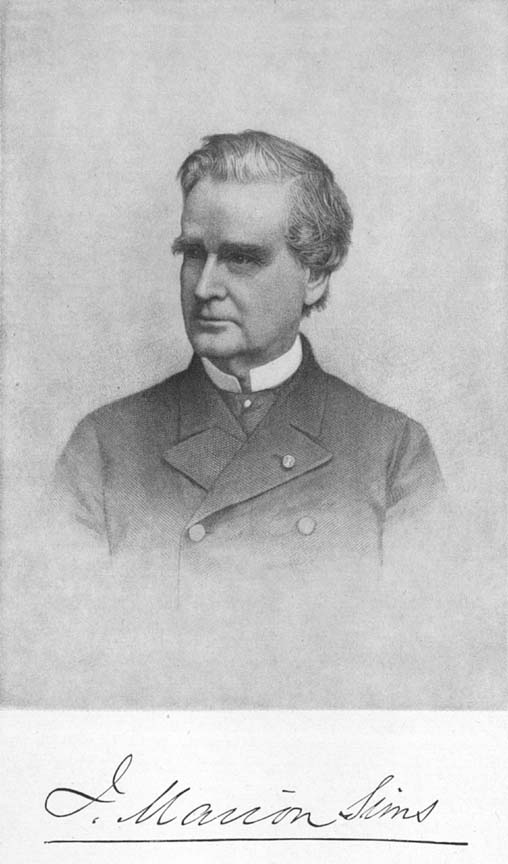
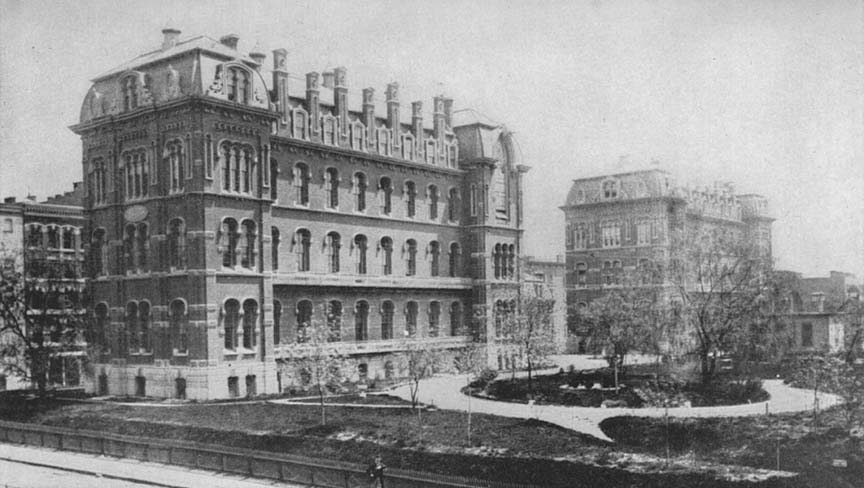
What was this new institution which Marion Sims had called into being? Physically it was a pleasant four-story Madison Avenue house, equipped with forty beds to accommodate women of all grades of society suffering from "diseases peculiar to females." Those were the days when some hospitals placed impecunious patients two in a bed, but apparently the Woman's Hospital never adopted this custom, even though the number of applicants soon exceeded the building's capacity. Most of the beds were occupied by patients unable to pay for care, but a few were reserved for the comparatively prosperous and for that hitherto neglected group, women of modest means who could not afford to pay large fees and yet would not accept charity.
As Sims himself put it a dozen years later: "We have always made tolerably good provision for the wretchedly poor. But never till the Woman's Hospital was organized had we any place where educated and cultivated women could go for relief when they had not the means to command it. No lady is degraded by entering the Woman's Hospital as a patient." Those who came to the hospital, he said, included "wives and daughters of clergymen, lawyers, doctors, merchants' clerks, merchants who have been unfortunate in business, college professors, teachers, druggists, artists, farmers, mechanics, and many others of respectability and culture. A young man on a salary has a poor, sick wife; his family physician says to him: 'Your wife's case is peculiar, delicate, and difficult, but it can be cured. I have not the facilities for performing the necessary operation, but if she goes to New York she might be cured in a short time.' 'But,' says the husband, 'I can't afford the expense of a boardinghouse or hotel and of a great city doctor.' The physician replies: 'Send her to the Woman's Hospital, and she will have the services of its medical officers without a cent's cost, paying only for board, according to your circumstances.'"
At first, naturally, until the hospital became widely known (as it did in a surprisingly short time), this hypothetical conversation between an out-of-town doctor and his patient's husband could not have taken place; but the principle which it embodied---the provision of care for all women, whether rich, poor, or in between---was there from the very beginning.
In its early days the hospital was distinctly on trial. Despite the generous endorsement given to Sims's project by many members of the medical profession, a considerable number of physicians continued to regard it as a quackish undertaking and its founder as something of a charlatan. (Commenting some years later on this prevalent attitude toward Sims, a writer in The Illustrated American observed: "Amongst medical people a quack is a man who does new things.") Although in France, Germany, and Great Britain a number of leading doctors had been concentrating for a decade or more on the study of women's diseases, many of their American contemporaries still were unconvinced that this was a sufficiently important field to require the establishment of a specialized hospital. With a few conspicuous exceptions, such as the great pioneer work in ovariotomy carried on first by Ephraim McDowell in Kentucky and later by the Atlee brothers in Pennsylvania, surgical gynecology hardly had been born; certainly there were few who would have predicted that half a century later one fourth of all surgical operations would be gynecologic in nature.
Marion Sims's task, therefore, was a threefold one. First, he had to bear the major responsibility for getting a new organization to function on a smooth and solvent basis. Second, he had to do endless pioneer work in the great unknown territory of gynecology: exploring paths and impasses, drawing maps, inventing tools. And third, he had to convince the doubting Thomases that the hospital was a worthy and essential enterprise.
In the first of these tasks---that of keeping the wheels going round day in and day out-he had at the outset the help of a strictly skeleton staff: one matron (Henri L. Stuart's widowed sister) to handle the domestic concerns, another matron to care for the patients' needs, and a single servant who doubled as nurse. The new hospital was precariously weak in its financial resources, and only by the Lady Managers' continual begging for contributions was it able to keep going at all. About two hundred people were persuaded to contribute in the course of the first year, but the great majority of them gave only five dollars or less; Mrs. William B. Astor's two-hundred-dollar gift was a rare exception.
More than once the young institution would have been forced to close its doors for actual lack of food or of money with which to buy provisions if it had not been for the amazingly devoted Mrs. Doremus, who, finding the larders chronically bare on her almost daily trips of inspection, would set out with her market basket morning after morning in search of food or funds to carry the patients and staff through just one more day---and then another and another. Thanks to her tireless efforts there was always something to eat, but often the margin of safety was too close for comfort.
Contributions to the new hospital were not limited exclusively to money and food. Among the charitably minded there were a number who, filled with concern and more than a shade of suspicion about the moral and religious status of the charity patients, felt that their greatest service was to donate Bibles, Testaments, tracts, and religious magazines. The hospital's management, while not unappreciative of these offerings, was perhaps still more grateful for the supplies of sorely needed medicines which several manufacturing druggists generously bestowed.
Even more essential than drugs, and harder to obtain in those days, were satisfactory dressings for surgical wounds. The rolls of gauze bandages so familiar today were unheard of. Indeed, the surgeon and his helpers were fortunate if they had an adequate supply of worn-out sheets and similar clean rags to use for their dressings, and doubly fortunate if these miscellaneous wrappings did not lead to infection in the operative site.
This question of infection after operations was causing not a little worry among surgeons everywhere. Large sections of the population lived in mortal terror of hospitals, and their terror is not too surprising in view of the fact that death was the fate of approximately two out of every five persons who underwent surgical operations. So genuine was this danger of death lurking in hospitals that there was even a word coined to describe it: "hospitalism." According to James Young Simpson, who was probably Great Britain's most famous surgeon of the period, "A man laid upon the operating table in one of our surgical hospitals is exposed to more chances of death than the English soldier on the field of Waterloo." The danger from operations existed at all times of year, but it was supposed to be particularly bad in summer, when "hospitalism" was at its worst as a result (according to general belief even in professional circles) of a certain poisonous miasma which lurked in the air during hot weather. It was for this reason that many hospitals were in the habit of closing for three months each year.
In the face of this general situation the record of the infant Woman's Hospital was really remarkable. Not only did it open its doors for the first time on the very brink of the heated season and stay open throughout the summer,(6) but it carried on its pioneer work without any of the fatalities which were the bane of other hospitals; not until it had been in existence for four years did it have a single death to mar its record.
It seems fair to assume that this exceptionally clean bill of health, so far in advance of its time, was due to something more than mere good luck. Those who watched Marion Sims operate (and their name was legion) carried away a lasting impression of a surgeon who, unlike most of his contemporaries, was meticulous almost to the point of fanaticism on the subject of operative cleanliness. The theory of the germ origin of disease had not yet been developed, and aseptic methods as such were still unheard of, but Sims's precautions had many points in common with a later generation's accepted technique of asepsis. Before and after operations he always washed his hands and his surgical instruments thoroughly in hot water and soap, and for his patients he required preoperative baths, with especially scrupulous scrubbing of the skin in the operative area. Today all this seems so elementary as to be hardly worth mentioning, but in 1855 a great many surgeons still were disposed to resent any stressing of ablutionary rites, which they characterized as ridiculous poppycock. At the risk of being considered a crank, however, Sims not only observed the skin-and-instrument-washing ritual, but also insisted that the surgical dressings he employed must be absolutely clean, refusing to follow the not uncommon practice of making repeated use of unwashed bandages. Even more determined than his stand for clean dressings was his continued avoidance of conventional silk ligatures for closing incisions and repairing injuries; convinced that silk threads served as foci of infection, he would use nothing but his beloved silver sutures.
One final aspect of Sims's campaign to purge surgery of defilement is perhaps open to some question on the grounds of historical accuracy. According to some observers' recollections he even wore a freshly laundered cotton gown while he was operating, but if this is true he certainly must have been considered a freak and a dangerous radical, for the black cloth frock coat was still as much the required badge of the surgeon's trade as the velvet robe had been in medieval days. An artist's portrait of Sims performing a vesicovaginal-fistula operation shows him attired in the time-honored frock coat with its long tails, but whether this picture presents him as he actually was or as the artist thought that dignity and tradition required is a question which must remain unsolved. Cotton gown or no, Sims's newfangled notions of surgical cleanliness paid notable dividends in the saving of patients' lives.
This emphasis on purity was not the only reason, however, for the Woman's Hospital's comparative freedom from the mortality which was the bane of contemporary surgery. Quite as important was the fact that in 1855 the general public and most medical practitioners as well still considered the surgeon's knife as something which should be resorted to only as a last desperate expedient. Operations seldom were performed unless it seemed fairly certain that the patient would die anyway; the man or woman who at last was consigned to the operating table would have been a poor life insurance risk even without the intervention of surgery and its attendant dangers. Under these circumstances it is not surprising that the percentage of deaths from operations was enormous.
At the Woman's Hospital this conception of surgery as nothing but a last-resort measure was radically revised. Insofar as gynecology was concerned, Marion Sims tended to look upon the knife not as the last weapon, but as the first. In espousing this viewpoint he sometimes brought himself into conflict with the distinguished members of his Consulting Medical Board, several of whom considered unduly reckless his suggestions for operating not only on cases of vesicovaginal fistula but also on divers other diseases and malformations of the female reproductive system into which his novel methods of examination had given him new insight. According to these advisors it was eminently proper for him to repair fistulas---that having been the primary purpose for which the hospital was founded; but when he sought their permission to turn his ingenious skills to the correction of other disorders they tended to demur, fearing that he might overstep the bounds of caution.
His most frequent critic among the members of the board was Dr. Alexander Stevens, whose natural conservatism was in instinctive conflict with Sims's advocacy of radical, revolutionary methods. Typical of their encounters was the one soon after the hospital's opening when Sims proposed operating on a young woman to remove an abdominal tumor. Dr. Stevens protested vigorously "in the name of humanity" against such a procedure, for if this operation were successful, he said, "every young doctor in the land would be opening the belly of every young woman to see if she had a fibrous growth." For many years Dr. Stevens had been chief surgeon to the New York Hospital, where, according to a contemporary, his one indispensable instrument was a stained and rusty-looking old bistoury which, after using, he cleansed with saliva and the patient's blanket and returned to his pocket in readiness for the next occasion. The disapproval of a man with so formidable a reputation as this was more than Sims could hope as yet to overcome, and the abdominal tumor was not removed.
Until comparatively recently, incidentally, Sims himself had been no less critical of abdominal tumor operations than the venerable Dr. Stevens. Only a few years before, when the Atlee brothers and the New Englander E. R. Peaslee had shocked the medical world by reviving and improving McDowell's almost forgotten technique of ovariotomy, Sims was (as he himself later wrote) "among the great herd that could scarcely find terms strong enough to condemn what were then characterized as acts of butchery and murder." Since that time, however, with his growing comprehension of the pathology involved, he had changed his viewpoint completely, and now he frankly admitted that his earlier attitude on ovarian removal had been wrong. Such willingness to acknowledge his own errors was a happy trait which, unfortunately, was not always characteristic either of Sims or of those who disagreed with him, as the hospital's disrupting frictions in later years were abundantly to show.
For the present, however, conflicts of opinion were neither common enough nor fundamental enough to be very serious. The Medical Consulting Board, quite as much as the Lady Managers and the attending surgeon himself, was primarily anxious to see the new hospital succeed, and its members shared in the common delight at each fresh indication that their experimental institution was gradually overcoming opposition and beginning to make a name for itself. So quickly did news spread of the surgical marvels performed there that long before the first year was out it was a common occurrence for the operating room to be filled with eager medical students and visiting physicians. Some of these observers came from other states or from upstate New York, while others were connected with those same old-established hospitals and medical colleges in New York City which had been inclined to view the outlander Sims as something of a quack. Just how much the visitors were able to learn from watching the operations would be hard to say, for Sims worked with such rapidity and dexterity that the untrained eye was quite unable to keep up with him. Whether or not they understood all he did, however, they carried away with them a vivid conviction that for any woman whose ills they themselves were unable to cure the one sure haven was the Woman's Hospital. As a result of this conviction the hospital soon was being asked to accommodate patients from all over the country---patients suffering not only from vesicovaginal fistula but also from a score of other female ills.
This matter of patients was, in fact, a constant surprise to those skeptics who had insisted that there were not enough women affected with diseases "peculiar to females" to justify the founding of a special institution. For a very short period after the opening it appeared as if their prognostications might be correct. By the end of the first month only half of the forty beds were occupied; but before the year was out the scope of the work had expanded to such an extent that applicants were having to be rejected constantly, and already it was obvious that the house at 83 Madison Avenue was not nearly big enough to satisfy existing needs. Within its first year the hospital was able to care for less than a hundred resident patients in all; that the number was so small was due to the fact that the stays of many of the women (particularly those with fistulas, who made up nearly half of the total) were extremely lengthy. Most of these early patients were indigent Irish immigrants who had been enfeebled for so long by disease, neglect, and inadequate nourishment that the hospital had to do an extensive job of feeding them and building up their constitutions before any operations could be performed with safety. Added to this preoperative liability was the fact that many of the women suffered from such very advanced and complicated fistulas that they could not be cured by a single operation, but had to receive surgical treatment over and over again. Hence the Woman's Hospital became almost their permanent address.
The most durable of all these perennial inmates was an Irishwoman named Mary Smith, who entered the new institution less than a week after its opening. Like many of her fellow patients, she had received extended treatment for her long-standing vesicovaginal fistula in the almshouses and hospitals of the British Isles; but these treatments had served only to aggravate her difficulties. The last physician to care for her before she left Ireland had attempted to solve her problems by introducing into the vagina a wooden ball. His theory apparently had been that the edges of the fistula would adhere to the ball, which then would automatically close the opening and put an end to all leakage. This theory proved to be spectacularly wrong, for not only did the horrible dribble continue unabated, but the wooden ball became deeply encrusted with a phosphatic deposit, so that it was the source of as much trouble as the fistula itself. Due to its effects Mary Smith was in such extremely bad condition when she entered the Woman's Hospital in May of 1855 that she could not be operated on until seven months later; and her first operation was only the beginning of a long series---thirty in all---extending over a period of nearly three years. Actually she never was permanently cured, although in time she became well enough to do light work around the hospital and to serve, after a fashion, as a nurse. (This was before the day of trained nurses.)
Mary Smith's particular nuisance value gave her a more lasting fame than that of any of her contemporaries, for one of the reasons why she never fully recovered was that she usually interrupted her convalescence by going out and getting roaring drunk. There were a number of others too, however (most of them, like Mary Smith, charity patients), who had to be operated on over and over again because of the fistula's exasperating genius for reproducing itself after an apparent cure. It is true that these discouraging cases were only a small percentage of the whole, for during the hospital's first year twenty-one other fistula victims were discharged as completely cured, but their protracted tenancy had much to do with the young institution's perilous financial status. Within that initial year the entire income from patients' board (paid, obviously, by very few) was only $288.18, while expenses were over $6,000. Even with donations from the city and from private subscribers there was a persistent gap between income and outgo, and it is small wonder that Mrs. Doremus had to spend so much of her time and energy in begging.
Meanwhile the list of women who were eager to be admitted kept growing longer and longer, being subject to constant enlargement not only through the cases referred by other physicians in New York and elsewhere but also by reason of the provision in the hospital's constitution that every annual subscription of three dollars or more entitled its donor to recommend one patient for treatment. Before the year 1855 was over it was obvious to everyone connected with the institution that this growing influx was more than one lone surgeon possibly could handle without trained help, and Sims was authorized by the Board of Lady Managers to choose an assistant surgeon. The choice he made, in the most casual manner imaginable, had a powerful influence on the Woman's Hospital's history for nearly fifty years.
In later years, when for a time the relations between Marion Sims and Thomas Addis Emmet were far from cordial, Sims said that in choosing his assistant he had been motivated by two considerations: Emmet was a member of a good family, and he just had married a beautiful young lady from Alabama whom Sims had known ever since her childhood. A review of the circumstances, however, indicates that probably this statement was colored somewhat by pique, and that actually he had far more valid reasons than this for selecting the man who was to share with him the responsibility for building the Woman's Hospital into a great institution.
It may be recalled that Sims's first meeting with Emmet had occurred in the autumn of 1853, when during his early rather desperate months in New York he had received an impromptu call from the younger man and a mutual friend from Alabama. Though he had been attracted then by the young Virginian, his struggle against illness and his intense preoccupation with other affairs had prevented him from pursuing the acquaintance, and for a year and a half after their initial encounter the two Southerners had had practically no contacts. During that period Emmet not only had formed the matrimonial alliance which so increased his stature in Sims's eyes but also, through a political upheaval, had had the misfortune to lose his place as visiting physician to the Emigrants' Refuge Hospital on Ward's Island, where he had been responsible for the medical care of thousands of frightened immigrant victims of cholera, typhus, and other epidemic diseases.
Not long after this upset in his professional arrangements Emmet was sitting in the office of his Fourth Avenue home late one snowy March evening, working on a study of the causes of the various cases of disease he had handled on Ward's Island. Suddenly he was startled by a loud rapping on his window. Going to the door, he found on the step Dr. Marion Sims, who explained that his reason for coming to call at such an unconventional hour was that the horsecar on which he had been a passenger had run on the snow-covered tracks directly in front of Emmet's house, and that while it was stalled he was seeking refuge from its frigid interior.
As the visitor warmed himself he inquired about his host's work; and Emmet, spurred on by the older man's flattering interest, found himself giving a graphic and detailed description of his experiences with the immigrants and also of the etiologic study he now was making. At the conclusion of his recital Sims exclaimed enthusiastically: "Why, I believe you are just the man I have been looking for!" He went on to speak about the imminent opening of the Woman's Hospital (of which, of course, Emmet had heard), and explained that although as yet he had no power to appoint an assistant surgeon he was hopeful that before long this situation would change, in which case he would like Emmet to work with him.
Like most other young men, Emmet was enchanted by the Alabamian's genial interest in him and his problems, and when the Woman's Hospital opened in May of 1855 he lost no time in accepting Sims's invitation to witness a vesicovaginal-fistula operation, and then another and another. Five or six months later, when authorization to name an assistant surgeon finally was received, lie was the logical choice. It is not unlikely that his appointment may have been somewhat distasteful to Sims's unofficial but devoted promoter, Henri L. Stuart, for Stuart was an enthusiastic member of the "Know-Nothing" Party and shared that organization's intense dislike for Roman Catholics, while Emmet was an ardent Catholic convert who more than once expressed his scorn for the Know-Nothings. Religious prejudice, however, played no part in the pioneer work which needed doing at the hospital; and, whatever aspersions Sims may have cast upon Emmet during his later period of anger, there can be no doubt that his choice of an assistant was an exceptionally fortunate one. For the fact was that Sims, with his mercurial genius and impatience of restraint, was temperamentally not too well fitted for performing the routine daily duties of the institution which his creative imagination had brought into being. In Emmet he found the perfect foil. Their relationship, according to the eminent gynecologist and medical biographer Howard Kelly, who knew them both, was the mating of the tortoise and the hare.
Emmet, lacking Sims's restless brilliance, possessed a patient, analytical persistence which was indispensable to the hospital's orderly functioning from day to day. At first his particular duties were merely to assist at operations, to relieve Sims of minor administrative responsibilities, and to keep meticulous histories of all the cases. (Before his coming the records had been distinctly sketchy.) But as time went on he began to handle more and more of the surgeon's work, including caring for outpatients in the clinic and even performing operations with a scrupulous, skillful adaptation of the technique he had learned from his mentor.
Of no mean importance in aiding Emmet to take on so soon a significant share of the surgeon's functions was the inspired assistance of a remarkable nurse, Margaret Brennan. Margaret, an Irishwoman in her late twenties, had come to the hospital at its opening as a combination chambermaid and nurse. Handicapped though she was by complete illiteracy, she showed such an aptitude for assisting the surgeon and caring for the patients that as soon as the employment of another chambermaid became financially possible she was allowed to devote herself exclusively to nursing. Her faculties of observation and memory---compensating for her illiteracy---were more than normally acute, and no detail of Dr. Sims's operative technique escaped her sharply watchful eye. When young Dr. Emmet came along, with his illustrious Irish ancestry and his burning devotion to the cause of Irish freedom, she immediately became his devoted slave, eager to do everything she possibly could to help him perform Dr. Sims's marvelous operations as brilliantly as Dr. Sims himself. Thus began a curiously close doctor-nurse alliance which lasted for nearly forty years, long after the stormy dissolution of Sims's own association with the hospital he had founded.
The reason why Sims had to turn over so much of his work to Emmet was that a large proportion of his own time now was taken up by conferences, lobbying, wire-pulling, and similar activities connected with the hospital's urgent need for expansion and increased public support. So much interest had the young institution stirred up in its few months of existence that obviously it could not remain long in its present modest establishment; but if it was to have a healthy growth many necessary factors were involved: wider sponsorship, a state charter, financial aid from both city and state, and a grant of land on which to construct a new building.
Discussion of these ambitious projects was ostensibly the purpose of the hospital's first anniversary meeting, held at Clinton Hall on Astor Place on February 9, 1856, just a year after that pioneering group of sheltered but public-spirited ladies composing the Board of Lady Managers had met with Dr. Sims in Mrs. Codwise's parlor to establish The Woman's Hospital Association. Actually, however, the meeting was less a planning session than a love feast, thereby setting the pattern for a long series of such annual mutual admiration parties extending down through the years to the unhappy day in 1874 when Marion Sims's outraged temper transformed the love feast into a tense council of war and abdication. In 1856, however, the idea that Sims ever might abdicate was inconceivable; he was the hospital, and a major portion of that amicable first anniversary session was taken up with flowery speeches praising him and eulogizing his contributions to the cause of suffering womanhood.
"The capacious room," according to the official report of the meeting, "was crowded with a brilliant audience composed of ladies and gentlemen of the highest standing." In the chair (and in his element) was Dr. Francis, president of the Medical Board, while also on the platform were Drs. Mott, Stevens, Delafield, Green, and Sims, together with Peter Cooper, E. C. Benedict, Mr. (not Mrs.) T. C. Doremus, four ministers of the gospel, and various others---all men. The women had created the hospital, but the men occupied the seats of glory, and the men were about to take over.
On the surface, to be sure, the women did not lose control of their institution. Through the events set in motion at that meeting they simply were nudged gently into the background now that their baby had outgrown the nursery. Perhaps the nudging was of their own volition; perhaps, in their inexperience and their sheltered tradition, they were terrified by all the big problems which now began to confront them and were only too happy to entrust the handling of such problems to their lords and masters. Certainly the resolutions introduced at the first anniversary meeting---resolutions calling for presentation to state and city authorities of the hospital's claims for financial aid---were matters strictly in the male realm; such political and monetary activities were definitely out of the sphere of fair women of the '50's.
As a matter of fact they were rather out of Marion Sims's sphere, too, but that did not deter him from plunging into them with zest. Long before he had dreamed of being a doctor he had wanted to be a business man, and now he found great delight in the opportunity which the hospital's expansion program gave him to mingle with lawyers and politicians and men of affairs and to see the wheels go around in their complex worlds. In a vastly exhilarated mood he devoted a good part of the next year or so to running back and forth between New York and Albany, conferring endlessly on plans and strategy with a wide array of key figures who controlled the affairs of city and state.
With so many irons in the fire he tended to neglect both his private practice and the actual day-to-day functioning of the hospital, leaving all these matters in the care of Emmet, who by now seemed to him almost like his own son or younger brother. For the twenty-eight-year-old Emmet, who until his association with Sims had had no particular training in surgical gynecology, this afforded a remarkable opportunity to enter with exceptional speed the inner circle of a new specialty which soon was to become one of the most popular and lucrative in the whole field of medicine.
His own appreciation of his good luck was somewhat blurred, however, by his resentful feeling that Sims was not carrying his fair share of work at the hospital---that he was, in fact, abandoning the bird in hand in order to pursue the one in the bush. In Emmet's opinion the hospital was large enough as it stood; Sims would be doing far better, he thought, to concentrate on making it a little model of its kind rather than to fritter away his energies on trying to create something larger.
This cautious point of view was quite alien to Sims's expansive temperament. He was convinced that the building up of the Woman's Hospital was his one great mission in life---a mission vast enough to embrace all his other auxiliary missions in behalf of what he and his contemporaries habitually called "suffering womanhood." Any temporary loss of his services which the hospital might be undergoing at present by reason of his outside activities would be more than compensated for, he was sure, by the great future gains which these activities would make possible. What he envisioned was a state-chartered and state-supported institution of at least 500 beds, with room for further expansion.
In working toward this goal he had the support of two handpicked committees (appointed at the anniversary meeting) made up of influential men who were wise in the ways of state and city politics.
The most active of these committee members was E. C. Benedict, the lawyer whose identification with the nascent hospital movement had begun in 1854. As a power in city politics and a former member of the State Assembly and Senate he knew all the proper moves to make. Benedict was abetted by an array of public figures whose names were ones to conjure with-men like Henry J. Raymond of the Times, now Lieutenant Governor of the state;
Benjamin F. Butler, who had been Martin Van Buren's law partner and Andrew Jackson's Attorney General; Luther Bradish, who had served both as Speaker of the Assembly and as Lieutenant Governor; and James Beckman, a wealthy State Senator who developed such a keen interest in the hospital that for many years, as president of its Board of Governors, he gave to it almost as liberally of his time and interest as did Mrs. Doremus herself.
Even with such a concentration of talent there were of necessity several years of maneuvering and delay before Sims's ambitious program could be put through in its entirety. In 1856, when the institution was barely a year old, a bill to make it an agency of the state was introduced in the Legislature. This passed the Senate, but for want of time and lobbying was lost in the Assembly. Among the other bills which failed to pass at this session there happened to be one providing for the disposal of a huge unused State Arsenal building which occupied the space from Fifth to Sixth Avenues and from Sixty-third to Sixty-fifth Streets in the city's newly established Central Park. This conjunction of events gave the hospital's supporters what seemed to be an excellent idea, and when the Legislature's next session rolled around they were ready with a bill proposing that the unwanted arsenal be transformed into a building suitable for the purpose of the Woman's Hospital, thereby saving a large sum in construction costs and providing the hospital with a quiet and desirable location. This proposal received impressive backing from the medical profession, which presented to the Legislature a "Memorial" beseeching that "Honorable Body to lend a fostering care to this little hospital," this plea being endorsed by the State Medical Association and signed by the faculties of all the city's medical colleges, the staffs of all its hospitals and dispensaries, and practically all of its leading physicians. (Among the hundreds of signatories, incidentally, were two of particular significance: Dr. Gurdon Buck, the eminent surgeon of the New York Hospital who a year or so before had vigorously opposed the new hospital's founding; and Dr. E. R. Peaslee, the scholarly authority on ovarian tumors who just had moved to New York from his native New England and who was destined in later years to come into frequent sharp conflict with Marion Sims's gynecologic theories and practices.)
The profession's virtual unanimity in supporting the Woman's Hospital's expansion program reveals two things: first, that Marion Sims's memory was playing him tricks when in his fragmentary autobiography, written in his old age, he repeatedly insisted that New York's physicians and hospital men were unrelentingly hostile to the institution he had founded; and, second, that the doctors as a group were very much aware of the special problems presented by women's ills. "Women," they wrote in their memorial to the Legislature, "are subject to diseases peculiar to the sex. The Virgin may suffer from a large catalogue of the most painful maladies. The Wife may be worn down with untold miseries, growing out of the marital relation. The Mother, in giving birth to her offspring, often suffers such horrible lacerations and injuries as to render life unbearable. Old Age, as well as Maturity, has its thousand female sufferings calling for sympathy and aid; while cancerous and malignant diseases require special investigation."
The last statement in this melancholy catalogue is of especial interest in view of the fact that some years later one of the irreconcilable bones of contention between Marion Sims and the Lady Managers was Sims's desire to operate on cases of cancer and malignant disease which in the Lady Managers' opinion should be strictly excluded from the hospital. Also worthy of note---anticipating as it does by many years the latter-day doctrine of psychosomatic medicine---is the physicians' specific recognition of the close interrelation of physical and mental ills. "These diseases," according to their memorial, "when left alone go from bad to worse till they completely shatter the nervous system, embitter existence, poison the sources of domestic happiness, lay the foundation for hereditary disease, and in many instances upset the intellect, driving their unfortunate victims to the madhouse. . . Statistics of our insane asylums show that from twenty-five to forty per cent of all cases of insanity in women arise directly from organic female disease which, in most cases, might be remedied by appropriate and timely treatment."
The complete inadequacy of existing facilities to stem this vast tide of physical-into-mental female ills was stressed by these men of medicine, who apparently were anxious to have the responsibility for such cases taken off their hands. "Five thousand poor women in the City of New York alone," they stated, "annually knock at the doors of our dispensaries. . . Our dispensary physicians see cases of female disease daily which cannot be properly treated because there is no suitable hospital for them . . . . Can the State turn a deaf ear to the moanings of the mothers and daughters of our land? God forbid!"
Despite its array of impressive signatures and statistics and its appeal to the Legislature's better nature this petition from the medical profession failed to achieve its primary purpose, for the plan to transform the arsenal into a hospital was defeated by the general feeling that it would be a mistake to allow the new Central Park to be cluttered up with miscellaneous buildings. The Legislature, however, with sufficient nudging from Benedict, Beckman, Francis, Sims, and all their attending galaxy of stars, was sufficiently impressed by the worthiness of the Woman's Hospital's cause to give serious consideration to several separate bills affecting the institution's future.
The first of these, providing for a state appropriation of $10,000 a year toward the hospital's support, was speeded on its way to passage by an unusual and remarkably effective bit of lobbying. This came in the form of an impassioned appeal to "the grave and reverend seigneurs" (as Sims called them) of the Senate and Assembly by a woman who had good reason to know whereof she spoke. She was Mrs. Caroline M. Thompson of Massachusetts, a well-to-do "lady" (as differentiated, in those days of delicate distinctions, from the "women" who made up the bulk of the hospital's patients) who for many years after the birth of her child had suffered miserably from vesicovaginal fistula. Her father, husband, and sister had done all they could for her relief, employing skillful surgeons and eminent physicians, but all to no avail. At last, after living almost as an exile for sixteen years, she had heard of the newly opened Woman's Hospital and had gone there to be operated on by Sims and to be restored with almost magic speed to normal life. Her gratitude for her sudden release from extended bondage knew no bounds; consequently when she heard of the hospital's campaign to obtain funds from the Legislature she volunteered to appear in person before the Assembly's Committee on Ways and Means. There she made a deep impression by her heartfelt plea, in the course of which she told something of her own long years of misery and of the kindred disabilities of other women who might be restored to health as miraculously as she herself had been if only the Woman's Hospital could obtain the necessary funds to expand its work. She assured the legislators that if they would grant these funds "for the remainder of your days you will look back upon this deed with pride; you will build for yourselves a monument in the hearts of women more durable than granite." To clinch her argument by a technique seldom known to fail, she concluded her testimony by laying "at the feet of your manly nature . . . the womanly hearts of my sex . . . . In woman's weakness lies her truest strength."
However wily Mrs. Thompson's florid appeal to masculine vanity through the time-honored "strong-man weak-woman" method may have been, there could be no doubt of her deep sincerity; and her vivid performance played an important part in winning approval of State aid for the hospital not only from the Committee on Ways and Means but also from the Legislature as a whole. (When the bill came before the latter body for action each member duly received a printed copy of the lady's moving testimony.)
Close on the heels of financial aid came the granting (in April, 1857) of a charter incorporating a new state institution to be known as "The Woman's Hospital in the State of New York." This peculiar nomenclature was due to the fact that when the act was being prepared for printing a copyist carelessly changed the phrase "of the State" to read "in the State." Clerical error or no, it was official, and therefore the law; and not for twenty years did the Legislature get around to changing the faulty pronoun and relieving the institution of its awkward title.
In this Act of Incorporation there appeared for the first time a definite statement of the new Hydra-headed leadership which now was supplanting the Board of Lady Managers in the hospital's administration. The Lady Managers remained, to be sure, but superimposed (although the new constitution never explicitly said it was above them) was a male Board of Governors. The Consulting Medical Board, carrying on without alteration, completed the trinity of divided authority which in time was to be the cause of many conflicts and hurt feelings. Under the new arrangement the only specific prerogatives retained by the Lady Managers (now rechristened Lady Supervisors, but called by both titles in later years) were the appointment of female employees, the handling of the institution's domestic concerns, and the supervision of its "moral and domestic management." All other functions, including final jurisdiction over the Medical Board, went to the men.
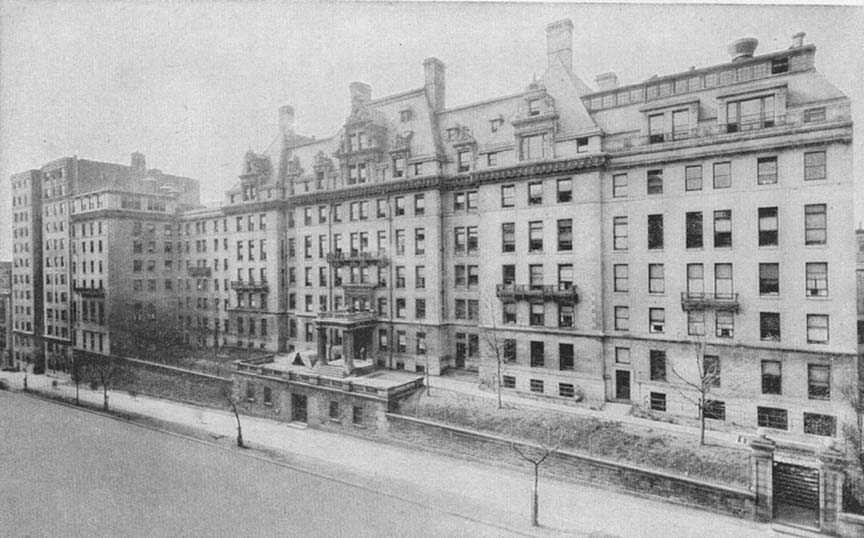
This newly created Board of Governors glittered with famous names. In addition to Peter Cooper, H. J. Raymond, E. C. Benedict, Benjamin Butler, and Dr. Francis, all of whom already had played some part in the hospital's early history, there were a score of such outstanding financiers, merchants, lawyers, and philanthropists as John Jacob Astor, Robert B. Minturn, E. D. Morgan, Theodore Sedgwick, John David Wolfe, and John C. Green. A few of these men found time in their busy lives to take an active interest in the institution's affairs, but the majority did little beyond lending the use of their names. In the eyes of the crusade's prime mover, however, this was service enough; Sims well knew just how useful those weighty names would be in obtaining further public and private financial aid and in winning support for the various other moves which must be made before his vision of a greater hospital could become a reality.
The chief of these moves was the securing of land on which a new building might be erected. With the Central Park site ruled out, the most promising possibility now seemed to be the block at Fiftieth Street and Fourth Avenue formerly used by the city as its Potter's Field, or paupers' burial ground. Because of the intricate legal technicalities governing disposition of the city's public lands it was necessary to carry on a time-consuming series of complicated maneuvers in order to acquire this macabre site, tenanted as it was by nearly 50,000 corpses. The State Legislature had a finger in the pie, and so did the Mayor, the Common Council, and the Board of Aldermen, while Sims, Benedict, Beckman, and others were kept busy operating behind the scenes to pull necessary wires. Not until the very end of 1858, nearly three years after the campaign for expansion had begun, did the Mayor sign the bill granting this land, thus opening the way for what promised to be a new and greater era both for the Woman's Hospital and for its surgeon founder, Marion Sims.
During all this period of Sims's quasi-political activity his work at the Woman's Hospital, which originally had been conceived as a place principally for the cure of vesicovaginal fistula, had been growing continually wider in its scope. According to the terms of its incorporation by the State the hospital had as its function not only the "relief of suffering humanity" but also "the extension of this relief to the widest possible degree by . . . practical instruction of the medical profession." This meant specifically that physicians and medical students were invited to visit the institution, observe carefully the novel operations performed there, and carry the fruits of their observation back to their own spheres of influence.
The 500 or more visitors who annually took advantage of this opportunity to learn something about the infant specialty of gynecology probably were unaware that the rapid, dextrous, self-assured operator who was teaching them was almost simultaneously teaching himself. Sims, as a matter of fact, was feeling his way in a field so new that no precedents existed. Nothing interested him more than to be confronted by a condition which he had not treated previously and to have to set about devising a satisfactory method of handling it. Devising new methods meant, of course, inventing new instruments as well, and these challenges to his ingenuity seldom found him unprepared. So fertile, indeed, were his resources that he could not resist making constant variations in his procedure, trying first one technique and then another for cases where all the indications were similar. From his own point of view this was highly enlightening; but for Emmet, his assistant, who was trying to keep exact records and to formulate definite rules, it tended at times to be rather disconcerting, for Sims operated so rapidly and allowed his restless genius to veer so abruptly from one new concept to another that often those who observed him were more likely to be dazzled than to be instructed.
By now, having perfected his instruments and technique for the vesicovaginal-fistula operation and having performed it successfully over and over again, he was beginning to find it of less interest than other conditions which presented a greater challenge to his ingenuity. Consequently the fistula repairs became more and more the responsibility of Emmet, while Sims, in such time as he could spare for surgery from his lobbying and organizing activities, devoted himself principally to an attempt to relieve the numerous other "diseases peculiar to females" which now were appearing on the hospital's rolls in ever-increasing proportions. He was finding that his fundamental contributions to the new science of gynecology---the speculum and the "Sims position"(7)---were invaluable in determining the causes of many of the ills which had baffled doctors for centuries. Supplementing these assets were his uncannily developed sense of touch and his talent for inventing new instruments to fit every occasion. Some of these instruments, like his uterine elevator and his ingenious sponge tents for the removal of polyps, were so effective and easy to use that soon they became the standard equipment of many of his contemporaries; but others, while generally successful in his hands, were inclined to be dangerous when employed by others less skilled. Time and again he devised a new instrument, used it for a while, and then discarded it when experience revealed its tendency to cause accidents. He had no particular regret about consigning one of these untrustworthy inventions to oblivion because his imagination already was filled with a picture of some new device which was to replace it.
All this abundance of crowding ideas was not without its defects, for it meant that he was so torn between a variety of competing claims that never again was he able to employ the long-drawn-out patience and pertinacity which a decade before had enabled him to solve the problem of vesicovaginal fistula. With so many challenging conceptions passing continually through his mind he found it impossible to tie himself down to the laborious maturing and completing of any one of them. Emmet, painstaking and methodical, felt that by spreading himself thin in this way Sims was failing to make as solid and lasting a contribution to surgical gynecology as he might have done; but his opinion was at variance with that of other observers who believed that by opening up so many new vistas and inspiring others to explore them Sims was accomplishing far more than he could have done by confining himself to the slow, meticulous, step-by-step development of one or two techniques.
Difficult though it may have been to formulate any exact rules of procedure on the basis of Sims's brilliant but mercurial performances, there can be no doubt that during this period he was achieving some remarkable results and giving the little Woman's Hospital a unique reputation which was beginning to be not only national but international. All the age-old and commonly unmentionable ills of women---ovarian tumors, displacement of the uterus, menstrual disorders, sterility, and many others---were brought to him by physicians and patients convinced by his growing reputation that here at last was someone capable of accomplishing the miracles which they had despaired of ever seeing.
In the great majority of cases he did not disappoint them. Sometimes, of course, he was fallible, as on the occasion when he told a patient that her ovarian tumor was inoperable and advised her to "prepare for death like a good Christian woman," only to have her prove his prophecy wrong by returning to him several years later still so much alive as to convince him at last of the wisdom of performing an operation, which turned out to be completely successful. This mistaken timidity about operating was a rare exception, however, for Sims's fallibility was far more likely to take the opposite form: willingness to attempt apparently hopeless operations which no one else would dare to consider. He had nothing but scorn for certain surgeons whose fear of marring their reputations for success caused them to refuse any cases where the patient's death seemed likely; he himself went to the other extreme by consistently staking his skill against formidable hazards. "To save life where death is imminent," he felt, "we are justified in assuming great responsibilities and even in taking great risks." As a result of this attitude he acquired among conservatives a reputation for recklessness which probably he did not deserve; for actually, despite his willingness to undertake desperate ventures which others avoided, he had only a handful of fatalities among all the hundreds of operations he performed, and practically all of these were in cases of cancer or tumor which still would be likely to have fatal terminations.
Not always, to be sure, did he resort to surgery, for he had more than one string to his bow. Nearly as important as his surgical virtuosity was his remarkable manipulative skill. Occasionally he found that a woman's troubles were caused by malposition of the uterus; and sometimes he was able to correct this fault by manipulation alone. That this was no easy task other physicians learned when they attempted to emulate him; many of the adjustments he performed required not only exceptional delicacy and skill but also infinite patience, as in the case of the patient who came to the hospital with a dual disability: a completely retroverted uterus and a uterine fibroid tumor. This condition not only had kept her childless, greatly to her sorrow, but had completely prostrated her in bed for two years. In all this time her own physician never had been able to diagnose her complaint, but when Sims examined her his acute sense of touch immediately told him what was wrong. A mechanical support, he knew, would give her some relief from her pain, but the uterus had been radically displaced for so long that such a support could not possibly be introduced immediately. Every day for more than a week, therefore, he patiently elevated the organ manually by gradual stages until finally it became sufficiently tolerant of manipulation to permit the use of an intravaginal support. Then came the tedious trial-and-error process of designing a support which would be precisely right for this exacting case. Next came the necessity of accustoming the patient to the wearing of the support---first for only an hour or so at a stretch, then a bit longer, and finally all the time except when the instrument was removed for cleaning. With the support keeping the uterus in its rightful position the woman soon had regained her strength sufficiently to permit Sims to operate for removal of the tumor, and not long after that she was able to return to her home in normal health.
That, of course, was not the end of the story; it was only the beginning. The denouement was the same as it was in a vast number of Sims's cases: within a few months after her return home the hitherto sterile lady became pregnant, and in due time she gave birth to a child without undue difficulty.
This is the recurring theme, the leitmotif, of a very large proportion of Sims's practice: the relieving of sterility. Constantly he was being besieged by unhappy women whose one dominant desire was to have offspring even at the cost of major operations and all kinds of personal discomfort. In the attempt to achieve their goal they suffered hemorrhages, miscarriages, infection, prostration, and all manner of ills, but always they bobbed up again after their setbacks, doggedly eager for conception and safe delivery. Both they and their husbands considered a childless marriage a major tragedy. One woman from the South remained in New York under Sims's care from 1857 to 1860; her husband, neglecting his business, stayed with her most of the time. During this three-year period she underwent:
| 1. | An operation to enlarge the mouth and neck of the uterus |
| 2. | The fitting of a pessary ring |
| 3. | Conception |
| 4. | A fall, producing a miscarriage |
| 5. | Another conception |
| 6. | Another fall and miscarriage |
| 7. | A severe hemorrhage |
| 8. | Serious inflammation of the uterus, accompanied by prostration |
| 9. | A period of recuperation at Saratoga Springs to put her in shape to start all over again |
| 10. | Another operation on the mouth and neck of the uterus, which as a result of the inflammatory attack were as hard and contracted as they had been in the first place |
| 11. | The fitting of a new pessary |
| 12. | Another conception |
| 13. | Careful watching by Sims and his assistants for the entire period of gestation |
| 14. | At last! Safe delivery of a son |
| 15. | Six weeks' further restriction to a horizontal position in the hope that this might train the uterus to remain permanently, in its proper place without instrumental aid. |
Proof of the lasting effectiveness of these cumulated measures came as an epilogue thirteen months after the patient had returned to the South, when, without operation or use of a pessary, she again became a mother---this time of twins!
Case histories of this sort, Sims reported later, "show that it is possible even in very difficult cases to understand the obstacles to conception and to remove them by persistent continued effort if our patient has sufficient fortitude and endurance." Splitting the mouth and neck of a contracted uterus, as he had done twice for the Southern lady, became a common practice for him, even though this subjected him to sharp criticism from some of his contemporaries, who protested that such "meddlesome surgery" was fraught with great danger. In its stead they advocated mechanical dilation of the uterine neck with bougies, but Sims found this practice highly unsatisfactory. One patient who had tried the bougie method for many months under another doctor's care told Sims that she had suffered far more each time the bougie was used than she did from his entire operation. (By now he was using ether anesthesia as an accompaniment to his surgery.) In Sims's opinion the operative procedure was actually far safer than dilation, provided that proper precautions were taken to prevent hemorrhage, which had caused him close calls once or twice when first he employed the method. In all the several score such operations he performed between 1856 and 1860 he had only one fatality (from peritonitis), so, despite critical comment, he continued to use this disputed technique, finding that frequently it not only cured sterility but also brought complete relief to patients suffering from painful menstruation.
Concerning this subject of dysmenorrhea he was at variance with many of his professional colleagues who insisted that menstruation might be consistently painful without any mechanical reasons; Sims's experience, on the contrary, convinced him that the pain was almost invariably a symptom of some growth or structural defect which usually could be corrected. Typical of his attitude on this was his explosive comment concerning the experiences of a wealthy woman who in the course of a dozen years of excruciating menstrual agony had received all manner of painful, expensive, and unavailing prescriptions from a wide assortment of American and European physicians. Finally she had come to Sims, and after he had relieved her completely of her periodic sufferings by means of a simple operation for removal of a uterine polyp he summed up thus his feelings about the medical mistreatment she had encountered: "The leeching, the physicking, the blistering, the anodynes, the baths, the mountain excursions, the sea bathing and sea voyages that this poor patient suffered and endured for years are almost incredible! . . . How often do we hear even medical men say, 'If she could only have a child it would cure her.' To this I always feel inclined to reply, 'If we could only cure her she would have a child . . . .' To treat dysmenorrhea successfully is to treat many, but by no means all, cases of sterility successfully."
Since dysmenorrhea accounted for "by no means all cases of sterility" he had to identify other causes and develop other means of correcting them. First and most obvious of all as a bar to conception was the unfortunate condition for which he coined the name "vaginismus"---the extreme and abnormal vaginal sensitivity which made it impossible for a wife to endure marital relations. A dozen times a year he would find himself confronted with cases like this. Some of the patients thus troubled were newlyweds, but many were women who had been married for periods even as long as twenty-five years, during which time. their disability, never resolved, naturally had been the cause of much unhappiness and nervous suffering both to themselves and to their husbands. In some instances divorce was threatened or potential grandparents were becoming impatient; in others the trouble had brought on serious neuroses and had made the women complete invalids. At first Sims was frankly stumped by this delicate problem of hyperesthesia, but after some study and experiment he perfected a fairly simple operation which cured the condition so completely that the formerly nerve-wracked patients were able to perform their wifely duties with ease and to bear the children that were expected of them.
Another frequently recurring type of patient was the one who repeatedly conceived and just as repeatedly suffered violent miscarriages. Sims determined that such miscarriages sometimes were caused by retroversion of the uterus, and he found that in such cases he could enable women thus afflicted to complete their pregnancies safely by fitting them with pessaries to correct the uterine position.
The whole matter of pessaries or mechanical supports was a perennial problem to him. On principle he disliked them, preferring if possible to correct by manipulation or surgery the faulty conditions involved. Such corrections were not always possible, however, so he found himself forced to accept pessaries as necessary evils and to use them constantly in his practice, but he was most insistent that they be meticulously fitted to individual requirements, for he had seen many cases where ill-fitted supports had caused serious damage. Vaginas, he maintained, "are as different from each other as are our faces and our noses," and he felt that the physician who expected a single model to fit diverse patients was as guilty of incompetence as a shoemaker who expected one shoe to fit every foot. He himself, with all his mechanical skill, often found it necessary to spend some time every day for several weeks in adjusting and remodeling a pessary so that it would exactly fit a patient's needs and would not become---as so many did---a source of discomfort, irritation, or infection. (Not until some years later, when he was living in France, did he devise his porte-pessaire, a pessary which a patient herself might insert and remove safely without a physician's aid.)
His experiences with one unfortunate patient who possessed a persistent and undiscouraged ambition for maternity left him with no doubt that displacement of the uterus is one of the causes of sterility. The lady in question had had one child who died. She and her husband were exceedingly anxious for more, but they seemed doomed to disappointment, for in the six years since the lost child's birth she had remained sterile, despite the fact that she had been almost constantly under treatment for this condition by a whole series of distinguished physicians. Sims, finding her womb completely retroverted, was able after a month of delicate adjustments to fit her with a ring support which she could wear with comfort to hold the organ in place. Within a year she gave birth to a healthy baby. During the latter stages of her pregnancy, of course, the pessary had had to be removed, and she was hopeful that now the uterus might remain in normal position without its aid, but when eighteen months passed without another conception she returned to Sims for another examination. Again he found the uterus retroverted, again he adjusted the mechanical support, and again she conceived and bore a child. A year and a half later the whole cycle was repeated a third time; there seemed to be no escaping the conclusion that in this case so long as the uterus was retroverted sterility was inevitable.
Quite as important as well-fitted pessaries in the repositioning of recalcitrant wombs was the ingenious uterine elevator which Sims devised in 1857. Until that time he had been using the uterine sound invented by James Young Simpson, the famous British obstetrician; but he was not satisfied with the performance of this slender instrument, which he had found all too likely to cause pain or even perforation, with ensuing hemorrhage. Hence he conceived the idea of using a hollow shaft tipped with a blunt perforated ball. Concealed within the hollow shaft was what he called a "uterine stem." When he inserted the instrument into the vagina, with the ball at the mouth of the uterus, he was able to maneuver a slide-and-spring mechanism on the handle so that the hidden stem could be released through any one of the several perforations in the ball, thus ensuring precisely the correct angle and preventing lacerations. After the stem had been fitted into the womb he could press on the elevator's handle so as to swing the fallen organ into its proper position without danger of injury or pain. The safety and flexibility of this instrument gave it a wide appeal, and it soon joined the speculum and other devices in the mounting list of inventions which Sims was contributing to the armamentarium of surgical gynecology.
Among the other devices was the sponge tent---simple enough in conception, yet remarkably effective in application. It was merely a plug of compressed sponge placed in the mouth of the womb, but it was responsible for Sims's discovery that when a woman had a small polyp growing within the uterus it was not necessary for her to wait through months and years of pain and sterility until the growth had become large enough to force its way into the vagina, where, with luck, it might be removed. With a gradually expanding sponge tent, Sims found, the uterine orifice could be dilated sufficiently to permit him to insert the looped chain of an écraseur, which then could be drawn tight enough around the polyp to permit its removal. So safe and simple was this minor operation that he performed it many times, and not infrequently his patients were rewarded by finding that a tiny polyp was all that had stood between them and the maternal state which they so much desired.
Sometimes, of course, intrauterine tumors were not so small nor so easily eliminated. Twice in those early years patients died from his attempts to cut out huge fibroid growths. Perhaps in such cases it would have been simpler and safer to remove the whole uterus; but this solution, involving as it did permanent destruction of all possibility of childbearing, found no favor either with the surgeon or with his patients. "It might very well be a question," Sims wrote of his surgery on uterine tumors, "whether such a hazardous operation . . . should be performed simply for the removal of sterility.. . . But I could very well imagine cases where it would be justifiable. Suppose a dynasty was threatened with extinction, and the cause of sterility was ascertained to be an enucleable fibroid. Or suppose an ancient family of great name, influential position, and large fortune, desirous of perpetuating these noble heritages in a line of direct descent: would such an operation be justifiable if the parties, knowing the risks, were willing to assume the responsibilities?"
The answer, as far as Sims was concerned, obviously was "Yes." Nothing, not even danger of death for the patient or of remorse and ostracism for the surgeon, was as important as the one great necessity of enabling childless women to emerge, rejoicing, from their tragic barren state. He was their court of last resort, and as the years went by the growing horde of women who had achieved fertility through his operations or manipulations were always ready to defend him against the not infrequent critics who accused him of recklessness and other sins.
There were some patients, however, who never became mothers even after the application of all the arts in Sims's repertoire. He might incise the neck of the uterus, rectify its position, remove tumors or polyps, and still the hapless women would remain stubbornly sterile. For several years this phenomenon puzzled and worried him until at last the microscope showed him the reason. Microscopes were still scarce and little used; most doctors regarded them as mere playthings. Sims himself belonged to this school of thought until the day in 1860 when one of his friends who enjoyed using the new toy as a hobby insisted on showing him a number of slides, including that old stand-by still favored by such hobbyists: the Lord's Prayer magnified from complete invisibility to easy legibility by the marvel of microscopy. This concrete example of the "plaything's" uncanny power made a deep impression on him. If the microscope could accomplish such a revelation with the Lord's Prayer might it not do the same thing with the germs and cells and fluids involved in human reproduction?
It could and it did, and after conducting a number of experiments with his new tool Sims discovered to his amazement and distress that some of the women on whom he had operated had undergone their operations quite unnecessarily, for the microscope indicated that the responsibility for sterility was not theirs at all, but their husbands'! (8) Disconcerting though this disclosure might be as far as the past was concerned, it held promise of new assurance for the future, for now he could count on having the microscope settle definitely and quickly certain points on which heretofore his decisions had been guided only by guesswork.
Thus, with a constantly expanding equipment of instruments and techniques, the new science of gynecology was growing, step by step. Compared to the progress in most other fields of medicine and surgery they were steps with seven-league boots. In 1855, when the Woman's Hospital was opened, the cure of vesicovaginal fistula was a rare miracle, sterility was still a complete mystery, and a woman who dared to complain that she went through agonies of pain each month was likely to be considered a neurotic who needed nothing but a change of scene or a family of children or a stiff dose of medicine to make her forget her imaginary woes. Five years later, thanks to Marion Sims's tireless imagination and talented hands, the repair of vesicovaginal fistula was a matter-of-course routine, and sterility, dysmenorrhea, and all the kindred ills of womankind were being treated understandingly and, in a notable proportion of cases, were being corrected.
Not everywhere was this so, of course; in many places "leeching, physicking, blistering, anodynes, baths, mountain excursions, sea bathing, and sea voyages" still were being recommended for ailments whose strictly mechanical causes never could be removed by such fanciful prescriptions. Every year, however, a few more of the leeching, physicking, etc. physicians heard about the work being done by Sims at the Woman's Hospital in New York, went to see it for themselves when they had a chance, and came away to put into practice as best they could the revolutionary new doctrines they had learned. The Woman's Hospital still was very young and very small, but it was beginning to have an influence far out of proportion to its age and its size. The time was soon to come when its restless founder was to spread that influence much farther than even he had dreamed.