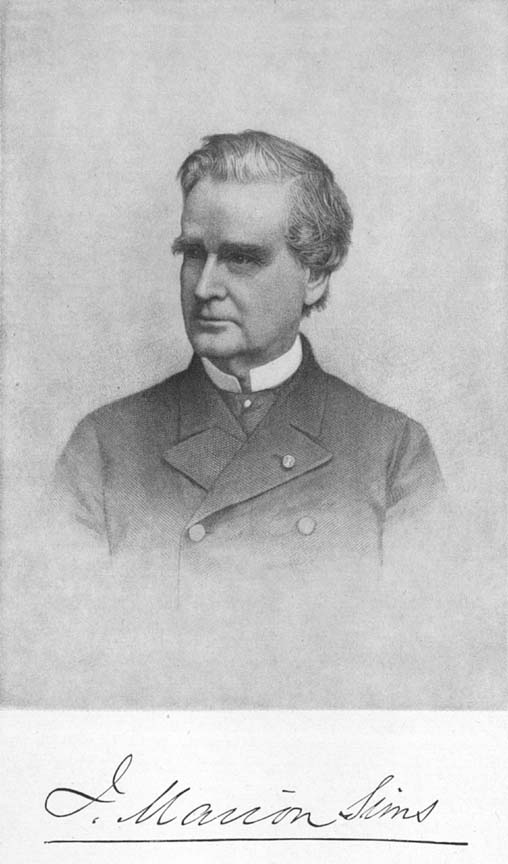
When the terrifying news from Washington worked its slow way down to Hanging Rock, young Jack Sims knew that the time had come when he could lead a peaceful life no longer. Until recently, like most of his South Carolina neighbors, he had not been able to get very much excited about the war, which had been dragging on for more than two years. It all seemed very remote to these pioneers in the backwoods, and certainly no one would expect a hard-working young farmer to desert his wife and brand-new baby son in order to risk his life in Mr. Madison's shadowy conflict with England. But if now it had come to the point where the British actually had captured Washington and had burned the Capitol and the White House, as the report said, then apparently it was up to him to take up the fight where his father and grandfather had left off during the Revolution. So off he went to Charleston as a third lieutenant in the state militia, leaving behind him in its cradle an infant destined to become a world-renowned surgeon.
That anyone would have considered predicting such a career for James Marion Sims, when he was born on January 25, 1813, is highly unlikely. His parents were ambitious for him, to be sure, but their ambitions had nothing to with medicine, which was a profession for which they had but small regard. They gave him a soldier's name in honor of South Carolina's Revolutionary hero, General Francis Marion, under whom Jack Sims's father had served; and they dreamed of his developing, despite his backwoods origin, into a learned lawyer or a distinguished preacher.
Marion Sims's father, though blessed by a handsome physique and marked personal charm, was handicapped not only by landlessness but by lack of schooling, too. His forebears had been respected farmers in Virginia and the Carolinas for five generations but they had produced progeny on too numerous a scale to provide lavishly for any of them; and Jack Sims himself, as an orphan bound out to help his farmer uncles, had had no chance to attend school until shortly before he went off to war. This did not mean that he was completely uneducated, but rather that his education had laid its especial emphasis on such subjects as deer-shooting, quail and fox hunting, cock fighting, and billiard playing. Some of these were valuable accomplishments, but others, he found, were pursuits upon which his wife did not look with approval.
Red-haired Mahala Mackey Sims was as hard-working as she was pretty, and like most of her Scotch-Irish Presbyterian family she deprecated light-minded sporting activities and had great faith in the value of the learning to be obtained from books. She herself had acquired such knowledge as she could from the wandering schoolmasters who during her childhood had set up shop for two or three months at a time at various points in the countryside, and she was determined that her tall, handsome husband should not continue to be hampered by his lack of education. Thus it was that, six months after his son Marion was born, twenty-three-year-old Jack Sims started attending school. Less than a year later his excursion into the militia interrupted his belated education, but this interruption was not without its valuable features, for it served to reveal a latent talent for leadership in military discipline which brought him, before his short term of service was over, the prestige of a captain's rank.
It was as "Captain Jack," therefore, that he returned home to Hanging Rock early in 1815, having been released from further obligations to service by the conclusion of the unpopular war. The war's end, according to local opinion, was due in no small part to the achievements of another native of Lancaster District, General Andrew Jackson, whose overwhelming rout of the British at New Orleans may have had its roots in his memory of the humiliation he had suffered some thirty-five years before when an earlier British Army had captured and imprisoned him, as a lad of thirteen, in the Revolutionary battle at Hanging Rock. Only a mile or so from that first battleground of Andy Jackson's was the farm where Captain Jack Sims at last was having a chance to become acquainted with the two-year-old son who had emerged from babyhood into a small boy's estate during his father's absence. The days of the farm as the center of existence were now numbered, however, for Captain Jack's recent experience as a leader of men at Charleston, combined with his hard agricultural apprenticeship in boyhood, had dampened his enthusiasm for farming as a way of life.
In this situation the expanded knowledge of the three R's he had picked up during his brief attendance at school came to his aid, and soon Jack Sims branched out into the operation of a little country store a mile or so from Hanging Rock Creek on the road from Lancasterville to Camden. As a gregarious man and a popular one he enjoyed the life of a storekeeper far more than that of a farmer, and as he prospered he managed to acquire a few slaves to take most of the farm work off his hands and to help his wife with the constant round of spinning, weaving, sewing, cooking, dairy work, and housework which her expanding family demanded. The ownership of slaves was only one of several accumulating symbols of Jack Sims's upward progress. Another was his determination that his children should have a better opportunity for education (which he had learned to value highly) than he himself had had. Thus it was that the eldest Sims son was barely five when his father launched him on his scholastic career.
In being sent to school at such a tender age young Marion Sims was not enjoying an unmixed blessing, for the teaching to which he was exposed was a hit-or-miss affair, and his experiences during his earliest classroom years were not very different from the grim pictures of education which Dickens took such savage delight in presenting in Nicholas Nickleby and elsewhere. The pursuit of knowledge was a monotonous record of floggings and sadism, punctuated by occasional days of calm when the tyrant of the classroom was too drunk to persecute his subjects. Moreover, as if these dour dominies were not enough to keep him in a constant state of trepidation, Marion possessed also an overwhelming terror of mad dogs and runaway slaves. During his first venture into education, provided by an itinerant Scotch pedagogue who set up shop not far from Hanging Rock during the summer of 1818, he was shielded from these real or imaginary dangers by a neighbor's seventeen-year-old daughter who escorted him to school and back each day. (In gratitude he fell desperately in love with her, of course.) The next year, however, he was not so fortunate, for then he was sent some six or eight miles from home to a boarding school run by a tyrannical elderly Irishman named Quigley, who let no day pass without demonstrating his prowess with the hickory switch.
Eventually, having learned from an abortive insurrection staged by some of the older boys that it really was possible to defy a Quigley and yet survive, the six-year-old boy worked up the courage to beg his parents to take him home. Yet his release from Quigley's tutelage was merely a case of the frying pan and the fire, for his next teacher, a peripatetic Irishman named Sanderson, was a drunkard who found release from his own defeats in a continual perverted cruelty which made Mr. Quigley seem like a model of gentleness. Only on Mondays were the pupils happy, for then Sanderson, still buoyed up by his week-end spree, was mild and jolly and good-tempered. By Tuesday, however, the brief respite was over; Sanderson was sober again, and with soberness his demon of vindictiveness returned. In Marion Sims, Sanderson's cruelty crystallized one deep and burning resolve: to grow big enough to be able some day to thrash the schoolmaster.
Just in time to keep him from becoming permanently afraid of his own shadow he was brought under the influence at last of a really good and kindly teacher who had the ability to free him from his phobias. Marion had great admiration for Mr. Williams, his new teacher, and he began to acquire a new faith in adult conception of justice when he found that now he was punished only when he really deserved it, as, for instance, on the occasion when he erred in trying to win a little girl's affections by throwing water on her. His method of courtship proved unsuccessful, but Mr. Williams' muscular method of discouraging it was markedly effective.
Such lapses from grace were comparatively rare, however, for he was on the whole a well-behaved boy. His "goodness" may have been due in part, perhaps, to a certain timidity engendered by his small size (his failure to inherit his father's majestic proportions was one of his lasting regrets), but more probably it could be traced to his notably happy home life. Jack and Mahala Sims practically never quarreled, and among their children their example was contagious. With home a thoroughly pleasant place and school now pleasant too, Marion was a remarkably contented child. As far as he was concerned Hanging Rock was an exciting and adequate world and one in which he was quite satisfied to spend his life. But his father, it seemed, had other ideas.
Keeping a country store had given Captain Jack Sims just enough taste of public life to make him want more. People told him that with his fine presence and popularity he ought to go into politics, but, buried out in the country as he was, there seemed to be little chance of that. What worried him most about his present location, however, was its lack of adequate educational and social opportunities for his fast-increasing family. He and Mahala had great ambitions for their numerous tribe, and they were beginning to feel discouraged with the hit-or-miss schooling which was all that the Hanging Rock section had to offer.
Almost a metropolis by contrast was the county seat or "district town" of Lancaster (still undecided as to whether or not to tack a "ville" onto its name). True, its population was only a few hundred, but with its position as the center of Lancaster District's affairs, its frequent visits from commercial travelers, and its thirty or more stores and dwelling houses spread out over a mile or so of pleasant tree-lined streets, it presented a number of alluring aspects of urban civilization. Added to these was the happy chance that one of Lancasterville's tavern keepers wanted to sell out his business. To Captain Jack, who knew nothing at all about running hotels, it seemed a heaven-sent opportunity, and in the winter of 1824-25 he and his family said good-bye to the farm and moved the ten miles northward into the sprawling county seat, where the populace was still smarting at the way the House of Representatives had maneuvered its district's native son, Jackson, out of the Presidency. At the time of their arrival in the town, an important addition was being contemplated: a high school---no fly-bynight affair, but a real, permanent academy, named in Benjamin Franklin's honor---which the leading citizens (with financial aid from the State Legislature) were exerting themselves to establish. New though he was to life in the county seat, Captain Jack Sims soon was right in the thick of those who were working to make the projected school a reality. His winning personality and talent for fellowship put him almost at once on excellent terms with the Witherspoons and Joneses and Masseys and other members of Lancasterville's aristocracy; and inasmuch as Colonel James Witherspoon was a power both in politics and in military affairs it was not long before Sims became both sheriff of Lancaster District and Colonel Witherspoon's adjutant in the local militia regiment. The hotel, meanwhile, was prospering in its multiple role as bachelors' boarding house, travelers' accommodation, headquarters for lawyers during district court sessions, social center for the male element of the community, and home for the large Sims family. To be sure, Mrs. Sims, with her eight children and the hotel's housekeeping to care for, was sorely overworked, but that was the common lot of most housewives and mothers in her day.
The leading doctor of Lancaster was a gentleman who practiced medicine merely as a polite profession in the family tradition while his principal income came from a gold mine and several large cotton plantations, and his principal delight from browsing in Homer and Horace, Addison and Steele. Dr. Bartlett Jones's large brick colonial house on Main Street, with its broad verandas and tall white columns and its long avenue of trees, was one of the first sights pointed out to the twelve-year-old Marion when he came to live in the district town. One afternoon not long after his arrival in Lancasterville he was standing by the window looking out at the passers-by, whose very existence still seemed miraculous to a country-bred boy. Suddenly he became aware of a very particular passer-by---a little girl coming toward the hotel, leading her small brother by the hand. "Oh see, Ma!" he cried excitedly. "What a pretty little girl! Isn't she a beauty? Who is she?"
"That is Dr. Jones's daughter," his mother told him. "She is coming here to see me, and I have dressed you in your best clothes expressly to receive her."
Such a sharp plunge into the social life of the county seat was too much for the boy from Hanging Rock. To be told he was about to meet the daughter of the fabulous Dr. Bartlett Jones was as startling and discomfiting as would have been a presentation to the daughter of President Monroe or President-elect Adams. He could not face it, and when the nine-year-old Theresa Jones and her brother came into the room Marion backed away into the corner and pretended not to hear his mother's introductions or the pretty little girl's polite remarks. But from that moment on he was Theresa's slave. Forgotten were the Hanging Rock girls, big and small, upon whom he had tried to fasten his eager affections. There was no other girl now but Theresa---Theresa whose father owned forty-odd slaves and whose life in all its aspects was marked by luxury.
To a boy whose aspirations and self-appraisal were extremely modest the sharp contrast between the loved one's background and his own was not a little intimidating. Obviously the only thing for Marion to do was to set about making of himself something that would measure up to Jones standards, and it would be pleasant to be able to report here that, fired by Dr. Jones's example, he immediately conceived an ambition to be a great physician. It would be pleasant but it would not be true, for actually Marion had not the faintest interest in medicine as a career. Not only that: he had no particular interest in any career; ambition was something which, now and for some years to come, he definitely did not possess. His father and mother, he knew, were determined to send him to high school and anxious for him to prepare himself for one of the professions, but (although as yet he did not tell them so) he was willing to humor them only so far. He would attend high school, since they insisted, but beyond that he would not go. No professions for him; the work which struck his fancy most was that of a merchant; when the time came he would get a job in a store and help his hard-pressed parents to support and educate the seven younger Simses.
Marion's main business at present, his parents insisted, was to get an education, but there was some difference of opinion as to that education's nature. When Lancaster's new Franklin Academy finally opened its doors in December of 1825 and Marion discovered that he was supposed to study Greek and Latin he protested vigorously to his father. Greek and Latin were all right, he said, for Rush Jones and Frank Massey and Frank Witherspoon and other boys whose fathers were well to do and could afford to indulge their sons in the luxury of a classical education, but in his own case---with bills mounting up and seven younger brothers and sisters to be cared for---it was all foolishness. It was obviously up to him, he insisted, to concentrate on learning something of immediate practical use so that he could go to work soon as a bookkeeper or clerk. But Captain Sims continued adamant; every day, he said, he felt more conscious of his own lack of education, and he was determined above everything else to give his children a better chance than he had had. So Marion, without enthusiasm, set about learning his Latin and Greek.
In studies, as in conduct, he was at this point neither bad nor particularly good. In conduct, to be sure, he did have the dubious distinction of being responsible for inflicting a particularly grievous wound upon the dignity of the teacher, a serious young man named Henry Connelly, who---just out of theological college in Pennsylvania---was earning his bread by teaching until such time as he should acquire a pulpit. This assault by Marion upon vested authority was strictly unintentional, however, being brought about by the accidental miscarriage of a little plot to deflate the ego of an overstudious teacher's pet. The teacher's pet, a boy named Ward Crockett, had developed a habit of sitting in Mr. Connelly's chair to study his lessons during the noon recess when the teacher and most of his pupils were out of the room for lunch or play. This casual assumption of the pedagogue's throne so irritated Ward Crockett's classmates that one of them, Frank Mackey, conceived a way to bring it to an end and invited Marion Sims to join him in his plan. Magnanimously he permitted Marion to play the leading role in the conspiracy, which involved affixing a villainously sharp and lengthy pin to the teacher's chair at the beginning of the recess hour, while Frank himself devised a pretext for taking the too-exemplary Crockett out of the room for a few minutes. Marion carried out his part of the bargain with an excellent display of the mechanical ingenuity which was to play so useful a part in his later career. So firmly did he fix the spike to the seat that it would have been quite impossible for Ward Crockett or anyone else to sit down without getting the point.
The stumbling block in the plot was that for once in his life the studious Crockett became interested in a ball game out in the yard and did not return to study in the master's chair. The inevitable happened, and when the afternoon session started and Mr. Connelly got the medicine which had been intended for his pet he did not take it kindly. He took it, in fact, very hard indeed, and went one by one down the roll of the school, calling each boy by name and asking him solemnly: "Did you put that pin in my chair?" Marion, normally a truthful boy, felt so overawed by the teacher's pale face, compressed lips, and clenched hands that it seemed physically quite impossible for him to do anything but give the same answer as all his fellows: "No, sir." His guilt, compounded by falsehood, burdened his conscience considerably for several years, but before he could work up the necessary courage to confess, Mr. Connelly had returned to the North, transferring his duties at Franklin Academy to a successor who, like himself, was newly graduated from college in Pennsylvania.
This new teacher exerted a profound influence on Marion Sims. He was a handsome, scholarly young man named J. F. G. Mittag, who, living and dreaming in the rarefied atmosphere of philosophy and the classics, found himself sadly lonely in the strictly practical little town of Lancasterville. In his loneliness he found time to take a deep interest in the delicate-looking Sims, with his finely modeled head and his general appearance of being an innocent child misplaced among rough youths twice his size (for Marion, to his great mortification, was very slow in developing physically). Mittag went out of his way to be kind to the youngster, helping him with his Greek and Latin, listening to his confidences (including his puzzled grief over the recent death of one of his younger brothers), advising him on his future, and discoursing to him about the other worlds which existed outside the little world of Lancaster. To have the friendship and interest of such a man was a wonderful tonic for a boy whose own background, though solid and strictly respectable, was lacking in the very elements which Mittag represented so richly.
Young Mittag, for all his beneficent influence, was unable to persuade Marion on two fairly important points: the necessity of learning to express himself in writing and the necessity of continuing his education beyond high school. As to the first of these the boy was obdurately unyielding: he never had been able to write compositions and he never would be, so that was that!
Whatever the reason may have been for his conviction, he had persuaded himself at an early age that he was simply incapable of putting any ideas on paper, and no teacher yet had been able to make him change his mind. Scoldings he had had aplenty for his obstinate refusal to fulfill the school's composition requirements, but so great was his natural charm and persuasiveness that somehow or other he never got whipped for his stubbornness, despite the prevailing theory that thrashings were the pedagogue's acknowledged privilege and most potent method of persuasion.
Concerning the other point at issue---a college education---he was able to advance more reasoned arguments, chief of which was his father's recent grave illness with pneumonia. (The siege of pneumonia had been brought on, incidentally, by Captain Jack's wager with one of his fox-hunting friends as to which of them could shoot more foxes during the winter. The loser was to buy the winner a hat. Captain Jack shot fifty-two foxes to the other man's twenty, but though he won the hat the prolonged exposure while hunting in cold, wet weather came close to costing him his life.) All through Captain Sims's illness Marion was terrified by the thought that if his father should die he himself would be chiefly responsible for the support of his mother and his six younger brothers and sisters. How could he measure up to that responsibility if he was still just a schoolboy, not a wage earner? His father solved the immediate problem by recovering his health, but not without leaving with his oldest son a heightened sense of insecurity.
Marion had plenty of reason to know how close to the brink of insolvency the Sims family was sailing, and his reason for possessing this knowledge was embarrassingly intertwined with another matter of an entirely different nature: his ever-growing interest in Dr. Bartlett Jones's daughter Theresa.
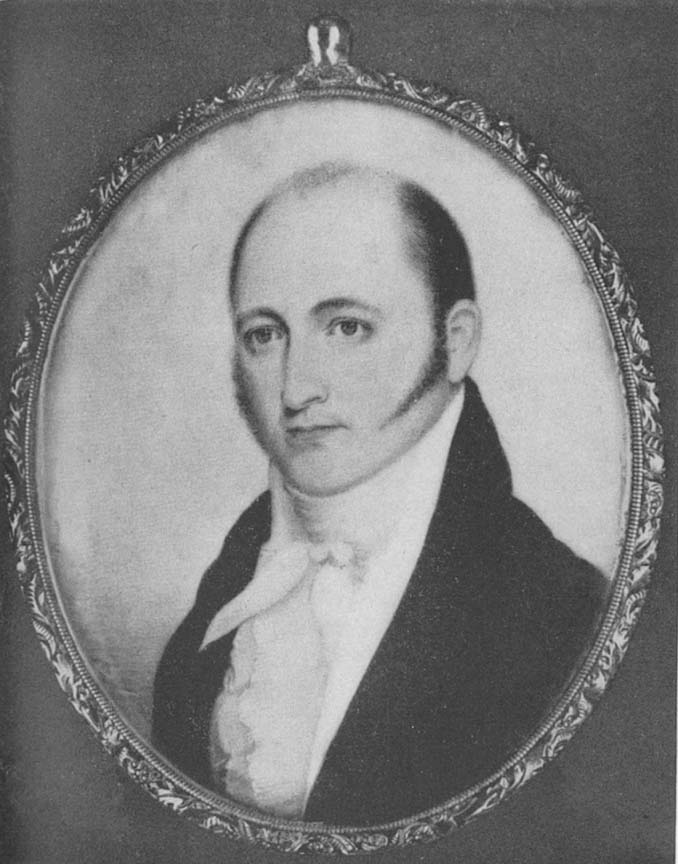
Theresa went to Franklin Academy too, and even though the girls' classes were on the lower floor of the schoolhouse, quite separate from those for the boys, there was plenty of opportunity for a boy and a girl who liked each other to develop their acquaintance. Marion, overcoming his initial shyness, made the most of his opportunities and was excited to find that Theresa, despite the fact that a number of other boys also eyed her with marked partiality, seemed to have a definite preference for his company. But as their mutual attachment became increasingly evident Marion gradually was made conscious that the Jones family viewed his association with Theresa with something considerably less than approval; and the reason for this disapproval, he knew, lay largely in the contrast between his father's financial standards and those of Theresa's father.
Dr. Bartlett Jones was not only wealthy, he was thrifty and careful in his stewardship, as well; while Captain Jack Sims, with his family's needs always exceeding his income, was inclined to be happy-go-lucky and far from speedy in paying his, debts. Many of these debts, unfortunately, were to Dr. Jones, who furnished not only medical services but also such diverse commodities as flour, corn, and fodder, beef, bacon, and butter, wood, brick, cotton, and various other products of his fertile lands. In Dr. Jones's carefully kept ledgers a disproportionately large number of pages was filled by the record of transactions, all on credit, with Captain John Sims. According to Dr. Jones's system of bookkeeping "Operation on spouse---$1" and "Medicine for son---25 cts." might be entered against Sims's account directly above "35 lbs. butter @ 121/2 cts.----$4.37-1/2" or "232 lbs. beef @ 3-1/2 cts.---$8.12-1/2" or "Hire of Waggon Team and 2 Negroes 1 day---$3.50."
All of this was commonplace business dealing, of course, and would not have worried Marion if it had not been for the fact that his father's account often went for months unpaid and that sometimes it was complicated by out-and-out loans of cash as well. Frequently Marion had to act as messenger to pay off, five or ten dollars at a time, such portions of this ever-accumulating debt as the Sims family could afford. At such times he observed that Mrs. Jones's attitude toward him, though kind, was slightly patronizing, and he could not help realizing that because of his lack of money she considered him an unsuitable companion for Theresa, despite the high respect the Simses enjoyed in the community.
Adding to Marion's discomfort at these meetings with Mrs. Jones was his acute feeling, ever since the presidential elections of 1828, that she belonged to a kind of royal family far beyond his reach. For Theresa had told him in awe-struck tones that when her mother's mother, Mrs. Dunlap, was a little girl named Mary Crawford she had been Andrew Jackson's first sweetheart. (Her uncle, in fact, had been the orphaned Andy's guardian.) Not only that, but she even had met George Washington, who had visited at her father's plantation in the Waxhaws. And then a year or so after Jackson's election to the presidency along had come a letter from the White House from Old Hickory himself, telling Theresa's grandmother (who to Marion's eyes seemed far too old to be a figure of romance) that the President often had thought of her through the years and begging her to accept as a memento of his undying friendship a silver snuffbox which he counted as one of his most treasured keepsakes. Marion was allowed to see and touch the treasured snuffbox for himself, and he could not help getting the impression, as Mrs. Jones showed it to him, that she was using this means of indicating to him, in a gentle but definite way, that a girl whose grandmother received gifts from the President of the United States and whose father owned forty-five slaves hardly could expect to look favorably upon an unambitious, undeveloped youth whose father always was in debt.
It all left Marion feeling sorely puzzled and confused. Secretly he could not help agreeing to some extent with Mrs. Jones, yet at the same time he was tremendously proud of his handsome and popular father, who, purely through the power of his own personality, without family or social connections, recently had advanced to the colonelcy of Lancaster's militia regiment when Colonel Witherspoon had moved into the lieutenant governorship of the state. Colonel Sims was also county surveyor and later became the high sheriff of Lancaster District. The boy's capacity for stubborn determination was no match as yet for Colonel Sims's persuasive powers and new prestige, so in the long run, despite his often expressed intention of going to work in Mr. Stringfellow's store as soon as he was graduated from Franklin Academy, he acceded docilely to his parents' cherished ambition for him to go to the state college down at Columbia. At seventeen, therefore, he left home, a frail little fellow who weighed only a little over a hundred pounds, in love with a girl who was supposed to be too good for him, and acutely conscious that, while his father expected him to become a lawyer and his mother prayed for him to be a preacher, he himself was gloomily certain that he could not be either and never would amount to anything at all.
Actually Marion Sims at seventeen was not quite the complete nonentity that he considered himself. He was handsome, in a delicately chiseled way, and he had easy, graceful manners, a winning personality, and an exceptionally gentle disposition---almost too gentle, perhaps, to be prepared for the rough give-and-take of a college community. So completely lacking was he in the boasted vices of many of his contemporaries that it was no wonder his mother envisioned him as a clergyman. When he entered the junior class of the modest little institution known as South Carolina College, located seventy miles south of Lancaster at Columbia, he was surprised to find that many of his classmates expected him to be as proficient as they were at drinking and gambling and swearing and allied accomplishments. Marion Sims sauntered through college in a strictly amiable way---not very good and not very bad, and decidedly not very much interested in anything that was taught him. Except for the rudiments of chemistry imparted by Dr. Thomas Cooper, the college president, who had a more active interest in preaching agnosticism than in teaching chemistry, the curriculum was almost entirely lacking in the sciences, being composed principally of courses in languages, logic, criticism, and moral philosophy.
These courses left Sims largely untouched, but so, indeed, did the worldly ways of some of his fellow students. He tried earnestly to oblige them by accompanying them on wine-drinking expeditions to the oyster saloon which was their favorite resort. But at the drinking he had to admit himself a rank failure, for he found to his embarrassment that he possessed an extraordinary over-sensitivity to alcohol. Even at the risk of being considered a prude, in an era when heavy drinking was the rule, he did not relish the experience of being made drunk by a single glass of wine, and before long he gave up all attempts to play a part in such conviviality.(1)
Like practically every educational institution of the era, the college had rival literary societies with high-flown classical names---in this instance the Euphradian (which claimed Sims among its members) and the Clarisophic. These societies' primary activity was debating, and in their heated verbal tilts the undergraduates who planned to be lawyers or ministers exercised their budding talents. Sims, despite his parents' ambitions for him, had little inclination along these lines, but he had genuine veneration for those who did. The greatest of his Euphradian heroes was James Thornwell---a puny, undersized, undistinguished-looking youth for whom Sims, being a little fellow himself, felt an instinctive sympathy. When Thornwell launched into oratory his audience completely forgot his insignificant appearance, for in his brilliant powers of logic, his uncanny command of language and of his hearers' emotions, he came nearly as close to genius, Sims felt, as that far more famous South Carolinian, John C. Calhoun. Calhoun was at that very time engaged in his resounding nullification controversy with another favorite son of South Carolina, President Jackson, so the young men in the literary societies had plenty of fuel for their fiery debates. Not only did they feel that they must settle the perennial questions of religious liberalism or dogmatism raised by President Cooper, but they also considered it necessary to help Calhoun and Hayne, on the one side, or Jackson and Webster, on the other, to decide whether South Carolina should pass acts nullifying within its borders the provisions of Henry Clay's despised "Tariff of Abominations."
Yet at all these exercises of mental ingenuity Sims was strictly an onlooker, seldom a participant. He was still undeveloped intellectually; no spark as yet had fired his interest. Typical of his remoteness from the arena of ideas was his continued bland refusal to write compositions for his English classes. Five of these were required of all seniors, and normally he was the kind of boy who obeyed the rules, but he looked upon compositions as merely a lot of highfaluting words about abstract subjects of which he knew nothing, and since he felt completely incapable of writing a creditable one, he decided that it would be a mistake to write any at all. He cheerfully explained this eminently reasonable attitude when, with graduation day looming near, he was summoned before his English professor to account for his nonfeasance. The professor, though failing to share his delinquent pupil's unorthodox viewpoint, took into consideration the fact that in other respects Sims's college record, while certainly undistinguished, had been at least without any serious flaws, and he decided therefore to be lenient. His composition requirement, the recalcitrant student was told, would be reduced from the normal five to only two, but unless he submitted these two themes within a week he absolutely would not be allowed to receive his diploma.
Sims accepted this ultimatum politely, but with no alteration in his attitude. He still was doggedly determined not to write compositions. "I cannot do it," he insisted, "and 1 will not."
Usually he was an amiable enough fellow, but when he took it into his head to be obstinate no one could outdo him. Years afterward he was occasionally to get into trouble for his refusal to abide by rules designed for general observance; perhaps it would have been salutary for him in those later years if in this first deliberate attempt at insubordination he had not triumphed so easily. For triumph he did, of course. When news of the impasse in which his stubbornness had placed him got around the campus an underclassman who admired him was so concerned over the possibility that his rebellious hero might fail to be graduated that he himself wrote two compositions, signed Sims's name to them, and sent them to the English professor, who presumably was not deceived but felt that the spirit of the law had been complied with and that Marion Sims therefore was entitled to receive his diploma with his class.
It was a rather sour conclusion to a college career which as a whole was nothing to boast about. Sims was sadly aware that he had gotten comparatively little out of his two years at college, but he hated to have them come to an end, partly because he had enjoyed his friendships there but chiefly because with his graduation he was confronted at last with a decision he long had dreaded: the choosing of a profession.
The gloom which enveloped him as he returned from Columbia to Lancasterville that December of 1832 was due only in a minor degree, however, to this necessity for making a difficult decision. Far more potent a cause for unhappiness was the fact that just before his graduation his mother had died---died at the age of forty of an ailment then commonly called bilious remittent fever. Nowadays her disease, if it occurred at all, probably would be diagnosed and treated as typhoid fever; but in 1832, thanks to poor sanitary conditions, its occurrence was frequent and its course---in a woman weakened by overwork and too much childbearing---was usually fatal, helped to its dismal conclusion by the prevailing medical treatment of bleeding, blistering, and purging.
Now more than ever, with his four brothers and two sisters motherless, Marion felt that something was expected of him, and more than ever he felt himself unequal to the challenge. He dreaded the inevitable session with his father, who was heartbroken enough at the loss of his wife without having his oldest son add to his burdens by refusing to enter the legal profession toward which his college education ostensibly had been directed. Colonel Sims apparently disliked forcing the issue as much as the young man himself did, for he allowed a whole month to pass without once raising the question of vocational plans. During that month Marion was acutely unhappy for still another reason besides the loss of his mother and his distaste for coming to grips with life: he was dreadfully in love, and for the time being there seemed to be not a thing in the world he could do about it.
Theresa, like Marion, had just returned to Lancasterville after two years at Columbia, where she had attended a pioneering "female collegiate institute." Like Marion, too, she recently had lost one of her parents: Dr. Bartlett Jones's death had occurred a year before that of Mahala Mackey Sims. These likenesses, however, did not serve to draw them together, for Mrs. Jones, combining now the authority of both father and mother, was determined that her lovely daughter should give thought to only the most eligible of her suitors; and certainly eligible suitors aplenty were available---tall young men (and how Marion envied them their size!) equipped with good family connections, money, property, and prospects for brilliant careers. Marion, on the contrary, had nothing to offer but an endearing personality and an attachment which had existed for eight years. While the handsome young men flocked around Theresa, who gave every appearance of enjoying their attentions, Theresa's long-standing admirer moped away his days at home, wondering what on earth he was supposed to do with his life.
At last his father, always a hearty man of action, could endure the awkward situation no longer. "Come, my boy," he said one day, "isn't it time for you to be buckling down to your professional studies?"
"Yes, Father," came the reply, "I have been thinking of it for some time."
Colonel Sims, encouraged, promptly suggested that Marion should call the next day at the office of a certain local attorney and ask to be allowed to read law with him.
Not till then did the son have the courage to destroy his father's long-cherished illusions. "I know that I am a great disappointment to you, Father," he said, "but it is impossible for me to become a lawyer. I haven't the necessary talents."
Colonel Sims was as astonished as he might have been if, on one of his fox-hunting expeditions, the fox had seized the gun and turned it on his pursuer. "But what," he managed to gasp at last, "what in the world are you going to do, then?"
"Well," said Marion, "if I hadn't gone to college I know what I'd have done. I'd have accepted Mr. Stringfellow's offer of three hundred dollars a year and gone into his store two years ago, and by this time I should be getting five hundred dollars a year. But as long as I have had a university education, I suppose I must study for a profession, and there is nothing left for me to study but medicine."
Marion had suspected that his father would be disappointed at his choice, and his suspicion was well founded. Colonel Sims, in his attitude toward his son's chosen vocation, shared the sentiments of the ancient Romans, who scorned to soil their hands in the practice of medicine, which they considered a calling fit only for foreigners and for slaves. "Medicine!" he exclaimed. "It is a profession for which I have the utmost contempt!" (He still was smarting, not unnaturally, from the medical profession's recent failure to save his wife's life.) "If I had known this I certainly should not have sent you to college."
"I know, Father," Marion concurred. "I didn't want to go and I knew that I should make you unhappy, but I am sure that you are no more unhappy about it than I am myself. I have no desire at all to be a doctor, but apparently a man who goes through college has to be either a preacher or a lawyer or a doctor, and since I am sure that I couldn't possibly be either of the other two I guess a doctor is what I'll have to be."
But his father, remembering some of the incompetent country doctors he had known, refused to be convinced of the desirability of medicine as a profession. (Perhaps the money he still owed to the estate of Dr. Bartlett Jones helped to stimulate his adverse feelings.) "There is no science in it," he protested. "There is no honor to be achieved in it---no reputation to be made. To think that my son should be going around from house to house with a box of pills in one hand and a squirt in the other is a thought I never supposed I should have to contemplate."
Since Marion continued resolute, however, on the subject of his unfitness for the law or the ministry, and since it was unthinkable to have sent a boy to college only to have him enter a mercantile career, Colonel Sims finally had to reconcile himself to the distasteful prospect. As the first step toward the new goal he told his son to enter the office of Dr. Churchill Jones to pursue his medical studies.
It was an ideal arrangement for learning nothing. If Dr. Bartlett Jones, a bookish man, still had been living Marion might have found him a helpful preceptor, but his brother Churchill was quite another matter. There could be no doubt that "Dr. Church" (so called by everyone to distinguish him from Theresa's father, who, though dead, was still the Dr. Jones in Lancaster's eyes) was a capable enough physician, but his office was almost bare of books, and during his leisure moments he was far too busy sampling his ample stock of liquors to bother himself with any tedious attempt to give medical instruction to an ignorant young student. Marion borrowed such books on anatomy and medical practice as he could find (there were few to be had, of course, in a little town like Lancasterville) and sat in Dr. Church's office doggedly trying to stay awake while he read them; but with no one to interpret them for him or to explain anything it was a losing struggle.
Dr. Church's lack of interest was not the only reason for his pupil's inability to concentrate. Another difficulty was to be found in the outlook from the office window, which afforded an excellent view of Mrs. Bartlett Jones's house and garden and of the village street, along which Mrs. Jones's radiant daughter Theresa often might be seen riding expertly on her beautiful horse, with an admiring young man in attendance. It was not always the same young man, to be sure, but the sad and important fact was that it was never---or hardly ever---Marion Sims.
Marion's friendship with Theresa Jones was not severed; it simply had reached an impasse. She was at an age when girls were supposed to start making serious plans for matrimony; while he, without money or prospects, was in no position to foster such plans. Normally he was an energetic and fairly talkative youth, with little fear of hazards, but now he found that when he went for a walk with Theresa his tongue was tied and his initiative completely stilled, while all he could think of was her mother's disapproving attitude and the hopelessness of his suit. At last, realizing that it was quite impossible for him to say to her the things which were in his heart, he wrote her a letter. Usually, it is true, he hated to write, but in this case writing appeared to be the only solution to his problem, and in contrast to the lonely business of trying to study incomprehensible medical tomes it did not seem like hard work at all.
In his letter he told Theresa of his plight: told her he always had loved her and wished very much to know whether she returned his affection; told her, too, of his grief at his inability to propose marriage now. Sims's brother Wash, always his ally, carried the letter and delivered it directly to Theresa. His instructions were to wait while she read it. While he was gone Marion read one page of a medical book over and over again, nor had he the faintest idea what it said. Wash's report, on his return, did nothing to relieve his older brother's pangs of uncertainty. Yes, said Wash, Theresa had read the letter. No, she had not seemed angry, nor had she thrown it back at him. But that was all. There was no reply.
Screwing up his courage, Marion himself went to see her. "You have received a letter from me," he said.
"Yes," said Theresa, "I have." And that ended it.
For a month the matter stood just there, which was nowhere at all as far as Sims was concerned. By then it was April, and for a warm-blooded twenty-year-old, affected by spring in the proverbial fashion of young men, such a prolonged state of indecision was intolerable. Finally, on Theresa's seventeenth birthday, Marion found himself alone with her at last under what seemed to be propitious and romantic circumstances. It was a beautiful moonlight night, and they were walking back from a party a mile outside Lancaster at the home of Theresa's older sister, Mary, who had married Colonel Witherspoon's son the year before. True, there were other young people in the group, but it was not hard to lag behind. Yet Marion found himself unable to do anything but chatter glibly about things that mattered not at all. More than halfway home, with his heart pounding wildly and his mouth so dry that he could scarcely speak, he persuaded his companion to stop for a moment under a large locust tree.
"Theresa," he began, desperately, "I wrote you a note a month ago. I did not ask you then to marry me, but I do ask you now. Will you marry me?"
Her voice, when it came, was as tremulous and unnatural as his, and very low. "No, Marion," she said, "I can never marry you."
There seemed to be no more to say. He had had his try and had lost. There was nothing to do but complete their homeward walk, and miserably they did, without another word beyond a hurried "good night" at her doorstep.
Arising the next morning after a melancholy night untouched by sleep, Marion felt that the only thing left for him to do was to get drunk. But this avenue of escape was a highly unappealing one, rendered the more so by his association with the bibulous Dr. Churchill Jones. He compromised, therefore, by purchasing some cheap cigars (always before he had refrained from tobacco) and smoking them until his sickness was not limited entirely to his emotions. But even the nicotinic counterirritant could not obliterate the all-important fact that Theresa in one dire moment had destroyed the mighty hope which had been with him ever since he was a boy of twelve. Obviously there was nothing for him to do but to go away--far away.
So he went to his father and said: "Father, I know you are very poor, but don't you think you could manage some way to allow me to leave this place? If I had a hundred dollars I could go to Alabama, or I could go somewhere!"
Colonel Sims, still unhappy at his son's incomprehensible decision to study medicine instead of law, was hardly prepared for this new manifestation of irrationality, and to Marion's strange request he responded, "Are you crazy?"
No, Marion told him, he wasn't crazy, but Theresa had turned him down, because now that she had so many rich North Carolina fellows flourishing around her he wasn't good enough for her, even though he had been her sweetheart all her life. He couldn't stand it, he couldn't study, and if he couldn't go away he didn't know what he could possibly do.
Colonel Sims was full of loving sympathy, but beyond that and advice to work hard and accept the inevitable he could not go, for he ruefully confessed, "I couldn't give you one hundred dollars to save my life." (It was quite true that he was little better off financially than he had been before he became sheriff. Many another man had grown rich holding that office in the counties round about, but John Sims was too kindhearted and good-natured to achieve such riches; often he felt so distressed by the plights of the people with whom his duties brought him in contact that he paid their fines himself or gave them money out of his own pocket.)
There followed for Marion a bleak three months. He was learning practically nothing in medicine; he was getting nowhere in the world; his mother was dead; his younger brothers and sisters needed help which he was failing abominably to give them; he was of no financial assistance to his poor debt-ridden father; and worst of all he was caged in a small town---where everybody saw everybody daily---with a girl whom he felt he must try to avoid while his every instinct cried out to be near her. For many weeks on end be never went down the main street by daylight, for it was almost impossible to do so without seeing Theresa or being seen by her, and that was unthinkable. Throughout those long summer months, with their seemingly endless daylight hours, he sulked at home or skulked in the woods, venturing into the village only occasionally after dark, when the danger of encountering Theresa seemed safely past.
Then came the time when, for all his circumspection, he met on the street not Theresa, but Theresa's cousin and closest friend, Betsy Witherspoon. Betsy and he, though not related, were in the habit of addressing each other as "Cousin," as was the custom with many young Southerners in a period when some sort of courtesy handle to a first name was obligatory with all but close friends and relatives. From their first greeting he could tell that his courtesy cousin had something on her mind, and she lost little time in coming to the point. "Cousin Marion," she asked, "how are you and Theresa getting on these days?"
Sims, who was sure that she knew all the details of his humiliation, was shocked when she asked such a question, and told her so. Betsy, however, protested complete ignorance of anything that had happened between Marion and her cousin, whereupon he, glad of a chance to share his burden of woe, told her of the sad event three months before which had ruined his life. "Since then," he concluded, "I am a changed man; I am nobody."
Betsy surprised him by receiving his unhappy communication more cheerfully than otherwise. Nodding her head, she exclaimed: "Now, Cousin Marion, I understand things. I have noticed something peculiar about Theresa lately. She has been very reticent and rather sad, but she has never mentioned your name to me. I thought this was odd, for I know that she loves you just as well as you love her. But I know too that the family do not want her to marry you, and I presume that she has been trying to obey her mother."
The very next morning found Marion abandoning his strictly nocturnal habits. In broad daylight he strolled along the main street, wondering whether he would have the courage to turn in the path to the Bartlett Jones place, and what excuse he could make if he did. He was spared the necessity for such bravery, however, for there, just inside the scallop-paled garden fence, was Theresa, all alone, a rosebud in her hand.
Marion's stroll came to an abrupt halt. For the first time in three months he smiled. "Good morning, Cousin Theresa," he said, bowing.
"Good morning," she replied. Her smile answered his and emboldened him to ask if she would give him the rosebud she was holding. Over the garden fence she gave it to him, and fifty years later Sims still treasured that faded rose.
It took only a little while to find out that for three months Theresa had been quite as miserable as he, and that when she had told him she never could marry him she had been sacrificing her own desires and dutifully following her mother's instructions. Now, in their delight at reconciliation, they entered a solemn pact. They would love each other forever, but for the present they would give no evidence in public of mutual affection, nor even seek one another's company, for no one was to know that there was anything between them. They were to have the utmost confidence in each other, and both were to feel free, if they wished, to carry on innocent flirtations with others.
With that understanding they parted, and for nearly two years their contacts were of necessity infrequent and strictly casual. Yet from that July day in 1833 when a rosebud sealed their mutual love and trust they both had faith that somehow and at some not-too-distant time they would manage-overcoming such trivial obstacles as poverty and family disapproval---to come together.
In his purely rational moments, when he was not blinded by his insistent love for Theresa, Marion could not help admitting to himself that her mother, in opposing his suit, was not entirely unreasonable. He was all too well aware that she and her son Rush were anxious to collect the debts still owed to Dr. Bartlett Jones's estate, and that Colonel John Sims was one of the principal debtors. He knew too that her opposition had its roots in something more intangible than financial debits or credits; it was based on Mrs. Jones's feeling, never directly expressed in words, perhaps, but always felt, that in culture and social background the Sims family was not the equal of the Jones family, and that if Theresa married Marion she would be marrying beneath her.
There was only one way to prove to Mrs. Jones that she was wrong, and that was to demonstrate that he was better than she thought. For the first time in his life Marion Sims, who had dreaded growing up, began to feel eager to assume the responsibilities of manhood; for the first time in his life he felt the incentive really to work at his studies instead of merely drifting with the tide. For the time being, with no one to teach him but the apathetic Dr. Churchill Jones, it was difficult to harness this new access of ambition, but in the autumn of 1833---nearly a year after his graduation from South Carolina College---he actually had a chance at last to receive a little formal instruction in medicine.
The first installment of Marion Sims's medical education was a three-month course of lectures at the brand-new Medical College of South Carolina, commonly referred to as Charleston Medical School.
The trip from Lancaster to Charleston was a considerable one---all the way from the north central border of the state to the southeastern seacoast; and the distance in general atmosphere was even greater than that. Charleston, with its population of 40,000, was a new experience for young Sims: its size impressed him; its rich flavor and historical associations delighted him; but most of all he was awed by his first view of the ocean.
He was happy during his brief stay in Charleston. Not only did he renew acquaintance with some of his old college friends, but he was congenially situated in a pleasant boarding house, and---best of all---he had worked out a method of exchanging letters now and then with Theresa, with his ever-dependable brother Wash serving as intermediary.
After his unconcerned drifting through two years of college at Columbia, followed by his discouraged boredom during the long months in Dr. Churchill Jones's office, he was determined that it was high time at last for him to be in earnest about something; and fortunately his newly acquired diligence had found rich soil in which to grow. Though Charleston no longer could claim to be the country's greatest center of medical influence, as it had been in the days before the Revolution, it still retained an outstanding reputation in that field, and some of the most glittering stars in its medical firmament were on the new medical college's faculty.
Chief among these was Dr. Samuel Henry Dickson, professor of the theory and practice of medicine, who, though still a young man, was widely noted as a brilliant public speaker and a prolific, polished writer. He was as handsome to look at as he was pleasant to hear, and Sims loved to sit and listen to his fluent, scintillating lectures. After the class periods were over, however, he sometimes found himself wondering just what, if anything, he had learned about the theory and practice of medicine, for Dr. Dickson's eloquence and beautiful diction so captivated his ears that he was unable to fasten his mind on the discourse's technical substance.
Perhaps even surpassing Dickson in distinction was Dr. John Edwards Holbrook, the leading American zoologist of his day, who was professor of anatomy. Holbrook was one of Charleston's most popular physicians, although in a period when specialization was rare he was handicapped somewhat by being too tenderhearted to handle either surgery or obstetrics. With this tenderheartedness was combined an instinctive sympathy for young men and their problems, and though he lacked Dickson's brilliant oratorical style he possessed an unusual talent for inspiring his students and for impressing them with the importance of a meticulous knowledge of anatomy.
This subject and that of surgery (taught by Dr. John Wagner, who had been a pupil of the great Dupuytren in France) were ones into which the practical-minded Sims---who was still too young to have much interest in theoretical presentations--- could really get his teeth. At the various lectures he conscientiously took notes, but it was in the dissecting room that he came into his own.
Anatomy and surgery may have been the subjects in which Sims felt the greatest interest, but oddly enough it was not the teachers of these, nor even the sparkling Dr. Dickson, who made the most valuable contribution to the work he himself was later to do. This distinction was reserved for Dr. Philip Prioleau, an elderly member of the faculty whose lectures Sims at the time regarded as least important of all for his own purposes. Dr. Prioleau's mission was to teach the boys something about obstetrics and kindred problems of women---subjects which, until recently, few medical schools had bothered to teach and for which most of the students, in common with their elders, felt a marked disdain. Sims in particular had a violent distaste for such topics and he listened dutifully but absentmindedly to these lectures, with no particular attempt to understand them and no intention of ever making use of their context.
One day while he was making sporadic notes in a desperate attempt to keep awake until the end of the lecture he heard Dr. Prioleau say: "Gentlemen, if any of you are ever called to a case of sudden version of the uterus backward, you must place the patient on the knees and elbows and then introduce one finger into the rectum and another into the vagina and then push up and pull down. If you don't get the uterus in position by this means you will hardly effect it by any other."
Sims shuddered inwardly; this was an aspect of studying medicine which he definitely disliked. He promptly set himself to thinking about pleasanter things and hastened to dismiss from his memory Dr. Prioleau's disagreeable advice. Or so he thought; a dozen years later he was to learn to his surprise that it had not been dismissed at all but had found its way into some obscure niche of his mind to lie buried unobtrusively until such time as it might be needed.
Whatever his lack of interest in lectures on women's complaints, however, he apparently impressed his classmates as a good student, for when the time came to select one of their number to deliver the valedictory address they chose Marion Sims. He was as horrified at the suggestion as he had been at the composition-writing requirement in the college at Columbia, and his unwillingness to comply was quite as unyielding. In the first place, he was sure he did not deserve such an honor; he always had been an indifferent student, and it did not seem possible to him that he ever could be anything else. And, in the second place, the very idea of trying to write an acceptable valedictory and then standing up before an audience to deliver it was quite unthinkable. He was simply not that kind of fellow; he could not speak in public any more than he could write; the best he could hope for was that he might be able in time to learn enough to earn a decent living by practicing medicine.
But that time obviously had not yet arrived. The course at South Carolina Medical College lasted only fourteen weeks, and before it was over Sims and his friend Ben Robinson, who came from North Carolina, made the bold resolve that the next year they would move on to conclude their studies at America's fountainhead of medical knowledge: Philadelphia.
The transition from Charleston to Philadelphia could not be achieved without appreciable delay, for in the 1830's all medical courses were of brief duration, and there was a seven-month lapse between the close of the Charleston lectures and the opening of a new term in Philadelphia. During those seven months---again spent unproductively in Lancasterville in Dr. Churchill Jones's office---Sims came to realize that Dr. Church, while certainly no teacher, was at least an excellent surgeon. Indeed, after witnessing a number of operations performed by his preceptor he decided that medical practice---if it could be made up mostly of surgery---might be quite as satisfactory a career as clerking in Stringfellow's store.
His incipient taste for surgery may have been a factor in determining his choice of a college for the conclusion of his medical education. Always until recently when a man had gone to Philadelphia to study medicine it had meant just one thing: that he was attending the University of Pennsylvania Medical School, the oldest and best-known in the country. But in 1825 a new institution, Jefferson Medical College, had been established, and almost from its inception it had attracted many students from the South who, upon their return home, had spread enthusiastic reports of the surgical marvels achieved by Jefferson's founder and guiding genius, Dr. George McClellan. Hence it was at Jefferson, not Penn, that Marion Sims and Ben Robinson and Theresa Jones's older brother Rush enrolled in the fall of 1834 after an uncomfortable week-long journey north by stagecoach.
Philadelphia, with its medley of thriving industries, its miles and miles of busy streets, its sprinkling of oddly garbed Quakers, and its wonderful new steam railroad lines, seemed like a strange and vast metropolis to the newcomers from the South. A boy who only a decade before had considered Hanging Rock the center of the universe might well have been expected to feel lost and lonely there, but Marion Sims apparently was destined to thrive mightily upon transplanting.
The sharing of living quarters with Theresa's brother Rush caused Sims's correspondence with Theresa to take on a new flavor of excitement, for Marion had reason to feel that Rush liked him well enough as a friend but not as a prospective brother-in-law, and hence he considered it safer to keep his roommate uninformed concerning the interchange of letters.
For Rush Jones to come to Philadelphia to study medicine was a matter of course and a family tradition; his father and three of his uncles had done the same thing, and both of his grandfathers had been physicians. But Marion Sims was no Rush Jones. For him to come north to medical college was certainly no commonplace; it was, rather, an unprecedented adventure and---more than that---an awesome responsibility, for he felt acutely conscious of how little his family could afford the financial outlay it involved. His board and the fees he was paying at Jefferson---fifteen dollars apiece for admission tickets to each of the half-dozen courses of lectures, plus ten dollars for use of the dissecting room, another ten dollars for his diploma, and five dollars for the janitor---were using up money which he was sure would be better spent on the education of his younger brothers and sisters. If only his father had let him go into Mr. Stringfellow's store to work four years ago! Here he was, however, and obviously it was up to him to make the most of his opportunities. Therefore he studied furiously all winter and (unlike many of his fellows) even found time to do a little dissecting, while on Saturday evenings he attended the college's distinctive "Medical Conversaziones"---good-natured weekly question-and-answer sessions designed to provide a means for informal social contact between the students and their teachers.
Jefferson's faculty that year was made up of seven men, but as far as Sims was concerned there were just two who really mattered: Granville Sharp Pattison and George McClellan. These two were his heroes and his models.
Pattison endeared himself to Marion Sims by his earnestness and enthusiasm and eloquence. These qualities engraved his teachings indelibly on the minds of his students, just as his kindness and personal interest in their problems engraved his memory indelibly on their hearts. Sims's admiration for him was so great that half a dozen years later he named his firstborn son "Granville Sharp Sims" in gratitude to the man whose engrossing Scotch-accented lectures and demonstrations had given him the intimate knowledge of anatomy which he needed to become a good surgeon.
In stimulating Sims's natural bent toward surgery, already awakened by his observations of Dr. Churchill Jones's work, Pattison's role was secondary to that of Professor McClellan himself, whose subject was "Principles, Practice, and Operations of Surgery." McClellan was far from thorough, to be sure, nor did he have much system in his teaching, but his very lack of conventional oratory was a tremendous asset; so direct and natural was his manner that he gave the effect of actually thinking aloud; and so contagious was his exuberance that his classes often found themselves aroused to a pitch of enthusiasm not unlike that which college students of later years were more likely to find at football games than in the classroom.
The aspect of McClellan's teaching which made the greatest impression on Sims was his clinical work. Many medical schools of the period blandly ran through their schedule of lectures and granted degrees without ever giving their students an opportunity to witness an operation close at hand. This was a matter on which McClellan felt strongly, and one of his first concerns after founding his new college was to establish in connection with it a small clinic at which the students might observe him and his fellow faculty members in their contacts with patients. The students themselves had no actual experience, to be sure (they were supposed to acquire that only after they had started practicing on their own patients!), but at least they were more fortunate than many of their contemporaries who were nurtured on pure theory and theory alone.
In this clinic Sims watched enthralled while his surgery teacher exercised his remarkable skill. So bold were some of McClellan's operations according to then current standards that many of his contemporaries considered him reckless, but actually he always knew precisely what he was about. He was one of the first in the United States to establish such daring and revolutionary new surgical procedures as lithotomy (removal of stones from the bladder), amputation of the jaw, extirpation of the parotid gland, and excision of a portion of a necrosed rib. His secret lay in his exceptional speed and dexterity---qualities absolutely indispensable to a good surgeon in those days when anesthesia was still nonexistent.
He was warmly interested in his students and appraised them closely, and in the youthful Marion Sims he soon recognized a speed and dexterity similar to his own. This recognition brought to Sims the most precious moments of his undergraduate career ---moments of supreme excitement when McClellan actually chose him to assist at operations. At such times Sims was completely happy, standing close by to hand the surgeon his instruments and to observe minutely every move as the great man---clad in his black cloth frock coat stained by the blood of many previous operations---deftly cut and gouged and chiseled at lightning speed, accompanying his maneuvers with a running stream of hearty vocal encouragement to his groaning patients, who were, of course, fully conscious and in acute agonies of pain. From those dramatic moments on, though convenience might for a time dictate side excursions, Sims felt more than ever convinced that his career must be primarily one of surgery.
In many of the other aspects of medicine, as a matter of fact, he was for the time being remarkably uninterested. The course in "Midwifery and the Diseases of Women and Children," for example, seemed to him merely something to be skimmed through as quickly and painlessly as possible. Worse than that, he was so completely innocent of knowledge of the characteristic signs and symptoms of various common diseases that he spent night after night sitting up with a sick friend, nursing him through an illness of whose identity he had not the slightest idea until at last the ailment became so advanced that he sent for Professor Pattison, who told him that the sick man was a victim of smallpox. (He died a few hours later.) The revelation of the nature of his friend's disease served to alarm Sims, who up to then had been worried not at all by the inroads of a smallpox epidemic upon the student body. He hastened to Dr. McClellan's office, told him he never had been vaccinated, and asked to have a vaccination performed immediately. Doctor McClellan, preparing to comply, glanced at his pupil's bared arm and exclaimed: "Why, you have there as fine a vaccination mark as any fellow in the whole college!" Whereupon the bemused student, who in only three more months was to be certified as a physician himself, at last recalled that once before, three years earlier, he had been through a smallpox epidemic at South Carolina College and had indeed been vaccinated!
An aftermath of this experience was a new demonstration of his curious lack of confidence in his own abilities. Jefferson's smallpox siege had cost the lives of several undergraduates, and when it was over the student body, detecting in Marion Sims a capacity for natural and moving speech which he himself still failed to recognize, selected him to deliver a memorial eulogy for their departed members. Sims was as horrified at this suggestion as he had been the year before on being chosen valedictorian at Charleston, and he declined the honor with fervent protestations of his complete unfitness to serve as a public speaker. This persistent failure to perceive his own potentialities was not mere false modesty; actually he was beginning to feel more and more panic-stricken at the realization that his medical training course was almost over and that within a month or so he would be expected, in all his ignorance and inexperience, to function as an accredited practitioner, weighted down with the responsibility of the life or death of trusting patients. At least he was able to put off for a little while his venture into the bleak unknown, for he learned that many of his classmates were planning to linger on after their graduation in March in order to take advantage of a private course of advanced anatomical lectures offered by Dr. Pattison. Sims, armed with his newly acquired diploma certifying him as a duly qualified doctor of medicine, was only too glad to join them in attending the Pattison lectures and thus to postpone the dreaded moment when he must face the world alone.
There were other reasons why he hated to bring his stay in Philadelphia to a close. His heart belonged in South Carolina, to be sure, but he had made many friends in the Northern city, where he found warm sympathy for Southerners and their problems. By now the question of the rights and wrongs of slavery was beginning to agitate the country, and in Philadelphia the medical students from the South were confronted with the realization that theirs was not the only point of view. They were surprised, however, to find that a large proportion of Philadelphians disagreed with the traditional Quaker criticism of slavery and shared the Southern attitude toward Negroes. Sims himself had scant interest in politics and social problems, but he could not help feeling grateful to Northerners who treated him and his Southern brethren so hospitably.
What he really would have liked to do, since he could not hope for the boon of postgraduate or hospital training, was to stay in Philadelphia and enter practice there. It would have been a comfort to know that in an emergency he could turn to one of his college preceptors for advice, or that he was not far from the reassuring authority to be found in medical libraries and museums. Besides, there were many aspects of city life that pleased him. He enjoyed the opportunity to meet all kinds of people; he liked the theaters and the modern conveniences. Why, just the other day the Philadelphia City Council (after failing to pass a proposed ordinance prohibiting tub bathing between November 1 and March 15) had voted to erect a municipal gasworks to supply illuminating gas to private dwellings and offices; and it was maddening to realize that by the time this new wonder of urban lighting actually came to pass he himself would be buried far away in a country town!
His family and friends were expecting him to come back to Lancasterville, where, they assured him, he soon would have a prosperous practice. Their urgings alone might not have been enough to persuade him, but he could not close his eyes to the fact that the competition in Philadelphia was terrific and that a beginner was almost certain to have no patients at all for a long, long time. Professor McClellan told him, for example, of one of the most brilliant students he ever had had, a Pennsylvania German youth named Samuel David Gross, who, opening his own office in Philadelphia after his graduation from Jefferson in 1828, had waited two whole years for patients who never appeared and then, giving up the struggle, finally had had to return to his home town upstate to begin practice there all over again. Sims had no illusions that he, without local connections or backing of any conspicuous talent, could fare any better than Gross, whose abilities he so often had heard praised. Therefore it seemed that he had no choice, now that Professor Pattison's special lecture course was over, but to return to Lancasterville, however much Philadelphia might tempt him.
There remained one final rite: acquisition of the necessary equipment for the practice of his profession-equipment which he could not obtain in Lancasterville. With what he hoped would be the last money his father would have to give him, he purchased a set of surgical instruments, a full stock of medicines, and a set of Eberle's treatises on the theory and practice of medicine. Thus armed, he was indubitably a doctor. All he needed was a stock of medical knowledge and experience to match his physical equipment.