
 Χιός  Γαλάτης Γαλάτης  Quarterback Quarterback |
|
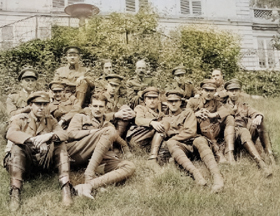 World War I World War I  Interim Interim 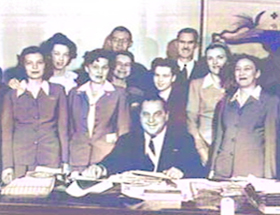 World War II World War II |
 |
|
 |
|
|
"The French people during the war won our warm admiration for their spirit, their devotion to high ideals, their strength of character, and their efficiency," one member wrote. "The people of the United States should know them better in the future, should strengthen the bonds of friendship between the two nations, and should increase their co-operation in the advancement of civilization according to their common ideals." (George Rock, "The Fellowships for French Universities" in The History of the American Field Service, New York: Platen Press, 1956)
* * * * *
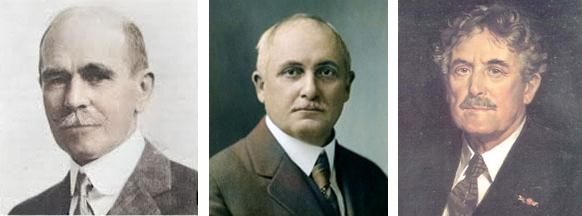
"It may not be inappropriate to here recall the origin of the Society for American Fellowships in French Universities. Late in 1915, Dr. John H. Wigmore, Dean of Law in the Northeastern University of Chicago, a widely known educator, laid the foundation of the Society, which from now on will bear the name of American Field Service Fellowships for French Universities. In correspondence with Professor C. H. Grandgent, then exchange Professor at the Sorbonne he learned that the project would be cordially welcomed by the French authorities. (Charles A. Coffin, Chairman of the AFS Fellowships for French Universities. "Remarks at first AFS reunion" "AFS Bulletin, July 1920)
* * * * *
During the year since our demobilization, we have consulted with the French Ministry of War, the heads of various other departments in France, and with individuals whose position and experience qualified the worth of their judgment, both there and in this country. The consensus of opinion was that our effort be academic, and for the establishment of scholarships between French and American universities. [...]
On returning to America last summer, we found that an association had already been formed for American Fellowships in French Universities. [...]. Almost immediately, however, Mr. Herrick advised us that having heard of our interest in a similar project, his committee would be glad to confer with us in regard to a possible alliance. At this conference it was explained by our trustees that they felt that the time and the way in which the members of the Field Service had done their part, justified the perpetuation of their identity, as well as their powers of administration, in whatever their future effort might be. The response of Mr. Herrick and his associates was perhaps as broad a tribute as our Service has received. They not only expressed understanding and approval of our viewpoint, but out of respect for the achievement of the Field Service they offered to give up their own identity, and rename the whole organization the American Field Service Fellowships for French Universities, to include the trustees of the Field Service on their Board, and to entrust to our Service responsibility in the administration of the work, and in the selection of fellows, etc. ("The Future of the Field Service", AFS Bulletin, April 1920)
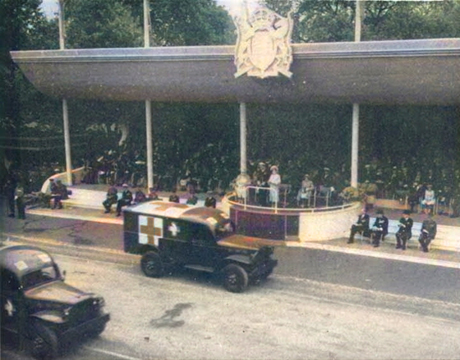
"In February 1946, while AFS was still winding up its wartime activities, Mr. Galatti began to inquire whether its membership wanted AFS to continue as a permanent organization. The French Fellowships would soon be able to function again, but that was a separate establishment. (George Rock. "The First Years of the Teenage Programs (1946-1955)." History of the American Field Service, 1920-1955. New York 1956.
* * * * *
"If the AFS is to continue to function, it should have a peace time project, and Mr. Galatti stated that it was his feeling that the Exchange of Students under a scholarship system should be the first project of the AFS. These fellowships would not be only between the United States and France, but they would be between all countries." (William P. Orrick. New York: The First Thirty Years of the AFS International Scholarships. New York: AFS Archives. 1991.)
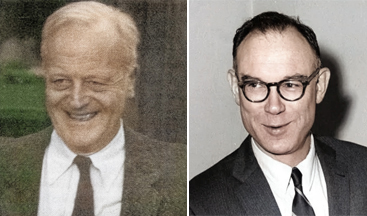
In early 1947, Stephen Galatti called a meeting of key supporters to discuss the issue. George Van Santvoord (a WWI driver) and his protégé, Arthur Howe (a WWII driver) attended. At this meeting, the broad lines of an international counterpart to the French Fellowship program were laid down. While the French Fellowships had been defined primarily with the intellectual concerns of advanced university education in mind, the new AFS International Scholarship program would be given a much broader scope./font>
The objective was to give the young people of various nations, who had been chosen for their character as much as for intelligence, as real an understanding of America as they could get in a year. AFS wanted them to be ambassadors for their countries while they were in the United States, informing Americans about the people, customs, and ideas of their homelands. At the same time, it was felt, they would learn about America and could take this understanding back to their families and friends at home. (George Rock, History of the American Field Service, 1920-1955. New York: Platen Press. 1956.)
The initiative, however, came from Paris from where one of Galatti's contacts had telephoned with the news that he had three French high-school-age students ready to go to America.
Steve Galatti was a trustee of St. Mark's and said, "I will take one here." And George Van Santvoord said that he would take one at Hotchkiss. And I agreed to get in my car, which I did the next day, and go into Westchester County and find a high school that would take one. I recall going into the backyard of the superintendent of schools in Pleasantville. [...] He was mowing his lawn that afternoon and I interrupted him and went through this weird dance of telling him that I represented the American Field Service and that we were bringing some students over here, and could we have one in the Pleasantville High School. And by God, this man said "yes"! (Arthur Howe, transcription of an interview, AFS Archives, New York, AFS Archives.)
The plan was to continue on the college and graduate-school level as before the war, and 22 of this first 50 were selected on this basis, some aided by scholarships arranged by former ambulance drivers. But the rest, the majority, were preparatory-school students. George Van Santvoord (SSU 8-3), the Headmaster of Hotchkiss School and President of the National Preparatory School Committee, had suggested in February 1947 that the schools of his committee were prepared to give scholarships (tuition, room and board) to a selected group of teenagers. The idea was that, as much good as was done by bringing the older students here, still more might be accomplished by bringing the younger. As very little of this sort had been done before, no one could quite guess how it would turn out. (George Rock, History of the American Field Service, 1920-1955. New York: Platen Press. 1956.)
* * * * *
...the United States Department of State asked AFSIS to outline a teen-age program for Germany. Under the terms of the agreement, 111 German students were brought to the United States in 1950-1951. Of the 108 other AFS students year, 82 were in secondary schools. The size of the program had thus been doubled in one year. (Only 26 of the total number were in colleges, and the following year the college program was discontinued). (ref,)
* * * * *
"The High Commissioner's Office in Germany was looking at the problems of a generation of German kids who had been conditioned in certain ways that seemed risky for their future positive contribution to the world, and there was a feeling that if some portion of the leadership of that youth group could see another side of the world, it might be a constructive factor in the whole reconditioning of Germany.
"To AFSIS it was a tremendous shot in the arm, because everyone came at cost basically, and for the first time we had a large source of support for our overhead here.
"Steve would raise money, enough money to get the kids here, (he'd use every penny he had to get kids here), and that left no money to rent space, to pay people. Almost no one, if anyone, on the staff was paid at that time. And amenities were at an absolutely unbelievable minimum. This was part of Steve's dedication and drive--to put every penny into another student.
"It's hard to realize the significance of that State Department grant in giving us a little leeway to being able to do some things, shall I say, properly."(Art Howe in William P. Orrick. New York: The First Thirty Years of the AFS International Scholarships. New York: AFS Archives 1991.)
* * * * *
Participants in the teenage program were boys and girls of not less than 16 and not more than 18 years of age, generally secondary school students, from both urban and rural areas. Each was expected to spend a year in the United States living with American "foster" families, attending high schools and participating in the programs of local youth groups and community activities. The original purpose of the teenage program had strongly humanitarian as well as practical purposes. The stay in the United States, it was hoped, would "heal the wounds of the war;" but other purposes had specific reorientation aims, namely, "to instill a knowledge of and respect for the democratic way of life in the youth of those countries [Germany and Austria] who had been indoctrinated under the National Socialist regime and were isolated from [indeed had never been exposed to] democratic practices and thought." Subsequently, with the relaxation of Allied control and Germany's gradual return to independence and sovereignty, the program objectives shifted from reorientation to "increasing mutual understanding,", with the expectation that life in a typical American environment might help the youngsters correct prejudices and form new views of the United States, thus laying the groundwork for a mutually beneficial relationship between America and Germany. (Henry J. Kellermann. Cultural Relations--Instrument of Foreign Policy. U.S.-German Exchange. 1945-54. State Department, 1978.)
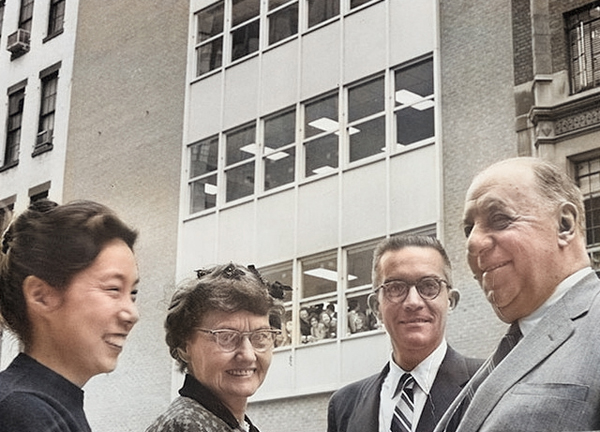
Sachiye Mizuki Dot Field George Edgell Steve Galatti 4. A New Field
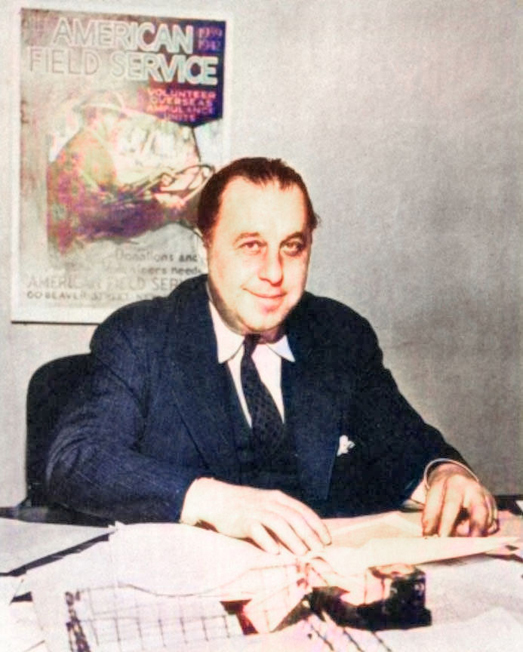
Mr. Rock looked at his watch, and said that Mr. Galatti should by now have reached his office after a flight from Ohio, and suggested that we go upstairs to meet him. As we did so, I learned that Mr. Galatti was a graduate of St. Marks and Harvard, had driven a front-line ambulance in the First World War, and in the years afterward had found time both to work in a brokerage business and to direct the A.F.S., up through the hectic Second World War years and the start of the present scholarship plan, in 1948. In 1954, he had retired from business to devote seven days a week, without pay, to the students.
We found Mr. Galatti talking on the telephone in a small room that seemed even more crammed than the rest of the building with photographs and mementos from AFSers. I noted a plaque testifying that Philippe Aucouturier, a French AFSer in California, had won a regional student speakers' contest; a recruiting poster from World War I; and a framed copy of General de Gaulle's famous announcement beginning "A Tous les Français: La France a Perdu Une Bataille." Among the items I identified on shelves along the wall were beer mugs, a miniature Costa Rican peasant cart, Finnish vases, a filigree ship's model from Portugal, a Guatemalan doll, a Spanish wine pouch, a wooden horse from Sweden, and a red imprint of a Japanese wrestler's hand on white paper. The desk at which Mr. Galatti sat was dominated by an oversized Mexican piggy-bank bearing a sign that said "Please feed me."
Mr. Galatti was a portly man with a large, distinguished head, gray hair, and a kindly, lined face. He looked both wise and humorous, and younger than his seventy-one years. When he had finished his telephone conversation, he greeted me and told me the call was from an Oregon town where an AFSer had to undergo an emergency appendectomy, and that he had been checking on the surgeon and hospital the student's American family had entrusted with the operation. "I have signed statements from the parents of all of the children, authorizing me to act for them in any emergency," he told me. "We insist that we be notified immediately; either George Edgell, who has over-all charge of the foreign students in America, or I are always reachable day or night. We get our share of the sort of things that happen to teen-agers, but we've had only one fatality." I remarked to Mr. Galatti that I understood he worked in the offices on Saturdays and Sundays as well as being on tap at nights. "It's a very easy thing for me to do," he replied. "My wife is dead and my son grown, and I like this quiet work."
Going back into the history of the A.F.S. and his career with it, he told me that between the two World Wars the organization had brought over some college exchange students, and had continued to do so after the Second World War, but its members had felt, uneasily, that there was still more they could accomplish for international friendship. Early in 1947, George Van Santvoord, a former A.F.S. ambulance driver, and then headmaster of Hotchkiss School and president of the National Preparatory School Committee, suggested that the A.F.S. start international exchange on the teen-age level. "He pointed out that children at that age have not yet formed rigid national prejudices, and that they are still spontaneous and flexible, without the demands for specialized training that college students usually have. So, we raised ten thousand dollars from our members, and asked educational groups and American cultural attachés in four European countries to select seventeen teen-agers. In the fall, we brought them over and put them in preparatory and boarding schools that had agreed to accept them in their senior classes with the usual fees waived. Then we found families for them to visit during vacation time. At the end of the year, we piled them into a bus for a tour of the country. Our alumni arranged for the youngsters to stay overnight in homes along the way. The tour was a stunning success. One of the stops was Elkhart, Indiana, and the high-school principal there later wrote us, asking for two exchange students for the following year. His student body, he said, had raised the necessary funds, and families had been found to take the kids in. Other towns heard of the Elkhart project and asked for students for their high schools. Right then and there, we decided to concentrate on the public schools, where a youngster would be able to reach and be reached by an entire community.
"We didn't know, of course, how this public school experiment would turn out, as no one had ever tried such a project on a large scale. But soon after the children settled down the letters began to come in. 'Marcel is all we could ever want in a son,' and 'It's a joy to have Greta as a member of our family,' they would say, or 'Hanne has been elected football queen,' and 'Dimitrios is now a member of the student council.' And the kids themselves invariably wrote that they felt so close to their American parents they were calling them Mom and Dad. It was obvious then that they got a lot out of their year, that they could adapt themselves to life here, and at the same time make very firm friendships---our main purpose. At that point the State Department, which was already co-operating by screening candidates abroad, gave us a big boost. It granted us the money to bring over more than a hundred young Germans, a program which it continued for six years. That gave us a total of 209 teen-agers from fifteen countries in 1950.
"We didn't have nearly enough communities to place them in. So we got together a list of good high schools around the country and put our members to finding homes in those towns and working up local interest. To many Americans the German kids were still enemy children, and the youngsters themselves were pretty terrified of their reception here. The astonishing thing is that everything worked out. On the bus trip even the French and the German youngsters became close friends. One German boy had told me that nothing could ever make him set foot on French soil. At the end of the trip he was planning to visit all the French kids in their homes on his way back to Germany.
"The State Department has helped tremendously. It gives us guidance in forming committees abroad, acts as liaison with foreign school systems, and helps us interview candidates in new countries until we get local committees organized," Mr. Galatti said. In 1953, the A.F.S. started in South America, he added, and by 1959 had over a hundred students from Argentina, Bolivia, Brazil, Chile, Colombia, Ecuador, Peru, Uruguay and Venezuela. It added Indonesia and Guatemala in 1956, and then Malaya, the Union of South Africa, Egypt, Syria and Iran joined. In some countries it now has widespread support, as in Norway, for instance, where 88 secondary schools out of a total of 111 take part in the program.
The Americans Abroad summer exchange, Mr. Galatti went on, which was conceived and carried out by the foreign returnees as a thank-you gesture, had spread to twenty-four nations by 1959. The returnees find families for the Americans to live with for their seven to eight weeks' sojourn (eleven or twelve weeks in Asian countries), watch over them during their visit, and raise money for an official end-of-season stay together in one spot, often the nation's capital, where the students evaluate their experiences, discuss their future role in A.F.S. and are elaborately entertained. "It's quite a feat for the returnees," Mr. Galatti said. "In their countries a youngster doesn't just clap his father on the back and tell him he'd like a foreign kid in his home for the summer. And school officials and community leaders are not in the habit of sitting down with teen-agers and seriously discussing anything."
The Americans Abroad school program, whereby high-school seniors spend their first semester in foreign schools, had been operating only two years, Mr. Galatti said. "Since our high-school kids, compared to those in most other countries, get comparatively little language instruction, there were serious language barriers to overcome. Also, they have, found the school life very different from ours---for most of them, it was little but hard work from eight o'clock to five, with no social or extracurricular activities at all. They seem, however, to have weathered it and even got a lot out of it. What's more, only a few of them had any difficulty getting into colleges of their first choice when they returned."
Mr. Galatti then said he must excuse himself to see the father of a former AFSer from Austria, who was in New York, staying with his son's American family. "These kids really make lasting ties," he said. "Most of them correspond regularly with their American families, and there's a huge amount of visiting back and forth." (Katharine T Kinkead, Walk Together, Talk Together, Norton: NYC, 1962)

At a meeting held last August in New York, shortly after Steve's death, to celebrate the 50th Anniversity of the American Field Service, which was attended by delegates from all parts of this country and the world, Dean Rusk, our Secretary of State, said,
"Stephen Galatti was working to achieve a world in which all mankind can live together in peace and brotherhood. That kind of world is the abiding dream of the American people and the ultimate goal of this foreign policy."
At that same meeting Edward A. Weeks, Editor of the Atlantic Monthly and Chairman of the Board of A.F.S., in speaking of Steve and referring to his becoming Inspector General in World War I said, "He proved to have a magic touch in raising money, but more important, in his disarming way he held the affection and absolute trust of the ambulance drivers who turned to him as they turned to no one else with their personal problems." Here are further quotations from Weeks' speech about the A.F.S. and Steve which I think help give a true glimpse of this modest, lovable man and the importance of the work he did:
"It is an old axiom that when you give yourself to a cause, the more you give the more you grow. Steve Galatti was the embodiment of that truth.
"It was Steve Galatti's special gift that he converted this experience (i.e., his work in W.W.I.) into a daring program. The exchange of French and American students between the wars was enormously enlarged in 1947; since then the Field Service has brought into thousands of American homes---17-year-olders, boys and girls... to become citizens of the world who will never forget their days in the United States... This was Steve's life, his way of saying that the only thing stronger than the bomb is the attraction of person to person--- the cohesive power of mankind."
G.P.G.
 |
Chapter Seven |
| |
Table of Contents |
