Right Bank
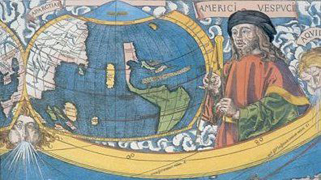
In 1507 in the little city of Saint-Dié, a group of scholars christened a newly-discovered continent with the first name of an early explorer, Amerigo Vespucci. The event was celebrated there 404 years later, in the presence of the American Ambassador, Robert Bacon, who said:
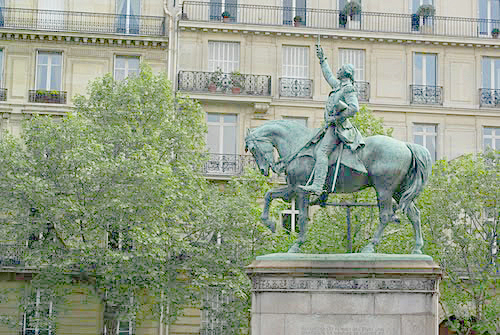
Sword? Ambassador Bacon is referring to Gilbert du Motier: a man whom we remember not by name, but by title: the Marquis de la Fayette, Americanized as Lafayette and celebrated all over America in monuments, institutions, cities, streets...“After French Lorraine had bent over our cradle to give us a name, it was greater France who threw her sword in the balance to give us independence.” (James Brown Scott. Robert Bacon, Life and Letters, 1923.)“Lafayette, we are here!” proclaimed one Charles E. Stanton, on July 4th, 1917----during a ceremony held at the final resting place of Monsieur du Motier’s ashes.
General Pershing has often been mistakenly credited with this remark.Colonel Stanton, a typical American army officer of the rough variety, made a speech, or harangue, waving his arms, beating the tribune---annihilated the whole German race, Kaiser and all, in his fury, had a tremendous success, was wildly applauded. (Allan Nevins, ed. The Letters and Journal of Brand Whitlock. 1936.)
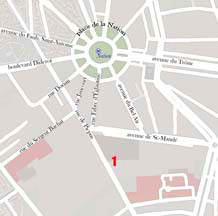
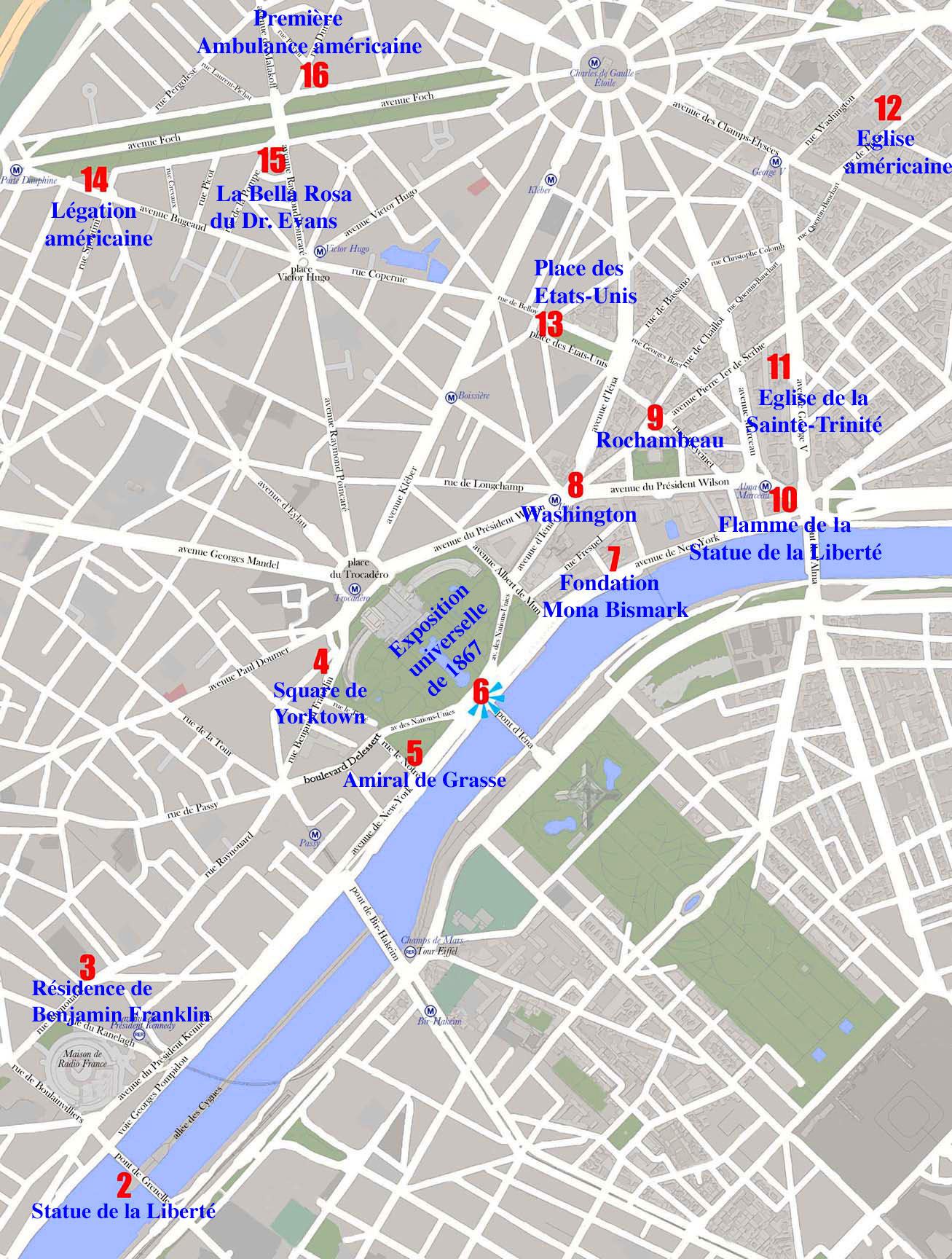
1: Lafayette’s grave,
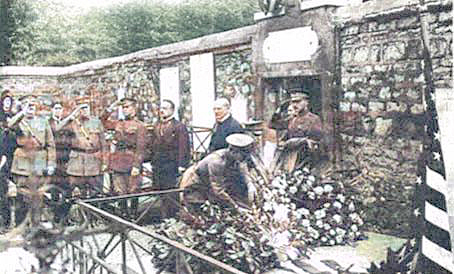
Cimetière de Picpus, 35, rue PicpusThe American Expeditionary Force had finally arrived! American volunteers, however, had been there from the outbreak of war... which is why our visit begins here. The marquis’ ashes are buried under American soil brought from Washington’s grave, so this, the only private cemetery in Paris, speaks of the two Revolutions, American and French. The guillotine had been set up nearby at what is now Place de la Nation, and many of its victims--- mostly from the nobility like Lafayette's family--- are buried here in two mass graves. Lafayette lived in troubled times, as did France of the Great War.Some American Ambulance people were encountered who insisted that I go with them to the ceremony at the Picpus. The cemetery where Lafayette is buried is in a remote part of Paris, and we reached there some half hour before the battalion arrived. [...] Many dignitaries were grouped about the tomb, "Papa" Joffre among them, and I may add that he had to be pushed forward into the front row, for, though he has been kicked upstairs by an unappreciative government, the people still adore him. Mr. Sharp spoke at length. Brand Whitlock read at still greater length many pages about civilization and humanity---very immaculate, in eye-glasses with a heavy black braid and in spats---both the speech and B.W. Then Colonel Stanton, U.S.A., brief and to the point. Finally le Général Pershing s'avance à la tribune "without the intention of speaking"; but he did, briefly---a fine-looking man with a square chin and proper shoulders. He may have said, "Lafayette, nous voici," but if so we didn't hear it on the wall. (Harvey Cushing. From a Surgeon's Journal, 1915-1918. 1936.)
Passy
Métro: RER C, Kennedy/Radio France
2: Statue of Liberty,
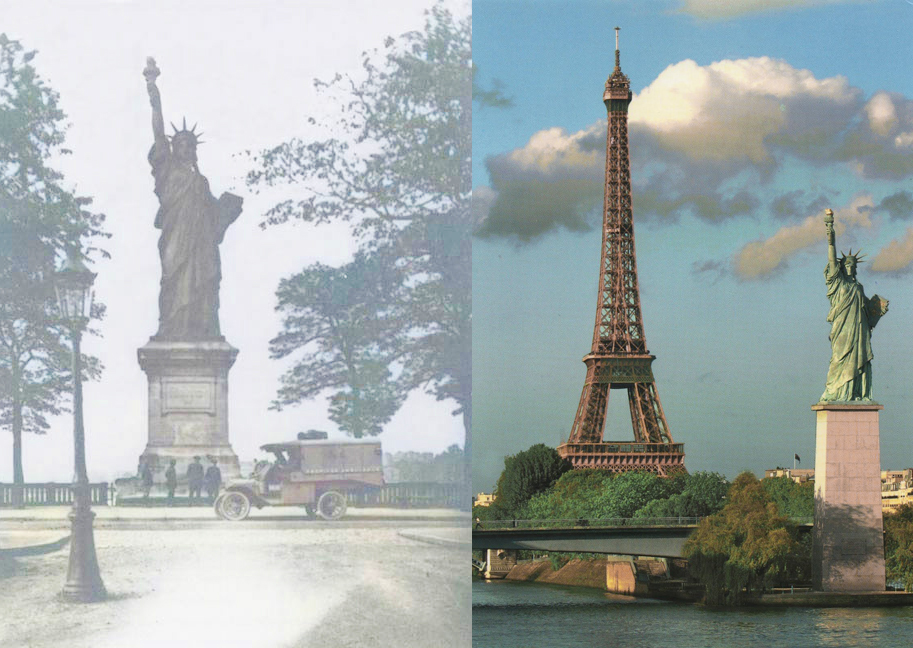
Ile des Cygnes, off the Pont de Grenelle.19th century Romanticism was fond of metaphor. French sculptor August Bartholdi, whose native Alsace fell under German rule after France's defeat of 1870, has become known for two great symbols: the Lion of Belfort (1880), representing the historic resistance of that town, and Liberty Lighting up the World (1886) in celebration of the centennial of the American Revolution. Paris possesses three versions of the latter, the largest one being here. It was a gift of the American Colony of Paris, including a large contribution from Dr. Evans. This quarter-size reduction was unveiled on May 12, 1885, before her larger sister in New York, both statues facing east. In the 1930s, when the Pont de Grenelle was rebuilt, the Paris statue was rotated 180° to its present position, both "Liberties" henceforth facing each other.
Bartholdi's Liberty in New York Harbor is built on an iron framework designed by Gustave Eiffel, whose tower forms the backdrop to the Paris statue.
3: Benjamin Franklin’s residence,
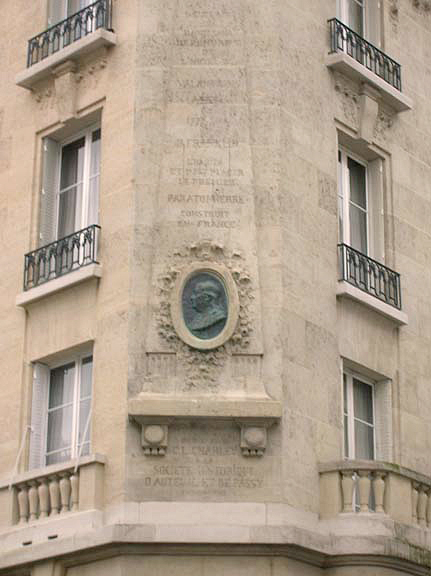
66 rue RaynouardIt is proposed that the statue be placed at the end of the Rue Franklin, near the Place du Trocadéro, in the section of Passy where the famous American ambassador lived from 1777 to 1785. He lived in a little pavilion at the Valentois mansion of which not a trace remains and which has today been replaced by the chapel of the Institution of the Brothers of Christian Schools, 66 Rue Raynouard. On the walls of that chapel there is already a plaque which recalls Franklin's stay in Passy and the setting up of the first lightning rod which he built in France. It carries this inscription:Here stood a pavilion, an outbuilding of
The Valentinois mansion
FRANKLIN
lived in it from 1777 to 1785
and had installed in it the first lightning rod
constructed in France.Above, the date the commemorative plaque was installed: May 8, 1896.
Franklin arrived in France around the end of the year 1776. He came to reconcile the favor and support of France to the cause of the independence of the United States. When, on July 4, 1776, the Philadelphia congress proclaimed that independence, the American cause seemed greatly in danger. It was necessary to find in old Europe allies for this new struggle which was to be waged and the eyes of the "Insurgents" turned towards France. Franklin maintained relations with well-known writers and philosophers. He was naturally chosen as ambassador. He rapidly aroused sympathies in Paris which were extended to his country. The public wanted to know him; he became "in fashion". None of the forms of publicity which brought a man to fame were denied him. Pictures were spread of him in his office, in the street, wearing his fur-lined hat and leaning on his stick of wild apple--- people never saw him other than in this familiar way. The popular singers spread his glory. (La Liberté of 14 August 1905)
4: Square de Yorktown
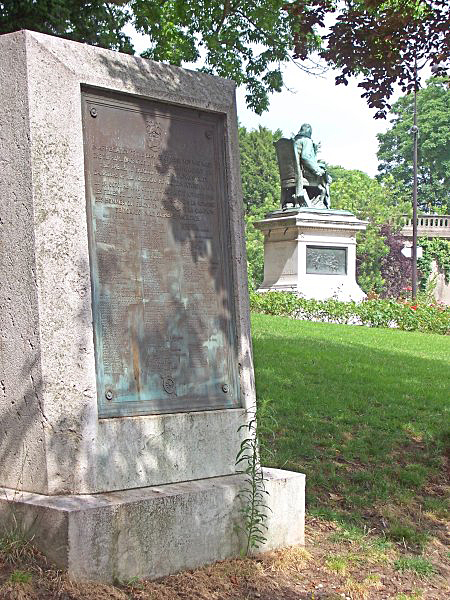
Memorial to French Volunteers in the American Revolution,
In French, the word volunteer has a military connotation. Some 17,000 volunteers soldiers from France helped the American colonists win the war. Americans remembered this in 1914.
We shall soon celebrate the anniversary of Yorktown. It is well to reflect now upon all that we fought for and won there for the world, for our brothers of England no less than for our own country which had revolted from the despotisms of Kings. That was another world crisis, and we won only through the aid of Frenchmen---Rochambeau, Lafayette, de Grasse---and with French treasure. These men came to us in our struggle through no motive of ambition or adventure, but because they cherished the ideals of liberty. France loaned us money even when the loan threatened to strain her credit, sending us her millions without thought of repayment. (Robert Bacon, quoted in James Brown Scott. Robert Bacon, Life and Letters. 1923.)
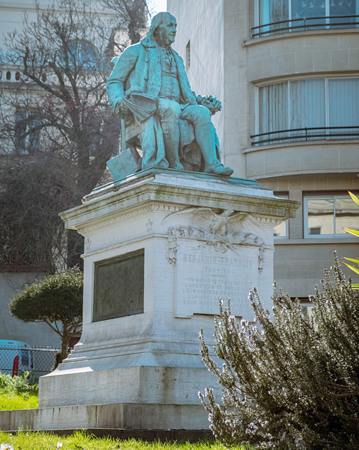
Statue of Ben Franklin
In view of the approaching two-hundredth anniversary of the birth of Benjamin Franklin, Mr. John H. Harjes has offered to the City of Paris a statue of the great statesman and first American Minister to France, to be erected at his cost in the rue Franklin. This offer has now been accepted. [...]
The statue offered by Mr. John H. Harjes is to be an exact reproduction of the bronze statue standing at present in front of the Central Post Office in Philadelphia and is to be made in America by Mr. John J. Boyle, of New York. (New York Herald, 28 July 1905)
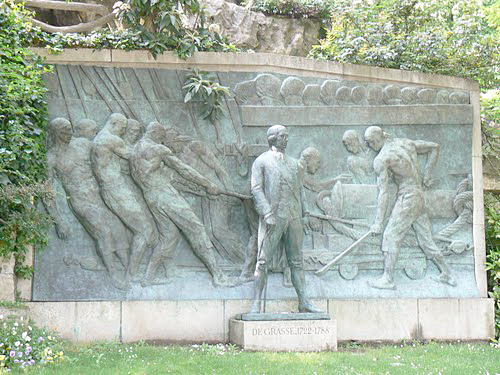
5: Admiral de Grasse,
statue in the Trocadéro GardensThis monument to Admiral Joseph Paul de Grasse, unveiled in 1931, was the work of Paul Landowski, better known for the large figure of Christ-the-Redeemer, overlooking the city of Rio di Janeiro. It had been commissioned by Kinsley Macomber, a prominent member of the American Colony and head of the American Hospital from 1926 to 1928. In September 1781, de Grasse landed 3,000 French reinforcements in Virginia, coming to the aid of Washington and Rochambeau's Expédition Particulière. and then defeated the British fleet in the Battle of the Chesapeake in September. De Grasse lured away the British forces and blockaded the coast until Lord Cornwallis surrendered.
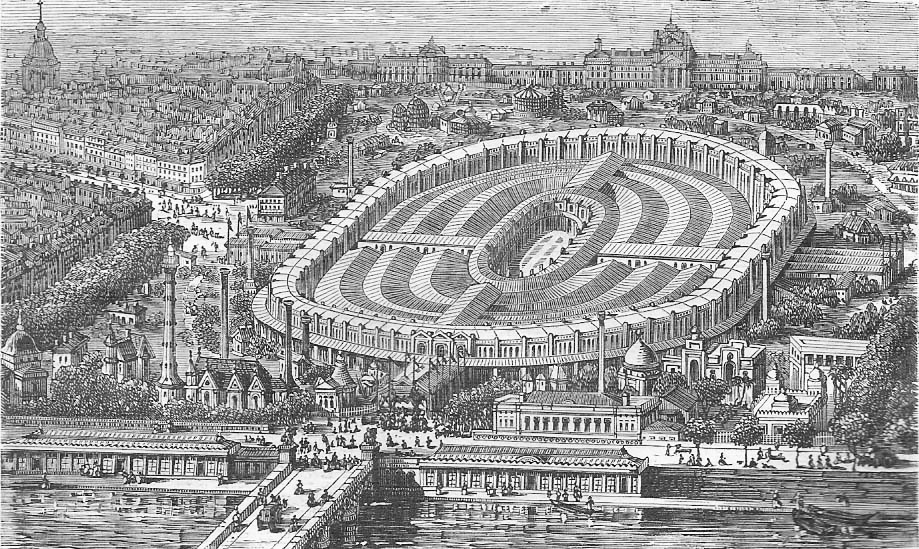
6: Overlook: Exposition Universelle of 1867,
Champ de Mars"As early as the year 1865 I decided to assemble in a collection and at my own expense," Evans said, "the inventions which had enabled the Sanitary Commission to obtain its wonderful results." His calculation was that the progress made by the United States sanitarians during the Civil War had saved the lives of a hundred thousand men. Dr. Evans approached inventors and manufacturers in the United States and sent his friend Dr. Crane to America to select and supervise. The result was an important collection of medical books, documents, photographs, apparatus, and equipment illustrating the work of the Sanitary Commission.The commission had planned to send an exhibit to Napoleon III's great Paris fair of 1867. But the American government refused to cooperate. Dr. Evans, with his own collection as the nucleus, now came forward to fill the vacuum. France gave him space on the fairground, and Evans paid the cost of transporting exhibits from the United States and constructing a building on the grounds of the Champs-de-Mars. (Gerald Carson. The Dentist and the Empress, 1983.)
N.B. The Eiffel Tower, erected for the World’s Fair of 1889, would have been absent from this vista.
7: Mona Bismarck Foundation,
34 avenue de New-YorkThis has been home to a host of American organizations, such as:
American Friends of Blérancourt
American Club of Paris
American Wives of Europeans
Association of American Resident Overseas
Association France Etats-Unis
Fondation du Mémorial de l’Escadrille La Fayette
French-American Foundation France
French Heritage Society
World Monuments Fund
8: Washington,
Place d’Iéna.A collaborative work between Daniel Chester French (best known for his statue of Abraham Lincoln at the Memorial in Washington), and Edward Clark Potter, whose specialty was animal sculpture (notably the two lions guarding the entrance to the New York Public Library). As part of efforts to celebrate Franco-American relations in the context of the Exposition Universelle of 1900, this gift of the Daughters of the American Revolution was unveiled on July 3rd followed by, the next day, the inauguration of a statue of Lafayette on horseback in the courtyard of the Louvre's Carrousel. (In 1984, to make way for Ieoh Ming Pei's glass pyramid, the Lafayette statue was moved a mile and a half mile west to a grassy strip lined with trees along Cours la Reine, midway between the Invalides and Alexandre III bridges).
9: Rochambeau
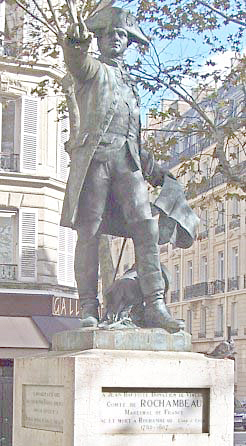
place de RochambeauOn June 4, 1900, the unveiling of the statue of Donatien-Marie-Joseph de Vimeur, vicomte de Rochambeau, preceded that of the two just referred to, taking place in Rochambeau's native city of Vendôme. The sculptor, Fernand Hamar, came originally from that city. The statue depicts Rochambeau on the eve of the Siege of Yorktown, clutching a battle map of Yorktown in one hand. The inscription reads, “Commander-in-chief of the French army in America, took Yorktown in 1781 and assured the independence of the United States.”
Three replicas were made of this statue, the first unveiled in Washington, DC. in 1902, this one in 1933; and the third in Newport, RI, the following year.
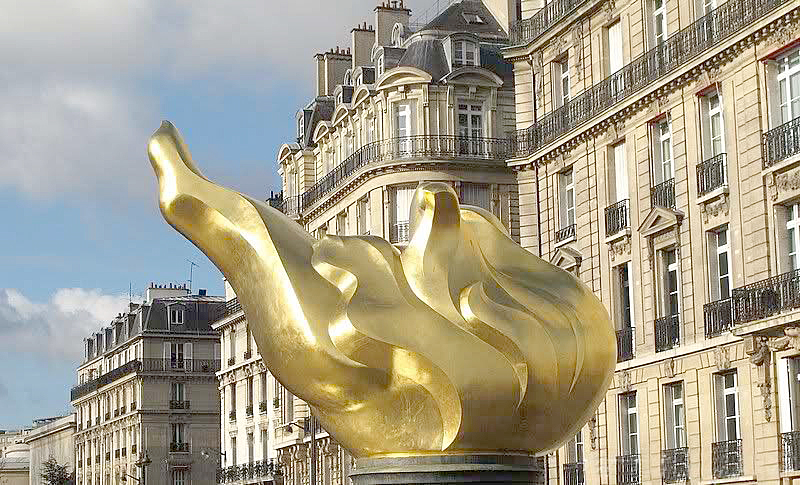
10: Flame, Statue of Liberty,
pont de l’AlmaA full-sized, gold-leaf-covered, replica of the new flame at the upper end of the torch carried in the hand of the Statue of Liberty at the entrance to the harbor of New York City since 1986. The monument was dedicated on May 10, 1989. On its base, the plaque reads:
"The Flame of Liberty. An exact replica of the Statue of Liberty's flame offered to the people of France by donors throughout the world as a symbol of the Franco-American friendship. On the occasion of the centennial of the International Herald Tribune, Paris 1887-1987."(The flame became an unofficial memorial for Princess Diana after her death in 1997 in the tunnel beneath the Pont de l'Alma.)
11: Church of the Holy Trinity, American Pro-Cathedral,
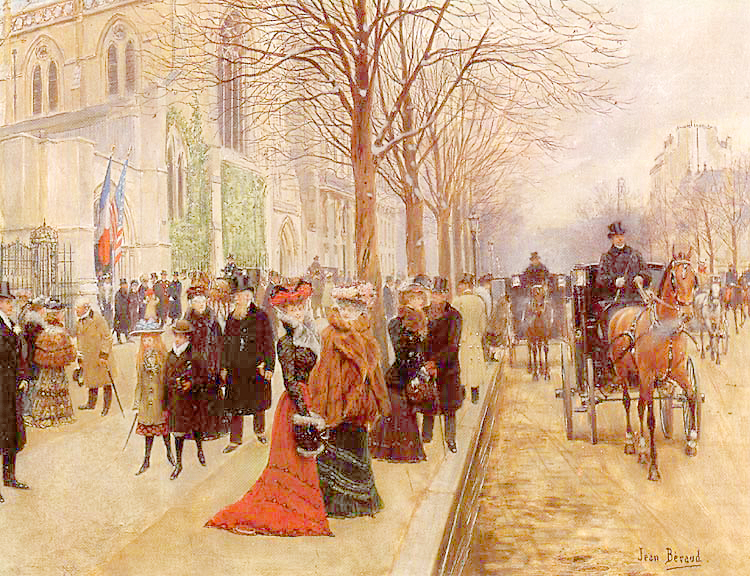
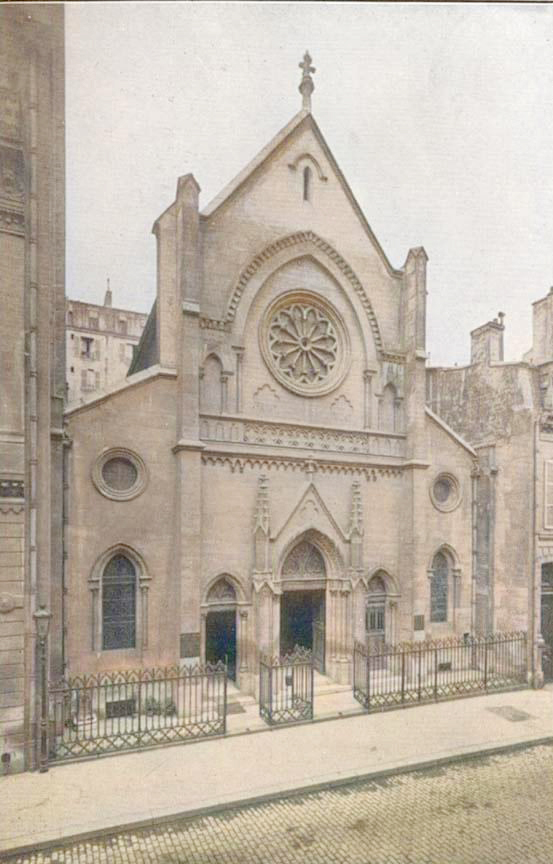
23 avenue George VThis, the more socially prestigious of the two American Protestant churches, was founded in the 1860’s, inaugurating its new building upon the present site in 1886. In the general proximity of the American embassy at the time, as well as the American Chamber of Commerce, the Cathedral was a gathering place for key figures in the American community living in Paris. In 1914, its pastor, Dr. Samuel N. Watson, a medical doctor by training, would play an important rôle in relief efforts.
12: American Church,
21 rue de BerriThis was the location of the first American Protestant Church around which resident Americans gathered. In the 1930’s, the building was sold and the Church moved to new quarters at its present location, 65 quai d’Orsay. (For a number of years afterwards, the International Herald Tribune remained in this neighborhood, having first rented space from the American Church before moving to its present headquarters in Neuilly-sur-Seine.)
13: Place des Etats-Unis
Originally called Place de Bitche, the square's name was changed for obvious reasons after Levi P. Morton, the American ambassador, established his residence and embassy there, in 1881. On 13 May 1885, a bronze model of the Statue of Liberty by Frédéric Bartholdi was erected in the center of the Place des États-Unis, directly in front of the American diplomatic mission--- with the aim of inspiring support for the building of the full-sized statue and its transport across the Atlantic. The model remained in place until 1888.
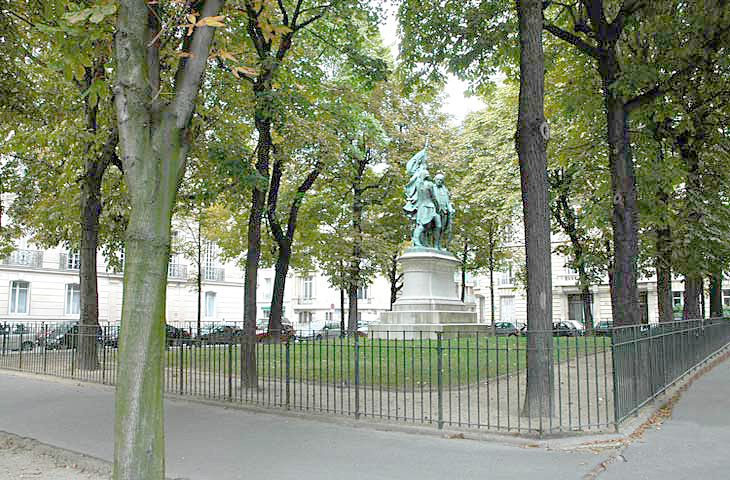
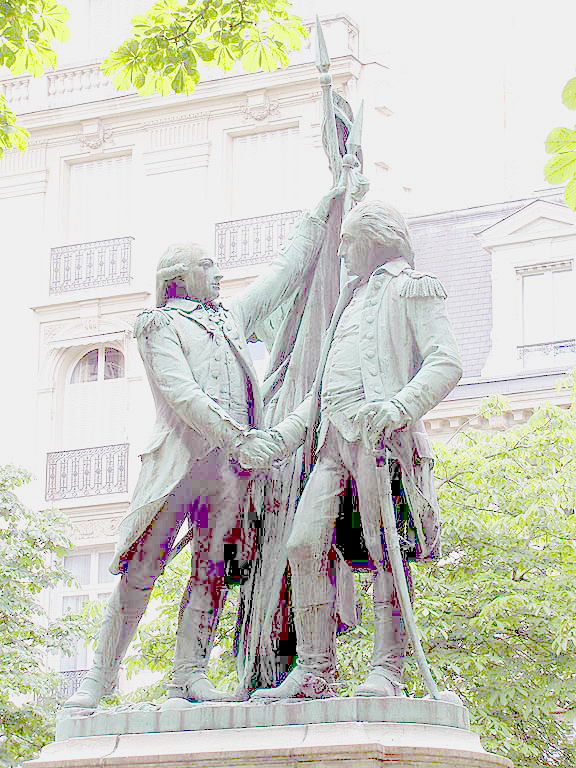
Lafayette-Washington
General George Washington and his comrade-in-arms of the American Revolutionary War, the marquis de La Fayette, on a marble plinth, are clothed in military uniforms, shaking hands; with the French and American flags as a backdrop. American publisher Joseph Pulitzer had been impressed by Bartholdi's Statue of Liberty and commissioned him to produce a statue symbolizing French-American friendship. It was dedicated in 1895---an exact replica later erected in Manhattan's Morningside Park.
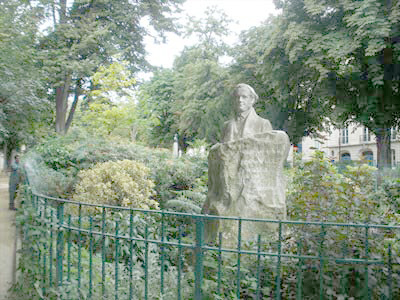
Horace Wells
A most curious tribute to the ill-fated "discoverer of modern anesthesia". The sculptor was René Bertrand-Boutée, and the monument was dedicated on 27 March 1910, during the tenth session of the Fédération dentaire internationale.
This is clearly a swipe at the vanity, if not memory, of the celebrated Paris-American dentist, Thomas Evans, who had died in 1895--- leaving his collections and his fortune not to France, but to the University of Pennsylvania.
Dr. Evans was the first dentist in Europe to develop the use of vulcanite rubber as a base for dentures. He experimented constantly with new techniques, appliances, amalgams, and introduced nitrous oxide gas as a general anaesthetic to his colleagues in London after using it himself in some thousand surgical operations. Meanwhile, his American contacts continued. He corresponded regularly with his old Philadelphia friend S. S. White, the manufacturer of dental supplies, and served as Paris correspondent for the American professional journal Dental News Letter, known after 1859 as the Dental Cosmos. The doctor also wrote frequently on orthodontics and operative dentistry for The Lancet in England, and translated monographs of scientific interest from English into French and from French into English. (Gerald Carson. The Dentist and the Empress, 1983.)
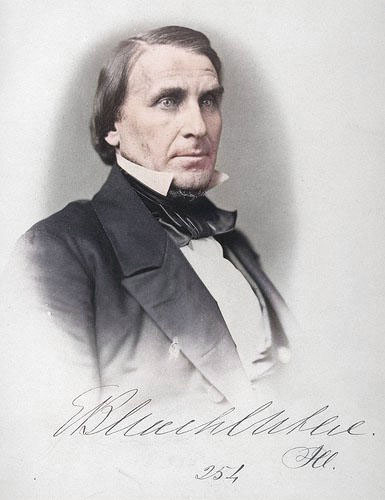
Elihu B. Washburne
14: American Legation,
75, avenue FochHere was installed the United States Legation to Paris in 1870-1871. E. B. Washburne, ambassador to Paris from 1869 to 1877, lived here, and remained here during the siege of Paris and during the Commune; the German Government had confided to him the interests of the Germans living in Paris, and Washburne secured their departure. This house was showered with shells during the siege; it was invaded by the Communards, but it was successfully preserved against fire. On the 22nd March, 1871, about fifty Americans gathered there to offer a banquet to General Sheridan, who had arrived some days previously in Paris, and who had followed the military operations from the German side. (François Boucher, American Footprints in Paris, 1921.)* * * * * * *
Mr. Washburne, it will be recalled, was the only member of the diplomatic corps from any country who remained at his post during the siege of Paris and the still more trying days of the Commune. Mr. Washburne was living near the Bois de Boulogne where shells were falling thick and fast. When his house was bombarded he followed Mr. Cowdin's suggestion and moved to the latter's apartment. (James Brown Scott. Robert Bacon, Life and Letters, 1923.)
* * * * * * *
"Let us go," said Madame Lebreton, "to the American Legation, to Mr. Washburne. The Revolutionists will respect the American flag. Mr. Washburne will protect us." "The American Legation---Mr. Washburne," repeated the Empress interrogatively---and then she thought of me. "No," said she, " I will go to Dr. Evans. He is an American also, but he has no political responsibilities, and, besides, is an old friend. I am sure he will not hesitate to render us every assistance we may require." And so it came to pass that the Empress and Madame Lebreton directed their cabman to drive them to my private residence, on the corner of the Avenue de l'Impératrice and the Avenue Malakoff, where they arrived at about five o'clock. (Thomas W. Evans. The Second French Empire, 1905.)
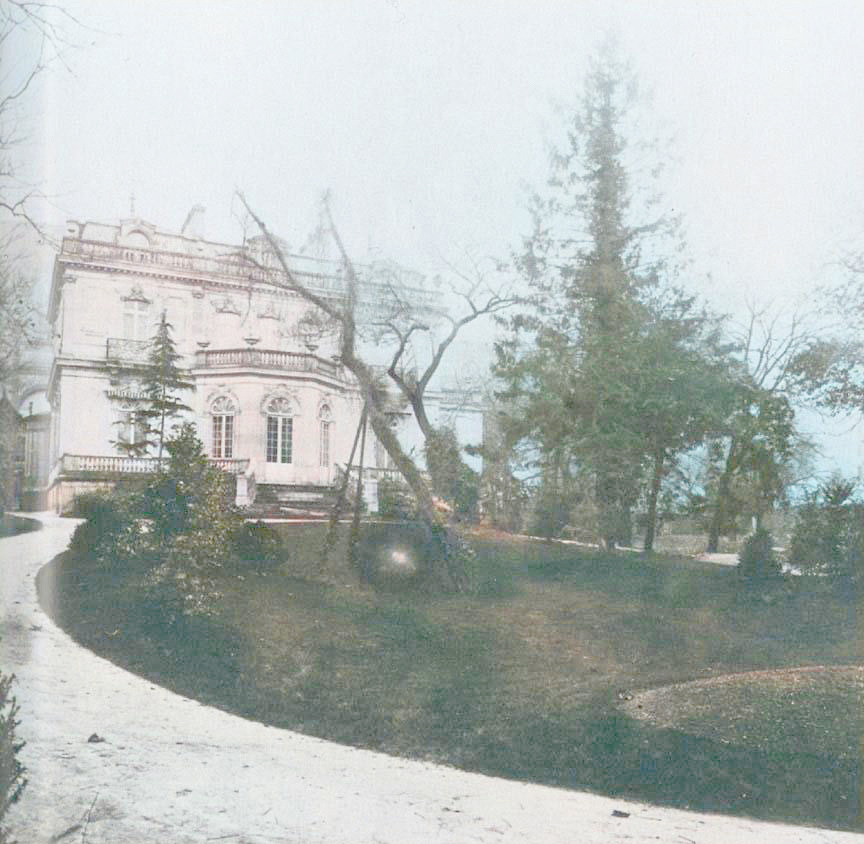
15: Dr. Evans’ home, Bella Rosa
41, avenue Foch
(This avenue was inaugurated under the name Avenue de l’Impératrice before taking the name of General Ulrich, then that of the Bois de Boulogne)Dr. Thomas W. Evans was the founder of the first American Ambulance. After Evans’ death, Bella Rosa was left to the City of Philadelphia which rented it to the French Government during the World Fair of 1900, its first guest being the King of Sweden. The Shah of Persia narrowly escaped an assassination attempt while leaving the house. It was demolished in 1907.
The splendid Avenue de l'Impératrice, begun in 1854 and completed in 1856, quickly became a show place for the fashion parade, with traffic jams every pleasant afternoon. Carriages and horsemen filled the new roadway on their passage to the boating on the lakes, the Pré Catalan with its gardens and huge copper beech tree, the Longchamps racecourse, or such other amenities as the children's amusement park, a miniature railroad, the zoo, a brasserie, and elegant café-restaurants. In 1857 and 1858 on a plot halfway down the slope between the Etoile and the gates of the Porte Dauphine, then known as the Porte de l'Impératrice, Dr. Evans erected a luxurious mansion, really a small palace, in the architectural style favored by the Second Empire. The land had but lately been devoted to the growing of cabbages. The residence was called an hôtel, which in nineteenth-century French nomenclature meant a home with aristocratic pretensions. It was located at Number 41, surrounded by the greenery of a pretty park facing the new avenue on the corner of the Avenue St.-Denis, which became the Avenue Malakoff after 1864, and near a footpath through Dr. Evans's property used by gardeners who drew their water from a pump called La Croix Blanche. The doctor gave the city the ground for transforming the path into the Rue de la Pompe. This left him room for his new house in the shape of an irregular lozenge, bounded by the Avenue de l'Impératrice, the Avenue St. Denis, and the Rue de la Pompe, and a larger parcel on the far side of the Rue de la Pompe upon which he later built an apartment house. Adjacent to Evans's property was a hippodrome, a vast riding school open to the sky with covered galleries for spectators. There, balloon ascensions and reenactments of military triumphs drew large crowds during the summer season. Fortunately, the hippodrome burned down in 1869.There was a carriage entrance to the property, extensive stables with stalls for twenty horses, a greenhouse, a fountain and jet, a heated, rat-proof aviary (the doctor was an enthusiastic collector of exotic birds), and beds of roses everywhere, which gave the estate its name, Bella Rosa. Elihu B. Washburne describes in his Recollections "the elegant grounds of Doctor Evans." (Gerald Carson. The Dentist and the Empress, 1983.)
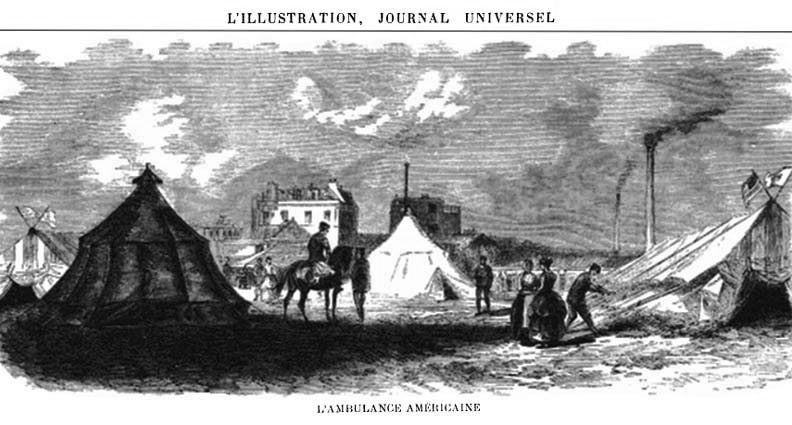
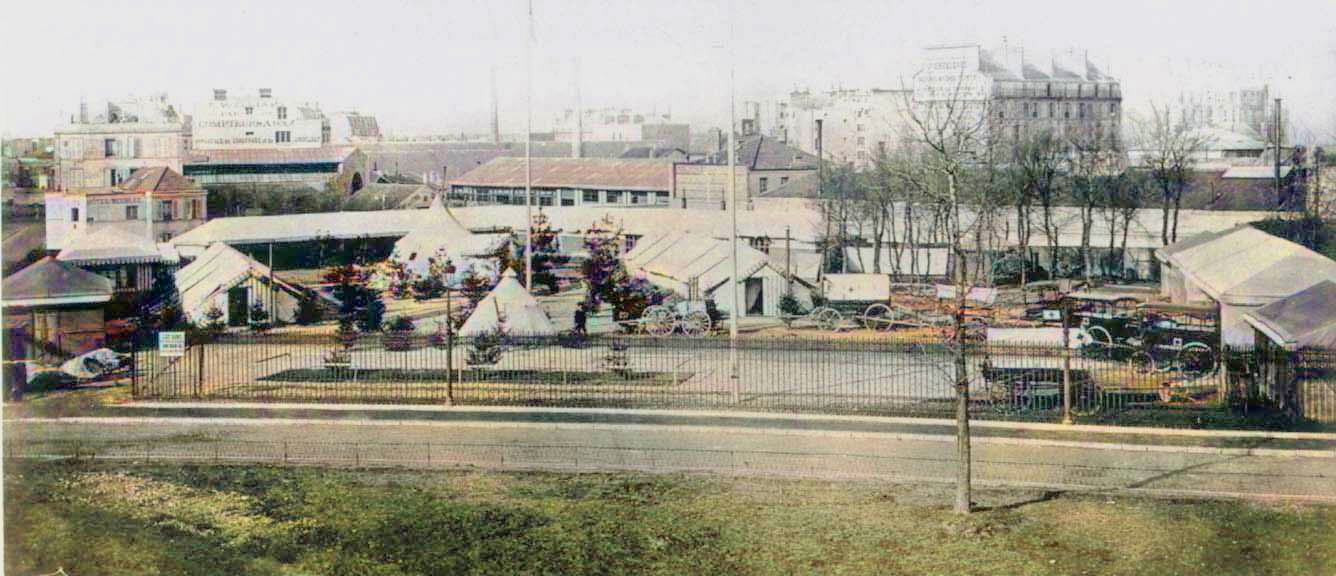
16: The first American Ambulance,
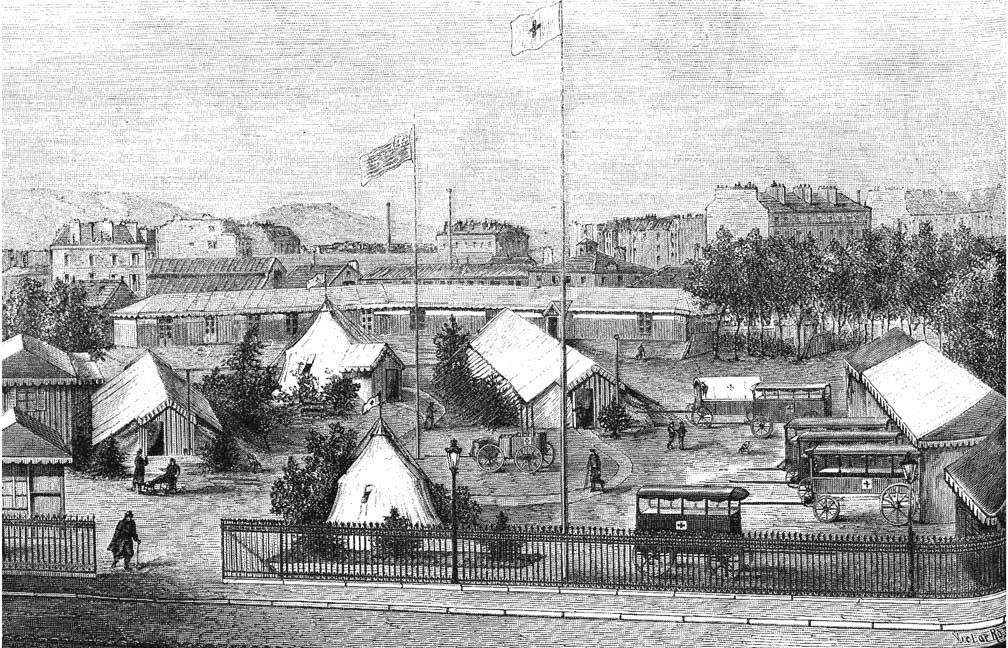
36, avenue FochEarly in September it became absolutely necessary to pitch our tents somewhere, and get ready for the conflict which was daily becoming more imminent. [...] A location had been selected on the avenue de l'Impératrice, No. 36, and several of the tents erected, on the first day of September, 1870. [...] The plot was by no means prepossessing; it was flat, covered with a rank vegetation, and had the appearance of a rich but neglected garden; and I may add that previously to our occupation it had been used for a dog show---several hundred dogs having been encamped there, during a considerable part of the summer of 1870. (Edward A. Crane, "Report on the Organization of the American Ambulance," 1873.)Description:
It is to Dr. Evans that the American ambulance owes more perhaps than to any one man. It supported itself, our corps did, and Dr. Evans furnished the largest portion of the money. He had some American ambulance-wagons and the material for a field hospital brought over and exhibited at the Exposition of 1867, and these were still in his possession.[...] Dr. Evans's tents were pitched in the Avenue de l'Impératrice, in the place where the dog-show used to be. This was our headquarters all through the siege, though at last, as winter came on, the tents were not large or comfortable enough to hold the wounded, and so we built barracks there. (Ralph Keeler. "Memoirs of the American Ambulance Corps in the Franco-Prussian War, 1870-1871", 1873.)
The first impression produced upon a visitor, on arriving at the American Ambulance, was generally one of surprise. It was difficult for a person only familiar with the hospitals of Paris and the ambulances organized in the city during the siege---nearly all established in monumental public buildings, or in hotels and private residences---to understand how such a collection of tents and barracks, as we had erected on the avenue de l'Impératrice, could be made to serve as an ambulance. And yet the first impression made upon the visitor was almost always an agreeable one.[...] On entering the grounds by the gate that opened upon the avenue, and passing the sentry-box to the left, the first building which usually attracted attention---as it was nearest the gate---was known to us as the "Administration." It contained two apartments---a reception room for visitors, and a committee room. But the tents were, of course, always the chief objects of interest; and accordingly we commonly conducted our visitor almost immediately to the pavilion nearest to the administration. (Edward A. Crane, "Report on the Organization of the American Ambulance," 1873.)The Ambulance in action
Fancy a beaming, grizzle-bearded, sure-handed master surgeon working for pure philanthropy, with a heart as soft as his language is strong ; a spruce Quakeress, scandalized at the slightest impropriety ; two ladies of the opéra ; an extremely evangelical parson, believing in the efficacy of texts printed in French ; a number of bankers and idle young men, believing in nothing at all ; a stray Englishman or two ; and finally, a rich woman of colour, who has left her luxury in order to perform the most menial offices for the wounded men, and to be snubbed by the rest of the ambulance. (Thomas G Bowles, The Defence of Paris, 1871.)
* * * * * * *
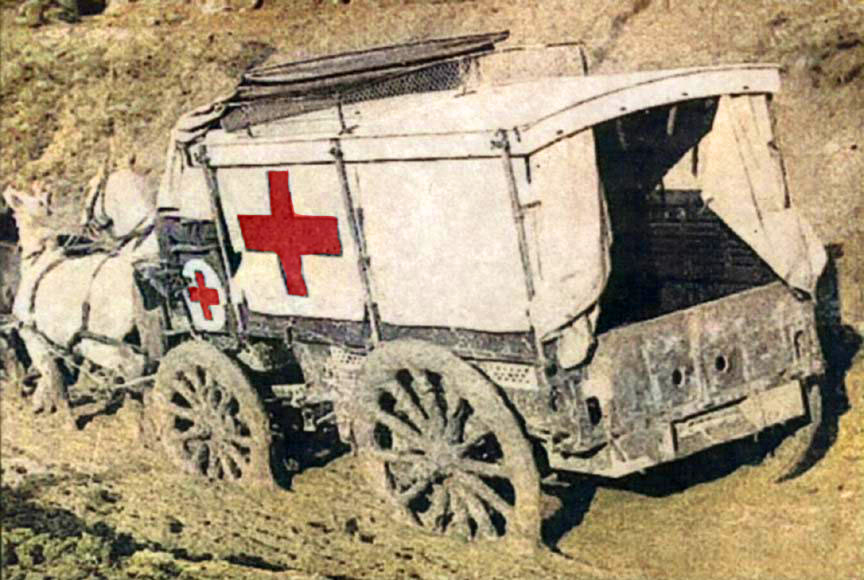
The gentlemen volunteer aides, whose duty it was to go to the field with the carriages to pick up the wounded, made it a point to seek and take in the most severely wounded, and particularly those having fractures, as it was believed that this class of wounded, especially, would suffer less under tents than in houses. In thus selecting the severely wounded, many would of necessity be brought in who were so gravely injured as to be amenable only to palliative treatment. An additional reason for our having obtained so large a number of this class of' wounded, was that these gentlemen were generally in advance of all others. (John Swinburne, "Report on the Surgical History of the American Ambulance," 1873.)
On entering the grounds, our visitors glanced round at the throng of volunteers sauntering about, and asked curiously “but who are these gentlemen, Messieurs ?” Kent explained that they were members of the volunteer staff, which was divided into two squads doing duty on alternate days, and pointed out several of the more prominent. “But they are men of wealth and high standing in society”, said the little gentleman in surprise. “Certainly, sir; but that consideration doesn’t seem to make any difference with their picking up a wounded man or dressing an injured limb on the field.”
Orders had been received at headquarters to be in readiness to move, and the whole camp was consequently in commotion. The volunteer service was larger than it had ever been before, and more completely equipped. Each aid wore the usual navy cap with its shield bearing the red Geneva-cross, and the regulation brassard about his arm.
It was at first impossible for us to proceed, the road being so jammed with ambulance trains ; but when the facts of our situation were made known at headquarters, a speedy answer came, in the person of Dr Sarrazin, who dashing up on his famous bay, shouted in a stentorian voice "l’ambulance américaine en avant !" And to the front we went, passing by scores of great, lumbering omnibuses, and out upon the unobstructed avenue. This little incident established a precedence for us, for ever afterward we had the honor of holding the van of the French army trains.
Here a part of our corps left us and moved down the slope to Rueil. They were evidently excited by the scene, for we could hear them singing as they tramped on --- "Marching through Georgia !" --- at the top of their voices --- Will Dryer’s high tenor and the gruff basso of Captain Bowles being easily distinguishable. Cheer after cheer rose from the French reserve, and all along the line. "What’s that for ?" called out Frank to a returning squad. "Les Américains ! " a voice replied. Our friends’ enthusiasm had aroused their admiration. But we had seen all there was to be seen, and Frank and I started with the first carriage-load. We drove carefully, for the poor fellows were suffering severely, and the slightest jolt make them cry out with pain. It was far into the night when they thundered across the draw-bridge of the Porte Maillot. "Hola ! de quelle ambulance êtes-vous ? " By the glare of the torches we saw the gleam of an armed guard . "L’ambulance américaine ! – Passez !" Inside the walls were assembled an anxious crowd. With some difficulty we got through the press, and at last drove into the ambulance grounds with our wagon-load of sufferers. (Louis Judson Swinburne. Paris Sketches, 1875.)
Chapter Two
Table of Contents