|
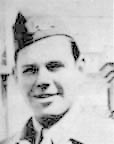
Cairo, Egypt, April 30, 1942. Thomas Esten, 28, of 195 Walnut St., Stoughton, Mass, died of pneumonia in an Alexandria hospital. He was buried in the British Cemetery with military honors. Thomas Esten served with the American Volunteer Ambulance Corps in France from October, 1939 to September, 1940 and during that time was awarded the Croix de Guerre twice, one with palm. For three days and nights, without rest, he helped carry wounded from the front lined to first aid posts, frequently acting as a stretcher bearer himself. Early in his association with the A.F.S. he showed his ability. He was selected as group leader and because of his experience and interest in map-making was given the job, during the long wait in India, of mapping out route marches. This earned him the endearing nick-name among his confreres of "The Mad Mapper" and "Slapsy Mapsie". The death of Tom Esten --- the first casualty in the A.F.S. during the present conflict --- saddened all of us who had the privilege of knowing him and we humbly pray that because of his supreme sacrifice we may do a better job. (AFS Letters No. 3)
|
|
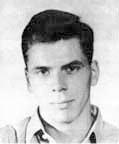
George Tichenor of Maplewood, N.J. was the first to die. As an Axis bullet pierced his head, he fell across the wounded in his care. His body protected them from the same deadly spray and they remained safe until they could be rescued. Quiet young George Tichenor was a little different from most of the Field Service men. He couldn't kill anybody. But he was, willing to. take anything being dished out in order to help the men who did fight. He was a pacifist with guts. The New York office of the Field Service didn't have to ask questions about him when he applied for service on Oct. 1, 1941. That spring he had been headed for the Middle East on the Zam Zam as a member of the British-American Ambulance Corps. His courage when the ship was torpedoed was a high recommendation. The townspeople of Maplewood supplemented that. His minister said he was an unusual young man, honest and reliable. Another sponsor added the words sober and trustworthy. His employer, the fashionable photographer George Platt Lynes. said his services, character and personality were entirely satisfactory. (Newspaper clipping in "A Mother's Scrapbook: John Newlin Hobbs and the American Field Service, 1942-1945.")
|

|
To the Honor Roll of the American Field Service is added the name of STANLEY KULAK, who was reported missing in action last spring. On the night of June 10th, 1942, Kulak took his place in the line of evacuation with Alexander McElwain, during the retreat from Bir Hacheim by the Free French. Together, they skillfully maneuvered their ambulance through the mine fields and cross fire of the German machine guns and reached the outside perimeter of this dangerous area when a shell struck their car, killing Kulak and wounding McElwain. Kulak's record of service is one of courage and unselfish devotion. During the fifteen day encirclement of Bir Hacheim, he worked incessantly under the stress and strain of the murderous barrage. His calm and steady manner during these days soothed the shattered nerves of the wounded. In the early days of his service, he narrowly escaped death when he was attacked from behind by two Messerschmidts which machine-gunned his ambulance, wounding Tom Krusi, his relief driver. He sacrificed his life for a common cause in helping to alleviate suffering. His loss is keenly felt by all those who had the privilege of knowing him and the honor of serving with him. (AFS Letters No. 10)
|
|
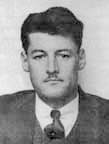
The name of William Keith McLarty, twenty-two-year-old California boy, has been added to the Honor Roll of the American Field Service. It was with a feeling of profound regret we learned of his death, as a result of wounds suffered when a bomb fragment struck him. He faced death---as he lived---fearlessly and bravely, doing the job he had chosen. Night and day he had driven his ambulance over the desert wastes with no thought to the dangers or the hardships which he might meed on the way. His loss is felt keenly by his companions, with whom he served, and by all those who had the good fortune to know him. (AFS Letters No. 6)
|
|
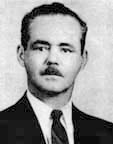
The Field Service ambulances with the New Zealand 5th Brigade and the 132nd Infantry Brigade worked back to the 4th ADS. A. P. Foster (a member of SSU 17 in World War I, whose two sons joined him in the AFS in World War II) was with the advancing column of 132nd Brigade. Although fairly deaf, he had insisted on being assigned to an RAP. What happened to him the night of 3/4 September is still uncertain. During a halt in the advance, he and his orderly got out from either side of his ambulance. The orderly never saw Foster again, and shortly thereafter the ambulance was blown up. Later the MO's batman reported that he had seen Foster lying on the ground beside the ambulance, presumably taking cover from the intense gunfire, and then during a let-up running toward the enemy line, presumably in response to a cry for help from a wounded soldier. When he did not reappear, it was hoped that he might have been captured. Some days later, however, it was reported at his platoon headquarters that his silver identification bracelet had been picked up on the battlefield. His body was never found, and he was never reported a prisoner. Regretfully, Arthur Paisley Foster was listed as "missing, presumed dead." (George Rock. Chapter 3. "Middle East 1. Tobruk to El Alamein (November 1941 to September 1942)" History of the American Field Service, 1920-1955. New York 1956.)
|
|
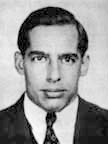
JOHN WATSON died at sea on December 4th, 1942, and was buried with full military honors. He left with his comrades with his heart set on the work he was to have done, and though it was not his lot to accomplish it, he nevertheless gave his life for the ideal which had made him voluntarily leave his wife and family. In the short time we knew him, he had already made an impression on all of us. The Field Service is built on examples of devotion such as Watson had, and in cherishing his memory we will realise that such a spirit as his can not die. (AFS Letters No. 10)
|
|
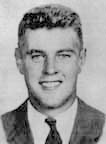
RANDOLPH G. EATON was killed in action on the Mareth Line in Tunisia. Capt. Howe, his Commanding Officer, reports as follows: "At 10 AM on the 25th March, 1943, Randolph Eaton, attached to the 6th N.Z. ADS South West of G. . . was severely injured by shrapnel from a bomb landing on the ground of the ADS. Major Duncan of the ADS gave him immediate attention, but he died five minutes later. Major Lamieson (Padre) buried him at the ADS." His home was in Brookline, Massachusetts and he had been a student at Bowdoin College, which he left at the end of his freshman year in order to join the American Field Service. He was 21 years old. (AFS Letters No. 12)
|
|
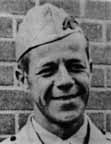
JOHN H. DENISON. Jr. 36 years old, died of pneumonia on March 27th. He was taken ill March 21st just after having arrived at a new post with the Fighting French Corps. He was buried with military honors in a British Military Cemetery, where a number of his A.F.S. comrades were present to form a guard of honor and also a squad of French troops acting as guards. His home recently had been in Bighorn, Wyoming where he owned and operated a ranch, but much of his life had been spent in both archaeological and anthropological studies which took him all over the world. (AFS Letters No. 12)
|

|
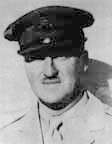
August A. Rubel was killed in action North of Enfidaville in Tunisia when his ambulance struck a mine. A veteran of AFS World War I, he felt he could no longer stay out of the present war, where he could be helpful to others. He reenlisted in the AFS in November 1942, and went to the Middle East as an ambulance driver shortly afterwards. (AFS Letters No. 14)
There was hope for a while that they had only got lost and been captured, as enemy patrols were known to be operating in the area, and the full story was not pieced together until the end of the campaign. August Alexander Rubel, who had enlisted in SSU 631 in World War I, was killed by the explosion and was buried by the Germans beside the wrecked ambulance. |
|
Richard Stockton died of wounds received while riding the same ambulance with August Rubel. When their vehicle struck a mine they were in enemy territory and Stockton was taken prisoner. He was taken to a German medical post but failed to respond to the operation. (AFS Letters No. 14)
|
|
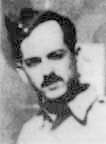
Curtis Rodgers died in Cairo on May 1, 1943. He had served in the Western Desert for a year, and had then left to join the faculty of Cairo University. All who have read the AFS Letters will have become familiar with his drawings and have understood his hate of war as well as his determination to serve and resolution not to stand aside. Because of this resolution he had decided to rejoin the AFS where he felt he could serve more fully. He, too, gave his life to a cause in which he believed. (AFS Letters No. 13)
|

|
Caleb Milne, IV was killed In action north of Enfidaville on May 11, 1943. He and his comrades had been attached to the forward troops of the 8th Army and since El Alamein had evacuated the wounded as they advanced through the Western Desert. Finally, during the bitter fighting at the end, came a call for volunteer stretcher bearers to help with the wounded forward, in an area ambulances could not travel. Caleb and three comrades responded, and while carrying out this task a shell from a mortar mortally wounded him. Carried back by his AFS comrades to the dressing station he was unable to survive the operation. Caleb had risked his life many times to save others, but when even more was asked he never hesitated. There can not be greater faith than this. (AFS Letters No. 13)
|
|
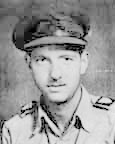
VERNON W. PREBLE, the first American Field Service man to cross the Sangro River in Italy. He lost his life attempting to save the lives of others while under heavy enemy gunfire. He was serving attached to an R.A.P., the forwardmost medical station on the Eighth Army front. (AFS Letters No. 20)
|
|
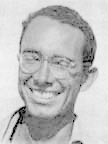
CHARLES JAMES ANDREWS, Jr., who was killed while on duty at a New Zealand Medical Station on the 8th Army front in Italy. An NCO he was leading his section in the thick of the front line fighting when he was struck by fragments of a mortar shell. (AFS Letters No. 20)
|
|
CHARLES K. ADAMS died on January 20th 1944 somewhere in the European Area. He was being repatriated to this country on a hospital ship after a period of illness in the Middle East. He was keen and eager to go overseas and be of service. He fulfilled this desire until his health broke down when it was necessary for him to come back, but, before reaching the home port, he succumbed to the illness with which he was afflicted shortly after his arrival overseas. (AFS Letters No. 22)
|
|
HENRY LARNER, on December 8th, 1943 was wounded by an enemy shell which struck him as he was entering the Medical Inspection room of an Advanced Dressing Station, to which he was attached. He put up a gallant fight for life and for a while it looked as though he would win through. However, on January 27th, 1944, he died in a hospital in Italy as a result of the wounds received. In giving his life, he gives still greater significance to the great effort now being made by humanity the effort toward decent living toward justice and the high purposeful meaning of all human life. His death is a great loss to his family and to all of us who had the privilege of knowing him and serving with him. (AFS Letters No. 22)
|

|
ALEXANDER RANDALL, Jr. was killed instantly by shell fire on February 8th, 1944. No other report than this has come through as yet: but the loss of this volunteer, one of the youngest, seems especially full of meaning. It is our youth, the fire of whose spirit we so profoundly honor, who are winning this war. Though they die on the ground, in the sea, or in the air; still this dedication of their lives is not death, really, but life that flames eternal. We will carry on for them, full of humility. and gratitude. (AFS Letters No. 22)
|

|
GEORGE BRANNAN was killed on the Assam-Burma Front during the latter part of April. With two companions, Frank Dignam and Mitchell Smith, he was flying in an unarmed and unescorted plane which was attacked by Jap Zeros whose fire seriously wounded Brennan in the throat. The men were being ferried to their destination by plane, which is the only means of, transportation between the rear and isolated forward positions where the AFS is at work. Brannen was landed at the nearest British Hospital where a delicate throat operation was performed. For a while he gained ground and it was hoped he would recover, but a fortnight later, he died of a cerebral embolism. His memory and devotion to duty will always be honored by those who knew him as an example of what la finest in courage and self-sacrifice. (AFS Letters No. 25)
|
|
ROBERT C. BRYAN on May 17th, while looking after the assignments of the forward posts of his platoon in the Rapido Sector, was wounded by shrapnel when a shell landed close to his car. He was immediately taken to an Advanced Dressing Station, but died in the ambulance which was transferring him for further attention to the Medical Dressing Station. His courage, devotion and leadership will always remain an inspiration and treasured memory to his comrades in the AFS. (AFS Letters No. 26)
|

|
DAWSON ELLSWORTH on May 27th, while acting as spare driver with Franklin Billings, was seriously wounded in the arm as a result of a mine explosion. Although his condition was serious, it was hoped that he would recover. However, he died as a result of his wounds on June 2nd. During the brief period in which Dawson served with the AFS, he did the jobs assigned to him and in giving his life; he gave well above and beyond the call of duty. (AFS Letters No. 26)
|
|
JOHN DALE CUNINGHAM on June 4th while working on the Italian Front; was instantly killed by shell fire. Time after time during the year and a half he served he had gone out courageously to advanced posts without thought of himself. His loss will be keenly felt by all those who knew him and served with him. (AFS Letters No. 26)
|
|
GEORGE A. LADD on July 2nd, while proceeding with members of his unit to a port of embarkation for the United States, suffered a heart attack and died instantly. George went overseas with the first AFS Unit destined for the Indian Command and served in that theatre until the termination of his enlistment. Few men were more universally liked, and he did much to keep morale high among the men because of his keen sense of humor. His conscientious devotion to the AFS will long be remembered. (AFS Letters No. 28)
|
|
DONALD HARTY on July 5th, was instantly killed by a mine. This the only information received to date was reported by cable to the AFS. The message, brief as it was, spoke volumes for the courage and devotion of this ambulance driver. During his seventeen months of service overseas, Donald held an outstanding record on the desert and his ambulance was one of the first to make the hazardous crossing of the Gargliano River with the Fifth Army in Italy. He was admired and respected by all who knew him and he was always where the need was greatest. His death is a greet loss but his memory will always be cherished by those who had the privilege of knowing him and working with him. (AFS Letters No. 27)
|
|
THOMAS L. MARSHALL on July 9th, while serving in the Italian Campaign was killed instantly by a mortar bomb which exploded directly over the small shelter in which he and some British personnel were gathered. Tom had served with the AFS since November 1942, was a veteran of the desert campaign and moved to Italy with his unit. His record of courage, faithfulness, loyalty and unselfishness will long be remembered by all who had the privilege of knowing him and serving with him. (AFS Letters No. 28)
|
|
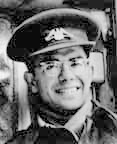
PAUL CAGLE AND JAMES WILTON on August 4th, while posted to an RAP on the Italian Front, were in an area which was under heavy shell fire. Wilton, who took shelter under his ambulance, was struck by an enemy shell. Cagle who had taken refuge with some British personnel, left his shelter to go to Jim's aid. As he was bending over him to ascertain the extent of his injuries, Paul was severely wounded. Both boys were given immediate surgical attention, but despite the quick action of the Medical Officers, they died as a result of their wounds. The service rendered by both of these boys will always remain an inspiration to those who carry on in their stead. Many AFS men have given their lives that others may live. This is the first time that one member of the Service has died in an attempt to save his friend --- "Greater love hath no man" may well be applied to Paul Cagle. (AFS Letters No. 29)
|
|
PAUL CAGLE AND JAMES WILTON on August 4th, while posted to an RAP on the Italian Front, were in an area which was under heavy shell fire. Wilton, who took shelter under his ambulance, was struck by an enemy shell. Cagle who had taken refuge with some British personnel, left his shelter to go to Jim's aid. As he was bending over him to ascertain the extent of his injuries, Paul was severely wounded. Both boys were given immediate surgical attention, but despite the quick action of the Medical Officers, they died as a result of their wounds. The service rendered by both of these boys will always remain an inspiration to those who carry on in their stead. Many AFS men have given their lives that others may live. This is the first time that one member of the Service has died in an attempt to save his friend --- "Greater love hath no man" may well be applied to Paul Cagle. (AFS Letters No. 29)
|
|
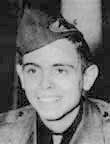
WILLIAM TUTTLE ORTH and RALPH EVANS BOAZ, on October 23, 1944, while serving in the India theatre. Both of these men had volunteered to help shorthanded aircraft crews parachute medical supplies from their planes to troops in the Burma Front area. While the plane was flying over mountainous regions dropping its load one bundle failed to clear the plane and caught underneath When it finally fell free, the pilot was unable to gain altitude and his ship disappeared from view behind a hill. A battalion located on higher terrain saw the crash and immediately British and Indian personnel set out to rescue the men. They were guided by runners from one of the native villages, but on reaching the scene of the crash, it was found that all aboard had been instantly killed. A memorial service was held for both of the men on November 4th. The Chaplain who conducted the ceremony uttered these appropriate words, "Let us remember before Almighty God, two who have given their lives--- Ralph Boaz and William Orth." (AFS Letters No. 31)
|
|
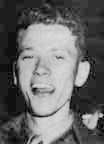
WILLIAM TUTTLE ORTH and RALPH EVANS BOAZ, on October 23, 1944, while serving in the India theatre. Both of these men had volunteered to help shorthanded aircraft crews parachute medical supplies from their planes to troops in the Burma Front area. While the plane was flying over mountainous regions dropping its load one bundle failed to clear the plane and caught underneath When it finally fell free, the pilot was unable to gain altitude and his ship disappeared from view behind a hill. A battalion located on higher terrain saw the crash and immediately British and Indian personnel set out to rescue the men. They were guided by runners from one of the native villages, but on reaching the scene of the crash, it was found that all aboard had been instantly killed. A memorial service was held for both of the men on November 4th. The Chaplain who conducted the ceremony uttered these appropriate words, "Let us remember before Almighty God, two who have given their lives--- Ralph Boaz and William Orth." (AFS Letters No. 31)
|

|
ALBERT STUDLEY MILLER of Cambridge, Massachusetts, on February 7th, 1945, was killed in France. Albert's ambulance and a French truck collided, instantly killing Miller and seriously injuring a French officer and a stretcher bearer, who were riding with him. Upon learning of Albert Miller's death, the Chief of the French Military Mission in the United States wrote, "I am sure I need not tell you that France is gratefully aware of the great assistance given the war effort by the splendid work of the volunteers of the American Field Service, and feels a personal loss in the passing of one of its members." (AFS Letters No. 35)
|
|
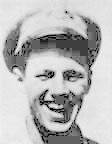
BRUCE GILETTE HENDERSON of Kenmore, New York, on February 15th, was killed by enemy action while serving on the India-Burma Front. Bruce was in charge of a jeep ambulance and was working at a forward post near the banks of the Irrawaddy. Just before dawn, on the morning of the 15th, the Japanese attacked the position in superior force, inflicting many casualties and forcing the remnants of the company to withdraw. During the operations, Bruce was shot through the chest. He was loved and admired by everyone in his section, as he was always cheerful and helpful to those he worked with and those he worked for. His Commanding Officer said, " ...one feels that, having known such a man, one can never lose heart." (AFS Letters No. 35)
|
|
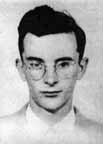
On 23 February, Paul Michael McKenna was sent down to the East African Brigade to replace P. T. Abelmann at 64 FA. Major Marsh reported the sorry details of McKenna's disappearance: "He arrived at about 0830 hours, by light plane, and at 1030 was sent forward from the Field Ambulance to one of the forward companies on the perimeter of the box. On the way up he passed George Riel, who was in convoy with a battalion that was on its way up to relieve the troops to whom McKenna was reporting. This was about 3/4 of a mile from his destination. McKenna waved at Riel but did not stop. . . .
(George Rock. Chapter 17. "Victory 4. India-Burma (November 1944-1945)" History of the American Field Service, 1920-1955. New York 1956.) |
|
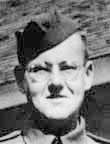
HILDING SWENSSON of Manasquan, New Jersey, on February 28th, was killed while serving on the India-Burma Front. The news of his death was received by cable and, as yet, the details have not reached us. The only information is that he was killed by a land mine. Hilding originally went overseas with the British Ninth Army during the Middle East Campaign. He returned to this country and in 1943, reembarked for the India theatre, where he served until his death. (AFS Letters No. 35)
|
|
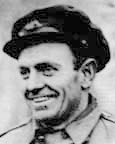
CHARLES BUTLER ALEXANDER, JR, of Eccleston, Baltimore Country, Maryland, died on April 9th, shortly after he was wounded by machine-gun fire and captured by the Germans in the town of Niefern, near Pforzheim, Germany. "C.B.", as he was known to family and friends, had been a member of the AFS since 1943. He served with the British Eighth Army during the Desert Campaign and in Italy, and in August, 1944, transferred to the French AFS Unit, where he served until his death. His outstanding courage as leader of an AFS Section will long be remembered by the men who served with him. (AFS Letters No. 37)
|
|
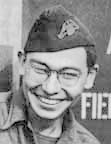
JACK WELLS DOUTHITT, of Florence, Alabama, was killed on April 20th, while serving with the French Unit of the American Field Service. Jack was ordered to evacuate four seriously wounded men in the village of Boblingen, which was partly surrounded as the result of a German counter-attack. He did not report back to his post and on April 21st, he was found dead beside his ambulance, which had been blown up by a German bazooka. Jack had served with the British Eighth during the desert campaign, in Italy, and with the American Fifth on the Anzio Beach-head, later transferring to the French Section of the AFS. He was absolutely fearless and devoted to the Service in which he volunteered. (AFS Letters No. 37)
|

|
GERALD R. MURPHY, of Chicago, Illinois, on June 20th, was killed in India. Gerald, in company with Gilbert Collyer, was riding in a jeep driven by a British Officer, who swerved suddenly to avoid hitting a parked truck, lost control of the car and hit a tree. Gerald was thrown from the jeep and struck his head killing him instantly. During the Burma Campaign, Gerald had risked his life many times transporting wounded in forward areas, and his death came as a great shock to all those who worked with him. (AFS Letters No. 39)
|
|
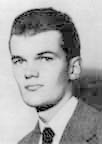
JOHN W. PARKHURST, of Winchester, Massachusetts, on July 3rd, died in India. John entered the hospital on June 20th, suffering from malaria, and later developed enteric fever. He was making satisfactory progress when pneumonia set in, and although every care and attention was given him, he could not pull through. John had served during the Burma Campaign and his courage and fine spirit were an inspiration to the men with whom he worked. (AFS Letters No. 39)
|


