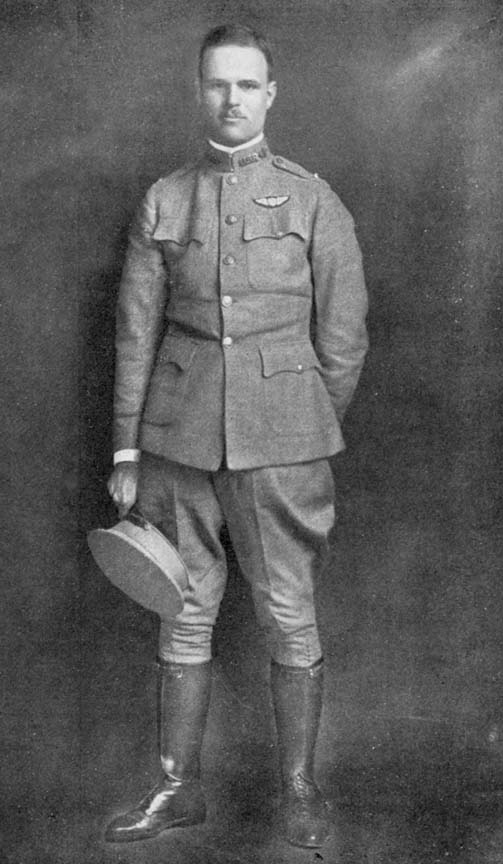
SON of John Joseph and Annie Agnes (Brennan) McLaughlin; was born at Worcester, Mass., July 22, 1893. He prepared for college at St. John's High School, Worcester, and attended Holy Cross for three years.
He enlisted at Boston on June 26, 1917. He attended the Ground School of the Univ. of Texas, graduating in Sept.; he continued his training at Rockwell Field, Sept. 22 to Dec. 12, and at Kelly Field, Dec. 15 to Jan. 6, when the school was discontinued. He served as Barracks Officer, S.M.A., at Georgia Tech., Atlanta, Ga., and was subsequently assigned to the 83d Aero Squadron at Rantoul, Ill. After graduating from the Armament and Gunnery School at Fairfield, O., he was commissioned 2d Lieut. in Feb., 1918. He sailed overseas in June, 1918.
From June 15, 1918, to Jan. 22, 1919, he was at the 1st Air Dépôt, and C.O. 637th Aero Squadron. Though ordered to finish training as gunner and bomber on Aug. 3, 1918, Lieut. McLaughlin could not be spared from his duties as C.O., on account of the scarcity of Officers. When relieved from flying, he served for some time as Instructor in Engines at San Diego, Cal.
FIRST LIEUTENANT, A.S., U.S.A., COMMANDING OFFICER, THIRD AERO SQUADRON, FORT SILL, OKLAHOMA
SON of George Pierce and Christina (Hopkinson) Baker; was born at Cambridge, Mass., June 30, 1894. He was educated in the Cambridge public schools, and graduated from Harvard College in 1915. At school he played on the hockey team and rowed on the crew; at college he was on the soccer team.
He enlisted on April 23, 1917, at Washington, D.C. He was trained for Aviation at Mineola, N.Y., and was commissioned 1st Lieut. on July 30, 1917. At different periods he acted as instructor in flying, liaison with artillery, liaison with infantry, and aerial gunnery, at Mt. Clemens and Fort Sill. He was Commanding Officer of the 3d Aero Squadron, Fort Sill, Okla; went overseas in Aug., 1918, and was officer in charge of Field 1, for Biplace Machines. at the Aerial Gunnery School St. -Jean-des-Monts, Vendée, France, He returned to the U.S. and was honorably discharged.
Brothers in Service --
Edwin O. Baker, Assistant Paymaster, U.S.N.
Myles P. Baker, Harvard R.O.T.C.

SON of James R. and Hannah T. Carret, of Cambridge, Mass.; was born on Nov. 29, 1896, at Lynn, Mass. He was educated at the Cambridge High and Latin School, and at Harvard College, graduating in 1917, A.B. cum laude. He completed one year at Harvard Graduate School of Business Administration during his senior year at college.
He trained with the Harvard R.O.T.C., Feb. 1 to July 7, 1917, and enlisted in the Aviation Service, July 7, 1917. He attended the M.I.T. Ground School for eight weeks, to Oct. 6, 1917, and sailed overseas on Oct. 26. He trained in flying at Tours and Issoudun; and had three weeks at the Gunnery School at Cazaux. On May 13, 1918, he was commissioned 1st Lieut. Having completed the full course of training for an Aviator, and having passed all tests for Chasse Pilot, he was sent to the front, 5th Air Dépôt, on Sept. 19, 1918, and was engaged in ferrying planes (binets) until Oct. 20, 1918. He returned to the U.S., and at his request he was honorably discharged on March 5, 1919, at Garden City, N.Y.

HE graduated from the Milton High School, Milton, Mass., in 1906, and from Harvard College in 1910. On Sept. 12, 1917, he was commissioned 1st Lieut., Aviation Section, Signal Reserve Corps. He was on duty, Personnel Section, Air Service, at Washington, D.C., and was promoted to Capt., Signal Corps, Regular Army (temp.), Feb. 19, 1918. On May 27, 1918, he was appointed Executive Officer at Mather Aviation School, Sacramento, Cal., and was stationed there until Nov. 1, 1918. Reserve Military Aviator, Oct. 28, 1918. He was appointed Assistant Executive Officer, on flying duty, at Kelly Field, San Antonio, Tex., serving from Nov. 4 to Dec. 5, 1918. On Dec. 12, 1918, he was chosen to serve on Peace Organization Committee for the Air Service, at Washington, D.C.
SON of John F. and Mary A. (Sullivan) Shea, of Somerville, Mass.; was born at Springfield, Mass., Nov. 25, 1896. He was educated at the Somerville High School and at Boston College.
He went to the Mexican Border with the National Guard in 1916, and served with that body until his transfer to Naval Aviation in July, 1917. He was assigned to the Ground School, M.I.T., in Oct., and on graduation, Nov. 20, was sent to Hampton Roads, Va., where he remained until Jan. 1, 1918. He was then ordered to Pensacola, Fla., where he qualified as Naval Aviator. On May 5, 1918, he was transferred to Miami, Fla., where he was commissioned 2d Lieut., U.S. Marine Corps, June 1, 1918. He sailed overseas July 1, and saw active service with the British First Army from Aug., 1918, to the close of the war. He was attached to Squadron 9 of the Northern Bombing Group, operating in Flanders.
Brothers in Service -
Joseph A. Shea, Sergeant-Major, 1st Division, A.E.F.
Edwin P. Shea, Private, Base Hospital 7, A.E.F.

FIRST LIEUTENANT, A.S., U.S.A., ONE HUNDRED FOURTH AERO SQUADRON, FIFTH CORPS, OBSERVATION GROUP
SON of William S. and Mary A. (Wilson) Cole; was born at Boston, Mass., Feb. 28, 1893. He was educated at the Boston Latin School and at Harvard University.
He enlisted at Boston in Aug., 1917, and was sent to M.I.T. Ground School, graduating with the class of Oct. 13, 1917. He sailed overseas, and trained at Issoudun, France, 3d A.I.C., from Nov., 1917, till March, 1918; he was attached to the 2d A.I.C. at Tours, France, from March until June, 1918, and was commissioned 1st Lieut. on May 18, 1918. Lieut. Cole was again at Issoudun from June till July, 1918, and again at Tours 2d A.I.C. in July and Aug. From Sept. 7, 1918, until Dec. 31, 1918, he was attached to the 104th Aero Squadron, 5th Observation Group.
Returning to America, Lieut. Cole was discharged at Garden City, N.Y., on Feb. 19, 1919.
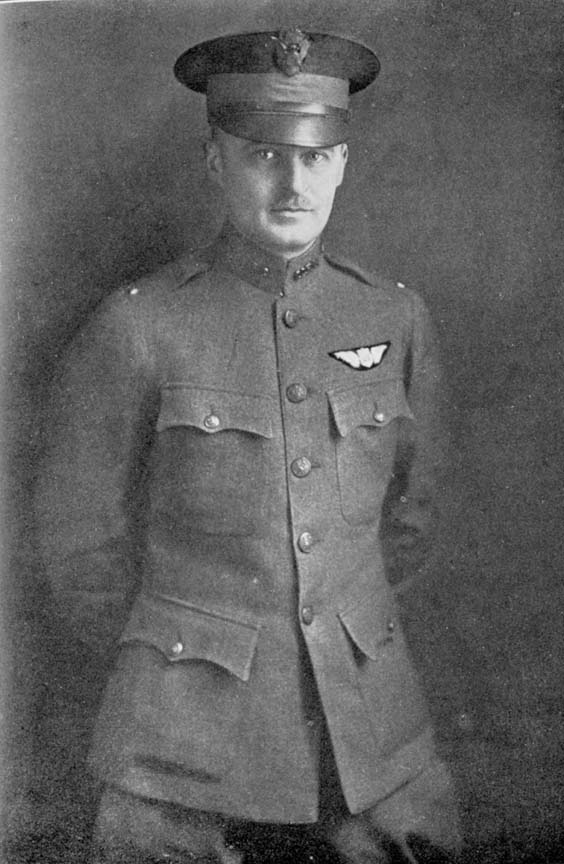
SON of Frank Eugene and Mary A. Greene, of Monson. Mass.; was born Nov. 10, 1884. He was educated at the Volkmann School, Brookline, Mass., and at Harvard College, graduating A.B. 1907. He pitched on the 'Varsity baseball team.
He enlisted on June 17, 1917, and attended the M.I.T. Ground School from June 17 to Aug. 11, 1917. He went for further training to the Flying School at Mt. Clemens, Mich.; to Mineola, N.Y.; and to Kelly Field, Texas. He was commissioned 1st Lieut. Jan. 3, 1918, and in Feb. sailed overseas. On July 25, 1918, he graduated at the 3d Aviation Instruction Centre, Issoudun, France. At Orly he acted as Ferry Pilot and was in charge of testing machines.
Married, Sept. 10, 1910, Gladys Gibbs; has one child, Gardiner Gibbs Greene, born Sept. 16, 1914.
Brother in Service ---
Robert R. Greene, Sergeant-Major, A.S., U.S.A.

SON of Mr. and Mrs. Paul Dana; was born Nov. 17, 1892, at New York, N.Y. He was educated at Groton School, Groton, Mass., and at Harvard College, graduating in 1914. He played end on the 'Varsity football team in 1914-15.
He was a member of Battery A, M.V.M., in 1912 and 1913. He enlisted on July 10, 1917, and received preliminary training at the M.I.T. Ground School. He sailed overseas on Oct. 26, 1917. He was stationed at Issoudun for the remainder of the war as commanding officer in charge of the shop for repairing, testing, and improving planes. He was commissioned 1st Lieut., May 16, 1918; Capt., on Sept. 30, 1918, 32d Aero Squadron. He is still in Service.
Married, June 10, 1916.
Brother in Service ---
Anderson Dana, Capt., Battery A, 305th Reg't.

SON of Edwin Plympton and Carrie (Thayer) MacBride, of South Weymouth, Mass.; was born at South Weymouth, June 11, 1893. He was educated at Chauncy Hall School, and at the M.I.T.
He enlisted in the Harvard R.O.T.C., May, 1917. He was trained at the Cornell Ground School for two months prior to going overseas. He was assigned to the 3d A.J.C. at Issoudun, where he remained for a year and three months. He was commissioned 1st Lieut., May 16, 1918, and served as Staff Officer and Flying Officer at Issoudun, France.
SON of Adolph Alexander and Louise Marie (Pinkert) Kuehl; was born at Medford, Mass., June 9, 1894. He graduated from the Medford High School and from the electrical engineering course at Northeastern College. He enlisted in the Air Service at Boston, Mass., Nov. 8, 1917, and received his ground school training at M.I.T. and at Princeton University. He was then transferred to Camp Dick, Dallas, Tex., to Concentration Camp, and thence to the flying field at Taliaferro Field, Hicks, Tex. He was commissioned 2d Lieut. at Barron Field, Everman, Tex., on June 2, 1918, and began instructing there. After reassignment to Camp Dick, he was ordered to Payne Field, West Point, Miss., and finally to Love Field, Dallas, Tex., where he was honorably discharged, Dec. 13, 1918.
Brothers in Service ---
Herman A. Kuehl; served at the Mexican Border.
Otto E. Kuehl, Supply Co. 334, Q.M.C., Army of Occupation.
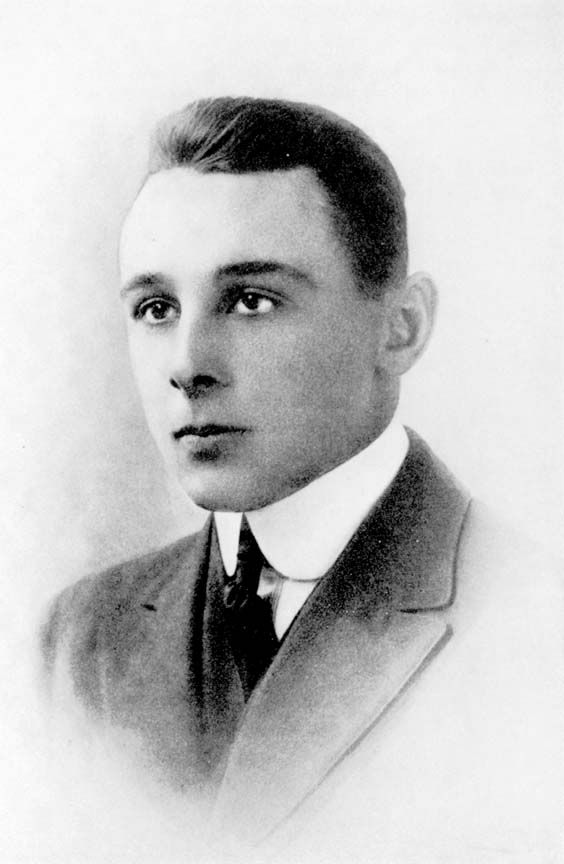
SON of Whitfield L. and Susan E. Tuck; was born at Winchester, Mass., May 25, 1891. He was educated in the Winchester public schools, and at Dartmouth College, B.S. 1915. He played football and hockey at school and college.
He enlisted at Boston, on May 2, 1917, attended the First R.O.T.C. at Sackett's Harbor, and the Cornell Ground School. Receiving overseas orders, he sailed for France in Oct., 1917, and had flying training at the 3d A.I.C. and at A.A.A.P. No. 1, in France.
In May, 1918, he was commissioned 1st Lieut., and up to Nov. 10 was on duty taking planes from England to the front. After the signing of the Armistice he was ordered back to America and was honorably discharged at Camp Devens, Mass., on May 28, 1919.
SON of Mr. and Mrs. A. C. Whitney, of Lexington, Mass.; was born Dec. 8, 1895. He enlisted in the American Ambulance Field Service and sailed for France June 9, 1917. He served until Oct. 1, 1917, when he transferred to the U.S. Aviation Service, in France. He was commissioned 1st Lieut. in June, 1918, and continued in the Aviation Service in France until after the signing of the Armistice.

SON of Martin L. and Margaret (Arnold) Welch, of Gloucester, Mass.; was born at Salem, Mass., on Feb. 10, 1891. He was educated at the Gloucester High School and at St. John's Preparatory School, Danvers, Mass. At school he was a member of the football, baseball, and basket-ball teams.
He enlisted in Aug., 1917, and was trained at Pensacola, Fla.; at Miami, and at M.I.T. He sailed overseas and continued his training at various stations in France and England. On Aug. 13, 1918, he was commissioned Ensign; and was still in Service at the U.S. Naval Air Station, Chatham, Mass., at last accounts.
Brother in Service ---
Martin L. Welch, Private, U.S. Marine Corps; killed in action at Belleau Wood, France, June 13, 1918.
SON of Hyman and Lena (Tanzer) Richmond; was born at Chelsea, Mass., Dec. , 1893. He was educated at the Revere High School and at the Mass. Institute of Technology, from which he graduated in 1916. He enlisted in the U.S.N.R.F. at Boston, Mass., July 4, 1917. From July 24 to Nov., 1917, he was held at the Boston Navy Yard, and from Feb. 18 to May 1, 1918, he was trained with the Naval Aviation Detachment at the M.I.T. He was then sent to the Naval Air Station at Pensacola, Fla., where he remained for flight training from May 4 to Aug. 17, 1918. He was transferred to the Naval Air Station, Chatham, Mass., for patrol and convoy duty, Aug. 20, 1918. He was commissioned Ensign, Aug. 6, 1918.

SON of Charles John and Mary B. (Lippitt) Steedman, of Providence, R.I.; was born at San Francisco, Cal., July 31, 1897. He was educated at St. Mark's School, Southboro, Mass., and Harvard College, class of 1920. He attended the 2d Officers' Training Camp at Plattsburg, in July, 1916, and trained with the Harvard R.O.T.C. from May 8 to Aug. 15, 1917. He enlisted in the Aviation Service on Sept. 18, 1917, at M.I.T., Cambridge, Mass. He attended the Ground School at Princeton, N.J., graduating with honor, Feb. 9, 1918, and was then sent successively to Camp Dick, Dallas, Tex., and Kelly Field, Sail Antonio, Tex. He was commissioned 2d Lieut., A.S., on June 5, 1918, and transferred to Camp Dick on June 10; to Payne Field, West Point, Mississippi, on July 5. He was transferred to Air Service Dépôt, Garden City, N.Y., on Oct. 3, 1918, for overseas duty; but the Armistice intervened. He was honorably discharged at Garden City, N.Y., On Dec. 11, 1918, and returned to Harvard College to finish his course.
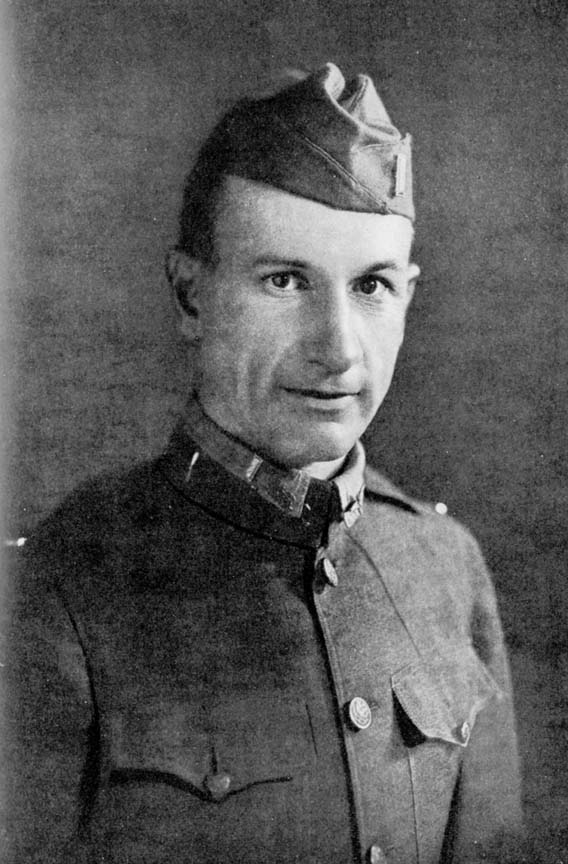
SON of Frederick H. and Eleanor (Skinner) Warner; was born at Boston in 1885. He was educated at the Volkmann School, Boston, and graduated from Harvard College, A.B. 1907. He trained with the Harvard R.O.T.C. in 1917, and attended the 2d Plattsburg Training Camp in 1917, where he was commissioned 1st Lieut. on Nov. 28, 1917. He was assigned to the Aviation Corps, University of Illinois; was transferred to Columbus, Ohio; then to Waco, Tex.; and later to Camp Greene, Charlotte, N.C., remaining about three months in each place. He was next transferred to Garden City, N.Y., for a short time, then assigned as Instructor in the Students' Army Training Corps, University of New York.
SECOND LIEUTENANT, A.S.A., U.S.A., ONE HUNDRED TWENTY-NINTH AERO SQUADRON
SON of Mr. and Mrs. Edwin Wilbur Fenton; was born at Thomaston, Conn., Jan. 23, 1895. He graduated from the Thomaston High School, and from Trinity College, class of 1917. On Nov. 10, 1917, he enlisted at Boston, Mass., and after completing the ground courses at M.I.T., and at Princeton University, he was ordered to Camp Dick, Dallas, Tex. He was transferred to Scott Field, Belleville, Ill., where he was commissioned 2d Lieut., A.S.A., June 15, 1918, and passed his R.M.A. flying tests. After further training at Brooks Field, San Antonio, Tex., he acted as Flying Instructor at Taylor Field, Ala., from Aug. to Dec., 1918. He was honorably discharged at Taylor Field, Montgomery, Ala., Dec. 16, 1918.
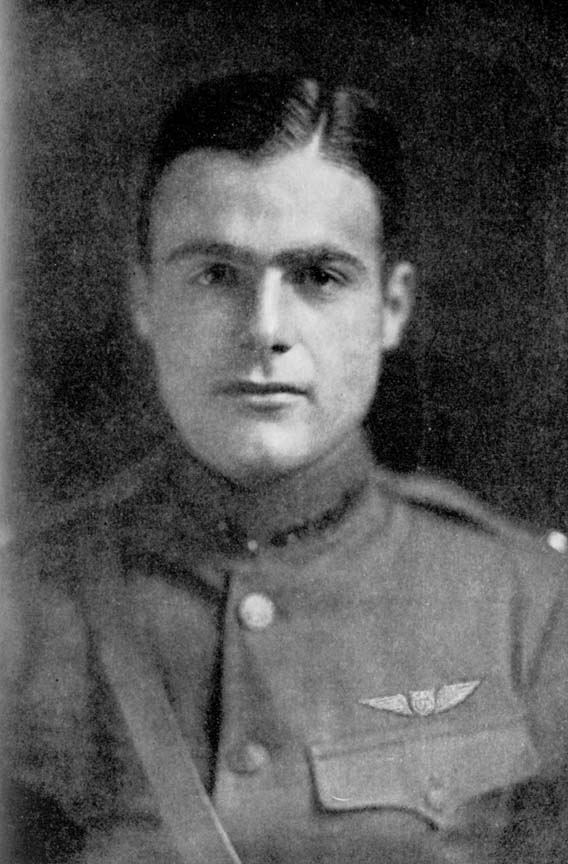
SON of Reuben Francis Richards (deceased) and Maria Louisa Alexander (now Mrs. Charles Frost Aldrich); was born at Cambridge, Mass., Oct. 7, 1892. He was educated at St. Mark's School. Southboro, Mass., graduating in 1911, and at Harvard College, graduating in 1915. At St. Mark's he played on the football team. At Harvard he was one of the authors of the 1915 Hasty Pudding play. He was a member of the 1st Corps of Cadets, M.V.M., 1911-14; served with them on strike duty in Lawrence, Mass., in 1911.
He enlisted in the Aviation Service, on April 16, 1917, and trained in the first Government Aviation class at Mineola, N.Y. On July 16, 1917, he was commissioned 1st Lieut. (R.M.A.). A.S.S.R.C., and stationed as Instructor and Supply Officer, 9th Aero Squadron, at Selfridge Field, Mt. Clemens, Mich. On Nov. 20. 1917, he sailed for England, where he organized and commanded two American Aviation sections of several squadrons each, serving in conjunction with the Royal Air Force; at Grantham and Spittlegate. After five months of service at these fields, he was transferred to the American Air Service Headquarters, at London, in charge of the technical training of all enlisted men in the American Army Air Service in Great Britain. In July, 1918, Lieut. Richards was ordered to Scotland to command all American Army Aviation units there: squadrons being trained under his direction for service at the front. He was three times recommended for promotion to a Captaincy, but the promotion did not go through. He was honorably discharged at Garden City, N.Y., Dec. 23, 1918.
Recommendation for Promotion by Major Fitzgerald HEADQUARTERS BASE SECTION 3. SERVICE OF SUPPLY, A.E.F.
LONDON, March 27, 1918This is to certify that 1st Lieut. J. A. RICHARDS. Sig. R.C.. A.S., is now on duty in charge of several squadrons of the U.S. Aviation Section. Signal Corps, at Spittlegate, Grantham. Eng. This officer has been under my personal observation since September, 1917. He has given every satisfaction, is a fine disciplinarian, and has his command under excellent control. He gets along exceptionally well with the British authorities, and it is my belief that he should be promoted.
I, therefore, take great pleasure in recommending that 1st Lieut. J. A. Richards, Sig. R.C., A.S., be promoted to Captain, Sig. R.C., A.S., believing that such promotion will be for the best interests of the Service.
Commendations To Officer Commanding 24th Wing, R.A.F.
SPITTLEGATE, May 11, 1918
I have the honour to bring to your notice the assistance I have had from Lieut. J. A. RICHARDS, U.S.A., Aviation Section, from the date I took over this Squadron.
Owing to his ready cooperation and tact, difficulties incident to the amalgamation of British and American Sections have been successfully overcome.
I have never had occasion to take disciplinary action against any of the N.C.O. 's or men under his administration.
(Signed) H. S. LEES-SMITH, Captain
Commanding No. 37 T.S.
Royal Flying Corps
HEADQUARTERS, 24TH WING, R.A.F.
GRANTHAM, May 14, 1918DEAR COLONEL MORROW:
Lieut. RICHARDS has left my Wing to report at your Headquarters, and I wish to express to you how much I and everybody have appreciated his services.
As you know four Squadrons and a Flight of Americans are in my Wing, and to get this party settled in, presented no small task, yet it was attained, and my thanks are in a great part due to the extraordinary ability and powers of coöperation of Lieut. Richards. I am
Yours sincerely A. B. BURDETT
From Officers' Record December 4, 1918
Lieut. RICHARDS has shown marked ability in the execution of various duties requiring executive ability and tact in connection with the U.S. Air Service Units stationed in England.
December 5, 1918
Lieut. J. A. RICHARDS has been on duty under my supervision for almost a year. He has initiative, energy, ability, and is an excellent leader of men. As C.O. of a large post, he discharges his duties most efficiently.
SON of Mr. and Mrs. William Doolin; was born at St. Albans, Vt., July 24, 1897. He was educated at St. Albans High School, at Phillips Andover Academy, graduating in 1916, and at Harvard College, class of 1920. On graduating from Andover he was made a member of the Cum Laude Society, and received the John Harvard Scholarship in the first class (1917); Detur (1917). At Phillips Academy he was a member of the track team in 1916.
He attended the R.O.T.C. at Plattsburg from July 5 to Aug. 8, 1916, and the R.O.T.C. at Harvard in April and May, 1917. He served with the American Ambulance Field Service in France, T.M. 526, from June 25 to Oct. 1, 1917, sailing with the Phillips Andover Unit.
On Oct. 1, 1917, he enlisted in the U.S. Army, at Jouaignes, France, applying for entrance to an Aviation training school. As the schools were at that time full, he was not admitted until the following spring, serving in the meantime at Field Service Headquarters, part of the time as interpreter. On March 19, 1918, he was transferred from Division Motor Transportation to the 496th Aero Squadron; and assigned to Air Service Concentration Barracks No. 3, at St.-Maixent, on March 29, as Cadet. He attended the French Flying School at Voves from May 29 to July 22, and was brevetted by the French on July 21. He had Sopwith training at the French School in Avord from Aug. 1 to Sept. 3; and Nieuport training at Issoudun, until Dec. 16, 1918. On Sept. 25, 1918, he was commissioned 2d Lieut., dating from Aug. 26, 1918. Lieut. Doolin's training was interrupted for about six weeks by ground-glass poisoning, followed by influenza. At the time of the Armistice he was just completing his training as a Combat Aviator.
Lieut. Doolin was honorably discharged at Garden City, N.Y., March 27, 1919.

SON of Frank Henry and Alice Lucy (Stearns) Thomas, of Newton, Mass.; was born at Cambridge, Mass., Feb. 16, 1893. He graduated from the Cambridge Latin School in 1912, and from Harvard College in 1916. He was assistant manager of the Harvard Crimson, 1914-16.
He enlisted on May 1, 1917, at Plattsburg Barracks, N.Y.. in the 1st Provisional Training Regiment, Battery 3. On Aug. 14, 1917, he transferred to the Aviation Section, Signal Corps, and entered active service as Flying Cadet, at the M.I.T. Ground School. He was assigned to Ellington Field, Tex., where he received primary and advanced flying instruction. He was commissioned 2d Lieut., A.S., U.S.A., April 6, 1918, and classed as Bombing Pilot, continuing his advanced training until he received overseas orders, Aug. 23, 1918. He sailed on Sept. 8, and continued his training in England. Lieut. Thomas was assigned to the 92d Squadron. at Field 1, Ford Junction, Sussex, for night bombing, and was engaged in this training at the time of the signing of the Armistice. He sailed for the U.S. on Dec. 4, 1918, and was honorably discharged at Mineola, N.Y., Jan. 4, 1919.
Married, Feb. 14, 1919, Louise Ames Smith, of Newton Centre, Mass.
SON of C. Hollis and Gertrude Ethel Crimmin, of Bradford, Mass.: was born at Haverhill, Mass., Feb. 9, 1896. He was educated at the Haverhill High School, where he played basket-ball, and was a member of the track team; and at the Mass. Agricultural College, Amherst, Mass. He entered the Air Service on May 25, 1918, at Cambridge, Mass. After finishing the course at the M.I.T. Ground School he was sent to the concentration camp at Camp Dick, Dallas, Tex., with Squadron 11. From there he was ordered to Kelly Field No. 2, San Antonio, Tex.
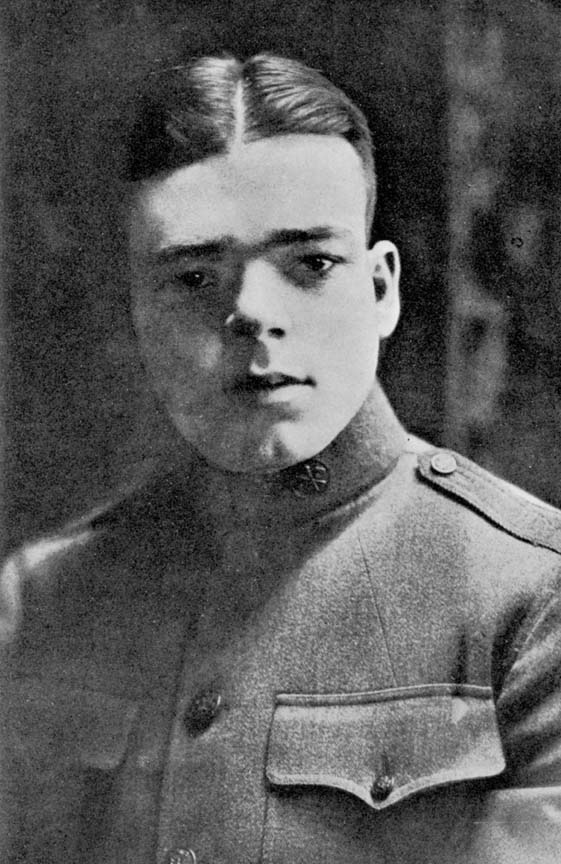
SON of Mr. and Mrs. G. W. Killorin, of Wakefield, Mass. He graduated from Holy Cross College in 1917. In June, 1917, he enlisted in the Air Service, and attended the M.I.T. Ground School. He continued his training at Ellington Field, Houston, Tex. In April, 1918, he was commissioned 2d Lieut., and appointed Instructor of Aerial Gunnery at Taliaferro Field, Fort Worth, Tex. While acting in this capacity he was killed in an airplane accident at Taliaferro Field, on Sept. 7, 1918.
SON of Charles R. and Henrietta (Thompson) Evans, of Watertown, Mass.; was born at Boston, Mass., March 16, 1888. He was educated at the Boston Latin, the Volkmann, and the De Meritte Schools; and at Amherst College. In 1906 he was runner-up in the Canadian Golf Championship, and Schoolboy Golf Champion. He enlisted at Boston, Mass., on Jan. 24, 1918. From June 1 to July he was in training at Camp Dick, Dallas, Tex., and from July 5 to Sept. 7 at the M.I.T., Cambridge, Mass. He was assigned to the Ground School at Cornell University, where he remained from Sept. 8 to Nov. 6, 1918. He was transferred to Camp Dick, Dallas, Tex., on Nov. 8, and was honorably discharged from the Service there, Dec. 4, 1918.
Married, March 5, 1919, Dorothy Ruggles.
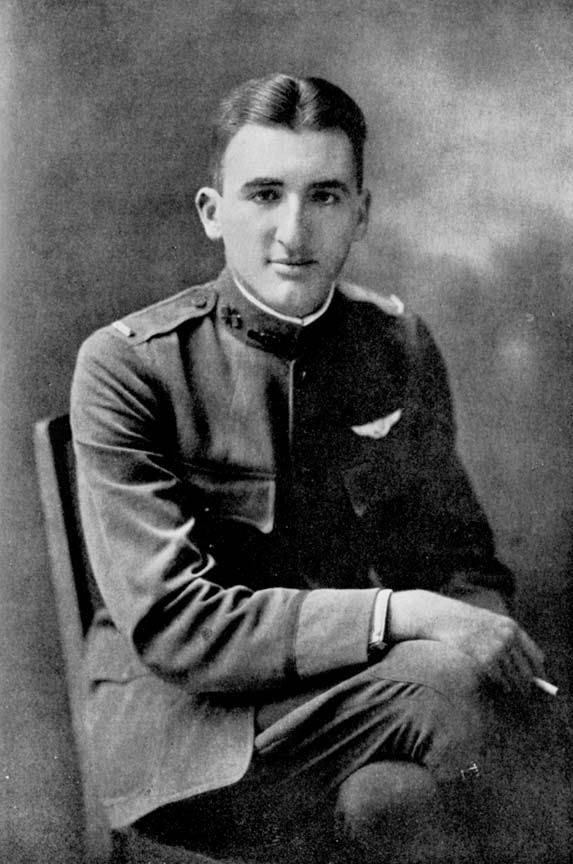
EDUCATED at St. George's School, Concord, N.H., and at Harvard College, class of 1919. He enlisted in the Aviation Corps in June, 1917, and was sent to the M.I.T. Ground School. He finished his training at Belleville, Ill., and was commissioned 1st Lieut., A.S., U.S.A. He was appointed Instructor, first at Gerstner Field, Lake Charles, La., then at Call Field, Wichita Falls, Tex. In Sept., 1918, he sailed overseas, and was in training for a Pursuit Pilot, at Issoudun, France, when the Armistice was signed.
SON of J. Fletcher and Anna E. (Baldwin) Barnes, of Bedford, Mass.; was born at Hubbardston, Mass., Jan. 23, 1890. He was educated at Mt. Hermon School, Mass., and at the Mass. Agricultural College, Amherst.
He enlisted, Nov. 3, 1917, and attended the M.I.T. Ground School; going from there to Cornell University. He trained in flying at Gerstner Field, Lake Charles, La.; and had advanced training at Call Field, Wichita Falls, Tex.; at Wilbur Wright Field, Dayton, Ohio; at Post Field, Fort Sill, Okla.; and at Taliaferro Field, Fort Worth, Tex. He was commissioned 2d Lieut., May 14, 1918. He sailed for France, and was stationed at Issoudun for final training. He was attached to the 186th Aero Squadron, 1st Army Observation Group. After the signing of the Armistice he was sent into Germany with the 3d Army of Occupation.
Married, Dec. 23, 1916, Mary Baker.

SON of Frederick C. and Mary (Winchester) Packard; was born at Roslindale, Mass., Aug. 10, 1894. He graduated from the Boston Latin School, and from Harvard College (with honors) in 1915. He enlisted in the U.S.A. in April, 1917, and was sent to Fort Monroe, Va., and commissioned 2d Lieut. (provisionally), on Oct. 26, 1917. In Jan., 1918, he was commissioned 2d Lieut., and in March, 1st Lieut. He volunteered for the Air Service in May, 1918, and trained at Langley Field, Old Point Comfort, Va., and at Selfridge Field, Mt. Clemens, Mich. On Sept. 1 he was ordered overseas, and continued his training at Tours, France; he was later attached to the 88th Squadron, and ordered to the front just at the time of the signing of the Armistice. Lieut. Packard was then assigned to the Army of Occupation. Subsequently he spent three months at the University of Poitiers, France, after which he served in the Department of Rents, Requisition, and Claims. Lieut. Packard had two brothers also in the Service.
SON of Bernard and M. Alice Early; was born at Newton, Mass., July 27, 1896. He was educated at the Newton High School, and at Holy Cross College. He enlisted in the Air Service at Boston, Aug. 20, 1917. He attended the Ground Schools at the M.I.T., and at Princeton University. He trained in flying at Taliaferro Field, Fort Worth, Tex., and at the Gunnery Schools, Taliaferro Field, and Wilbur Wright Field, Dayton, Ohio. He then proceeded overseas, and was assigned to the 3d A.I.C. at Issoudun, France, for advanced training. He was subsequently transferred to the school at St.-Jean-des-Monts. He was then detailed as Staff Pilot to the 4th Artillery Aerial Observers' School at Meucon, France. He was commissioned 2d Lieut., June 17, 1918, and was honorably discharged at Garden City, N.Y., Feb. 8, 1919.

BORN at Norwich, Conn., June 5, 1894. He was educated at the Norwich Free Academy, and at the Mass. Institute of Technology, class of 1917. He entered the Service at the M.I.T., Oct, 1917, and attended the Army Aviation School. He trained at Wilbur Wright Field, Dayton, Ohio, and was there commissioned 2d Lieut., A.S., Signal Corps. On June 19, 1918, he was killed at Wilbur Wright Field, when his machine collapsed.
SECOND LIEUTENANT, A.S., S.C., SECOND PROVISIONAL SQUADRON, ELLINGTON FIELD, HOUSTON, TEXAS
SON of William W. and Harriet (Covil) Gordon; was born at Hazardsville, Conn., May 31, 1894. He attended the Central High School, Springfield, Mass., where he was president of the senior debating society and captain of the crew. He graduated from Wesleyan University, Middletown, Conn., where he was a member of the football and track teams. He enlisted at Boston, Mass., May 11, 1917, with the Medical Corps, Ambulance Section, and transferred from the station at Allentown, Pa., to Army Aviation, at Mineola, N.Y., Aug. 29. He attended the Ground School at the M.I.T., from Nov. 3, 1917, to Jan. 12, 1918. He continued his training at Kelly Field, San Antonio, Tex., from Jan. 18 to April 5; there he was commissioned 2d Lieut. on April 5, 1918, and was sent to Camp Dick, Dallas, Tex. He was stationed at Hoboken, N.J., awaiting overseas orders, from May 5 to May 29, and then sent to Ellington Field, Houston, Tex., for advanced training in bombing. He remained there from June, 1918, to Jan. 11, 1919, when he was honorably discharged.
Married, Sept. 2, 1918, Doris Clark.
Grandfather in Service -
Andrew Gordon, served in the Civil War.
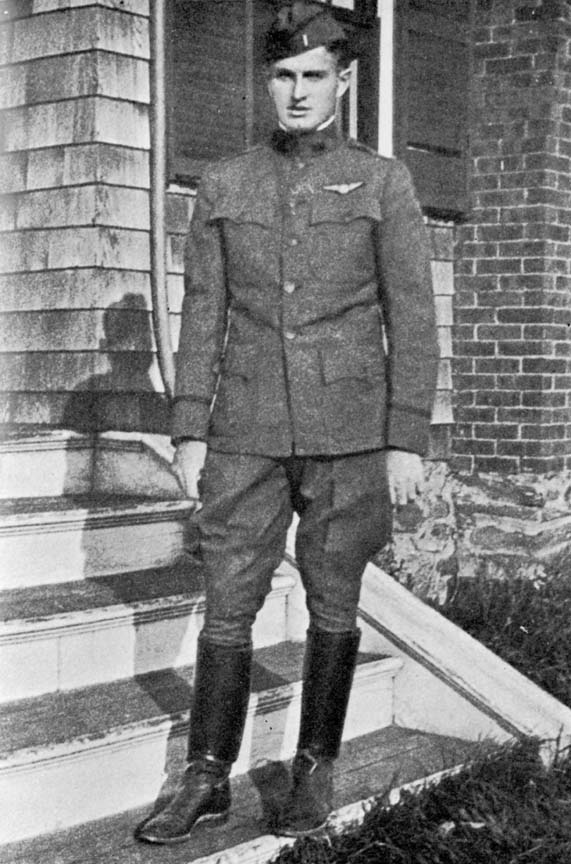
SON of John L. and Mary E. (Ford) Hughes; was born at Brighton. Mass., July 15, 1894. He was educated in the public schools of Brighton, and at Boston College. He enlisted on July , 1917, at the M.I.T. In Sept., 1917, he continued his training at Wilbur Wright Field, Dayton, Ohio; he was transferred to Ellington Field, Houston, Tex., in Jan., 1918. He served as Instructor at Camp Dick. Dallas, Tex., at Call Field, Wichita Falls, and at Love Field, Dallas. He was commissioned 2d Lieut. in April, 1918. In Sept., 1918, he sailed overseas and continued his training in France. He returned to the U.S. in May, 1919, and was honorably discharged in June, 1919.
SON of Mr. and Mrs. Charles Morse, of Lancaster, N.H.; was horn at Colebrook, N.H.. June , 1893. He was educated in the public schools of Lancaster, N.H., at the Lancaster Academy, and at the Mass. Institute of Technology. At the Lancaster Academy he belonged to the baseball, basket-ball, football, and track teams, making a record in the 100-yard dash, and in a high jump, of five feet, three inches. At the M.I.T. he was a member of the class baseball, football, basket-ball, and track teams, and of the 'Varsity basket-ball team. He enlisted in the Air Service, July 17, 1917, at Mineola, N.Y. He was assigned to the Cornell University Ground School, whence he proceeded to Gerstner Field, Lake Charles, La., and then to Camp Dick, Dallas, Tex. He was subsequently transferred to Taliaferro Field, Fort Worth, Tex., where he was detailed as Instructor in Aerial Gunnery. He was then ordered to the School of Aeronautical Engineering at the M.I.T., and later to McCook Field, Dayton, Ohio.
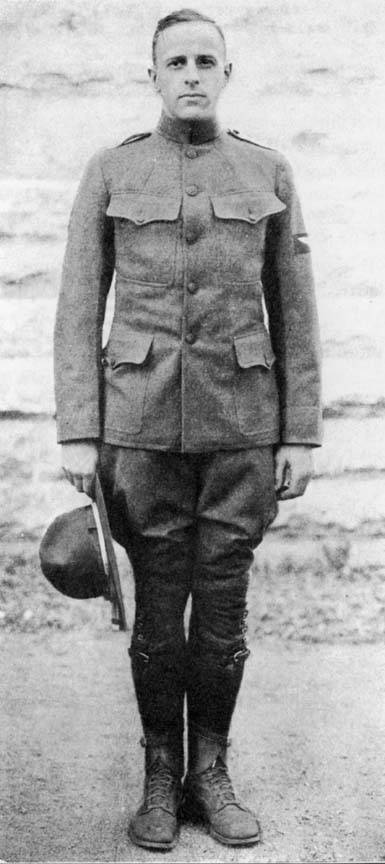
SON of William F. and Sarah (Savage) Noble, of Newton Centre, Mass.; was born Aug. 3, 1891. He was educated at Andover Academy, graduating in 1912, and at Yale University, graduating in 1915. He enlisted in the Air Service in 1917, and trained at the Ground School at Columbus, Ohio. In Nov., 1917, he sailed for France and continued his training at Issoudun. He was commissioned 2d Lieut. in May, 1918. Lieut. Noble was taken ill with influenza, which for a long period prevented him from flying, and kept him from seeing active service at the front. He was attached to the Requisition and Claims Department, and after the signing of the Armistice was stationed at Tours, and at Villel, France. He was honorably discharged in Sept., 1919. He has since joined the Kosciusko Escadrille in Poland, as pilot, and is engaged in fighting the Bolsheviki forces.
Brother in Service---
Arthur W. Noble, Corp., 302d Inf., 76th Division, A.E.F.
SON of Robert and Martha (McLennon) Slater, of South Royalton, Vt.; was born at Charlestown, Mass., Aug. 24, 1895. After graduating from the South Royalton High School, he attended Denison University, Granville, Ohio, for one year. At both institutions he played baseball, basket-ball, and football. He enlisted in the Aviation Service at Boston, Mass., Oct. 14, 1917, and reported for active duty Dec. 15, 1917, at the M.I.T. He was transferred to the Ground School at Cornell University, Ithaca, N.Y., on Jan. 7, 1918, and was ordered to Dallas, Tex., March , 1918. He was sent to Kelly Field, San Antonio, Tex., April 3, and after completing his training there, was commissioned 2d Lieut., Oct. 18, 1918. He was subsequently assigned to North Island, San Diego, Cal., for scout flying. On Nov. 8 he took part in a flight in which 12 planes were in the air at one time. He was honorably discharged at San Diego, Cal., Jan. 8, 1919.
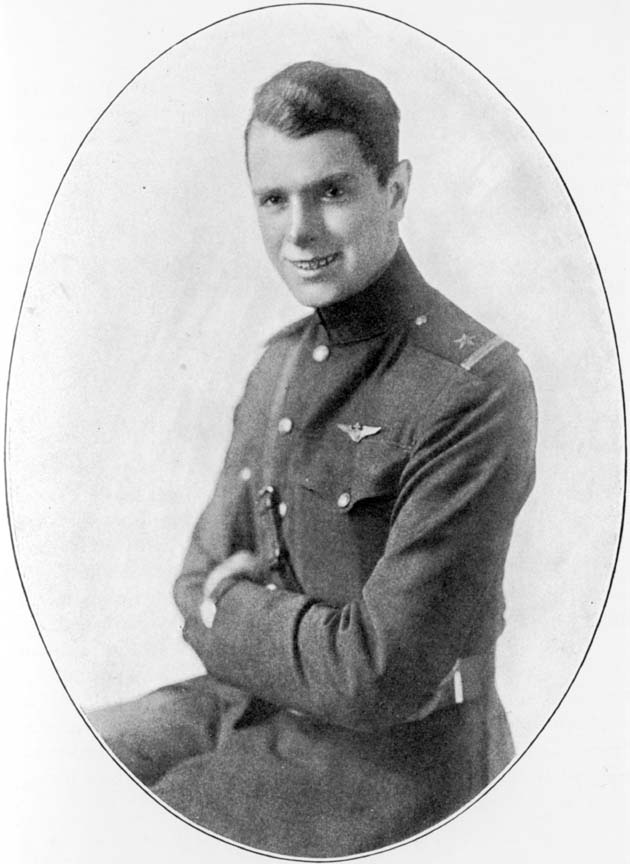
BORN Dec. 30, 1895. He attended the Quincy (Wollaston) Grammar School, and Wilbraham Academy. He was later associated with his father in the printing business. Following the declaration of war, he enlisted in the Aviation Service, and was assigned to the Squantum Aviation Field, in May, 1917. After the breaking-up of the Squantum Field he was transferred to Pensacola, Fla. He was ordered overseas in Feb., 1918, and served in France until July, 1918. He was killed in a seaplane crash, on July 6, 1918, at Moutchic-Lacanau. He was buried at Lacanau, Gironde, France.
SON of Henry Edward and Charlotte Adaline (Rogers) Keough of Lowell, Mass.; was born at Chelsea, Mass., Jan. 23, 1891. He graduated from the Winthrop High School, Winthrop, Mass., and from the Lowell Textile School in 1910. From 1911 to 1915 he served in K Co., 6th Inf., Mass. N.G. He enlisted at Plattsburg, N.Y., May 14, 1917, and attended the 1st Officers' Training Camp. He was then transferred to the M.I.T. Ground School, and subsequently served as a cadet at Kelly Field, San Antonio, Tex. He was commissioned 2d Lieut. 011 Feb. 14, 1918. He served as Instructor in flying at Kelly Field, and later at South Field, Americus, Ga. He was ordered to Garden City, N.Y., for overseas service, but was prevented from sailing by the signing of the Armistice. He was then ordered to duty at Rockwell Field, San Diego, Cal., where at his own request he was discharged, Jan. 9, 1919.

BORN at Boston, Mass., Sept. 11, 1865. He was educated in the Boston public schools, and at the Mass. Institute of Technology, graduating in 1887. After leaving the M.I.T. he took post-graduate work in metallurgy in Germany, and was subsequently associated with the Pennsylvania Steel Co., at Steelton, Pa. He established a testing laboratory at Hartford, Conn., for commercial work. He enlisted in the U.S. Service, in 1917, and was commissioned Major in the Signal Officers' Reserve Corps, and was appointed Assistant Chief of Division of Aviation.
Major Souther died at Fort Monroe, Va., Aug. 15, 1917, after a surgical operation.
SON of Michael A. and Annie A. Ferrone, of Jamaica Plain, Mass.; was born at East Boston, Aug. 1, 1889. He was educated at the Mechanic Arts High School, Boston, and at the Thomson Houston Engineering School.
He enlisted in the Naval Air Service at Boston, April 4, 1917, and was assigned to the Ground School, M.I.T. For flight training, he was sent to Pensacola, Fla. He was commissioned Ensign, Aug. 27, 1918, and was subsequently attached to the Naval Air Service Headquarters, London, Eng.
Ensign Ferrone was placed on inactive duty at Boston, June 15, 1919.

SON of Arthur Mitchell and Ruth (Leavitt) Teulon, of West Newton, Mass.; was born at Dorchester, Mass., Sept. 3, 1893. He graduated from the Newton High School, where he was a member of the track and hockey teams; he was also a member of the swimming team of the Newton Y.M.C.A.
He enlisted in the U. 5. Naval Aviation Service, at the Boston Navy Yard, on May 23, 1917, and received his ground training at the M.I.T., when he was sent to Pensacola, Fla., for flying training. He was commissioned Ensign, Dec. 27, 1917. In Jan., 1918, he sailed overseas, and was stationed at Great Yarmouth, Eng., where he was attached to the 288th Squadron, 73d Wing, R.A.F., and engaged in patrolling and scouting over the North Sea from Jan. to July 1, 1918. For some time he was detained in the Naval Hospital with an attack of influenza.
On Aug. 1 he was detached from the British Service and sent to the U.S. Naval Air Station at Lough Foyle, Ireland, where he remained as Squadron Commander until Jan. 1919. He was commissioned Lieut. (j.g.), Oct. 1, 1918. On April 7, 1919, Lieut. Teulon was placed on the inactive service list at Washington, D.C. He was cited for bravery while stationed at Pensacola, for risking his life by swimming out into the bay to rescue some Government property. In April, 1918, he was recommended for promotion for the good work performed in hunting the German submarines in the North Sea.

THESE fifteen Americans (the officer in the centre is an Englishman) entered the U.S. Service as Seamen, 2d Class, U.S. Naval Reserve, early in 1917.
EUGENE I. WOLFE, Baltimore, Maryland
ALFRED GARDNER, Garden City, New York
RALPH HAWTHORNE NORRIS, Chelsea, Massachusetts
MAX J. BAEHR, St. Louis, Missouri
DONALD H. MERRILL, Cambridge, Massachusetts
R. L. PIPER, JR., Tyrone, Pennsylvania
GEORGE DANA ANDERSON, Somerville, Massachusetts
ALBERT A. BAILEY, Norfolk. Virginia
THOMAS R. PUNNETT, New York, New York
ADDISON C. BURNHAM, JR., Newton Centre, Massachusetts
THOMAS E. MCCRACKEN, Brooklyn, New York
PHILIP J. BARNES, Minneapolis, Minnesota
ENGLISH OFFICER. London. England
N. J. LEARNED, Elmira. New York
JOSEPH WARREN HOMER, JR--- Brookline, Massachusetts
HARRISON S. GOODSPEED, Grand Rapids, Michigan
August 20th, 1917, they were enrolled in the Naval Aviation Detachment Corps, Massachusetts Institute of Technology. Cambridge, Massachusetts, at that time a Ground School for Aviators. In October, 1917, they were sent to England, some of them going voluntarily to "learn to fly 'blimps'" (dirigibles).
They left Boston October 13, and New York, October 27, 1917.
They were the first U.S. Aviators who went in a body to England to become pilots and assist the Royal Naval Air Service in observation and convoy work off the English coast.
(This photograph was taken December 1, 1917, by F. N. Birkett, London.)
THE building-up, from a small nucleus, of a Naval Aviation Corps with a personnel, in service and training, almost as large as was the entire Navy before the war; the building of scores of stations in Europe as well as in America; the exploits of naval aviators in the war zone, make up one of the most interesting chapters of America's part in the war.
Previous to the declaration of war, the United States Navy maintained the Naval Air Station at Pensacola, Florida, with a complement of thirty-eight naval aviators and one hundred and sixty-three enlisted men, with twenty-two seaplanes, five kites, and two free balloons. A certain amount of flight training and mechanical training was given at this station, but, in a word, Pensacola with its small personnel and material summed up most of the aviation activities of the United States Navy.
The remarkable growth of the Service from April, 1917, to Armistice Day, in November, 1918, reflects the greatest credit on the officers in charge of Naval Aviation.
Captain Irwin gathered around him as his aides and executives a group of enthusiastic naval aviators, selected from those at Pensacola, who handled the departments over which they had charge with extraordinary ability, and pushed the work with untiring energy, so much so that at the close of hostilities there had been enrolled and trained over fifteen hundred naval aviators, over thirteen hundred ground officers, and over thirty-five thousand enlisted men; and there were in training four thousand flight officers and ten thousand enlisted men. There were in commission, in round numbers, fourteen hundred seaplanes and airplanes and about three hundred lighter-than-air craft. There had been sent abroad over twelve hundred officers and nineteen thousand enlisted men for aviation, together with three hundred and eighty-eight seaplanes, one hundred and forty airplanes, and forty-two kite balloons. At the close of hostilities there was, either in Europe or en route, a sufficient number of seaplanes to supply all our stations abroad, and to replace losses and crashes which might occur during the year 1919.
It is a fact worth recalling that the Aviation Detachment which left the United States in May, 1917, in charge of Commander Kenneth Whiting, U.S.N., was the first detachment of any American armed force to set foot in Europe after the United States entered the war. Closely following the arrival of Commander Whiting and his organization, Captain Hutch I. Cone and a board of officers reached France for the purpose of studying the types of planes in use by our allies and formulating methods of cooperation with the Naval Aviation Forces of England, France, and Italy, and our policy abroad was based upon the report of this board. At the end of the fighting the number of stations in this country had increased from one to seven training stations, ten patrol stations, nine rest and refuelling stations, two experimental stations, and a number of additional stations for various purposes had been authorized and were under construction. These stations extended from North Sydney, Nova Scotia, to Coco Solo, Canal Zone, and a large station was located at San Diego, on the Pacific Coast. In Europe there had been established and were in commission twenty-eight stations, two training stations, and twelve bombing squadrons located in England, Ireland, France, and Italy, including a Marine Aviation station at the Azores.
To the flyers themselves too much praise cannot be given. They are the men who, by the very nature of their duty, were called upon to exhibit not only the highest qualities as naval officers, but the utmost skill and daring as aviators. They were in competition with the world's best, but they did not suffer in the least by the comparison. Aside from the dogged, monotonous work of patrol, they proved themselves heroes in action. Many of them were decorated by the Allied Powers of Great Britain, France, Belgium, and Italy.
Admiral Sims sums up the place held by our naval aviators in the war in the following despatch sent to Washington at the cessation of hostilities:
Please express to the Naval Aviators of America my most sincere appreciation of their courageous and loyal performance of duty at home and abroad throughout the war. Their brilliant exploits, their determination to win, will ever remain one of the highest tributes to American manhood. The performance of duty of these young Naval Aviators under my command has not only been in keeping with the very best traditions of our Naval Service, but has in addition won for America the enthusiastic praise of her allies.
The real measure of success of Naval Aviation was, of course, its ability to engage in actual war operations. This was done on a large scale. In home waters new stations were put into commission in order to cover by patrol all the waters threatened by the enemy submarines. These patrols covered all the important harbors and most of the coast from the north of Nova Scotia to the waters at the mouth of the Rio Grande. Each seaplane on patrol covered an area of three thousand square miles, and it is interesting to note that the total distance covered by naval coastal patrols in American waters during the month of August, 1918, was 360,000 miles; in September, 480,000 miles were covered, and in October, 465,000 miles.
The seaplane patrols and convoys were especially successful. After the installation of our seaplane patrols and during thousands of miles of convoy, only one ship in such convoys was ever successfully attacked by enemy submarines. Prior to our patrols on the French coast the sinkings by the enemy submarines averaged one Allied ship each day, but in the ten months our patrols were active, only three ships were lost on the patrol area between Penmarch and Ile d 'Yeu, a ninety-nine per cent reduction. Credit is given us by the British, French, and Italians of attacking ninety-five per cent of all submarines sighted on our patrols, of damaging forty-five per cent, and sinking twenty-five per cent of those attacked. Many mines were also sighted and destroyed, which is another important part of the work performed by our seaplanes in the war zone.
During the Great War, in the North Sea sector, "lighter than air" was one of the most important fleet adjuncts in use by the British, and on more than one occasion their use by the Germans baffled the best-laid plans of the Admiralty. No less an authority than Admiral Jellicoe gives to the airship the credit of the German escape at Dogger Bank; or, if not the entire credit, then the most important place in the scheme of observation and intelligence used by the Hun in that epoch-making battle.
The German Zeppelin was in no sense a failure. Scouting and observation for the High Seas Fleet was only a part of its function. They maintained regular patrols over the North Sea and kept a very close watch of the Allied navies. They made possible the destroyer raids on Yarmouth and other English coastal towns, working in close touch with the Hun flotillas, giving ample information regarding the location of the British in order that the attacks could be made and a get-away successfully accomplished before the possible arrival of the Allied ships.
The frightful Zeppelin raids over London were a side issue with the German airship fleet. As soon as the British developed sufficient anti-aircraft defence to push the "Zepps" up to a high ceiling and make inland raids particularly dangerous, the giant airships were recalled to their main duty with the fleet; the Germans being sensible in this respect that they could not afford to lose their supremacy in naval observation, however enticing other activities might be. Before the installation of the London aerial defences, Zeppelins were able to fly as low as 9000 feet above the city and plant bombs with astonishing accuracy.
The British, early in the war, began a systematic development of the lighter-than-air section of the Royal Air Force. The coast of Scotland and England, being the most exposed portion of the British Isles, and also the gathering-place of the major portion of the Allied fleets, naturally provided the location for the large air stations to which airships were assigned. And at these stations were posted our own airship pilots, first as students, and then, as they progressed in skill, as pilots and captains.
Free balloons, kite balloons, dirigibles, both non-rigid and semi-rigid, and the right type of airship were among the list of ships and lighter-than-air craft with which our pilots became experts. Parachute jumping, bombing, patrolling, scout duty, convoying, navigation and signalling, and squadron manoeuvres were among the arduous tasks which these young men were obliged to perform, and they became so skilful as to excite the admiration of their commanding officers as well as their comrades. Letter after letter of commendation and citations with decorations were won by the American lighter-than-air pilots, although their exploits have seemingly never come to light, but have been overshadowed by the speedier and more spectacular heavier-than-air craft. In a letter to Admiral Sims, dated June , 1918, Brigadier-General E. M. Maitland, Superintendent of Airships, writes:
It is desired to bring before your notice the most excellent work which has been done by the United States officers who are lent for training. Since their graduation all these officers have done very useful patrol work. The work done by Ensign Barnes has been specially noticeable; the officer, besides being the Captain of his ship, is also in charge of a mooring-out station, which is run very efficiently and to the present station's entire satisfaction, and it is suggested that its officer deserves to receive special recognition.
Below is given the actual number of hours flown by each of these officers, including the times as pilot and passenger, for your information:
|
Hours |
Min. |
|
| Ensign G. D. Anderson |
368 |
0 |
| Ensign H. E. Goodspeed |
114 |
41 |
| Ensign P. J. Barnes |
254 |
20 |
| Ensign L. A. Pope |
30 |
30 |
| Ensign R. L. Piper |
243 |
35 |
| Ensign N. J. Learned |
214 |
40 |
| Ensign J. W. Homer |
301 |
10 |
| Ensign D. H. Merrill |
90 |
45 |
| Ensign R. H. Norris |
143 |
15 |
E. H. MAITLAND
With about half the complement strength, Barnes (in May and June, 1918) operated the Royal Air Station at Lowthrope, Yorkshire, to the utmost satisfaction of the Royal Air Force, for which success he was named to command His Majesty's airship C-Star-9, and after a brilliant series of exploits with this ship he was further honored by the Admiralty.
During this time Barnes was the first pilot to fly a single-engine airship for a period of more than twenty-four hours, winning the world's record by a non-stop flight of twenty-five hours and forty minutes. Shortly after, not being content with this record, he increased it by making a sustained flight of thirty hours and eighteen minutes, a feat which brought a special commendation from the Commanding General. While convoying ships, in which he was engaged for a total of more than two hundred hours without the loss of a single ship from any cause, Barnes destroyed nine enemy mines which had been planted in the ship-lanes off the British coast.
[It is of interest to note in the above record of hours flown that Ensign G. D. Anderson heads the list, and that Ensign J. W. Homer ranks second in the list. Ed.]
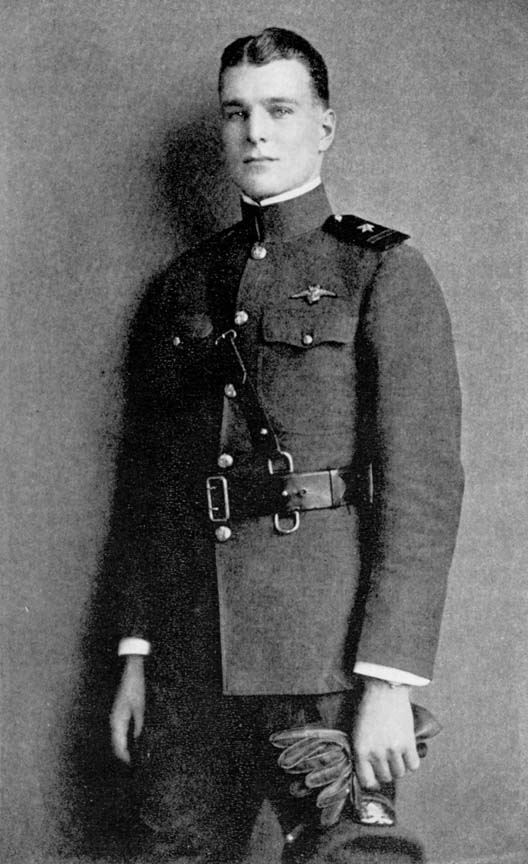
SON of Joseph Warren and Constance (Smith) Homer; was born at Roxbury, Mass., April 11, 1897. He attended the Brookline public schools; the Stone School, Boston; entered the Mass. Institute of Technology in the class of 1919; played on his class football team, rowed on his class crew, was associate editor of The Tech, and member of S.A.E. Fraternity. On Aug. 14, 1916, he enrolled in the Civilian Naval Training Cruise on U.S.S. Virginia, returning to M.I.T. in Sept. to remain until Dec., when he left to enter the Potomska (Cotton) Mills, New Bedford.
On June 26, 1917, he enlisted in the U.S. Naval Reserve; on Aug. 20 he joined the Aviation Detachment at M.I.T., and in Oct. was one of fifteen men who volunteered to go to England to learn to fly "blimps" (dirigibles), sailing Oct. 27, 1917. He and his associates were the first U.S. aviators to land in a body in England to become pilots, and assist the Royal Naval Airship Service. During Nov. and Dec. he trained at Aviation Ground Schools at Roehampton and Cranwell. In March, 1918, he received his Pilot's license and was ordered to the Royal Air Force Station, Polegate, Sussex, for "active duty," and engaged in observation and convoy work over the English Channel. He was twice lost in fog, once blown sixty miles north of his course, his airship being damaged after landing, and again blown eighty miles south, landing "for a few minutes" on the north coast of France. May 16, 1918, he was commissioned Ensign.
On Aug. 13 he was ordered to the R.A.F. Station at Portsmouth, then to Howden, East Yorks, and on Aug. 23 to East Fortune, Scotland, flying over the North Sea. In Oct. he returned to London, and engaged in studying the design and construction of airships. While there he was taken ill with influenza, and died of bronchopneumonia at the U.S. Naval Hospital, London, on Nov. 9, 1918. On Dec. 24, 1918, he was buried at Mount Auburn, Cambridge, Mass., following an impressive memorial service conducted by the Rev. Abbot Peterson at Brookline, Mass.
The following extracts from Ensign Homer's letters give an excellent idea of the dirigible pilot's training in England:
LONDON, Sunday, Dec. 9, 1917
We have made our solo balloon flights, and are now ready for balloon pilot's licenses. It was a lot of fun going up in a balloon all alone, 'way up over the clouds 4000 or 5000 feet where you can't see the earth or anything. That is n't high, but the balloons we use are n't much good except for training. From now on we will be using the real blimps.
The other night we went up for a night flight, and went over London. We got home about midnight, and about three hours later the air raid of twenty-five gophs started.
Our job will be to escort transports and supply ships through the danger zone into port, we going out to meet the ships in our airships.
The real front is only about eighty miles from here, and yesterday we heard the guns thundering all day .... But you would never know there was a war here --- it's so peaceful.
And beyond the hills the War, in all its horror of the latest enormous Hun offensive --- I don't feel a bit like killing any one, but in a few minutes an orderly will report my ship ready, and I'll slide over the hills and away to the Channel to hunt for U-boats.
POLEGATE, May 1, 1918
Yesterday, I went on patrol at 6 A.M. and got into the fog (we are almost always out of sight of land) and flew around for about four hours. I was just going to lay a course for home when I sighted land to the south where it ought not be. On investigation it was Cape Barfleur. So I flew inland until I reached a French Airship Station and landed for a few minutes .... Then I went home (about eighty miles, arriving at 7 P.M. thirteen hours over the water). It was just a matter of sticking to it.
Coming home I laid a course, and arrived within two miles of the place I headed for, steering seventy miles out of the eighty by compass only, so you see you can get along pretty well without seeing land .... Am Captain of a ship of my own now, her name is "Sea Scout Zero 39" and she has "S S Z 39" in enormous letters on the envelope.
Have been for five hours without seeing anything except gray sea below and gray fog all around --- and have come home when it was so thick that I couldn't see the station a quarter of a mile off ---just had to find the beach, then find the town I knew, then follow roads and railways about a hundred feet off the ground until I got to the station.
On Sept. 8, 1918, he wrote from East Fortune, where he had been made 3d Officer of the R 29:
Skipped all intervening types of ships and have gone from the smallest to the largest ship in the service. The C.O. of my ship is a peach of a boy and I'm all happy. It seems funny to go to bed a thousand feet up in the air! But very nice .... We do patrols of one or two days usually ....
Previous to this, his Commanding Officer had written on Aug. 17:
GROUP HEADQUARTERS, ROYAL AIR FORCE
WARSASH, HANTSMY DEAR ENSIGN HOMER,
It is with much regret that you leave this Command to go to bigger ships. However, it is all for your good, and that is the only consolation that I have personally. During the time you have been under my command at Polegate and the Mooring-out Stations you have set a very high example in all-round efficiency in anti-submarine patrols and you are destined to do big things, I think, before this war is over. Au revoir, and the best of good luck go with you. I am
Yours very sincerely FRASER
Lt.-Col., R.A.F.
On Sept. 20, Homer wrote from East Fortune to Lieut. W. A. Edwards, U.S.N., Aide for Aviation, Grosvenor Gardens, London, saying:
I am getting a good deal of experience in the handling of the Rigid, but Major Thomas thinks that I could learn more of the construction by going for short periods to other stations devoted entirely to constructional work; especially to Barlow, where the new R 34 is building, and to White City where the fabric work is done.
On Oct. 8 he was ordered to Wormwood Scrubbs, London, where he had an opportunity to follow the construction of the R 34, destined to make the famous trans-Atlantic flight. And it is of interest to note that when this British airship landed at Roosevelt Field, one of its officers conveyed a message of sympathy to the parents of Ensign Homer, testifying to the appreciation of those that had trained with their son in England.
The final extract is Ensign Homer's description of a sunrise viewed from the air:
The sunrise over the clouds is gorgeous sublime --- incomparable, untellable. One does n't feel very poetic after one has been out in the darkness and fog all night---but when the sun rises and lights up the tops of the mist one forgets the war, the cold, the cramped legs, and glories in the beauty of the scene. The sun comes up out of its cloud of gray, turning it to a shell-pink. Then, as it climbs higher, it sets the whole sea of clouds sparkling and seething --- a myriad of rainbows, a mass of majestic, rolling, heaving beauty. There is no use in my trying to explain it --- one must be in it and surrounded by it --- the only bit of humanity in all the vast firmament --- then only can it be appreciated.
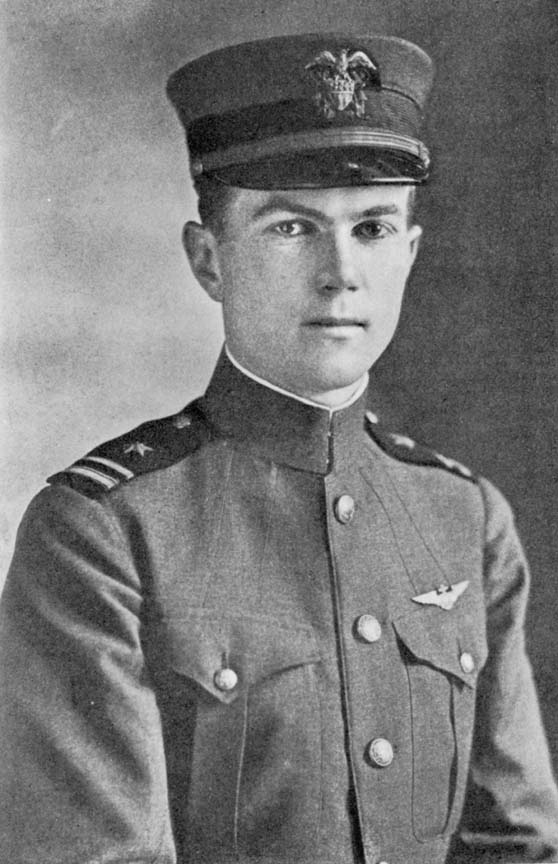
SON of Frederic C. and Myra (Tucker) Hood; was born at Brookline, Mass., Feb. 13, 1893. He was fitted for college at St. George's School, Newport, R.I., and in 1914 graduated from Harvard College, where he had acted as manager of the Harvard baseball team. He attended the Officers' Training Camp at Plattsburg, N.Y., in Aug., 1916.
He enrolled at Washington, D.C., on Nov. 20, 1917, as Lieut. (j.g.). He was ordered to Akron, Ohio, where he was put in charge of the construction and testing of lighter-than-air craft for the Navy. He qualified as a Naval Aviator on June 28, 1918, and was a member of the first crew to make the flight from Akron to the Atlantic Coast. He was promoted to Lieut. on Oct. 1, 1918, and was released from active service on March 4, 1919.
Lieut. Hood has kindly written the account of the lighter-than-air construction which follows:
Lighter-than-air construction in this country previous to the war had consisted, as far as the Navy was concerned, in one non-rigid dirigible balloon, the DN 1, which was built about 1914, and used at the Naval Air Station, Pensacola, Florida, and several kite and free balloons.
When the United States entered the war it had had practically no experience with lighter-than-air craft, whereas Germany had developed it to a very marked degree with their rigid airships previous to the war, and England had led the Allies in development during the war, with France and Italy following.
The first dirigibles built during the war were approximately 160 feet long by 35 feet in diameter, having a capacity of 77,000 cubic feet, and a displacement of about 5400 pounds. The fuselage used in these first dirigibles was taken from a standard Navy training seaplane, using a single 100-horse-power Curtiss motor, which gave the dirigible speed of about forty-eight miles an hour, an endurance of about ten hours at full speed, and a ceiling of about 6000 feet.
During the war about twenty of these dirigibles were built, and all used in this country at our Naval Air Stations for patrol purposes. At first, due to lack of experience both in construction and operation, many difficulties were encountered, but as the manufacturers had more experience in the construction of dirigibles and the Navy more experience in their operation this first type of dirigibles became very successful and was used to great advantage.
The main objection to the first dirigibles was their almost certain loss if serious motor trouble developed, since they had only one motor, and at most of our coastal stations on the Atlantic Coast there is a prevailing westerly wind which would drive them out to sea in case the motor stopped.
Early in 1918 plans for a twin-engine dirigible were got out and the first dirigible was flown successfully in the late summer of the same year. This dirigible was about 192 feet long, 41 feet in diameter, had a capacity of approximately 180,000 cubic feet, and a displacement of about 12,600 pounds; a maximum speed of about 60 miles an hour; a cruising speed of about 45 miles an hour, carrying two 150-horse-power motors, and had considerable bomb equipment and complete wireless installation. The car was especially built for dirigibles, being about 40 feet long, and provided space for five to seven men with available space which could be used for bunks or storage. The two motors were mounted on outriggers amidships of the car.
The first dirigible C 1 was built and tried out at Akron, and after being successfully tested was flown from Akron to the Naval Air Station at Rockaway Beach, N.Y., with a stop at Washington. This was the first successful long flight over land made in a dirigible in this country, although this same flight had been twice attempted before. This same dirigible was used at the Naval Air Station at Rockaway for several months, and was then flown by three stages to the Naval Air Station, Key West, Florida. Several duplicates of the C 1 were built and it was planned to fly one of them, the C 5, across the ocean.
Kite balloons, which were built in large numbers, and used for observation purposes from battleships, destroyers, and smaller craft, formed a most important part of the Navy's lighter-than-air programme.
Free balloons, which were built in small quantities, were used in elementary fight training by all lighter-than-air officers in order to instruct them in the effects of varying atmospheric conditions upon a balloon. The free balloon consists of a spherical envelope around which a net is placed which supports a basket, and the balloon having no propelling forces, moves with the wind, and can only be controlled up or down by throwing over ballast or valving gas. Training in free balloons was essential, as the effects of varying atmospheric conditions on the gas in the envelope are the largest factors in the operation of lighter-than-air craft. Also, when the motor of a dirigible stops or a kite balloon breaks away, they both become essentially free balloons and must be treated as such.
Akron was really the centre of balloon manufacturing and development because of the rubber companies situated there. The companies were the logical manufacturers of lighter-than-air craft, because a balloon envelope is made of a rubberized light-weight cloth or silk, and the development of this fabric is of utmost importance.
The Navy purchased and built a station near by Akron for test and construction purposes where the dirigibles were assembled and tested.
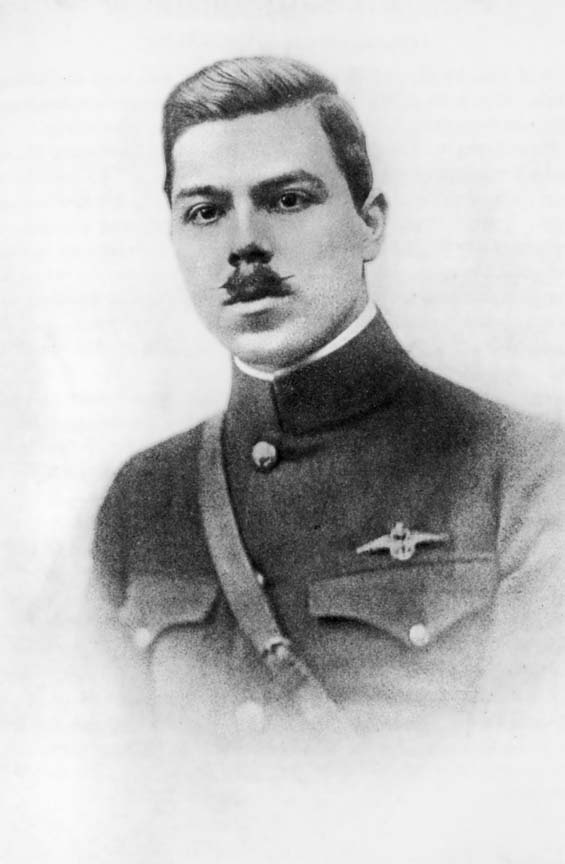
SON of James Robb and Katharine Dana Anderson, of Somerville, Mass.; was born at Denver, Col., June 6, 1895. He attended the Somerville public schools, and entered the Mass. Institute of Technology, where he remained for two years. He took three years at Boston University, being granted leave of absence in May, 1917, to enlist. He trained with the R.O.T.C., and on June 30, 1917, enrolled as seaman, second class, in the U.S.N.R.F., and was ordered to the Naval Aviation Ground School at M.I.T., where he trained until ordered overseas Oct. 20, 1917.
On reaching London he was sent to Roehampton, for kite balloon and dirigible training, and from there, on Dec. 10, he was ordered to the Royal Naval Air Station, Cranwell, Lincolnshire. On Feb. 20, 1918, he was sent to the Royal Naval Air Station at East Fortune, Scotland, where his duties consisted of fleet reconnaissance, anti-submarine work, and convoy duty. He was commissioned Ensign, with Pilot's license, in March, 1918.
After a few weeks as Second Officer, at East Fortune, he acted as Captain of one of the ships at this station, where he remained for seven months. In Oct., 1918, he was commissioned Lieut. (j.g.), and was ordered to the Royal Naval Construction Station, at Kingsnorth, for a course in designs and the rigging of airships. On Nov. 15 he was sent to the U.S. Naval Aviation Headquarters, London, and attached to the Bureau of Construction; there he did special work on repairs and testing, and on parachutes, being one of two men who volunteered for, and actually made two daring parachute jumps.
On April 1, 1919, Lieut. Anderson was ordered to Washington, D.C., for duty in the Office of Naval Operations. On Sept. 1, 1919, he was appointed Aide for Aviation Recruiting. He performed approximately 500 hours of patrol duty during the war. He is still in the Service.

SON of Charles H. and Elizabeth M. Norris; was born at Chelsea, Mass., March 29, 1892. He attended the Chelsea public schools and Sanborn Seminary, and graduated from Dartmouth College.
He enlisted in May, 1917, in the U.S.N.R.F.C. at Boston, Mass., and was assigned to the Naval Aviation School at M.I.T., where he received instruction in the main rudiments of dirigible and balloon work. Upon completing this course he was ordered overseas to London, Oct. 20, 1917, and thence to Roehampton for kite balloon and dirigible training with the Royal Naval Air Service, where he qualified as a Free Balloon Pilot. On Dec. 10, 1918, he was assigned to the Royal Naval Air Station at Cranwell, Lincolnshire, to qualify as a Dirigible Pilot. He was commissioned Ensign, March, 1918, and Lieut. (j.g.) in Sept., 1918.
He was assigned to the Royal Naval Air Service Station at Teinbroke, Wales; from there he went to Mullion, Cornwall, and thence to the U.S. Naval Air Station at Paimbœuf, France, for dirigible duty in connection with the location of enemy submarines. He is credited with two Hun submarines.
Lieut. Norris returned to the U.S. on Dec. 15, 1918, being assigned duty at Montauk Point, N.Y., in charge of the C 4 and two smaller dirigibles. He represented the Naval Air Service at Mineola, during the landing of the British trans-Atlantic dirigible R 34. He has been assigned to the North Island Naval Air Station, Cal., where he is still in Service.
Married, June 25, 1917, Erdine L. Gay.
Brother in Service ---
Clarence W. Norris, Sergeant, U.S.A., Permanent Detachment, Overseas Casual, Oct. 5, 1917, to March, 1919.

SON of Clifford M. and Harriette W. Brewer; was born at Medford, Mass., May 4, 1896. He was educated at Medford High School, Phillips Exeter Academy, and at Harvard College, class of 1919.
He enlisted on May 21, 1917, at the Charlestown Navy Yard, in U.S.N.R.F. From June to Sept., 1917, he studied at the Goodyear Balloon School, Akron, Ohio. He was commissioned Ensign on Oct. 27, 1917, and ordered to overseas duty. In France he trained at U.S.N. Air Station, Paimbœuf, France, from Nov., 1917, to Oct. 31, 1918, where he did excellent convoy and patrol work in a zone mined and patrolled by the enemy. He was attached to the Naval Air Station at Guipavas, from Nov. 1 to Nov. 23, 1918. He was commissioned Lieut. (j.g) on March 23, 1918, and Lieut. on Oct. 1, 1918. He was ordered back to the U.S. and stationed at Bay Shore, N.Y., from Dec. 6, 1918, to Jan. 8, 1919. He was then sent to U.S. Naval Air Station at Chatham, on Jan. 11, 1919, as Dirigible Officer.
Lieut. Brewer was cited by the French Government, and by the U.S. Government.
Citations (From copy of French citation) I have the honor to inform you that following the ascension of twenty-five hours and forty-three minutes made on the 7th of April, 1918, by Dirigible AT 1, at the American Dirigible Centre at Paimbœuf, during a wind of five to twelve metres, and in a zone mined and patrolled, I have decided to record an official statement of satisfaction to:
Lieutenant CULBERT, Commanding
Ensign DELENO
Ensign BREWER
Ensign MACCRACKEN, and to the crew of the AT 1with the following motive:
Have given proof, during the course of an ascension of twenty-five hours and forty-three minutes, which constitutes by its duration a remarkable performance, of the most excellent qualities of endurance, of energy, of sang-froid, and technical ability.
(Signed) Vice-Admiral SALAUN
Director-General of Submarine Warfare
(From Bureau of Navigation, Washington, D.C.) To Lieut. (j.g.) A. D. BREWER, U.S.N.R.F.
The Bureau is pleased to quote below a communication received from Vice-Admiral Salaun, Director-General Submarine Warfare, French Republic, commending you for the performance of the Dirigible AT 1, following the ascension made on April 27, 1918. (Then follows quotation of French citation.) A copy of this letter will be filed with your official efficiency record.
(Signed) HANIS LANING
Chief of Bureau
SON of Ernest W. and Helen L. (Hersey) Merrill; was born at Somerville, Mass., Jan. 22, 1896. He attended the public schools of Somerville, and in the fall of 1916 entered Tufts College, taking an engineering course. Early in 1917 he enlisted in the U.S. Naval Reserve, and during the summer was engaged in road construction at Camp Devens, and also worked for the Mass. Highway Commission. About Aug. 20 he entered the Naval Aviation Ground School at M.I.T., as a member of Flight C, and on graduation in Oct., 1917, was one of fifteen men sent to England for training.
He was in active service in England, engaged in patrolling the west coast in search of submarines, until July, 1918, when he was sent to France and stationed at Paimbœuf. He was commissioned Ensign while in England, and Lieut. (j.g.) after his arrival in France. He returned to the U.S., June 22, 1919, and after a short furlough was sent to Norfolk, Va. In the middle of Aug. he was transferred to Panama, where he was stationed at last accounts.
Married, Aug. 9, 1919, Marion Roop, of Arlington, Mass.
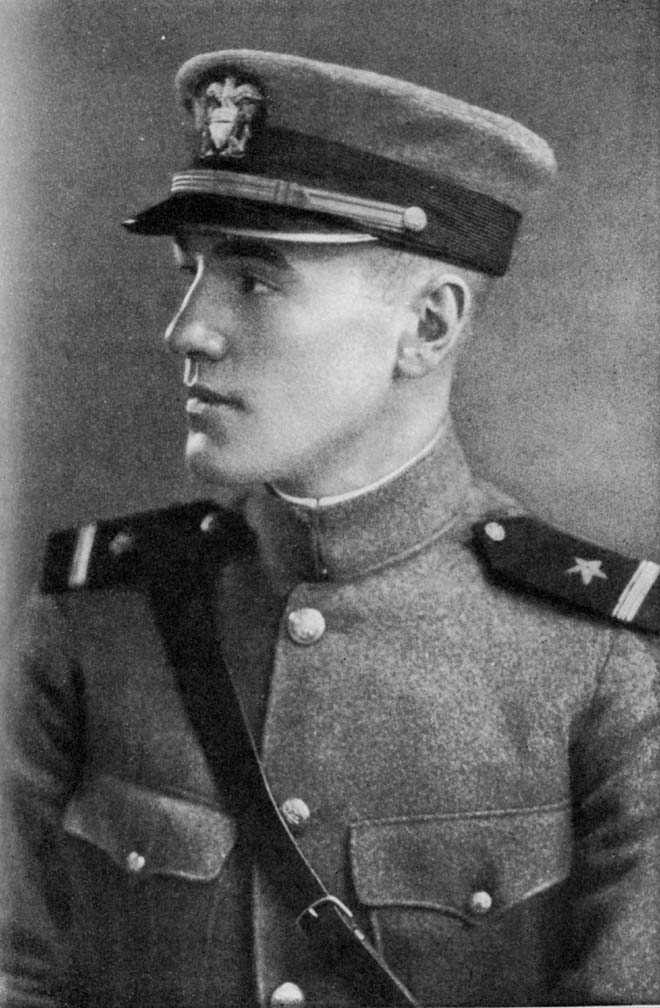
SON of Andrew and Martha (Hillard) MacLeish; was born in Glencoe, Ill., Sept. 19, 1894, of distinguished New England ancestry. He prepared for college at the Hotchkiss School, Lakeville, Conn., and at Treat's Tutoring School, Helenwood, Tenn. He entered Yale College in the class of 1918. He was a member of the freshman and 'Varsity track teams, and of the 'Varsity water polo team.
Before the U.S. entered the war, he associated himself with a group of Yale men whose purpose was to establish a naval flying corps to be placed at the service of the Government in case of war. He enlisted in the Naval Reserve Flying Corps, as an electrician, second class, on March 4, 1917, and late in March left college for West Palm Beach, Fla., for training in the use of hydroplanes. In June he finished his training at Huntington, N.Y., where he was commissioned Ensign in Aug. 1917, and served as Officer Instructor at Langley Field, Norfolk, Va. He sailed overseas in Oct., 1917, to France, and was detailed for a brief time as Instructor; then assigned to important inspection work at the Navy Assembly and Repair Bases. From the middle of Dec., 1917, to the middle of March, 1918, he trained at Moutchic-Lacanau, France, Eastleigh and Gosport, Eng., and at Turnberry and Ayr, Scotland. He was ordered to the front, March 7, 1918, on a chasse machine attached to the British Naval Air Service. He received a commission as Lieut. (j.g.) on June 23, 1918, and was promoted to Lieut. in Aug., 1919. From April 20 to May 24, 1918, he was attached to the U.S. Naval Air Station at Dunkirk. Most of his flights at this time were made with the British Royal Air Force, against the enemy submarine bases at Zeebrugge and Ostend, the object being not only to damage the mole and harbor works, but also to catch the submarines as they came out at high tide. On May 24 he was transferred to the 7th A.I.C. at Clermont-Ferrand for a course at the U.S. Aviation Bombing School. In the middle of July Lieut. MacLeish returned to Flanders and flew a two-seater bombing machine with the British R.A.F. in raids upon Zeebrugge, Bruges, and other points behind the enemy lines. Early in Sept. he returned to Eastleigh, Eng., where he became the First Flight Officer. Early in Oct., 1918, he declined a furlough to return for a few weeks to the U.S., and applied for the opportunity to go to the front with the famous British Combat Squadron No. 13, R.A.F., in the great offensive which the Allies were just beginning in Flanders. On Oct. 13 he was given permission to join this Squadron, and on the morning of Oct. 14, 1918, he went out over the lines bringing down an enemy plane. In the afternoon of the same day he went out, and was seen to bring down a second enemy plane, and then, with assistance, a third enemy plane. At this juncture he and his British companions were attacked by Germans in numbers three to one. MacLeish headed right into the enemy and was heavily engaged, when his five comrades, seeing his desperate position, turned to help him. Four of the British were brought down immediately, but Lieut. MacLeish and the Flight Commander fought off the Germans in a running fight of sixteen miles, at the conclusion of which the Commander was brought down in flames and MacLeish killed in the air, over Schoorl, Belgium. Not until Dec. 26, 1918, was his body found by the owner of the Belgian farm in Leffinghe, where he fell. He is buried where he fell, his grave marked by a headstone brought over by his comrades of the U.S.N.R.F.C. The Royal Air Force has planned a permanent memorial to mark the spot. The night before he left for the front Lieut. MacLeish wrote:
If I find it necessary to make the supreme sacrifice, always remember this --- I am so firmly convinced that the ideals I am going to fight for are right and splendid that I am happy to be able to give so much for them. I could not have any self-respect, I could not consider myself a man, if I saw these ideals defeated when it lies in my power to defend them. So I have no fears; I have no regrets; l have only to thank God for such a wonderful opportunity to serve Him and the world. No, if I must make the supreme sacrifice I will do it gladly and I will do it honorably and bravely, as your son should, and the life that I lay down will be my preparation for the grander, finer life that I shall take up. I shall live! You must not grieve. I shall be supremely happy --- so must you --- not that I have "gone West," but that I have bought such a wonderful life at so small a price and paid for it gladly.
Brothers in Service --
Norman Hillard MacLeish, 2d Lieut., 53d F.A.
Archibald MacLeish, Capt., 146th F.A.
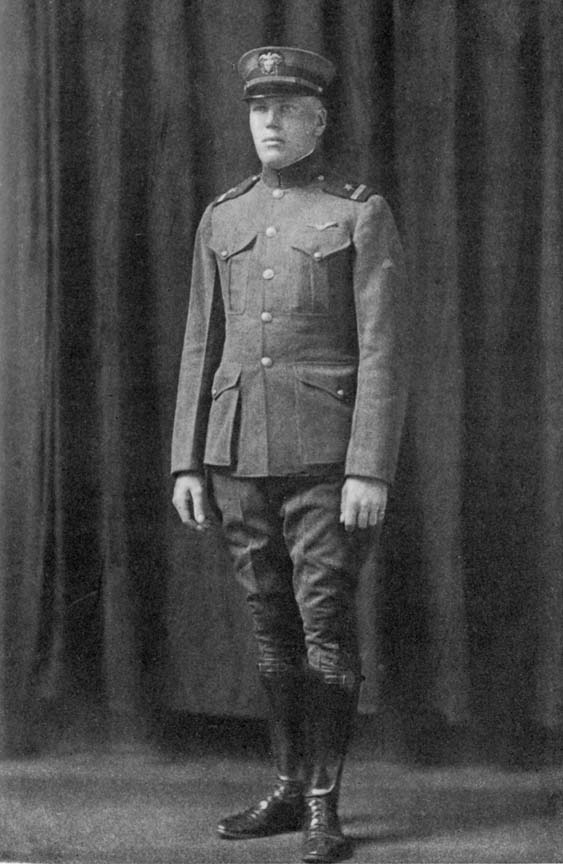
SON of Levi and Agnes (Stimson) Cooley; was born at Newtonville, Mass., Aug. 10, 1895. He fitted for college at the Mitchell Military School, and at Phillips Exeter Academy, and entered Dartmouth with the class of 1918.
On May 5, 1917, he left college to enter the American Ambulance Field Service, sailing for France with the first Dartmouth Unit. He returned to this country in Oct., 1917, and enlisted in Naval Aviation, Nov. 20, 1917, at Boston, Mass. He was called to active duty Feb. 18, 1918.
While training at the Ground School, M.I.T., he was drafted for lighter-than-air service, and sent to the Naval Air Station, Akron, Ohio, April 27, 1918. After a preliminary course in lighter-than-air work, he was assigned to Pensacola, Fla., for dirigible training. June 20, 1918. He received his commission as Ensign, Aug. 22, 1918, and acted as an Instructor at Pensacola. In Oct., 1918, he was placed in charge of bombing instruction in the lighter-than-air section. At the end of Oct., he was recommended for junior lieutenancy.
He was returned to inactive duty, Dec. 9, 1918. He received promotion to Lieut. (j.g.), March 1, 1919; commission to date back to Jan. 1, 1919.
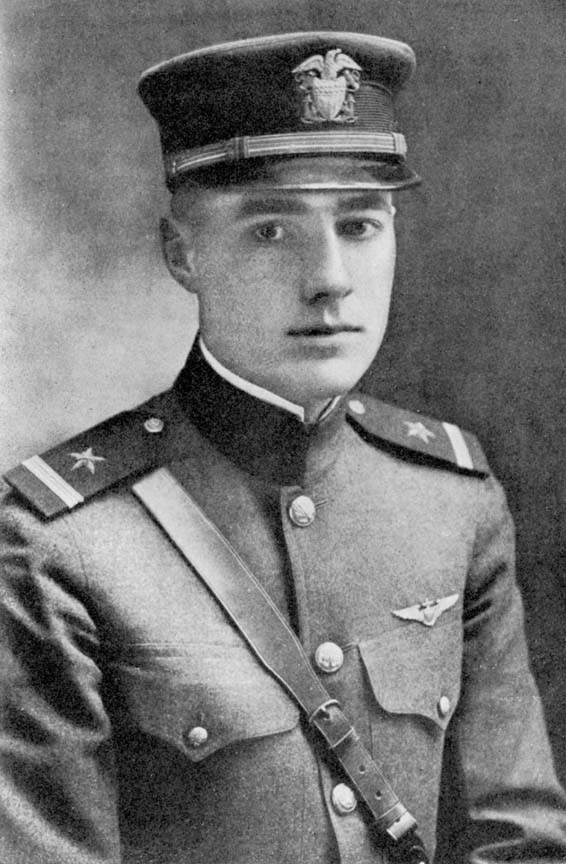
SON of Winfield H. and Mary E. (McGrath) Palmer; was born at Malden, Mass., May 17, 1897. He was educated at the Malden High School, and at the Wentworth Institute, graduating in 1917. He attended the Plattsburg Training Camp in July, 1916.
In Aug., 1917, he enlisted in the U.S.N.R.F. at Boston, Mass.; trained at M.I.T., and later at Pensacola, Fla. He was sent overseas in April, 1918, having received his commission as Ensign in Feb., 1918. He trained in France until June, at Moutchic-Lacanau, Gironde. He was then sent to Italy to train for night bombing with Caproni machines, at Malpensa. Ensign Palmer was brevetted in Italy in July, 1918, and was made First Pilot in the same month. After finishing his training, he was sent on a special mission, to test out and pilot a new 600-horse-power Caproni bombing-machine, ordered by the U.S. In this machine he flew from Milan over the Alps to Paris. The flight was made in seven hours, actual flying time, with landings at Turin, Lyons, Dijon, and Paris. From Paris he was ordered to the Northern Bombing Group, Field A.
He was killed in an accident at St.-Inglevert, France, on Sept. 14, 1918, and was buried in the Military Cemetery at Calais, France.
Married, March 3, 1918, Dorothy Keniston.