
SON of George F. and Mary Stewart (McLeod) Coward; was born in Cambridge, Mass., on June 8, 1895. He was educated at the Cambridge Latin School, and at M.I.T., class of 1918 (course uncompleted). There he was on the track and hockey teams in 1916-17. Previous to enlistment he trained one year with the M.I.T. Cadets.
He enlisted on April 28, 1917, at the Officers' Training Camp, at Plattsburg, which he attended for three months. From Aug. 14, 1917, to March 4, 1918, he trained with S.M.A., M.I.T. and with the Detachment of Flying Cadets, at Kelly Field, No. 2, San Antonio, Tex. He was commissioned 2d Lieut., A.S., Signal R.C. on March 4, 1918. From March 4 to July, 1918, he continued training at Camp Dick, Dallas, Tex. and at Fort Sill, Okla.
Lieut. Coward was ordered overseas in July, 1918, with the Aviation Section (unattached). Later he was transferred to the 1st Aero Squadron, with which he saw active service until the signing of the Armistice. He was for seven weeks in the Argonne sector, on observation duty; and took part in the fight at Argonne Forest. Later, he made flights over many of the contested battle-fields, including Verdun and the French trenches in the Champagne sector.
Lieut. Coward was with the Army of Occupation at Weissenthurm, Germany, with the 1st Aero Squadron, 3d Army.
Brother in Service ---
Warren F. Coward, Private, U.S.A., Ordnance Department.
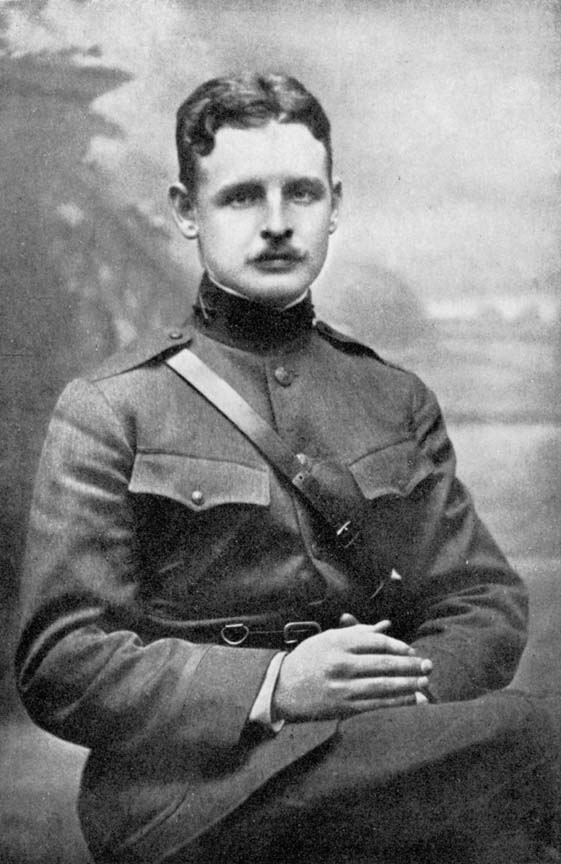
SON of William Key Bond and Maria Holmes (Furman) Emerson; was born in New York City, April 9, 1894. He graduated from Middlesex School, Concord, Mass., in 1912, and entered Harvard College with the class of 1916. He left college in his sophomore year to join the American Ambulance Field Service, and served with the Unit in France for six months, in 1915; but returned to graduate with his class at Harvard in June, 1916.
In 1917 he again joined the American Ambulance Field Service, and went this time to Serbia, attached to the Army of the Orient. He received the Croix de Guerre with one Star, for "conspicuous gallantry in rescuing wounded under fire, near Monastir, in Aug., 1917."
Returning to France he was commissioned 2d Lieut. He attended the French Officers' Artillery School at Valdahon; and after graduating in Feb., 1918, he was attached for a short time to the 15th Field Artillery, U.S.A., then to the French Escadrille C 21. He was transferred from the French Service to the 12th Aero Squadron, U.S.A. On the afternoon of May 14, 1918, Lieut. Emerson was acting as artillery observer, with Lieut. Cyril M. Angell, of Attleboro, Mass., as pilot; and they were flying over the German lines north of Toul. They disappeared into low-lying clouds, and were next seen falling within the American lines, probably hit by an anti-aircraft shell, though there is no positive proof of this. Both aviators were killed. Lieut. Emerson was buried in the cemetery of the 104th Infantry, U.S.A., at Vignot, France, north of Toul.
He was the first Field Artillery Officer to be killed in action in the war while flying for the U.S. Army. In recognition of this fact the Aviation Field at Camp Jackson, S.C., has been named "Emerson Field," by the War Department.

SON of Thomas H. and Charlotte Angell of Attleboro, Mass.; was born in Fall River, Mass., April 9, 1895. He attended the Newport High School, and graduated from the Fall River High School, and from M.I.T.
He enlisted at Champaign, Ill., in Aug., 1917, and trained at the Univ. of Ill. School of Military Aeronautics. He was then attached to the Royal Flying Corps, Squadron 83, training at Camp Mohawk, Deseronto, Can.; and later the R.F.C. School of Aerial Gunnery, Hicks, Tex. He was commissioned 2d Lieut. in Aug., 1917.
Lieut. Angell received overseas orders, and was stationed in France, first with the 147th Aero Squadron, A.E.F.; then with the 12th Aero Squadron, A.E.F. He was killed in action at Vignot, France, on May 14, 1918.
Lieut. Angell was flying as pilot, accompanied by Lieut. W. K. B. Emerson, Jr., as artillery observer. They went up in the afternoon of May 14, 1918, flying over the German lines, and were lost to sight until those watching for them saw them fall inside of the American lines, presumably shot down by the enemy. Both pilot and observer were killed. Lieut. Angell was buried in the cemetery of the 104th Infantry, U.S.A., at Vignot, France, north of Toul.

SON of Harry Clayton and Jennie (Bartlett) Beaman; was born in Princeton, Mass., on July 20, 1890. He was educated at Phillips Andover Academy, and at Harvard College, from which he graduated in 1913. He was on his class baseball nine at college.
On May 10, 1917, he attended the Officers' Training Camp at Plattsburg, and was transferred from there in July to the Ground School at M.I.T., where he graduated in Oct., 1917. He was sent overseas on Nov. , 1917, and received further training at Tours, 2d Aviation Instruction Centre, and at Issoudun, 3d A.I.C. He was commissioned 1st Lieut. May 16, 1918. For a considerable time he acted as "ferry pilot," taking new machines to the front.
He joined the 12th Squadron toward the end of the Argonne offensive, and was in active service as observation and photographic pilot up to the time of the signing of the Armistice, when he was assigned to the Army of Occupation at Trèves and Coblenz. When the 12th Squadron was detailed home he was detached for duty with the 4th Corps, and attached to Headquarters Air Service at Zinzig.
He sailed from Marseilles on June 10. and was honorably discharged July 15, 1919.

SECOND LIEUTENANT, A.S., U.S.A., TWELFTH AND FIRST AERO SQUADRONS, FIRST OBSERVATION GROUP
SON of Mahlon R. and Bertha L. (Schrack) Bryan, of Brookline, Mass.; was born at Camden, N.J., Aug. 9, 1895. He attended the Hackley School, Tarrytown-on-Hudson, and entered Harvard College with the class of 1919. He served for nine months with the American Ambulance Field Service, Section VIII, in 1916-17.
On returning to America, he enlisted at M.I.T., Cambridge, Mass., on July 23, 1917. He reported for duty on Sept. 5 at Fort Wood, N.Y., and was attached to a company of 100 which was sent to Toronto, Can., to train with the Royal Flying Corps. After completing the ground-school work in Toronto in Nov. he was sent with the Canadians to Fort Worth, Tex. There he was attached to the 27th Aero Squadron, one of the first American squadrons to be organized. After he had finished the required tests and had completed the gunnery course, he was commissioned 2d Lieut. Feb. 5, 1918, and placed on active duty. Almost immediately he received his overseas orders, and sailed from New York for Liverpool. There he joined the 27th Squadron which had sailed a few weeks previously; he went with this Squadron to Issoudun, France, for higher training. After he had passed through Field No. 7 at Issoudun, he, with four other pilots, was transferred to the 12th Aero Squadron which was already in the zone of advance, ready for work over the front. He reported to the new Squadron at Amanty and remained with it until the end of the year. In June the Squadron was detached from the 1st Corps Observation Group and temporarily sent to work over the Lunéville sector. On July 1, 1918, the Squadron rejoined the Group near Château-Thierry and participated in the general advance. Subsequently Lieut. Bryan's Squadron removed to Toul, where it stayed through the St.-Mihiel offensive, and later served throughout the Argonne-Meuse drive. After the signing of the Armistice the Squadron became part of the Army of Occupation in Luxembourg and Germany.
Lieut. Bryan left Squadron 1 at Trèves. Germany, on Dec. 29, 1918, for transfer to the United States, arrived in America on March 3, 1919, and was honorably discharged at Mineola, N.Y.
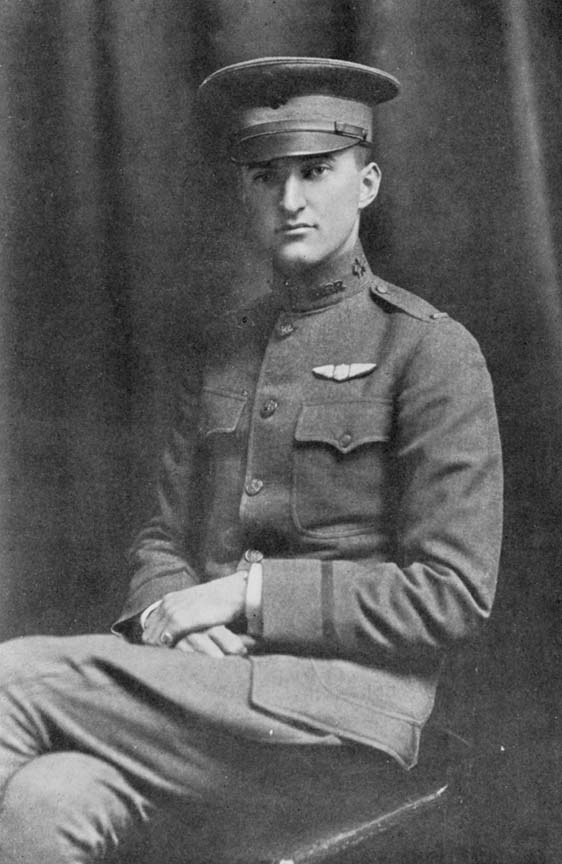
SECOND LIEUTENANT, A.S., U.S.A., TWELFTH AERO SQUADRON, FIRST OBSERVATION GROUP
SON of Henry W. and Caroline M. Dwight, of Cambridge, Mass.; was born at Brookline, Mass., Jan. 12, 1896. He was educated at Phillips Andover Academy, class of 1914, and at Williams College, class of 1918. He was on the track team at Andover and at Williams.
He enlisted at Boston, on April 10, 1917, U.S.N.R.F., and was transferred to Army Aviation on Aug. 23, 1917. He attended the Ground School, M.I.T., from Sept. 29 to Nov. 20, 1917; was attached to R.F.C., Can., for further training, which he received at Fort Worth Field, Nov. 27, 1917, to March 7, 1918. He was commissioned 2d Lieut., A.S., U.S.A., on March 7, 1918, and was assigned to the 184th Aero Squadron. He sailed overseas on June 29, 1918, landed in England July 7, and was sent to France July 10, with casual officers; attached to the 3d Aviation Instruction Centre, July 17 to Aug. 10, 1918; he attended the School of Aerial Gunnery at St.-Jean-des-Monts, from Aug. 10 to Aug. 25; was made Staff Pilot, 2d Aviation Instruction Centre, Aug. 25, 1918, serving until Oct. 9, 1918. He served with the 12th Aero Squadron, 1st Corps Observation Group, from Oct. 10 to Nov. 22, 1918, and took part in the Argonne-Meuse offensive from Oct. 10 to Nov. 11. He was attached to the 12th Aero Squadron, 4th Corps Observation Group, Army of Occupation, from Nov. 22, 1918, to Feb. 11, 1919, stationed at Trèves and Coblenz, Germany; served as Casual Officer at Bordeaux Embarkation Camp from Feb. 22 to April 13, 1919. He sailed for America; landed at Hoboken, May 3, 1919. and was honorably discharged from the U.S. Army at Mitchel Field, Garden City, N.Y., on May .5, 1919.
Brother in Service ---
Winslow Dwight, Sergeant in Tank Corps, A.E.F.
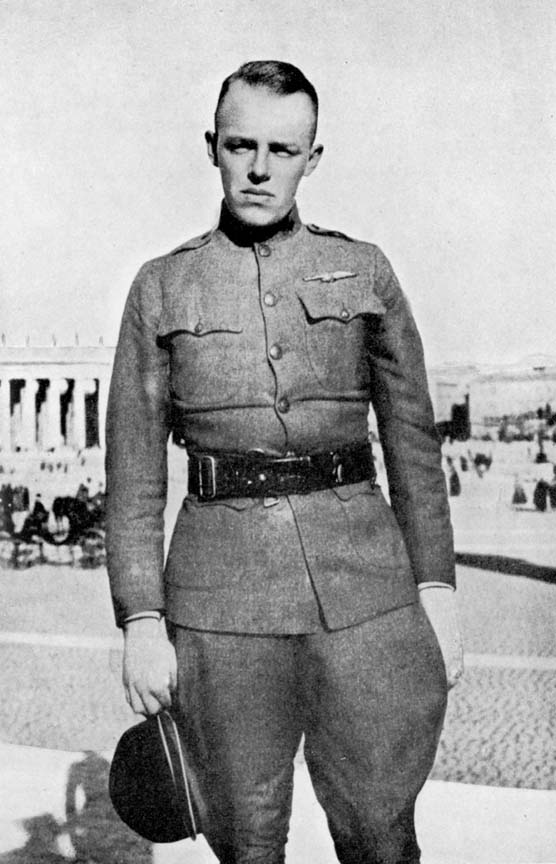
SON of William Preston and Jennie M. (Hayward) Beauclerk; was born at Irasburg, Vt., Oct. 10, 189.5. He prepared for college at the public schools of Concord, N.H., and entered Syracuse University in the class of 1919. In Aug., 1916, he attended the Officers' Training Camp at Plattsburg. He enlisted May 11, 1917, and went to Madison Barracks, Watertown, N.Y. On July 18, 1917, he entered the U.S. Aviation Ground School at Ithaca, N.Y., and on completion of his course there was sent overseas to Foggia, Italy, Sept. 25, 1917.
He received his pilot's license in Italy; was commissioned 1st Lieut. on March 22, 1918, and was sent to France for further training at Tours and Issoudun. He was assigned to the 12th Aero Squadron Sept. 8, 1918, and took part in the St.-Mihiel drive, being later transferred to the Argonne sector.
His excellent work performed in the St.-Mihiel attack proved him one of the best men in the Squadron and he received high praise from his commanding officers in the Argonne.
On Oct. 29 he was sent up with a formation of six planes whose mission was to photograph a sector over which the infantry must advance the next morning. The formation was attacked by overwhelming numbers, but in spite of this the mission succeeded, through the heroism of Lieut. Beauclerk, who sacrificed his own plane to save that containing the pictures necessary for the guidance of the infantry. By taking the bullets intended for the photographic plane, he doubtless saved many lives in the impending advance.
He fought to the last, and when he came down behind the German lines, mortally wounded, he landed his machine in such a way as to save his observer’s life.
When on the following morning the infantry made its famous attack, which had a direct bearing on the end of the war, they found the grave of Lieut. Beauclerk, who had been buried with military honors by the enemy at Champigneulle, five miles east of Grand Pré. Upon a cross these words were inscribed, "Here lies an American flyer, Lieut. S. W. Beauclerk, Jr., killed Oct. 29, 1918."
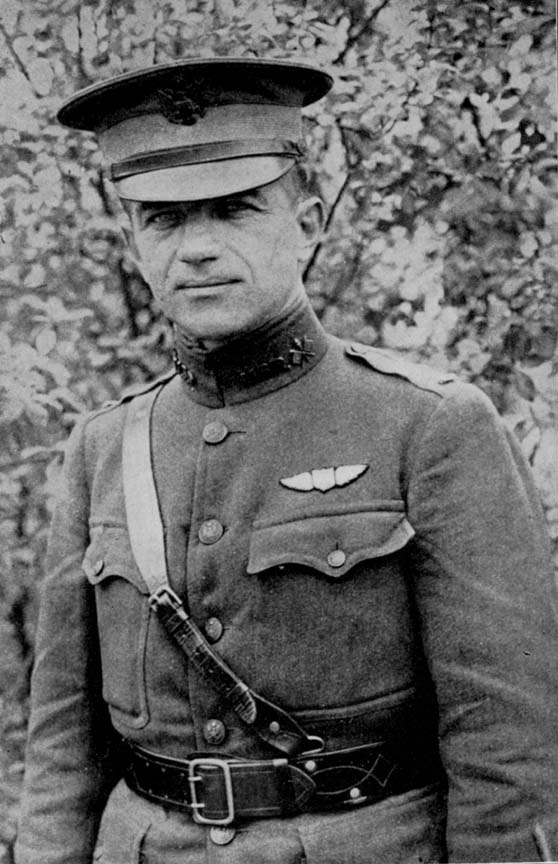
SON of Lieut. Boutelle Noyes, U.S.N., and Charlotte (Luce) Noyes; was born at Newport, RI., Nov. 26, 1881. He was educated at St. Mark's School, Southboro, Mass., and at Harvard College, A.B. 1903, Scientific School, B.S. 1905. He played quarter-back on the 'Varsity team in 1905; prior to the war he was a member of Battery A, M.V.M.
Previous to enlistment he took a preparatory course in a private flying school at Essington, Pa., reporting for duty at Newport News on Feb. 5, 1917. From then until April 14 he trained at the Curtiss Flying School. While awaiting overseas orders he was attached to the 1st Aero Squadron, stationed at Columbus, N.M. He was commissioned 1st Lieut. May 10, 1917, and sailed overseas Aug. 12, 1917. He trained in France at Avord and at Cazaux; was attached to the 1st Aero Squadron, from Sept. 1, 1917, to June 30, 1918, acting as Flight Commander. He first flew over the lines on April 5, 1918.
From July 1 to Oct. 25 he commanded the 12th Aero Squadron. He was commissioned Capt. on Aug. 1, 1918. His Squadron served in every engagement in which our troops participated Seicheprey, Château-Thierry, Fismes, St.-Mihiel, and the Argonne. He won the Croix de Guerre near Châtel Chéhéry, July 6, 1918, and the Distinguished Service Cross in the Argonne, Oct. 16, 1918.
From Oct. 26 to Dec. 1, 1918, he commanded the 5th Corps Observation Group; and from Dec. 1 to April 16, 1919, he commanded the Corps Observation Group, 1st Army. He was appointed Major, J.M.A., April 23, 1919. He was honorably discharged at Mitchel Field, N.Y., on May 27, 1919.
Citations Croix de Guerre (translation) Pilot of the first rank, cool and brave, model of duty for his Squadron. On July 6, 1918, attacked first by an enemy patrol, he dispersed them by his brave manoeuvres, and permitted his observer to take the desired photographs. Attacked a second time, he destroyed one of his adversaries in a severe combat; ended his flight by a reconnaissance at the height of 500 metres over the German lines.
D.S.C. For extraordinary heroism in action near Châtel Chéhéry, France, Oct. 16, 1918. Capt. Noyes volunteered under the most adverse weather conditions to stake the advance lines of the 8d Division. Disregarding the fact that darkness would set in before he and his observer could complete their mission, and at the extremely low altitude of 150 feet, Capt. Noyes proceeded, amid heavy aircraft and ground machine-gun fire, until the necessary information was secured. On the return, due to darkness, he was forced to land on a shell-torn field, and proceeded on foot to Headquarters with valuable information.
SON of Frank E. and Mabel C. Rollins; was born in Dover, N.H., Oct. 30, 1890. He was educated at the Dover High School, and at Dartmouth College. At Dartmouth he played baseball and football. He belonged to the Business Men's Military Association of New York City. He enlisted in Chicago, Ill., June 30, 1917, and was assigned to the Ground School at the University of Illinois. He was ordered overseas, and received his preliminary flying training at the French school at Châteauroux, from which he was transferred for advanced training to the 3d A.I.C. at Issoudun, France. He was subsequently assigned to the 33d Aero Squadron, and detailed to Issoudun as Flying Instructor at the 3d A.I.C. He was commissioned 2d Lieut. on May 18, 1918.
Father in Service:---
Frank E. Rollins, Capt., N.H. National Guard, during the Spanish War; retired rank, Lieut.-Col., N.H.N.G.; at present Major, N.H. State Guard.
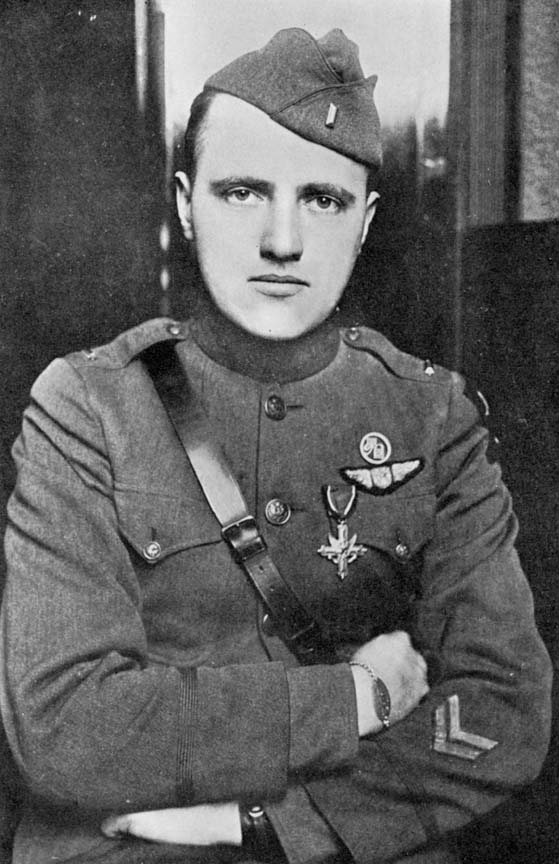
SON of Mr. and Mrs. Charles E. Kinsley, of Winchester, Mass.; was born Sept. 1, 1891, at Somerville, Mass.; educated at Winchester High School and the Rindge Manual Training School, Cambridge.
He enlisted at Ithaca, N.Y., on July 9, 1917, in the U.S. Air Service. He was trained at Cornell Ground School; Elementary Flying School at Selfridge Field, Mt. Clemens, Mich.; and at Gerstner Field, Lake Charles, La. (advanced flying). He was commissioned 2d Lieut. Chasse Pilot, at the Gerstner Field, on Feb. 8, 1918. He sailed overseas in Feb., 1918, and received advanced training at Issoudun, France, and Cazaux Gunnery School. He was appointed to the 90th Aero Squadron, 3d Observation Group, 1st Army, July 1, 1918, at Ourches. He made his first flight over the lines on July 3, 1918. The Squadron was stationed at Souilly and Béthainville during the Argonne-Meuse offensive, and at Ourches during the St.Mihiel offensive. Up to the time of the St.-Mihiel offensive Lieut. Kinsley's work consisted of reconnaissances and observations. He performed infantry liaison work in the Toul sector and east of the Meuse River, taking part daily in the St.-Mihiel offensive. His record shows 78 hours' total flying over the German lines. He received official credit for two German planes shot down in the Argonne drive east of Cunel. He took part in 17 individual combats, at St.-Mihiel, Argonne, Meuse, and Verdun. He was recommended by his CO. for promotion. He was honorably discharged at Garden City, N.Y., on Feb. 13, 1919.
Extracts from his citations and from letters written by Lieut. Kinsley's two Commanding Officers follow:
For extraordinary heroism in action east of Cunel, Verdun sector, France, 7th Oct., 1918. While staking the advanced lines of the 80th Division he was attacked by eight enemy machines (Fokker type) which dived from a near-by cloudbank. Although attacked simultaneously by the enemy planes he placed his airplane in such a position that his observer, 2d Lieut. William O. Lowe, S.M.S., was able to shoot down and crash one enemy plane and disable a second so badly that it was forced to land a few kilometres inside the German lines. Later, on the same mission, he was attacked again by a patrol of five enemy planes, scout machines, and in a running fight he drove these off and successfully completed his mission.
France, Dec. 18, 1918
The Air Service Commander, First Army, cites the following named officer for exceptional devotion to duty: 2d Lieut. Willburt Edward Kinsley, Air Service, U.S.A., Pilot, 90th Aero Squadron, by his spirit, initiative, and ability, was an inspiration to service among officers and men. He served with distinction for five months at the front.
Lieut. Kinsley has served under me for the past five months and has proved himself a capable officer and a pilot of great skill and courage. He has always been one of the first to volunteer for the most difficult and dangerous missions. He flew in the worst possible kind of weather in both the St.-Mihiel and Verdun-Argonne-Meuse offensives and has been officially credited with the destruction of two enemy planes in aerial combat. For extraordinary heroism he has been recommended for and is shortly to receive the Distinguished Service Cross. He has also been recommended for the Distinguished Service Medal. [Signed, Captain W. J. Schauffler, Jr., A.S., U.S.A., 3d Corps, Commanding Observation Group, Nov. 30, 1918.]
As one of the oldest and most experienced pilots of this command, Lieut. Kinsley has, by his coolness and skill as a pilot on active fronts, been a source of great inspiration to pilots and observers joining the Squadron, and has thus contributed, in an unusual degree, to the esprit which has made possible the Squadron's successful participation in the St.-Mihiel and Verdun offensives. He has, on many occasions, demonstrated his ability both in aerial combat and as an observation pilot, and after a particularly dangerous and brilliant mission he was recommended for and is shortly to receive the Distinguished Service Cross. Because of the unusual consistency of his work he has also been recommended for the Distinguished Service Medal. [Signed, Norris Pierson, 1st Lieut., A.S., U.S.A., Commanding 90th Squadron.]
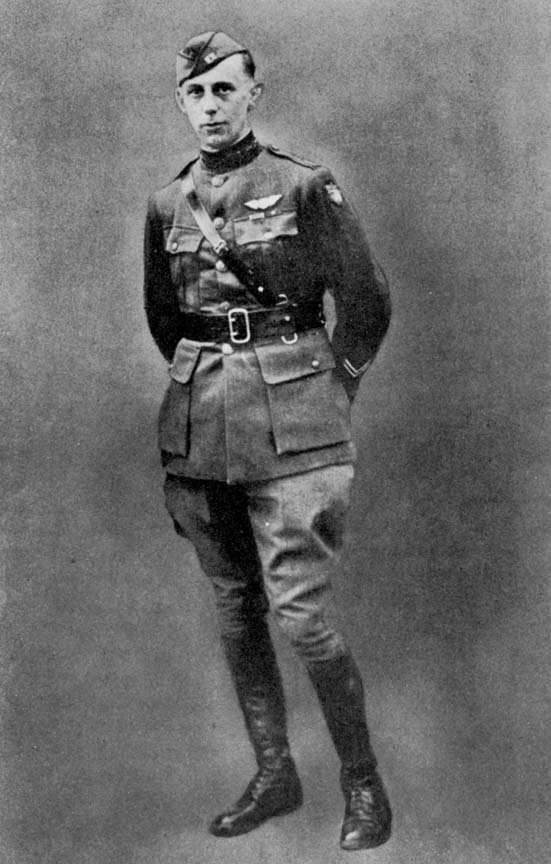
CAPTAIN, U.S.A., A.S., COMMANDING EIGHTY-EIGHTH AERO SQUADRON, FIRST, THIRD, AND FIFTH OBSERVATION GROUPS
SON of Frederic L. and Susan (Fowler) Babcock, of Lynn, Mass.; was born at Lyme, Conn., Aug. 12, 1893. He graduated from the English High School at Lynn, where he was captain of the track team, 1911-12, and from the Mass. Agricultural College at Amherst, in 1916.
He entered the U.S. Service, May 12, 1917, at the Officers' Training Camp, Plattsburg, having previously attended the Plattsburg Camp in 1916. On June 17, 1917, he was sent to the Aviation Ground School, M.I.T., continuing his training at Mineola, N.Y., July 30 to Nov. 2. He was commissioned 1st Lieut. Nov. 2, 1917; sailed overseas and trained at Issoudun, France, Dec. 2 to Feb. 20, 1918; he was assigned to the 88th Aero Squadron, 1st Observation Group, Feb. 2, 1918, and stationed at Amanty, France. He moved to the front May 8, station Ourches (Toul sector); moved to Château-Thierry sector July 6, stations Franchéville, Ferme de Graves, Goureaucourt; moved to St.-Mihiel sector Sept. 10, station Souilly; moved to Meuse-Argonne sector, Sept. 15, stations Pretz-en-Argonne, Souilly, Béthainville, until Nov. 11, 1918. Army of Occupation Dec. 5, 1918, stations Villers-les-Chèvre and Trèves, Germany, where he was on duty with the 7th Army Corps.
Capt. Babcock took part in the following battles: Champagne, Marne defensive, Aisne-Marne offensive, Oise-Aisne, St.-Mihiel, and Meuse-Argonne, besides participating in other affairs at the Toul sector, Château-Thierry sector, Fismes sector, and Verdun sector.
He was Flight Commander Aug. 5, 1918; commissioned Capt., U.S.A., A.S., Oct. 15, 1918; and 88th Squadron Commander March 7, 1919.
Citations D.S.C. For extraordinary heroism in action near Fismes, France, 11 Aug., 1918.
Under the protection of three pursuit planes, each carrying a pilot and observer, Lieuts. Bernheimer and Jordan, in charge of a photo plane, carried out successfully a hazardous photographic mission over the enemy's lines to the river Aisne. The four American ships were attacked by twelve enemy battle-planes. Lieut. Bernheimer, by coolly and skilfully manœuvring his ship, and Lieut. Jordan, by accurate operation of his machine gun, in spite of wounds in the shoulder and leg, aided materially in the victory which came to the American ships, and returned safely with 36 valuable photographs.
The pursuit plane operated by Lieuts. Hitchcock and Burns was disabled while these two officers were fighting effectively. Lieut. Burns was mortally wounded and his body jammed the controls. After a headlong fall of 2500 metres, Lieut. Hitchcock succeeded in regaining control of his plane and piloted it back to his airdrome.
Lieuts. McClendon and Plummer were shot down and killed after a vigorous combat with five of the enemy's planes.
Lieuts. Babcock and Palmer, by gallant and skilful fighting, aided in driving off the German planes and were materially responsible for the successful execution of the photographic mission.
Croix de Guerre Lieutenant Pilot P. R. BABCOCK, of the American 88th Squadron The 19th of July, 1918, having had his plane seriously hit in an infantry contact patrol, did not return until his mission was completed, with a machine riddled with bullets. The 4th of July, 1918, engaged in combat with several enemy planes which he outdistanced, received more than thirty bullets in his machine, and returned to the landing-field of his Squadron more than forty kilometres away.
Recommendation for appointment as Squadron Commander Capt. PHILIP R. BABCOCK, AS. (Pilot) Flight Commander, with more than 100 hours' flying time over the lines. Has served with great credit to organization since his assignment to same, Feb. 22, 1918. Has been awarded the D.S.C. and the French Croix de Guerre for conspicuous bravery in action.
Capt. Babcock has acted as second in command of his organization for the past three months, and during the absence of the Commanding Officer has served as such very creditably.
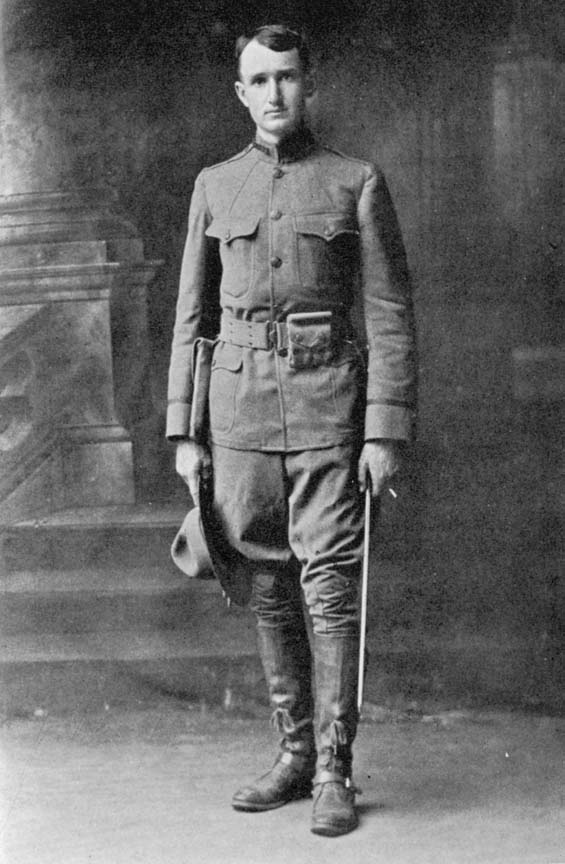
SECOND LIEUTENANT, A.S.A., U.S.A., OBSERVER, ONE HUNDRED FIRST FIELD ARTILLERY ATTACHED TO EIGHTY-EIGHTH AERO SQUADRON
SON of Henry M. and Alice (Hussey) Plummer; was born at New Bedford, Mass., May 25, 1890. He prepared for college at the Morristown School, N.J., and graduated from Harvard College in 1914. Prior to the declaration of war he was a member of Battery A, 1st Mass. Regiment, F.A., N.G., and went with that organization to the Mexican Border in 1916.
When war was declared he volunteered, and was commissioned 2d Lieut. in the spring of 1917. He went with Battery A to Camp Curtis Guild, Boxford, Mass., and after a month's training, sailed overseas, Sept. 10, 1917, with the 101st Regiment, F.A. Soon after reaching France he joined the Division of Aeronautics, trained as an observer at the various French camps, and was attached to the 88th Aero Squadron.
The following extract is from the report sent by Lieut. Plummer after an engagement for participation in which he received the Croix de Guerre:
July 24, 1918
Near Beuvardes
Observation at 800 M. 7-18-15 PM.Two monoplace planes appeared from the north, circled to the east and above us. I kept an eye on them, and could distinctly see the French colors on their tails.
A few moments later two German planes appeared, while we were over the Beuvardes Wood. I fired 25 rounds at these.
At this time we were under heavy anti-aircraft gun-fire, the pieces cutting the wings and fuselage, besides cutting several guy wires. My goggles were shot away.
On inspection I found that many machine-gun bullets had pierced the wings and fuselage; the majority of these came from behind and from above. There were only the first two planes of which I have spoken which could have done this.
On Aug. 11, 1918, while flying a protection plane near Fismes, Lieut. Plummer was attacked by five enemy planes. In vigorous fighting he succeeded in downing two planes before his own pilot, Lieut. McClendon, was killed. Before Lieut. Plummer was able to regain control of the machine, however, it crashed to earth killing him instantly.
Lieut. Louis G. Bernheimer wrote to Lieut. Plummer's family:
It was a difficult mission inside the German lines. His duty was to protect my plane. We had taken our photographs and were crossing the lines for home when we were attacked. He fought off five planes. We think he brought two of them down before he was killed. You will be proud of him --- he died gloriously.
Capt. P. R. Babcock, Commander of the 88th Squadron, wrote:
I was piloting one of the planes in our formation and was the only one who saw Lieut. Plummer's plane go down. I assure you he was fighting gallantly to the very last, firing burst after burst of machine-gun bullets into five enemy planes that so closely pursued him.
Lieut. Plummer and his pilot were buried at Chiery, France, on a knoll overlooking the valley. Chaplain John H. Lewis officiated at an impressive service, attended by the French and American officers. As is customary for aviators, his grave was marked with a propeller blade instead of a cross.
Citations D.S.C. Second Lieutenant CHARLES W. PLUMMER (deceased), Observer, 101st F.A.: Distinguished himself by extraordinary heroism in connection with military operations against an armed enemy of the United States at Fismes, France, on 11 August, 1918, and in recognition of his gallant conduct I have awarded him, in the name of the President, the Distinguished Service Cross. Awarded on 10 October, 1918.
(Signed) JOHN J. PERSHING
Commander-in-Chief
Croix de Guerre The Marshal of France, Commander-in-Chief of the French Armies of the East, cites in the order of the Army Corps Lieut. CHARLES W. PLUMMER, Observer in American Escadrille 88: July 24, 1918, while protecting a group of aviators over the enemy lines, he engaged in a combat with several German planes. During the combat he received more than 30 bullets in his plane, but continued to fire and succeeded in beating off his adversaries.
(Signed) PÉTAIN
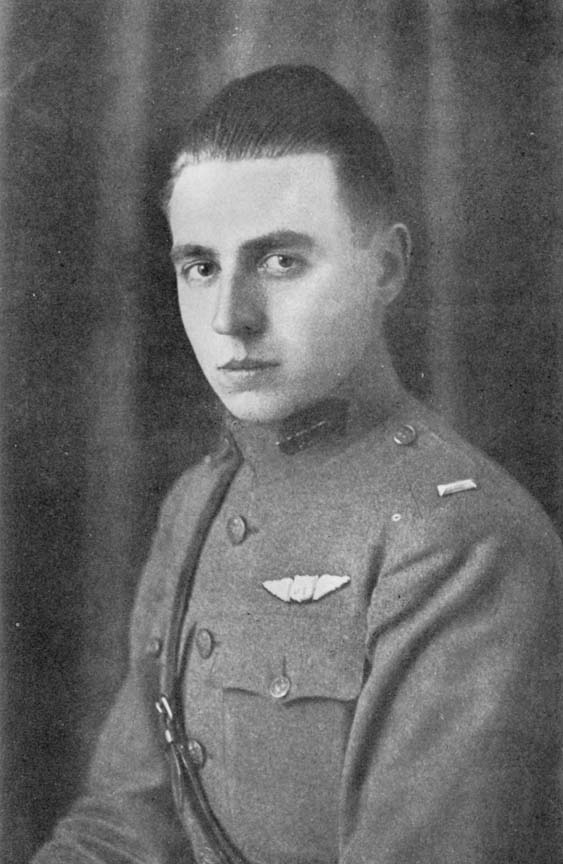
CAPTAIN, A.S., U.S.A., FLIGHT COMMANDER, NINETY-FIRST AERO SQUADRON, PILOT, OBSERVATION GROUP
SON of Harry Lambert (deceased) and Marion Booth (Lambert) Kelley, of New York; was born March 19, 1897, at Salem, N.J. He was educated at Germantown Academy, Philadelphia; Phillips Exeter Academy, class of 1915; and Harvard College, class of 1920, leaving in the middle of his freshman year to drive an ambulance in France. He served with the American Ambulance Field Service from Feb. 19 to Aug. 21, 1917, at Verdun and in the Champagne. In Sept., 1917, he enlisted in the Aviation Section of the U.S. Army, at Paris, and trained at Tours, Issoudun, and Gondrecourt, France. He was commissioned 1st Lieut. on Dec. 1, 1917, and was attached to the 91st Aero Squadron, as a pilot in the Observation Group. Lieut. Lambert was awarded the Distinguished Service Cross (Dec., 1918) for "extraordinary heroism" in action near Stenay, France, Oct. 30, 1918.
He was commissioned Captain, March 19, 1919, and appointed Flight Commander. He was sent with the Army of Occupation to Coblenz, Germany. On March 18, 1919, he was awarded the Croix de Guerre, with Palm, for ambulance service; also a medal and citation from the French Government. An additional citation from Gen. Pershing entitled him to an Oak Leaf with the D.S.C.
D.S.C. While on a photographic mission in the vicinity of Stenay, his work being seriously interfered with by the fire of a formation of enemy airplanes, Lieutenant Lambert temporarily discontinued his mission, attacked the formation and dispersed it, destroying one airplane and seriously damaging another. He then returned to his objective, completed his mission, and returned with information of great value.
Additional Citation First Lieutenant JOHN 11. LAMBERT, Pilot, 91st Aero Squadron, for distinguished and exceptional gallantry over Metz, Alsace, on 15 August, 1918, in the operations of the American Expeditionary Forces. In testimony thereof, and as an expression of appreciation of his valor, I award him this citation. Awarded on 27 March. 1919.
JOHN J. PERSHING
Commander-in-Chief

FIRST LIEUTENANT, A.S.A., U.S.A., NINETY-FIRST AERO SQUADRON, FIRST OBSERVATION GROUP
SON of Mr. and Mrs. Edmund Guilbert, of Boston, Mass.; was born at New Berlin, N.Y., Nov. 1, 1892. He was educated at the Gunnery School, Washington, Conn.; St. Paul's School, Concord. N.H.; and Yale College.
He enlisted in June, 1917, trained at M.I.T. Ground School, and at Hempstead Field, Mineola, N.Y. He sailed overseas and was trained at Issoudun, Amanty, Gondrecourt, and Commerey. He was commissioned 1st Lieut. in Oct., 1917. He acted as pilot in the 91st Aero Squadron, Observation Service. He took part in the St.-Mihiel drive; was later injured, and was for six weeks with the Aeronautic Division of the 4th French Army as Liaison Officer.
In Jan., 1919, he received the Croix de Guerre, with Palm, for bringing back valuable information in July, 1918, when he and one other observation plane were attacked by six enemy planes.
Lieut. Guilbert has written the following account of the work of his Squadron:
Under the command of Major, now Lieutenant-Colonel. John W. Reynolds, it was the first American Army Observation Squadron to begin work over the lines, operating over the Toul sector under the 8th French Army from the middle of June until the formation of the 1st American Army. When that was organized, shortly before the St.-Mihiel drive, the Squadron became part of the 1st Army Observation Group, of which Major Reynolds took command, Capt. Everett R. Cook, one of the original pilots of the Squadron, succeeding to the command of the 91st Squadron.
The Squadron did effective work in the SL.-Mihiel operations, but it was in the attack on the Argonne-Meuse front that it was put to the test. The Germans massed their air service units in an effort to nullify the work of ours, and hardly a mission was performed without at least one combat, two or three of our planes sometimes fighting off 14 or more of the enemy. Though only an observation squadron, and in no sense an attacking or pursuit squadron, the 91st is credited officially with the destruction of 22 enemy planes, in over 140 combats. In its work over the Toul sector the Squadron lost 5 planes, on the Argonne-Meuse front, 4, with the loss of 11 pilots and observers killed in action, 12 wounded, and 9 made prisoners. Nineteen of the officers in, or formerly in, the 91st have received the Distinguished Service Cross, five the Croix de Guerre with a Palm, and five have been promoted to the command of squadrons.
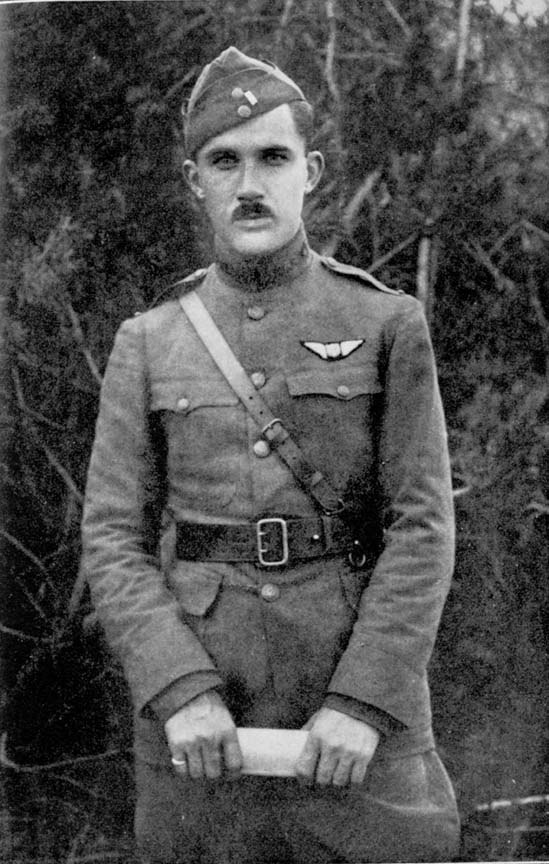
FIRST LIEUTENANT, A.S.A., U.S.A., EIGHTY-EIGHTH AERO SQUADRON, FIRST OBSERVATION GROUP
BORN in Boston, Dec. 29, 1894.
He enlisted in Paris in June, 1917, with the Norton-Harjes Ambulance Unit, Section 63, R.C.A. In July and Aug., 1917, he served with the Section Sanitaire, Automobile 63, behind Verdun during the great drive. He was transferred from the French to the American forces in Sept., enlisting for aviation training. He was trained at Tours and Issoudun, and was commissioned 1st Lieut. Nov. 3, 1917, with active orders on Jan. 10, 1918; being assigned to 88th Squadron and 1st Aero Squadron, 1st Observation Group. He was flying over the front lines from May to Aug., 1918, including the engagement at Château-Thierry. On Oct. 8, 1918, he was assigned Commanding Officer of Flight C, 351st Aero Squadron, at 1st Artillery Observation School, near Rennes, France. He was honorably discharged on Feb. 14, 1919, at Hoboken, N.J.

FIRST LIEUTENANT, A.S.A., U.S.A., TWELFTH AERO SQUADRON, FIRST OBSERVATION GROUP
SON of Joseph S. and Eva A. Lockhart; was born in Cambridge, Mass., on Oct. 12, 1896. He was educated at the Lycée de Vesoul, Haute Seine, France; at Acadia University, N.S.; and at the Mass. Institute of Technology.
He enlisted in June, 1917, at the Harvard R.O.T.C., and in Aug. was transferred to the Air Service. After an eight weeks' course at the Ground School, M.I.T., he was sent to Camp Mohawk, Ontario, Can., to join Squadron 84. He was subsequently ordered to Fort Worth, Tex., to finish his flying course, and then assigned to the School of Gunnery at Camp Hicks. He received his commission as 2d Lieut. Jan. 16, 1918, and on Jan. 29 was assigned to the 139th Squadron as Flying Officer. He sailed overseas about Feb. 22, 1918.
At the end of March he was in service at the front with the 12th Squadron to which he was attached. After recovering from an operation for appendicitis at Base Hospital No. 1, he was assigned to the 166th and the 168th Squadrons, early in July, 1918, as Flight Commander. He received the citation for the Croix de Guerre for excellent work, and was commissioned 1st Lieut., A.S.A., on Oct. 10, 1918; he was second on a list of men recommended for Captaincy. Lieut. Lockhart is a member of the Aero Club of America. He was honorably discharged from the service at Garden City, N.Y., in Feb., 1919.
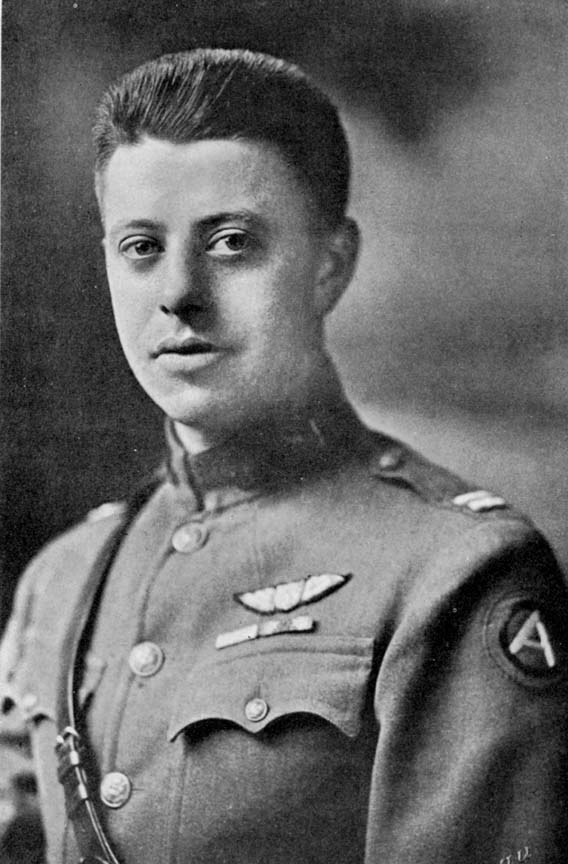
BORN at Yarmouth, N.S., Aug. 6, 1889. He was educated at the Brookline High School, and at the Mass. Institute of Technology, class of 1911.
He enlisted on June 2, 1917, at M.I.T.; trained there at the Ground School during June and July, and at Mineola, N.Y., from Aug. to Nov., 1917. He was commissioned 1st Lieut. Nov. 5, 1917. He sailed overseas on Nov. 14, 1917, and continued his training at Issoudun, France, from Dec. 15, 1917, to Feb., 1918. He was assigned to the 91st Aero Squadron on Feb. 22, and worked over the lines under orders from the French 8th Army from May 24, 1918, to Aug. 10, 1918. From that time until Nov. 11 he served with the American 1st Army, taking part in the St.-Mihiel and Meuse-Argonne operations. From Nov. 11, 1918, to April 16, 1919, his Squadron served with the American Army of Occupation. On March 18, 1919, he was commissioned Captain, and is still in the service.
D.S.C. First Lieutenant GEORGE C. KENNEY, A.S., Pilot, 91st Aero Squadron, distinguished himself by extraordinary heroism, in connection with military operations against an armed enemy of the United States at Jametz, France, on 9 Oct., 1918, and in recognition of his gallant conduct, I have awarded him, in the name of the President, the Distinguished Service Cross. Awarded on 25 November, 1918.
JOHN J. PERSHING, Commander-in-Chief
First Lieutenant GEORGE C. KENNEY, Pilot, 91st Aero Squadron, for distinguished and exceptional gallantry at St.-Mihiel on 15 Sept., 1918, in the operations of the American Expeditionary Forces. In testimony thereof, and as an expression of appreciation of his valor, I award this citation. Awarded on 27 March, 1919.
JOHN J. PERSHING, Commander-in-Chief
Brother in Service --
Arthur I. Kenney, 2d Officer, U.S. Army Transport Kentuckian.
Sister in Service
Gertrude L., nurse, Army Nurses Corps, stationed at Base Hospital No. 78, Toul, France.
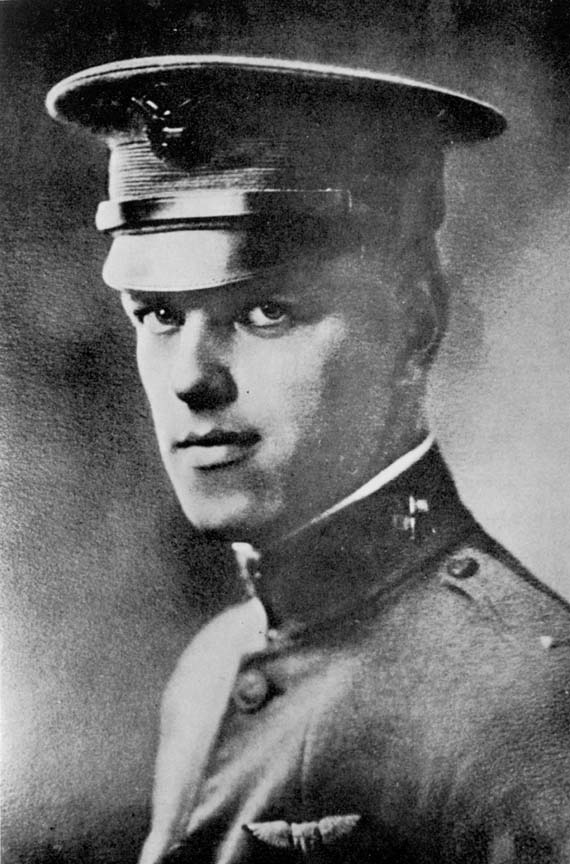
SON of Frederic Lauriston and Clara Elizabeth (Keil) Bullard, of Revere, Mass.; was horn at Dayton, O., on Sept. 17, 1895. He spent three years at Phillips Exeter Academy, graduating in 1916. He entered the U.S. Service May 12, 1917. After one year at Cornell University, he was several months in a provisional regiment at Madison Barracks. He volunteered for the Air Service on Aug. 1, 1918, and was trained at M.I.T. and at Princeton University School of Military Aviation. He learned to fly in Texas and Oklahoma and was commissioned 2d Lieut. May 15, 1918. Sailing from Hoboken on Sept. 26, he trained at Issoudun and Romorantin and reached the Argonne front just ten days before the Armistice. He was detached from the 90th Squadron on Jan. 21, 1919, and spent three months at the First Air Dépôt at Colombey-les-Belles, mostly in the ferry service. After having flown many hours both in America and in France and having navigated airships of many types, Lieut. Bullard, five months after the Armistice, came to his death "in the line of duty" in a motor-car accident near Toul. On April 7 he sustained fatal injuries when a wheel collapsed and his automobile was overturned. He died the next morning. A Board of Inquiry pronounced the machine defective. He was buried on April 9 in the little military cemetery near Colombey-les-Belles. He had been recommended for a 1st Lieutenancy.
He possessed marked literary ability. Describing his first Renault flight, he wrote:
I plugged along by my lonesome and tried to pretend I was enjoying myself in a strange ship, over a strange country, going to a strange field, in a thick haze which was fast deepening into twilight, and against a stiff gale which was colder than anything I had ever felt before.
It has been learned that certain Red Cross workers, in personal letters to their own families, said of him that in addition to his remarkable physical qualifications, he was gifted with a brilliant mind, and had an unusually keen sense of humor and justice.
Brother in Service --
Frederic Keil Bullard, 1st Lieut., U.S.A., F.A.
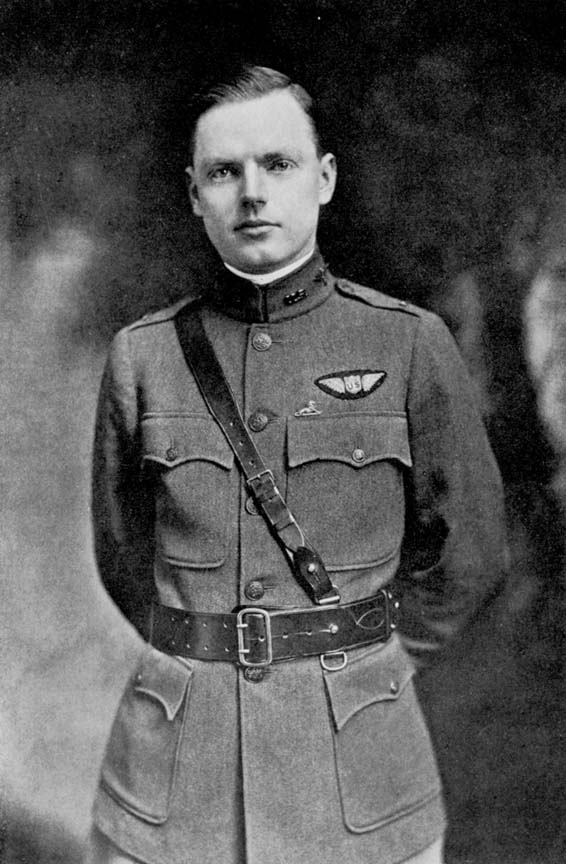
FIRST LIEUTENANT, A.S.A., U.S.A., TWO HUNDRED FIFTY-EIGHTH AERO SQUADRON, FIRST ARMY
SON of William G. and Lucy C. Hughes, of Ossipee, N.H.; was born at Boerne, Tex., on Jan. 15, 1895. He was educated at Milton Academy, graduating 1912, and at Harvard College, graduating 1916. He attended the Officers' Training Camp at Plattsburg in 1916, and the Harvard R.O.T.C. On April 6, 1917, he enlisted at Boston as Sgt. S.E.R.C., and was ordered to Mineola, N.Y., for training in flying, April 12, 1917. He passed final tests, R.M.A., July 11, and was ordered to Chanute Field, Rantoul, Ill.; assigned to duty as Officer in Charge of Flying. He was commissioned 1st Lieut., A.S., SC on July 26, 1917.
On Dec. 15, 1917, he was ordered to Rich Field, Waco, Tex., where he remained as Asst. O.I.C.F. and Flying Instructor from Dec. 20 to Aug. 25, 1918. He was ordered overseas for training as pilot and sailed for England Sept. 8, 1918. He trained at Issoudun from Oct. 1 to 31, and at St.-Jean-des-Monts, American Gunnery School, from Nov. 1 to 8. He arrived at Toul Nov. 11, 1918, and was assigned to the 4th Pursuit Group. Two days later he was attached to the 258th Squadron. He returned to New York Jan. 31, 1919, and was honorably discharged at Garden City, N.Y., on Feb. 5, 1919.
While stationed in Texas, Lieut. Hughes was one of five members of the escort chosen to fly over the train in which Miss Margaret Wilson was travelling; receiving later from her a letter of appreciation of the escort's remarkable flying. Of this group, containing men of unusual skill and experience, three have since been killed in accidents.
Brother in Service---
George F. Hughes, Capt., A.S.A., U.S.A.

CAPTAIN, A.S.A., U.S.A., TWELFTH SQUADRON, FIRST OBSERVATION GROUP; COMMANDING OFFICER, TWO HUNDRED FIFTY-EIGHTH AERO SQUADRON
SON of William G. and Lucy C. Hughes, of Ossipee, N.H; was born at Milton, Mass., Sept. 8, 1892. He attended Milton Academy, and entered Harvard College, class of 1918.
He left Harvard to enlist with the Air Service in Boston on April 3, 1917. He was stationed at Mineola, N.Y., as Sgt., E.R.C., from April 12 to July 6, 1917. He was commissioned 1st Lieut. on July 20, 1917, and ordered to Wilbur Wright Field, Dayton, O., as Flying Instructor.
On Nov. 1 he was ordered overseas in command of the 12th Aero Squadron, and from Nov. 1 to 30 remained at Garden City, N.Y., awaiting embarkation orders.
He sailed on Dec. 4, 1917, and was stationed at St.-Maixent, France, until Jan. 14, 1918; on Jan. 16 he was transferred to the Staff Field, Chaumont, Headquarters A.E.F., where he remained with the 12th Aero Squadron until Jan. 31, when he was relieved of the command of the Squadron by Major Harry M. Brown, and the Squadron ordered to Amanty to assist the 1st Aero Squadron.
On May 1, 1918, the Squadron was ordered to active duty on the front to cooperate with the 1st Aero Squadron in the Seicheprey sector. From July 1 to July 25 Lieut. Hughes was stationed in the Château-Thierry sector.
On July 25 he was relieved from duty with the 12th Aero Squadron, and ordered to duty with the 2d Army Corps, B.E.F., in command of the 183d Flight Detachment.
On Aug. 1, 1918, he was commissioned Capt.
On Sept. 10 the 183d Detachment was incorporated in the 258th Aero Squadron, attached to the French 7th Army; and from Sept. 10 to Nov. 14 Capt. Hughes was Commanding Officer of the 258th Squadron. From Nov. 15 to Dec. 15 he was ill in Base Hospital 82 at Toul. On his return to the U.S., he was honorably discharged at Garden City, N.Y., on Feb. 5, 1919.
Brother in Service ---
Gerard Hastings Hughes, 1st Lieut., A.S.A., U.S.A.
Citation November 11, 1918
For gallantry in action, the General Commanding cites the following officers:
Captain W. H. SAUNDERS, Observer, 12th Aero Squadron
First Lieut. G. F. HUGHESThese officers flew in an A.R. Airplane for more than two hours in the vicinity of Le Bois de Gargantua, performing adjustments of artillery fire despite an exceptionally heavy concentration of Hun anti-aircraft artillery fire. After completing réglages for two batteries and while conducting fire for amelioration for a third, they were brought down by shell fragments stopping their motor. In attempting to land inside the American lines, the plane was smashed.
. . . . . . . . . . . By command of Brigadier-General WILLIAM MITCHELL
LIEUTENANT, A.S., U.S.A., NINETY-FIRST AERO SQUADRON, FIRST OBSERVATION GROUP
SON of Abbott L. and Nancy Fifield (Dudley) Carlisle; was born at Exeter, N.H., June 14, 1892. He was educated at Exeter High School; at Phillips Exeter Academy; and at the N.H. State College. He was a member of his class football team. He had three years' military training while at college, and joined the first Plattsburg Camp in 1916, enlisting there on May 13, 1916.
He trained at M.I.T. Ground School; then at Fort Worth, Tex. He sailed overseas on Oct. 17, 1917, and was stationed at the Aviation Camp, Issoudun, France. He was sent to Campo Aveste, Italy, about the middle of Feb., 1918; returned to France in July. In Aug. he was sent to the front, where he was wounded by a shell which sent him to hospital. About Sept. 11 he was discharged from hospital, and was accepted as a pilot on Sept. 26. From then till the close of the war he saw much active service, being attached to the 91st Aero Squadron, which was in many engagements and won much glory. An Italian Salutation was granted him before leaving Italy. He was shot down twice. During the last week of the war he was flying with two other machines when they were trapped by 14 Boches. Lieut. Carlisle was the only member of the American party to return, and his own observer was killed.
Since the close of the war Lieut. Carlisle has been with the American Army of Occupation at Coblenz.
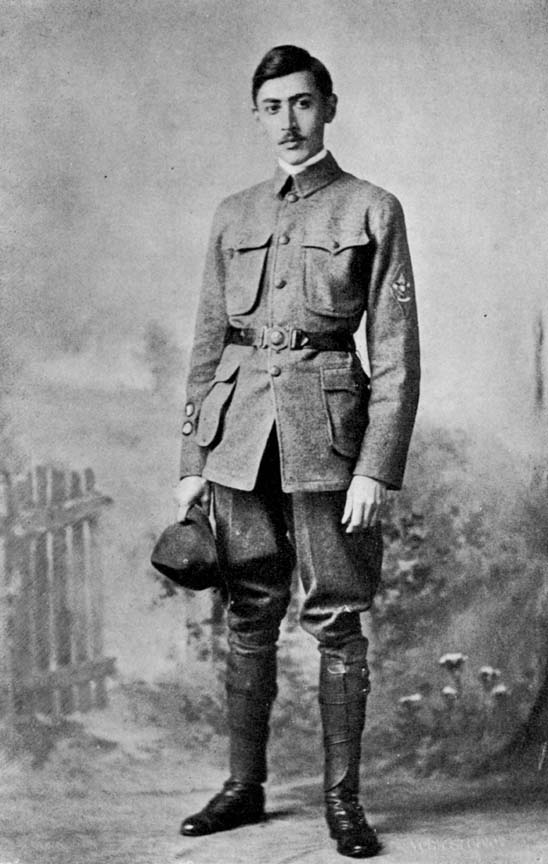
WAS born Nov. 15, 1889, at New Haven, Conn. He attended the public schools of New Haven; graduated from Yale Sheffield Scientific School, in 1910, and from Springfield Y.M.C.A. College in 1914, winning honors both in school and college, and the freshman first prize in French at Yale.
He was deeply interested in the Boy Scout Movement, and was Scout Executive, for New Haven, from Aug., 1915, to June, 1917, when he resigned to enter the U.S. Aviation Service. His work among the boys was remarkably successful, and his name is loved and honored by them. After his death a "Gilbert N. Jerome Lecture Course for Scout Leaders" was established in his memory.
He enlisted in June, 1917, and attended the Ground School of the M.I.T., completing his course with honors. He was sent overseas in Sept., 1917, and trained at the flying schools near Bourges and Brest. On Feb. 14, 1918, he was commissioned 1st Lieut., and assigned the duty of "ferrying" planes from various points around France.
Early in June, 1918, Lieut. Jerome wrote:
Having finished my training, I am now in the process of being assimilated with the ten others into French chasse escadrilles, fighting squadrons. Although none of my special pals came into this detachment there is a very congenial crowd; Quentin Roosevelt is one .... We expect soon to be sent to the front, and will handle the most desirable type of machine. It handles wonderfully in the air, but the speed is simply terrific, and it is called a "Spad."
Again he wrote:
I am now at the front going over the lines every day. This afternoon I vent to protect a photographing machine. We met no hostile planes, but were liberally "strafed" by anti-aircraft. It is very odd to watch the black balls of smoke suddenly appear in space out of nothing, and realize that they are meant for you.
Later in June Lieut. Jerome was assigned, with Lieut. Ross J. Hoffman, of Philadelphia, to a French escadrille, stationed near Nancy. Here he met his death from a German anti-aircraft gun, on July 11, while patrolling the French lines. He fell near Verdenal, within the enemy lines, and he was buried by the French people of Blamont, Meurthe-et-Moselle, in a German military cemetery, with military honors by the enemy.
Lieut. Jerome was among the 16 chosen from 800 contestants for the 1000-franc prize offered by the "N.Y. Herald" in Paris. His poem which follows was ranked 7 on the list.
|
THE AIRPLANE What strange device is this; . . . . . . . And now one comes and grasps the twisted wood, Then, bounding from their hands like some wild thing Thus, godlike, alone, the human being, Such is the miracle of flight; the latest proof |
|
It cannot be, I say it cannot be; It cannot be. I say it cannot be, It cannot be, I say it cannot be; |

FIRST LIEUTENANT, A.S., U.S.A., TENTH AERO SQUADRON, CAPRONI, FOURTEENTH GROUP
SON of Arthur E. and Gertrude (Stetson) Fitch; was born at Medford, Mass., June 10, 1896. He was educated at Medford High School, and Dartmouth College, B.S. 1917. He was coach of the Dartmouth 1920 hockey team.
He attended Plattsburg Training Camp in 1916, and was instructor of the Dartmouth Training Regiment in 1916-17. From May 12 to June 19, 1917, he attended the first R.O.T.C. at Plattsburg; from June 19 to July 28 the M.I.T. School of MA. at Cambridge. He sailed for Italy with the 8th A.I.C., A.E.F., in Sept., 1917, and remained in that Service at Foggia, Italy, until June 15, 1918. He was commissioned 1st Lieut. on Feb. 21, 1918. From June 19, 1918, to Nov. 14, 1918, he was attached to the 10th Squadron Caproni, 14th Group, Italian War Zone. He participated in day and night bombing at the front, notably in the raid on the Austrian port of Pola. In Sept., 1918, he was decorated by the Italian Government for his exploits.
He was later in a bombing raid that was intercepted before it reached its objective. However, Lieut. Fitch succeeded in dropping his bombs on two of the enemy aviation camps, and then started back for the Italian lines. While still about 13 miles within enemy territory, five Austrian scout planes overtook him from the rear. Lieut. Fitch, who was acting as pilot, dived in order to obtain the maximum speed, and then pursued a zigzag course in the race for the Italian lines. Meanwhile his machine-gunner continued to fire at the pursuers, bringing down one of the Austrians. The other four Austrian airmen attacked in turn; but the fire from the American frustrated them. Finally Lieut. Fitch's escort, from whom he had been separated, saw his predicament and returned, driving away the enemy.
Lieut. Fitch was honorably discharged at Garden City, N.Y., on Dec. 8, 1918.
With the Decoration from the Italian Government came a report, of which the following is a translation:
Lieutenant WILLIS FITCH, U.S.A., was part of this escadrille from June 20 to Nov. 14, 1918. He is an officer of a serious and well-disciplined character, and fulfilled his special duty with zeal and intelligence. He is of a loyal, open nature. Even when off duty he always conducted himself correctly. He won the esteem of his superiors and the affection of his colleagues and inferiors. A skilful pilot, full of enthusiasm, he took part, with his whole soul, in the actions; he carried out eleven (11) bombardments, fulfilling conscientiously the various difficult tasks confided to him, distinguishing himself by his calmness and surety, even in the most trying moments. On account of the admirable way in which he conducted himself while flying over the enemy lines, he was decorated with the Cross for Martial Merit and proposed for the bronze medal for Military Valor.
(Signed) The Captain Commanding Escadrille
BUTTINI(Countersigned) Major Commanding the Group
RUSSIThe work of this young and valorous pilot was always such as to evidence his faith in the cause for which his great country took up arms.
(Signed) Chief of the Air Service
LA POLLA
SON of Frank A. and Grace (Clark) Robinson; was born in Bangor, Me., Aug. 11, 1894. He attended the public schools of Bangor, Me. and graduated from the Mass. Institute of Technology in 1916, where he took a prize of $200 for the best two years' work in Architecture.
He joined the Plattsburg Camp in Jan., 1917. He was trained at Ellington Field, Houston, Tex., and at the Post Field, Fort Sill, Okla. Subsequently he was transferred to Camp Dick, Dallas, Tex. He was assigned to the 8th Aero Squadron, Army Aviation, and sailed overseas in Aug., 1918.
During an engagement over the German lines he was shot down, and his observer was injured. They were both taken prisoner, but managed after five days to escape with some French soldiers. Lieut. Robinson was able to take out valuable information from Germany, for which he was especially commended by the General and Chief of the Air Service. While he was in Germany he was reported "missing in action," and his effects were later returned to him marked "Lieut. Clark Robinson, deceased."
At last accounts Lieut. Robinson was stationed at Bordeaux, where he was architect of the new "Victory" theatre just erected there, and had also done the designing of curtains, stage settings, etc.
Brothers in Service
Albert E. Robinson, Sgt., U.S.A., 140th Infantry, 35th Div.
Paul Robinson, 2d Lieut., A.S., U.S.A., Carlstrom Field, Arcadia, Flu.
Sister in Service
Katharine G. Robinson, Reconstruction Aid, Base Hospital, Camp Upton, NV.
Father in Service ---
Frank A. Robinson (deceased), Major, National Guard, State of Maine.
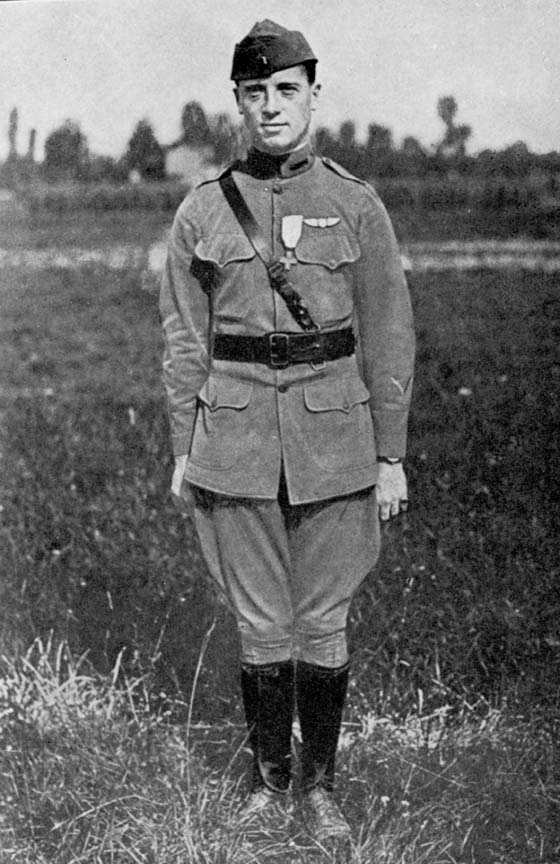
FIRST LIEUTENANT, FIRST ITALIAN CAPRONI SQUADRON FOURTH AIRPLANE GROUP, ITALIAN WAR ZONE
WAS born at Brookline, Mass., Nov. 3, 1895. He prepared for college at the Volkmann School, where he was prominent in athletics, and in his senior year captain of the track team. He graduated from Harvard College in 1916, and was attending the Law School when he entered the U.S. Aviation Service, April 29, 1917.
During the summer of 1916 he drove an ambulance in France with the Morgan-Harjes Unit.
He received his early aviation training at the Ground School, M.I.T., going from there overseas to continue his training at Foggia, Italy. He was commissioned 1st Lieut. Jan. 12, 1918, and attached to the 1st Italian Caproni Squadron, 4th Airplane Group, Italian War Zone, June 18, 1918.
While returning from a bombing expedition Lieut. Baldwin's Italian pilot discovered that a new bridge had been thrown across a river, which he determined to photograph. He turned the controls over to his companion, telling him to take the machine down as law as possible, and Baldwin immediately nosed the plane over and got far below the barrage and anti-aircraft guns, guiding the machine so skilfully that an excellent photograph was taken. Within a few hours the place was identified and the bridge shelled by the Italian artillery.
Lieut. Baldwin took part in a daylight air raid on the Austrian Naval Base, at Pola, in the Adriatic. The expedition started at daybreak, and over 60 planes took part attacking in cooperation with two fleets of destroyers. It was a 110-kilometre flight straight across the Adriatic and only two or three Americans were allowed to take part. The raid was a success and the objectives were bombed and all the planes returned in safety, despite the fire directed at them by land batteries and ships in the harbor.
On July 4, 1918, Lieut. Baldwin was one of five American aviators decorated with the Italian War Cross by King Victor Emmanuel.
After acting as instructor on the Italian front Lieut. Baldwin was ordered to England, Aug. 13, 1918, as Commanding Officer of the 140th Squadron.
He was honorably discharged at Garden City, N.Y., Jan. 2, 1919.

SON of Walter Irvin and Eva Grace (Swan) Peak, of Somerville, Mass.; was born in Medford, Mass., on Jan. 2, 1893. He graduated from the Mechanic Arts High School, Boston, in 1910.
He enlisted at Somerville on July 13, 1917, and was assigned to the Ground School, M.I.T., for training, Aug. 20, 1917. After a short course there he was chosen from among the honor graduates (class of Oct. 13, 1917) to be sent abroad for pilot's training in the European schools. He was ordered to Mineola, N.Y., on Oct. 16 and sailed from New York on Oct. 26. When he arrived in France it was to find there were no facilities for advanced training. After waiting four months he volunteered as an observer in response to an urgent appeal for men for that work.
After a course at Cazaux, and the American School at Clermont-Ferrand, he was rated as an Aerial Observer, Gunner and Bomber, under both French and American systems. On May 18, 1918, he was commissioned 1st Lieut. and on June 15 was one of 16 American aviators chosen for further training with the French, the idea being to have men with actual battle experience to lead American squadrons as they were formed.
From June 15 to Oct. 23, 1918, he was attached to the French Independent Air Force as a member of Escadrille B.R. 66, G.B. 6 (Day Bombardment), Commander Vuillemin. This was one of the escadrilles which made the first reprisal raid on Germany in response to German raids on French towns; it was also a part of the famous Escadre 12.
While a member of Escadrille BR. 66, Lieut. Peak took part in the Château-Thierry offensive, and in July covered the sector from Château-Thierry to Reims. In Aug., 1918, he was in Picardy, covering the sector from Amiens to Soissons and along the Chemin des Dames. In Sept. the escadrille was chosen as one of those to help the Americans in their St.-Mihiel attack in a sector extending from Verdun to Nancy; in Oct. he served in Champagne with the French, covering the sector from Verdun to Reims.
Escadrille B.R. 66 took part in practically every attack made by the French in these regions from July to Nov. and was awarded the Fourragère colors and the Médaille Militaire (4 citations). In addition to having the French Brevet, Lieut. Peak has the distinction of being one of the two Americans who performed the necessary work to entitle them to the escadrille insignia, the "Épervier." On Aug. 11, 1918, after a series of raids, Lieut. Peak brought down his first official Boche, and on Aug. 17 was cited for the Croix de Guerre.
He was withdrawn from the French in Oct., 1918, and sent to Issoudun. After the Armistice because of his familiarity with the French language and customs, he was ordered to work with the Rents, Requisitions, and Claims Service, where he has been employed in settling large Aviation claims.
Citation Croix de Guerre Commander Vuillemin, Squadron 12, cites that Lieutenant LAWRENCE PEAK, an American Observation Officer of the highest order, arrived in the midst of the battle and immediately went into the fight, where he bore himself brilliantly, attacking fiercely the enemy troops by bomb, in a run of nine bombardments, and brought down an enemy machine the 11th of Aug., 1918.
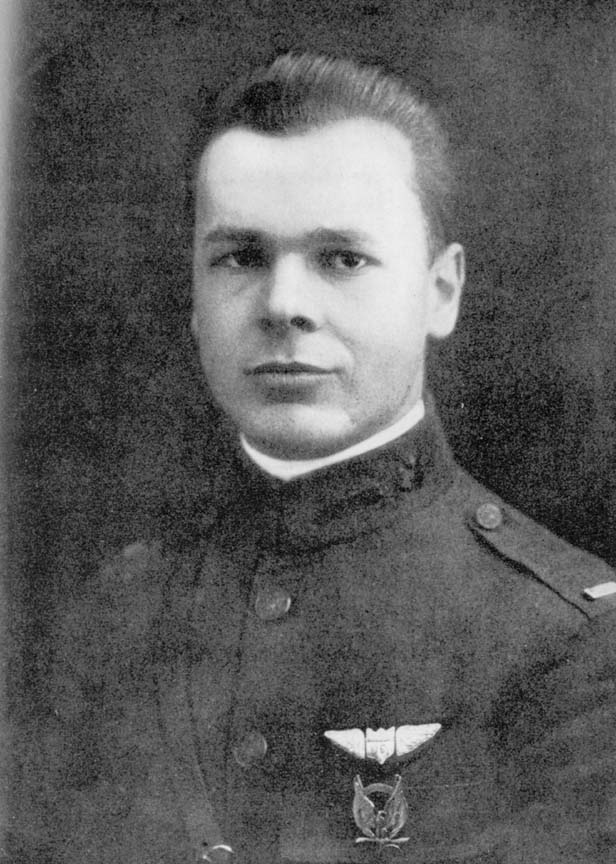
LAFAYETTE FLYING CORPS; LATER SECOND LIEUTENANT, VOLUNTEER DETACHED AMERICAN OFFICER WITH FRENCH ESCADRILLE, S 120, SECTEUR POSTAL 102
SON of Dr. James Owen and Emma (Dinsmore) Ely; was born at Chicago, Ill., May 16, 1894. He attended the New Trier High School; the University and Chicago Latin Schools; and entered the Architectural School, M.I.T., in the fall of 1913. He was president of the Lambda Chi Alpha Fraternity, and vice-president of the Architectural Club. He completed his junior year in high standing and volunteered in May, 1917, for service in the Tech Unit of the American Ambulance Field Service, sailing for France on June 25, with the avowed purpose of getting into the Aviation Service as quickly as possible.
Arriving in Paris July 4, he secured his release the following day from the Ambulance Service, volunteered, and was accepted as a member of the Lafayette Flying Corps. He attended the French Aviation Schools of Avord, Pau, Tours, and Cazaux, and during his months of training had three thrilling escapes from death. On completion of his training, a qualified fighting pilot, he volunteered for active service under the French flag, and in Feb. arrived at the Toul sector as a member of the French Escadrille guarding the American lines. Here he remained in active service until March 29, 1918, when they were ordered to the great battle then centring around Amiens.
Passing through Paris, Ely was released from his French Squadron and commissioned 2d Lieut. in the U.S.A. But with the idea of more immediate service than seemed probable under the American forces still forming, he obtained permission to volunteer and return to his French corps as a detached officer, as his one desire was to be at the front.
In the last letter written by Lieut. Ely to his family on April 5, 918, he said:
At present my one desire is to reach the defensive front. Right now it is hard for the French mind to grasp how much the Americans have wanted to help in this defensive during their first year of preparation. No matter how great the American organization is to be, if we suppose there are 300,000 Americans actually fighting in this offensive (no one knows numbers), we must keep things in scale by remembering that Germany alone has probably had more than a million and a half put out of action in this battle alone.
And I want to say in closing, if anything should happen to me, let's have no mourning in spirit or in dress. Like a Liberty Bond, it is an investment, not a loss, when a man dies for his country. It is an honor to a family, and is that the time for weeping? I would rather leave my family rich in pleasant memories of my life than numbed in sorrow at my death.
On April 21, 1918, Lieut. Ely was fatally injured in an airplane accident; he was taken to the hospital at Versailles with a fractured skull and passed away without regaining consciousness. He was buried with full military honors at Des Gonards' Cemetery, Versailles.
His last message --- "Like a Liberty Bond, it is an investment, not a loss, when a man dies for his country" --- has been used as a slogan throughout the country to help swell the Liberty Loans. Posters bearing these words went broadcast, and over a million full-page copies were printed in the newspapers of this country. Two weeks after Lieut. Ely's death $1,000,000 was subscribed as a memorial to him, on the last day of the Third Liberty Loan drive in Chicago, and in accordance with the request of Lieut. Ely, his $5000 life insurance was used to buy Liberty Bonds. A year after his death the wooden cross from his grave in France was presented to the Historical Society of Chicago, and lent inspiration at the conclusion of the Victory Loan drive. Of this cross the Librarian of the Historical Society wrote to the Chairman of the Victory Loan Committee:
The little white cross brought to my thought the thousands of those pale crosses that, like a thicket of Easter lilies, blanket the fields of France, and it seemed that there might be a message here that could be used to strengthen our morale at this moment.
And once more the young aviator's words helped swell the returns in his city and elsewhere.
For months Lieut. Ely's last message headed the casualty lists in the "Chicago Tribune," and cards with the printed paragraph upon them have brought comfort and inspiration to many bereaved hearts.

LAFAYETTE ESCADRILLE, FIRST LIEUTENANT, AS., U.S.A., ONE HUNDRED NINETY-THIRD, TWO HUNDRED THIRTEENTH AERO SQUADRONS
SON of Elihu G. and Marion H. (Fitch) Loomis; was born at Bedford, Mass., April 7, 1894. He was educated in the schools at Bedford; at Concord High School; Lawrence Academy; Groton; and Phillips Academy, Andover; and graduated from Amherst College in 1917, with the degree of A.B.
He sailed for France as member of the American Ambulance Service, May 19, 1917; he enlisted in the French Aviation Service and went through the French training schools, obtaining his license as a pilot; he served on the French front, flying with French companions for about six months, beginning in Nov., 1917. In 1918 he transferred into the U.S. Army with the rank of 1st Lieut. in Aviation, and was engaged in aerial service at Château-Thierry, St.-Mihiel salient, Verdun, and elsewhere, serving as Flight Commander and as a member of the "Hat in the Ring" Squadron. He received the Croix de Guerre from the French Government for faithful and efficient service. At the close of the war he returned to America and was honorably discharged.
Brothers in Service --
Ralph Lane Loomis, Ensign, Naval Aviation.
Hubert H. Loomis, 101st Regiment, F.A.
Samuel Loomis, 2d Lieut., 71st Coast Artillery.

SON of Elihu G. and Marion H. (Fitch) Loomis; was born at Bedford, Mass., April 13, 1887. He was educated in the public schools at Bedford; at Concord High School; Boston Latin School; and at Phillips Academy, Andover. He graduated with the degree of A.B. at Amherst, 1908; attended Harvard Law School, and was admitted to the Suffolk Bar, Boston, 1911; he practised law for a season and later engaged in business in Boston as one of the members of the firm of Loomis & Co., dealers in paper. On June 25, 1917, he sailed for France as a member of the American Ambulance Service, but upon reaching France he enlisted in the French Aviation Service and passed through the various aviation schools and obtained commission as a pilot; later, in 1918, he transferred into the U.S. Navy with the rank of Ensign; engaged in aviation work in connection with the officers of the English Navy, flying from Dunkirk and attacking enemy positions at Zeebrugge and Ostend; he was certified by his Commander to have been "a very good pilot and efficient officer in charge of men."
He is still in service, and stationed (May, 1919) at Pola, Istria.
Brothers in Service
William Fitch Loomis, 1st Lieut., Lafayette Escadrille.
Hubert H. Loomis, Battery A, 101st F.A.; fought through the war with his regiment, being continually engaged at the front throughout the heavy fighting.
Samuel Loomis, 2d Lieut., 71st Coast Artillery.

SON of James Lowell and Jane (Newell) Moore; was born in Cambridge, Mass., Jan. 12, 1896. He prepared for college at the high school, Wayland, Mass., and entered Harvard College, class of 1918. He left college at midyears in his sophomore year to join the Norton-Harjes Ambulance, and after six months' service returned in the fall of 1916 and finished his junior year.
He enlisted, May 17, 1917, and trained at the M.I.T. Ground School. He sailed for Europe, July 23, 1917, in the first group of aviators sent to France. He continued his training at Tours, Sept., 1917, Avord, Oct., 1917, and at Issoudun, where he remained from Nov., 1917, to Jan., 1918. He was commissioned 1st Lieut. on Nov. 20, 1917. Lieut. Moore was transferred to the Gunnery School at Cazaux, where he stayed from Feb. to April, 1918, as Pursuit Pilot. Subsequently, he spent some time in England at the Hythe Gunnery School. He returned to France, May, 1918, to act as Aerial Gunnery Instructor at the 7th Aviation Instruction Centre at Clermont-Ferrand.
He was sent to the front with Groupe de Bombardement 9, French Army, and was wounded, June 14, 1918, while engaged in a bombing expedition over Soissons. After his recovery two months later, he was put in charge of the Aero-Gunnery School at Clermont-Ferrand, Sept. to Dec., 1918.
In his report on the wounding of Lieut. Moore, Lieut. Mongin, a superior officer, wrote:
On the 14th of June, on the return trip from a bombardment attack on Soissons, a formation of Bréguet aeroplanes, among which was Lieut. Moore, American aviator, was attacked by an enemy formation of pursuit planes at a height of 4800 metres over the German lines. At the first opening of fire, Lieut. Moore's observer, Lieut. Giquel, was killed; his body falling on certain controls, wedged them. Lieut. Moore, having lost control of his machine, fell, pursued by the two enemy planes which poured an incessant fire into his machine. Little by little he succeeded in regaining control of his plane, and continued to descend in regular spirals. The enemy planes steadfastly pursued him to an altitude of 1000 metres, pouring in their shot incessantly, and wounding him three times on the arm and right side.
Thanks to his calmness, presence of mind, and skilfulness, Lieut. Moore succeeded in landing his machine, riddled with bullets and damaged in its most essential parts, within our lines. Lieut. Moore was seriously wounded, and was at once despatched in an ambulance to the hospital at Guilly and evacuated immediately to Paris.
Citation 1st Lieut. MOORE, Pilot, Escadrille. Br. 29 A pilot of great bravery, possessing equally splendid enthusiasm and remarkable presence of mind. On the 14th of June, 1918, in the course of a combat above the enemy lines, his observer was killed, and he was forced to descend from an altitude of 5000 metres, pursued almost to the ground by two enemy planes, firing at him incessantly. Although he was wounded by three bullets and had his machine seriously damaged, he succeeded, thanks to his dexterity and courage, in reaching the ground.
(Signed) PÉTAIN
Lieut. Moore was honorably discharged from the Service at Garden City, N.Y., Feb. 10, 1919.
SON of Bruno E. and Esther (Rylander) Hockert, of Hartford, Conn.; was born at Chicago, Ill., Sept. 10, 1894. He was educated in the public schools of Hartford, Conn.; graduated from Valparaiso University, B.S. 1912; and from Columbia University Law School, LL.B. 1917. He attended the R.O.T.C. at Plattsburg in 1917, and enlisted at Cambridge, Mass., Aug. 15, 1917. He attended the Ground School at M.I.T. from Aug. 3 to Oct. 6, and sailed for Italy on Oct. 17, 1917. He was trained at Campo Oveste Flying School, from Feb., 1918, to July, 1918; was commissioned 1st Lieut. May 13, 1918; and on June 14, 1918, received the Royal Italian Brevet as a pilot.
He was then ordered to France, where he was further trained: at Tours, from July 4 to July 19, 1918; and at Issoudun, from July 19 to Nov. 3, 1918. He acted as Ferry Pilot at Romorantin, France, on DH 4. He returned to the U.S. Jan. 31, 1919, and was honorably discharged on Feb. 10, 1919, at Garden City, N.Y. He now holds a commission in the Reserve Corps.
Brother in Service
Frederick Hockert, 2d Lieut., U.S.A., 3d Infantry.
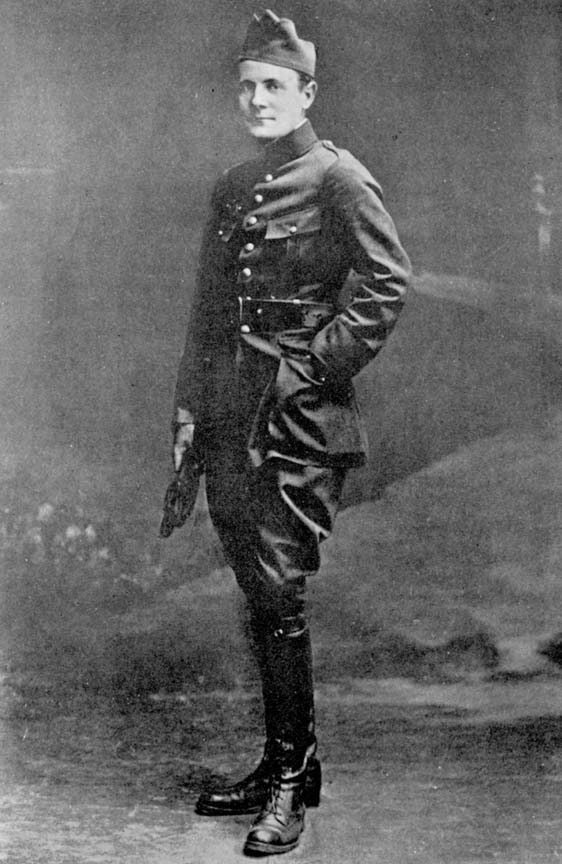
SON of Henry E. and Jenny (Royce) Meeker; was born at New York City on Jan. 5, 1894. He was educated at Pomfret School, Conn., graduating in 1913; and at Harvard College, graduating in 1917. He had a very promising literary gift, and his articles and letters written overseas have been published in the press.
He drilled with the Harvard Regiment as Private, Corporal, and Sergeant. In the summer of 1916 he trained at the Thomas-Morse School at Ithaca, N.Y. Later, in the Harvard R.O.T.C., he was brevetted Corporal, Lieut., and Capt. On April 23, 1917, he enlisted in the Signal Officers' Reserve Corps, Aviation Section, at Cambridge. He sailed overseas, and received additional training at the French School at Avord, through June, July, and Aug., 1917. On July 29 he was brevetted Corporal at Avord. He reached Pau for training at the French School for Aviation Acrobacy on Sept. 10, 1917. He was killed on his trial flight at Pau, on Sept. 11, 1917, and was buried at Pau, France, on the same day.
That Corporal Meeker was one of the most promising young pilots, who needed but time to win distinction in his chosen Service, is shown by the citation issued on July 29, 1917, from the Commandant of the French School of Aviation at Avord, to Corp. Meeker, and to Samuel Skinner (Harvard, 1915), of which a translation follows:
The Captain-Commandant of the School extends congratulations to the American pilots, Meeker and Skinner, for the skill arid good-will of which they have given proof in the course of their instruction, which they have succeeded in completing in a remarkably short time, accomplishing their brevet of B.M. in less than three days. The Captain-Commandant presents these pilots, serving voluntarily in the French Army, as an example to all the pupils of the School, for the devotion and the excellent military spirit with which they are animated.
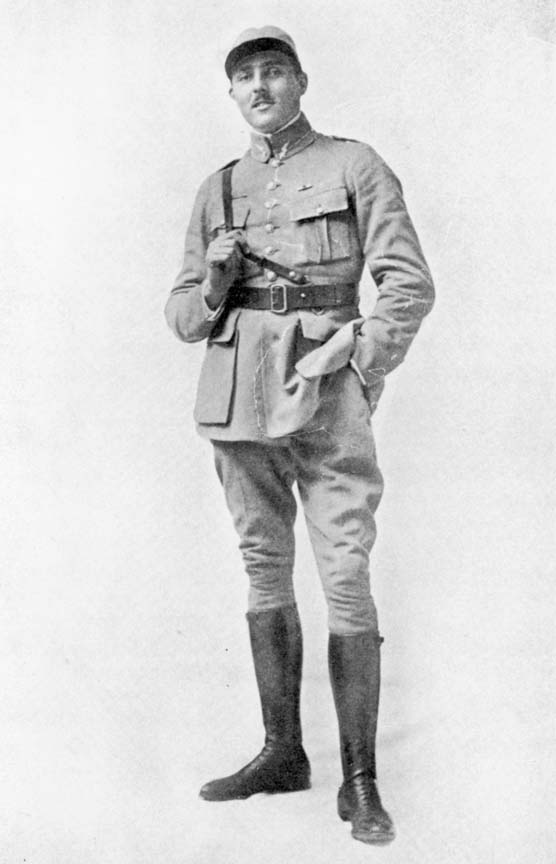
SON of Charles Edward and E. (Sherburne) Eaton, of Cambridge, Mass.; was born at Woburn, Mass., June 28, 1897. He was educated at Cambridge Latin School, 1915, and Harvard College, class of 1919. He was on the Harvard freshman and 'Varsity football squads.
He enlisted in the Foreign Legion at Paris, on March 2, 1917, and was soon transferred to Aviation, being sent to Avord for training on March 23. He was injured in a smash while training in July; and on Aug. 18, 1917, was brevetted Pilot, and made a member of the Aero Club of France. Again he was injured in a smash at Dijon in Sept., 1917. After finishing his training at Avord and Longwy, he was attached to the Lafayette Flying Corps for eight months, as a pilot. He was detached on special service to the U.S. Army, and attached to the 1st Aero Squadron as interpreter and instructor.
Eaton returned to the United States to lecture on the second and third Liberty Loans, and on the Red Cross drive with "Men from the Front" Section, U.S. Committee on Public Information, doing valuable service in four States. He acted as inspector of aeroplanes, and on the "Safety Committee." He spent three months, Aug. 23 to Nov. 28, 1918, at Louisville, Ky., in conjunction with the U.S. Field Artillery. On Nov. 28, 1918, he was honorably discharged.
Brother in Service
Putnam Eaton, Chief Yeoman, U.S.N., Historical Staff, Intelligence Dept., London Headquarters.
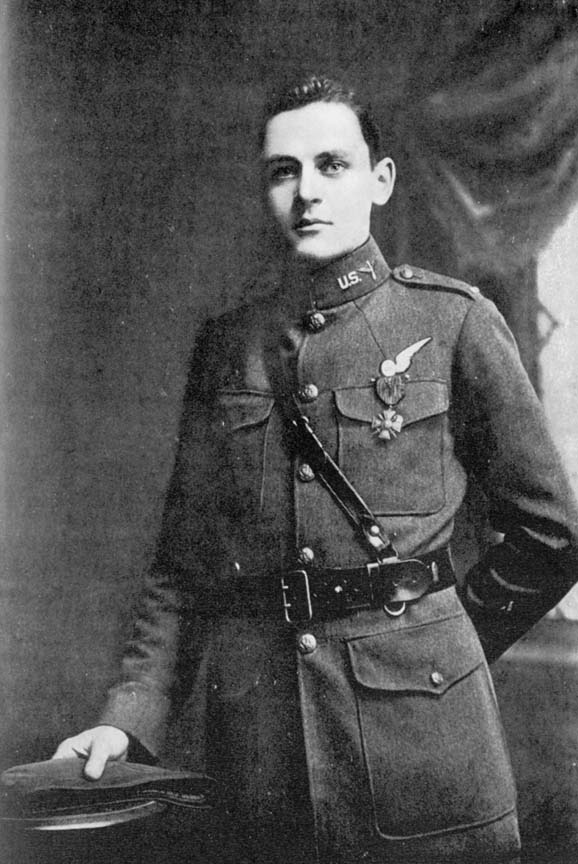
SON of Franklin P. and Annie J. Knight; was born at Newburyport, Mass., on Jan. 11, 1896. He attended the public schools of Newburyport and the Mass. Institute of Technology, where he played on the baseball team as catcher.
He enlisted on July 23, 1917, at Boston, and trained at the M.I.T. School of Aeronautics, where he was one of five highest honor graduates of Squadron 17. He was ordered to Egypt for advanced training; sailed for Liverpool on Nov. 11, 1917, to await transportation to the Mediterranean, but as no transports were available, he was transferred to France. He trained at Avord, Pau, and at Cazaux. He was sent from there to Gondrecourt, at the front, but as no machines were procurable, volunteered for observer in night bombing, and was sent back to Cazaux for further instruction in aerial gunnery; and from the latter place to Clermont-Ferrand Day Bombing School. From Clermont-Ferrand he went to Foggia, Italy, where he completed his training; thence to Modain, Italy, where he served with the Italian Air Forces, making day raids across the Adriatic Sea into Austria. He was sent to Chartres. France, and assigned to a French Bombardment Squadron and flew in day bombing. From this time on he followed the lines. Was three and one half months on day, and five months on night bombing.
At Plessis-Belleville most dangerous low-altitude day bombing was carried on. On one bombing raid at this latter place Lieut. Knight was nearly killed, his machine being riddled with bullets, necessitating its being discarded after his return to the aerodrome. He received a citation for this expedition. He continued flying over the lines at Gourgançon, Vinet, Arcis-sur-Aube, and La Perthe. He started night bombing at this latter place on single-motor Voisin machine. He moved forward to Mairy-sur-Marne; stayed there on bombing until transferred to Caproni machine at Villeneuve in Champagne. From Champagne he went to Épiez, remaining two and one half months, and flew from there over the Vosges Mountains to the Rhine. He flew here with Capt. Paul de Lesseps, the son of the French engineer who built the Suez Canal. Then he went westward to Alsace-Lorraine and continued bombing operations. He made, in all, 104 bombardments into enemy territory, and was decorated by General Pétain with the Croix de Guerre, with two citations. He was at Épiez when ordered, with three other lieutenants, to the United States to start a school of instruction in night bombing at Ellington Field, Houston, Tex. He sailed from Liverpool two days before the signing of the Armistice, and arrived in New York Nov. 16, 1918. He was instructor at Ellington Field for the two following months, and was honorably discharged July 1, 1919.
Brothers in Service ---
David C. Knight, Private, U.S. Infantry.
Elliot P. Knight, Flying Quartermaster, Naval Aviation.
SON of Cornelius and Anne (Early) O'Brien; was born in Wallingford, Conn., Jan. 5, 1891. He was a graduate of Yale College. 1911, and made records in swimming and wrestling. He enlisted Aug. 10, 1917, at New Haven, Conn., as Private, 1st Class, A.S.E.R.C., U.S.A. He attended the M.I.T. Ground School, graduating with the class of Oct. 6, 1917.
Oct. 18, 1917, he sailed overseas, and trained at Issoudun, France, attached to the 5th Foreign Detachment. Later he was sent to the Ecole Militaire d'Aviation, at Châteauroux, Indre, for preliminary flying instruction. He was commissioned 1st Lieut. May 13, 1918; brevetted in Caudron, and made a member of the Fédération Aéronautique Internationale, May 21, 1918. He was assigned to the American School of Perfectionnement for complete training as Pursuit Pilot, and graduated July 31, 1918, when he was ordered to the 1st Aircraft Acceptance Park at Orly, Seine, for duty as Transfer Pilot, while awaiting assignment to a Pursuit Squadron. He performed this duty until Dec. 17, 1918, when he was ordered to the U.S. and honorably discharged at Garden City, N.Y., Jan. 10, 1919.