
As its name implied, the 1st Day Bombardment Group was America's first attempt at such work and mistakes were naturally to be expected. Unfortunately no adequate use was made of the experience of the Allies, and both in tactics and equipment much was learned only by a needless sacrifice of many lives. Two of the Squadrons, the 20th and the 12th, were the first to be equipped wholly with American machines De Haviland 4's, with Liberty motors. These machines quickly earned the soubriquet of "flaming coffins," from the vulnerability of the gasoline tank. In the De H. 4's these tanks were directly between the two men. They thus not only made a third distinct vital spot as target for the enemy --- the engine, the pilot, and the gas tank but separated the pilot from his observer, so that all communication had to be indirect, a tremendous handicap not only against cooperative work, but to that moral support which direct contact of one person with another can give.
These tanks were not protected with the usual cork or rubber lining which, in case they were punctured by a bullet, closed up after it and prevented the fatal leakage which means "flames." The gas, too, was fed to the engine by pressure, which was thus simultaneously stopped by the unchecked puncture and could only thereafter be supplied by hand pumping. Already the type of machine had been discarded by the Allies as superannuated. Some idea of how far it fell short of expectations can be formed when it is known that the bomb racks were constructed to hold 10 bombs, and though at first it was attempted to fly with 4, it was subsequently necessary to cut the number to 2. The machines were also without the armored seats then in fairly frequent use, and because of the relative position of the gasoline tank and the wings, the pilot's view was much more circumscribed than in the machines whose tanks were forward. In such antiquated machines these boys were asked daily to face death. They knew the weaknesses, for they had been trained in Allied "ships" of the best type.
In tactics there was a similar lack of understanding. Before the formation of the American Bombing Group late in Aug., but little attention had been paid by the Germans to the flyers in the American sector. It was thus taken for granted that even a single bomber might be sent out alone. But immediately upon the advent of the 1st Day Bombing Group the Germans moved several of their crack circuses down to oppose them. Thus in pitiable small groups these American boys were called upon to meet tremendously predominating forces. The Allies had long abandoned small formations and sent their bombers only in large numbers.
The first flight over the enemy lines which the 20th Squadron was called upon to make was an example of the fearful odds they had to meet. That they met this crisis successfully is recorded in the following citations accorded their Group.
Citations Commendation of work of First Day Bombardment Group September 19, 1918
1. The work of the 1st Day Bombardment Group during the battle of St.-Mihiel, and in the operations after it, has been such as to bring out the praise and appreciation of all the troops of the Allied Service participating in the operations.
This Group, under most difficult conditions, with new equipment, and Pilots and Observers, who had recently come up on the front, has shown a devotion to duty and initiative which has not been exceeded by any troops on the front.
2. The work of the 1st Bombardment Group has materially aided in hindering hostile concentration troops, troop movement along the roads, and in sweeping the enemy back, thereby making lighter the work of our own pursuit aviation along the immediate front.
3. I desire that all members of the Group be informed of the high regard in which their work is held throughout the Army.
(Signed) W. S. MITCHELL
Colonel, A.S., First Army
Telegram Headquarters A.E.F.
Chief of Air ServiceFirst Day Bombardment Group---
Excellent work done by the officers and men of your Group during the recent offensive deserves and has received hearty commendation; congratulations to you and your command on the record you have made for yourselves and for the Air Service. It is good to know that we can rely upon you to keep up this fine work which counts for so much in bringing about the results desired.
(Signed) General PATRICK
SOME light may be shed on the fortunes of the 11th Squadron by the fact that most of its members started operations on Friday the 13th of September, 1918. On account of the tremendous speed on paper of the American de Haviland, the Squadron, together with the 20th, was detailed to protect the Spad patrols of the 1st Pursuit Group operating from Toul in the St.-Mihiel drive.
When it was demonstrated that the D.H. 4's could not keep up to pursuit planes, let alone protect them, the Squadron was sent back to its proper work of day bombing, making its maiden raid the 14th. On that day two teams were lost, 1st Lieut. Edward T. Comegys and his observer being killed, and 1st Lieut. Fred T. Shoemaker, and his observer, 2d Lieut. Robert R. Groner, wounded and taken prisoner.
Hard luck only waited until the very next day before following up his first blow with one plainly labelled knockout. Out of a formation of six planes which crossed the lines, only one succeeded in staggering back in a riddled condition. The extent of this calamity was very much intensified when taking into account who the missing men were.
We started out with four pilots and one observer who had seen service over the lines. These officers were 1st Lieut. Thornton D. Hooper, our Commanding Officer; 1st Lieuts. John C. Tyler, Roger F. Chapin, and Cyrus G. Gatton, flight-leading pilots; and 1st Lieut. Harry H. Strauch, flight-leading observer. Of these, all, except Gatton, whose motor fortunately refused to carry him over the lines, were lost.
This catastrophe left the Squadron with only one man capable of leading a flight, and not enough machines to make one in any case, so, as the St.-Mihiel drive was already quieting down, the Squadron was given a few days in which to get new planes and reorganize.
In that time a new Commanding Officer, Capt. Charles L. Heater, D.F.C., arrived with experience gained on the British front, and 1st Lieut. Vincent P. Oatis was trained as flight leader, so that when the group left Arnanty for Maulan to commence the Argonne battle, the 11th was again in condition to do its share in the operations.
With the ranks again filled up to normal, the 11th was able to lend half a dozen teams to the 96th in order to fill up their depleted roster and these flew the French Bréguets with some success after their own so-called "flaming coffins" or D.H. 4's.
During the month of Oct. the 11th was quite fortunate. We succeeded in dropping more bombs than any Squadron except the 96th, whose machines carried twice as many as ours, and most of the casualties of the group were borne by the 20th and 96th. Also the dog belonging to Adj. Joe Molten died.
At this time there was a shortage of observers and a call made or volunteers among the enlisted men of the Squadron. They responded almost to a man and three were picked for training. Among them one was wounded, and another made half a dozen successful raids. Neither was given any reward, not even an observer's wing. Nothing could speak higher for the spirit of the men than going with eyes open into such a forlorn adventure, more especially as at the time they were sleeping in the hangars under the planes and standing in a foot of mud in the rain to eat their meals.
In the last raid that weather permitted, on Nov. 6, we lost two our best teams, including the ever-faithful Gatton, than whom no man ever more deserved decoration by his Government. The other men lost were 1st Lieuts. Dana E. Coates and George Bures, and 2d Lieut. Loren S. Thrall.
On the day following the signing of the Armistice, 2d Lieut. Lawrence J. Bauer was fatally injured in obeying an order to make a practice flight in weather in which it was almost impossible to get off the ground. This was the last casualty in the Squadron and one of the most unnecessary.
From that time practically no flights were made, and the pilots began to be sent in small groups in the general direction of home, to separate and probably never again have the chance to meet and discuss the grievances and misadventures which made the "Bewilderment Group" famous throughout the Allied Flying Corps.
| Captain Charles L. Heater, A.S. | Commanding |
| 1st Lieut. Jos. G. B. Molten, A.S. | Adjutant |
| 1st Lieut. Charles F. Netzel, M.C. | Surgeon |
| 2d Lieut. Sigbert A. G. Norris, A.S. | Operations Officer |
| 2d Lieut. George T. King, A.S. | Engineering Officer |
| 2d Lieut. Warren N. Cromley, O.C. | Armament Officer |
| 2d Lieut. Frank Katlinsky, A.S. | Asst. Arm. Officer |
| 2d Lieut. Henry W. Ulmo, A.S. | Supply Officer |
|
1st Lieut. Thomas M. Ring |
1st Lieut. Paul S. Greene |
|
2d Lieut. W. C. Craig 1st Lieut. Thornton D. Hooper 1st Lieut. Dana E. Coates 1st Lieut. Harry H. Strauch |
SON of Henry Brooks and Amy B. (Stevens) Greene, of Reed's Ferry, N.H.; was born in Boston, Mass, on Oct. 8, 1892. He was educated at the Methuen High School, and at Amherst College, class of 1916. In Feb., 1916, he left college to join the Norton-Harjes Ambulance Unit, Section 5, with which he served at Verdun, Vosges, Oise, Aisne, and Chemin des Dames; the Unit being cited for bravery in the month of March. He returned to the U.S. in Sept. to finish his senior year at Amherst, but when war was declared, was released from college, and on April 8, 1917, sailed again overseas, and rejoined the Harjes Unit.
On Sept. .5, 1917, he enlisted in the Air Service, U.S.A., at Paris, and trained at Tours, Issoudun, Clermont-Ferrand, Gondrecourt, Chartres, Châteaudun, and Orly. He was commissioned 2d Lieut. on Dec. 7, 1917. On March 20, 1918, he was commissioned 1st Lieut. and in Aug. was assigned to the 11th Aero Squadron, serving as bomber, at St.-Mihiel and in the Argonne, and remaining with the Squadron at the front until the Armistice was signed. On Oct. 4, 1918, he brought down a Hun plane; when flying at a low altitude, he and his pilot, Lieut. Theo. M. Ring, were attacked by a large number of enemy machines. He wrote the following day:
I had the narrowest escape anybody could have. We were attacked by Boches variously estimated from 15 to 40, and my pilot did n't know it! We sailed along way behind, and they all hopped on. I did n’t know which one to shoot at.
One devil got right behind my rudder and I had to shoot part of our tail to get him out of it. Then one got real nasty and loomed up nice and close and I knocked him off. He emitted a lot of smoke and went into a vrille, or spinning nose-dive, and fell to earth. Two other men saw this, and I expect it to be confirmed. My first Boche! May there be many happy returns. I went on fighting a lot more, when both my guns jammed. I thought then we were done, but at the critical moment our chasse planes came along in a multitude and Mr. Boche beat it.
Lieut. Greene was honorably discharged at Garden City, N.Y., on Feb. 7, 1919. He has written a short account of the 11th Squadron which is included in this volume. (See pages 99 to 102).

SECOND LIEUTENANT, A.S., U.S.A., ELEVENTH AERO SQUADRON, FIRST DAY BOMBARDMENT GROUP
SON of Thomas West Wilson and Grace Eveleth (Tobie) Atwood; was born at Portland, Me., June 27, 1897. He fitted for college at the Portland High School, and entered Bowdoin College in the class of 1920; he was a member of the Psi Upsilon Fraternity.
He joined the R.O.T.C. at Bowdoin in the spring of 1917, and was among those chosen to attend the Officers' Training Camp at Plattsburg, but being under age was not admitted.
He enlisted at Portland, Me., Aug. 23, 1917, and was assigned to the School of Military Aeronautics, M.I.T. from which he graduated with the 18th Army Aviation Squadron, Nov. 10, 1917. He sailed for France Nov. 23, 1917, and continued his training at the 1st Corps School at Gondrecourt, March 9-25, 1918, and at the École de Bombardement Aérien, Le Crotoy, Somme, March 29 to May 29, 1918. He attended the 7th Aviation Instruction Centre, Clermont-Ferrand, as student for two months. He joined the 11th Aero Squadron, 1st Day Bombardment Group, Nov. 2, 1918, and was with them until Dec. 4, 1918.
He was commissioned 2d Lieut. May 18, 1918, and was honorably discharged at Garden City, N.Y., Feb. 19, 1919.
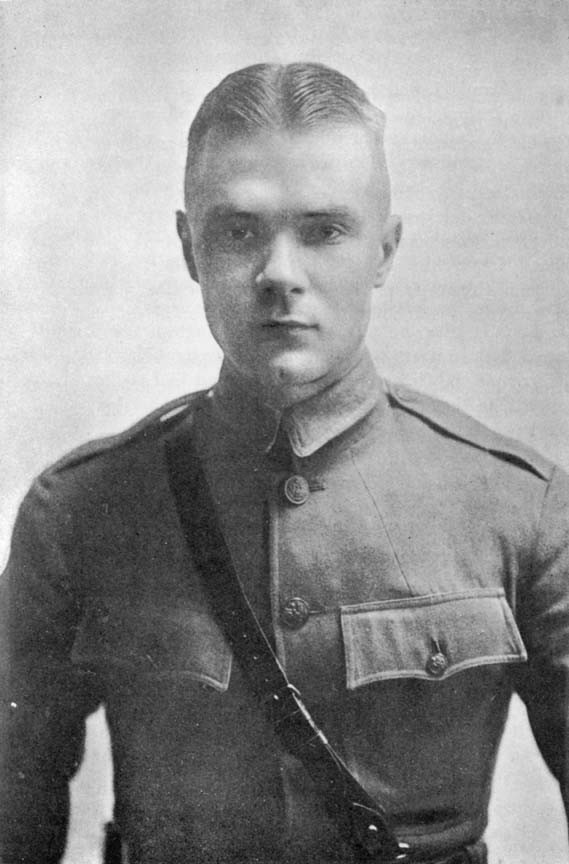
FIRST LIEUTENANT A.S.A., U.S.A., ELEVENTH AERO SQUADRON, FIRST DAY BOMBARDMENT GROUP
SON of Charles Taft and Annie W. Chapin of Ashmont, Mass.; was born in Boston, Mass., on Aug. 3, 1892. He graduated from the Dorchester High School, where he played on the football team for two years. For three years he belonged to the 1st Squadron, Mass. Cavalry. He enlisted at the Officers' Training Camp at Plattsburg, on May 14, 1917, was transferred to the Air Service in June and assigned to M.I.T. for ground work. On completing the course there, July 30, 1917, he was sent to Mineola, N.Y., for preliminary flying. He completed the R.M.A. flying tests on Sept. 17, and was commissioned 1st Lieut. on Nov. 14, the date on which he sailed overseas. He completed his advanced training at the 3d Aviation Instruction Centre at Issoudun, France, in March, 1918, and proceeded to Clermont-Ferrand for a two months' course in Day Bombardment. He was ordered out with a French Day Bombing Squadron, Escadrille Bréguet No. 127 (Groupe de Bombardement 5), about the middle of ,June. While attached to this Escadrille, Lieut. Chapin took part in the Château-Thierry offensive on July 15, and during Aug. was at the Fismes-Soissons-Mondidier front. At the end of Aug., he was recalled to go out with the new American Day Bombing Squadron, No. 11, and took part in a number of raids through the St.-Mihiel offensive. On Sept. 18, Lieut. Chapin and his observer, Clair B. Laird, of Algona, Iowa, were brought down back of the enemy lines north of the Chambley-Toul sector by enemy machines. The observer had been wounded by the fire of machine guns. Both men were captured, and kept as prisoners of war until Nov. 28, 1918, when they were exchanged through Switzerland. Lieut. Chapin received the Croix de Guerre for his services with the French. He was honorably discharged at Mineola, N.Y., in April, 1919.
Croix de Guerre Le Chef d'Escadron, VUILLEMIN, Commandant l'Escadre, cite à l'ordre de l'Escadre 12:
CHAPIN, ROGER, 10 Lieutenant Pilote, américain, de l'escadrille Br. 127: Excellent pilote, toujours volontaire pour les missions périlleuses. A pris part aux bombardements des 15 et 28 juillet et des 10 et 11 août, 1918, qui ont causés à l'ennemi des pertes considérables.
Signé: VUILLEMIN
FIRST LIEUTENANT, A.S.A., U.S.A., ELEVENTH AERO SQUADRON, FIRST DAY BOMBARDMENT GROUP
SON of Frank N. and Julia (Smith) Spear, of Walpole, Mass.; was born in Walpole, on Nov. 18, 1895. He was educated in the public schools of Walpole and graduated from M.I.T. in 1917. He enlisted in the Aviation Service in Boston, on July 2, 1917. After a ground course at M.I.T. he sailed overseas in August to finish his training in England.
He attended the School of Military Aeronautics in Oxford, Eng., and was soon after sent to Grantham, Eng., for an instructor's course in machine guns. He was then ordered to Scampton, in Lincolnshire, to learn the working and managing of a squadron. On Feb. 1, 1918, he was sent to Waddington, Lincolnshire, for actual flying training, and thence to Bircham-Newton, Norfolk, for work in fighting. He was then ordered to London, and there assigned to the Central Despatch Pool in London for ferry duty. On Sept. 10 he proceeded to France with the A.E.F. After three days at Tours, he was sent to the First Air Dépôt at Colombey-les-Belles. He was there fortunately able to join the 11th Aero Squadron which was made up of a number of men with whom he had trained. He reached Amanty, the Squadron Headquarters, in time for the last of the St.-Mihiel drive, and was with the Squadron throughout the entire Argonne offensive, and until the middle of Dec., 1918. Passing through the casual camps at Colombey-les-Belles, Tours, and Angers, he arrived at Brest on Jan. 30, 1919, and sailed for the United States on Feb. 2. On his arrival. Feb. 9, he was ordered to Garden City, N.Y.
FIRST LIEUTENANT, A.S., U.S.A., ELEVENTH AERO SQUADRON, FIRST DAY BOMBARDMENT GROUP
SON of Mr. and Mrs. Charles A. Munn, of Manchester, Mass.; was born at Washington, D.C., April 11, 1891. He attended the Westminster School, Simsbury, Conn., and graduated from Harvard College, class of 1914.
He served for three years in the Mass. National Guard, and on June 11, 1917, enlisted in the Aviation Service, at Manchester, Mass. He attended the Ground School at M.I.T. and was sent from there to Mineola, N.Y., for further training.
He sailed overseas for France, attached to the 98th Squadron, and trained at Tours, and later at Clermont-Ferrand for day bombing.
He was commissioned 1st Lieut. Oct. 4, 1917.
Lieut. Munn joined the 11th Aero Squadron, 1st Day Bombardment Group, at the front, and with them saw active service until the signing of the Armistice. He returned to the U.S. and on July 16, 1919, resigned from the Service at Washington, D.C.
He had two brothers in the Service; one acted as Assistant Military Attaché at the Army Embassy at Paris, and the other as Assistant Naval Attaché at the American Embassy, Paris.
ON Sept. 7, 1918, the 20th Aero Squadron was ordered to Amanty, Meuse, to join the 1st Day Bombardment Group which at that time consisted of one Squadron, the 96th.
Operations began Sept. 12, 1918, the opening day of the St. Mihiel push. Three of the Squadron were sent to do Army reconnaissance. 1st Lieut. G. M. Crawford, our first casualty, was taken prisoner Sept. 12, while attempting a reconnaissance mission in the rain. The other officers were sent to Toul to operate with the 2d Pursuit Group. At this time it was believed that our planes, the Liberty D.H. 4's, could be used as biplace fighters. However, this proved impractical and the Squadron was assigned to daylight bombing.
The morning of Sept. 13 we made our first bombing raid, and since the 20th was the first off the ground, it achieved the distinction of being the first Squadron of American-built machines to drop bombs on the enemy. In spite of adverse conditions due to lack of familiarity with planes and work, the Squadron made eight raids in three days.
Capt. Cecil G. Sellers and Lieut. K. C. Payne were fortunate in being the first to receive Distinguished Service Crosses, the official citation being as follows:
For extraordinary heroism in action near Longuyon, France, Sept. 16, 1918. Starting on a very important daylight bombing mission with five other planes, Capt. Cecil G. Sellers, Pilot, and Lieut. Karl C. Payne, Observer, went on along when the other five planes were forced to turn back. On crossing the German lines they were attacked by three enemy planes. Keeping the enemy at bay they went on, reached the objective, and dropped their bombs on the railroad junction, cutting the line. On the way back four more planes joined the attack, but they kept them off and reached the Allied lines.
Other decorations were soon to follow, however. Lieut. J. Y. Stokes, Observer, and Lieut. A. F. Seaver, Pilot, started on an early morning raid which had Étain as its objective. All the planes in the formation with them dropped out before the lines were crossed. They sighted another American formation headed for the same objective and followed. Before the objective was reached, their plane was struck by anti-aircraft fire and thrown into a vrille. They straightened out and followed the formation, which was, by this time, far ahead of them. After dropping their bombs on the objective, their motor stopped entirely and they were attacked by an enemy plane. Lieut. Stokes held him off while his pilot managed to glide to our lines. The action brought both the D.S.C.
During the time the Squadron operated from Amanty, it lost but one man over the lines while one man was killed and one injured, in a crash in the field. Among the objectives were Dommery-Baroncourt, Gorze, Bayonville, Longuyon, and Mars-le-Tour. Nine successful raids were made. The Squadron --- with the Group --- was cited for devotion to duty during the St. Mihiel offensive, and four Distinguished Service Crosses were won.
On Sept. 23, 1918, we moved from Amanty to Maulon, near Ligny-en-Barrois. It was from the latter field that we did the major part of our work and suffered virtually all of our casualties.
Our most disastrous raid was the operation of Sept. 26, 1918. Out of a formation of seven planes, five were lost over the lines and one returned with a dead observer. A portion of a letter written by 1st Lieut. E. C. Leonard, one of the observers who was wounded and taken prisoner, gives an idea of the fight:
The flight leader made a very sharp turn to the right after we dropped our bombs on Dun-sur-Meuse. Phil [1st Lieut. P. H. Rhinelander] and Harry [1st Lieut. H. C. Preston] slipped below the formation to avoid a collision. We were attacked by five Fokkers. "Coop" [1st Lieut. M. C. Cooper] and I dropped below the others to help Phil and Harry, when twelve Fokkers came at us from above, diving through the formation. I could n't swing my guns fast enough, for they were on all sides at once about a million lines of tracer smoke coming the wrong way.
It was always the aim of the German flyers to break up a formation, for they could then attack each plane separately. The plane thus attacked would be without the efficient protection of the other members of the formation.
In this raid, 1st Lieut. W. Clarkson Potter stuck to the leader, 1st Lieut. Sidney Howard, after the leading observer, 1st Lieut. E. A. Parrott, had been killed, and thus protected the rear of the leading plane. Lieut. Potter was awarded the D.S.C. for this act, but was himself shot down and killed a few days later.
The officers lost on this raid were: Lieut. P. H. Rhinelander and Lieut. H. C. Preston (killed); Lieut. Harris and Lieut. E. Forbes (killed); Lieut. H. P. Matthews and Lieut. E. A. Taylor (killed); Lieut. G. B. Wiser and Lieut. Glen Richardson (prisoners); Lieut. M. C. Cooper and Lieut. E. C. Leonard (prisoners); Lieut. E. A. Parrott was brought back dead.
Probably the Squadron's most successful raid was over Montmédy on Nov. 4, 1918. Montmédy at that time was the headquarters of the German army. It was also a most important railroad centre and directly in the main line of communications. We were over the town at 2.20 P.M. Sixteen 155 mm. penetration bombs were dropped, all of which found their mark. We left the town in flames. On the return to our lines we were attacked by seven Fokkers, two of which were shot down. All our planes returned safely. (The "Montmédy cocktail" is very well known to the New England members of the 20th.)
On Nov. 5 was the last and one of the most disastrous operations in our history. We were, after we had dropped our bombs, attacked by three patrols of Fokkers. The first patrol was driven off. During the fight with the second, 1st Lieut. K. G. Wrest, Pilot, and 1st Lieut. Wm. Frank, Observer, were shot down in flames. Both flyers were of the original quota. Lieut. Frank had been wounded and recommended for the D.S.C. Lieut. West was one of the best pilots in the Squadron and a veteran of many raids. A lull in the fight made it possible for all to observe the red ball of flame as it tumbled to the earth, 13,000 feet below.
The third German patrol shot down two planes. Lieut. Brooke Edwards and Lieut. Karl C. Payne, with the motor riddled, the gas tank punctured, the controls shot away on one side, and out of ammunition, were fortunate enough to make a landing even behind the German lines. The third American plane to fall was driven by 1st Lieut. Samuel Mandell. Lieut. R. W. Fulton was the observer. The plane went down partially out of control. A few hundred feet off the ground "Sam" straightened it out, and then sideslipped and smashed. Mandell was killed; Fulton came through without a scratch. (See Lieut. Mandell's record, pp. 149-51.----Ed.)
On the day that the Armistice was signed, there was a picture taken on the field at Maljon. Time survivors of the original flyers in the 20th stood together. There were six: Capt. C. G. Sellers, Lieut. Gardiner Fiske, Lieut. A. F. Seaver, Lieut. Sidney Howard, Lieut. J. Y. Stokes, and Lieut. W. S. Holt. These officers, either due to skill or good fortune, but probably a share of both, managed to get back from every raid. They were all flight leaders and three were winners of the D.S.C.
At one time during the operations north of the Argonne Forest, it was necessary to call for volunteers among the enlisted men to fly over as machine-gunners. Sgt. 1st class Fred C. Graveline, Corp. Raymond C. Alexander, and Pvt. 1st class Hoyt M. Fleming came forward and carried on with the work.
The 20th lost 20 officers over the lines, had 2 men killed on the field, and 1 observer brought back dead, during the time we operated from Maulon. Some of the objectives were Montmédy, Grand Pré, Tailly, and Buzancy. The original members of the Squadron were given personal citations for devotion to duty.
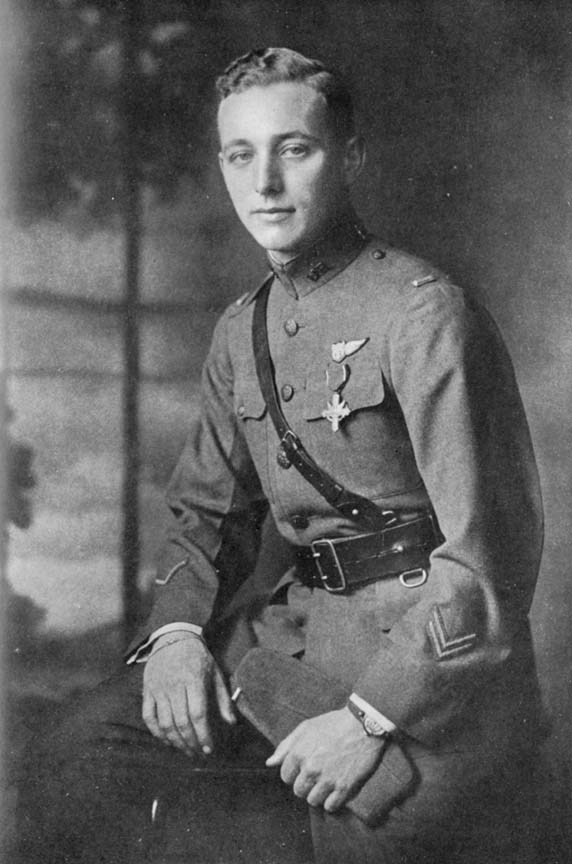
FIRST LIEUTENANT, A.S.S.C., CHIEF OBSERVER, TWENTIETH AERO SQUADRON, FIRST DAY BOMBARDMENT GROUP
SON of Edward F. and Mae (Chatwin) Payne, of Belmont, Mass.; was born in Cambridge, Mass., on June 18, 1896. He was educated at the Belmont High School, the Browne and Nichols School in Cambridge, and M.I.T. At the Browne and Nichols School he was prominent in athletics, and was captain of the football and hockey teams. He attended military classes at Norwich University, Northfield, Vt., in the spring of 1917, and in the summer trained with the Harvard R.O.T.C.
He enlisted in Cambridge, Mass., on July 20, 1917, and was assigned to the Ground School at M.I.T. in the fall of 1917. He was sent overseas in Nov. and was trained at French flying schools at Issoudun, Clermont-Ferrand, Châteaudun, and Chartres. He was commissioned 1st Lieut. about June 18, 1918, and spent the following summer at the front in the St.-Mihiel and Argonne sectors. He was made Chief Observer of the 20th Aero Squadron, and made over 16 successful bombing raids during the great offensives. He was awarded the D.S.C. on Sept. 16. On Nov. 5 he went over the lines on a bombing expedition, and when the formation returned, his plane was missing. This is the account of the experience which Lieut. Payne sent to his family in a letter dated Nov. 24:
The next day I went over with Brooke Edwards. We were flying protection in the rear. We bombed Mouzon, north of Stenay, arid turned right going east. The leader made a great turn and took us away over Montmédy. The Boches were waiting for us there and about forty of them jumped us. We were only eight. It was a real fight. We got the first one to come up, but there were a lot behind him. I was running short of ammunition and the bullets were snapping close to my ears. Then the gas tank was hit low arid the gas ran out. At the same time I was shooting at a devil that had come up rather too close. My left arm was across my chest. the wrist being about over my heart, when I felt a bump and saw my glove torn just above the wrist. I lost the use of that arm, but I could n't help but smile to have my arm over my chest just at that moment. I turned to tell Brooke that I was hit and out of ammunition and the gas tank was punctured. As I turned I saw him put his hand up to his head. Naturally I thought he had got a load of lead. I sat down and took control of the plane from the rear scat. I put the plane into a steep nose-dive. We outdared the Huns by going down nearly vertically. Finally, having dropped from about 14,000 to 2000 feet, we could see the infantry below us and it was German infantry. Brooke took control of the plane and levelled out. trying to glide without motor to our own lines. However, as soon as we levelled out, the Huns --- three of them --- caught up with us and the bullets snapped close again. They shot the fur off my collar and I saw it flying up as the bullet passed through. Then they shot through my sleeve up near my shoulder. I had about ten bullets left and feel pretty sure that I got one of the Huns with these. But the game was up, they drove us to the ground in the German infantry.
They were round us the minute we landed. And I really believe that, but for a German non-com who ran up, I would not be writing this now. But the non-corn came and they dressed my arm. Then they marched us back, to the artillery and the artillery took us back to Loupy.
Lieut. Payne was later taken to Virton and finally to Karlsruhe Prison. He escaped from Karlsruhe on Nov. 20 with several other officers, and reached Strasbourg, Lorraine, on Nov. 22.
Citation For extraordinary heroism in action, near Longuyon. France, Sept. 16, 1918. Starting on a very important daylight bombing mission with five other planes, Lieut. Payne, observer, went on alone when the other five planes were forced to turn back. On crossing the German lines, he was attacked by three enemy planes. Using his guns to keep the enemy at bay, he went on, reached his objective, and dropped his bombs on the railroad junction, cutting the line. On the way back four more planes joined in the attack, but keeping them at bay with his guns, he reached the Allied lines.
(Signed) PERSHING
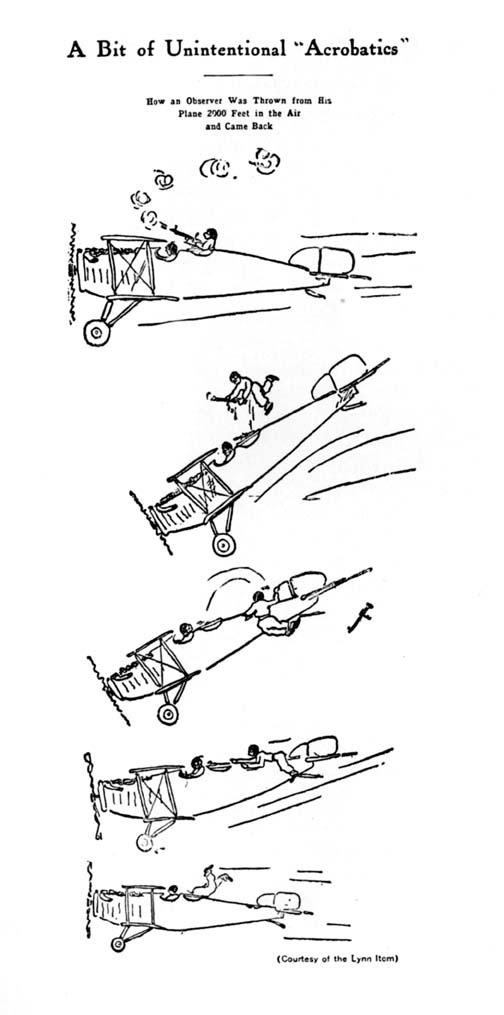
I HAD the thrill of my life yesterday. We were flying formation in these great big busses and the machine I had had two camera guns on it, one for the pilot and one for the observer. Old F---was standing up on the seat in back shooting away with his camera gun at a scout machine that was flying around us. At the same time I dove to get a shot at him with my gun. I heard sort of a crash behind, and after I had straightened out looked around to see what it was. Lo and behold, a man in a leather coat holding onto the tail of my machine. I could hardly believe my eyes, but F------ had fallen out of his cockpit when his gun broke loose from its fastenings and I had nosed over. The first thought that came to me was: Will he have strength enough to hold on till I get down to the ground? I put the machine in the gentlest glide I could and started for home, as I could not land where I was up on the mountain-tops. All this happened at about 700 metres. God help him if he had fallen. F------ all this time was lying with his body across the fuselage right next to the vertical stabilizer on the tail. As I watched him over my shoulder, he gradually wound his way up the fuselage. He got a-straddle of it and gradually slid up, caught hold of the tourelle, and dove head first into his seat. About ten years' weight came off my shoulders by this time. It was the funniest sight in the world to see the expression on that face as he scrambled up the fuselage and fell face first into the cockpit with only his heels sticking out. All that saved him was the little wooden spars that hold the covering of the fuselage breaking and making a sort of a hole in which his body stuck as it struck. As we were in formation, some of the other men saw it. They said that F------ left the fuselage bodily and flew through the air for a space of five feet till he struck the vertical stabilizer that knocked him back on to the fuselage. Of course, it is hard to believe, but it is Gospel truth. All the time it was happening we were going at the rate of 100 miles per hour at least.
F------- to-day is reposing in bed, having been excused from all formations. He will never come any nearer death at the front, and nothing can ever scare me any more than this did.
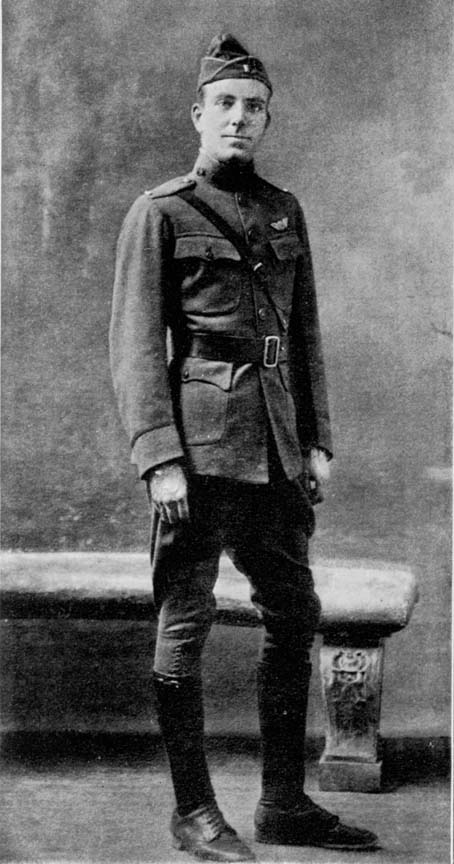
FIRST LIEUTENANT, A.S., U.S.A., TWENTIETH AERO SQUADRON, FIRST BOMBARDMENT GROUP
SON of Andrew and Gertrude (Horsford) Fiske, of Weston, Mass.; was born in Boston on Sept. 14, 1892. He was educated at the Noble and Greenough School, and at Harvard College, A.B., class of 1914. Before entering the U.S. Service he was for two and a half years a member of the 1st Corps of Cadets, M.V.M.
He enlisted May 30, 1917, at Weston, Mass., trained at M.I.T. from May 1 to June 3, and was transferred to Essington, Pa., June 24, 1917. He was commissioned 1st Lieut. on Oct. 31, 1917, and ordered overseas Nov. 1, continuing his training at Issoudun and Clermont-Ferrand, France, throughout the winter and spring of 1918. He was attached to the French School at Châteaudun and Chartres, G.D.E., during the summer of 1918. On Aug. 31 he was assigned to the 20th Aero Squadron, 1st Bombardment Group, and took part in 14 bombing-raids over the lines, and two patrols as biplace pursuit. Stationed at Toul and Amanty during the St.-Mihiel drive; at Maulan during the Meuse-Argonne drives.
Lieut. Fiske's account of the Squadron's "Last Raid," is embodied elsewhere in this work, as well as a description of his remarkable experience in being hurled from his plane when at an altitude of 2000 feet. Officially credited with the destruction in combat of one enemy aircraft. Acted as flight leader in five bombing raids.
He was honorably discharged at Garden City, N.Y., on Feb. 14, 1919.
Citation France, 21st Nov., 1918
The Army Air Service Commander, First Army, cites the following officers and men for exceptional devotion to duty:
45. First Lieutenant G. H. Fiske, A.S., U.S.A., as observer of the 20th Aero Squadron, First Day Bombardment Group, participated in every raid made by the Squadron in the Argonne-Meuse sector during Oct., 1918.
By order of Colonel MILLING
W. C. SHERMAN
Lt. Col., A.S., U.S.A.
Chief of Staff
Married, Oct. 13, 1919, Constance Morss.
Thirty of our bombing planes executed a successful raid on Mouzon and Raucourt this morning, dropping over two tons of bombs with good effect. --- American Communiqué of Nov. 6.
To the Headquarters of the 1st Day Bombardment Group at Maulan, south of Bar-le-Duc on the evening of Nov. 4, came the daily telephonic order from General Headquarters. It was as usual a very simple order, giving nothing beyond the bare facts of the work the Squadrons were to do the following day. This time the order said, "Stand by to bomb Mouzon at 9.45 A.M."
On receiving this order the flight leaders and deputy leaders went to their maps to locate the new objective and study photographs of the town to pick out the points of military value. In studying Mouzon it was not difficult to see what we were to do. The town lay on the east bank of the Meuse with a suburb on the west bank where the railroad station and warehouses were situated. We decided to try to cut the railroad and destroy the warehouses.
The next morning our orderlies called us early enough to see a low-lying mist over the camp. It was just dawn. We dressed amidst shouts from the barracks of "Come on, rain." This appeal to the rain god was heard every morning whatever the weather, as rain was sure preventive of bombing raids. Nevertheless, we felt that thrill which came only when we were on the alert to go over.
At 7.15 the flight leaders held their meeting in the office of the Group Commander, where the Colonel outlined the plan of the formation to be used. This morning, if the weather cleared up, we were to go over in three "V's," the 166th Squadron first, then the 20th, and lastly the 11th. We were to meet over our own field at 8000 feet, fall in behind one another in order, and climb to the final height of 13,000 to 14,000 feet during the final run to the lines. We were to bomb with the wind, which the weather report showed to be blowing toward Germany at a speed of about 30 miles an hour. This was rather a stiff wind, difficult but not impossible to operate in.
The sun appeared quickly, drying up the mist as if anxious to see us get on our way. We dressed carefully in our flying clothes, climbing into the De Havilands, and tested out our sights, machine guns, and Vérys pistols. Soon the signal "all set" was given. A Vérys pistol was fired showing one green ball, giving the signal to start the Libertys. With a roar the long line of engines started almost all at once as the mechanics swung the propellers and the process of warming up began. Then we --- we were flight leaders that day in our Squadron, the 20th --- began taxiing to the starting-line; number 2 followed, then number 3, and so on until the whole flight were ready in formation on the ground all the powerful engines throbbing and the propellers turning over. Suddenly the Operations Officer, noting the Squadron ahead of us had left the field, fired a single red Vérys light from the line. We opened our throttle and moved forward, taking off into the air. As we took off, numbers 2 and 3 started forward and in their turn leapt into the air, numbers 4 and 5 followed, then the next two and finally the 9th, until all the planes were in sight.
Our next difficulty was to gather the Squadron into formation. After getting up to 1000 feet altitude, we throttled down until 2 and 3 caught up and climbed a little above and behind us. We three then continued climbing slowly until the rest gathered together and formed our "V" in a wide, loose formation.
The flight climbed together until we reached our desired altitude over the field. Taking one hour, this part of the trip is always very tiresome. One sits gazing at the altimeter, wondering if one will ever get up, the time passing so slowly. Down below the country gradually gets more and more spread out, until the forests blend into a patch of green and the rivers show only as nickled lines.
We returned over the field, looking meanwhile for the other two Squadrons. Finally down below us we saw the leaders, the 166th, starting for the lines. We fell in line behind them, passing over Bar-le-Duc and flying up the valley with the Argonne Forest on our left and Verdun on the right. As we neared the lines I signalled the planes into close formation so that by the time we crossed we were prepared to withstand an attack, the planes being stepped up and back with the "V" much smaller. One plane here firing a red light fell out with motor trouble, not being able to keep up with our speed. We all had orders to return in this contingency.
The clouds were numerous and heavy, but we could see the leading Squadron ahead as well as patches of ground in spots showing us our position. We were travelling at a terrific rate, the wind being apparently much stronger than the weather report showed. Stenay was plainly visible on our right. I thought of turning and dropping our bombs there, but as the leaders still went on I followed, thinking that they could see the objective from their position, though I could not see it from ours. As they reached the place where Mouzon was situated, they turned to the left over Raucourt, because, as we learned later, Mouzon was covered with clouds when they passed it. All this time the anti-aircraft shells were bursting around us, but our speed compared with the ground was so great that they were very inaccurate at our height of 14,000 feet. They showed, however, that we were discovered by the enemy and we could expect an attack by their planes.
As we reached Mouzon luck caused a sudden rift to appear in the clouds and the town was plainly visible. I steered the pilot, by the reins attached to his arms, for the town, swinging the formation to the right. Getting the edge of the town in time sight I gave the "all set" signal by firing off a Vérys light with seven green balls. At this point always comes a tense moment. The town passed back along the bar of the sight, reached the cross-bar and passed it. I pulled back the lever and let go our bombs. Waiting a few seconds to be sure all the Squadron had dropped theirs, I signalled to the pilot that all was well and to go home. Leaning over the side of the plane as far as possible, I tried to see the effects of the bursts, noticing one on a barracks and some flames near the railroad.
We turned now down time Meuse toward home against the wind, feeling that all was well. It had been a successful raid, and we were feeling happy about it.
Without warning a blue body with a white cross flashed up in front of us. Grasping a Vérys light, always kept prepared, I gave the "Enemy Aircraft" signal --- seven red balls --- and stood up at the guns ready for the attack. The first Boche passed from under our wing and came up under our tail. I gave him one volley as he passed and continued as he hung on his propeller not twenty feet from us, just behind our horizontal stabilizer. In this volley I shot away our right flipper wires so that I had to be careful in the future in shooting on the other side, as if both sides were shot away we should be forced to land. This blue fellow went down some distance, but climbed up behind us again and reopened fire, his tracers flashing all around us, but never hitting any vital part.
The other planes in time formation were having their troubles too. From the leader's place I could see one Boche in flames above the rear of time formation and one Liberty going down below for protection. This plane was smoking, but not yet in flames. Then the fight stopped just as suddenly as it began. I counted the Squadron, and slacking speed to gather the planes back into the "V," found there were seven left. We seemed to have got at least two Boches and had lost one of ours.
At this point two more German Squadrons appeared from the rear. The first thing I saw was one of our rear planes dive down suddenly into time middle of the "V" with two black-and-white-checked Fokkers after him. One of these fell out of control into a vrille; the other fell back and satisfied itself with long-distance firing; the Liberty went back to its old position. The tracers were flying by in the rear of the formation in all directions, but it was impossible to see exactly how many Boches were in the attack. One started crawling up on us from behind about twenty-five feet below. I fired bursts at him steadily, but he still came on. Having made a habit of always keeping one magazine in reserve on the gun fully loaded, I felt in the cockpit for a fresh one to replace the one just used up. There were none left. The reserve I had on the gun was now the last shot I had in the plane. As the German came nearer I fired in bursts of ten my last magazine. He turned back, luckily, as we were now helpless in case he persisted. I swung the useless tourelle back and forth pretending to point the guns at him as he hung back 400 yards behind. Finally, we seemed to crawl by Stenay and got over our lines at Dun-sur-Meuse. Here again I counted the flight. There were five left.
We arrived back at the field to await the hardest part of the whole raid. After making our report we watched the sky for the missing planes to come in. One hour passed; then two; finally we heard a month later that one plane had gone down in flames and two others had been forced to land in German territory. This was our last raid, as the rain god answered our daily supplications from Nov. 6 to Nov. 11.
THE 96th had one of the most unique and checkered histories of any American Squadron at the front. The enlisted personnel, commanded by Capt. George C. Thomas was one of the first to get to France; it was trained in French factories and airdromes, and when the American Bombing School was started at Clermont-Ferrand, in Jan., 1918, it was detailed there, and there its history really begins.
When the first group of bombing pilots had finished their training and were ready for the front, they had no planes of any kind --French, British, or American --- fit to take to the front. As a result of the prospecting advertising which bombing had been given, much pressure was brought to bear in this direction, and it became necessary to get some kind of a bombing squadron to the front. After delays and changes in plan, ten planes of the Bréguet (French) type, which had been used in school for some time, went forward about the last of May.
Ten lucky (or unlucky) pilots, and ten observers, climbed into their old machines, already partly worn out, for a 200-mile trip from Clermont-Ferrand to Amanty, where the field from which they were to operate was located. At Amanty, they were joined by other pilots and observers, who had been sent out earlier to do observation work, and the great American aerial bombing offensive, which was to have had thousands of American planes at that time, according to the schedule, was launched the first part of ,June, with ten second-rate and partly worn-out French planes and ineffective French bombs.
After a few trips over the lines, Major Brown, then in command of the Squadron, took off on his well-known trip, famous throughout the Army. About July 10, the weather looked uncertain, but he had had orders to raid whenever it was possible. Seeing an opening in the clouds, he called out his flight, and in spite of the adverse advice of the French and British, started for Germany. The flight of six planes had no sooner gone through the opening than the clouds closed in solidly beneath them. They continued, with a high wind at their backs, until they saw an opening, through which was seen a city which they did not recognize. Turning for home, they flew for nearly two hours, but the wind against them was so strong that they made practically no progress, and finally, one by one, were forced to come down, out of gasoline, somewhere in the vicinity of the Rhine. Some tried to get away, but they were all captured, and a few days later, so the story goes, the Germans dropped a note saying --- "Thanks for the six planes, but what shall we do with the Major?"
After this episode the Army operations reports read: "Army bombardment, First Day Bombardment Group, 96th Aero Squadron, planes on hand, ---2; available for duty, ---1." This was the standing of American aerial bombing until the latter part of July, when new planes were received from the French, and operations recommenced. During the month of Aug. the 96th operated continuously, with from one to three raids a day, whenever it was at all possible to get over, with only a few minor casualties. In Sept., how ever, came casualties that were exceeded by those in no squadron at the front. The Richthoffen circus was sent down to wipe out American bombing before it could get properly started, and they nearly succeeded in doing it. On Sept. 4, four men were badly wounded and only escaped with their lives through clever leadership on the part of the Flight Commander, who kept the formation in the sun. This was merely a start, for on Sept. 12, with the St.-Mihiel offensive, in rain and impossible weather, doing low altitude bombing, the Flight Commander was lost on one trip; four men lost from another flight; and as the days went on, one more was killed while landing in the dark. Following this a flight of four planes was completely wiped out, with eight men gone; later an observer was killed, and there were any number of flights from which the men returned only through remarkable flying and leadership. Not only were men killed and wounded, but the strain of the work and conditions in the Squadron were such that many men were unable to stand it, and when the Armistice was signed there was only one pilot who had remained with the Squadron from the time of its transference to the front in June.
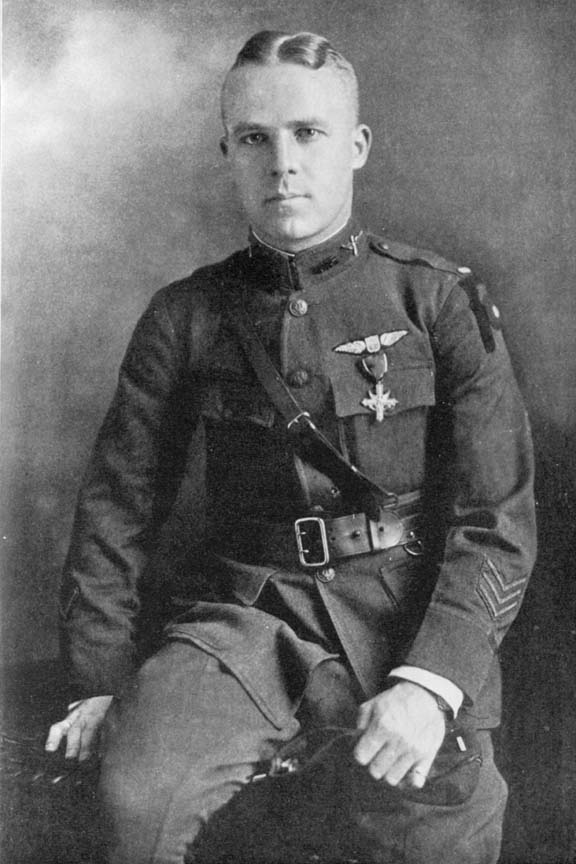
FIRST LIEUTENANT, A.S., U.S.A., NINETY-SIXTH AERO SQUADRON, FIRST DAY BOMBARDMENT GROUP
SON of Arthur Bengough and Stella Hadden Alexander; was born in Decatur, Ill., on Oct. 27, 1892; descendant of Henry Lewis, of the Revolutionary Army. In 1910 he graduated from Phillips Exeter Academy, where he played on the football team; and from the Univ. of Wisconsin, B.S. 1914, where he played on the 'Varsity Football team for three years, on the tennis team, and was captain of the hockey team; of Harvard University, Graduate School of Landscape Architecture, M.L.A. 1917.
He enlisted in the Aviation Section of the Signal Corps on June 13, 1917, and entered the 4th class of the Army Aviation Ground School at M.I.T. on that date. After six weeks' ground-work he was selected among ten from that class to he sent to France for flying training, and sailed on Aug. 22, 1917. He entered the French "École d'aviation militaire" at Tours, Oct. 1, where he received his preliminary flying training under the French; then was sent to the American School at Issoudun for advanced training and was commissioned 1st Lieut. Feb. 20. Upon completion of the course at Issoudun, he was returned to Tours in March as an instructor for two months and a half. On June 1, he went to the Bombing School at Clermont-Ferrand (7th Aviation Instruction Centre) and was ordered to the front, July 14, 1918, where he was detailed to the 96th Squadron, the first American Bombing Squadron to be organized, and participated in daylight bombing raids over enemy territory until wounded. On Sept. 4, while returning from a raid, and still 2.5 miles beyond the lines, his Squadron of 8 planes was attacked by 15 or more enemy planes and badly shot up. All managed to return safely, however, and two German planes were shot down. Lieut. Alexander was severely wounded, a bullet passing through his abdomen, but he succeeded in landing safely on his own field after fainting several times during the descent. He was awarded the D.S.C. by General Pershing with the following citation:
For extraordinary heroism in action on Sept. 4. 1918. While on a bombing expedition with other planes of his squadron, Lieut. Alexander engaged in a running fight over hostile territory with a superior number of enemy battle planes, from Friauville to Lamorville, France. He was seriously wounded in the abdomen by a machine-gun bullet and his observer was shot through both legs. Although weak from pain and loss of blood, Lieut. Alexander piloted his plane back to his own airdrome and concealed the fact of his injury until after his observer had been cared for.
After partial recovery from his wound he was called back to duty at General Headquarters to represent the Air Service on the Board of Awards, which was composed of a man from every branch of the Service who had been wounded, decorated, and seen a year's service. This board passed on recommendations for the Congressional Medal and D.S.C. Lieut. Alexander was returned to the U.S. in Feb., 1919, and honorably discharged at Garden City, N.Y., Feb. 7, 1919.
Lieut. Alexander has described the raid of Sept. 4, over Germany, in the following extract:
We had just dropped our bombs on the railroad tracks when Boche machines began to appear from every side. The wind was such that we had to stay over there much longer than usual, which gave them a chance to come up at us. At first it was a fairly even scrap, but more and more of them kept coming on until you saw them wherever you looked. Once I looked down, and there was a gang more on the way up. We were in the back of the formation and things got hotter and hotter. They kept closing in and we gave them all we had, but it finally got to be almost impossible to keep them off because they were so many.
They closed in on us as close as 30 to 50 yards at times, and you have no idea what a sensation it is to hold to your formation and hear the Boche machine guns, from four to five planes, cracking at you, and see their tracer bullets flashing by your head and hear and feel them hitting the wings and fuselage. McLennan, my observer, kept after them all the time, tapping me on the shoulder as he wanted me to tip up to give him shots. until he finally collapsed with two bullets in one leg and one in the other.
Almost at the same time a bullet went into my side. From then on the only thought I had was to get back .... How I got there I don't know, but we finally got back to our own field and a safe landing before I went completely under, once more proving that the power of God is more powerful than that of evil.
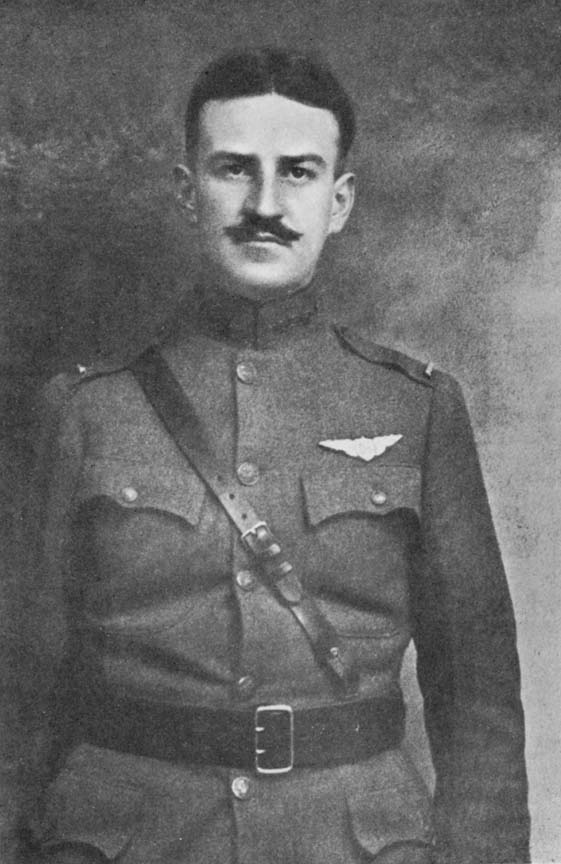
SECOND LIEUTENANT, A.S., U.S.A., NINETY-SIXTH AERO SQUADRON, FIRST DAY BOMBARDMENT GROUP
SON of Dr. Edward E. and Louise (Tullock) Hopkins; was born in Newtonville, Mass., March 19, 1892. He was a direct descendant of the signer of the Declaration of Independence whose name he bore. He prepared for college in the Newton schools, and graduated from Harvard College in 1914. During his high school and college career, he was prominent in athletics; he played on the 'Varsity hockey team for three years, and later on the Boston Athletic Association hockey team. He was a member of the Hasty Pudding, Institute of 1770, D.K.E., 'Varsity, Iroquois, and Porcellian clubs.
After graduation from college, he spent a year at the Harvard Business School, and then went into the Lancaster Mills, at Clinton, to learn the cotton business, where he remained two years. He was then made assistant treasurer of the Becker Milling Machine Company at Hyde Park, which position lie held at the time of his enlistment.
He entered the Army Aviation School of the M.I.T. in Sept., 1917, and the following month was sent to Foggia, Italy, sailing Oct. 28; there, after seven months' training, he was commissioned 2d Lieut., May 13, 1918.
From Foggia, he went to Vendôme, France, for further training, and later to Clermont-Ferrand for practice in bombing and formation flying. At the completion of his training he was sent as a bombing pilot to the 96th Aero Squadron.
He entered active service at the front in Aug., 1918, and during the great offensive at St.-Mihiel, his plane was shot down in flames, and both he and his observer, Lieut. Bertram Williams, were killed. News that these two aviators were missing in action was received by their relations some three months before it was ascertained that they had been killed. They were buried at Charey, France.
Just before starting upon his last flight over the enemy lines Lieut. Hopkins wrote to his father:
We have been all ready to take a trip into Germany several times only to have it called off just at the last moment. Yesterday we repeated this several times. We got up early in the morning ready to start, but the weather was so bad that you could n't get off the ground. As you have probably read, the much heralded U.S. drive started, and we were particularly anxious to contribute our share. At last, under the most unfavorable weather conditions, our squadron leader started out alone. He did not return. We then got our formation ready and had our motors tuned up, bombs on, machine guns tested, etc. Just then a plane which was landing on our field crashed into my machine, thereby wrecking it. Thus I was deprived of my first trip over the lines. This formation returned with the exception of one machine, which, however, is safe at another aerodrome. Finally I procured a machine and was to go in the next formation. We waited around and attempted to make several starts, but each time such a storm would hit the field that. we simply could n't get away. At last we started, just before dark. We went to our objective and dropped our bombs; it was dark then. I have never seen such a sight in my life. The whole country was one mass of flames, where the Germans were in retreat. You could see the flashes of the guns, and anti-aircraft occasionally broke around us. However, as it was dark, the anti-aircraft and Hun machines were scarce. It was a most remarkable day, as every time we were given an objective during the day, we would proceed there and find that the Americans had it .... If they can only keep it up! After we dropped our bombs, our work really only started, so far as getting on to terra-firma safely was concerned. It was pitch dark and we flew for a long time on a straight course that we knew would ultimately take us over the lines. We finally recognized a river that we knew was in France. So far so good. The next question was how to find a good field or our own field to land on. Of course, all lights are out in this country and consequently there were very few landmarks. The moon finally came out, and by the aid of this we were able to follow rivers and the shapes of certain forests, and finally, in the direction of our field, we saw some flares. Perhaps we were n't pleased! Three of the machines smashed in landing, but the teams were not hurt. I was the only one who did not damage a machine. One team did not return and I have just heard that the pilot was killed in trying to land. It was too bad as he was a fine chap from Princeton.
This letter was prefaced by the words: "Just a note before I start out for a hard day's work." From this flight Lieut. Hopkins did not return.
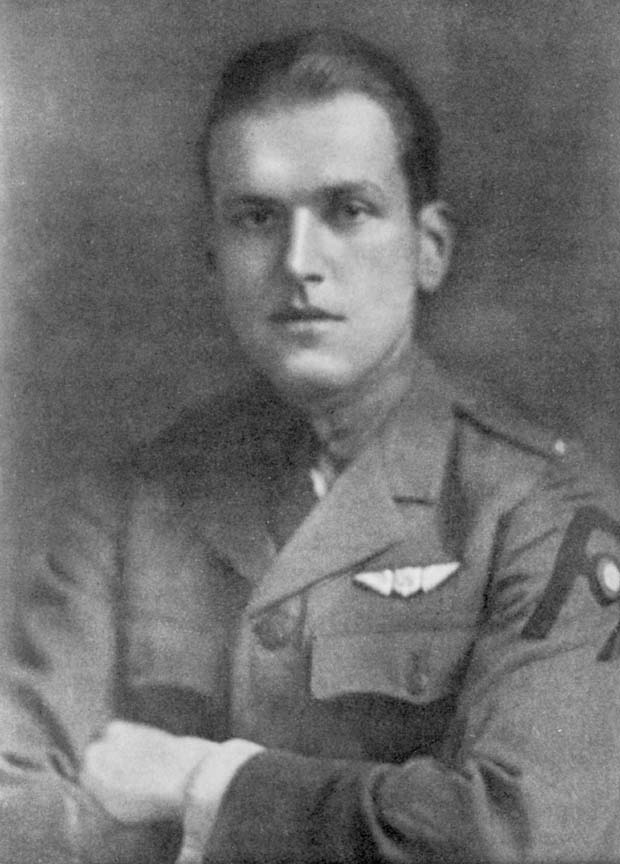
FIRST LIEUTENANT, A.S.A., U.S.A., NINETY-SIXTH AERO SQUADRON, FIRST DAY BOMBARDMENT GROUP
SON of Russell S. and Anna K. (Crafts) Codman; was born in Boston, Mass., Feb. 22, 1893. He was educated at Groton School, Mass., and Harvard College, A.B. 1915. Prior to the declaration of war, he served with Battery A, M.V.M., one year; and with the American Ambulance Field Service for nine months.
He enlisted in April, 1917, attended the M.I.T. Ground School, and the Flying School at Essington, Pa. He was commissioned 1st Lieut. on Oct. 31, 1917, and sailed for France with the A.E.F. about Nov. 1. He trained at the U.S. Flying Schools at Issoudun and Clermont-Ferrand, France, and on the completion of his courses was assigned to the 96th Aero Squadron.
Lieut. Codman was in active service at the front from June 3 to Sept. 16, 1918. While bombing Conflans, on Sept. 16, 1918, he was in a flight of four machines attacked by 24 Fokkers. The other three machines in the formation were brought down in flames and the occupants killed. Lieut. Codman and his observer, Lieut. S. A. McDowell, of Philadelphia, were the only survivors of the flight, and McDowell was severely wounded, but not before he had brought down three enemy planes. Lieut. Codman's machine was shot down, and he being wounded was made prisoner near Conflans. He remained a prisoner in Germany until the Armistice. He escaped from Landshut prison about Nov. 8, together with James Norman Hall, Henry Lewis, and Robert Browning, all of the U.S. Air Service. They arrived in Berne, Switzerland, Nov. 19; sailed for America; and on Jan. 3, 1919, Lieut. Codman was honorably discharged at Garden City, N.Y.
Brother in Service:---
Russell S. Codman, Jr., 1st Lieut.. U.S.A., Dépôt Brigade, Camp Devens.
Received from the French Army Citation and Croix de Guerre with Palm; also, cited in Citation Orders No. 1, by General Headquarters, American Expeditionary Forces, for Gallantry in Action Sept. 16, 1918, while engaged in Bombing Expedition near Conflans, France.
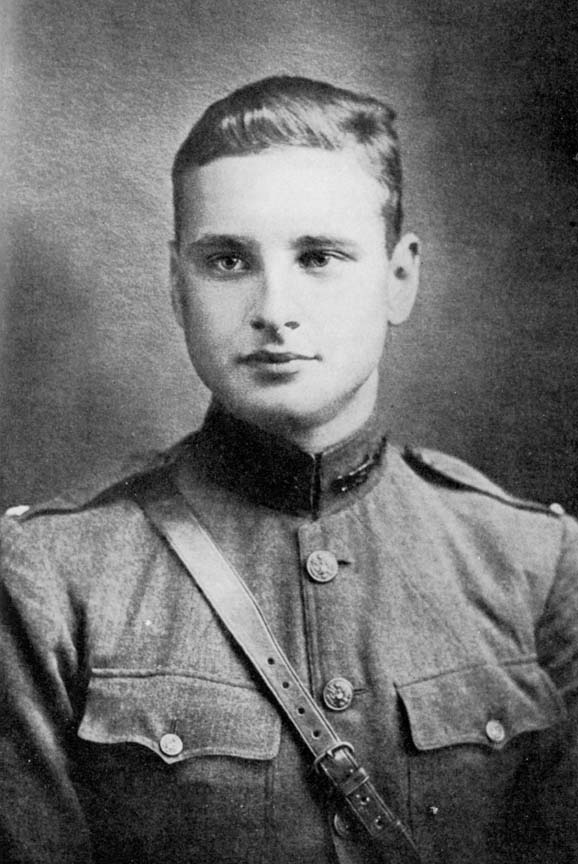
FIRST LIEUTENANT, A.S.A., U.S.A.. NINETY-SIXTH AERO SQUADRON, FIRST DAY BOMBARDMENT GROUP
SON of John Bertram and Olive (Swan) Williams; was horn in Cambridge, Mass., on Sept. 11, 1896. lie was educated at the Browne and Nichols School, Cambridge; at the Middlesex School, Concord, Mass.; and at Harvard College. At the Middlesex School, he made the second school crew in 1913, and rowed bow in the first crew in 1914. He was also a member of the dramatic and debating clubs, managed the baseball team in 1912, and the crew in 1913. He entered Harvard with honors, belonged to the Phoenix, the D.K.E., and the Owl clubs, and rowed on the freshman crew, which won the four-oared race at New London in 1914. In 1916 he was given six months' leave of absence from college to join the Morgan-Harjes Ambulance Corps, sailing for France in Feb. He was assigned to Formation No. 5, and went at once to the front near Verdun. This corps was cited for the work done under fire from March 8 to 19.
Bertram Williams returned to college in Sept. and joined the R.O.T.C. at Harvard. He was accepted for the Air Service in July, and was assigned to M.I.T. for Ground School work in Aug., 1917, graduating in Oct. Being among the "honor men" of his Squadron, he was at once ordered overseas, and sailed on Oct. 17, 1917. He wrote at sea: "We got so efficient at abandon ship drill that it was almost disappointing not to have a chance to use it." Immediately on his arrival at St.-Nazaire, he was sent to the 3d Aviation Instruction Centre at Issoudun. He stayed there until March, 1918, when he volunteered, with 25 others, for a two weeks' ground course preparatory to becoming an observer, and was ordered to Gondrecourt. From there he wrote:
We are the first fighting observers, and ever since we volunteered for it, they have never known just what to do with us. For this reason we all wear white elephants on our identification plaques.
He was at time Aviation Instruction Centre at Tours until April, and was then sent on to Cazaux. He wrote home:
There are four of us picked according to our grades at Tours, who are going to the School of Aerial Gunnery at Cazaux. All this may not mean much to you, but any one who has been through the French School at Cazaux is a little bit better than any one else in the flying world over here, and I am tickled to death.
In a later letter, he said:
When we were shooting at a silhouette of an airplane on the ground, I was lucky enough to get 28 per cent, which put me on the Tableau d'Honneur --- the third American to get on it.
He was commissioned 1st Lieut. at Cazaux, in May, 1918, and ordered to Clermont-Ferrand, where he remained until Sept., when he was attached to the 96th Squadron. On Sept. 13 Lieut. Williams and his pilot, Stephen Hopkins, were in one of three planes flying over Chambley. One of the American planes was separated from the rest, and 20 German machines attacked the remaining two. Both were shot down in flames. Lieut. Williams and Lieut. Hopkins were reported "missing in action," in the middle of Sept., and later "killed in action." They were buried at Charey, France. In June they were reinterred at Thiaucourt, one of the national cemeteries. The following is quoted from a letter written by Lieut. Roth, observer in the plane which was not shot down:
I was one of the men who were on the bombing-raid the day your son Bertram was killed, and I want to tell you with my whole heart that a man never died a braver death than your son did ... the weather conditions were so bad during the first days of the St.-Mihiel drive that flying was almost out of the question, and yet those in command of the aviation felt that there was need for us to do what we could in order to help defeat the enemy .... We had lost some planes over the lines but a great many more were broken up on the flying-field because of the bad condition the ground was in. The result was that on the morning of the 13th our Squadron had only five planes in commission, and when we received notice to go out on a raid in the afternoon, these planes were made ready for the start.
Our objective that day was only a little distance over the lines and none of us had any idea that we would encounter the opposition that we did. We had scarcely gotten over when we were able to see the road running from Chambley to Gorze but could observe no troops on the road and turned to our alternative objective, which was the town of Chambley, and prepared to bomb the town. Just as we were turning in order to pass over the town, the German anti-aircraft batteries began shooting at us, and the black puffs which always follow the explosion of shells gave away our position and the next. instant we could see a whole flight of fast German pursuit planes, possibly around fifteen in all, diving down through the clouds at us, and the next instant they were on top of us. However we had our work cut out for us and dropped our bombs down on the town, and tried to protect ourselves as best we could. It looked hopeless, and as for myself I never expected to get back across the lines Lieut. Williams and his pilot, Lieut. Hopkins, Lieut. Thompson and his pilot, Lieut. Farnsworth, being of course slightly in the rear had to stand the brunt of the fighting, but the odds were so great that the attack was coming from three sides at once. Nevertheless, Lieut. Williams and Lieut. Thompson stood by their guns so bravely until they were overwhelmed and forced down, that the attack was slowed up for an instant and no doubt that instant was a great factor in carrying out the mission. I feel that when these officers in the two planes that went over on this mission, absolutely unprotected by scout planes, not only succeeded in carrying out the mission before they were killed but aided one of the other planes in returning safely to the lines, their heroism in doing all this deserves to come under the consideration of whatever Board at Washington has the awarding of the Distinguished Service Cross.
This letter from Lieut. Roth furnishes the only account of this battle which has so far been received, and its expression of the conviction of a fellow officer, in regard to the deserved award of the D.S.C., would have meant more to the men who had given their lives in this encounter than any decision of the authorities at Washington.
Lieuts. Williams and Hopkins lie near together at Thiaucourt, France, under the white crosses that they were so ready to win.
Among Lieut. Williams's effects was a bronze medal, evidently awarded for his shooting record at Cazaux.

SON of John K. and Isabella (Morrison) McLennan; was horn in Newport, RI., Aug. 9, 1891. He was educated in the public schools of Newport, R.I., and at the Univ. of Pennsylvania; he received the degree of B.S. in Electrical Engineering in 1916, from the Towne Scientific School, U. Pa. After graduation he held a position in the Philadelphia Electrical Co.
In May, 1917, he applied for a commission in the Aviation Section of the Signal Corps, and was offered a non-flying commission. This he refused, preferring to enroll in the flying section of the AS. Signal Corps, in which he enlisted July 30, 1917, at Essington, Pa.
On Sept. 1.5, 1917, he entered the U.S. School of Military Aeronautics at Princeton, N.J., completing the course on Nov. 10, 1917. He was ordered overseas with the 16th Foreign Detachment of Cadets, sailing on Nov. 23. He was stationed for the winter at St.-Maixent, France, leaving there on March 12, 1918, for the 1st Corps Gunnery School at Gondrecourt. He took up Aerial gunnery at Cazaux, from March 25 to April 24, returning to St.-Maixent on completion of the course. He was commissioned 2d Lieut. AS. (A.) May 18, 1918. On May 27 he was sent to the 7th Aviation Instruction Centre at Clermont-Ferrand, to take up bombing, completing this course about the first of July, when he joined the 96th Aero Squadron then stationed at Amanty, Meuse. He remained with the 96th Squadron during July and Aug., making frequent bombing raids over the territory between Verdun and Metz.
On Sept. 4, 1918, Lieut. McLennan and his pilot, Lieut. A. Hadden Alexander, were both severely wounded in an action with enemy planes over Conflans. With great heroism the wounded pilot was able to bring the plane safely back to the home field. McLennan was in the hospital at Châlet Guyon until Jan. 3, 1919, the Armistice meanwhile having been signed. He was sent to Gondrecourt for reassignment to duty. From there he was detailed to duty with freight trains running between the advance S.O.S. and the Army of Occupation in Germany; this duty lasting until March 5, 1919, when he was ordered back to the U.S. He was honorably discharged at Garden City, N.Y., in June, 1919.
SON of George E. and Anna Gertrude (Bachelder) Hall, of Needham, Mass.; was born in Dorchester, Mass., Oct. 13, 1895. He was educated at the Warren Private School and English High School, where he was a member of the track team. He was 1st Lieut, in the United Boys' Brigade of America. In the summer of 1916 he attended the Plattsburg Camp.
On May 4, 1917, Lieut. Hall enlisted in Boston for the Plattsburg Officers' Training Camp; after which training he attended M.I.T. Ground School, and the School at Mineola, N.Y. He was ordered overseas, and stationed at the 3d and later at the 7th Aviation Instruction Centre, attached to the 90th Aero Squadron and the 96th Squadron, operating in the Toul sector, France. He had qualified for his commission Sept. 11, 1917, having finished his R.M.A., and was commissioned 1st Lieut. Jan. 18, 1918.
Being trained as a pursuit pilot and a bombing pilot, Lieut. Hall was first assigned to artillery observation, then to bombing, which he followed chiefly, with the 96th Squadron. He spent 22 months in Service, 16 months overseas. On Feb. 11, 1919, he was put on the list as a casual officer and in Class 2 (Reserve), at Garden City, N.Y.
Twin brother in Service ---
Ray Currier Hall, Hospital Serg't., 9.2 months; Camp Upton, 19 months; Ambulance Service, 3 months.
SON of George E. and Charlotte K. Berry; was born at Malden, Mass., Jan. 7, 1895. He was educated at the Malden High School, Brewster Academy, and at Dartmouth College. In athletics he played football and hockey.
He enlisted in the U.S.N.R. Flying Corps, in May, 1917, and attended the M.I.T. Ground School, Flight A (1). In Oct. he joined the Royal Flying Corps, Cadet Wing, at Long Branch, Toronto, Can. He trained at the School of Military Aeronautics, Toronto University; at Armour Heights, and Leaside Flying Camps, Toronto. He continued his training at the School of Aerial Gunnery, Hamilton, Ont. In May, 1918, he was commissioned 2d Lieut., R.F.C.
He sailed overseas to England, and completed his training at Cranwell Flying Camp, and Freiston No. 4 Fighting School, Lincolnshire. He was commissioned 1st Lieut., R.A.F., in Sept., 1918, and attached to Squadron 210, 5th Group, at Eringham, near Dunkirk, France. Later he moved to Cambrai, and saw active service until the end of the war. Lieut. Berry was officially credited with two Hun planes "crashed." He was demobilized at London, Eng., in March, 1919, and returned to the U.S.
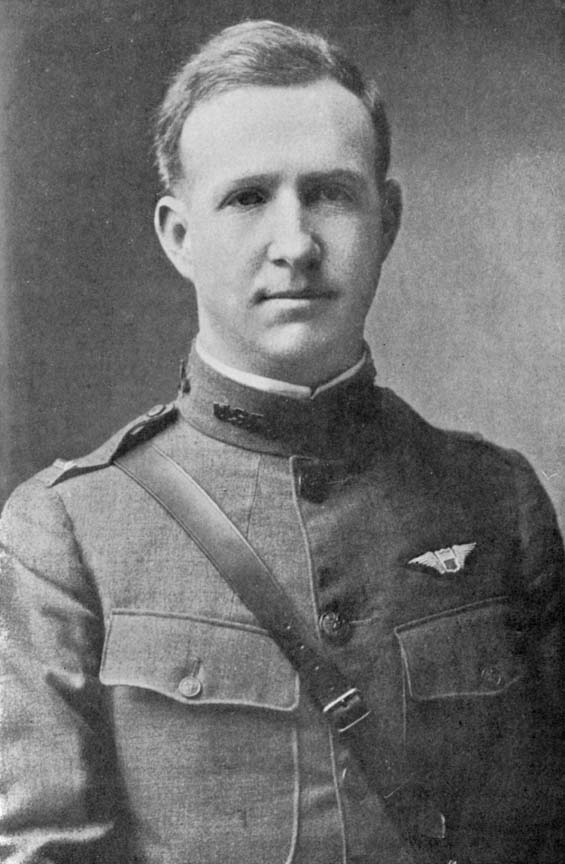
FIRST LIEUTENANT, A.S., U.S.A., NINETY-SIXTH AERO SQUADRON, FIRST DAY BOMBARDMENT GROUP
SON of Alexander and Barbara (Annand) Taylor, of Billerica, Mass.; was born at North Sullivan, Me., on April 30, 1892. He was educated at Arlington High School, and at Tufts College, graduating (cum laude) in 1916. While at college lie completed his training in the Mechanical Engineering Department, where he showed great initiative and constructive ability; was a member of the S.I.A. Fraternity, and the Glee Club. Upon graduation he was selected with three other young men from Arlington to attend the Plattsburg Training Camp, during the summer of 1916.
In Feb., 1917, he went to New York and volunteered for the Aviation Service. He enlisted April 1, 1917, and was sent to Miami, Fla., for instruction; then to Austin, Tex., June 3 to July 27. He trained at Rantoul, Ill., 10th Aero Squadron, July 27 to Sept. 16: at San Antonio, Tex., 136th Squadron, Sept. 16. to Oct. 10, and was then transferred to Fort Wood, N.Y., for a few days before sailing overseas. He was commissioned 1st Lieut. on Oct. 1, 1917.
He reached France about Nov. 5, 1917, and was stationed at the 3d Aviation Instruction Centre. Issoudun. On March 3, 1918, he continued his training and later served as an instructor at Tours, and from April 25 to July 10, attended the Bombing School at Clermont-Ferrand. From there he wrote on May 9:
What have we "Great Americans" done in our year of war? I hope to get to the front by the time this letter reaches yon, but there seem to be so many side-tracks arid the French are quite able to fly their own planes and the British are too darned good flyers to take any chances on greenhorns, --- our only hope is to borrow an old bus from somewhere. If you people can fix the heads of those individuals who have held up machine grins, so they can think straight and fix the spies who help them --- you will be doing the Allies the greatest service ... it's a shame that many of us have been in training for over a year and we have n't had a look at the Boches yet .... We want guns, bullets, and planes and we want them badly.
On July 10, Lieut. Taylor joined the 96th Aero Squadron at Amanty, where he realized his desire to get to the front, returning from his first flight over the lines with four bullet holes in his plane.
This number was increased to 36 bullet holes up to the time the aviators were forbidden to paint black crosses over the holes.
While at the front Lieut. Taylor was offered the rank of Captain, if he would go back to one of the schools as instructor, to which he replied: "They need me at the front now more than anywhere else."
On Sept. 16, he made his last flight. 6 Bréguets left Amanty, but owing to motor trouble but 4 planes crossed the lines east of St. Mihiel. On approaching Conflans, 24 enemy aircraft were sighted; these attacked them after they had dropped their bombs on their objective.
An extract describing the combat, from the report of Lieut. Charles R. Codman, follows:
Before reaching us the enemy aircraft (Fokkers and Pfalz) divided into three groups, the first circled round our rear, the second to the southwest to cut us off at the lines, the third attacked us directly. Their fire was first concentrated upon No. 2 machine (in which was Lieut. Raymond Taylor, pilot, and Lieut. Wm. A. Stuart, observer). I think the pilot was hit by the first burst, as the machine went suddenly out of control, skidded out of the formation and, according to Lieut. McDowell, my observer, went down in flames.
No. 3 machine (Lieut. Codman's) moved over to No. 2's place, with the intention of making room for No. 4, which was slightly to the left of the formation. No. 4 was attacked, however, before regaining the formation and was brought down, according to Lieut. McDowell, in flames. No. 1 machine was next attacked and the gasoline tank hit. It went down in flames. The above all took place within the space of five minutes, I should say, in the vicinity of the objective.
Lieut. Codman's machine was of a newer and faster type than the others and equipped with an armored gasoline lank which could not explode. This enabled him to land safely. Undoubtedly Lieut. Taylor and his observer were attacked by a dozen enemy planes, made a brave fight, and before being shot down themselves shot down one enemy plane, as testimony to this effect was given by several witnesses. The plane fell near the village of Mainville, some 10 miles from their objective, Conflans, and there Lieut. Taylor and his observer are buried in a field between Mainville and Norroy-le-Sec.
Married, Oct. 1, 1917, Dolly Anna E. l'Hatton.
Brother in Service --
Theodore M. Taylor, Motor Transportation Corps.
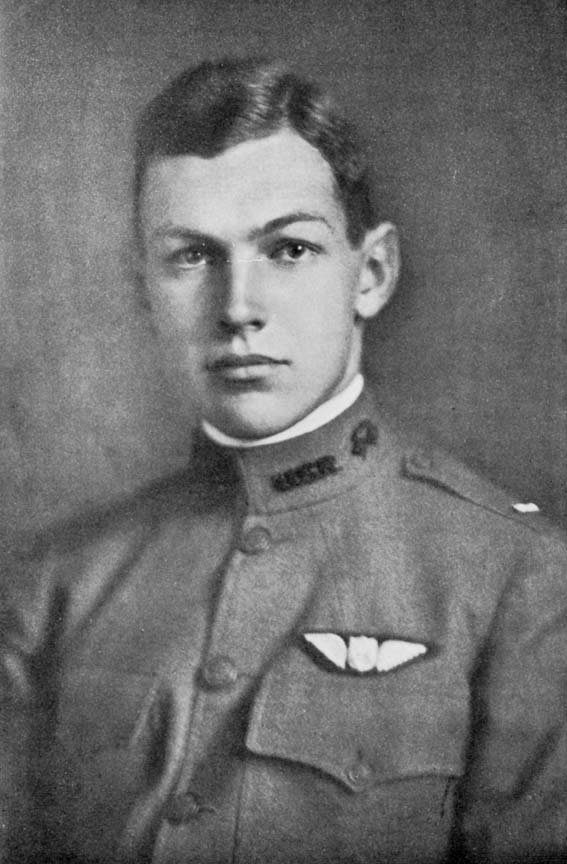
FIRST LIEUTENANT, A.S., U.S.A., TWENTIETH AERO SQUADRON, FIRST DAY BOMBARDMENT GROUP
SON of George S. and Emily (Proctor) Mandell; was born in Boston, Mass., March 20, 1897. A special slant was given his boyhood by an out-of-door environment. His days were spent in riding, hunting, breaking colts, and playing polo. He entered Harvard College from St. Mark's in 1915. His freshman vacation he devoted to the Harvard Flying Corps, going to Ithaca, N.Y., and the next spring enlisted at Newport News, March 3, 1917, though the U.S. had not then entered the war. Here he qualified as pilot July 25, and passed on to M.I.T., Cambridge, and Mineola, N.Y., where he received his commission, Nov. 5, 1917. Thence he proceeded overseas, Dec. 15.
Landing at Glasgow, he was sent to Winchester, and almost immediately to France: Issoudun, Jan. 25 to March 20; Tours, to May 21; Clermont-Ferrand, to July 11; Châteaudun, to Aug. 18; Orly, and finally on Aug. 30 was assigned to the 20th Aero Squadron and the front.
The very first flight over enemy lines which the 20th was asked to make was to take part in the St.-Mihiel drive. In driving rain and hail, weather such as none of them had ever before been permitted to venture out in, these untried men were sent to support the American attack. That they met the crisis splendidly is recorded in the citation which the Group received, for having "shown a devotion to duty and initiative which has not been exceeded by any troops on the front."
Mandell participated in 17 raids, practically all that were made by the Squadron, and for this he was cited. On the day before his last flight, he was certified for bringing down an enemy Fokker.
His last flight --- and it was the last American air raid of the war --- was on Nov. 5, Mouzun being the objective. A detailed account is given elsewhere. It was in the third fight that his "ship" shot up. An aileron was put out of commission and the engine was shot dead. The "ship," then some 12,000 feet up, sank in great spiral vrilles from which its occupants managed to right it about every 1000 feet. The last recovery was less than 100 feet from the ground. It fell within a few yards of the canal in Martincourt.
Lieut. R. W'. Fulton, of N.Y., his observer, was practically unhurt; Mandell’s leg was badly broken. The exact details of his other injuries are doubtful. The Germans marched Fulton away, and left the wounded pilot propped against his plane.
The rest of the story is gleaned from the inhabitants of the town. About 4 o'clock in the afternoon, a German captain of infantry came to the bank, took a rifle from one of the guards, and deliberately fired a number of shots into the helpless American.
It was the 17th before a detachment from the 5th Marines, in passing through the town, were notified of the dead young aviator. Reverently they buried him where he fell. Shortly afterward, the Meuse overflowed. It was thus that news came to Lieut. Petit, of the 58th Field Artillery, who had known Mandell at home as a fellow sportsman. Petit immediately arranged for a reinterment in a little country churchyard on the hill nearly opposite. Later, the body was again transferred to the little U.S. military cemetery between Beaumont and Letanne.
Citations
| (General Orders, No. 27) |
November 17, 1918 |
First Lieutenants S. P. Mandell, John T. Willis, Jr., and Gardner II. Fiske and Second Lieutenant L. P. Koepfgen, 20th Aero Squadron, First Day Bombardment Group are hereby credited with the distinction, in combat, of an enemy Fokker, in the region southwest of Montmédy at 12,000 feet altitude, on November 4, 1918 at 13.25 o'clock.
By order of Col. MILLING
U. C. SHERMAN
Lieut. Col. A.S., U.S.A., Chief of Staff
| (General Orders, No. 29) |
November 21, 1918 |
Extract The Army Air Service Commander First Army cites the following officers and men for exceptional devotion to duty.
First Lieutenant S. P. Mandell, A.S., U.S.A., as Pilot of the 20th Aero Squadron. First Day Bombardment Group, participated in every raid made by the squadron in the Argonne-Meuse sector during October. 1918.
By order of Col. MILLING
U. C. SHERMAN
Lieut. Col. A.S., U.S.A., Chief of Staff
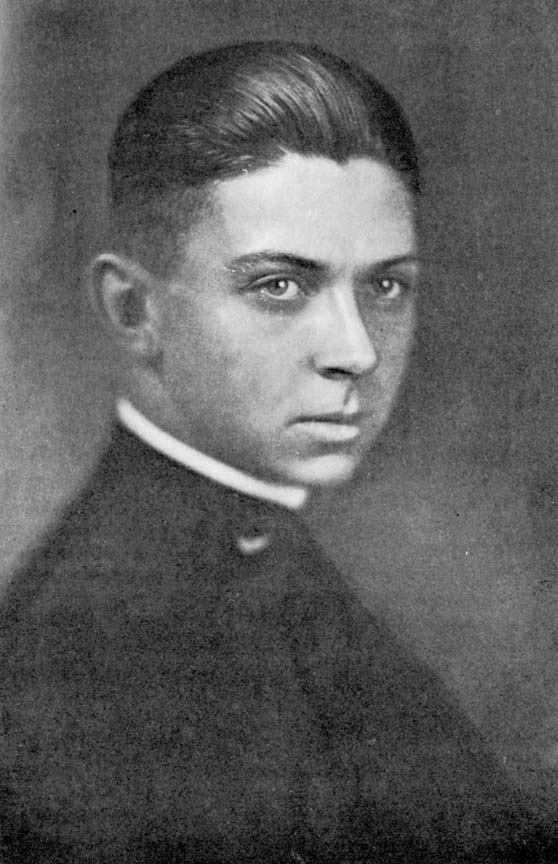
FIRST LIEUTENANT, A.S., U.S.A., NINETY-SIXTH AERO SQUADRON, FIRST DAY BOMBARDMENT GROUP
SON of Clyde Longyear and Caroline Eunice Warner, of Swampscott, Mass., was born in Rochester, N.Y., Feb. 25, 1895. He graduated from the English High School in 1914, and attended M.I.T., class of 1918, three years; leaving to enlist at the end of his junior year, July 16, 1917, at Cambridge.
He received ground school training at M.I.T., graduating in Oct., 1917, and was sent immediately with others of his class overseas, sailing Nov. 2, 1917. He trained as a bomber at Clermont-Ferrand, France, and at the Aerial Gunnery School, Cazaux, France. Finishing his training in April, 1918, he was at once ordered to the front, where he was commissioned 1st Lieut., May 18, 1918, U.S., A.S., and was later attached to the 96th Aero Squadron, 1st American Bombardment Group.
Lieut. Warner participated in frequent bombing raids, and did notable service until Sept. 4, 1918, when he was wounded in action very severely. For his bravery at this time he was recommended for advanced flying rating by the War Department, on the date of Sept. 4, 1918, and was awarded the Distinguished Service Cross on Jan. 18, 1919. The ceremony was performed on the steps of the U.S. Army General Hospital, No. 10, Parker Hill Avenue, Roxbury, Mass., by Colonel Joseph Taylor Clarke, Commandant, while the medical department of that institution, 600 men and 50 officers, stood at attention.
Citation D.S.C. While on a bombing expedition with other planes of his squadron, he engaged in a running fight over hostile territory with a superior number of enemy battle planes from Friauville to Lamorville, France. During the combat he was severely wounded, his right thigh being shattered. In spite of his injuries he continued to operate his machine guns until the hostile formation had been driven off and one plane shot down burning.
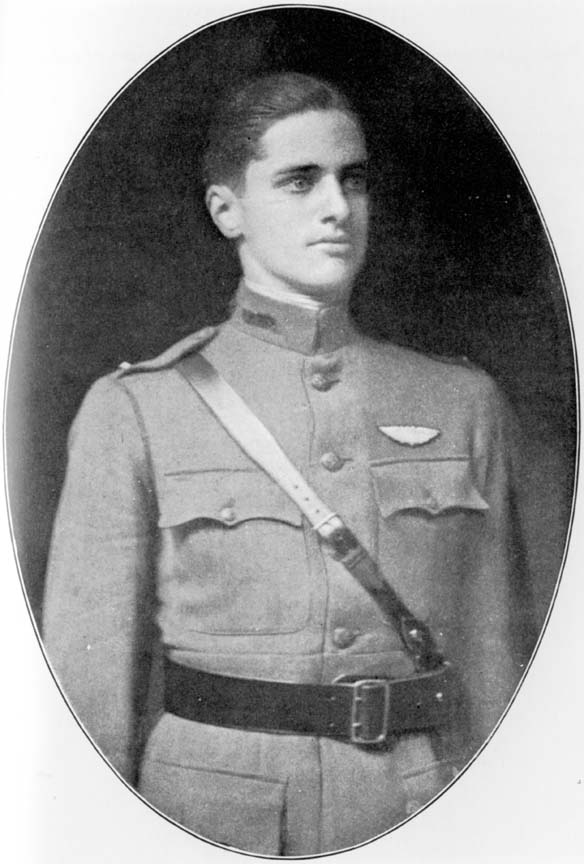
FIRST LIEUTENANT, A.S., U.S.A., NINETY-SIXTH AERO SQUADRON, FIRST DAY BOMBARDMENT GROUP
SON of William and Lila Courtney (Wetmore) Stanley, of Great Barrington, Mass.; was born Jan. 14, 1897, at Pittsfield, Mass.; educated at the Berkshire School, Sheffield, Conn., and at Yale College, where he spent two years.
He enlisted on June 10, 1917, at New York. He graduated from the Cornell Ground School, in the class of Oct. 13, 1917, and sailed for France as a cadet, Oct. 1, 1917. He was employed at first in building the 3d Aviation Instruction Centre at Issoudun. About March 1 he was assigned to St.-Maixent, and April 15 to his first flying school at Tours He received his brevet and his commission as 1st Lieut. on June 7, 1918. In Sept. he was sent to Issoudun, for further training, and later transferred to Clermont-Ferrand. He finished the course in bombing Oct. 1, 1918 and then joined the 96th Aero Squadron, 1st Day Bombardment Group.
On Oct. 29, with his observer, Lieut. Folger, he was officially credited with being wounded in action by enemy aircraft, and with the distinction in combat of a Fokker. Though pursued by enemy machines, they succeeded in reaching their own lines just outside Verdun. Lieut. Stanley returned to the U.S., Feb.2 0, 1919.
Brothers in Service --
Clarence Stanley Ensign, U.S. Naval Aviation.
Leonard Stanley 1st Lieut., AS., U.S.A.,
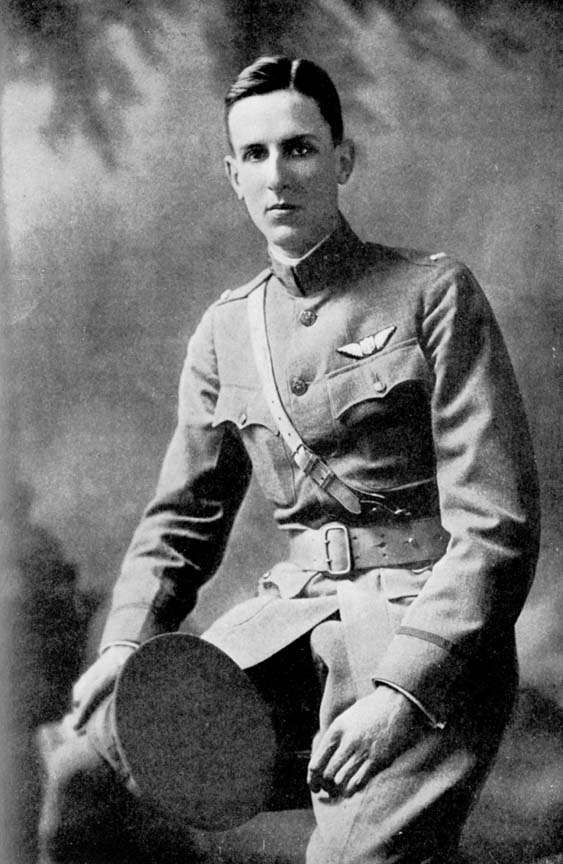
FIRST LIEUTENANT, A.S., U.S.A., NINETY-SIXTH AERO SQUADRON, FIRST DAY BOMBARDMENT GROUP
SON of Edward R. and Alice (Eastman) Trowbridge; was born at Providence, R.I., June 9, 1895. He was educated at Hotchkiss School, Lakeville, Conn., 1913; and Sheffield Scientific School, Yale, Ph.B. 1917.
He enlisted on April 18, 1917, at Mineola, N.Y., with rank of Sergeant, A.S., S.E.R.C. He studied at Mineola, qualifying as R.M.A. on June 8, 1917. On July 10 he was commissioned 1st Lieut. From July 15 to Aug. 20 lie was stationed with the 8th Aero Squadron at Mt. Clemens, Mich.; from Aug. 22 to Sept. 19 with the 44th Aero Squadron at Dayton, O., as supply officer. He was in command of the 13th Aero Squadron from Sept. 20, 1917, to Jan. 26, 1918, during which time the Squadron was moved from Dayton to Garden City, N.Y.; was outfitted, and sailed for France on Dec. 4, 1917. Lieut. Trowbridge was in command of the 15th Foreign Detachment of "Flying Cadets" for one month at St.-Maixent, France. He then received advanced training at the 7th Aviation Instruction Centre, Clermont-Ferrand; and was Instructor there from May to Nov. He was attached to the 96th Aero Squadron in the Argonne-Meuse sector in Nov., 1918. Lieut. Trowbridge was honorably discharged at the Air Dépôt, Garden City, N.Y., on Feb. 15, 1919.
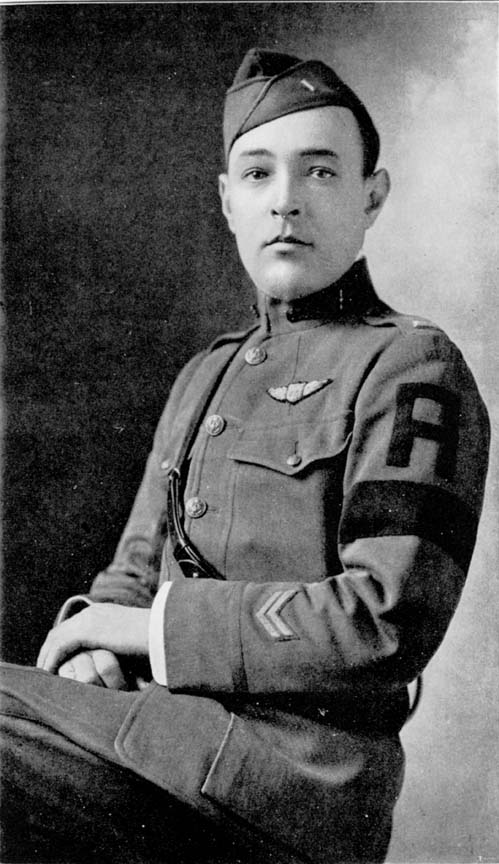
FIRST LIEUTENANT, A.S., U.S.A., NINETY-SIXTH AERO SQUADRON, FIRST DAY BOMBARDMENT GROUP
SON of Walter G. and Nellie F. Cowles, of Hartford, Conn.: was born at Abilene, Kan., on Oct. 28, 1889. He was educated at the Hartford public schools; Conn. Literary Institute, Sheffield, Conn.; Allen School, West Newton, Mass.; and U.S. Naval Academy, Annapolis, Md.
He enlisted at Plattsburg, N.Y., on May 15, 1917. He trained at Plattsburg, at M.I.T. Ground School, at the flying fields in Mineola, N.Y., and at Kelly Field, Tex. He was commissioned 1st Lieut. in Sept., 1917, and sailed overseas in command of the 117th Aero Squadron on Dec. 16, 1917. He was stationed at Issoudun, where he was in command of one of the fields, and at Clermont-Ferrand. He was assigned to the 96th Aero Squadron, and participated in several bombing raids over and around Verdun and St.-Mihiel. He was a trained and experienced bomber; and while awaiting planes for his especial work he did much ferrying of new planes from Paris to the battle-lines. He developed considerable aptitude for cross-country work in strange places, and was ordered to take a special course in aerial navigation in England, but owing to the Armistice the order was revoked. He was discharged at his own request on Feb. 1, 1919.
Brother in Service ---
Donald B. Cowles, 1st Lieut., U.S. Marine Corps, Aviation Force: died in Service.
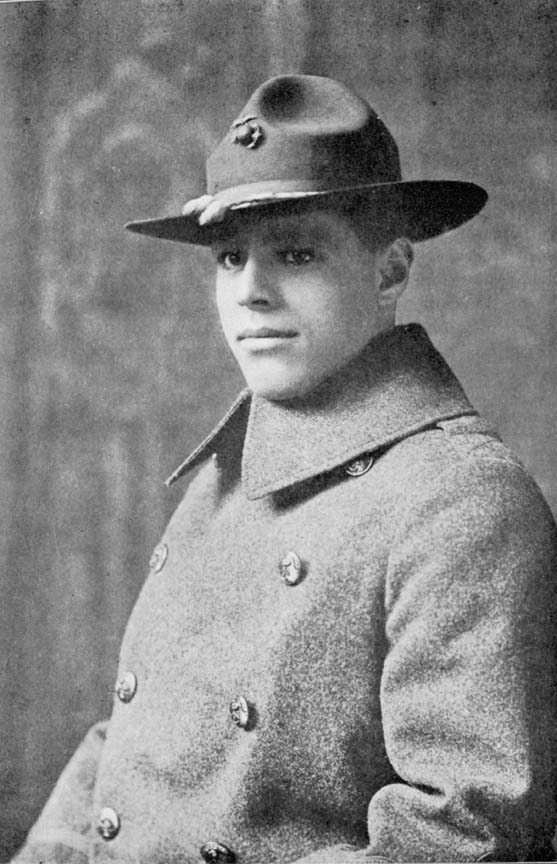
SON of Walter G. and Nellie F. Cowles; was born at Hartford, Conn., July 26, 1895. He was educated in the public schools of Hartford; at Holderness School, Plymouth, N.H.; and at N.Y. Military School, where he graduated with military honors.
He enlisted on July 5, 1917, at Winthrop, Md.; he was attached to the Winthrop Rifle Range, and trained at Quantico, Md., Officers' School. He was then chosen as one of the First Aviation Force of the Marine Corps, and trained as an aviator at Garden City, N.Y.; Philadelphia Navy Yard; and Miami, Fla., where he became an instructor in advanced flying and acrobacy. He was commissioned 2d Lieut. on June 22, 1917, and 1st Lieut. on July 1, 1918. He sailed overseas Sept. 16, 1918. Two days after landing at Liverpool he died in that city, of pneumonia, on Oct. 1, 1918; he was buried at Hartford, Conn.
Brother in Service
Francis W. Cowles, 1st Lieut., AS., U.S.A., 96th Aero Squadron.

SECOND LIEUTENANT, ONE HUNDRED SIXTY-SIXTH AERO SQUADRON, FIRST DAY BOMBARDMENT GROUP
SON of Dr. Charles L. and Mary J. (Brayton) Nichols; was born in Worcester, Mass., on Dec. 29, 1892. He attended a private school in Worcester, spent two years in school at Lauzanne, Switzerland, and then fitted at Pomfret School, for Harvard College, graduating in 1915. While in college he enlisted in Battery A, M.V.M., and in 1916 went as a private in this battery, 1st Mass. F.A., N.G., to the Mexican Border, being stationed at Fort Bliss, El Paso, Tex., from June 10 to Oct. 17. On his return he entered Tufts Medical School, where he studied until the U.S. declared war on Germany. He then went to the Plattsburg Officers' Training Camp. He there elected Aviation, and in Aug. took a special course at Newport News, Va., at the Curtiss Aviation School, receiving a commission as Pilot. From Oct. to Dec. he attended the Ground School at M.I.T. and was then sent to Ellington Field, Houston, Tex., where he remained until June, 1918. There he was commissioned 2d Lieut. in March, 1918. From July 11 to Sept. he was at the finishing school at Fort Worth, Tex., and then went overseas to France. He stayed at the Bombing School at Clermont-Ferrand for five weeks and was then assigned to the 166th Aero Squadron at the front. After the signing of the Armistice the Squadron was moved forward with the Army of Occupation, being first assigned quarters at Joppécourt, then at Luxembourg, and later at Trèves, Germany, where it remained until its return to the U.S. in April, 1919. Their time was spent in single flight, in practice formation, and in aerial photography, in order to he prepared for further action if the peace negotiations failed. During a regular formation flight, on April 2, an air collision occurred involving four of the machines, three of which fell to the ground, three men being killed, and one drowned in the Moselle River. Lieut. Nichols was killed in this accident at Kordel, a few miles from Trèves, and was buried at the Stadt Cemetery at Trêves with his companions.
Brother in Service: ---
Charles L. Nichols. Jr., private, 34th Machine Gun Squadron, 76th Division, Camp Devens.

FIRST LIEUTENANT, A.S.A., U.S.A., NINETY-SIXTH AERO SQUADRON, FIRST DAY BOMBARDMENT GROUP
SON of Charles P. and Gertrude (Russell) Briggs of Lexington, Mass.; was born in Lexington on Jan. 26, 1896. He was educated at the Lexington High School, and at Harvard College, class of 1918. He attended the Officers' Training Camp at Plattsburg, in 1916, and belonged to the Harvard R.O.T.C.
He enlisted in the Air Service at Cambridge, Mass., on July 7, 1917, and was assigned to the Ground School at M.I.T., where he remained from Aug. 13 to Oct. 6, 1917. He was then ordered to Mineola, N.Y., where he was stationed from Oct. 14, to Oct. 27. He proceeded overseas, arriving in Liverpool on Nov. 10.
He continued his training in France: at Issoudun from Nov. 17, 1917, to Jan. 8, 1918; at the Aerial Gunnery School, Cazaux, from Jan. 12 to Feb. 7; at Issoudun, from March 6 to April 1; at Tours (preliminary training) from April 2 to July 3; at Issoudun (secondary training) from July 15 to Sept. 6; and at Clermont-Ferrand (final training as bomber) from Sept. 7 to Oct. 1. He was assigned to the 96th Aero Squadron, 1st Day Bombardment Group, at Maulan on Oct. 9, 1918. With his observer, Howard C. Binley, he bombed Villers-devant-Dun, Bayonville, Brequency, Damvillers, Tailly, and Stenay. On three of these trips his plane was struck. His total time spent in bombing was 760 minutes.
He was commissioned 1st Lieut. on May 13, 1918. He was discharged from the Air Service at the Air Service Dépôt, Garden City, N.Y., on Feb. 3, 1919.
15. First Lieutenant H. Briggs, W. H. Moreland, and H. C. Binley and Second Lieutenant W. R. Maynard, 96th Aero Squadron, 1st Day Bombardment Group, are hereby credited with the destruction in combat of an enemy Fokker in the region between Verdun and Damvillers, at 3600 metres altitude, on October 29th, 1918. at 1.20 o'clock.
Brother in Service -
Russell Briggs, Cadet, A.S.A., U.S.A.

SON of Charles P. and Gertrude (Russell) Briggs, of Lexington, Mass.; was born in Lexington on Aug. 14, 1894. He was educated at the Berkshire School, from which he graduated in 1914, and at Harvard College, graduating in 1918. He belonged to the Harvard R.O.T.C. He enlisted in Boston on Jan. 5, 1918, and was sent to Kelly Field, San Antonio, Tex. lie was honorably discharged from the Service at Kelly Field, on Nov. 9, 1918.
Brother in Service
Henry Briggs, 1st Lieut., A.S.A., U.S.A., 96th Aero Squadron.
FIRST LIEUTENANT, A.S., U.S.A., NINETY-SIXTH AERO SQUADRON, FIRST DAY BOMBARDMENT GROUP
SON of Mr. and Mrs. James B. Buchanan, of North Adams, Mass.; was born at Lowell, Mass., Aug. 12, 1896. He was educated at the Lowell High School, and at the Mass. Institute of Technology. He was a member of the Lowell High track team, and of the 'Varsity track team at M.I.T. At the end of his junior year, he enlisted at Boston, May 18, 1917, and entered the M.I.T. Ground School, where he completed the course, and was then sent to Mineola, N.Y., for further training. He was ordered overseas to France, and trained at Issoudun, and at Clermont-Ferrand. He was commissioned 1st Lieut. Nov. 2, 1917. He was first attached to the 90th Squadron and then to the 96th. Lieut. Buchanan was sent to Italy, and later returned to Issoudun, where he was just completing chasse training when the Armistice was signed. He returned to the U.S. and was honorably discharged at Garden City, N.Y., March 21, 1919.