AFTER the arrival of the 95th Squadron at the Gengoult airdrome, the 1st Pursuit Group was officially formed on May 5, 1918. The Group was composed of the 94th and 95th Squadrons. Although these Squadrons had been on the front since the middle of Feb. they had not operated over the front to any extent because the pilots of the 94th, although they had planes, had no machine guns, and the 95th with machine guns had no planes.
On May 31, 1918, the 27th and 147th Squadrons joined the Group, thus bringing it up to full strength. At that time the Group was operating with the 8th French Army at Toul, and up to June 25 had shot down 58 Boche planes, 27 of which were confirmed. Toward the end of June, the Group moved to Touquin, in the Château-Thierry sector, and started operations there. The preponderance of German aviation on that sector necessarily caused very heavy losses, the Group losing 36 pilots in a period of about six weeks, although credited with 38 Hun machines destroyed.
During all this time the Group was attached to the 6th French Army and did not operate with the American Army until the St. -Mihiel offensive in Sept.
On Sept. 1, 1918, the Group moved to Erize-la-Petite, where it stayed until the Armistice. At Dumey, the St.-Mihiel attack, "low flying on the offensive" was the order. This was also done through the Argonne-Meuse attack, and at no time did any pilot in the Group fly at more than 600 metres, except as a voluntary patrol. Ground and balloon "strafing," and attacks on enemy réglages and observation machines constituted the day's work.
On Oct. 7, 1918, the 185th, a night-flying Chasse Squadron, joined the Group. From Sept. 12 to Oct. 12 the Group shot down 104 planes and balloons officially; an average of almost one victory for each Squadron.
At the Armistice the Group was credited with 285 victories, 201 of which were official, and had suffered 72 casualties. To show the calibre of the 1st Pursuit Group, one needs only mention Capt. Edward Rickenbacker, Maj. Raoul Lufbery, Capt. James Norman Hall, and Capt. David Peterson.
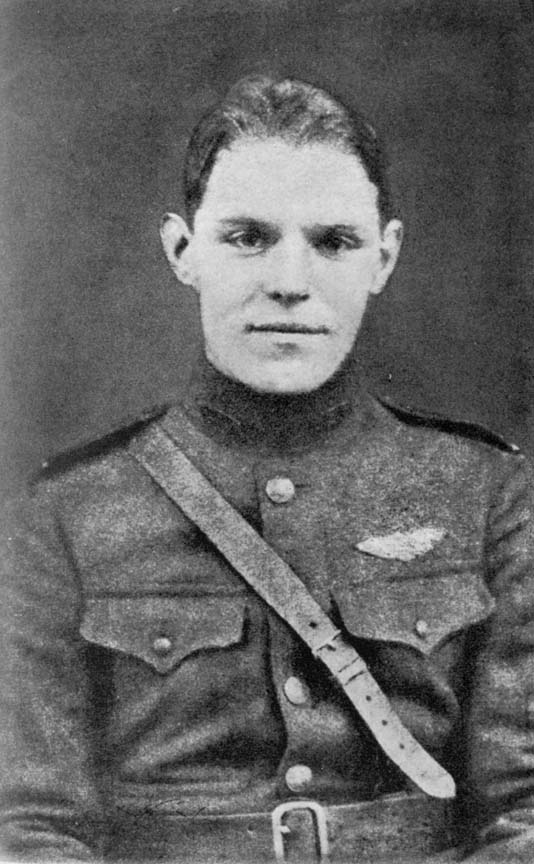
SON of Edward E. and Mabel (Fuller) Blodgett; was born in Brookline, Mass., June 27, 1897. He attended the Newton High School, and Lawrenceville, N.J., where he was prominent in athletics. He entered Williams College in the class of 1919, and during his freshman year played on his class football team and was captain of the hockey team; the following year was on the 'Varsity football squad. He was an admirable musician and played on several instruments; he was a member of the Sigma Phi Fraternity.
In 1916 he attended the Officers' Training Camp at Plattsburg, and when war was declared he volunteered for six months' ambulance service abroad, leaving college in his sophomore year. He sailed for France May 5, 1917, and when on arrival he found the ambulance service overcrowded, he signed for six months' duty as a munitions truck-driver, during which time he won a commendation from the French Commander, for "courage and coolness displayed under violent bombardment July 28, 1917."
Before the time of his camion service had expired, he was transferred to Aviation, training at Tours, Issoudun, and graduating from the School of Acrobatics. He was an able and enthusiastic flyer, and it was believed he would surely become an ace. When the 95th Pursuit Squadron was formed, he was assigned to it and accompanied it to the Toul sector; and about March 1 he was one of a famous trio that went over the lines patrolling without guns between Epernay and Reims at 5500 metres.
As soon as the guns arrived he was eager to try them, and on May 9 he wrote:
At last we've got guns on our planes. You know we were at the front for six weeks without them; my first trip over the lines with a gun, I got in a fight with two German biplanes. There were four of us (all in monoplane fighters) and we split up and two attacked each plane.
There was a Major with me and first thing his gun jammed. That put it up to me; so I went in hell bent for election. I manoeuvred as much as possible so his machine-gunner could n't shoot at me, and let him have it. I shot two hundred and sixty rounds into him. I followed him all the way to his airdrome, killing his observer, and I think starting a fire, as he let out clouds of smoke. My comrades were all split up and the last time they saw me I was following the German right home. They thought surely the anti-aircraft would get me, as I was very low, but they did n't even shoot at me. I ran out of gas just after re-crossing the lines into France and they thought surely I had been brought down, until I telephoned in. It was a pretty exciting game.
Most of our work is far back of the German lines, as they won't come to meet us usually. In the last two days, however, there have been two new German pursuit squadrons in our sector, supported by another squadron of Von Richthofen's circus, or all aces. They have brought down two of our men, one of them James Norman Hall, author of "Kitchener's Mob," and whom I saw shot down last summer while he was with the French on his second trip over the lines. This time in German territory; so we don't know whether he survived or not. The other fell in flames.
We have caused so much damage here that they are out for revenge, and there's going to be hell breaking loose. It's a great game and you have to keep on the watch every second. Even when shooting one man, you have to watch another does n't drop on you. But, Dad, we're giving them hell. We're winning. We're showing fight and ability and we're fighting cleanly and cleverly. The cost is awful, but it's far worse for them. This sector is going to see some terrible casualties, but we've got to do it.
If I go out, you can know that I went game; that before I went I brought one down; that we're beginning to get up against the best, but that we make him pay heavily for his victory.
On May 17 Blodgett and Lieut. Sewall went out in the morning to protect an observation plane; during an attack by hostile pursuit planes, Blodgett engaged one German and drove him down behind the enemy lines. When the two pursuit planes started back with the observation plane, Blodgett was flying very high. When on the return of the other planes he failed to appear, it was supposed that he had gone off by himself to look for another German; when he finally appeared, his flying in coming down attracted some attention, as he seemed to be trying to land some distance from the airdrome. Suddenly his machine crashed to the ground, and though help arrived promptly the fall had proved fatal. There were two bullet holes through the bottom of the machine, and the conclusion was that Blodgett had been in a fight, was wounded in the head, but had been able to get almost back when he lost control of his machine.
He was buried with full military honors, at Sebastopol, France, and lies next to Major Lufbery, who was killed the following day.
He was known as a daring and efficient flyer and acted as instructor while still a cadet. He received his commission as 1st Lieut. Dec., 1917, and was leader of the first American patrol to patrol the front in aviation; he was, in the absence of his ranking officer, Flight Commander, and he drove a fast fighting monoplace, capable of making 140 miles an hour.
Major Davenport Johnson, of the 95th Aero Squadron wrote of Blodgett:
We had become very fond of Dick and deeply feel his loss, and the one idea is to avenge him, which we have done to date, by bringing down four enemy planes (official), and six others which were too far in the German lines for the infantry to see from the ground. His memory is always fresh in our minds, as he was the first of our number to give all for his country.
Lieut. Alden Bradford Sherry, who had been with Blodgett both in training and in the Ambulance Service, wrote:
His kindness and cheerfulness towards others, his sunny nature and his simplicity of character, all endeared him to us. Out here on the front it was his ability as a flyer, his quick perception of his duty, and his great zeal in carrying out his work, without any thought of the risk involved, which made our admiration for him almost as great as our affection. He was flying all the time and was almost unhappy when he was not in the air. His impetuosity and his enthusiasm had a most marked influence on his entire squadron, which was most apparent to my squadron which was working with his .... The first day he flew over the lines he attacked a two-man German plane and brought it down single handed. The combat took place so far behind the lines that none of the French and American observers saw the German fall, or he would have received official recognition of his victory.
Le Chef d'Escadron, Directeur des Services Automobiles aux Armées, adresse ses félicitations au Personnel du 3e Peloton de la Section-Groupe Américaine Génin, placé sous les orders du Chef de Peloton H. E. Cox, pour le sang-froid et le courage dont il a fait preuve dans la nuit du 28 juillet 1917, au cours d'un déchargement dans un dépôt soumis a un violent bombardement.
Signé: DOUMENC
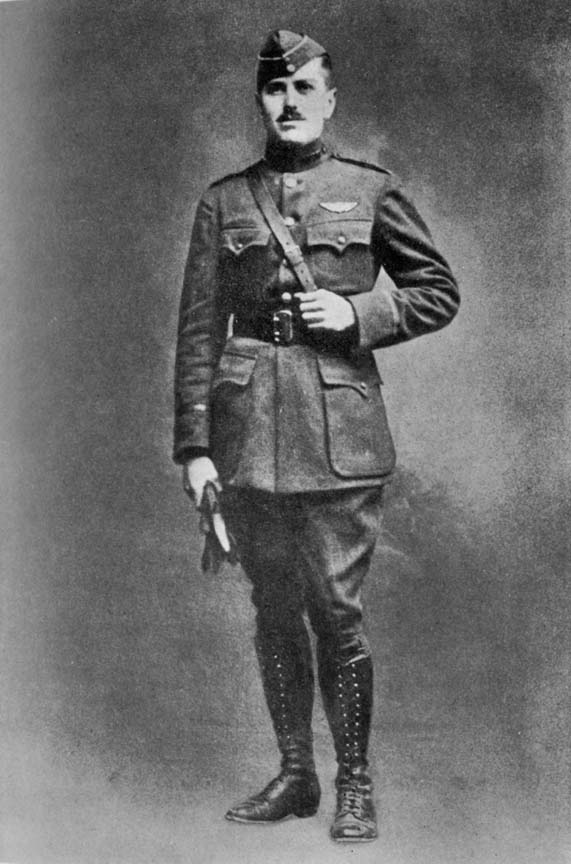
FIRST LIEUTENANT, A.S.A., U.S.A., NINETY-FIFTH AERO SQUADRON, FIRST PURSUIT GROUP
SON of William D. and Mary L. (Sumner) Sewall of Bath, Me.; was born in Bath, June 17, 1897. He fitted for college at the Westminster School, Simsbury, Conn., and entered Harvard College with the class of 1920. He attended the Officers' Training Camp at Plattsburg, N.Y., in July, 1916. In the second half of his freshman year he left college to sail with the American Ambulance Field Service, with which he served in France from Feb. 17 to Aug. 20, 1917.
He enlisted in the American Air Service in Paris on Aug. 23, 1917, and was assigned to Tours for preliminary training with the 3d Platoon on Sept. 2. He was transferred to the 3d Aviation Instruction Centre at Issoudun. He subsequently took a course in aerial gunnery at Cazaux, and was commissioned 1st Lieut. on Dec. 8, 1917. In Feb., 1918, the 95th Pursuit Squadron was formed at Issoudun, and Lieut. Sewall was assigned to it. On March 1, with Lieuts. Blodgett and Wooley, he went over the line on the first patrol without machine guns at 5500 metres, in a type 28-metre Nieuport between Epernay and Reims. Later, the Squadron was sent to Château-Thierry, where Lieut. Sewall succeeded in bringing down several Boches. In Sept. the 95th Squadron moved to Rembercourt, took part in the St.-Mihiel drive, and continued on through the Argonne offensive until the Armistice was signed. During these two drives, Lieut. Sewall was officially credited with 7 Boches, and became an Ace in Oct., 1918. He was recommended for promotion at the close of the war. The French Government awarded to him the Legion of Honor, and the Croix de Guerre with a palm. From his own Government he received the Distinguished Service Cross with one oak leaf. He was made a member of the Order of Leopold, by King Albert I of Belgium. In Jan., 1919, the Aero Club of America awarded him its medal. He was honorably discharged at Garden City, N.Y., on Feb. 20, 1919.
On Nov. 27, 1918, Lieut. Sewall received this letter from the Chief of the Air Service, A.E.F.:
The exceptionally meritorious service which you have rendered with the American Expeditionary Forces resulted in a recommendation for promotion in grade submitted by your superior officers. The Chief of Air Service approved the recommendation, but unfortunately instructions from the War Department discontinued all promotions of officers on the 11th inst. making it impossible to confer the reward which you have so well earned.
While communicating the above information, the undersigned takes this opportunity of thanking you personally for the assistance contributed toward the American air successes in the great war now drawing to a close.
(Signed) MASON M. PATRICK
Major General, N.A.
Chief of Air Service
Order of the Crown On Feb. 12, 1919, Lieut. Sewall received from the Chief of the Belgian Mission in France, the letter which follows:
My dear Lieutenant:
The KING, Albert I of Belgium, has given me instructions to inform you that He has bestowed upon you the
Ordre de la Couronne with the rank of "Chevalier."
His Majesty desires that this honorary distinction he conveyed to you as a token of His esteem and in recognition of the valuable services you have rendered the common cause.
The medal will be handed over to you by the Adjutant General.
Please accept my most cordial greetings.
I am, my dear Lieutenant,
Very truly yours (Signed) J. M. CINAUT
Chief of the Belgian Mission
For repeated acts of extraordinary heroism in action near Menil-la-Tour, France, June 3, 1918, and near Landres St-Georges, France, Oct. 13, 1918. On June 3 Lieut. Sewall with two other pilots attacked a formation of six hostile planes. Though his comrades were forced to withdraw because of jammed guns, he continued to fight for fifteen minutes and succeeded in sending one of his adversaries down in flames. On Oct. 18. while on voluntary patrol this officer saw an American observation plane being attacked by a German machine (Fokker type). accompanied by eight other hostile planes. He immediately attacked and destroyed the Fokker and was in turn attacked by the other eight planes. By skilful manœuvring he evaded them and escorted the observation plane back to our lines.
(Signed) PERSHING
An oak leaf to be worn with the D.S.C. was awarded to Lieut. Sewall on Dec. 8, 1918.
For the following act of extraordinary heroism in action near Rocourt, France, July 7, 1918, Lieutenant Sumner Sewall is awarded an oak leaf to be worn with the Distinguished Service Cross awarded him 10 Dec. 1918. Lieutenant Sewall fearlessly attacked a formation of five enemy planes (Type K Fokker) and separating one from the group, pursued it far behind the enemy's lines and sent it down in crash, following it within 30 metres of the ground in spite of severe fire from a machine gun, rifles, and antiaircraft guns, bullets from which passed through his clothing.
(Signed) PERSHING
Pilote ardent en combat, ayant une haute conception de son devoir, le 3 juin, a attaqué, avec sa patrouille, une formation ennemie de 6 avions, a poursuivi l'un d'entre eux jusqu'à 200 métres du sol et l'a abattu. Au cours des opérations Marne-Aisne, s'est dépensé sans compter, descendant un avion ennemi en flammes et forçant un deuxième adversaire à atterrir.
Au Grand Quartier Général, le 30 novembre 1918.
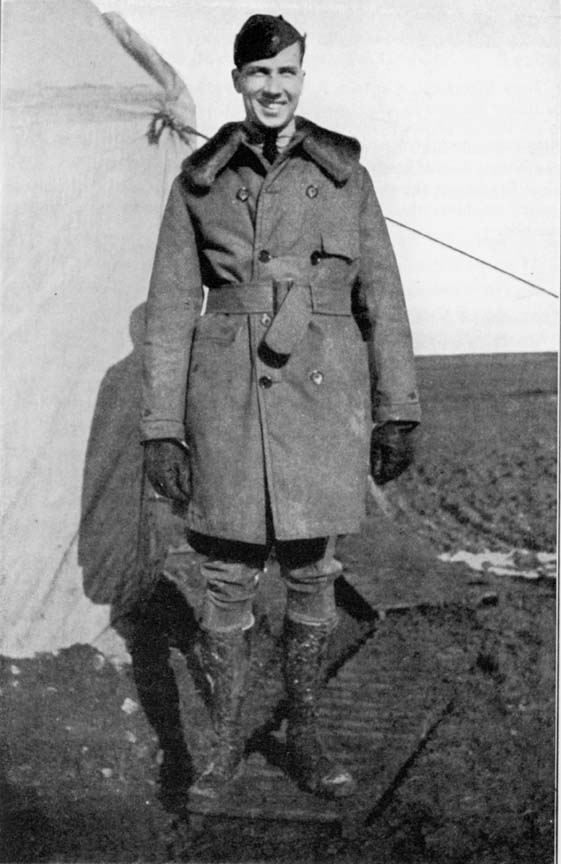
SON of Walter J. and Eva B. (Sherlock) Mitchell; was born at Cincinnati, Ohio, Oct. 15, 1895. He attended the Fay School, Southboro, Mass., and St. Mark's School, Concord, N.H., and graduated from Harvard College.
He enlisted (from Manchester, Mass.) at Key West, Fla., on March 1, 1917; was trained at Miami, Fla., Essington, Pa., and at M.I.T. He was commissioned 1st Lieut. June 7, 1917, and went overseas Sept. 1, 1917, continuing his training at Issoudun and Cazaux, France, and joined the 95th Squadron.
At Toul he was credited with helping members of his squadron to bring down two Boches, and at Château-Thierry he did excellent work in patrolling and strafing infantry formations. During a "dog fight" with Richthofen's circus, he divided the honors with Lieut. Heinrichs in bringing down one of the circus.
The following are official confirmations of several combats in which he was engaged:
I, Captain David McK. Peterson, AS., Sig. R.C., certify that First Lieutenant John Mitchell, of the 95th Squadron, has been engaged in the following mentioned combats with the enemy, the results of which have been officially confirmed by the French and American military authorities:
(a) On May 7, 1918. Lieutenant Mitchell encountered three enemy airplanes over Apremont. He dove on the last airplane in the formation, and after firing a burst of forty shots, it crashed to the ground. (Confirmed in Operations Report No. 18, Hdqrs. 1st Pursuit Group, June 16, 1918.)
(b) On May 30. 1918, Lieutenant Mitchell at 8.15 A.M. encountered two enemy airplanes in the vicinity of Apremont, who turned and headed toward the lines. He caught up with the rear German airplane, and fired 185 rounds from above. The German dove into a nose-dive and crashed to the ground in flames. (Confirmed in Operations Report No. 18, Hdqrs. 1st Pursuit Group. June 16, 1918.)
(c) On July 5, 1918, Lieutenant Mitchell, near Priez, encountered six enemy Albatross monoplanes. He attacked the highest one and engaged in a running fight, lasting twenty minutes, which terminated by the German bursting into flames. (Confirmed in Operations Report. Hdqrs. 1st Pursuit Group, Order No. 59.)
Attest: DAVID McK. PETERSON
On Aug. 1, 1918, Lieut. Mitchell was commissioned Captain, and on Oct. 13, 1918, he was placed in command of the 95th Squadron.
Citations D.S.C. (awarded Dec. 31, 1919) JOHN MITCHELL, Captain, Air Service, 95th Aero Squadron. For extraordinary heroism in action near Beaumont, France, May 27, 1918. Seeing three enemy planes flying cast over Apremont, at 2500 metres, Captain Mitchell unhesitatingly attacked the three machines, which were in close formation, despite the fact that a fourth, hovering above, threatened to close in and join the enemy formation. He succeeded in shooting down the enemy machine, which proved to he a biplane returning from an important mission.
(Signed) PERSHING
Croix de Guerre, with Palm (awarded Nov. 29, 1918) Lieutenant-Pilote JOHN MITCHELL, à l'Escadrille américaine, 95:
Excellent pilote de chasse, possédant les plus belles qualités militaires. Le 27 mai 1918 a attaqué et descendu un biplane ennemi dans ses lignes. A attaqué, le même jour, une formation ennemie et a forcé un appareil à atterrir. Le 5 juillet a attaqué six monoplanes et en a abattu un en flammes.
Signé: PÉTAIN

SON of James and Laura (King) Knowles, of Cambridge, Mass.; was born at Cincinnati, Ohio, Dec. 27, 1896. He was educated at the Peabody School, Cambridge, and at Phillips Andover Academy. He entered Harvard College in the class of 1918. He was a member of the 'Varsity baseball team for two years and won several prizes on both school and college track teams.
He was examined and accepted for aviation at Washington on April 7, 1917, and trained at the Ground School, Ohio State University, Columbus, Ohio, till July, 1917. He was then ordered overseas, sailing July 23. He had his preliminary flying training at Tours, France, being among the first American Army Aviators to be trained in France. He was sent to the 3d Aviation Instruction Centre, Issoudun, France, received his advanced training there, and was commissioned 1st Lieut. Nov. 20. After three months' work he was ordered to Cazaux, where he rapidly completed the course in aerial gunnery. Later he was sent to the front and attached to the 95th Aero Squadron, 1st Pursuit Group, with which he remained until the Armistice, seeing active service in the Toul, Verdun, Château-Thierry, St.-Mihiel, and Argonne offensives. He was awarded the Croix de Guerre with one palm, the Distinguished Service Cross with one oak leaf, the Aero Club of America Medal, and was officially credited with five Boches destroyed in combat.
Following Jan., 1919, Lieut. Knowles was stationed at Tours, France, in the office of the Assistant Chief of Staff of the Air Service, working on Historical Records Data and the Official Government Records of the Air Service. He returned to the United States, March 13, 1919.
For extraordinary heroism in action near Montfaucon, France, 9 October, 1918. While on a voluntary patrol over the enemy's lines, Lieutenant Knowles observed three enemy Fokkers attacking one of our balloons. He unhesitatingly attacked, and in a bitter combat that lasted for five minutes, he succeeded in bringing one of the enemy planes down in flames and driving off the others.
(Signed) T.
D. MILLING.
Colonel, A.S., U.S.A.
[Translation] Lieut. Pilot James Knowles, Jr., of the American 95th Squadron. Excellent chasse pilot, very aggressive, who never loses opportunity to engage in combat. On July 25, 1918, he brought down an enemy biplane protected by six monoplanes.
(Signed) PÉTAIN.
Marshal of France
Commander-in-Chief of the French Army of the East
Lieut. James Knowles, Jr., is a direct descendant of Richard Knowles, Plymouth (1630), William Munroe (1640), of Lexington, and Captain Jonathan Parker, the minute man of Lexington.
Capt. Richard Knowles the first was a sea-captain, owner of the ship in which he came to America in 1630; and his descendants took part in all the Colonial wars, the Revolution, and the War of 1812. Capt. John Knowles, his son, of the Militia, was killed by the Indians near Taunton in 1675. His son, Colonel Samuel Knowles, was of the Militia. His son, Samuel Knowles, Colonel in the French Wars, commanded a company at the storming of Crown Point. Col. Willard Knowles, of the Revolutionary War, died in 1786. Next, Capt. Winslow Knowles, captured in Cape Cod Bay by the British, was taken to Provincetown to the frigate Spencer, Capt. Raggett, and released to obtain ransom. Instead, he fitted out a privateer manned by his fellow townsmen, and met with considerable success.

SON of J. Randolph, Jr., and Mary (Hill) Coolidge; was born at Brookline, Mass., Sept. 1, 1895. He prepared for college at Groton School, where he was senior prefect, captain of the school eleven, and pitcher of the nine. He entered Harvard College in the class of 1919; was vice-president of his freshman class and played on the freshman baseball team, and was in the 'Varsity football squad in 1916.
He attended the Plattsburg Training Camp in the summer of 1915, and the Curtiss Flying School at Buffalo in the summer of 1916. In March, 1917, he entered the U.S. Service at Key West, Fla., enlisting in the Aviation Section, Signal Corps, training at Miami, Fla.; graduating from there June 5, 1917, he was sent to the 1st Ground School at M.I.T. In July, 1917, he sailed for France and was stationed at Headquarters Office in Paris, where he was engaged in organization work.
He was commissioned 1st Lieut. on Sept. 29, 1917, and on Oct. 19, was assigned to the 3d Aviation Instruction Centre at Issoudun, where he helped to organize and develop the great flying school. Graduating from there second in his class he was for a time Commander of a Squadron of 150 men, later becoming tester of planes, from Dec., 1917, to June, 1918, averaging from 15 to 20 flights a day. On June 16, with his friend, Quentin Roosevelt, he joined the 94th Squadron, 1st Pursuit Group, at the front at Toul.
On July 7 he wrote:
I got a Boche to-day, or rather Jim Meissner and I together got one .... Four of us attacked a single biplace Rumpler and we all peppered away without result for several minutes. He was fighting for his life and gave us all a good fight! Suddenly it occurred to me that it would be much more to the point to get under his tail where I should be out of range from his rear gun and at the same time have a chance to soak some of the shots into him at close range; as I did so, Jim Meissner appeared. The other two of our group had jammed and left the scrap. We both shot at the Boche, and a second later, great hot, red flames burst out from beneath his fuselage. I shall never forget the sensation of seeing a stream of flaming tracer bullets from my guns sink into its body and almost instantly flames bursting out as we dove at great speed through the air.
On Sept. 27 he shot up a German supply train, himself flying alone four times up and down the hapless column. Then came four victories together. He wrote:
On Oct. 2 I picked lip a Halberstadt biplace fighter over the lines. My guns jammed after about 50 rounds, but I kept manoeuvring with him to keep him occupied till help arrived. Help did arrive in the form of seven more of my companions! We cut the old boy off from their lines and started driving him home. But one of the boys growing impatient, put a few incendiaries into him and brought him down in flames .......The next day, Oct. 3, two of us attacked enemy balloons ten kilometres behind their lines at 4.35 P.M. I hardly had time to think of Archie-fire and streams of machine-gun bullets that flew by, as I dove on my balloon. I could see my incendiaries pour into the old gas-bag and the observer jump out in his parachute. A few seconds later the flames burst out and down it went .... companion, a boy from another squadron, was ahead of me and about to attack another balloon, when I suddenly saw a formation of seven Fokkers above. He never saw them. My shriek of "Look out, Walter!" never got beyond my mouth because of the roaring exhaust; it was hideous; in a second they were upon him. Just a glimpse of the poor boy in the midst of these devils was all I could catch before the whole mess went circling to the ground. When I reached the spot they were careering around like a flock of buzzards over a freshly killed prey. I was so mad I saw red and dove upon the nearest of them. He did n't see me, so I waited till I was close upon him, then I riddled him with bullets. Then I was completely surrounded, but my situation was so futile that I was strangely calm. I tried to keep head on to the attackers. In a few more seconds they would have had me in such an unequal combat, when a Spad flashed down from the sky, and then another and another! The protection, five Spads, had arrived. For fifteen minutes, we milled together, rolling and tumbling, Spad, Fokker. Fokker, Spad. Gradually we edged towards the lines, and finally crossed them with the Fokkers in hot pursuit. The day was not over yet, however. After the main bunch had gone home a few of us were still out on the lines. The Boches evidently thought we had all gone for they sent an observation plane sneaking over to do some quick reconnaissance work. Three of us spotted him almost simultaneously a few kilometres in our lines. We raced at him together and ten seconds later he was in flames. He sailed on a little, about 200 feet above the ground, then tottered and crashed in a final burst of flames. If all my victories are officially confirmed I shall be an "ace," five victories.
Two planes and a balloon were added to his record in the ensuing fortnight, and on Oct. 3, 1918, he was promoted to a Captaincy, and offered the command of another squadron. He wrote:
By some queer arrangement I have become a Captain. Here's the way it strikes me. I don't want any position higher than the one I hold now, that of Flight Commander, where I lead in person my little band of 6 or 8 on their stunts. I am afraid they are going to make me a Squadron Commander, when I shall have to tell my men to do things, instead of being able to lead them personally. I don't want a position of authority or responsibility where one sits in a chair. If they will leave me alone, a simple pilot and flight leader, I won't mind being a Captain---voilà!
On Oct. 27, while leading a protective patrol over Grand Pré, Capt. Coolidge was struck by anti-aircraft fire and instantly killed. He lies buried where he fell at Chevières. He was an ace, having brought down 12 planes or balloons. He was officially credited with 8. He has been awarded the Croix de Guerre with palm, a citation by General Pershing, and the Distinguished Service Cross.
Arthur Woods, Colonel in the Air Service, who saw Capt. Coolidge at the front three weeks before his death, wrote to his parents:
Ham was his own splendid self, genuine and modest and confident. He had a score then of 4 Hun balloons and 2 planes. He was proud of the work of his Group, which since the 1st of Sept., with only 8 casualties, had officially been credited with 92 balloons and planes. Like American boys they had devised new ways of doing things, and some of their balloon tactics had come from Hamilton and had results that as far as I could find had not been equalled at all by other American or British Groups.
Hamilton gave far more to his country than simply the results of his own work as pilot in patrolling his sector and fighting the German. He was a sunny and steadying power among boys who were living in cold and wet and cheerlessness, who were high-strung by nature, and were growing more taut every day, for they were flying those little Spads in all weathers, were hunting out the enemy and engaging him even if he were vastly superior in number, and the battle was so continuous they could get no proper leave for rest.
Citations Croix de Guerre, with palm Après approbation du Général Commandant en Chef des forces expéditionnaires américaines en France, le Maréchal de France, Commandant en Chef des Armées Françaises de l'Est, cite à l'Ordre de l'Armée:
. . . . . . . . . . . . . . . . Lieutenant-pilote HAMILTON COOLIDGE, à l'Escadrille 94: Pilote de grand courage. A abattu en flammes, le 7 juillet 1918 un biplace ennemi dans la Région de Grisolles.
Le Maréchal de France
Commandant en Chef les Armées Françaises
PÉTAIN
D.S.C. For extraordinary heroism in action near Grand Pré, France, Oct. 27, 1918. Leading a protection patrol, Capt. Coolidge went to the assistance of two observation planes which were being attacked by 6 German machines. Observing this manoeuvre, the enemy sent up a terrific barrage from anti-aircraft guns on the ground. Disregarding the extreme danger Capt. Coolidge dived straight into the barrage and his plane was struck and sent down in flames.
First Lieutenant HAMILTON COOLIDGE, A.S., 94th Aero Squadron, for distinguished and exceptional gallantry at Bonnes, France, on 7 July, 1918, in the operation of the American Expeditionary Forces.
In testimony thereof, and as an expression of appreciation of his valor, I award him this citation.
JOHN J. PERSHING
Commander-in-ChiefAwarded on 7 March, 1919
SON of Daniel H. and Mary A. Buckley of Springfield, Mass.; was born at Westfield, Mass., on April 4, 1896. He was educated at Phillips Andover Academy, where he was a member of the track team, the football squad, and captain of the swimming team.
In March, 1917, he entered the American Ambulance Service and served for 4 months in France; enlisting in the U.S. Air Service, in Paris, Aug., 1917. He trained at Tours, during Sept. and Oct.; at Issoudun, Nov., 1917, to Feb., 1918; and at Cazaux in March, 1918. He joined the 95th Aero Squadron, 1st Pursuit Group, and served at the front from March, 1918, until the signing of the Armistice. During this period he was in the Champagne sector in March; Toul sector, May and June; Château-Thierry drive, July and Aug.; St.-Mihiel drive, first part of Sept.; Argonne drive, Sept., Oct., and Nov., 1918. He was commissioned 1st Lieut. on Dec. 12, 1917; and on Nov. 1, 1918, he was commissioned Captain. He was awarded the Croix de Guerre; D.S.C. with oak leaf; medal of Aero Club of America; and officially credited with five Boches.
Croix de Guerre Citation à l'ordre du Corps d'Armée.
Le Lieutenant-Pilote HAROLD R. BUCKLEY, 95th Escadrille américaine, chef de patrouille, calme et déterminé. A attaqué les avions et les saucisses, et mitraillé les troupes sur la terre d'un hauteur faible. Le 30 mai 1918. avec sa patrouille, est livré combat à deux avions ennemis, dont l'un a été descendu, l'autre a été forcé de descendre désemparé.
PÉTAIN
D.S.C. Awarded for extraordinary heroism in action at Perles, France, Aug. 10, to Lieut. Harold R. Buckley, 95th Aero Squadron.
Lieut. Buckley was on a patrol protecting a French photographing machine when they were suddenly set upon by six enemy planes. Lieut. Buckley attacked and destroyed the nearest and the remainder fled into their own territory. He then carried on with his mission until he had safely escorted the photographing machine back to its own aerodrome.
A bronze oak leaf for extraordinary heroism in action near Remonville, France, Sept. 25-26, 1918.
Lieut. Buckley dove through a violent and heavy machine-gun and antiaircraft barrage and set on fire an enemy balloon, as it was being lowered into its nest. The next day, while leading a patrol he sent down in flames an enemy réglage machine, which was engaged in work over our lines.

SON of Rev. William G. Thayer, D.D., and Violet (Otis) Thayer; was born at Southboro, Mass., March 24, 1896. He was educated at St. Mark's School, 1908-14, and at Amherst College, 1914-17, A.B. causa honoris, 1918. At St. Mark's he was on the school football and track teams; at Amherst he was captain of the track team, and won his "A" in track.
He enlisted in June, 1916, in Battery A, 1st Mass. Regt., F.A., N.G., and went to the Mexican Border. Returning from Mexico, he was transferred to Aviation, and trained at M.I.T. Ground School from April to Aug., 1917. From Aug. to Oct. he trained at Mt. Clemens, Mich., Aviation Camp. From Oct. to Dec. he was stationed at Mineola, N.Y., and was commissioned 1st Lieut. on Dec. 10, 1917. From Dec., 1917, to March, 1918, he was at Lake Charles, La.; and at Mineola, N.Y., in March, 1918. Receiving overseas orders, Lieut. Thayer sailed for England on March 4, and went from England to Issoudun, France, and from there to Haussiment-sur-Marne. He was first attached to the 99th Aero Squadron, then to the 12th Squadron, with which he went through the St.-Mihiel and Argonne-Meuse offensives, acting as Flight Commander from the end of Aug. until early in Oct., 1918. He was then transferred to the 95th Pursuit Squadron, as chasse pilot, and served until the Armistice, when he was attached to Aviation Headquarters, at Paris, going as courier to England. He returned to the U.S. in April, 1919.
Lieut. Thayer was cited in General Orders Sept. 13, 1918: "For gallantry in action near St.-Mihiel, France."
Brothers in Service ---
William G. Thayer, Jr., 2d Lieut. U.S. Infantry.
James Appleton Thayer, 2d Lieut. U.S. Infantry.

SON of Theodore and Edith Kermit (Carow) Roosevelt; was born at Washington, D.C., Nov. 19, 1898. He was educated at Groton School, Groton, Mass., the Episcopal High School, Alexandria, Va., and at Harvard College, class of 1919. Prior to enlistment he attended the Officers' Training Camp at Plattsburg.
He enlisted about April 30, 1917, at Oyster Bay, N.Y., and trained for the Air Service at Mineola, N.Y. He was commissioned 1st Lieut. in April, 1917, and sailed overseas on July 3, 1917, on the S.S. Orduna, landing at Liverpool. From there he was sent to Paris, where he remained at Aviation Headquarters until Oct., when he was sent to Issoudun in command of the flying cadets and served as Instructor. On finishing there he went to Cazaux, Aerial Gunnery School, Feb. 8, 1918, and remained there for three weeks, returning to Issoudun to stay until the first of June in charge of one of the fields. About the first week in June he was sent to the American Acceptance Park at Orly, near Paris, and from there was assigned as tester of planes at Villacoublay, a French field near Orly.
He received orders to go to the front and joined the 95th Aero Squadron, 1st Pursuit Group, on June 15, 1918. On July 14, 1918, he was killed in action, falling near Chaméry, about 3 or 4 kilometres southeast of Fère-en-Tardenois.
Brothers in Service
Theodore Roosevelt, Lieut.-Col. 26th Infantry, 1st Division, U.S.A. (20 months with A.E,F.; gassed and wounded).
Kermit Roosevelt, Capt. B.E.F., Light Armored Motor Battery, Mesopotamia; Capt. U.S.A., Field Artillery (20 months with A.E.F.).
Archibald Roosevelt, Capt. U.S.A., 26th Infantry (14 months with A.E.F.; invalided home).

SON of Bertron A. and Nettle B. Hunt; was horn at Johnson, Vt., Jan. 24, 1894. He prepared for college at the High School in Johnson, Vt., and graduated from the University of Vermont in 1915. He entered the Harvard Law School in the fall of 1915, leaving there at the end of the second year to attend the 1st Officers' Training Camp at Plattsburg in May, 1917. At the time of his graduation from the University of Vermont, he was captain of the University Battalion and the following Nov. he was commissioned 1st Lieut. in the State Guard.
In July, 1917, he was one of 25 men sent from Plattsburg to Toronto to take up Aviation. From Canada he was sent to Texas to continue his training, where he was commissioned 1st Lieut. in Feb., 1918, and sent overseas attached to the 27th Squadron, 1st Pursuit Group.
With this Squadron he did excellent work, and on Aug. 1, while in the Château-Thierry sector, he was sent out on a mission with five other planes to protect an observation machine. When the formation was well within the enemy territory they were attacked by some 20 German planes; the protection planes did their best to shield the observation machine, which started for home with the photographs that had been taken. In the fight that followed, all but one of the American machines were shot down. Two of the aviators, although wounded, afterwards recovered in German hospitals, but Lieut. Hunt was probably instantly killed, although his family have been unable to obtain the exact details regarding his death, or to ascertain the place of his burial.
The observation machine which Lieut. Hunt was helping to protect was able to reach its own side of the line, carrying the photographs, which proved to he of great value although the pilot, who was fatally wounded, lost control of his plane before he could make a landing and it fell killing him and his observer.
Brother in Service
Bertron A. Hunt, Jr.; served in Co. E, 101st Ammunition Train, in the 26th Division, A.E.F.
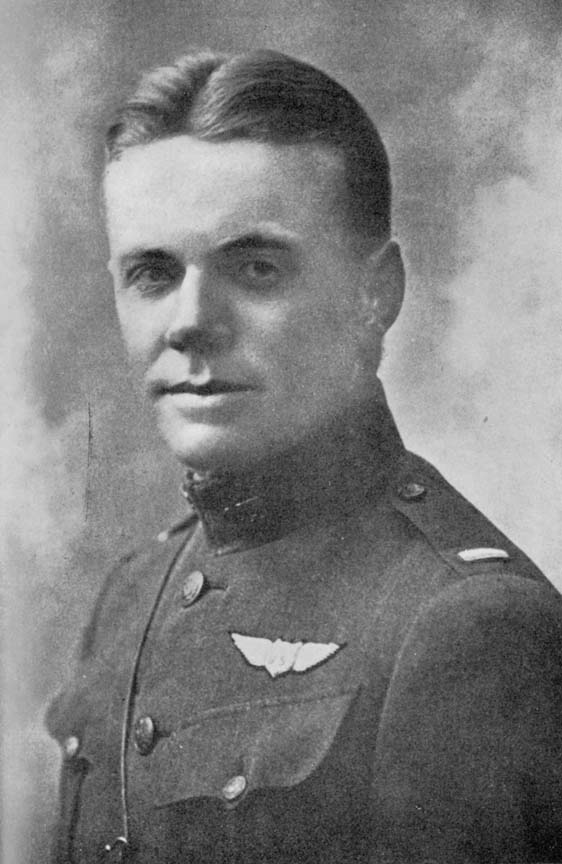
SON of Samuel H. and Elizabeth (Slater) Colton; was born at Worcester, Mass., Feb. 2, 1895. He attended Worcester Academy and graduated from Bowdoin College in 1917. During the summer of 1915 he served for six months with the American Ambulance Field Service in Belgium.
He enlisted at Boston on July 16, 1917, and trained at the Princeton Ground School, Princeton, N.J. He completed his course there on Sept. 14, 1917, and sailed within the week for England. His first six months abroad were spent in training at Foggia, Italy. He trained for two months at Tours; three months at Issoudun, and one at Orly. He was commissioned 1st Lieut. May 13, 1918.
On Sept. 1, 1918, he was transferred from Orly to Rembercourt and attached to the 27th Squadron, 1st Pursuit Group. From this time until the signing of the Armistice he flew over the front with this Squadron, participating in the splendid work done by the 1st Pursuit Group, especially during the St.-Mihiel and Argonne-Meuse attacks.
Lieut. Colton was officially credited with bringing down two enemy planes. Among the many exciting encounters in which he took part was one north of Grand Pré, where he was attacked during the early morning patrol by a number of Fokkers. Other Americans came to his assistance and during the fighting Colton managed to separate one of the enemy planes from its group and downed it after five minutes of combat.
Lieut. Colton was honorably discharged at Camp Mills, Mineola, N.Y., Feb. 10, 1919.
Brothers in Service --
James H. Colton, Temporary Ensign, U.S. Navy.
John B. Colton, U.S. Naval Reserve.
Sydney Colton, U.S. Medical Corps.
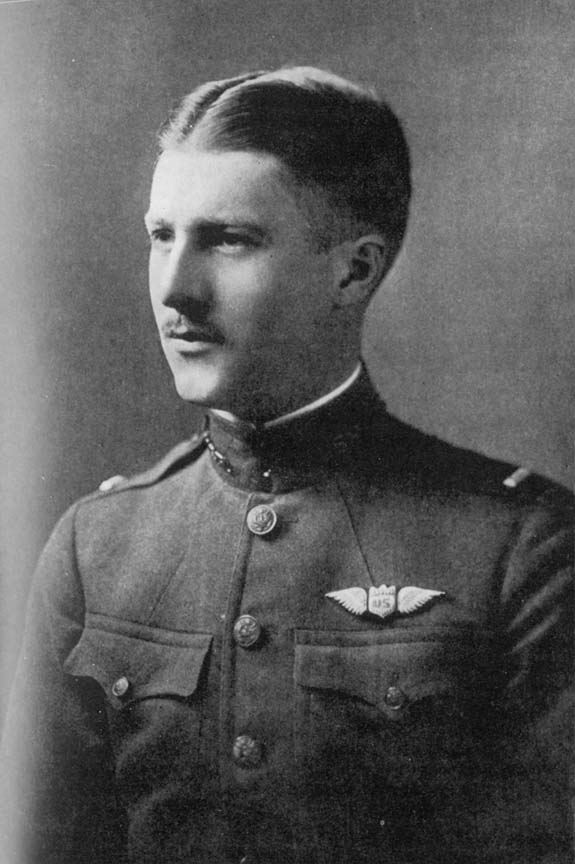
SON of Judge Robert Fulton and Mary E. (Walker) Raymond, of Newton Centre, Mass.; was born in New Bedford, Mass., on March 15, 1895. He was educated in the public schools of New Bedford and Newton, and at Tilton Academy, Tilton, N.H. He graduated from Wesleyan University, Middletown, Conn., in 1917, receiving the degree A.B. in absentia, because of attendance at Plattsburg.
In 1915, and again in 1917, he attended the Plattsburg Camp, enlisting there in the Air Service in May, 1917; lie trained with the Royal Flying Corps at Toronto, and at Camps Mohawk and Borden, in Canada, in the autumn of 1917. He was then assigned to Hicks Field, Fort Worth, Tex., where he remained throughout Dec., 1917, and Jan., 1918. He was commissioned 1st Lieut. in Jan., 1918, and sailed from New York in Feb. with the 27th Aero Squadron. He saw service with this Squadron, 1st Pursuit Group, in the Toul St.-Mihiel, and Château-Thierry sectors. On June 24, 1918, he brought down his first plane, a German two-seater, and was awarded the D.S.C. by General Pershing. He was commissioned Capt. June 24, 1918. On July 16, 1918, he was shot down over the enemy lines at Château-Thierry, but was uninjured. For the next five months he was a prisoner in German prison camps, at Rastadt, Landshut, and Fürstenfeldsbruck. He was released on Dec. 5, sailed for America, and was honorably discharged in Feb., 1919, at New York.
For extraordinary heroism in action near Château-Thierry, France, June 24, 1918. Lieut. Raymond piloted one machine in a formation of three which were escorting three reconnaissance planes over enemy territory. On account of motor trouble, he was unable to keep up with his companions, and while thus detached, was attacked by an enemy machine. In spite of the condition of his engine and his presence far within the German lines, Lieut. Raymond vigorously attacked the German plane and destroyed it, after which he succeeded in rejoining his patrol.
Capt. Raymond was also awarded the Croix de Guerre with the palm, by the French Government.
Brother in Service:
Allen S. Raymond, Corporal, U.S.A., 306th Brigade, Heavy Tank Corps, A.E.F.
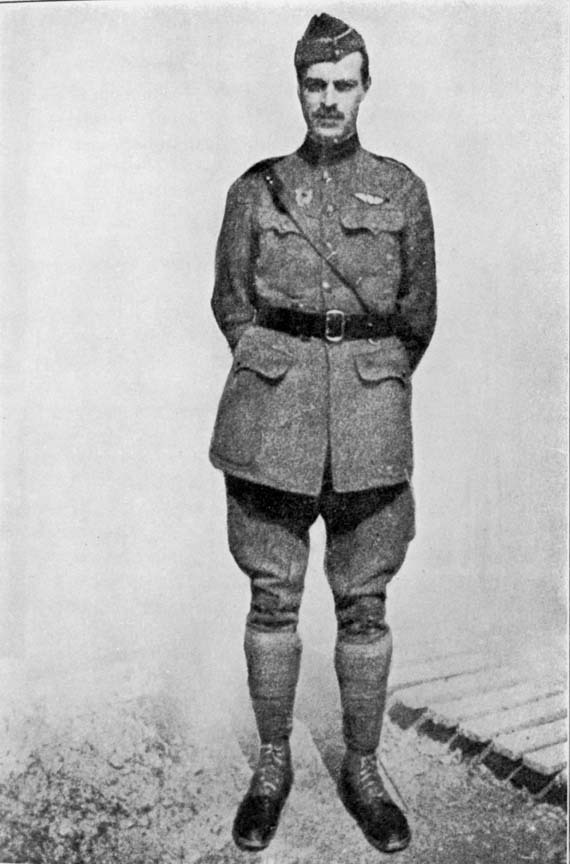
BREVET, LAFAYETTE CORPS, SECOND LIEUTENANT, NINETY-FOURTH AERO SQUADRON, FIRST PURSUIT GROUP
SON of S. Warren and Maria E. (Washburn) Davis; was born at West Newton, Mass., March 10, 1888. He was educated at the Newton High School, class of 1904, and at Harvard College, A.B. 1908. He made records in hurdling and tennis at college, and later in tennis clubs. After leaving college he entered the office of Lee, Higginson & Co., where he remained for two years. Subsequently he went into business for himself, as partner in the firm of Chamberlain & Davis, investment securities.
Previous to the war he was a member of the 1st Corps of Cadets, M.V.M. In May, 1917, he sailed overseas determined to do his part in the Ambulance Service; he reached Paris, June , 1917, and three days later wrote:
I have enlisted in the Aviation Squadron, the Lafayette Escadrille. I decided that it was the only right thing to do. You cannot imagine at home---of course, I could nt--- what this war really is. How everybody has got to do his share to save the world from the Boches ... they need aviators badly and they are very important in the conduct of the war. Now that the U.S. is in the war I think our men should be at the front. Once I had determined to get into the Army, I wanted to get into something where individuality counts and it does in Aviation more than anywhere else. Even if the danger is greater the value of the service is greater too.
He trained at Avord, Pau, and Cazaux, receiving his Brevet Oct. 26, 1917. He was transferred to the U.S. Service, was commissioned 2d Lieut. on Jan. 6, 1918, and was assigned to the 94th Squadron (Major Lufbery's). With this Squadron he took part in several actions. On June , 1918, Lieut. Davis made his last flight. Capt. Douglas Campbell was leading the patrol when four of the American planes were attacked by five or six Germans. After a hot fight the Germans were driven off, but Lieut. Davis was seen to fall in flames.
He was buried near Burly Wood (Richecourt), north of Seicheprey. (See record of Lieut. Arthur Lawrence Cunningham.)
Sister in Service ---
Amelia W. Davis, in Y.M.C.A. canteen and library work abroad, from Oct., 1917, until the Armistice.
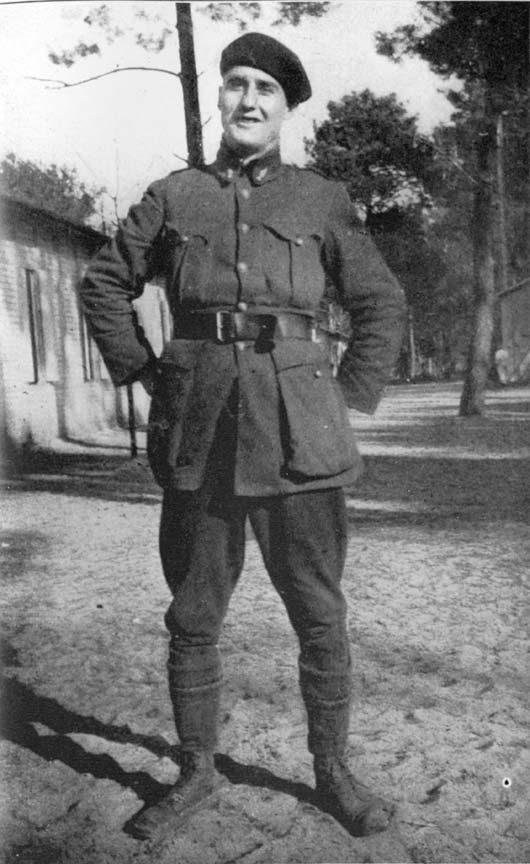
SON of John F. and Mary Elizabeth (Ryan) Cunningham; was born at Everett, Mass., Dec. 15, 1895. He prepared for college at the Medford High School, where he was valedictorian, and Major of High School Battalion; he entered Harvard College in the class of 1918, and was winner of Price-Greenleaf, and three other scholarships.
On May 26, 1917, he went overseas with the Harvard Ambulance Unit, and after a month in Paris with that organization, enlisted July, 1917, in the Foreign Legion, Lafayette Escadrille. He trained for some months at Avord, Pau, and Cazaux, and in Jan., 1918, was commissioned 2d Lieut. and assigned in Feb. to the 94th Squadron, 1st Pursuit Group, and participated in all the great drives.
On May 7, 1918, he took the air in answer to a challenge from a German aviator and found five others in hiding behind clouds. Attacked by six Germans, he fought until his machine gun jammed, then succeeded in reaching the American lines with his plane riddled with bullets.
On June 2, 1918, while returning from escorting a British Bombing Squadron along the Rhine Valley, Lieut. Cnnningham and Lieut. Philip Davis, of Newton, were cut off from their seven other companion flyers, and attacked by a squadron of German planes. Lieut. Davis's machine burst into flames and he fell five miles back of the enemy lines. Lieut. Cunningham circled around, but could do nothing, as his machine was riddled with bullets, but he succeeded in reaching the American lines unharmed. He was convinced that they had brought down two enemy planes, but he was too far over the German lines for official verification. On Aug. 1, 1918, he was commissioned 1st Lieut. and in Sept. made Assistant Operations Officer, and later Operations Officer, on Major Hartney's staff, for the 1st Pursuit Group.
After the signing of the Armistice, he rejoined the 94th Squadron and was transferred to Coblenz, Germany, with the Army of Occupation.
Brother in Service -
John P. Cunningham, Ensign U.S. Navy.
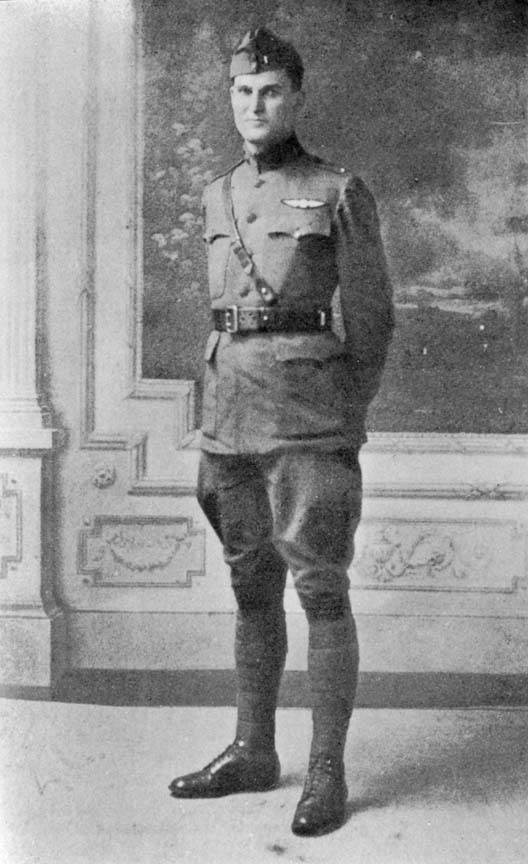
Sox of George Howard and Ruth (Coolidge) Kelton, of Hubbardston, Mass.; was born in Waltham, Mass., on Jan. 4, 1897. He was educated at the Boston Latin School, at the Gardner High School, and at Harvard College.
He enlisted in Cambridge, Mass., on Aug. 20, 1917, and was immediately assigned to the Ground School, M.I.T.. where he remained until Oct. 13. He sailed for France on Nov. 1, 1917. He was trained at Issoudun, France, from Nov. 16, 1917, to Feb. 10, 1918, and was subsequently student and instructor at the School of Aerial Gunnery at Cazaux, from Feb. 10 to May 1, 1918. He was then given preliminary work in flying at Tours from May 1 to June 20, and advanced work in flying at Issoudun from June 20 to Aug. 18, 1918. He later took a Pilot's Gunnery Course at Cazaux from Aug. 18 to Sept. 1, and acted as Ferry Pilot at Orly from Sept. I to Sept. 8. He was assigned to the 185th Squadron on Sept. 9, transferred to the 27th Squadron on Oct. 1, and transferred back to the 185th Squadron for night pursuit work on Oct. 18, 1918. He was shot down and taken prisoner on Oct. 30. He was confined in the Karlsruhe Prison Camp, from which he escaped on Nov. 20, 1918, and reached Strasbourg by walking all night. He was attached to the 41st Aero Squadron, 5th Pursuit Group, on duty with the Army of Occupation in Coblenz, Germany. He was commissioned 1st Lieut. on June 9, 1918.

SON of Charles T. and Fay (Bigelow) Crocker; was born in Fitchburg, Mass., in 1896. He was educated at Fay School, Southboro, Mass., and at St. George's School, Newport, R.I. At the latter school he was on the football and hockey teams.
In 1913 he enlisted in Battery A, M.V.M., at Boston, Mass. In 1915 he joined the American Ambulance Service in France, sailing on the U.S.S. Sussex which was torpedoed in the English Channel. The Ambulance Unit with which Lieut. Crocker served received the Croix de Guerre for its excellent work. In 1915 he was recalled from France, to go to the Mexican Border with Battery A, then 1st Mass. Reg't, F.A., N.G.
He was transferred to the Aviation Service in 1918, and after 10 weeks' technical training at the M.I.T. Ground School, was sent abroad, and stationed at Issoudun, France, for practical flying. In July, 1918, he was sent to the front, attached to the 94th Aero Squadron, 1st Pursuit Group. Just previous to the Argonne drive, Lieut. Crocker was one of two pilots to volunteer for a low flight far beyond the German lines over Stenay, to ascertain the movements of the German troops. He performed the mission successfully, and was recommended for the D.S.C.
At last accounts Lieut. Crocker was with the Army of Occupation at Coblenz, Germany.
Citations Recommendation for D.S.C. October 29, 1918 On Sept. 27, 1918, a call for volunteers to fly at a very low altitude to Stenay-sur-Meuse was made. Lieut. Crocker was one of the first to volunteer. To successfully fulfil this mission, it was necessary for Lieut. Crocker to pass twice through a very intense barrage and on account of atmospheric conditions at such a low altitude that his plane was in easy range of machine guns on the ground. In fact, the visibility was so poor that it was impossible for other planes to work. During the entire trip, he was under continual and intense shell and machine-gun fire, but in spite of this, and the fact that he was well within the lines of hostile country, he, by skill, courage. and determination, brought to a successful conclusion a mission, the hazardous nature of which made his safe return almost impossible. The information he was able to furnish our forces was of a most valuable nature, especially at that particular time, and aided materially in the success of our operations.
Lieut. Crocker has been on active service at the front with this Squadron since Sept. 5, 1918, during which time he has displayed a marked desire for work of the more arduous and dangerous nature. On numerous occasions, he has voluntarily performed missions which called for the highest courage and devotion to duty. He has made many valuable reports on the condition of enemy bridges, roads, and movement of troops. This information has been obtained by him under the most perilous conditions and which often necessitated penetrating the German lines from thirty to fifty kilometres while flying at an extremely low altitude.
E. V. RICKENBACKER
Captain, Air Service, U.S.A.
Belgian Legion of Honor Cross France, 12th February, 1919.
My dear Lieutenant. --
The King, Albert I, of Belgium, has given me instructions to inform you that He has bestowed upon you the
Ordre de la Couronne with rank of "Chevalier."
His Majesty desires that this honorary distinction be conveyed to you as a token of His esteem and in recognition of the valuable services you have rendered the common cause.
The medal will be handed over to you by the Adjutant General.
Please accept my most cordial greetings.
I am, my dear Lieutenant,
Very truly yours J. M. CINAUT
Chief of the Belgian Mission
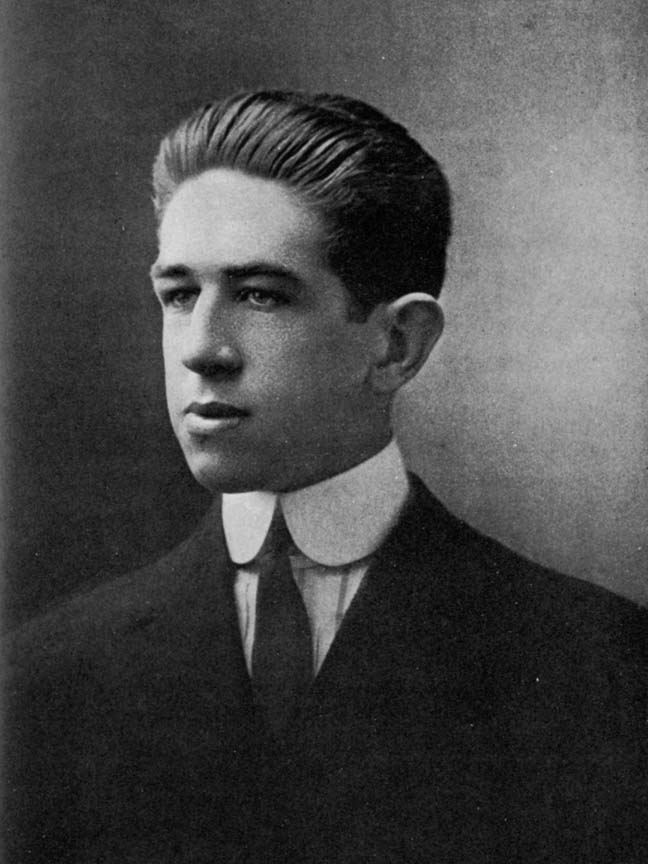
SECOND LIEUTENANT, A.S., U.S.A., ONE HUNDRED EIGHTY-FIFTH AERO SQUADRON, FIRST PURSUIT GROUP
SON of E. Arthur and Edith (Robinson) Tutein; was born at Revere, Mass., May 17, 1895. He attended the Revere and Winchester public schools and graduated from the Winchester High School. He was finishing the third year at M.I.T. at the time of his enlistment with the American Ambulance Field Service in May, 1917. He was prominent in athletics, being on the High School football team and captain of the boat crew. At Tech he continued his interest in athletics; he was a member of the Athletic Committee, entered the school meets and was prominent on the hockey team, of which he was elected captain just before enlistment.
He left New York on June 920, 1917, with the American Ambulance Field Service, staying in that service until Nov. 19, 1917. On arriving in France he was assigned to the Section Groupe Américaine, Convois Automobiles, T.M. 526, Peloton C, serving as conductor of camions in the region of the Aisne and the Chemin des Dames.
On Dec. 4, 1917, he enlisted in the Air Service, in Paris, but was not called until early in the new year; in the meantime he found employment in the A.E.F. Post-Office in Paris.
About Jan. 1, 1918, he left Paris for the Cadet Flying Camp at St.-Maixent. He received his commission as 2d Lieut. on May 17, 1918.
About May 29 he was transferred to the 2d Aviation Instruction Centre at Tours. He left Tours for the 3d Aviation Instruction Centre at Issoudun, where he finished Sept. 30, and awaited orders to go to the Gunnery School at St.-Jean-des-Monts, where he arrived Oct. 21. He left there Nov. 10, arriving at the front near Bar-le-Due on the morning of Nov. 11, just after the Armistice was signed. "Well," he wrote, "Roy Youmans and I are assigned to the First Pursuit Group (the best) and we go out this afternoon. We may fly to-morrow, but we are all pretty low. The Armistice is signed and we will not be able to get any Boches."
On Nov. 20, the Commanding Officer of the 185th Squadron wrote to the parents of Lieut. Tutein of his death on Nov. 17:
Chester had been flying over the field for some time. I had been watching him and admiring his flying which was of the best. Suddenly he seemed to lose control of his plane on a turn and spun straight to the ground. Death was of course instantaneous, so that there was absolutely no pain or suffering. I had not known your son very long, as he came to my squadron Nov. 12. I really knew him much better than some of the pilots who have been with me much longer. He was always willing and cheerful about his work.
Chester was buried at 3 P.M. Nov. 18. at Base Hospital No. 6, at Suilly (France). We held a military service. I obtained as many flowers as was possible and left a permanent wreath on the grave.
The 185th Squadron, of which Lieut. Tutein was a member, was trained in Texas under English tables of organization, and subsequently was sent to England, where it saw duty before going to France. On Oct. 7, 1918, it was assigned to the First Pursuit Group, being equipped with Sopwith Camel machines with Monosoupape motors. Its duties were to establish a barrage over the American line of searchlights against enemy night-bombing machines. This was the first attempt at night-flying chasse made in the American Air Service. A schedule of night patrols was maintained over the searchlight positions and all along the lines where it was known that enemy bombers were apt to cross. Extremely bad weather during Oct. and the early part of Nov. prevented the Squadron from doing much work. The Squadron engaged in five combats, but because of lack of searchlights did not bring down any enemy planes.
Brother in Service
Dexter A. Tutein Ensign, U.S. Navy.

SON of Frank W. and Johanna (Nelson) Wehner; was born in Boston, Sept. 20, 1895. He attended the Everett High School and Exeter Academy. At both institutions was captain of the football team; at Exeter, he was stroke on the crew.
Prior to the entrance of the U.S. into the war, he did Y.M.C.A. work in prison camps in Germany, leaving when diplomatic relations were severed. In June, 1917, he enlisted in the Air Service in New York City. He trained at Austin, Texas, and after graduating at the head of his class was sent to Scott Field, Belleville, Ill. Here he also did exceptionally fine work. He was commissioned 1st Lieut. Jan. 9, 1918, and about Feb. 1 sailed for England, where he was two weeks in training. He was then assigned to the 3d Aviation Instruction Centre at Issoudun, France. In June, 1918, he was at the front, taking part in the big drive. On Sept. 15 he found an enemy patrol of eight machines attacking a single American observation plane; he attacked promptly, and succeeded in destroying one of the enemy machines, and forcing another down. He convoyed the American plane to safety. For this exploit he received the D.S.C. On Sept. 16, 1918, he destroyed two enemy balloons, and was awarded a bronze oak leaf. He was reported missing in action on Sept. 18, and on Sept. 20 his death in action inside the German lines near Serronville, was officially given out. He was buried at Serronville, France.
For extraordinary heroism in action near Rouvres, France, Sept. 13, 1918. While on a mission Lieut. Weiner found an enemy patrol of eight machines attacking a single American observation machine. He immediately attacked, destroying one and forcing another down out of control, his own plane being badly damaged by enemy machine-gun fire. He managed to convoy the American plane to safety. A bronze Oak Leaf is awarded to Lieutenant Wehner for the following act of heroism in action near Mangiennes and Réville, France, Sept. 16. 1918. Amid terrific antiaircraft and machine-gun fire, Lieut. Wehner descended, attacked, and destroyed two enemy balloons. One of these balloons was destroyed in flames after it had been hauled to the ground and was resting in its bed.
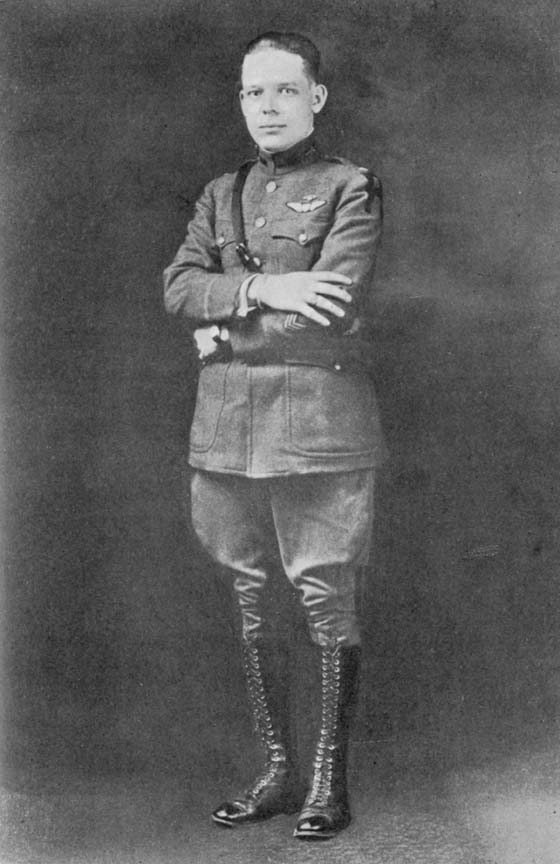
SON of Dr. and Mrs. James Chalmers, of Framingham, Mass.; was born in Columbus, O., May 23, 1891, and is now living in Hartford, Conn. He graduated from the Fitchburg High School in 1909, and from Middlebury College, B.S. 1913. He played on the 'Varsity football team four years.
He enlisted in S.E.R.C., on May 21, 1917, at Columbus, O., and trained at the Ohio State University Ground School from May 21 to July 14, 1917. On July 23 he sailed overseas, and was trained at Tours, Issoudun, and Cazaux. He was commissioned 1st Lieut. on Nov. 20, 1917.
From March to May, 1918, Lieut. Chalmers acted as ferry pilot at Paris, and saw active service with the 94th Aero Squadron at Toul and Château-Thierry. At Château-Thierry he was captured by the enemy, being shot down 15 kilometres behind the German lines. He was held prisoner for the remainder of the war, but was released after the Armistice, on Nov. 29, 1918.
Lieut. Chalmers sailed from Brest for America on Jan. 29, 1919, and was discharged at Garden City on Feb. 18, 1919.
Married, May 14, 1919, Katherine Williamson.
Brother in Service
Robert Burns Chalmers, Ambulance Section 511, now with the French Army of Occupation.

SON of David and Carrie E. (Wainwright) Bruce, of Lawrence, Mass.; was born at Seattle, Wash., May 3, 1894. He graduated from Phillips Andover Academy in the class of 1911; a member of the Cum Laude Society, and was on the honor-roll for four successive years. He graduated from Harvard College in 1915; a member of the Phi Beta Kappa, with highest honors in scholarship. He was a member of the Harvard Gymnasium athletic team, and of the Harvard chess team.
On graduation from college he taught mathematics and chemistry at Phillips Andover Academy, until his entry into the Service. He attended the Officers' Training Camp at Plattsburg in 1916. In March, 1917, he helped to organize the Andover Ambulance Unit, and sailed with its 3 members to France, April 28, 1917. Soon after arriving in Paris, he and his Unit volunteered for camion service with the French Army, where he remained until allowed to enter the U.S. Air Service, in Sept., 1917. He was trained at Issoudun, Cazaux, and elsewhere; and was commissioned 1st Lieut. on Jan. 2, 1918. After the big German drive was turned, he was assigned to the 94th Aero Squadron, 1st Pursuit Group.
Lieut. Bruce met his death in combat at Les Cruaux, on Aug. 17, 1918. In an engagement with the enemy, his patrol was attacked from above, and when their gas was almost exhausted the Americans retreated; but Lieut. Bruce and another pilot of his patrol brushed wings. Lieut. Bruce, losing control of his machine, started to fall. But after falling 1000 metres, he regained partial control, and made a tight spiral during the remaining 2500 metres. The pilots above noticed that he was trying to spiral into an open field, but he missed that and landed in a forest. His machine struck some tall trees, nose first, at an angle of about 30 degrees, and Bruce's neck was broken by the fall of nearly two miles.
Lieut. Bruce was buried where he fell, in the Commune of Chéry-Chartreuve, Aisne, France.

SON of Herbert Clifford and Amy C. (Bullard) Wells, of Wayland, Mass.; was born in Cambridge, Mass., Nov. 16, 1894. He was educated at Cambridge Latin School and at Harvard College, class of 1918; leaving college during his sophomore year to go to France. He sailed on May 5, 1917, to join the American Field Service in France, driving an ammunition truck to and from the front for six months. He then transferred to Aviation, in Sept., 1917, enlisting in U.S.A.S. He was trained in the American Aviation School in France, and was then sent as chasseur to the front. He was commissioned 1st Lieut, about Feb. 1, 1918, and was assigned to the 147th Aero Squadron, 1st Pursuit Group, Zone of Advance.
While in active service Lieut. Wells took part in the great battle of Château-Thierry.