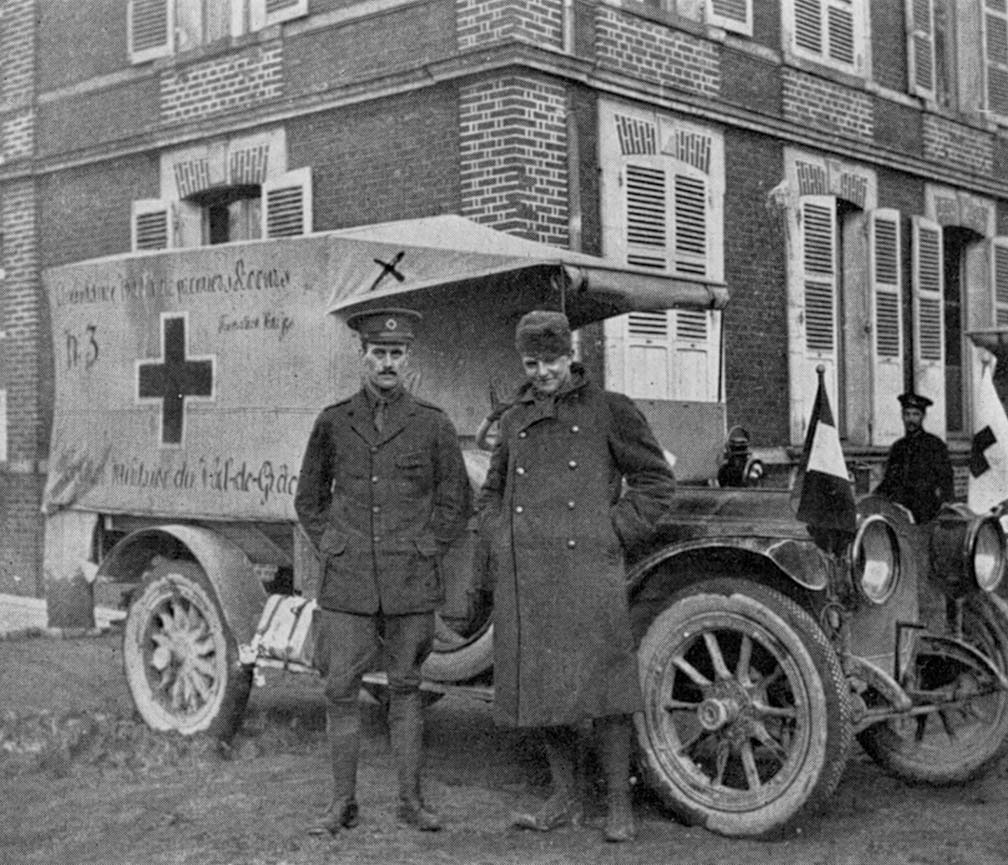
On Board R. M. S. Olympic
September 26, 1914
Just a line to say good-bye and thank you for the bully way you let me go. * * *
Nothing much of interest has happened since sailing this morning except that, when we got outside the three-mile limit we hove to and wig-wagged with the Caronia which is now armed and taken over by the Government. She was all gray and looked quite important. An English cruiser hovered around about three miles off for a while, but has now disappeared. We are running with all deck lights out,---windows, port holes and doors painted black and canvas over the ship's lights, etc. No side lights are on and only one head light.
This afternoon Mr. M------ and I were moved from our very comfortable cabins to a Louis XIV suite and now have two immense rooms with double beds, writing tables, closets and a bath and shower between us. It's too comfortable for words. * * *
Dined with Mr. M------, V------, the Greek Attaché, and E------, ***
It's the queerest feeling to see this immense ship with only eighty first-class passengers. * * *
There's a rather amusing French girl on her way home, so I ought to get some French practice. * * *
This ship is awfully depressing. * * *
On Board R. M. S. Olympic
September 30, 1914
We had a dance to-night, but I did not perform. I talked to D------ for an hour or so, and although he is rather fond of D------ he has traveled a lot and talks interestingly. Mr. M------ has asked H------ and me, the D------'s and H------'s to dine with him at the Ritz to-night. He is the life of the ship and gives very choice parties. The Greek Attaché is really afraid of him, I think, especially when he "kids him along."
The run and our position are never posted and no Marconis can be sent. * * *
My germs (inoculation for typhoid) have behaved well and except for a rather low day on Monday, I am quite o. k.
On Board R. M. S. Olympic
October 2, 1914
Woke up to see land and when I got on deck found we were opposite Queenstown. * * *
Burlington Hotel, London W.
October 4, 1914
We landed at Gourock near Greenock, which is near Glasgow, at nine o'clock yesterday. It took me almost an hour to get my bags into the van. A semi-witted Scotch porter put them on the wrong train and I only saved them from going to Liverpool through great good luck.
Mr. M------ had a compartment reserved for the four French people and ourselves, so we traveled in considerable comfort. Mr. M------ went to Claridges, G------ and W----- to the Savoy, and I came here. The deck and station at Gourock were patrolled by soldiers of the Argyle and Sutherland Highlanders, and I saw a couple of the finest looking officers in kilts I ever laid my eyes on.
When I arrived, I discovered that Mr. and Mrs. M----- from Boston were stopping here also, and upon my return from church found an invitation to lunch with them. The Abbey was closed, but St. Margaret's Chapel adjoining it open, so I went in there. It was fine to see the soldiers in khaki scattered around, and the prayers for those at the front were impressive and solemn. The place fairly yelled its head off on an old St. Paul's hymn, "Lord of our Life and God of our Salvation," and at the end they sang one verse of "God Save the King," in a way that made shivers run up and down your back.
I called on Mrs. P------ who was away, and then walked home past the Palace. The red-coated "bear skin" Guards are gone and in their place are the Grenadier Guards in full khaki uniforms. They lose in dignity, but are almost more impressive.
There are signs up all over calling for another 1,000,000 men, and Kitchener is played up for all he is worth.
Later
Just left the M------'s. They were awfully glad to see me. G------ left here on Friday, having come from Berlin with dispatches for the Embassy.
The M------s were in a Berlin restaurant when war was declared and their party was hissed and yelled at as they left their dinner. They were in Vienna when Austria declared war against Servia, and Mr. M------ was arrested. They are to spend the winter in the Isle of Wight.
In church this morning there was a rather humorous touch, for the minister, after a distinctly war-like and very thinly disguised anti-German sermon, announced he would continue his theme on the Sunday after next,---"next Sunday being the Harvest Home Festival," he said "I suppose I have got to say a "few words about the harvest"!
To-morrow I am going to the Embassy, the French Consul and Cook's to see what I can find out. Mr. M----- strongly advised me to stay a week or two at the Embassy here and then go on to Paris with a letter from Ambassador Page, but I do not think I will.
The papers report a serious interruption of traffic from Harwich to Dieppe, as a result of laying an English mine field, but I do not believe it's as bad as it sounds. The newspaper posters are very vivid and speak of the "Kaiser's flight," "Crown Prince's Rout," "Universal Success of the Allies," etc. All the tops of the street lights are painted black and at night only one out of three gas lamps are lit, and only every other electric light. Artillery horses are tethered in Green Park. * * *
P------ was o. k. on the 31st, but the W-----'s are afraid he will be killed. He and ten other Oxford men were the first chosen from the applicants. Too bad about poor O------. [A young English officer, who had been in America the preceding year, and who was killed while leading his troops in German East Africa.]
Burlington Hotel, London W.
October 4, 1914
London is quite the deadliest place I have ever been in on a Sunday. The only signs of life were the speakers in the Park. There is a recruiting tent there "For the entertainment of any men of his Majesty's forces" and from the noise coming out of it, they were evidently having a very choice time. All the shops have war pictures pasted in the windows, and some of them have fragments of German shells exposed, with sarcastic and patriotic comments thereon. You see any number of autos and motor bikes with "O.H.M.S." (On His Majesty's Service) on them, and the Bobbies are very respectful to them. Every little while you see a taxi with bags in front and an officer having a last ride with his wife.
Burlington Hotel, London W.
October 6, 1914
Dinner with the W------s was delightful, and as I was coming out I ran into the C------s. Mr. C------ gave me letters to Ambassador Herrick and Dr. Gros, and asked me to dine on Monday next.
Yesterday I went around to our Embassy in the morning, and after they had kept me waiting twenty minutes, they told me F------ had gone away, but would not say where to. Then I went to the French Consul and Cook's and had my passport viséd. I then visited the War Office to look up Colonel H------ and had a complicated and troublesome time to accomplish anything. It's a big square building with a central courtyard, in the middle of which is a bulletin board for casualties. There was a mob around it, as fresh lists had just been put up, and every few minutes some woman would find a name, and she would either explode on the spot or turn around and walk off looking a thousand miles in front of her but perfectly quiet. I hope never to see such absolutely hopeless and miserable faces again. There were some captured guns in the courtyard which drew considerable attention. Once having gotten into the building, I was given a printed slip on which I had to fill my name, where I lived, who I wanted to see and about what. After ten minutes waiting, a page came back with a pass, and although he swore there was no Colonel H------ in the war office, I went up under convoy of a boy scout to Room 351. I did not see the Colonel, however, but talked with General W------ who said Colonel H------ had joined General French's staff in France. He was very polite, and told me not to lose my pass, as no one was allowed to leave the building without one. I walked from there to the Savoy and lunched with G-----and D------.
In the afternoon I arranged to be inoculated for the second time by Mrs. W------'s doctor and did a few errands before dining with the C------s. After dinner Mrs. W------called me over and introduced me to Sir Edward Burne-Jones, and I talked with him until we started for the theatre.
Burlington Hotel, London W.
October 8, 1914
I went to see Mr. H------ but he was not at the bank, so I left my address and dashed up to the Coburg where Mrs. W------- had arranged for me to meet a Mrs. M------ of Paris. She was exceptionally nice and gave me a corking letter to our Military Attaché in Paris. Also a very nice note to Mrs. Herrick.
I saw a lot of soldiers marching through the city and uniformed volunteers swinging along and singing "Your King and Your Country Want You,"---which is the great tune here.
Searchlights are mounted on the top of Hyde Park gates, and a couple of light guns.
October 8, 1914
I did not expect to have another chance to write before I left London, but I have a few minutes before going to bed.
I saw Dr. D------ after lunch and he put five hundred million more typhoid germs into me for the sum of one guinea, which is not very much per germ, but seems quite a bit for the labor involved. He knows P------ very well.
I am just back from dining with the W------s. and Mr. B------. The last time I saw him was at a party G------ and P------ gave at the "Spee" in Cambridge. Mr. C------ gave me a most impressive letter to Ambassador Herrick, and Mrs. M------ had left for me a letter to Mrs. V------ R------ T------ of Paris. Mr. H------ was dining with the C------s and wanted to know all about you and where he could find Mr. M------. Near us at dinner was a good looking officer in khaki and his wife, having a farewell dinner before he starts for France tomorrow morning. I do not think either of them enjoyed the meal very much.
Lady I------ has a son, born yesterday.
A letter from P------ [the writer's room-mate at the Harvard Law School who with some ten other Oxford men volunteered as a bicycle-scout in the British Army] arrived for Mrs. W------- this afternoon. He says he is well fed, but would accept chocolates, cigarettes, matches, etc., with great pleasure.
The city is darker than ever to-night as the new regulations have gone into effect. A man well up in the war office told Mrs. W------- they were considering laying out brilliantly lit lines of lamps like streets in the parks, to draw any possible Zeppelin bombs.
The story of Russians passing through England was a complete hoax, though vouched for by any number of otherwise truthful persons and seems to have been circulated in order to give Berlin something to worry about. Mr. B------ says that letters from Norway through England to America are opened and censored. Any alien who wants to stay here over two weeks has to have a "permis de séjour" and to-day a foreigner, supposedly German, was sentenced to six months hard labor for having in his possession two carrier pigeons. His excuse was that he was about to have pigeon pie, but when it was proved he had the birds for two years, the pie theory fell flat.
It's the most marvelous thing to see how hard every one is working. You see old ladies knitting as they are whirled along in limousines. Any contribution directed to the Prince of Wales Fund, goes through the mail without postage stamps, and every few yards some one has some
kind of relief work to tell you about. I saw three large private houses in Belgrave Square with Red Cross Hospital flags on them and visitors' hours pasted on the doors.
Mrs. M------ made me promise to write her from Paris, and was worried lest I might feel low from the germs. I probably shall.
Paris
October 9, 1914
Wednesday I took the ten o'clock train from Victoria to Folkstone and arrived there about two hours later. On the dock we had to show our passports, identification cards and tickets before we were allowed to board a small tub called the Sussex. We had a perfectly smooth passage, which was lucky as the boat was jammed,---three hundred or more. We left Dieppe at six, arriving at Paris at 9.40 P. M. There were sentries guarding the bridges all along the line.
On my going into a compartment, three Frenchmen arose and saluted monsieur l'Anglais and asked all about some Red Cross men who had come over. I told them I was an American, but in spite of President Wilson's prohibition, was as much of an Ally as an Englishman, upon which a new entente cordiale was started, which helped the trip out considerably.
At St. Lazare they told us our luggage would not arrive until Thursday, so I started for Mr. M------'s in a taxi. He seemed glad to see me and gave me a pair of pajamas.
Thursday I got my luggage and in the afternoon went to see Ambassador Herrick. He gave me a card to Mr. C----- at the American Ambulance Hospital at Neuilly, where he said ambulance drivers were needed. C------ referred me to Dr. B------, who was operating all that afternoon. After that I went and got my permis de séjour from the police and then went to see about W------'s trunks and sent him a cable. At the cable office they told me I must have my cables stamped by the Commissariat of Police of my arrondisment. This afternoon. I went to see Dr. B------ who said Mr. K------ had charge of all transportation and that he was off with the ambulances. I stayed talking with internes and others until K------ returned, and had the good luck to find, him talking to C------ who had evidently read my letters. At present all the drivers' places are filled, but K------ said there were more ambulances coming, and that he would give me a job as soon as they arrived. C------ asked if I would like to help out as an orderly in the hospital, and I accepted at once. Whereupon I was led up stairs to fill out blanks and sent to get my photograph taken to put on my passes, etc. I will probably start in at the hospital on Monday, all "dolled up" in white, washing new arrivals and helping out generally. One of the internes told me you usually had to cut the uniforms off the, men. They had just finished washing a man who had not had his clothes off since the first day of mobilization. I lunched at D------'s and then started off to get photographed.
I have just finished dining with Mr. M------ and Mr. C------. To-morrow I go to the Hospital again. I am glad Mr. Herrick could not use me at the Embassy, as the Hospital seems to me much more closely connected with the bigger part of this mix-up. When I get my ambulance it will be exactly what I would have chosen. They will give me a room in the Hospital with meals free and the orderlies say the food is very good.
This town is far more war-like than London,---hardly any lights at all and you see only three or four people to the block after eight o'clock. In the Place Vendôme only three stores are open, and only one out of ten or twelve on the Rue de la Paix. Rumplemayers, Paquin, Cartiers, are all closed and in nearly every case you see signs up reading "Le Patron est sous-officier avec le régiment de ligne." Maxim's, Voisin's and a few hotels still run half-heartedly, but nearly all of them are shut down on account of the staff having gone to the war. In the Crillon there is a long tablet on the wall surmounted by a German helmet and two broken German rifles, and on which is written "Rôle d'Honneur." Beneath are the names of the hotel employes who have gone to war. It is rather a nice idea.
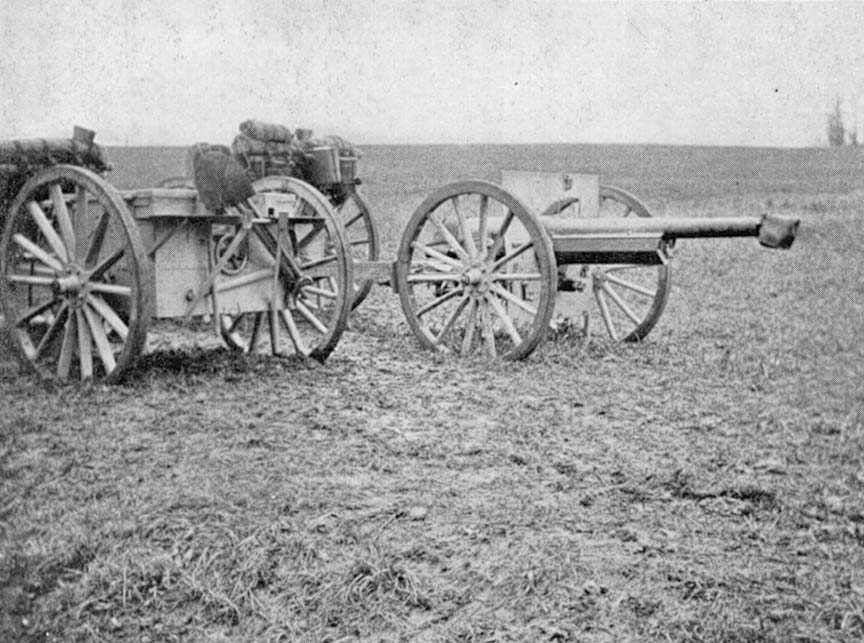
I was at the Hospital this morning when the ambulance came in and the men looked like nothing on earth. One ambulance was dripping blood as an ice wagon drips water in the summer in New York. It was ghastly beyond words. The orderly told me that some of the men who arrived this morning had been wounded ten days ago. .There were quite a few Turcos in the wards, and of all the fierce, evil looking men, they are the worst I have ever seen. They say the Germans hate them worse than they hate the English, and that they are exceedingly dirty fighters. One French soldier was loud in his praises to me of the English---they all are---but this one particularly. "Bon Dieu comme ces Anglais se battent---ils vont en bataille fûmant des cigarettes." He could not get over their quietness and sangfroid. It is, the sporting point of view as opposed to almost fanatical patriotism that he could not see. Although they both tend to the same result, the former I think is more conductive to accurate work.
In almost every block there is a Red Cross house and the flags of the Allies fly everywhere. The Civil Government is in rotten shape to cope with the situation. This one hears everywhere, and the military authorities are jealous of the Red Cross work in Paris,---so much so that although there are about twelve thousand beds available here, the wounded have to be practically kidnapped from the Army doctors. The removal of the Government to Bordeaux really did more harm than good, it would seem. The town always had a reputation of being pretty gay and now it is almost continually en fête. The restaurants are open all night and it's one big party. It is creating scandal.
This afternoon I saw a biplane go up and chase a monoplane toward the north. Both were fairly near. Yesterday a Taube dropped a bomb near Neuilly and wounded two men and a child. Two or three other bombs failed to explode. People are scared to death if they see any air machines, and while I was in a tram this afternoon several people got out and ran into doorways because two machines were flying overhead. I heard several exclaim "Mon Dieu, quand les Zeppelins viennent." There seems to be an idea that they are coming here when Antwerp falls.
There are any number of outrageous cartoons in circulation about Germans. The following is not outrageous, but rather amusing. It shows a picture of a French soldier shaking a German dog (the Kaiser's likeness) by the tail and saying "Je ferai pour vous ce qu' a fait le Russe pout l'autre chien" (Autrichien), and there is a Russian holding up another pup by the tail and dashing its brains out gainst a wall. At the Port Maillot they have put up all sorts of fortifications. I would hate to have to cross them, much less with some one trying to stop me.
Paris
October 11, 1914
I enclose one of my photographs taken for my passport. It is pretty bad but good enough for the purpose. I can begin as orderly in the Hospital any time now, but when Mr. C------ came in this morning he advised me to hold off a couple of days as Senator S------ has organized a French ambulance corps for the front and had told him he wanted chauffeurs. I would much rather be out of doors getting at the wounded when they have been recently hit, than washing them after they are fixed up for the surgeons.
Mr. M------ and I have been studying first aid books, trying to find where the arteries run and how to stop hemorrhages. This city is certainly cold. I wasn't really warm for two days, but now I am used to it.
Mrs. C------ was out when I called yesterday, but I left my card and address with a few words.
In the public gardens you see circles of women, many in black, knitting away for dear life, and there were no loiterers of any description about. The place as a tout ensemble is very impressive and you rarely see any one laughing or smiling.
Paris
October 13, 1914
Two chances of going to the front as an ambulance driver and stretcher bearer, are on the horizon, ---one with Senator S------'s ambulance service,---the other with Lady A------ and Mrs. C-. Lady A------'s sister the Countess de P------ who is in Brussels has left her car at their disposal, and as Mrs. C------ is diplomée with the Société de Secours au Blessés, she is quite on the inside.
Yesterday I went over the Hospital with Dr. H------. There is only one sabre wound in the whole place. One of the Algerian Zouaves nearly kissed me when he, found I had been in Algiers. He said it's lots of fun to push your bayonet through a fellow if you do it slowly, but added "la chasse aux Allmands is not half as much fun as fighting in Algeria, because there when people run, they have no artillery to cover their retreat!"
Sunday I saw two Taubes that did much damage, being chased by two far inferior French machines, and it was just my evil luck that I missed seeing the bombs drop near Notre Dame, as an hour before I was on the spot where they fell. Again yesterday a Taube flew over the city and dropped a few more bombs,---shrapnel this time, and several more were killed and wounded. All of Mrs. C------'s windows were shattered a little while ago. They do not really do a lot of damage, but I would just as soon not be under one.
Had a fine visit with Mrs. C------ this morning and she was very keen about getting me into the ambulance work. Lady A------ runs an ouvroir for fifty women each afternoon and pays them herself. One of Doucet's best is now sewing slippers, made out of old curtains, for the wounded. They make up packages containing socks, wooley belts, slippers, underclothes, cigarettes and chocolates, which are very neat and usable, sewn up in a towel---a rather unnecessary luxury.
I am still studying automobile terms, and they are quite difficult. Also the maps of the environs of Paris. I am going to try to get Monsieur G------ L------ on the telephone and see how he is. The mails are very indefinite, and the letter you sent Mrs. C------ took nine days from England. Mr. M----- has just come back from meeting mobs of wounded at Aubervilliers, and he says their condition is awful.
Paris
October 14, 1914
Yesterday morning I called on Mrs. C------ and Lady A------. It's a bore being tied up this way and not being able to do anything but give wounded soldiers cigarettes, but Senator S------ is encumbered with much red tape and things move very slowly.
Yesterday afternoon I sent Mrs. C------ fifty packages of cigarettes for the soldiers' trousseaux, as they are called, and studied automobile French and maps until dinner time.
This morning I saw my friend the Commissioner of Police about a driver's license. The Dames de France have a machine which will probably need a chauffeur and stretcher man, and if I can get that, Senator S------ can go,---whichever comes first I will take,---and if neither turn up, it's the Hospital for me!
Ever since lunch I have been fighting half the Government at the Palais de Justice to get a driver's license. The application had to be made on papier timbré, which meant nothing to me,---accompanied by a quittance a souche,---another unknown quantity, verified by a précepteur. I got them all after a while and handed them in with two of my photographs, my permis de séjour and passport, and a very surly underling told me he would let me know when I could take the driver's examination. I argued that there was grand besoin of me at the Hospital and that I could take it then and there, but there was nothing doing.
On my way back I saw the 30th Infantry on their way to the front, in Rue St. Honoré. It was rather sad to see their wives and children following along to say good-bye. One fellow had his dog at his heels, who would not leave him, for a moment until a boy ran out and grabbed him. The men did not look happy and the only time they smiled was when twenty or thirty English soldiers at the Rue Royale stood with their hats off and cheered them. One wounded soldier on a balustrade cheering as they passed, almost fell off in his excitement. The people in the streets seemed very grim, and now and then when they spied a friend would yell at him to bring back a German helmet. One old woman stood n the corner and shouted "allez mes enfants vengez vos amis" until a gendarme pulled her back. They are not a very efficient looking lot, but I imagine it's their clumsy uniforms. Every third man carried entrenching tools and a pack was on each fellow's back, which must have weighed sixty pounds. They were followed by two mitrailleuse taken apart and carried on horses. * * *
The daily Taube failed to appear, and I really think people were a bit disappointed. The official bulletin gave no news whatever, except that "notable progress has been made by our valiant soldiers."
Two days ago they found a German waiting for a tram near the Madeleine, dressed up as a Captain of artillery in the French army. He was spotted by an observant citizen who thought he looked too young for a Captain and told a gendarme to ask for his papers which were not forthcoming. It was pretty keen work.
Paris
October 15, 1914
Another day of "watchful waiting" and a rainy one at that. I had a very pleasant tea with Mrs. C------ and both she and Lady A------ were delighted with the cigarettes. Mrs. C------ has decided to enter a military hospital, so our scheme for a private ambulance is off. I dined at the Café Royale, and thought the waiter seemed a bit familiar looking. He began to talk English after a while and when I asked him where he learned it he said in the old Café Martin. He expanded with joy when I gave him news of New York, and in return told me several interesting bits of information about things in this town.
It's as much as your life is worth to cross either the Place de L'Etoile or de la Concorde after dark. The motors wear no headlights and go faster than ever. I have escaped so far, but now I blow my nose loudly before I leave the curb! The lamp posts in the Champs Elysées, ---having no lights,--- cause several smash-ups at night.
I have a letter from Monsieur G------ L------ in answer to my telegram, and may run down to see him on Sunday. The American Hospital does good work, but I encounter everywhere the feeling that there are some flaneurs there, who are doing the thing because it's done, and I had rather sized it up the same way. I just missed C------ who left a letter for me, but will get him to dine with me to-morrow.
Paris
October 17, 1914
Yesterday I went to call on C------ who had left his card, and then to the American Hospital, where I gave them my photograph, and got my last dose of typhoid germs. I then told them I was ready to begin work, but they said I could not until I had been vaccinated, and as that could not be done while the typhoid germs are at work, I would have to come back next week.
I went to Morgan, Harjes & Co. to present my letter. Mr, J------ took me into a private room and was very polite. He said Mr. H------ was looking for chaps like me, and to come in and see him to-day, which I did. Mr. H------ has an ambulance station just behind the firing line and needs another man who understands automobiles, and I can probably have the job. I am to see him again on Monday. If it comes true, it's ten times as good as anything in Paris, and we will be within hearing distance of the fighting. I had a letter from the Prefect of Police this morning, begging me to present myself, on Monday morning to take my driver's test, avec une voiture automobile. That rather staggered me, but I went around to the Packard Company and tried to hire one. When they found out I was to do ambulance work, they told me I could have the car as long as I wanted it for nothing, which I thought very decent.
C------ dined with me last night and introduced me to Mlle. P------, a Pole, connected with the Red Cross in England. I am going out to tea with her to-morrow. Monday I lunched with Lady A------, and with good luck, ought to be on my work towards the middle of the week.
One English officer in the Astoria stated that when they had to retire and leave their wounded where they lay, any number asked him to shoot them, and that he had killed several who were obviously beyond hope.
An awfully funny thing happened to me in the Metro. I was sitting next to a woman with a small baby. All of a sudden she let out a yelp, threw the kid to me and ran to the other end of the platform, where she fell on the neck of a soldier. I did not know if I was to become an adopted father or not, but I could not drop the kid and sat there very much fussed, trying to amuse it. By evil luck a crowd of ouvrières came along and burst into shrieks of laughter. Their remarks were considerably more witty than polite! By the time the mother came back I was the centre of an amused crowd. Now, if I see any babies around I don't sit down!
L'Aneret, Mer
October 20, 1914
Back here again after three years, and it's awfully nice to see the place again. Monsieur G------ L------ is the same as ever. Madame P------ is a little more feeble, but still much alive and she wept with joy at seeing me. I am enjoying my visit a lot.
De T------, who was here with me three years ago is now the English censor at Orleans and I am going to see him on my way back to Paris. A------, F------, and F------ are all at the war. F------ is an interpreter with the English. Twenty-two out of thirty with him have been killed. Monsieur G------ L----- says it's because their French uniforms are conspicuous among the khakied English. F------ just sent S------ a helmet cover which he took from a dead German, and she is quite proud of it. Madame P------ has twelve grandsons and sons-in-law fighting.
We are just back from meeting two trains at Mer and feeding the soldiers hot drinks and bread. I talked to a sergeant of the Bengal Lancers and he was tickled to death to talk English. There are six thousand Indian troops near Orleans getting ready for the front and those I saw were very powerful looking brutes. Their looks alone ought to win most battles.
In the big Halle there are about a hundred Belgian refugees and a more miserably unhappy crowd I never saw.
They have not a thing but their clothes, and sleep on straw in a corner. The townspeople give them food which they cook over an open fire but how they will keep warm when the winter comes I cannot say. Each station along the railroad has a Red Cross room and a canteen, and crowds meet every train with tobacco, wine, food and hot drinks. I do not think the German prisoners get any however. S----- says they all have got guilty consciences about their evil deeds, and expect to be treated as they treated the Belgians! Monsieur G------ L------ says if they only knew in America what the Germans were like, the U. S. would declare war on them at once, and that he does not see how Wilson, remembering how Lafayette chased the English in 1776, can help declaring war on general principles, and I could not make him see any good reason to the contrary.
I passed my driving test "with bells," and Monsieur R------, Directeur de Bureau de Mines, complimented me. The G------ L------ family send you their
best regards and any amount of untranslatable French messages of politeness.
L'Aneret Mer
October 22, 1914
Just had three healthy and interesting days and am off for Paris to get vaccinated and begin work. A------ left two motors here and yesterday at Monsieur G------ L------'s request I got one going and we went to Blois. Formalities of the road are innumerable. A "laissez-passer" and "sauf-conduit" are indispensible, and sentries stop you every few miles. Just outside of our gate there is a post, and they stop everyone they do not know. Monsieur G------ L------ gave them a sentry box which they enjoy in rainy weather, and on the side they have scribbled in pencil "Merci a Monsieur G------ L------." I thought I could run by a sentry and simply wave a paper at him, but when I saw him slip a cartridge into his rifle, I did not think it worth while. An officer at Blois who did not stop for some reason was shot and killed by his own sentry, so you see they are fairly strict.
I took chocolate at Mme. C------'s, but my friend Angele n'y'etait plus!!! It seems she is off on a visit to her mother, which grieved me considerably. To-day we went to Orleans to lunch with De T------. He is now a sub-lieutenant and Censor for the Indian Troops at Orleans. There are now about 42,000 in and around the town, and with De T------ as guide we went over two camps. The order and smartness of the camps is wonderful. Everyone seems to be washing something or themselves. A detachment of Cameron Highlanders marched through the town while we were there with bagpipes squealing and swinging along as if they owned the earth and didn't care who knew it. They were perfectly magnificent and the townspeople raved out loud over them. The Indian Troops, mostly Sikhs and Gurkhas are most evil looking. They brought all their own stuff with them, even water canteens and their commissary wagons are relics of a prehistoric civilization, with little mules pulling them. I saw a camp prepared for a battalion of Bengal Lancers at La Source, and things were most marvelously done, sentries, horse lines, sick lines, wash houses and everything, and the men are all clean and cheerful looking. I saw one officer raise sin because the line of saddle cloths and saddles behind the horse lines were not quite straight, and there was not a moment's peace until they were as parallel as railroad tracks. De T------ told me that they do not think the Germans yet know of the arrival of the Indian Troops, but it is strange if they don't. He says the nurses' letters cause more trouble than all the rest put together. They always write where they came from and where they are going and quote gossip as to what the Colonel said to so and so, etc.
Monsieur G------ L------ had letters from all three of his sons this morning, which cheered the whole house immensely, but there is no news of the incomparable Joseph, and his wife, the cook, is wild. F------, G------ L------ has manqué d'être un héros, and here's how. He was sent out with a few men to reconnoitre a friendly village where there were some wine caves, and as they were going to sleep near one of these, F------, who has "a magnificent hearing" heard noises in the cave. Thinking there might be German spies in hiding, he asked for two volunteers to accompany him and descended the caves to see, le pistolet au main. The noise increased as he approached, and he rushed forward heedless of danger, to discover about 200 rabbits in full flight! You cannot help laughing, but all the same it needed some nerve.
The English give no mercy to anyone not in uniform who strays into their lines and cannot explain themself, and their strictness is leading the French to be more careful. Also they say the English shot the Mayor of St. Quentin for not behaving himself. It's a fine time for non-combatants to be very quiet and very polite to anyone who looks like a soldier!
Paris
October 24, 1914
It looks as if we were off with the ambulances for the front. Mr. H------ sent B------ after me last night who found me five minutes after I got back from Mer. To-day I bought thick shoes, gloves and khaki shirts. The Hospital is some miles northwest of Compiègne and right behind the trenches. B------ tells me that they have ten or fifteen German wounded who cause all the trouble they can by upsetting their food, being noisy and generally disagreeable. A few days ago a French officer with ten Senegales surrounded some Germans who had surrendered. The blacks wanted to hash up the German officer, but the Frenchman saved him. When the former came up to give up his sword he spit in the Frenchman's face, and in five minutes there wasn't a thing left of that Dutchman except his buttons.
B------ also tells me that while he was distributing papers to the wounded in a Paris hospital, he came up to an Englishman who was lying with a blanket up to his chin, and offered him a paper. The fellow said nothing but two big tears welled up in his eyes and trickled down his face. Both arms had been amputated on account of gangrene! He said it's splendid to see how some of the wounded---particularly the English, die,------cheerful and with as much of a joke as they can manage. Everyone you hear says "mais c'est bien heureux que nous avons les Anglais avec nous," and people do not hesitate to say that if it had not been for them, the Germans would now be in Paris. There is a feeling that the English finish anything they start.
There seems to be a great feeling of discontent with the Government, especially since they are raising such particular hell in the way of dissipation at Bordeaux. * * * There was a Swiss lawyer at lunch who was very interesting. When the war broke out, the German Swiss were sent to guard the French Swiss frontier and vice-versa, but pretty soon the French Swiss began mixing it up with any Germans they saw, and had to be withdrawn. The lawyer said the anti-German feeling predominates for two reasons. One the atrocities the Germans have committed, two the violation of neutral Belgium and the publication of the diplomatic correspondence preceding the war. The Swiss being in somewhat the same position as Belgium felt very strongly the violation of the latter's neutrality. * * *
I think I wrote about the Indian camp at Orleans. There is a great affection between the Gurkhas and the Highlanders for some reason, and De T------ told me that when the Gurkhas heard of the Gordon Highlanders being so badly cut up, they nearly went mad. He also said the Indians were to be used for night work as they are supposed to be very silent workers. The Germans are in possession of quarries from which it is almost impossible to dislodge them. There is a new army being formed here to go and relieve the one now near Compiègne, and great things are expected of it. General Galliéni has 250 armored motors coming in a few days, which he ordered without authority just before the war. This I heard through a Frenchman who is supposed to know a good deal, but I do not vouch for it.
I had letters from you all last night and one from P-----in which he said he had been made a Lieutenant. Not bad coming up from a private so fast.
Walked miles in the Bois with C------ yesterday and saw the cows and goats. Half the alleys are closed and only the main roads are open. An officer told C------ the following tale: A big Senegalese had charge of five German prisoners, and his officer told him to be careful and not go to sleep or they would escape, but coming back later he found the coon snoring and the Germans all lying perfectly quiet. He woke up the coon and asked him what he meant, whereupon the sentry showed him that each of the Germans had been run through by a bayonet and explained that he was really very sleepy, and that following directions he made sure the Germans would not escape!
Here in Paris, in the cafés, the English have found any number of Germans who managed to pass as English among the French, but whose talk gave them away when they ran into the English. I was out with B------ on Saturday in a car which he has been using for ambulance work. There were forty-eight shrapnel holes in it as a result of his going a bit too far forward. He had gotten out to crank the car when a shell fell thirty yards off and three slugs went through the driver's seat. He certainly can't complain of his luck. Another driver going along the road one night ran almost into the German lines before he found out his mistake and was fired at as he fled. Our boss will be Paul Rainey, the big game hunter. I met him yesterday and talked with him quite a while. I also met Tod Sloan, the jockey. A man who owns a big store for binoculars told me the French officers all ask for Zeiss lenses, and said they did not care if they were German, as they were the only decent glasses manufactured.
Saw G------ M------ and his daschund in the Café de La Paix.
I have been doing quite a bit of work on old silver and Mr. M------ helps me all I want. It grieves me a lot not to have started working sooner, but if this job comes out o.k. it's well worth waiting for. The men go out with the car as near the trenches as they dare, pick up the wounded who are taken back eight kilometers or so to the Chateau, where the doctors fix them up temporarily and send them on to the base hospitals. Most of the cars are Packards. There are four of them, three doctors, six nurses, ten chauffeurs, cooks, bottle washers, etc. My visit with the G------ L------'s did me no end of good, and I was surprised to find how much French I had forgotten.
I do not think there is much news or gossip, except that I have heard it said in several places that if the English had not come in and the Germans came nearer Paris, it was arranged that no great resistance was to be made, that Prince Victor Napoleon was to be made King by the Germans, and that Caillaux was to get several millions out of a war indemnity several times as large as that of the last war! Caillaux seems to be the "goat" of every story, and people are very angry over his being Paymaster General.
Paris
October 29, 1914
No news, as I have been waiting to hear about starting for the front. Was measured for a very sporty uniform, all khaki, and cap like the English officers. I just found the following in Kipling, which explains what I have often felt about not settling down:
"It's like a book, I think, this bloomin' world,
Which you can read and care for just so long,
But presently you feel that you will die
Unless you get the page you're readin' done,
An' turn another---likely not so good,
But what you're after is to turn 'em all."