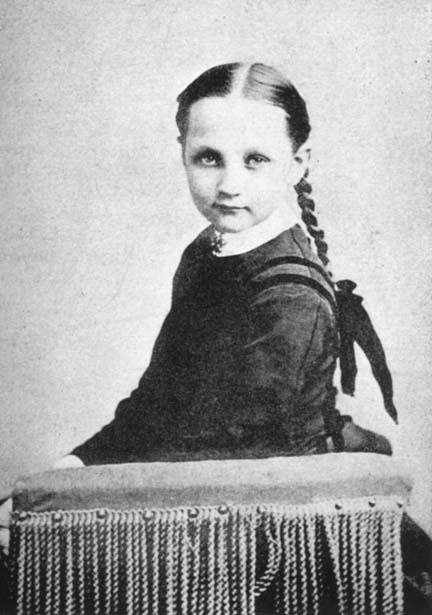
THREE of the earliest episodes in my life are distinctly associated with cowardice, gluttony, and mendacity.
I remember, at two years of age, being seated on the lap of a shaking Quakeress, at Lebanon, during a terrific thunderstorm. The bolt from heaven shook even more than the Quakeress, so that together we were thrown to the floor. There I sat in a heap---yelling from fear, plain physical fear---which explained an unconquerable terror of thunder and lightning which lasted until at the age of fifteen I was shamed out of feather-beds, dark rooms and damp cellars.
I recall my first birthday party when three years old to which my little friends in the neighborhood were bidden. In the center of the table was a great bowl of luscious strawberries. All the big ones had been put on top. Prior to the arrival of my guests, I crept into the dining-room, climbed on a high chair, removed all the large berries and hid them away to eat later in selfish solitude.,
The third episode indicated a straight road to a Reformatory School. My father received from a client a large bunch of green bananas. In those days bananas were a rarity. They were my strongest passion, and I was never able to indulge my appetite for them to its fullest extent. I was six when I saw the fruit in question being brought into the house and placed in a store-room to ripen. This was on a Wednesday. I became obsessed with the idea of getting at those bananas. I waited feverishly until Sunday morning. My parents, who were both God-fearing people, went to church, I pleaded to stay at home, coughing, sneezing, holding on to my head and giving every evidence of an approaching malady.
I watched with inward delight the departure of my father and mother, of my three brothers, of my one sister and of the servants; only the cook remained, to prepare our midday meal. This was my chance. I sneaked into the store-closet. I sat my chubby little person on the floor and began to eat the forbidden fruit. I had Adam and Eve discounted, for I ate six green bananas at one fell swoop. That night I writhed in agony. I heard my distracted mother and our kindly family physician racking their brains as to what had caused my illness. I stolidly refused to explain---until suddenly I heard fear expressed that my hours might be numbered. Then all the Sunday School threats of eternal damnation flashed before my eyes. Hell fire was sizzling. Red devils were dancing. Three-pronged forks were pricking. I was broken at the wheel. My spirit groaned, my flesh was conquered, my soul cried out. I confessed---not through remorse, but through fear. I had lied through fear. I was truthful through fear.
These three episodes are my earliest recollections.
Conspicuous in my memory are the incidents in a fashionable school, which I attended for several years. I suggested to the class of some thirty girls that we should form ourselves into a secret society. The very name had an enticing sound. It breathed exclusiveness, and all children are natural born snobs. I proceeded to elect myself both president and treasurer. A name had to be chosen and a pin designed. I decided that the initials A. B. S. would look well interlaced, but what would those letters mean? Presto---I had it! "Asses Bray Shockingly." This interpretation, born of the moment, proved satisfactory to my classmates. I had seen to it that the selection and ordering of the pin was to be my affair. The price was agreed upon. The pins were to cost twenty-five cents each. I recalled a little shop in the Bowery which supplied flags, banners and emblems. There I struck my bargain. The pins were to be made of real, shiny tin, so that they might suggest silver. The cost was to be eleven cents each. Therefore, on this transaction, I cleaned up the net sum of four dollars and twenty cents, representing the value of my idea. I had something to sell and I sold it.
The next story deals with an annual prize offered to the scholar who could recite with proper effect a long poem by some distinguished author. I selected Gray's Elegy. As nothing was more difficult for me than to memorize, I had to struggle to master the self-imposed task. At last I knew the lines, and knew them so thoroughly that for three consecutive years I recited the poem with stupendous success, carrying off the prize each time---the repetition remaining undetected. But at the fourth contest I met my Waterloo. The teacher remembered!
In connection with my own school days, let me observe that I do not believe there is a greater fallacy than the belief that one's social standing is improved or cemented by the associates found in a class-room. School friends are invariably dead friends in an incredibly short period after graduation. Rarely in after-life does one meet them, nor does, as a rule, the phrase "I 'used to go to school with you," strike any responsive chord. School mates are not ships that pass in the night, but little skiffs which are generally engulfed by the fifty-thousand-ton liners of after life. Besides, very few women, as they grow older, like to face that ruthless reminder of the passing years.
When I graduated, I was destined to restrain my early evil tendencies, and to become a respectable member of society. My early mental training had been remarkable, for before I was seven, my father was teaching me the first Latin Grammar and directing my literary taste, so that I was reading daily and having expounded to me the Odes of Horace, pages of Dr. Johnson, Tasso, Kant's Critique of Reason, Jeremy Taylor's Living and Dying, Plutarch, the Greek drama, Shakespeare and a score of other classics, the very titles of which are unknown to most of the youth of to-day.
At ten years of age, I gave an illustrated lecture on the Solar System, with a lantern and slides belonging to my father. The room was crowded with expectant children, who had been mulcted of five cents each to listen to me. All went well, until suddenly there was a strong odor of burning wood. In order to see the pages from which I was reading, (my older sister having been coaxed to manipulate the slides, without compensation), I had set a lighted candle in my mother's china-cupboard. As the shelves were fairly close together, the origin of the fire was readily explained. The lecture came to an untimely end, but I have no recollection of returning the money at the door.
I will omit the many other influences and incidents tending to my business development until I come to my first real venture, which had to do with the raising of chickens. Incubators were a new invention, but they seemed to solve my temporary problem.
I was about twenty-five years of age, and lived with my family in a comfortable old-fashioned house in Irving Place, occupying a small hall-bedroom in the third story. There was ample space in it, so the Incubator was bought, and set up at the foot of my bed. This was in the month of February---I was a passionate admirer of John Ruskin, and I can remember perfectly regulating the temperature of the eggs, while devouring at the same time the pages of "Sesame and Lilies."
I had grown tired of doing nothing. I began to realize that the world was divided into three groups, wasters, molluscs and builders. I made my decision early. I would not belong to either of the first two classes. I had danced and played long enough. I had the germ of independence in my system. Besides, my father, like thousands of others, had caught the get-rich-quick microbe. I wanted to have my own life-saver, in case of financial disaster, so I thought that an anchor to windward would be advisable, in other words, an individual bank-account.
Like the hayseed who first plays poker, my beginning was a glorious success. From one hundred eggs, eighty-seven chicks pecked their way into life. When old enough, they were carefully transported to Long Island, where we had an old-fashioned manor-house and farm. There I had my brooder ready to receive them. Not one died on the way. My venture prospered, and soon, on borrowed money which I eventually paid back, I built elaborate yards and in the course of due time was the proud owner of what, in those days, was a large poultry plant.
I became an exhibitor at the shows, and on one occasion, after making thirteen entries, took nine Firsts and Specials. it was a great moment, but incidentally it bred romance as well as chickens. A few days after the show closed, I received an offer of marriage from a rival breeder in Connecticut. He was a widower of forty and a well-known professional. Attracted, I presume, by my success, and remarking that I was, judging from my appearance, a healthy young woman, he with a keen business sense decided that I would make a practical helpmeet for him. Like many another girl over-confident of her charm, I thought I could marry whenever the spirit seized me, so I turned down this very substantial offer. More fool! It was the last that ever came my way. I never drive through that particular town in Connecticut that I do not think that I was served jolly well right for my conceit. I might have been a happy old grandmother by this time, had I not been so cock-sure of myself.
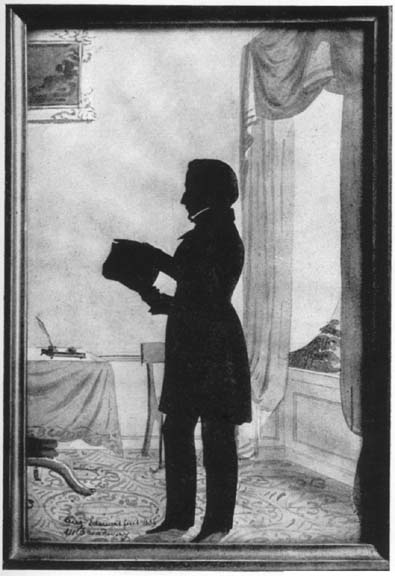
IF, having read thus far, you feel any interest in my ancestry, let me state that I was born in New York City in 1856, and was the youngest of five children. We came from a long line of lawyers, with an occasional doctor thrown in to balance the mental with the physical. My maternal grandfather, a Quaker, was Vice-Chancellor William T. McCoun, a resident of Warren Street, and a page out of old New York. How often he described being taken, when he was a lad of seven dressed in a little velvet suit with lace frills at his throat and sleeves, with knee breeches, silk stockings, paste-buckled shoes and a cocked hat, to meet General Washington! My maternal grandmother was a very handsome woman of Huguenot parentage. She was on the Reception Committee of the Ball given to the Marquis of Lafayette, who evidently cherished a memory of her because he sent her back from France as a souvenir, a gold needle-case, which is still in my possession.
My grandfather knew the founder of the Astor family, John Jacob, who dealt in skins as well as in real estate, and I have often heard the story of the way in which he traded. The skins were placed along the high shelves, with the tails of the animals carefully brushed, and hanging conspicuously over the edges. When the trader came into the little shop, which was ill lighted, he was invited to look over the stock, but his actual choice had to be made from the tails, for no skin was ever taken down until purchased. As frequently inferior skins had very bushy tails, Astor was thus enabled to unload much of his least desirable merchandise.
Cornelius Vanderbilt the first was also well known to the citizens of those days. He did a thriving business by peddling in his boat cargoes of watermelons, then a great delicacy, between New York City, Staten Island and Albany. This perishable freight, however, was handled with such skill that little of it rotted on the way. Cornelius Vanderbilt was thus the pioneer in the fruit trade.
Once I was taken by my Grandfather McCoun to the old Meeting House, which was at Locust Valley, L. I. The occasion was the funeral of one of his many Quaker cousins. The service was conducted in absolute silence, which lasted an hour, and which was a terrible strain upon my active little person. As we filed out, the female relatives, who were dressed most carefully in delicate shades of gray and fawn-colored silks, with immaculate white kerchiefs and becoming poke bonnets, exchanged condolences regarding the deceased "sister"---when suddenly one of the ladies leaned forward, took a fold of her friend's dress between her fingers and exclaimed: "Dear Phoebe, thy dress is made of a beautiful quality, where did thee find it?"
I had always been told that Quakers knew nothing of vanity, of vainglory or of worldliness; from that time on my belief in them was shattered.
Long Island was in those days unknown to millionaires. It was peopled by good, substantial folk, chiefly farmers and village store-keepers. The railroads were still embryonic. Glen Cove was the boat-landing for Oyster Bay and when we children were taken annually to pay Grandfather a visit, he invariably met us with a team of his big horses harnessed to one of his farm wagons, for when he retired from active law practice, he had gone into gentleman-farming. His livestock was my delight, and I remember how I trudged joyfully with him over every acre of his property, growing daily more and more familiar with the complexities of crops and fruit trees.
It was not until years later, after my mother had inherited the Oyster Bay homestead, that the tide of fashionable summer residents began to flow in our direction. It is almost needless to state that when the old house came into our hands, an architect of the worst period, and of the most vicious tendencies, was employed to "do it over." He promptly destroyed every bit of the Colonial landmark and erected instead a hideous modern structure, with jazzed roof and meaningless excrescences, in which our family lived until the death of my parents.
It was in Oyster Bay that I first knew Theodore Roosevelt, and it was he who inspired me to raise English mastiffs. It was fortunate that the Bull Moose had not been domesticated. At that time, he was entering upon his political career in the State Assembly. He used to ride a regular Fenimore Cooper gentle Narragansett, with a Mexican, large stirruped saddle. On our barn was a hitching-ring to which visitors tied their horses.
My young neighbor Theodore found that I made a good try-out for his speeches, but in the end I proved a keen disappointment. One evening, he appeared with a bulging manuscript in his pocket, a speech he was to deliver the following night in the Jamaica Town Hall. It was pretty long and fairly dull. I fell asleep, and when he turned to me, eager for comment, I was dead to the world and to him. In after years we often referred to this incident which he magnanimously forgave.
Two stories which always struck me as very characteristic of Roosevelt might properly be told here.
When his five children were all very young, he used to take them, even in the coldest weather, to the dock in front of Sagamore, his country place. There he would line them up, shivering and shaking in their bathing suits. Suddenly in a voice of thunder he would cry out "Dive," at which command the youngsters all leaped into the water not daring to disobey.
Roosevelt's tone of authority on these occasions was the same which he used at San Juan Hill, in fact throughout his life. Roosevelt was metaphorically insistent that those around him should "dive" if they wanted to make good in his eyes.
In those old Long Island days hunting became a popular sport, and whether the trails were for aniseed or foxes, the fun was the same. Theodore Roosevelt was rarely absent from a meet. He rode hard, as he did everything else that came his way. He always wore his glasses which at times were his torment, especially when heading for a stiff fence. On one occasion I was near him when he had a terrible cropper. He scrambled to his feet; the glasses had disappeared. Stroking his horse's neck he remarked "this is the time, old chap, when I will have to trust to another .fellow's eyes."
My father, Francis F. Marbury, was a remarkable man. He was one of the original members of the Century Club, where he is still referred to as a wonderful conversationalist and ready wit; many are the stories attributed to him. On one occasion an eminent English jurist was a guest of honor and after dinner remarked that he had observed that our country knew nothing about entails, to which my father replied "That may be so, but we know everything about cocktails."
He was born in Maryland, on the shores of the Potomac but when a little lad his parents removed to Alexandria, Virginia. There he lived until at thirteen years of age he entered Amherst College. One of his humorous anecdotes connected with his collegiate days was that at fourteen he had the measles and was cared for by a spinster of fifty, whose business it was to act as matron to the boys and who nursed them when ill. My father, whose allowance was very modest, was amazed at the amount of this lady's bill when presented. Asking timidly for an explanation, this venerable dame said that of course she had been obliged to add ten dollars to the account as compensation for the damage to her character, which as an unmarried woman was involved in her attending the sickbed of a young man.
This was my poor father's first and last personal experience with a blackmailer.
After graduating from Amherst, he taught in the High School at Hudson, where he earned and saved enough to enable him to remove to New York and continue his law studies until such time as he could pass his Bar examination. He soon entered my grandfather's law office, with the ultimate result that he became his son-in-law. My father's cousin, by the way, was the great forensic luminary of the District of Columbia, who won fame and place in history in the historical case of "Marbury versus Madison."
Father's memory was prodigious. He was an omnivorous reader and could easily recall and correctly quote seventy-five per cent of what he read, None of his children, I may add, inherited his gift.
He was emotional and temperamental, which qualities, added to his logical brain, made a most interesting combination, although his absent-mindedness at times threatened disaster. On one occasion he was taking my two small brothers, aged six and eight respectively, to visit an old friend in Rochester. In those days, one had to make the connection at Utica. My father led the little boys to a bench in the waiting-room, bidding them not to budge until his return. He became absorbed in a new book which he had purchased, when suddenly, hearing his train announced, he rushed to board it, leaving my brothers where he had seated them. When he remembered their existence, it was too late, but fortunately the station-master was a kind man, who took care of them until they could be forwarded to their destination.
I well recall his political activities. He was a staunch member of the Tammany Hall organization, as were his friends Samuel Tilden, Abram S. Hewitt and a score of other citizens of high standing. The name of Thomas Jefferson was a household word.
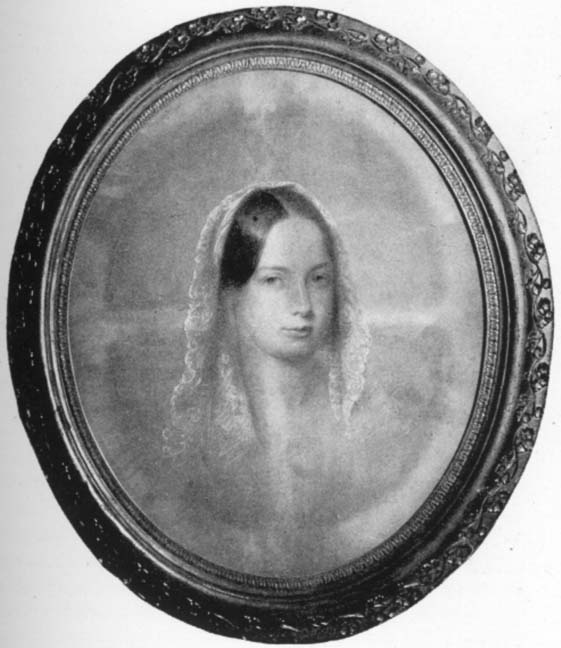
My mother was a direct contrast to my father. She was slight, and the quintessence of gentleness and refinement. I never recall her raising her voice. She was exquisitely neat in her dress and had infinite method in the regulation of her household. She was firm in her authority, however, and while we could always coax and wheedle my father, we instinctively knew that my mother's word was law.
She had all of the graces of life. Her education, after the fashion of that day, included languages, music and botany. Personally, she seemed to me like a piece of delicate porcelain, so that frequently I restrained my boisterous and hoydenish ways and my love of emphatic argument, for fear that I might cause her to break, and to dissolve like powder. Her very fragility became my most potent influence for law and order.
It was my mother who instilled into me the mysteries of housekeeping, and it was through her that I learned the intricacies of purchasing, preparing and presenting food. Until this day I enjoy nothing more than going to market (which I always do myself) and of directing my household. Thrift and economy were my guiding stars, waste and extravagance were deplored and avoided. Culinary magazines and cook-books were then unknown. Receipts, like historical traditions, were passed down through a long line of ancestry.
In looking back, I think that my mother's precepts sank deeper in my mind than even my father's brilliant witticisms. For instance, once when I expressed a desire to give an elaborate party, quite out of scale with our usual modest expenditures, my mother remarked: "Why sacrifice a year's hospitality for one evening's entertainment?"
On another occasion I queried inviting some friends to a family meal, fearing that our table might be too crowded. "Ah, daughter," said Mother, "where there is room in the heart, there is always room on the hearth."
There is another incident I recall which when I was ten years old, gave me my first lesson in the relations of employers and employees.
We had a buxom young Irish girl named Mary, who was our general housemaid. One day I took exception at her indifference to some childish request of mine. Finding her callous and stubborn, I waxed indignant, showered some ugly abuse upon her defenseless head, and finally gave her a good pounding with my fists. My mother witnessed the scene, and forthwith marched me to her room, where, taking me on her lap, she gently explained the one-sided game I had played; for I had attacked and insulted some one who, in the position of our employee, could neither retaliate nor protect herself. She was forced to endure in silence. In other words, my mother plainly showed me that I had acted like a vulgar and brutal little bully. I was dissolved in tears, and with a truly contrite heart, sought Mary and humbly, apologized for my misconduct; thus learning a lesson which was never forgotten. All through my life, I have endeavored not to be rude, intolerant nor inconsiderate, where an inferior was concerned, and when I have erred I have had the grace to express my sincere regret while asking forgiveness for my overbearance, injustice and impatience.
It was amid such home influence that I grew from baby days to childhood. The first four years were passed before a screen of sunshine and happiness, when suddenly everything became dislocated, even to my infant mind. This was in the fatal year of 1860. Hatred replaced love. War drove out peace. It was then, for the first time, that I felt the shadow of racial prejudice, of fraternal differences, of freedom as against slavery, of tolerance as opposed to bigotry. I began to realize that revenge and disaster went hand in hand.
I recall the breaking out of the Civil War, its episodes and its ending; the assassination of Lincoln and his funeral. It was early morning when the news reached us from Washington that our great President had been shot. Our household, like thousands of others, vibrated with horror at this fateful deed. As I stood listening to the details of the crime I had but one thought---that with the death of Lincoln, the .awful rebels about whom I had been hearing for three years would surely pour into New York and kill us, each and every one. How could I escape? I suddenly remembered that we had a roomy cedar closet which was only opened occasionally. Into this I went, carefully closing the door. I sat on a trunk, shivering with fright, and waiting.
By and by, I heard my name being anxiously called. I kept silent. Hour after hour passed. I heard my mother's anxious sobs, my father's determination to ask aid from the police.
Then everything became hazy. I felt the earth slipping, and tried the door, but in the meanwhile it had been locked from without. With my fast ebbing childish strength I pounded on it. The door was opened and I fell, in a faint, into the hall.
Is it any wonder that the Assassination of Lincoln imprinted itself indelibly upon my memory?
As I look over the pages of a resurrected Valentine's Manual, I can rebuild the city of New York in recalling its old landmarks, which I remember perfectly, many of which I saw constructed, and many more which I have seen destroyed.
Incidentally we had friends who had greenhouses on the East River and within a stone's throw of my residence to-day at 13 Sutton Place. At that time the fish ran vigorously along the very bank of our pretty garden, and I can recall many a good catch taken literally in front of my door---the land then being part of historical Sutton Manor.
The old Reservoir stood on the site of our present Public Library and for many years was the boundary between town and country.
The best residential section was in Washington Square, gradually extending up Fifth Avenue to Thirty-fourth Street, where on the northwest corner stood what was referred to as the White Marble Palace of A. T. Stewart. To-day this mansion would be considered small and unpretentious.
One of my earliest delights was the homestead of Peter Goelet, which was on the northeast corner of Broadway and Nineteenth Street, the center of the shopping district of those days. The chickens and goats roamed freely at the back of the house. I remember one incident clearly. My grandfather and I were passing the stable, which faced Nineteenth Street, when he spied his friend Peter, who sat in the doorway, surrounded by pots and pans, having by his side a tinsmith's stove and in his hand a soldering iron. As my grandfather expressed some surprise at his occupation, Mr. Goelet answered, "Why, Chancellor, should I waste my, money paying a lazy tinsmith for work which I can do myself in half the time?" Peter Goelet lived and died a millionaire.
Whenever I see the prints of the old Volunteer Fire Department, I remember the activities of my second brother, Gilbert by name, who was always full of the spirit of adventure. He and some of his pals were enthusiastic members of one of the hose companies, but Gilbert was a sound sleeper, and at times failed to hear even the third alarm. He occupied a front room, with a window on the street, so devised the following experiment: A long string was attached to his big toe, while to the other end, which reached nearly to the sidewalk, was fixed an iron ring. When the call came, some more wakeful neighbor would jerk Gilbert's toe from without, so that in a few moments he would be rushing with the others, to play the hose on the burning property, and to cry out, "Jump her, boys, jump her."
The first circus I can remember was at the foot of Irving Place, in East Fourteenth Street. It was a country, canvas tent. And the dwarfs! Lavinia Warren, Tom Thumb and Commodore Nutt! How I revelled in them. Perhaps the proudest moment of my young life was when once, in Irving Hall while my nurse had turned her head towards my sedate sister sitting at her right, I, who was on the aisle at her left, upon hearing the Manager invite any little girl or boy of six to come to the platform to measure height with Commodore Nutt, seized this first opportunity to appear before the public, rushed up the aisle, and in a moment stood back to back with the idol of my dreams.
When I returned to my seat, my nurse warned me that for such bold and disgraceful conduct, I would certainly be severely punished upon reaching home. I have no recollection of this threat being carried out. My father's love of a joke probably spared me.
The first dramatic performance I ever attended was in the old Barnum's Museum, which stood on the corner of Broadway and Ann Street, and which was burned in 1865. There I saw Mrs. John Wood in "East Lynne." Many years later, by the way, I sold "Aunt Jack" to A. M. Palmer, in which play Agnes Booth was featured. This was an amusing comedy written by Ralph Lumley, who was Mrs. Wood's son-in-law. It was at Lumley's house, near Regents Park, London, that I met Mrs. Wood, who was then over ninety.
My parents believed that the theatre was educational, so I became its constant attendant. Every Friday night I was religiously taken to see something. Wallack's Theatre, at the corner of Thirteenth Street and Broadway, became my happy-hunting-ground. How well I recall the performance of "School for Scandal," with John Gilbert and Madelein Henriques as Sir Peter and Lady Teazle; then "Ours," "Don Caesar De Bazan," "Ruy Blas", "Rosedale," and a dozen other plays in which Lester Wallack and Mrs. John Hoey appeared.
Harry Montague, Wallack's successor as leading man, was in the mind of a romantic schoolgirl a name and personality to conjure with. And the splendid melodramas in the Union Square Theatre, chiefly adapted from the French, presented under the management of A. M. Palmer---how fine was the Company! I can recall each and every member of it; and the great artists, whose first appearances in New York City are as fresh in my mind as yesterday, Charlotte Cushman, Agnes Ethel, Clara Morris, Charles Fechter, Hélène Modjeska and young Julia Marlowe, E. H. Sothern, Virginia Harned, Margaret Mather, Mary Anderson, Richard Mansfield, and a score of others. As the theatre tide moved uptown, Edwin Booth and Lawrence Barrett were in the Twenty-third Street Theatre, where, by the way, I saw Adelaide Neilson, the Juliet of her century. I went not once but twenty times, to study her performance.
Julia Marlowe proved a delightful successor in this rôle. In those days Shakespeare was revered. The form of the production was traditional. A "chatty" Mercurio would not have been tolerated, and the actors and actresses selected as interpreters approached their tasks with humility and respect. They did not assume that they could improve upon the text, transpose the scenes, apply the spirit of Modernism with impunity, or jazz with supreme conceit through the greatest plays in the English language.
Then there was the Madison Square Theatre, where long runs of such excellent comedies as "Hazel Kirke" and "Captain Swift" set the pace, and the first Lyceum Theatre in Fourth Avenue, near Twenty-fourth Street, where the names of Belasco and de Mille, as joint authors, headed many a successful bill, and the Barrymore Dynasty, founded by Maurice Barrymore, who had married Georgie Drew. He was not only an actor, but an author. His was a wonderful and alluring personality. How well I remember it all!
THERE were some very hospitable houses in old New York, where one could meet artists, actors, singers and men of letters. Society in those days was much smaller, and informal gatherings were the rule rather than the exception. On Fourth Avenue, running from Eighteenth to Nineteenth Street, were three very quaint dwellings which stood back from the street. In one of these lived Professor and Mrs. Ogden Doremus, with their children. It was here that I met Christine Nilsson, who made her first bow to our public at the old Academy of Music. She stopped at the Clarendon Hotel, then the best in the city. It was on the southeast corner of Fourth Avenue and Eighteenth Street.
Clara Louise Kellogg and her mother always had their apartment there, and no foreigner of any prominence thought of going elsewhere. It was owned and run by a man named Charles Kerner, who had, as I recall, a very pretty wife. He was a pioneer in hotel-keeping, and was especially expert in the selection and preparation of food. Even when Mr. Kerner was in affluent circumstances, he never delegated the practical duties of a steward to any subordinate, for every morning, at five o'clock, he made his visits to the lower markets. This fact may explain the great popularity of the Clarendon.
Christine Nilsson's rooms faced on Eighteenth Street. She became the idol of the city, especially among schoolgirls. I remember my first visit to her. I was very young and very nervous, so that at the graciousness of her greeting I became self-conscious to such a degree that I could only mumble and withdraw. Afterwards,, when I grew more accustomed to celebrities, she and I became great friends, and I saw her frequently, both here and abroad.
Nilsson was a phenomenally strong woman. She was a great walker. I can recall her, dressed in coarse tweed, with stout boots, trudging through the streets, in the heaviest snowstorms. She never took any especial precautions to protect her throat.
I often joined her in these promenades, and delighted in her reminiscences of the farm in Sweden where she was raised, of the discovery that she had a voice worth training, and of her subsequent struggles, heartaches and disappointments, until she scored her first triumph in the Théâtre Lyrique, in Paris.
Her marriage to Auguste Rouzaud, a Frenchman, she invariably referred to as "a luxury to which I treated myself."
The last time I met Christine Nilsson was at the gambling table in Monte Carlo. Like many women when they grow older, she found much solace in this nerve-racking pastime.
She was a great artist, especially in certain rôles. I doubt whether anyone ever surpassed her in "Faust" or "Mignon."
Another delightful house was the Richard Watson Gilders'. They had converted a stable into a dwelling, and many were the pleasant evenings spent under their roof.
The Laurence Huttons' was noted for its hospitality and its death masks, for Hutton had made a wonderful collection of the latter. It was there that I first saw Laurence Oliphant, the dreamer, the man of vision, the man who had practiced self-abnegation so that one believed he had looked into the face of God.
And Robert Louis Stevenson! What shall I say of him, who created a literary era while drifting through Southern Seas and while visiting tropical islands hitherto almost unknown! His inspired tribute to that saintly priest, Father Damien, whose life was ultimately sacrificed in the tender care of the poor lepers, to whom he had been a ministering angel, was a twice-told tale. Like all great records, it was the story of a life well lived and simply lost.
It was at the home of Miss Emily Butler that I met Matthew Arnold the poet, his wife and his daughter Lucy. We had all loved "Tom Brown's School Days," Hughes' immortal tribute to Dr. Arnold of Rugby, who was the father of Matthew Arnold. The latter had come to our country to give an extended course of lectures, and so great was his personal popularity that it was said of him that from the day of his landing until he sailed, he was never allowed to pay a hotel bill. While he traveled, his daughter remained in the city. She and I grew to be close friends. She eventually married an American, Frederick W. Whitridge, which rejoiced her many admirers---for she had inherited her brilliant father's talent of attracting them.
How long ago it all seems, but the Society of early New York would be a blank without a passing reference, at least, to these real "salons." In those days there were no millionaires with palaces in which period furniture, eighteenth century paintings and powdered flunkies were supposed to compensate for an absence of real people with real brains. In the modern drawing room, celebrities are often regarded as seven-headed cows, to be advertised in advance, and to be stared at upon arrival.
Hostesses used to create their own atmosphere. They did not depend upon professional decorators. They gave as well as did their guests. They were not crushed by the weight of their magnificence. They were adequate and articulate in themselves. There was no suggestion of that mental vacuum which, undigested wealth generally fails to fill.
About this time I was given the opportunity of meeting Emma Lazarus the poetess. She was one of a large family well known and respected in this city.
Emma had a rare literary talent which received recognition both here and in England. I must confess, however, that I was much more attracted by the character of the woman than by the genius of the writer. She was the first Jewess I had ever really known and one must admit that my introduction to this great race was made under remarkable guidance. Her ideals were sublime and her loyalty to her people was very beautiful to contemplate. She had studied their history reverently and was entirely familiar with their literature. I was her junior in years, which gave me the privilege of sitting at her feet.
I can truly state that I owe to this friend my first impetus toward the higher things of life. To be with Emma Lazarus produced a stained glass effect upon one's soul. Her tastes were of the simplest description, for despite the fact that she lived in a house of luxury, her own room was sparsely furnished. The walls were white and a plain iron bedstead was her chosen place of rest. She claimed that she preferred this severe environment on account of her work. I was inclined to applaud her wisdom.
It is no wonder that I thus acquired a respect and a love for the Jews which otherwise I might have been denied. Through Emma Lazarus, I understood the beauty and simplicity of Ruth standing breast high amid the corn; and Rebecca at the Well was revealed to me as a woman full of the poetry and the pathos of her people.
My early splendid impressions of the Jews was cemented when later I met Israel Zangwill. I saw him frequently both here and in England, and watched with sympathy his efforts in behalf of his race. This was his life's work, and never once during all the disheartening years has Israel Zangwill ever turned back. He and Emma Lazarus are the representatives of the chosen people who could have led me with enthusiasm to the very shores of the "Red Sea."
As I have crossed the ocean some seventy times between the ages of sixteen and sixty-seven, it might now be advisable to refer to my first trip, I went abroad with a school friend, some college boys and several elderly chaperons. We were fourteen days from New York to Liverpool, and I experienced all the novelty of sea sickness, followed by the hilarity born of recovery. We "did" the British Isles, Switzerland, the Rhine, Belgium and France. This was directly after the Franco-Prussian War. My whole memory of this trip centres around Paris as I then saw it for the first time. The Commune was barely over. Ruined streets and destroyed buildings were on every side. The Vendôme Column had been wrecked by the Revolutionists and lay broken towards the Rue de la Paix. The Rue Royale was swept clear of buildings as far as the Church of the Madeleine. The Hotel de Ville on the opposite bank of the Seine was picturesque with its open arches made by the shattered windows. The Bois de Boulogne was practically devoid of trees, as they had been cut down to provide barriers during the siege. The Palace of the Tuileries was in ruin, and outside of Paris, the Palace of St. Cloud was still smoking.
Everywhere and in all directions one realized the tragedy of War and the terror of Revolution.
It took many subsequent visits before I could visualize Paris as a city of sunshine and laughter, for my first introduction to it had been through this echo of tears and of suffering.
The Palace of Versailles seemed even then to be smarting from the deliberate insult planned through the crowning of the victorious German Emperor in its great gallery of mirrors. The German officers, by the way, were stationed in one of the oldest hotels in Versailles, and it took many years before the inhabitants forgave the proprietors for selling its renowned wines to their foes. But these gentlemen argued in their defense that they were really doing a very patriotic thing when they forced the enemy to pay the top price for these products of French vineyards.
My first introduction to black bread was at this time because it was many months before even the tourists could buy anything made of white flour. Yet in those days as now, the American dollar had a large purchasing power.
The Prince Imperial was alluring to my imagination. We were practically the same age. I never wearied of the many anecdotes told of his boyhood days, of his easy-going father, Napoleon the Third, and of his frivolous and selfish mother, the Empress Eugénie. Stories illustrative of her superstitions were frequent. I recall that during the War she received many blessed statues of the Virgin which were sent to her as votive offerings from different villages in Spain. Each in turn was placed in the niche of prominence in the Palace and visited as a shrine by Her Imperial Majesty and the ladies of the Court. But when news of a fresh disaster was reported, that particular statue was removed and replaced by one which had more recently arrived.
When in later years the Prince Imperial lost his life, sacrificed in a measure to the Empress' parsimony, I remember how deeply I was impressed by the headline in the New York Herald announcing his tragic ending. It read, "Shot dead in the tangled grass of Africa."
Years afterwards Victorien Sardou, the great dramatist and my friend of whom later I shall write at length, told me many stories about the reign of Napoleon III. and the Empress Eugénie. Before she made the brilliant marriage which placed her upon the throne of France, she lived at No. 12 Place Vendôme with her mother, the Comtesse de Montijo, and with her sister, afterwards the Duchesse d'Albe. Here all of the gifted young authors, men of fashion and statesmen were constant visitors. These ladies, after the Spanish fashion, smoked incessantly. Sardou said that as you entered the floor on the street and mounted the stairs you could smell the tobacco, and that the rooms were invariably filled with a cloud of smoke. Years afterwards he was summoned to the Palace at Compiègne to give a court performance of his then famous comedy, "Nos Bons Villageois." At the rehearsal, at which an Intendant of the Royal household was present, when one of the actors proceeded to light a cigarette, this gentleman informed Sardou that this must be cut out. Asking for an explanation of such an arbitrary ruling, the Intendant said that Her Imperial Highness especially objected to tobacco and that even the sight of anyone smoking was distasteful to her.
When the Tuileries was sacked, Sardou, who was an ardent young patriot, rushed through the empty corridors and endless suites of rooms until he found himself in the private apartment of the Empress, practically as she had left it. Evidences of her hasty flight were everywhere. Following the very natural impulse of taking away some souvenir of her occupancy, he grabbed the first thing at hand, which, when he afterwards examined it, turned out to be a very intimate article of toilet.
While at the Hotel Bristol in Paris a trivial incident connected with my first visit deals with our Italian courier named Fantappi and a very prim English maid named Smithers, whom we had picked up in London. Desiring to make himself agreeable, Fantappi offered to show Smithers the art treasures in the Louvre. They sallied forth for the whole of a Sunday afternoon. Imagine our surprise when, within two hours, Smithers returned with flashing eyes and flaming cheeks. When asked the cause of her ill-suppressed excitement, she exclaimed, "I always heard, Madame, that those Italians had dirty minds, but would you believe it, the whole reason that vile man took me out was to drag me into a building and through dark passages just to show me a lot of men and women with not a stitch of clothing on them. There the shameless creatures stood with nothing to cover them. I was that mortified, I didn't know where to look and all the time that low Italian was explaining in his broken gibberish that they were art treasures that had been dug up. The only thing I said to him was that they had better have been left buried for the decency of the world! I am sure Madame agrees with me!"
This same Fantappi evidently thought that American tourists were congenital idiots, for he never failed to exclaim when leaving a hotel, "This is the street," or when arriving at the sea coast, to say, "This is the sea."
However, like many others in those days who were new to foreign travel, we imagined that couriers were a necessary evil and that attending to railway tickets was merely an incidental part of their duty; their real business being to protect travelers from bandits and highwaymen. When I think of those long carriage drives in Switzerland, climbing the mountain passes at a snail's pace, the brakes constantly in use, the tired horses resting with steaming flanks, the heat and the discomfort, the classical itinerary comprising Chamonix, the Mer de Glace and the rest, I feel that to tour Europe as part of one's early education was no light task. We were crammed with historical details which to this day I have never digested.
I recall my first Paris dress. It was of green camel's hair cloth, but made long. Never before had I had a frock below my boot-tops. When I put on the gown in question, I purposely walked in and out through a door that I opened .and shut in order that I might revel in the novelty of lifting the train so that it should not be caught. After all, this was a very harmless amusement.
It was during this first trip abroad that I had my introduction to the great collections of art. I began to realize .the woefulness of ignorance. Things of unimportance fell into their proper places.
I was inoculated with beauty and my feet became shod with a sense of its value which sense I am happy to say has never left me.
I studied day and night. One interest followed another. Even though I was threatened with mental indigestion I never paused. I bought books, I collected photographs, I gathered souvenirs.
It was not a case of the great men I had known, but of the great men I intended to know.
I reveled in anticipation of the broad and inspiring life which I determined to make mine. I had eaten of the tree of knowledge. There would be no going back.
The art of etching was then in its infancy and I became the proud owner of "Battersea Beach," by Francis Seymour Haden, and of "Le Stryge," by Charles Méryon, which I had picked up as bargains. These were among my most cherished purchases.
Looking back I am aware of the lack of method in this self training. It was like a meal in which the courses were reversed, but there was time enough in which to tabulate, and the very spontaneity and enthusiasm of my wanderings may have quickened my imagination and may have spared me from an academic dullness of perception.
William Blake became a real person and Dante Gabriel Rossetti an actuality. The golden staircase of Burne Jones was thronged with angels I knew, and I floated down the rivers of France with the Romance of the Rose as my guide book. It was a wonderful awakening of the soul and of the mind of a young girl; but again I must pay tribute to my unusual father and to my gentle mother who had paved the way. Mine was a glorious inheritance; the inheritance of plain living and of high thinking.
FOLLOWING my return to America after my first trip abroad, the next eight years of my life were chiefly experimental. I dashed into one absorption after another. Parties, balls, receptions and dinners came in natural order. On the other hand, I joined literary clubs; I took up various welfare work; I taught in the Sunday school where, by the. way, Governor Pinchot of Pennsylvania was my pupil. I can see him now in a black velvet suit and red necktie. I wrote spasmodically for the magazines and newspapers. I became a polite philanderer reveling in the joy of living. My mind was kaleidoscopic.
I fished, shot, rode, drove and played tennis. I was considered by my contemporaries as an all around good sport, but underneath this apparent aimlessness of purpose, I was steadily developing, because I had brains enough to feel a divine discontent and to know that there was something infinitely better awaiting me whenever I would stretch out my hand to take it.
Many of my friends expected me to marry young and well; and when I never married at all, great was their astonishment. I will now tell the truth as to why I never married and then the subject can be dismissed.
I can honestly say that I never had a really good offer. The best was but anaemic. I attracted all the lame ducks that were limping about, I was the lode-star of the weaklings; the youths who trailed me were poor affairs as a rule, and to prove that my estimate of them was correct, not one in after life ever demonstrated any real value and never achieved any conspicuous accomplishment.
I was always in love from the time that I was ten years old until I was nearing the end of my first half century of existence, but invariably the quality of protection was the dominant note of my affection. I built many of my heroes out of straw, in fact this was my proverbial habit, endowing them with unrealities, while blinding myself to their realities, of which sophistry, poor dears, they were sublimely unconscious.
Probably the longest lived in my memory was a fascinating gentleman, Byronic and Saturnic in appearance, for whom I cherished a hopeless passion for four years. I use the word hopeless because he had a perfectly good and healthy wife. As she was his generous provider and held the purse strings, he never, even when expressing the flattering assurance of his intense admiration for me, came within a thousand miles of suggesting a more compromising intimacy than that of a perfectly restrained and well ordered friendship. He was almost cynical in the correctness of his conduct. I fancy that I was orange juice to him; healthful and refreshing. Nevertheless this romantic attachment may have made me blind to possible matrimonial opportunities. Yet in the instances, during this period, when my rejected suitors transferred their affections elsewhere, they never seem to have contributed much but misery to the ladies of their ultimate choice, so I may have escaped a worse fate than that of single blessedness. Perhaps if I had had sense enough to have recognized a "real man" when I met him, who would have commanded and not pleaded, I might have responded to him and been a happy great-grandmother even as I write.
To be quite honest, I firmly believe that every woman should marry if this is humanly possible for her. Her one indisputable field of usefulness is in the bearing and raising of children. This is the end for which God intended her. I wish that before any girl decides against matrimony on general principles, she would consult me before it is too late because this is a subject upon which my advice would be of benefit, as I know what I have missed.
If a woman through her own conceit registers against marriage in favor of some problematical career she will find, provided she lives long enough, that all through life she is at best only a misfit. She may live creditably and even accomplish infinite good, her influence may be of great service to the world, she may help and heal, she may spread sunshine, she may exude happiness; nevertheless she has missed the normal expression of all these things clamoring within her for utterance. Her natural territory is her home, even if it is a tiny flat. She should realize that the mothers of great men have contributed much to their making. If on the other hand the bearing of children has legitimately been denied her, then she can prove herself a real helpmeet to her husband, and if she is more richly endowed in vision and in capacity than he, she can encourage and mother him and be the silent influence making a good man better or a bad man less evil.
New Year's Day in old New York was socially observed. It was kept in an orthodox fashion. The ladies of the family were dressed and in their drawing rooms as early as ten o'clock in the morning, ready for their visitors. On the dining-room table a collation was set out consisting of cold ham, boned turkey, jellies, sandwiches, punch and pickled oysters. The latter were very popular. Then the callers began to stream in. A careful count was kept of the number so that for days following we girls would compare notes, and if any one bell had rung the oftenest in the neighborhood, the fact was proudly proclaimed by that triumphant hostess. As the distances grew greater in the city, the character of New Year's Day necessarily changed, until baskets were fastened on the doors, into which cards would be dropped. In due time this habit almost became obsolete, until now bridge, Mah-Jong, matinées and movies have replaced these old-fashioned customs.
There was a solidity about the great houses of that time which was certainly early Victorian. Mahogany doors and American Colonial furniture were a hall mark of gentility. No one has better portrayed the spirit of this era than Edith Wharton in her delightful novel, "The Age of Innocence." That Mrs. Wharton (who had been born a Jones) became a successful writer caused no wonderment to those who knew her as a girl. She was never satisfied with anything but the best. Her taste was indisputable. She agreed with Buffon that style in literature made the man, and incidentally the woman. She would either learn to write well or she wouldn't write at all. She sought masters of pure English. She worked incessantly and was her own severest critic. Those who think that success in the world of letters comes easily should realize that an infinite capacity of taking pains is at the root of such accomplishment. The trouble to-day is that everyone thinks he or she can write, while very few know that they cannot. "Ethan Frome," by Edith Wharton, is a classic which ranks with the very best fiction which American literature has produced.
It was in those days of long ago that I met her. I believe it was Henry James who first recognized and encouraged her talent. He was one of a group of brilliant young men familiar in New York society. Others were Allen Thorndike Rice, who was the proprietor, for a while, of the North American Review; Edmund Randolph Robinson, that handsome lawyer from Philadelphia; Stanford White, the architect, whose presence made the success of any dinner table. I had many talks with Henry James, who always longed to write for the stage. I think that perhaps one of his bitterest disappointments in life was due to his failure as a playwright. He never could grasp the safe receipt, that plays must act first and talk afterwards.
One of the most agreeable houses was that of S. L. M. Barlow, which stood on the northeast corner of Twenty-third Street and Madison Avenue. It was a landmark for many years and a Mecca to all strangers of note who visited New York. The Barlows were great dog lovers, and their canine friends were just as much part of the household as were the humans. The Hon. Roscoe Conkling, then at the height of his political career, was a frequent guest. I remember when sitting next to him one evening that I referred with admiration to E. L. Godkin, who was for many years the editor of the New York Evening Post. Mr. Conkling listened with tolerance to my girlish enthusiasm and then dryly remarked, "Godkin is all right. He studied law in my office---I always found that he could think on the spur of a month!"
Another recognized hostess was Mrs. William Waldorf Astor, whose house was on the southwest corner of Fifth Avenue and Thirty-fourth Street. Her entertainments could hardly be called hilarious. They were temperate in their joy-giving quality. On one occasion when the champagne was served it was found to be "corked," but instead of sending it away, Mrs. Astor said that she preferred it corked because it reminded her of white wine.
Several years afterwards Elsie de Wolfe and I crossed the ocean on the French steamship La Gascogne. We were at the Captain's table together with the members of the Panama Commission and Mrs. Astor. The latter was placed on the right of Captain Santelli, and as we sat down on the second night out, her servant brought a dust covered bottle which Mrs. Astor put in front of her, asking at the same time for a small liqueur glass while remarking that the wine was old Tokay costing forty dollars a bottle. When the steward brought the tiny glass she filled it and offered it to the Captain, who in voluble French insisted that he did not wish to rob her of such a priceless beverage. The next night, however, the old lady called for a large glass, which she filled and passed to the Captain. Overcome by this increasing generosity, he was visibly embarrassed, when Mrs. Astor put him wholly at his ease by saying "I beg of you to drink it. I find that it gives me a severe headache."
These were the days when Mr. Ward McAllister rendered social New York a great service. He took the most infinite amount of trouble in organizing and directing the subscription balls such as the Patriarchs and the Assembly, not to speak of the public entertainments for charity. He was invariably kind and courteous and many a débutante felt grateful to him for seeing that she was provided with partners. In those days Delmonico's, on Fourteenth Street and Fifth Avenue, was the fashionable resort; afterwards the tide followed this same popular restaurant to Twenty-sixth Street and Fifth Avenue, then everything swept northward until Sherry's on the corner of Forty-fourth Street became the centre.
The everyday whirl of that time was as unlike the present as it is possible to imagine. Sleighs in New York City are no longer seen whereas then they were familiar objects. How beautiful some of them were, to be sure! I recall the excitement when one of the most dashing young men we knew drove up to our door with a Brewster sleigh drawn by three horses abreast, in leopard-skin collars and harness à la Russe. This was certainly sensational enough to have been the legitimate forerunner of the Chauve Souris. Jerome Park, as the terminal of coaching parties and of straw rides, was very popular.
Everyone seemed to know everyone else. One of the old houses still remains as a landmark, not only in brick and mortar, but in its hospitality, which has changed but little. in its character since those early days. I am speaking of the Hewitts at 9 Lexington Avenue.
Peter Cooper, that pioneer in practical welfare work, and the founder of Cooper Institute, was the father of Mrs. Abram S. Hewitt, and, on their mother's side, the grandfather of Mrs. Gifford Pinchot and of Mrs. J. Sergeant Cram.
Abram S. Hewitt was always in active Democratic politics. He was a member of Congress from 1874 to 1878, and from 1880 to 1886, after which he was elected Mayor of this city. During his administrations New York was honored by the visit of Queen Liliuokalani of Hawaii. The Mayor appointed his daughters and myself as her escort to introduce her to the things of interest which she might enjoy seeing.
We arranged that she should visit the Vanderbilt private gallery of paintings which was then unique. When we arrived, Her Royal Highness passed listlessly from one picture to another. We handed her one of the large magnifying glasses. This seemed to amuse her while she held it forward, then drew it back with gusto. However, the climax of her delight was reached when, in passing out, she saw for the first time a dumbwaiter in operation. Not once, but over and over again she insisted upon having it run up and down, clapping her hands gleefully and urging her prime Minister, who was also her interpreter, to see to it at once that similar dumbwaiters were installed throughout her royal palaces.
At the large reception given her by the Mayor she appeared in a robe made of the yellow plumage of the Oo birds, which only royalty had the privilege of wearing.
There were five children in the Hewitt family with whom I literally grew up, and much of my youthful enjoyment I owed to these good friends.
The house was the centre of all that was best socially, intellectually and artistically in New York, and the fidelity with which the next generation kept up the tradition of their family to the honor and glory of their forbears is indeed worthy of the highest commendation. The Manor House at Ringwood in New Jersey was then, as now, a model country estate. From the very beginning, it had an atmosphere which was essentially its own, and one which defied imitation. It was first and always a home in the fullest sense of the word. It exuded a breeding which came from the heart. Gentle kindliness was its watchword. Old age and youth mingled naturally. There was inspiration to be drawn from these fundamentals of good taste, of warm affection, of mental vigor and of honest principle with which it was permeated.
Then the delightful musicales given by May Callender and Caro de Forest---who can forget the graciousness of these hostesses, or the informality of the evenings when great artists provided an enjoyment only equaled by the generous hospitality which was so genially dispensed?
Nevertheless, and despite such cases as I have described, there were quite as many snobs then as now, and I can recall the careful combing of lists and the rejection of names on the plea of exclusiveness. I wonder that the leaders of the seventies and eighties do not turn in their graves 'When they, read the society columns in our contemporary press and note the present importance of the descendants of those who in their day were cruelly snubbed and ignored. I have always maintained that to climb socially is legitimate, provided that in the struggle the machinery does not creak too loudly. If I may be permitted, however, to offer a little advice to those who are striving for this kind of recognition, let me say that nothing in the world is easier than to get within this inner circle of the so-called fashionable set, provided a little intelligence is displayed while making the effort. Here is the general receipt:
First, the oven must be hot with enthusiasm. No attention must be paid to dampers. The mixing of the ingredients must be done with infinite care. When ready to function, cultivate on the quiet some few really nice people of assured position. Take a house that is not too large. Have a faultless cook and an imaginative and experienced butler. Give generously to charities, but not so lavishly as to become conspicuous. Do not begin with more than one automobile. Invite only the few already well selected and allow your visiting list to expand normally. Do not rent an opera box at first. Subscribe for seats. Do not lease a house at Newport until you have substantial friends in the Berkshires and on Long Island. Above all, do not let any other woman discover that you are intelligent. Conceal this fact as a crime. Be well dressed, but never too well dressed. Wear small pearls and not large ones. Be deferential when advisable, while preserving always a dignified independence. Analyze and acquire a proper estimate of values. Do not hurry and do not wax impatient if your social progress seems slow. If you are young, you can afford to wait. Above all, realize that you cannot indulge in economy. The richer your friends, the more they will cost you. There is no greater fallacy than to imagine that millionaires are profitable acquaintances. In my long and varied experience I have found them to be a very expensive luxury.
When a young girl, I had a friend whose income was forty thousand a year. It was always I who paid for matinée tickets, for cabs, for luncheons and for similar items. Once in London I was the daily companion of a multi-millionairess from a large Western city. We lunched, dined and went to the play. At the end of a week, I had to retire, as in the seven days I had spent one hundred and fifty dollars upon her entertainment. Believe me, it is far cheaper in the end to pay for your own taxis, your own meals and your own pleasures. The rich, as a rule, never acquire the habit of incidental spending. They donate libraries, found charities and endow churches, but the everyday items of life seem beneath their comprehension.