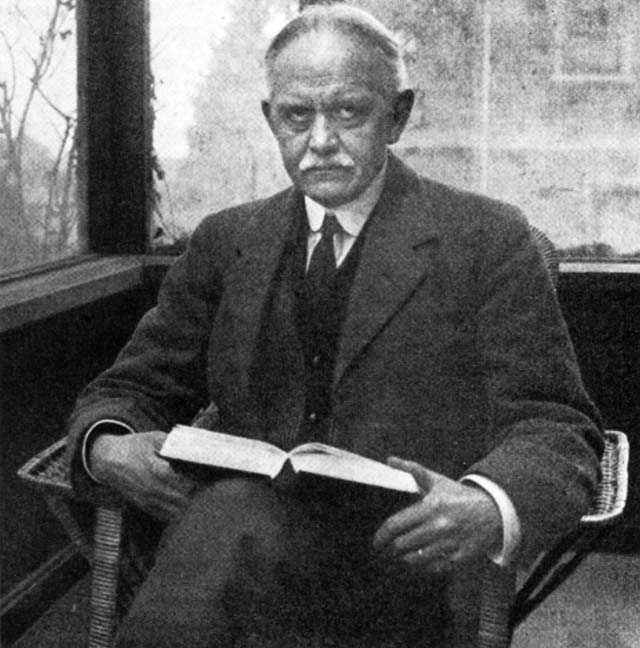
WHEN GAYLEY came to Berkeley in the fall of 1889, the University of California was beginning its twenty-first year of teaching. In 1889, a total of 701 students was enrolled, 401 of whom were in the colleges at Berkeley. The senior class at Berkeley contained 39 students, the junior 51, the sophomore 46, the freshman 94; there were 150 students in special standing; and there were 21 graduate students, two of whom, W. E. Downs and Armin O. Leuschner, were candidates for the doctorate. Charles M. Bakewell and Charles L. Biedenbach were candidates for the M.A.; of the three candidates for the M.S., one was William E. Ritter. The rest of the graduates, who were pursuing special subjects, included Charles S. Greene, Joseph D. Layman, Elsie B. Lee, Mary E. McLean, Emmet Rixford, Millicent W. Shinn, and James Sutton. All these names were destined to become well known, either locally or nationally. But there were no graduate students in English. In 1890, the faculty at Berkeley consisted of 17 professors, 6 associate professors, 5 assistant professors, 9 instructors, and 23 other officers. Martin Kellogg was president pro tempore, after the retirement of Horace Davis. Among the members of the faculty of the Berkeley colleges were Joseph and John LeConte, Willard B. Rising, George Davidson, Eugene W. Hilgard, Frederick Slate, Frederick G. Hesse, Bernard Moses, William Carey Jones, Edward J. Wickson, Irving Stringham, George Holmes Howison, Thomas R. Bacon, Mellen W. Haskell, John C. Merriam, Adolph C. Miller, Andrew C. Lawson, and Isaac Flagg. Several of these were at this time instructors or assistant professors who had not yet made themselves known beyond California, or even Berkeley. The annual expenditure of the University was about $250,000
It was, then, a small state university to which Gayley had been called; but it was a university that was destined to grow by leaps and bounds, in numbers and scholarship, until it should stand at the head of American state universities. In that amazing growth, the new head of the English department began to play a prominent part. He grew with the University, and the University never outgrew him.
In 1870 the English department had boasted one professor, William Swinton, A.M. In August of that year, Bret Harte had been offered an appointment as Professor of Recent Literature, but he had declined it in October. Swinton was not without fame. General Grant, in his Memoirs, tells the story of how Swinton was discovered, crouched behind a stump, eavesdropping on a campfire conversation between Meade and Grant. He was honored by a personal reprimand from the latter. Later, caught at other mischief, he was ordered shot; but Grant released him and sent him away. By 1870 he had published Rambles among Words (1859) and four books on the Civil War. From 1871 to 1886 he put out some sixteen schoolbooks in elementary geography, grammar, word analysis, etc. At Berkeley, in 1870, he bore the burden of the title Professor of the English Language and Literature, Rhetoric, Logic, and History. Besides, he was Librarian. He offered courses in "the history and structure of the English literature." His chief textbooks were Latham's Hand Book of the English Language, Marsh's Lectures on the English Language and Early English Literature, Whitney's Linguistics, Trench's Study of Words, Swinton's Rambles among Words, Whately's Elements of Rhetoric, Blair's Lectures, Campbell's Philosophy of Rhetoric, Chambers' Cyclopedia of Literature, Craik's English Literature, and Taine's Histoire de la littérature anglaise, Whately's Logic, J. S. Mills's Logic, Rawlinson's Manual of Ancient History, Grote's Greece, Mommsen's Rome, the "Student's Gibbon," Guizot, and Merivale. Out of these ambitious beginnings grew the English department at Berkeley.
In 1874 Swinton was succeeded by Edward R. Sill, A.M., and in 1875 the time of one graduate assistant, Thomas F. Barry, was divided between the departments of English and mathematics. Sill (1841-1887), a graduate of Yale, had traveled round the Horn to California, had clerked in the Sacramento post office and in a bank at Folsom, had returned East to study divinity at Harvard for a short time, had worked on the New York Evening Mail, had taught school in Ohio for three years, had been principal of the Oakland High School, California, and thence, at the invitation of President Daniel Coit Gilman, had come to the University at Berkeley. He was, in his own right, both a poet of small output yet fine quality and an essayist of graceful and leisurely comment.
He was modest, poetic, charming, and rather picturesque. He was a handsome creature. He was always riding a black horse about the college town, and back into the bare hills, where he enjoyed the marvelous views of San Francisco Bay and the Golden Gate. But he was not the sort to appeal to the usual run of young collegiates. English, under him, decidedly was not a popular subject, even if he did revise the curriculum. His lengthy prospectus (1875) insisted that the study of English in a college should simultaneously for four years explore the history and structure of the language, trace the literature of past and present, and practice the arts of composition, rhetoric, and criticism. "During the four years, these studies go hand in hand, constantly helping each other to a higher development." Sound as the idea was and is, Sill, like his predecessors and successors, found it necessary to skimp simultaneity in nourishment by temporally dividing the diet. A sequence of courses in language, literature, and composition and rhetoric was devised. New texts were added; old ones were dropped. Now Hadley, Earle, Maetzner, Ellis, Morris, Thorpe, Whitney, Max Müller, and others were lumbered into position on the language line, in evident imitation of the methods of contemporary German scholarship, and juniors were proudly invited into the comparative study of Anglo-Saxon, Latin, Greek, English, German, and French grammar. The courses in literature and composition did not sound equally formidable; but their announcement was almost equally grandiloquent. Professor Sill evidently had a very high and serious aim in all the English work he concocted for undergraduate consumption. One gratefully remembers, therefore, that in practice he wrote charming poetry and graceful essays, howsoever heavy was his theory of teaching.
Three years later, in 1878, the prospectus was much condensed and very materially simplified, and one "Josiah Royce, Jr., Ph.D., Balt.," was added to the staff, as instructor in the English language and literature. Royce, later to become internationally renowned as the leading American exponent of Idealism, was at this time twenty-three years of age. Born in Grass Valley, California, in 1855, he had graduated at Berkeley in 1875, had studied philosophy at Leipzig and Göttingen, and then had been one of that extraordinary first group of Fellows, including William James and Charles Peirce, elected at the newly established Johns Hopkins University. At Johns Hopkins he received his Ph.D. in 1878, and at once was brought back to his alma mater. He remained in the English department for four years, going thence to Harvard, to begin his long and glorious career in its department of philosophy. At Berkeley he must have exercised a restraining influence upon Sill. At any rate, in 1880 there was a freshman course in rhetoric, logic, and composition; a sophomore course in composition and "library work"; a junior course in composition and language study; and a senior course in prose, poetry, composition and speaking, and comparative philology. The junior course in the comparative study of grammar had dwindled, seemingly, into a study of Whitney's Language and Study of Language. In 1881 Royce prepared for his students in composition A Primer of Logical Analysis, the very sight of which today would empty a classroom.
In 1883, Sill and Royce, a famous pair, left the English department and were replaced by Albert S. Cook, Ph.D., as professor, and Cornelius B. Bradley, A.B., as instructor. Cook was really trained in the new philology. He had studied a year at Göttingen and Leipzig, and some three years at Johns Hopkins, then in London, and under Sievers in Jena. Bradley, recruited from the Oakland High School, in the neighborhood, as Sill had been nine years before, introduced the famous (alas, to most students, infamous) freshman course, English Prose Style, based on William Minto's Manual of English Prose Literature, a book that presently came to share with Bourdon's Elements of Algebra the distinction of an annual mock burial at the hands of groaning undergraduates. For six years Albert Cook, who afterward became the head of the English department at Yale, guided the department at Berkeley, reorganizing the curriculum by multiplying courses of more specialized content. He himself offered work in Old and Middle English, Beowulf, Chaucer, Shakespeare, Milton, Burke, Dante in translation, and the history of English literature. For two years Francis H. Stoddard was added as instructor, but he was replaced in 1888 by W. D. Armes.
Cook, however, was too learned in fact, as Sill had been in theory, for the taste of the students. English languished at Berkeley. It was considered a "stuffy" subject, and for the most part was heartily despised. When Cook accepted a call to Yale, in 1889, everyone felt that the time had arrived to call as head of the department someone who could lift English from the slough of dislike and despond. How the choice fell upon Charles Mills Gayley has already been told.
The new head did not have the doctorate, but he had spent a year in Germany, knew the latest things in English studies, was sound in Latin and Greek and had taught the former amazingly well, was said to have a knowledge of philosophy and aesthetics, to have read widely in history, and to have written verses. Above all, he had triumphantly rescued the English work at Michigan from a similar slough. Three notable names, Sill, Royce, and Cook, had gone before him---in vain, so far as the students at large were concerned, though the curriculum had gradually been whipped into shape from the days of Swinton to those of Cook. Berkeley wondered what sort of man this new, young head of the department might be. Would he be romantic, handsome, and difficult, like Sill? Learned, precise, and difficult, like Cook? Or something of both, or nothing of either? At Michigan he had been nicknamed "The Irish Troubadour."
Bradley and Armes were there to meet him, and a new instructor, a Dr. Hubbard, had been added. In the rest of the faculty, considering its small size, there was a goodly number of men of first-rate ability, against whom he must needs be measured. In the College of Letters, from some two-hundred-odd students he would draw a few small classes, and he would find their attitude toward his subject vividly enacted in the annual Burial of Minto.
That burial deserves passing notice. At the end of each college year the freshman class placed two hated textbooks in a coffin, and in solemn funeral procession bore the coffin across the campus to a little slope in what used to be called "Coed Canyon," just west of the present Faculty Club. There, after appropriate ceremonies, the casket was lowered into a grave and covered with earth. A suitable epitaph was erected. The rows of little graves were not molested, and were one of the stock sights of the University. Later, cremation was substituted for burial, with wild processioning of devils and priests through the city streets, mock mourning, good-natured warring, and scurrilous scoffing, with a truck for a hearse, with weird priests setting off red fire and skyrockets from the trucks, and with a grand finish on the campus, where flames at last licked up the coffin, while the "Damnator" spoke his curses upon the books, and a "Laudator" sang the praises of the freshmen. The date of the first Burial, of Bourdon only, was June 3, 1875; Minto was added at the Burial of May 22, 1886.
So the English manual, along with Bourdon, was consigned to the realm of lost souls year after year. "Then came Gayley," wrote an eyewitness of these events. "Then came Gayley! It is impossible to describe his enthusiasm. He was the most alive person I had ever seen. He spread a contagion of enthusiasm." And though the Burial continued as a custom until 1900 the reputation of the English department at once began to change for the better. How the new chief took hold, what changes he initiated, what was the 'faculty atmosphere' of those days, what changes his own teaching underwent, and what advance he made in his own scholarship during the next eight years, until his first sabbatical leave, make the story of this chapter.
The students were at once aware that a vivid and admirable personality had been added to the faculty. He took hold of his work with vim and energy. He was as active as quicksilver. Soon the Berkeley students were aware of the figure the Michigan students knew so well---the young, slender, tall figure, the swarthy complexion, the large brown eyes, magnetically alive. He carried himself with easy distinction. But he was not self-conscious. He appeared before his classes in tennis flannels, and in blazers, broad-striped in black and red. Other members of the faculty began to copy his freedom in dress. One staid professor, who had been a preacher, came to recitations in a linen duster. Gayley also set a style in Shakespeare beards. He was always vivacious, and he loved to tell Irish stories in class and out of class. Word went round that he had a generous outlook upon the world, that he was easy to approach, that he believed rules were made to be broken in peculiar cases, that he could look at life and rules and problems as students looked at them, and could respect a student's view while broadening it with his own. He met the students more than halfway, without ever losing his dignity. He had a way of talking which made the student feel that this professor was first of all genuinely interested in him as a human being, and therefore really believed that the ever-present problem was how to fit the University to this human being, instead of how to squeeze the individual into the system. He worked with a student, rather than at him. He was an older comrade. He was a man before he was a professor. He had an impetuous desire to be of personal assistance. He was full of enthusiasm, and his enthusiasm was contagious. In the Senior annual, The Blue and Gold, for 1891, a student tribute was paid to him. "The University of California may congratulate itself in having such a liberal and energetic young man in a place where unconstrained teaching is of such importance. His broad culture and original methods have already brought his classes into popularity, and his fearlessness and independence of speech have the agreeableness of rarity in this State institution."
It was known that he had introduced Rugby and tennis at Ann Arbor, that he had persuaded the students at Giessen to set up a gymnasium, and that he had written a university song for Michigan, and published the Michigan collection, Songs of the Yellow and Blue. Before long, in 1895, he composed the first of his California songs, "Blue and Gold," and on November 20 of the same year his famous "Golden Bear," beginning "Oh, have you seen the heavens blue, heavens blue' " was written to celebrate the victorious return of the first track team to be sent east by the University. The team had defeated Michigan, Chicago, and many other teams of the larger mid-west universities. The campus was agog with excitement. Gayley's song, a vivid interpretation of the popular enthusiasm, was an immediate success, and contributed to the selection of a "golden bear" as the mascot of the athletic teams. In his papers has been found a much marked copy of some printed account of the bear on the old flag of the Republic of California, and it is evident that he took the suggestion of the bear from this source, and then united to it the heavenly constellation of the Bear: "He's center-rush in th' heavens, I swear," etc. After the first singing of the song in Stiles Hall, The Berkeleyan printed it on its front page, and added the "Blue and Gold" on the back page. Its issue of November 22 contained the following editorial: "In after years, when these songs are sung by every undergraduate and by many an alumnus (and we have no doubt of such futurity) it will be deemed a great honor to have been at the 'first practice game,' to have been, as it were, a charter member in their first production." The following February, the management of the class manual, Blue and Gold, announced that a volume of college songs edited by Gayley would be published along with the annual, provided suitable arrangements could be made. In October, 1896, the chairman of the Associated Students appointed a committee on football songs, consisting of Gayley and two seniors, a Miss Morgan and a Mr. Case. Evidently the new professor of poetry was not above being interested in college songs!
Moreover, he was hugely interested in debating, and he at once began to lend his support to this activity. During the decade 1890-1900 he was the inspirational force behind debating at the University. He presided at debates between Bushnell Union and the Student Congress, and presently (1893) organized a class in argumentation, which was eagerly welcomed by the students and at once became the training ground for those who wished to take part in the annual intercollegiate debate with Stanford. This class inaugurated the systematic training of debaters in the University. In August, 1894, Baron Pierre de Coubertin established the Carnot Medal, in honor of President Carnot of France, for whose death France was then mourning. Each year, representatives of California and Stanford were to debate for the medal, upon a subject pertaining to French affairs. Similar medals were also offered by De Coubertin at Princeton and at Tulane University, New Orleans. Professor Gayley at once played up the interest of California in the "Carnot Medal Debate." He and Professor Thomas R. Bacon of Berkeley and Professors Ross and Lathrop of Stanford were appointed to set up the rules for governing the debate, and the first debate was held, and lost, at Stanford in April, 1895. Gayley was now more than ever the chief vivifying factor in the debating circles at Berkeley. The student paper, The Berkeleyan, announced, as a regular part of its campus news, the debates of his class in argumentation. In October, 1895, the class as a whole was taken into the Students' Congress, and held one recitation a month as part of that organization. On January 21, 1896, The Berkeleyan said, "We have an excellent lot of men from which to choose our Carnot and our Intercollegiate debaters, thanks to the unremitting efforts of Professor Gayley." Those were the palmary days of intercollegiate debating in California. The interest was second only to the interest in intercollegiate athletic contests. The audiences were large and victory was celebrated enthusiastically. But it was Gayley's spirit that inspired the Berkeley debaters and their student supporters in the annual contests. The second Carnot Medal was won for California by a certain senior, Martin Flaherty, February 7, 1896, and an editorial in the Daily Palo Alto attributed Stanford's defeat to a lack of such training in style and delivery as was set up for debaters at Berkeley.
Martin C. Flaherty, for many years head of the Department of Public Speaking at Berkeley, was one of Gayley's 'finds.' In 1891-1892 Gayley had inaugurated University Extension lectures with a course in Shakespeare, given to a large group in San Francisco. In the group was a boy who gave his name as Martin Flaherty. This boy began to take a notable part in the discussions. When the members of the class read their own rather thin papers, it was difficult to get anyone to speak loud enough. The authors, most of them female teachers in the San Francisco schools, were badly frightened. "Louder, please!" Gayley would beseech them again and again. Then Flaherty's turn came. "Now, remember," cried Gayley, "for Heaven's sake, loud! " Flaherty's voice rang the rafters. Gayley was delighted.
"Wait for me after class, Mr. Flaherty," Gayley said. Then, "What are you doing?"
"Studying law in a law office."
"You're not a graduate of a university?"
"No."
"Well, you ought to have a university education."
Flaherty was already aware of the need. Without telling Gayley, he came to Berkeley, and one day they met by chance on the campus.
"What are you studying?"
"History, mostly."
"Fine! But you must get as much English as possible."
So, in 1892, Flaherty joined one of Gayley's classes. It was a class in Old English! But later he entered Gayley's course in debating, and there began to prove himself. After he had won the Carnot Medal, and had distinguished himself as a member of the first and second winning intercollegiate trios, Gayley got him to help in training debaters, procuring for him in 1896-1897 a fellowship in argumentation, the salary of which was supplied by the Hon. James D. Phelan. Shortly after, Flaherty was appointed Instructor in Argumentation. At the end of two years, under Gayley's persuasive influence and as a result of his own ever-growing interest in academic work, Flaherty finally decided to give up his studies in the law and follow teaching as a profession. But the training he brought from the law always stood him in good stead, and was in part responsible for that clear insistence upon adequate preparation in fact and upon logic in presentation which always distinguished his work in argumentation and forensics.
In February, 1897, Harry A. Overstreet, later a professor of philosophy at Berkeley, and now at the College of the City of New York, won the Carnot for California, delivering one of the most powerful and finished arguments ever heard in this series of contests. The memory of that evening is still green for those who were present in the hall at Stanford. Three days later, The Berkeleyan, commenting editorially upon the victory, took occasion to pay another tribute to Gayley. "The active interest taken in debate by the students at California during the last three years has been a matter of remark, and the renaissance is due more to the influence of Professor Gayley than to any other one cause. By untiring personal work among our debaters, and by the wise establishment of courses in forensics and argumentation, Professor Gayley has contributed largely towards bringing our debating interests into the prominence they now occupy, and has infused into our men the spirit of victory that has given California the ascendency in debate over our rival down the bay. The next thing before us is the intercollegiate debate. If this is won for California, we can feel that we have almost made up for our Thanksgiving Day's ignominious drubbing [in football]." Indeed, in those days, there was a cliché at Berkeley, to the effect that "though Stanford may have the brawn, Berkeley certainly has the brains." Gayley's own attitude toward victory was expressed in an interview which was published five days later in the same paper. "In matters of debating I have always insisted on modesty before the event, and generosity after it. Assurance and braggadocio have never gained a victory, and never will. As long as Mr. Flaherty and I have charge of argumentation we intend to impress upon the minds of those interested the fact that no matter how sure you may be of your own training and the validity of the argument, the man who is cocksure beforehand generally comes out second best, and that the side that wins does not abate one jot the glory by emphasizing the excellence of the side that has been overcome. The spirit of university debating is not the spirit that calls for such expressions of mutual esteem as the slogan, 'Give 'em the ax right in the neck.' That may well be reserved for champions in another field."
A remarkably successful by-product of his interest in debating should logically be mentioned here, though in point of time it belongs in the next chapter. In the fall of 1898, somewhat relieved of his responsibility in the field of debating by the appointment of Mr. Flaherty, he gathered a group of men which included Victor Henderson, Richard Walton Tully, Milton Schwartz, Alfred C. Skaife, Clinton E. Miller, Willsie M. Martin, Ezra Decoto, and Archibald Cloud, and began with them what came to be one of his famous courses, Oral Debates upon Literary Topics. He excluded women by setting up certain prerequisites to which he adhered with the women but neglected for the men. Masterpieces of literature were studied by drawing from these works questions and propositions for debate. The course was given in a two-hour period, once a week. The hard but enthusiastic work of the course and its definite training in arguing from the evidence soon gave it a notable reputation, so that many of the best men were always begging to be admitted. It was held in Room 24, on the top floor of old North Hall, from four to six. Outside the room, waiting for Gayley's arrival, could be seen some of the best-known men in college. About them there was always a special atmosphere, as of something important about to happen. Other students regarded them with awe, and wondered what special occasion could draw such men together. Under the witty wisdom, severe criticism, and fervid encouragement of the instructor this course was a rare privilege; its members were indeed fortunate, and as the years went by, it became one of their most grateful memories. From its vivid discipline they gained a lifelong masculine interest in great literature.
In his classes, in fact, the new professor of English at once made his mark. There was a new voice in Berkeley, and it was a golden voice, the very splendor of which was like a miracle in these dull classrooms. His voice was one of Gayley's greatest natural gifts. Resonant, warm, and clear, it was a musical baritone of great range and richness, continually modulating to his mood, never monotonously pitched, always electric in effect. It was a perfect vehicle of his enthusiasm and his scorn. When he read aloud a poem he reverenced, his voice itself was a perfect interpreter of its force or tenderness, and of its subtle nuances of meaning and suggestion. When he read a poem he scorned, the poem became scornful of itself. Just to hear Gayley lecture was an event in a student's life. To hear him read poetry was to begin to love poetry. It was a supremely beautiful voice. Years later, the day Gayley retired from teaching, the head of the department of Latin, himself no mean reader, wistfully remarked: "After all, Gayley's greatest service in the University was his reading poetry aloud."
But his phrases, too, aroused admiration. They were sinewy and forthright, eloquent and colorful; fluent, epigrammatic, and humorous. He was never at a loss for a telling epithet or a revealing figure of speech. He could range from the choice and measured words of a classic simplicity, through middle reaches of spirited, colloquial vividness, down humorous avalanches of metaphor or up again to a sierra of invective. But there was no preciosity. His lips never caressed their phrases. Always it was a man speaking, not a self-indulgent poseur; but no ordinary man. What he professed, he possessed, or was possessed by it. Noble ideas and a noble practice in living were united in him, and he carried them like a banner, and spoke of them contagiously. Students did indeed hang upon his words, and his enthusiasms and epigrams and puns passed current on the campus and found their way into student publications.
No one slept under his lectures. The second he entered the classroom, or any room, that room became alive with his own distinction: something vivid, generous, magnanimous. The class was always assembled before he arrived, and it waited, with a peculiar expectation, not for 'another professor,' but for a unique personality, bringing with it the breath and electric spark of a splendid world. Always he came like a messenger bearing important tidings from some vital center of life-at-its-best. The voice and the words transported his hearers into that center of the spirit. And for thousands that center became, for the rest of their lives, a vantage point, long after the actual words were forgotten. The man was unforgettable.
In the 1897 Blue and Gold, the frontispiece of which is a full-page photograph of Gayley, is a contemporary student appreciation of his work as teacher and lecturer.
But there was hard work under the new professor. Rigorous recitation, free discussion, and a plentiful use of the Socratic method kept students on tiptoe, and made them use the best that was in them. The assignments in his courses were enormous, the examinations difficult. An enterprising business, called a Theme Agency, advertised that it would supply written papers for various classes. The price of themes suitable for Gayley's courses was five dollars; for other English courses, fifty cents.
At Berkeley, as the head of the Department, he had far more freedom to develop his gifts as a lecturer than he had had at Ann Arbor as an instructor to whom rather narrow duties were assigned. Very quickly, therefore, he made a platform reputation far beyond anything he achieved in Michigan. One of his first public lectures, delivered in Berkeley on October 22, 1889, vividly and eloquently portrayed his memories of the 1886 campaign for Irish Home Rule. Those who attended the lecture realized at once that a trained and gifted speaker had come to the University, and as they listened to his humorous illustrative anecdotes and felt the fire of his enthusiasm, they did not need to be told that the lecturer "had passed somewhat of his life upon the sod." In 1890 he was delivering a popular lecture, "The Drama in Literature and Life," in Oakland, at Mills College, in Santa Cruz, and before the Charming Club in San Francisco. Naturally, as a man of thirty-two, he was then much surer of many things than he was later; he was sharper in his scorn for Ibsen than in later years, more given to wide and hasty generalization.
But then as always the fire of his enthusiasm was kindled by the significant correlation of life and literature. The audiences of this lecture were given a quick and inspiring survey of the drama from China and Japan to Paris and London, with side glances into the demesnes of philosophy and aesthetics, religion and ethnology, ethics and economics and history! But under the influence of his magnetic voice, for a little while the world's literature became a supremely significant part of the world's life. Soon he was in demand for public lectures up and down the State. Various "reading circles" both within and without the University, originated from the interest aroused by his lectures. One of the first of these, at Berkeley, was the Wordsworth Circle, comprising six men and six women. The men, be it noted, were as much interested as the women!
But these reading circles gave way to classes under University Extension. As early as 1886-1887 President Holden had recommended a plan for extension work, and in 1888-1890 President Davis had advocated the establishment of extramural courses. For some years the departments of agriculture and of astronomy had from time to time offered various services in the general nature of 'extension.' In 1890-1891 Gayley began to tell his colleagues about 'university extension' in England, and to press for the adoption of some comprehensive plan under a policy not of imitation of the English or of any other system, but of independent, experimental development. Characteristically he objected to the term itself, while supporting the proposal. "Though the terms 'University' and 'College' imply concentration and intension of educative effort," he said, "and though the phrase 'University Extension' is not only a contradiction in words but a suicide in sense, there is still no doubt that the movement, in spite of the misnomer, is of great importance. 'University Extension' should be called a 'Plan for the Promotion of Useful Knowledge,' or for the 'Advancement of Public Instruction.' " Today, 'Adult Education' is displacing the objectionable phrase. Largely as a result of Gayley's urgency, the University in June, 1891, announced that courses in history, mathematics, English, and philosophy would be offered in San Francisco if the demand should prove sufficient. Then, in October of the same year, extension work was initiated, and Gayley offered the first course, in the auditorium of the Academy of Sciences. It was a course in Shakespeare's tragedies, and 160 persons were enrolled. Visitors were admitted and soon the attendance increased to more than 400. The fire of Gayley's genius ignited that audience. Subsequently, in January, 1894, he conducted at Los Angeles a well-attended course in English comedy. He endeavored to keep these classes up to university level, but experience soon convinced him of the futility of ranking extension courses, though excellent in their sphere, on the same basis with academic work. A practice soon developed of omitting quizzes, essays, and class discussion, and of restricting the courses to lectures and final examinations. Most of the listeners, after all, were and remained auditors and amateurs. Nevertheless, the value and success of the scheme was demonstrated, and Gayley's own offerings were enthusiastically applauded by his public. In 1893, to the February number of University Extension, A Monthly Journal Devoted to the Interests of Popular Education, published in Philadelphia by the American Society for the Extension of University Teaching, he contributed an account of the origin and first achievements of extension in California. This article contains (p. 236) a report on the subject written by him, with the assistance of Professor Stringham, which had been submitted to the Regents of the University May 12, 1892. Thus he initiated the work in Extension, which was destined to grow to the present huge proportions of an annual enrollment of about 50,000 in classes and correspondence courses (to say nothing of 110,000 visitors at lectures and 3,500,000 in attendance at Visual Instruction). Thus, too, he gained further experience in lecturing and achieved a wide reputation as an eloquent speaker, of remarkable personal charm.
His fame also grew in another direction. As University Examiner he visited many high schools, a task he found tiresome but very informing, and provocative of a vivid interest in the relation, under the accrediting system, of the secondary schools to the University. The school authorities, impressed by the vision and charm of the new examiner, came to rely more and more upon his advice and leadership. In these visits began that close and lifelong association with the secondary system which was one of Gayley's contributions to the State. As, gradually, in increasing numbers, his own students at Berkeley went out to teach in the schools, this association became personal and intimate. Never was he too busy to answer letters from his old students who asked advice on their problems in teaching literature. Always he was eager to promote their welfare by recommendations to principals and school boards. Eventually, this correspondence was overwhelming; yet he steadfastly refused the aid of stenographer and typist, for he felt that letters written in his own hand conveyed the personal interest in his old students with which his heart always overflowed. In turn, the devotion of these teachers to the man and to his vision of teaching resulted in incorporating his influence in the schools throughout the State. Today these teachers are old in the service or have been retired from it by their age. But among their choicest possessions are the letters they long ago received from their beloved 'Chief,' and they look back upon the time when his influence permeated their classes, as upon a golden age. If all the letters now scattered in their jealous possession, and in the files of principals and school boards, could be collected, they would form a small library. Nor was this generous part of his work confined to the limits of the State. As the years went on and his fame spread far beyond California, he extended his efforts, in behalf of his 'boys' and 'girls,' throughout the country, and even abroad. How often did one hear him explaining, grumbling, that the whole morning, or the whole day, had been consumed in this correspondence! "How can I ever get back to my work? How can I ever complete anything?" Yet this correspondence was never neglected, never procrastinated. He invariably put the interests of others before his own. He could not bear not to help a fellow being. Many a man and woman who now occupies an important place in education, or even in the world of business, owes his first or some later position to the influence of Gayley. Indeed, one of the pleasures of compiling this biography has been the large number of letters from such persons, eagerly and gratefully testifying to the practical aid they received from him years ago, and to the inspiration they owe him, as fresh today as ever it was. These letters, many of them too personal, perhaps, to be put into print, make an extraordinary monument to his unfailing goodness of heart.
But we must go back to the first days and first achievements at Berkeley. His immediate task, of course, was the reorganization of the English department. Cook, as was noted above, had already defined and broadened the instruction in English by increasing the number of courses of specialized content, including work in Old English and Beowulf, Middle English and Chaucer, and courses in such authors as Shakespeare, Milton, Burke, and Dante. The pretentious promises and disappointing performances of the days of Swinton and Sill had become strange memories under Cook and Bradley. In Gayley's first year, 1889-1890, the number of courses was raised from the thirteen of the previous year to nineteen. He himself offered nine courses, of which two, Chaucer to Davenant, and Davenant to Wordsworth, were a rearrangement of the old offering in the history of English literature. He also took over the Shakespeare and something called Masterpieces of Literature. His five distinctive additions were listed as Science of Rhetoric, Nineteenth Century Poets, Aesthetics of Literature, Principles of Criticism, and Comparative Literature. These five courses, and the Shakespeare, as time eventually proved, gave a measure of the interests of the new head of the department. The Science of Rhetoric stood for his long-since awakened interest in argumentation and debating, and the very title indicated the definitiveness and seriousness of the drill which in this work was to him a second nature and sine qua non. The Shakespeare prophesied his lifelong interest, ever-continued courses, and chief scholarly publications in and concerning that author, and in the drama in whole or in part. The Nineteenth Century Poets began another lifelong interest. Perhaps of all the courses he offered during his incumbency, this course, given repeatedly but seldom twice the same, brought him the greatest pleasure. He always turned from it to the Shakespeare with keen anticipation; but as each alternate year he came back to it, his pleasure was very great indeed. It gave him that adventure in the enjoyment of many and varied poets which for him was always a kind of intellectual intoxication. He was ever adding new poets to the list; and as the twentieth century grew, he was assiduous in collecting its best poetry under the title of the previous century, until contemporary poetry fairly burst the old label and achieved a title and a course of its own. With what a vim he gave himself to these poets, so that he seemed to bring his class authentic personal acquaintance with the men about whom he talked! Successive generations who heard him on Browning, Wordsworth, Tennyson, Keats, Meredith, William Morris, Kipling, John Davidson, Stephen Phillips, Walter de la Mare, John Masefield, James Stephens, Seumas O'Sullivan, and a host of other poets, now recall these writers as living characters they once met. But most of all they remember the man who lectured, his points of view, the things he loved in poetry, his enthusiasm. They remember how under his treatment the world grew fairer and nobler, more worth the effort to keep it fair and noble and generous. Phrases, a few sentences, of the lectures may dwell in memory. Perhaps only a few. But the sight of the lecturer, virile in devotion to the best that has been thought and beautifully poetized, made an indelible mark, and was transmuted into a nobler insight into what makes life truly worth while.
Sometimes, suddenly, he would turn aside to lecture on Goldsmith or Crabbe, and then students would beg him to give a course in eighteenth-century poets. The hunger for poetry this man could create was amazing. His was a mind illuminated and illuminating.
The other three courses, Aesthetics of Literature, Principles of Criticism, Comparative Literature, bespoke his philosophical bent and his abiding interest in problems of literary development. In his year in Germany he had imbibed the new "kulturhistorisch" method and dreamed its dreams of bringing the study of the arts into organized relation to the evolution of culture in general; and there, too, he had found impetus to continue the speculative, aesthetic studies he had begun at Ann Arbor, which now he introduced at Berkeley. At the same time he became an active member of the Philosophical Union, in those halcyon days when Howison was its tutelary deity. These avenues of study, also, he continued to tread for many years, moving toward and accomplishing significant publication in each. Perhaps, at first, his consuming interest in aesthetics overloaded some of his courses with recondite theory, to the astonishment and confusion of some of his students. But as the years went by he more and more kept his aesthetic theory to himself, as an invisible, unspoken source higher than the tap whence flowed his lectures. Yet to the end, whenever he presided in a seminar where young minds reveled in adventurous theory and generalization, his eyes always gleamed in sympathetic eagerness as he remembered his own youthful devotion to soaring speculation. After having given for years the only course in aesthetics offered in the University, he rather gladly relinquished the work to younger heads in the department of philosophy.
In his second year at Berkeley, 1890-1891, three more courses were added, his own in American Literature, undertaken, perhaps, in memory of his Michigan friend and instructor, Moses Coit Tyler, and two courses in Gothic and the History of the English Language, given by Alexis F. Lange. In calling Lange, whom he had known at Michigan, to take charge of the linguistic work of the department, Gayley indeed chose wisely. Lange was thoroughly trained in German scholarship, had his doctoral degree from Michigan, and was a singularly well balanced, far-seeing, and constructive mind. Slower in intellectual movement than Gayley, but sure and methodical in his attack, he was in temperament almost Gayley's opposite. But he understood and appreciated the virtues of Gayley's gifts. These two made an excellent team, ably supported by the clear, incisive, almost hypercritical mind of Bradley, whose scholarship was both wide and exact. Under the leadership of these three men, so different one from the other, yet so supplementing and respecting and admiring each other, the English department rapidly moved forward in organization, achievement, and reputation. The newest and soundest methods of literary scholarship were introduced and ably taught, while the older rhetorical tradition was retained in modernized form and proper balance. In 1892-1893, courses for graduate students were announced for the first time, three in philology by Lange, one in higher rhetoric by Bradley, and two by Gayley, viz., English Comedy and Comparative Literature. This year too, another man of distinctive ability was added to the staff, Louis DuPont Syle, Gayley's boyhood friend at Blackheath. The story of that surprising meeting of Syle and Gayley in Philadelphia, while the latter was spending a college vacation with his Pennsylvanian cousins, has already been told. The reunion of these old friends in Berkeley was to them an event of deep and pleasurable satisfaction. Syle's chief literary interests were in the eighteenth century, so that this period was now more amply provided with courses. In 1893-1894 the number of courses had advanced to more than thirty. The staff now consisted of six men: Gayley, Bradley, Lange, Armes, Syle; and Thomas F. Sanford, a graduate of Yale, who was the addition of this year. A seventh man appeared the next year, Evander Bradley McGilvary, a relative of Professor Bradley. He had been a fellow of Princeton Theological Seminary, where Gayley's father, Samuel Rankin Gayley, was prepared for the ministry and so for that tragic adventure in China of which the story has already been told. McGilvary, now the well-known professor emeritus of philosophy at the University of Wisconsin, remained in the department for but one year, transferring thence to the department of philosophy, in which he attained his doctoral degree in 1897, and became assistant professor.
Between 1892 and 1894 the aims of the new organization were substantially realized: the elementary courses in analysis and composition, the sophomore course in the history of the literature, advanced courses in periods, movements, types, and authors, linguistic courses, argumentation and debating, American literature, courses in method and criticism, speculative and theoretical courses, and comparative literature. The first course in Medieval Literature in general was offered by Bradley in 1894-1895. In this year, also, Lange opened two new fields, the influence of Germany on English literature, and Old Icelandic. Gothic, Old Saxon, and Sixth-Century English had already appeared. It was a rather amazing achievement for that time, and it was recognized as such. In the November number, 1895, of the Educational Review, Professor G. R. Carpenter, of Columbia College, reviewing Payne's English in American Universities, wrote as follows: "The degree to which the college study of English is philosophically planned and organized is simply surprising. The day of scattering courses, following the whims of individual instructors, seems to be over. Each branch of study is now treated as a part of the whole group of English studies, in which, and for the good of which, it exercises its peculiar functions. In this necessary organization the Western colleges seem to be stronger than the Eastern. The most broadly and thoroughly planned scheme, that in force at the University of California, is in many respects radically different from the common Eastern type, and deserves the careful study of teachers throughout the country." In the decade, from about 1888 to 1898, when the modern study of English literature was being adopted and formed by universities throughout the country, California was leading the way by the audacious planning of Gayley, Bradley, and Lange.
For many years Lange continued in the department. But eventually, his powers of organization having been recognized by the faculty at large, and his grasp of educational aims and methods having become notable, he was drafted, at Gayley's own suggestion, to reorganize the department of education. The success of that new venture is an important part of the history of education in California. Among other changes introduced by Lange was the setting up of the junior colleges.
But Lange was not the only man of rare promise and achievement to be brought from Michigan by Gayley. A year after Lange arrived in Berkeley, the Latin department needed a young man. Gayley presented to the acting president, Martin Kellogg, the name of his former student and friend at Ann Arbor, Leon J. Richardson. The nomination was accepted, and Richardson arrived in the summer of 1891, to begin a long and distinguished service, especially notable for his power of presenting Latin less as a dead language and more as a living literature. He, too, like Lange, had an executive gift that eventually carried him to other duties. Today he is nationally known for his work in adult education while he was director of the extension division at California. That Gayley so soon after his own arrival in 1889 should have been instrumental in calling such men as Lange, Richardson, and McGilvary to Berkeley speaks eloquently of the energy and wisdom with which he entered into his new field; and the support given him by the annual additions to his staff testifies to the regard in which the University authorities held him. This support continued. In 1895, Walter Morris Hart, later to become a widely known scholar as well as a vice-president of the University, joined the department. The following year Martin Flaherty, of whom mention has already been made, became an instructor in argumentation.
The University faculty in these early days, 1889-1897, was a pleasant body of men. It had many of the cordial attributes of a small and select club of kindred spirits. Its discussions, when it met formally and officially as the University Senate, were impersonal, well-considered, and pertinent. The new head of the English department soon became very active, frequently speaking on the floor of the Senate and always laboring on many committees. He brought authentic reports of what Michigan, the foremost state university, was accomplishing with its system of accrediting secondary schools, with its new venture into extension courses for adult education, and with other phases of university organization. His colleagues realized that he had vision, and they liked his style of speaking, forceful but distinguished. Timid members of the faculty were at times a little shocked by his impulsive candor, but the results nearly always justified his views. He was an active member of many committees, including those on Schools, on Admission Requirements, on Student Affairs. President Martin Kellogg speedily put him upon the University Committee on Legislative Affairs, and on several occasions sent him to the legislature at Sacramento, to look after the University's interests. The legislators, themselves, testified how attractively he had met them and performed his duties. More and more, President Kellogg relied upon him in affairs both intramural and extramural, until Gayley was generally regarded as the president's right-hand man. Those were the days in which many of the seeds of the University's later advancement were sown, and most of the reforms during some ten years began with Gayley and his set of friends. Among these reforms some of the most important were the following: reorganization (1893) of the curricula of the old College of Liberal Arts into the three Colleges of Letters, Social Sciences, and Natural Sciences, with a combination of free and group elective methods; the development, from this reorganization, of university courses and methods, properly so-called; a more vital coöperation of the academic colleges with the professional schools; the establishment of more advantageous relations between the University and the high schools, the normal schools, and the small independent colleges throughout the State, by means of the accrediting and other systems; the organization and development of University Extension; the development of administration by committees, encouraging academic coöperation and conserving academic freedom; the establishment (1898) of the College of Commerce, the first complete college of the kind, of university grade, to be founded in the United States. Those ten years, from 1889 to 1899, during which the University trebled itself in numbers and the graduate courses increased tenfold, were the years in which a college grew to a university. It was a time of hospitality to new ideas, of insistence upon farsighted policy, of a growing University pride among professors, students, and alumni, and of singular forbearance, persistence, and wisdom in the debating of new measures.
Often, when important issues were being debated in faculty meetings, and the need for fuller consideration became evident, some member of the Senate would quietly address the chairman: "I move, Mr. Chairman, we make this question the subject of a dinner debate." The adjourned meeting would then take place around a dinner table at the California Hotel, in San Francisco. Generally, twenty to forty gentlemen would be present; sometimes as many as sixty. They leisurely enjoyed the good cooking for which the hotel was famous. They sipped their red wine and white wine, and the air was redolent with tobacco. Young men, like Leon Richardson, coming from the East or Middle West, where, perhaps, drinking, and even smoking, were frowned upon in the faculty, found in the informal freedom, equable bonhomie, and urbane bohemianism of these dinners a cause for amazement. In truth, these occasions were symposia. Everything was carried on in the finest possible spirit. President Kellogg presided with rare firmness and tact, always alert to prevent deviation and to anticipate aberration. No one stole the show. The discussions were extended and careful, extraordinarily sincere and forthright, usually ceasing just in time for the members to catch the last boat back to Berkeley. Years afterward, when these affairs long since had become only memories, those who had had the privilege of attendance looked back upon them as the finest academic gatherings they had ever known. A problem that was taken to more than one dinner was that of the proper relation of the University to the State. Long speeches were made by Howison, Joseph LeConte, Bernard Moses, Irving Stringham, Martin Kellogg, and Gayley. Then followed a series of dinners to discuss the kind of man who should be invited to become the new president of the University. Kellogg, with that simple nobility which characterized him, had said, "Gentlemen, this University has a great future, and I am not the man to guide its fortunes." President Eliot of Harvard and President Harper of Chicago were once present, and they contributed their ideas. These were the searchings of head and heart that preceded the coming of Benjamin Ide Wheeler in 1899. In all the talk, Gayley bore his part with distinction. By 1897 he was among the foremost in the councils of the University.
In business affairs, for all his Gaelic impulsiveness, Gayley was a true descendant of his Scottish ancestors. He had a remarkably good 'business head'; he was shrewd, cautious, thrifty, farseeing. His acumen was recognized. In 1896 he was elected a director of the Commercial Bank of Berkeley. Through various consolidations this bank was finally incorporated in the American Trust Company of California. During these changes Gayley retained his position as director and at his death was a member of the advisory board of the Berkeley branches of this Trust. At one time he was offered the presidency of a bank. As a bank director he was not a professorial figurehead. He participated deeply in all discussion, and his fellow members habitually listened to his suggestions and advice with eagerness and respect. "Be as enthusiastic as you like," he once said, "but always remember to be canny, too"---canny in no mean sense of the word, but in the sense of husbanding reserves of hard-headed balance and farseeing judgment. His advice in business matters was eagerly sought not only by his colleagues in the University, but by business men as well. And his advice was always sound, based on amazingly thorough examination of pertinent evidence.
Before passing to other matters, a word may be said concerning his church affiliations. He was confirmed in St. Mark's Episcopal Church, Berkeley, by Bishop Nichols of California, November 27, 1892. Shortly afterward he was licensed as a lay reader, and during the rectorships of the Rev. G. A. Easton and the Rev. George E. Swan he assisted frequently by reading the lessons and occasionally the entire service. When it was known that he was to read the lessons, University students flocked to St. Mark's, such was the renown of his simple but sympathetic and powerful delivery of the Scriptures. Often he addressed students in particular, on religious topics, either at special Lenten services or at meetings of the Student Club. He also formed the Canterbury Club, as a forum for the discussion of general problems of the application of Christianity to everyday life. His religious faith was simple and deep. No one could talk with him without being aware of it. He was thoroughly modern in the historical interpretation of the Bible and of Christian theology. He won from modern higher criticism not skepticism, but a purified faith in the reality of the spirit. His faith was expressed in his love of the beautiful. It was that love which made the Prayer Book and the simple but dignified worship of the Episcopal Church so congenial.
In the meantime, he had made a characteristic beginning of that large number of significant publications which eventually placed him among the five or six leading American scholars in the field of English studies. When he came to Berkeley in 1889, he had no scholarly writings to his credit. He had published in the Buffalo Express and in the Buffalo Sunday Courier, in 1881, and in the Atlantic Monthly, in August, 1886, some verse translations from the ancient classical poets, including Simonides and Anacreon, and some original poems in the classical mode. These efforts were an outcropping from his vivid and creative interest in teaching the classics at Ann Arbor, and were composed while he was still there in the Latin department. Two brief sentences in one of his later publications would seem to bear testimony to the origin of these early classical poems of his and to the way in which his mind awoke to an interest in writing. "How many a man," he wrote, "held by the sorrows of the Labdacidae or the love of Alcestis, by some curious wonder in Pausanias, or some woe in Hyginus, has waked to the consciousness of artistic fancy and creative force within himself! How many, indifferent to the well-known round, the trivial task, the nearest care of home, have read the Farewell to Andromache and lived a new sympathy, an unselfish thrill, a purified delight!" The classical character of his first compositions, taken with this later testimony to the creative influences of classical poetry, clearly indicate one of the seminal influences in his intellectual life, which was to produce much and varied fruit throughout his career. The rest of his ante-Berkeley publications comprised some short book reviews in the Buffalo Express and The Dial; one or two fugitive magazine articles; a collection of Ann Arbor college songs, Songs of the Yellow and Blue (Ann Arbor: 1889; 3d ed., 1895). and a serial in The Cosmopolitan (1889), written in collaboration with his half brother, David H. Browne.
But at Berkeley he turned to more serious writing. His first publication sprang from that interest in aesthetics which already has been mentioned. For his course in Aesthetics, and as the first step toward a larger work he had in mind, he needed a bibliography of aesthetics. Therefore, in 1890, during his first year at California, he produced, with the help of Fred Newton Scott of Ann Arbor, A Guide to the Literature of Aesthetics (University of California Library Bulletin No. 112, 121 pp.). Three years later appeared his first work of importance, in answer to a demand he himself had fostered. Soon after his arrival at Berkeley, the Academic Council of the University, heeding the suggestions of its Professor of English Literature, introduced into its entrance requirements in English the subject of classical mythology in its relation to English literature, and recommended, as a textbook, Bulfinch's Age of Fable. Gayley's contention was that much of the best English poetry needs for its appreciation an understanding of literary allusion to Greek and Latin, and also Norse and other Germanic, myths. The contention was, and is, sound; and the experiment of making the subject an entrance requirement met with favor. But there at once developed a demand for a textbook better adapted to the purpose than was the Age of Fable. At the request of the Boston publishing house, Ginn and Company, Gayley undertook a revision and rearrangement of Bulfinch's work. At the end of a year's labor he found that half his material was new, and that the remainder differed very considerably from the work on which it was based. It was decided, therefore, to issue a new book, with a title of its own, but with full acknowledgment of the indebtedness to Bulfinch. Thus appeared the first edition of The Classic Myths in English Literature (Boston, Ginn 8c Co., 1893, xxxviii+539 pp.). The beautiful scholarship of this book---accurate in research, enthusiastic in approach, distinguished in literary style, and rich in the vivid association of English poetry with classical story---finally established the Gayley tradition at Berkeley and throughout the State. Taught in all Californian high schools---sometimes, one fears, too woodenly, by minds incapable of divining the forever applicable poetic truths of the old myths---it became so well known, and for years was so taken for granted as natural and indispensable, that 'Classic Myths' and 'Gayley' became firmly connected in the minds of hundreds of thousands of teachers and students. Indeed, not a few high school graduates upon entering the University were surprised to hear that the initials C.M.G. stood for Charles Mills Gayley. They had assumed the name was Classic Myths Gayley. Some students, using the phrase 'Gayley's Myths,' assumed that Gayley himself had invented the myths. At least, so the stories go! The book and its fame were another of the fruits of that seminal influence of classical studies.
Moreover, the very title was symptomatic of the spirit with which the professional study of English literature, as distinct from the old 'rhetoric,' entered the universities of England and America during approximately the last quarter of the nineteenth century; for at least one aspect of that spirit was a conviction and promise that English literature should be studied in close relation to its classical heritage. For example, in 1885-1887, when the proposal to establish a chair of English literature at Oxford was being agitated, those in favor of the project insisted in the strongest possible way that the study of the national literature should be "indissolubly associated" with the study of the ancient classics. They advanced excellent reasons for this association: that a study of a subject should be concerned with its foundations, and that the modern literatures are very largely founded upon the ancient; that the forms and the spirit of much of the best of modern literature are not properly understood until they are seen as characteristic modifications of classical form and spirit; that certain phases of the human spirit, especially an unfettered and beautiful reasonableness, are more commonly realized in ancient than in modern literature, and that a knowledge of this excellence is spiritually profitable. Moreover, if an important aim of education is to liberate the mind from slavery to contemporary ideas by conferring upon it the freedom of different cultures, surely the classical cultures offer the most significant contrast to our modern complex of Christian theism, scientific naturalism, and mechanical whirligig. Finally, far underneath these cultural differences, the student, and especially the student of literatures, eventually discovers a common human nature reacting to circumstances in profoundly similar ways, however different may be the forms in which the reactions may be expressed. Then, indeed, the outer aspects of a culture cease to enslave his intelligence, for he understands something of the universal principles of human nature; and this profounder knowledge is of saving advantage in all the affairs of life, public and private. That Gayley was in full accord with these reasons for keeping the study of English literature in close relation to the ancient classics is amply proved by many of his written utterances as well as by his practice in teaching. In the Introduction to his Classic Myths he eloquently pleaded for this association of cultures; the book itself was one of his contributions to this method of study; and the enthusiasm with which, as a teacher of Latin at Ann Arbor, he had imparted to his grateful students the spiritual force and beauty of the classics, eminently fitted him for the chair of English Literature. His very progression from Latin to English meant not a reaction against the classics, but an infusion of their spirit into his way of presenting a modern literature, so that he was very definitely a torch bearer in a grand and noble tradition of teaching. And upon his students at Berkeley his love of the classics made an unforgettable impression. They came to realize that in the ancient classics of Greece and Rome lay one of the major sources from which he drew his rich, sympathetic understanding of life and literature. Under the influence of his enthusiasm, under a conviction that what had blessed so powerfully the man they so heartily admired might bring gifts to themselves, many of them were drawn to study Latin and Greek. Many other students found that to his home a 'major' in Greek or Latin was an open sesame.
The rest of Gayley's publications during this period were symptoms of his interests, rather than notable contributions. For example, there were various poems, articles, essays, and book reviews; syllabi of extension courses in Shakespearean Tragedy and English Comedy; a little pamphlet, Suggestions to Teachers of English in the Secondary Schools (1894, 68 pp.; 2d enlarged ed., 1906, 78 pp.), written in collaboration with C. B. Bradley, which was a novel venture for a department of English, and which for years was the chief vade mecum of the high school English teachers in the State; a paper, "English at the University of California," in The Dial (July 16, 1894), reprinted in W. M. Payne's English in American Universities (Boston: 1895). But special emphasis should be given to one of these symptomatic essays, for it marks his interest in the "kulturhistorisch" movement in literary studies, particularly in the comparative method of study. On August 1, 1894, in The Dial, appeared his article, "A Society of Comparative Literature," in which he calls for the organization of a society for the comparative investigation of literary growths. His argument is that trustworthy principles of literary criticism depend upon the substantiation of aesthetic theory by scientific inquiry; that for lack of systematic effort the comparative, scientific investigation of literary problems is not yet adequately prosecuted; that no one individual can hope by himself to complete the necessary inductions from the mass of phenomena in the world's literature; that, therefore, an organization of effort in a Society of Comparative Literature (or of Literary Evolution) is necessary. By this proposal he aligned himself with the contemporary scientific efforts of such literary scholars as L. P. Betz, Brunetière, Carrière, Demogeot, Grosse, Jacobowski, Max Koch, Letourneau, Posnett, Texte, W. Wetz, and Eugen Wolff. Obviously he was no less awake to the scientific than to the aesthetic approach to literary study, and he sought to make these approaches mutually supplementary.
He was, indeed, one of the first in this country to speak out loud and bold for the comparative method of literary research. But from Yale Professor Cook ridiculed his successor at Berkeley. He lifted one sentence from its context in this appeal in The Dial. Unwarrantably he let this one sentence represent the entire proposal. Gayley, stressing the need of a comparative method in studying the development of literary types and movements, had intimated that 'literary' beginnings among uncivilized peoples must be investigated. Cook could not swallow the cannibals. But his squeamish humor was already out of date, for already Steinthal (1868), Posnett (1886), Biedermann (1889), Jacobowski (1891), Letourneau (1894), and others were pointing the way to this rich field, and soon Grosse (1897), Comparetti (1899), Hirn (1900), Gummere (1901), Macculloch (1905), Hurgronje (1906), Mackenzie (1911), Beatty (1914), Pound (1917), and many others were demonstrating the usefulness of the comparative method when it is extended to the investigation of the oral 'literature' of the simpler peoples.
Thus the publications of this opening period (1889-1897) of his service at Berkeley evinced the following diversified but interrelated interests: organization of a University department of English, of the relations of English in the secondary schools to University instruction in English, and of extension courses in English; the study of the drama, especially Shakespeare and comedy; the close association of the ancient classics with the study of modern literature, in the high schools as well as in the University; the aesthetic approach to literary appreciation; and the scientific, comparative method of literary investigation.
His interest in original poetic composition experienced a marked impetus when he was appointed to write the Commemorative Ode for the celebration (June 24, 1896) of Angell's quarter-centennial at Michigan. This ode, one of the longest and noblest of his poems, was sung at the Celebration by a chorus, to music composed and played by Professor Stanley. It was sung immediately after Angell's address, while the audience stood. It made a deep impression. Five days later Angell himself wrote to Gayley as follows: "Your noble ode lent dignity to the whole occasion. It has been greatly praised.... I doubt if at any moment there was such an uplift of the vast audience as during the singing of the ode."
And now, with a few notes of a more personal sort, this chapter may be brought to an end. At the end of his fifth semester at Berkeley, Gayley went east, and in Detroit, Michigan, at Christ Church, was married, December 17, 1891, to Sallie Pickett Harris, daughter of the Rt. Rev. Samuel Smith Harris, D.D., LL.D. (1841-1888), second Protestant Episcopal Bishop of Michigan. She was the handsome girl with whom Gayley had danced at the 1888 'Junior Hop' at Ann Arbor, when their engagement was already rumored.
Mrs. Gayley, whose ancestry was English, was born in Montgomery, Alabama, November 11, 1866. Her father was an intimate friend of Henry Rogers, and always stayed at the latter's house when he came to Ann Arbor. There he had met the young Gayley, but Sallie Harris first met the young man when he came back from Germany in 1887. She was an intimate friend of President Angell's daughter, Lois, and it was in the Angell house, where Miss Harris often stayed, that the first meeting occurred. The romantic attachment, however, did not begin until they met in 1890 at the wedding of Lois Angell and Andrew McLaughlin. At that time Gayley swore to McLaughlin that he would marry Sallie Harris. In the next year the marriage took place. One of the ushers at the wedding was James R. Angell, son of President Angell of Michigan, and later himself a president of Yale University.
Mrs. Gayley's English ancestry was a happy complement of her husband's Scottish-Irish ancestry, and her Southern associations made a colorful addition to his Northern and Pennsylvanian as well as Irish heritage. Her qualities made his distinction perfect. To be welcomed at their fireside, whether at their first home on the corner of Channing Way and Piedmont Avenue, or at the rambling old Palmer house with the queer cupola, at the head of Bancroft Way, or from 1905 on at the serene and beautifully appointed home at Durant and Piedmont, was a privilege. As one entered the later Piedmont home and saw the spacious, beautiful rooms done in the Colonial white style, opening each into each, always filled with light, furnished with Old World dignity but with comfort too he felt immediately the lovely, shining distinction of the minds that planned the rooms. Something very luminous, very beautiful, and marvelously well balanced; a house that had found itself, and was as a mirror for that "glory of a lighted mind" which its owners perfected in each other.
On April 16, 1893, their first daughter, Mary Gindrat Harris Gayley, was born in Berkeley. As she grew toward maturity it became apparent that this beautiful and lovable girl combined within herself three rare spirits. She had much of the vivacity and social sympathy of Gayley's mother, whom she somewhat resembled in appearance. She had her father's courage and happy audacity. To her mother she owed a lovely quietness, which somehow she managed to add most amazingly to the Gayley liveliness.