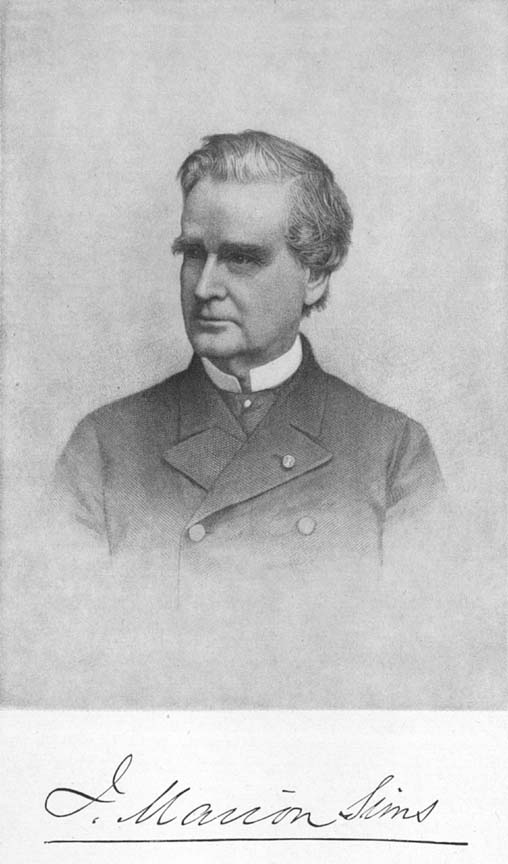
A physician interested in research might have found Mount Meigs an ideal laboratory for probing into the causes and control of malaria, but Sims, at the present happy-go-lucky stage of his life, was not interested in research. As a matter of fact, he was not even particularly interested in medicine. Its chief virtue, in his eyes, was that it seemed to be a fairly satisfactory way of earning a moderate living, leaving him with more than the average amount of free time for enjoyment of the things that really mattered: his wife, his home, his friendships, and his trips afield with horse and dog and gun. When he was called to care for a patient he did the best he could and let it go at that; his attitude toward his profession was much like that of an office clerk whose real life is entirely divorced from the job which fills his time (but not his thoughts) from nine to five. Still innocent of any serious purpose, he was ready at any moment to change his whole way of life for whatever new opportunity might offer better inducements.
Thus it was that less than a year after their marriage he and his wife moved from Mount Meigs to the Cubahatchee Creek region of Macon County, where he had been offered a partnership by Dr. Blakey, an older physician who had developed such extensive interests as a plantation owner that he found his large medical practice burdensome. (This was in the accepted tradition for Alabama professional men in an era when cheap and plentiful cotton-growing land provided a far quicker road to riches than the practice of law or medicine.) This new location he liked very much, and so did Theresa; yet hardly had they gotten settled there when he decided not only to move again, and far away, but to transform himself from a physician into a business man! A picture of himself as an astute and prosperous merchant had remained firmly fixed in his mind ever since, at the age of twelve or thirteen, he had first begged his father to be allowed to go to work in Mr. Stringfellow's store; and now at last this old dream seemed about to be realized. A man whom he had known in Philadelphia during his student days wrote to offer him a partnership in a clothing firm soon to be established in Vicksburg, Mississippi, by a group of Philadelphia capitalists; and Sims, completely without knowledge of the clothing business or any other business, immediately accepted the offer. As a doctor, he was convinced, he never could make anything but a modest income, but as a clothing merchant he might easily grow rich, and money would be an important asset in raising the large family which he and Theresa hoped to have. (Already they were the parents of one baby girl, Mary, born early in 1838 just after they had moved to Cubahatchee.)
The fact that in making this move he would be giving up the medical profession did not seem to him a serious handicap. Many of the physicians he had known---men like Dr. Bartlett Jones of Lancaster, Dr. Lucas of Mount Meigs, and Dr. Blakey of Cubahatchee---had made most of their money from planting or business or some other occupation and had practiced medicine only as a side line. He himself, having no particular enthusiasm for the profession, was perfectly willing to relinquish it even as a side line. He remembered that his own father had plunged into the unknown when he had moved from Hanging Rock to try his hand at keeping the tavern at Lancasterville, and it seemed to him that he was quite as much entitled to take a chance as his father had been. (As a matter of more recent history the restless John Sims, still taking chances and looking longingly toward the unknown, not long ago had pulled up roots at Lancasterville and moved to Mississippi.) Therefore he sold his recently acquired cabin at Cubahatchee, with its little piece of ground, handed back his new practice to Dr. Blakey, and made all preparations to move to Vicksburg. Just as he was about to leave, however, there came another letter from Philadelphia, announcing that as a result of the current national financial panic the promoters had lost their capital. Consequently the whole deal was off.
This anticlimax left him with nothing to do but pick up again the broken pieces of the life in Cubahatchee, buy another house, and resume a country doctor's rounds. Aside from feeling mild regret at having to give up his dream of easy wealth he did not particularly mind this change of plans, for his present location was an increasingly comfortable one. One of its notable assets was the marked favor, both social and professional, which he was receiving from the clan of Abercrombies, who in their ownership of rich, far-flung plantations enjoyed a position not unlike that of the feudal lords of old. Sims served as physician not only for the various Abercrombies themselves, but also for all their hundreds of Negro slaves. It was an easygoing, pleasant life, for every call he answered meant a ride through the woods or the swamps; a gun on his shoulder and a dog trotting along behind him were as much parts of his regular equipment as were his saddlebags filled with medicines and instruments. He never let the call of duty completely quell the call of sport, and seldom did he make a professional visit in the daytime without bringing home a partridge or squirrel or wild duck acquired along the way with his gun.
The surprising thing about this idyllic existence was that it even paid him well. He had thought he could not make much money in medicine, but by 1839, when he had been at Cubahatchee only a year or so, he found his profession bringing him an income of $3,000 a year---a really impressive sum for a man of his age in that time and place. With the Abercrombies as his potent patrons there was little doubt that this income would be expanding in the years to come, and there seemed to be every prospect that the Sims family would become permanent residents of the Cubahatchee district.
They had some anxious hours, to be sure, with their second baby, Eliza, who joined the family in November, 1839. When she was only a few days old she gave every evidence of being on the point of death. Her breath came in rapid gasps, she was unable to take any nourishment, and while her parents looked on in agonies of apprehension she went into violent spasms, with her tiny arms and legs as rigid as pokers and her skin a cold mass of clammy perspiration. Her physician father, having no notion what could be the matter with her, could only look on helplessly while his young wife held the baby cradled tightly in her arms for hours on end, hoping desperately to ward off by the sheer force of her own devoted contact the grim fate which seemed inevitable. At last, exhausted and dispirited, she laid the child down on the bed, giving up all hope of its recovery. Instead of placing the infant on its back, as she usually did, she inadvertently put it on its side. Within a little while the young Eliza began to show signs of returning health, and a few hours later her alarming symptoms had quite disappeared and she was apparently as well as ever.
Sims was profoundly puzzled by her unexplained recovery---and not till five years later, when he had occasion to handle several cases of trismus nascentium, or infant lockjaw, did he understand that Theresa unwittingly had saved the baby's life by laying her on her side instead of on her back, in which position she had lain so long that the occipital bone had been pushed in on the brain to cut off the circulation and cause all the other symptoms which had been so nearly fatal.
This threat, however, for all its poignant horror, was short-lived, leaving no enduring shadow upon the family's happiness. Far different was the threat which came with summer. It had started out to be a jolly season, marked by a long and happy visit from Sims's sisters Virginia and Miriam, now lively girls in their middle teens. Then came the miasma of malaria, rolling in from Cubahatchee Swamp and sweeping all before it. This time Sims came even closer to death than he had four years before; he was saved only by the arrival at the crucial moment of Dr. Holt, one of Montgomery's leading physicians, who had traveled more than twenty miles to Cubahatchee to bring the precious quinine which alone could forestall fatal "congestive chills." This arrested his malady, but no sooner was he able to be out of bed than his wife fell victim to the scourge, then his children, then his servants, then Sims himself again. It seemed to be an endless cycle, and, Worse than that, there was no assurance that it might not recur every year, summer after summer. Much as they had enjoyed their Arcadian life at Cubahatchee, the Simses now realized that this obviously was not the place for them to live in peace and to raise a healthy family. There was nothing to do but start all over again. But where?
One possibility was Mobile, where Dr. Josiah Nott, brother of one of Sims's South Carolina college friends, had built up a flourishing medical and surgical practice. Another potential location was southwest of Montgomery in Lowndes County, where Mrs. Bartlett Jones, who had followed her daughter Theresa to Alabama, had acquired a prosperous plantation. Rush Jones was now practicing medicine there, and since he and Theresa were an exceptionally devoted brother and sister the idea of joining forces with him seemed like a good one. As soon as Sims was strong enough to travel, therefore, he set off for Lowndes County with the intention of discussing such a move with his brother-in-law. En route he stopped overnight in Montgomery, which, while not yet capital of the state, already was beginning to rival Mobile and other older towns as one of Alabama's principal urban centers. At the hotel there he met an old friend---an Alabamian of long standing---to whom he told his predicament and his plans. The friend was shocked. Lowndes County, he protested, was a most unlikely place for a victim of malaria to find health; it was even more malarial, in fact, than Cubahatchee. The thing for Sims to do, he insisted, was to move to Montgomery instead.
Sims scouted the suggestion. He was nothing but a little country doctor without money or reputation, he said, and he would starve to death in Montgomery, where so many able physicians already were established in practice. But all the next day, as he rode on toward his brother-in-law's plantation, his thoughts kept recurring wistfully to this advice at which he had scoffed. And when he reached Rush Jones's plantation and found the whole place a hotbed of intermittent malarial fever, with Rush and his overseer and most of his slaves all ill, he knew that his friend in Montgomery had spoken the truth, and that Lowndes County never could be the place for him.
Back in Cubahatchee, he told Theresa of his findings, and she agreed immediately that their one best course was to move at once to Montgomery and take their chances of making a living there. Before the end of the year, therefore, they had moved again---their fourth move since their marriage only four years before (for in Mount Meigs, as in Cubahatchee, they had had two homes). As far as living accommodations went they were far better off than they had ever been before, for actually Sims was not quite so unknown in Montgomery as he had averred, and a large, well-built house promptly was offered him at moderate rental by one of the town's leading lawyers, whom he knew through mutual friends in Mount Meigs. Better than that, his landlord promised him his own patronage, which obviously was bound to serve as an entering wedge toward obtaining in time the practice of some of the other outstanding families among Montgomery's 4,000 inhabitants.
For the time being, however, medical practice had to play second fiddle to poor health, for Montgomery, with its unpaved streets and its humid location along the Alabama River, seemed to be not much better as a health resort than Cubahatchee had been. During their first year in their new home Sims himself was in bed at least half the time with recurring attacks of fever, Theresa fared little better, and the whole household was completely malarialized. In March of 1841, in the very midst of all this illness, the family's first son chose to be born, and despite his mother's invalidism he managed to thrive. He was named Granville Sharp Sims in honor of Professor Granville Sharp Paulson, the anatomy teacher who had meant so much to Marion Sims at Jefferson (where, incidentally, neither Pattison nor McClellan himself, the college's founder, now served on the faculty, which had undergone one of its periodic upheavals a year or so before). In the brief intervals when Sims was out of bed he made spasmodic attempts to acquire patients, but such scattered practice as he had---mostly among the freed slaves---was not enough to keep him in cash, and he and his household lived from hand to mouth, mostly on credit. In this last respect he differed little from most of his neighbors, however, for throughout Montgomery cash was plentiful only once a year, when the cotton crop was sold in the fall. At other times almost everyone lived on credit.
His ill-health might well have proved an insuperable barrier to his becoming solidly established in a town where there were so many good doctors if it had not been for one intangible factor: Personality. All his life Sims had had the unconscious ability to make people like him, but for years his lack of confidence in himself and his always haunting fear of losing Theresa had limited his conquests to a narrow field. Now at last, despite his miserable health and precarious finances, he was supremely happy in his domestic life and possessed of new assurance concerning his abilities; and inevitably his growing inner radiance began to make itself felt in his every contact. The other doctors of Montgomery, who as a group were remarkable for their co-operative spirit and their freedom from petty jealousies and bickerings, were captivated by this handsome, magnetic newcomer, whose engaging boyishness made them anxious to do anything in their power to help him overcome the handicap of illness. They were just beginning to feel the need of an organization to hold them together and to serve as a clearing house for ideas, and Sims joined them enthusiastically in the task of founding their first professional body, the Sydenham Medical Society. With one or two of the younger men near his own age, such as William O. Baldwin, newly returned from medical school in Kentucky to embark on his long career as a Montgomery physician, he struck up devoted friendships which were to endure all his life. Upon the older men---successful practitioners with more work than they could handle---his lively spirit in the face of his obvious physical delicacy made such an impression that they lost no opportunity to make his path a little smoother by throwing some practice his way.
Thanks to their good offices Sims found himself within a year or so the physician not only for the free Negroes and for several upper-crust families but also for practically all of Montgomery's Jewish population, who paid him well and recommended him to their friends. All this was very gratifying and served to keep the wolf from the door, but probably it never would have led him to anything but a prosperous career as a popular local doctor. Something else, however, happened at this point---something which had a profound and far-reaching effect. Sims discovered, somewhat belatedly, that primarily he was not a medical man at all, but a surgeon.
Perhaps it is somewhat inaccurate to say that Sims did not recognize surgery as his specific métier until after he had been practicing medicine for six or seven years. Actually he had been acutely conscious ever since his days in medical school that surgery was the one aspect of his profession for which he seemed to have a marked native gift. It never had occurred to him to concentrate on developing this gift, however, for a very potent reason: for a doctor of that era to specialize in any one field was practically unheard of. The custom was for every physician, whatever his aptitudes, to do a little bit of everything--and Sims was no exception.
Despite this deterrent he had not been long in Montgomery before he began to win a reputation as a doctor who was particularly skillful at surgery. His first distinction in this field was due indirectly to the lingering nostalgia for South Carolina which made him continue to read the newspapers of his native state. In several of these he found enthusiastic accounts of the highly successful operations for cross-eye and clubfoot performed by Dr. Hugh H. Toland of Columbia, who had learned during his recent studies in Paris the new and effective operative techniques devised by France's surgical titans.
Marion Sims had never studied in Paris, but he did have access to medical journals describing the latest French methods for surgical treatment of cross-eye and clubfoot, and he saw no reason why he could not master these techniques if Toland could. Accordingly he procured some new instruments, did a little rehearsing of the steps outlined in the medical journals, refreshed his knowledge of the anatomy of the affected regions, and then boldly attempted his first eye and foot operations.
His optimism had been well founded. His operations, carried out largely by instinct and based on what might be termed mail-order instructions, were completely successful. More than that, they were entirely unheard of in his section of the country, and they brought him instant prominence. Doctors from many miles around, hearing of the young Montgomery surgeon's wizardry at correcting deformities hitherto considered incurable, sent him their patients and came to watch him work. Some of them tried to emulate him, but soon they found that this was not so easy as it looked. Techniques might be learned, to be sure, but techniques were only half the story, for they had to be plied with speed and grace and skill; and these vital traits, unless inborn, were usually hard to come by. For any essay at surgery to achieve its goal without anesthetics to deaden pain and prevent shock it was necessary for the operator to possess---as Sims did-an exceptionally high degree of manual dexterity, combined with split-second resourcefulness.
So abundantly did the cases roll in that within a year or so there was hardly an example of cross-eyes or clubfeet in or near Montgomery which had not been straightened out by Sims's swift-moving fingers. Soon people began to think that a body mechanic who could repair these ailments could repair others too, and Sims found himself being asked to undertake all sorts of operations, some of them fairly simple but many of them truly formidable for a man whose experience and equipment were both decidedly limited. Formidable or no, Sims tackled them willingly, for no sooner had he begun to acquire confidence in his surgical skill than he shed all those persistent doubts of his own ability which had tortured him for years. Almost overnight his erstwhile diffidence was replaced by a certain self-assurance which a few of his rivals were inclined to disparage as overboldness. His mounting record of successes soon gave testimony, however, that his boldness apparently was justified.
This bustling new prosperity was a lightning metamorphosis from his happy-go-lucky life in Cubahatchee and the racking anxiety of his initial period of illness and insolvency in Montgomery, but he took his changed role in his stride and adjusted himself to it as if this were what he had been waiting for all his life. Gone, quite gone, were the expeditions with dog and gun to escape from the bewilderments of a medical practice based largely on guesswork and myth; in place of these bewilderments there flow was solid ground from which he wanted no escape. Here were people flocking to him with all sorts of interesting derangements and deformities which needed to be corrected; and frequently, by the grace of God and his own finesse, he was able to give them the relief that they craved. It was a wonderful feeling; from such a vocation as this a man would be a fool to want to escape into hunting or any other diversion; no so-called recreation could equal the thrill to be found in transforming a marred human being into a normal individual. Certainly he could wish for no more satisfying career; the one favor he could ask was that he might be granted sufficient good health to permit him to carry on his work.
For the time being his state of health was tolerably good---good enough to permit him to try any number of new operations and to make several interesting additions to his establishment. One of these additions was his "Grecian galley," the first four-wheeled doctor's buggy in Montgomery. At first this new conveyance was looked on somewhat askance by a few of the older practitioners, who felt that no self-respecting physician should be seen making his rounds except in the time-honored way: on horseback or in a conventional two-wheeled sulky. (In time, of course, they all acquired four-wheeled buggies too.) A second addition, contemporary with the buggy, was a small private hospital which Sims built in the yard of his home. This he did because he needed a place to care for the numerous slaves who were sent to him as patients by the owners of plantations often too far removed from Montgomery to permit him to visit them on his daily rounds.
By no means all of his greatly augmented practice was made up of surgical patients, for people assumed that anyone who could perform such remarkable operations must be a very fine physician indeed, and they hastened to place their general practice in his hands until soon he found, somewhat to his embarrassment, that he had one of the largest and most profitable family medical practices in Montgomery. He took great pride in this, without a doubt, and enjoyed the many contacts it brought him, for he was essentially a highly social creature; yet no call to prescribe for the assorted indispositions of the most eminent plantation lord or his lady could interest him so much as a chance to use his talented hands to tinker with some mechanical maladjustment of the human machine.
Certainly the budding surgeon had every reason to feel daunted on the day when Miss Margaret C., a young woman from Lowndes County, walked into his office and asked him to help her. Her face was completely concealed by a thick blue veil, which, she explained, she always wore because she had a harelip so hideous that she could not bear to let anyone see her, not even her own family. Her voice was nasal and almost unintelligible, and she told him that because of her deformity she was excluded from all society. Life held no charms for her, she said; nothing he could do for her could make it any worse, but just possibly he might make it a little better.
Sims asked her to raise her veil, and when she did so he saw that certainly she had not exaggerated her plight. Never had he seen anyone so horribly-so sickeningly---ugly. Her nostrils were wide fissures, and from the center of her nose hung down a narrow bony snout covered with skin. She had no upper front teeth, no way of closing her mouth, and to his fascinated embarrassment he found he could look straight down into her throat through the gruesome, abnormal opening in her face.
It was a prospect calculated to discourage even the most optimistic surgeon, but Sims was enthralled. In his medical journals he had read of harelip operations performed by the great Liston of England, and he told Miss C. that he was sure he could help her. Already his mind was excitedly leaping from one expedient to another, trying to decide what would be the best way to rectify this ghastly mistake Nature had made.
A few days later, in the presence of two other physicians and Montgomery's leading dental surgeon, Dr. Belangee, he tackled the job, doing all his cutting and rearranging and plastering under the handicap of a steady flow of vehement conversation from poor Miss C., who apparently found that only by talking could she allay in some degree the frightful pain she was undergoing. After a five-week wait to permit the wounds to heal and the parts to re-form, he performed a second installment of the operation, with Dr. Belangee's help; and when at last the dressings and sutures were removed and Miss C. was fitted with an ingenious dental plate of Dr. Belangee's design she emerged as a remarkably presentable woman, with no further need to hide herself from the world.
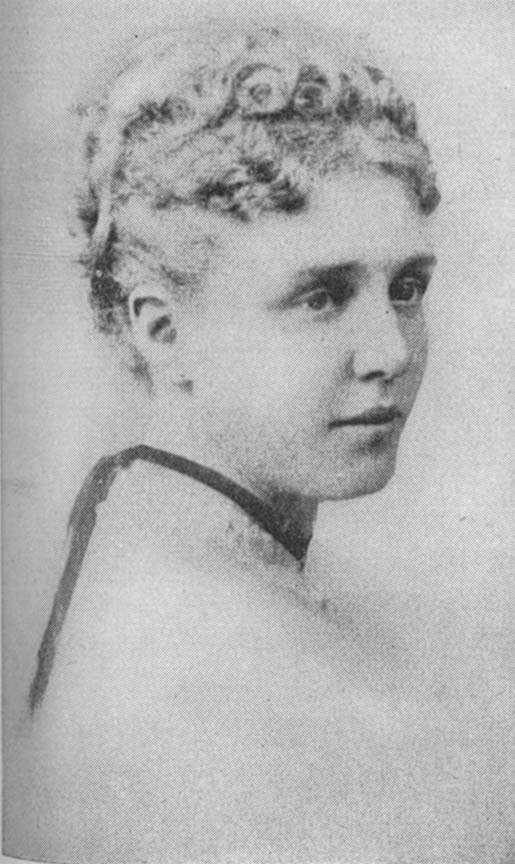 |
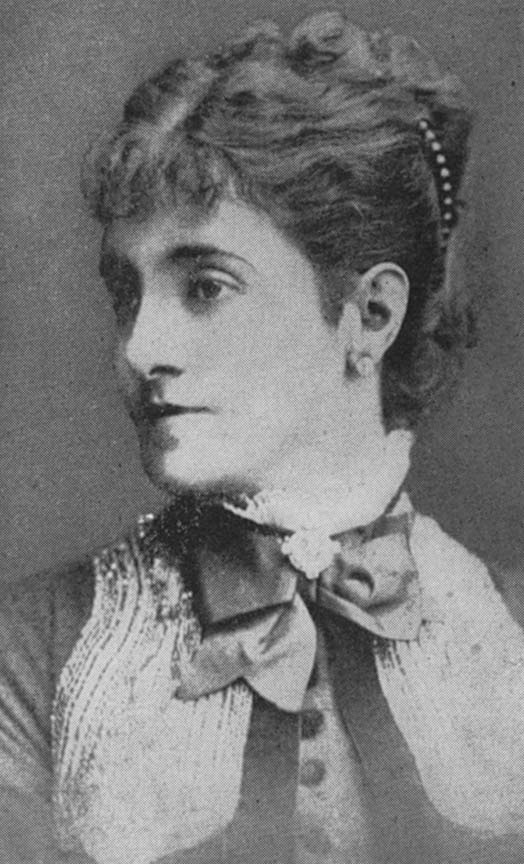 |
| Clara Jerome grandmother of Winston Churchill, who made the necessity for consulting Dr. Sims her excuse for moving from New York to Paris. | Adelina Patti, whose romance with the Marquis de Caux blossomed under the auspices of the Sims hospitality in Paris. (Courtesy of Marion Sims Wyeth.) |
Satisfying as this experience was to Sims's desire for creative fulfillment, it had another and more far-reaching result: it was responsible for his first appearance in print. A physician may be a genius and he may perform miracles, but the sad truth is that unless he also has the ability to describe his operations or his discoveries and to get these descriptions published in the journals read by other members of the medical profession he is unlikely ever to achieve anything more than a strictly local reputation. Up till now it never had occurred to Sims that he should write reports of any of the things he was doing, for he still was under thrall to the powerful delusion which had cast a shadow over his school and college careers: that the mere act of trying to set down one little English word after another to form a composition or a paper was quite beyond the bounds of his abilities. For years, to be sure, he had been writing graphic and interesting letters to Theresa and to his family and friends; but these, he assumed, were an entirely different thing from the kind of writing which he so instinctively dreaded. Hence even after his successful harelip operation, which caused no little excited comment in Montgomery and in Lowndes County, he gave no thought to publication. Such things, he thought, were all right for men who were writers---men like his local confreres, Ames and Boling, who contributed regularly to the professional journals; but for a fellow like himself they were quite out of the question.
More than a year had passed after the transformation of Miss C., and Sims was deep in other concerns, when Dr. Chapin Harris of Baltimore, the most famous dentist of his day and the founder not only of the world's oldest school of dental surgery but also of the first periodical devoted to dentistry, made a long visit to Montgomery, in the course of which he became well acquainted with Sims. While calling at the young surgeon's office one day he happened to notice an object lying on the mantel and walked over to examine it. "What is this?" he asked.
"Oh, that!" said Sims. "That is the plaster cast Dr. Belangee made of the roof of Miss G's mouth." The visitor expressed further interest, so Sims went on to describe the details of his venture into facial plastic surgery.
 |
 |
When he had finished Dr. Harris said: "I'll tell you what I wish you'd do, Dr. Sims. I'd like to have you write an account of this case for my Journal of Dental Surgery."
Sims protested, of course, that he could not write anything and never had been able to, but Dr. Harris insisted that all he needed to do was to put down the account word for word as he had just told it verbally, and Sims, full of dark misgivings, agreed. Two or three months later, when Dr. Harris sent him the September, 1844, copy of the Journal, containing his printed article, his pride in his maiden venture at authorship was overshadowed by his fear that one of Montgomery's really good doctor-writers, like Ames or Boling, might see his poor childish attempt and think the less of him for it. He was sure that none of them subscribed to the Journal, however, and the chances seemed good that if he made no mention of his article they might never know about it. What he did, therefore, was to hide the offending periodical behind some large, impressive medical books on one of his library shelves (which now, incidentally, housed far more than the original seven volumes of Eberle).
Several months afterward an uncanny thing occurred. The one man whose literary opinion Sims most feared was Dr. Ames, Montgomery's acknowledged medical leader. Ames was a meticulous writer and a critical one; and Sims, who knew that already he had written many chapters of what he planned as a monumental book on the physiology of the nervous system, stood greatly in awe of him. They were good friends, however, and often dropped in at each other's offices. In the course of one of these casual calls Ames wandered over to Sims's bookcase, glanced idly at the titles, and by some strange chance lifted out one of the very volumes behind which the Journal of Dental Surgery was hiding. The paper cover partly concealed at the back of the shelf caught his eye, and Sims, watching in an agony of apprehension, knew instinctively that his day of reckoning had come. Methodically, inexorably, never saying a word, Ames drew forth the magazine from its refuge, riffled its leaves, came to a halt at a certain page (Sims was certain he knew which one it was), read absorbedly for several minutes, then turned around.
Sims shuddered. "Now," he thought, "I shall get it!"
The usually austere Ames spoke slowly, and with a certain wistfulness. "What would I give," he said, "if I had the faculty of expressing myself in writing like that!"
Still frightened, Sims could only say, "I don't know what you mean."
"I mean," Ames went on, "that I have never read anything more natural than your description of that case. I could not write that way to save my life. What I write is labored; what you write comes easily, it seems."
As Sims struggled with his embarrassment and relief, the older man continued: "Now let me give you a piece of advice. I have seen you perform many beautiful operations and many difficult ones. As long as you have this power, I advise you to submit your case reports for publication in medical journals." More than that, he offered to glance over Sims's completed reports and, if necessary, to polish them. With such generous and unexpected co-operation from Montgomery's most eminent medical writer, Sims no longer could afford to blind himself to the benefits of authorship. Obediently he began to write out histories of all his surgical cases and to send them to Dr. Ames for criticism---criticism which was always kind and never extensive. So interested did Dr. Ames become in the great strides his colleague was making in surgery that soon he was offering his services as assistant at some of the younger man's delicate operations.
Among these were several for malignant growths of the mouth and jaw. Even with anesthetics and all the accessories of modern surgery, operations of this type are considered fairly formidable; in the conditions under which Sims worked they were truly heroic. A rough idea of how exhausting such procedures were for everybody concerned---patient, surgeon, and assistants---may be gathered from some of Sims's own accounts, which soon began to be published regularly in the American Journal of the Medical Sciences, the leading medical periodical of the time.
There was the case of Sam, for instance. Sam was a twenty-six-year-old Negro suffering from osteosarcoma of the lower jaw. The disease had involved the body of the bone, which was granulated and discharging; half of the lower teeth had been removed. This visit to Sims was not Sam's first experience with the medical profession. His master had sent him previously to two physicians. The first of these had diagnosed the trouble as a gumboil and had sought to lance it, with no results. The second, recognizing the tumor, had started to operate on it. At his first incision, however, Sam had leaped from the chair and absolutely refused to submit to further cutting.
Confronted with this intimidating history, Sims decided that only by the most elaborate precautions could he get Sam to submit to his ministrations, and he laid his plans accordingly. In the presence of ten students and fifteen doctors (not to mention a portrait painter charged with the task of making sketches of various stages of the operation) he persuaded Sam to sit in a barber's chair; then, taking the victim momentarily unaware, he and his five assistants hastened to fasten their patient down by means of an elaborately constructed device involving a five-foot plank and surcingle webbing, with leather straps over his thighs, knees, ankles, abdomen, thorax, shoulders, elbows, wrists, and head.
After these preparations, according to Sims's account, Sam not too surprisingly "appeared to be very much alarmed." In the hope of easing his alarm he was given sixty drops of laudanum, a heroic dose, but unfortunately this produced no effect until after the ordeal was over. As further fortification he received occasional swigs of brandy and water during the course of the operation. For forty minutes, while Sims cut open the cheek, dissected away the diseased mass, and then experimented with three different instruments before he found one (a chain saw) with which he could do an effective job of cutting away the affected bone, Sam sweated and suffered in full consciousness, quite helpless in the face of his multiple constraints. Yet in the end he had reason to be grateful to his torturers, for after a long convalescence in Sims's infirmary (his racking experience and loss of blood had exhausted him completely) he was able to return home fully cured.
This successful result did not entirely satisfy Sims, however. Looking at the hideous scar his incision had left on Sam's cheek, he began wondering how this might have been avoided, and by the time he was called upon, not long afterward, to perform another operation for osteosarcoma of the lower jaw he had figured out the answer. His new patient, an older Negro named Jack, had an exceptionally large mouth, and by a series of highly complicated maneuvers which to the lay reader sound like pure legerdemain Sims succeeded in performing the whole operation---including the removal of most of the jaw bone---without causing the slightest external mutilation.
It was too much to expect that he should have unvarying success with every operation he attempted. Another young slave, eighteen-year-old George, underwent without flinching an excruciatingly painful operation for removal of a malignant tumor in the sinus back of his eye, but within two months the tumor had grown again to twice its former size. In response to George's ardent entreaties Sims operated a second time, probing for the diseased tissues in the deep dark recesses at the base of the brain, guided only by the sense of touch in his left forefinger. During this ordeal George, buttressed only by brandy and water, "evinced wonderful fortitude, but at the close his strength was almost exhausted, and often he would cry out in the bitterest agony: 'Oh! How long? How long will it last?' " The cruel answer was that it lasted an hour and a half, and it was all in vain, for the malignant growth returned almost immediately, and within a few months the courageous George was dead.
It is a bitter thing to realize that all the while Sam and Jack and George were suffering the agonies of the damned under the surgeon's knife a means to relieve them of their tortures already had been devised, but Sims, for all his diligent reading of the medical journals, did not know it---could not, in fact, have known it. Less than three hundred miles away, in the neighboring state of Georgia, a country doctor named Crawford W. Long had discovered that by giving his patients sulfuric ether to inhale he could perform operations upon them without their feeling pain. Long, however, suffered from a writing phobia not unlike that which formerly had dominated Sims, and though from 1842 onward he used ether quite regularly and successfully to protect his surgical patients from pain he never got around to reporting his innovation to any of the medical journals until some years later, when W. T. G. Morton's successful demonstrations of ether anesthesia at the Massachusetts General Hospital already had convinced all but the most skeptical members of the medical profession that victory over pain might at last be achieved.
If Long's discovery had been published sooner Sims's lot (and that of his patients) in the years from 1845 to 1849 might have been immeasurably easier, for it was during those years that he embarked on a new series of operations compared to which all his earlier efforts seemed like mere setting-up exercises. It was during those years that---quite against his own wish or intention---he became a woman's surgeon.
More than eleven years had passed since Sims, as a medical student in Charleston, had decided firmly that he would have as little as possible to do with the special diseases of women. Nothing that had happened since then had induced him to change his mind. Whenever a woman came to consult him about any trouble which was strictly "female" in its origin he always told her promptly, "This is out of my line; I know practically nothing about it," and advised her to go to see Dr. Henry or Dr. McWhorter, who were the chief local authorities on obstetrics and allied matters. In the summer of 1845, however, several things occurred in swift succession to drag him willy-nilly into the very field that he hated.
First, Dr. Henry asked Sims to accompany him to Mr. Wescott's plantation, a mile or so out of town, to help him bring relief to a seventeen-year-old Negro girl who had been in labor for three days without giving birth to her child. Doctor Henry had decided that this was a case calling for the use of instruments, and if instruments were to be employed he would rather have them wielded by Sims than by anyone else. Using forceps, Sims delivered the child without any great effort and returned home assuming that with the delivery his part in the case was closed.
How far from closed it actually was he learned five days later when Dr. Henry told him that Anarcha, the young mother, had lost control of her bladder and rectum as a result of the harm done to her vagina by long-continued pressure of the infant's head before its delivery. Sims made another trip to the Wescott plantation and was horrified to see for himself the condition Dr. Henry had described: in both walls of the vagina were great holes where damaged tissues, so long abused by the tedious labor, had sloughed away. This destruction of Nature's watertight compartments left poor Anarcha with no control over her normal discharges.
Sims was greatly upset. In his medical books and in occasional articles he had heard of vesicovaginal fistula, or rupture of the bladder, but he had assumed that it was about as much a rarity as Siamese twins, and he never had expected to encounter such a case in his own practice. He hurried home and searched through his library for everything he could find on the subject. He found plenty. He found that for two centuries or more the leading surgeons of Europe had been trying in vain to devise operations to repair these abnormal openings and to save women from the incapacity, the mortification, the veritable living death which followed such an aftermath of childbirth. He found that several famous American surgeons, most notably John Peter Mettauer of Virginia and George Hayward of Boston, had been working on the problem in recent years with somewhat greater success than their European brethren, but that any results they had obtained were so marked by uncertainty that they still had a long way to go before reaching any final solution of the problem. From all his searching he learned just one thing for sure: down through the ages vesicovaginal fistula had been considered incurable.
The next day he told Mr. Wescott, Anarcha's master, that the girl was doomed to permanent invalidism, that she never could work again as a servant, and that there was nothing which he or any other doctor could do about it.
Only a month later a doctor from Lowndes County sent him another young colored girl, Betsy, who, having had her first baby after protracted labor a few weeks before, was suffering from the same desperate ailment as Anarcha's. Sims examined her, found the base of her bladder destroyed, and sent her back to her master with a note saying she could not be cured.
And then, unbelievably enough in view of the fact that until 1845 Sims had practiced medicine for ten years without seeing a single example of vesicovaginal fistula, the next month brought yet another case---three cases in three months. The difference was that this time the slave girl's owner---an old friend of Sims's from the Cubahatchee section---was a determined man who, refusing to take Sims's "no cure" verdict as a final answer to his inquiry, insisted on sending the girl anyway, convinced that the surgeon who had proved so adept at relieving other abnormal conditions could devise a remedy for this one too. Sims could be as stubborn as the next man, and when the young woman (whose name was Lucy) arrived in Montgomery he told her firmly that he could not help her and would have to send her back to Cubahatchee the next afternoon. Before the time set for her return home, however, something else had happened, and Lucy stayed.
The something else was a woman being thrown from her horse. Sims was just about to set out on his morning rounds in his "Grecian galley" when a little boy came running to beg him to go at once to see Mrs. Merrill, the victim of this accident. He found her in bed, with no broken bones, but complaining of an almost unbearable pain in her back and of a miserable feeling that something was bearing down on her bladder and rectum.
Normally, when confronted with symptoms like this, Sims would have made his conventional protestation of ignorance accompanied by his usual little speech recommending Dr. Henry or Dr. McWhorter. This, however, seemed to be an emergency; he could not decently desert Mrs. Merrill in her agony just because the one thing he hated above all others was investigating the organs of the female pelvis. He probed and examined with his fingers and---unfamiliar as he was with the general terrain---decided that his patient's uterus had been sharply displaced by her fall and that the great essential was to return it as speedily as possible to its normal position. How this was to be done, however, he had not the faintest idea. Altogether it was a most embarrassing position for a physician who had persistently ruled out of his province anything having to do with the peculiar organs of women.
Groping frantically among his few scraps of information on this subject for something that might be helpful, he suddenly found himself recalling with startling clarity the words old Dr. Prioleau had used in his unappreciated class at Charleston more than eleven years before: "Gentlemen, if you are ever called to a case of sudden version of the uterus backward, you must place the patient on the knees and elbows and then introduce one finger into the rectum and another into the vagina, and push up, and pull down."
He hoped he remembered the advice correctly; never before in all these years had he had any occasion to follow it. Now at last, however, he must try, so he placed his patient in the recommended position, with a large sheet thrown over her to protect her modesty. Yet even now he could not bring himself to put his finger into the rectum; he had had to do that a few days before with a male patient, and the man had complained so vehemently about the discomfort it caused him that Sims was hypersensitive on the subject, and he dreaded the thought of causing this poor woman any more pain than she was suffering already. Therefore he compromised by inserting both his middle and index fingers into the vagina. By this maneuver, he found, he could touch the uterus, and he made strong efforts to push it back into its normal position, pumping his hand vigorously up and down in the process. Suddenly he felt nothing at all beneath his fingers; and just as suddenly Mrs. Merrill exclaimed, "Why, Doctor, I am relieved!"
He had accomplished his mission. Just how he had done it he did not know, but, maintaining his air of professional omniscience, he removed his hand and said, "You may lie down now."
As the surprised woman fell gratefully to her side, exhausted by pain and effort, there was a sharply audible explosion of air escaping from the vagina. This abrupt sound brought mixed emotions to its hearers. To Mrs. Merrill, who thought she had been guilty of an involuntary breach of good manners, it was deeply embarrassing; but to her physician it was both welcome and enlightening, for it solved the mystery of her abrupt recovery. His knowledge of physics was not great, but it was enough to enable him to understand just what it was that had happened. By placing his patient on her knees and elbows and inserting two fingers into the vagina's mouth he had harnessed natural forces and dilated the opening to such an extent that inrushing air pressure had inflated the chamber and pushed the uterus back into its normal position. With a sense of mounting excitement Sims realized that this physical phenomenon might have a wide and valuable application. If atmospheric pressure could force a uterus back into its proper place, might it not also prove a worthy ally in making visible the walls of the vaginal cavity?
Instantly his mind flashed back to Lucy, the young vesicovaginal-fistula victim whom he had examined yesterday and pronounced incurable. If he were to place her in this same position and allow atmospheric pressure to distend her vagina, why couldn't he get such a clear view of everything inside that he could see just what was wrong and perhaps devise a way to repair it? Certainly it was worth a try.
Hurrying away from Mrs. Merrill, who no longer needed his attentions, he dashed home, stopping en route at a hardware store to buy a pewter spoon. The spoon, he thought, might make a better tool than his fingers for forcing in air. Pausing next at his office, he asked the two young men who were studying medicine under him to come with him at once to his little hospital in the yard. There he found Lucy feeling very disconsolate at the thought of having to return home that afternoon without prospect of relief from her affliction. When he told her that before she left he wanted to examine her once more she was delighted. He put her on a short table, resting on her knees with her head in the palms of her hands. Then he instructed the two students to stand on either side and pull open the mouth of the vagina. As they did so the air rushed in with a loud puff, dilating the chamber to its fullest extent. When Sims introduced the bent handle of the pewter spoon he "saw everything [as he himself wrote years later] as no man had ever seen before. The fistula was as plain as the nose on a man's face. The edges were clear and well defined, and the opening could be measured as accurately as if it had been cut out of a piece of paper."
He was fired with enthusiasm by his discovery. It seemed to him that there was nothing for him to do---now that he could see everything so clearly---but to pare the edges of the fistula, bring them together with sutures, and then keep a catheter in the neck of the bladder until the united edges of the hole had healed together. Why, Lucy could be cured in no time! And Anarcha, and the other girl, too!
His whole scheme of life underwent a sudden revolution. He went on his daily rounds much as usual and continued to do other types of surgery, but all his thoughts and hopes were on his plans for the wonderful new vaginal operations he intended to perform as soon as he could figure out all the necessary details of technique and make certain other preparations. A major aspect of plotting the technique was the designing of the instruments he thought he would need. Most important of these was the speculum---a glorified version of the pewter spoon he had used in conducting his revealing examination of Lucy. He had it made of German silver, with a seven-inch handle and a two-and-a-half-inch concave end to be placed in the vagina. The concavity was highly polished, so that it would reflect a strong light down into the vagina. To get this light exactly right Sims experimented with windows and tables and mirrors until he found a satisfactory arrangement whereby a small standing mirror could be made to reflect the rays of the sun directly into the vagina. He decided also just what he was likely to require in the way of knives and needles and silk thread for ligatures, and had them all in readiness so that there should be no delay when at last his great experiment got under way.
It all seemed so promising that he decided there was no point in going into this thing in a small way. He might as well do it wholesale while he was about it. Why limit himself to curing Lucy alone, when those other poor girls, Anarcha and Betsy, were in plights as bad as hers? Maybe there were other cases in need of attention, too. He made inquiries around the countryside and found that indeed there were several other unfortunate Negro women who had been hidden away for years, suffering from vesicovaginal fistula and unable to take any part in normal life. Such women never died from their affliction, it seemed; instead they lived on year after year in misery and ostracism and disgust, wishing for death and sometimes committing suicide to achieve it. He rounded them all up, had his private hospital doubled in size (it had had eight beds and now it had sixteen-twelve for patients and four for servants to care for them), and made arrangements with the masters of his patients (all of whom were slaves) for the conditions of their care. So sure was he of success within a short time that he agreed to pay out of his own pocket all the expenses of supporting the women, leaving the masters responsible only for their taxes and their clothing.
Practically all of his surgical ventures in the past five years had turned out well, and the possibility of failing in this one never occurred to him. Every detail of the projected operation seemed clear to him; he had made careful notes of each step. Bubbling over with enthusiasm for his project, he discussed his plans with all his medical friends; and they, impressed by his ingenious plan of harnessing atmospheric pressure and knowing his unusual skill as a surgical strategist, agreed that he was doubtless on the eve of a great discovery. All of them wanted to be present on the historic occasion when he solved the long insoluble problem of vesicovaginal fistula; and Sims, always gregarious and never loath to display his virtuosity, cheerfully invited at least a dozen of them to form his audience.
So long did it take to enlarge the hospital and make all the other meticulous advance preparations that it was not until December (Mrs. Merrill's accident had been in August) that the great day came when the leaders of Montgomery's medical profession gathered in the little building in Sims's yard in the expectation of seeing surgical history made. But history refused to be hurried.
Lucy, whom Sims had chosen as his first subject, spent a whole hour crouched on her knees and elbows, fortified only by opium and hope against the searing, racking, operative pain. The entire base of her bladder had been destroyed, leaving a great hole two inches wide. The surgeon was confronted with the problem not only of closing this fistula but also of first scarifying its calloused edges so that when the membranes were sutured they would have sufficient vitality to grow together. Scarification involved making a great many little incisions with the lancet; and this, in turn, involved profuse bleeding. Through all the attendant pain and hemorrhage Lucy bore up admirably, flinching only slightly; for this was, she knew, part of the price she had to pay for being made again a normal woman.
Then came the fixing of the ligatures. This was tedious and difficult, for although the patient's position and the light reflected by the speculum made the field of operation clear, the surgeon's fingers had to do their delicate work in sorely limited space. With time and experience Sims would learn to perform wonders in this cramped area; but on this, his first venture into vaginal operation, he was a little awkward. At last he succeeded in drawing his needles, laden with silk thread, through the membranes, and in holding the scarified edges together by tying the threads. It was physically impossible for him to reach into the vagina far enough to tie the threads as tightly as he would have liked; he could only hope that the rather loose closure he was able to achieve would serve its purpose.
This done, there remained the problem of preventing urine from draining into the vagina during the time required by nature to knit together the edges of the still permeable fistula. In the course of his advance planning Sims had given long thought to this question. His first idea had been to run a narrow drainage tube from the urethra into the neck of the bladder, but most of the reports he had read of earlier surgeons' efforts to cure vesicovaginal fistula said that it was impossible to make a catheter stay in the bladder, so, having never tried it himself, he accepted their verdict and set himself the task of devising something else. The method he worked out involved the inserting of a small piece of sponge in the bladder's neck, with a silk string dangling from it to draw away the water after the manner of a capillary tube.
This device proved effective enough for drawing off the urine, but in other respects it was a horrible mistake. Five days after the operation Lucy became seriously ill, with high fever, rapid pulse, and all the indications of blood poisoning. It was essential, Sims realized, for him to remove the sutures and the sponge in an attempt to find out what was causing the trouble. The sutures came out easily enough, but the sponge was another matter. It was no longer the soft little sponge it had been five days ago; its long-continued absorption of mineral matter in the urine had transformed it into a solid piece of stone. Around it the bladder and urethra were violently inflamed. The offending sponge, hardened and enlarged, seemed imbedded there to stay, and the only way Sims could take it out was by a really brutal display of force, prostrating Lucy so severely that for a while death seemed imminent.
The girl's remarkable recuperative powers soon asserted themselves, however, and within ten days her recovery was sufficient to permit an examination with the object of determining what results---other than the near tragedy of the sponge---the operation might have had. What this examination revealed restored the surgeon's optimism. The enormous fistula had disappeared, leaving in its place, along the line of union, two small holes about as big around as knitting needles. This was far from success, of course, for a small leak can be quite as distressing as a large one, but at least it showed some progress. It was enough to encourage him to believe that if he could find a method of drawing the urine away and of preventing such inflammation as the calcified sponge had caused he would probably achieve his goal.
Lucy was still too ill to undergo another operation for a while, so he went to work next on Betsy. Again most of the physicians of Montgomery gathered round. This time Sims, despite the warnings of his predecessors, devised a catheter to take the place of the sponge and found to his delight that it stayed perfectly in place and caused no complications. But again the operation was a failure; in place of the original large fistula there appeared several little ones along the line of the sutures---only small holes, it was true, but still big enough to permit the constant drip, drip, drip that made life miserable.
Anarcha came next---Anarcha whose great fistulas opened not only into the bladder but into the rectum as well---Anarcha who, at seventeen, seemed doomed to be forever as disgusting an object to herself as she was to everyone who came near her. For her Sims's feeling of concern was even more keen than for the others, for she it was who had given him his first glimpse of this terrible affliction; and some there were, he was aware, who were whispering that he himself might have caused the fistula by maladroitness in removing her baby with his forceps. He knew there was no ground for this accusation; he was sure that his forceps had served only to save her from even greater punishment by the impacted fetal head, yet even so the part he had played in her confinement gave him an extra desperate longing to bring Anarcha back to youth and health. Yet for all his special interest, for all the improvements he had made in suture apparatus and catheter, he had no better luck with Anarcha than with the others. The little holes remained, and as long as they remained they spelled failure.
After Anarcha came the other patients who had been assembled from the countryside, and after them came Lucy and Betsy and Anarcha again---and again---and again---and again. Often success seemed only a hairsbreadth away, sure to be achieved in the next operation; but it refused to come. Always there was some slight defect in the results, and the women were left with their fistulas ---smaller and smaller fistulas, to be sure, but still fistulas.
The pursuit became almost a monomania with Sims. At first he had had such supreme confidence in his plan of campaign that success had seemed only a matter of days or weeks or-at the very most-months; yet now the months were vanishing into years, and his goal apparently was almost as far away as ever. It began to seem as if he might as well have been trying to catch up with the end of the rainbow. His medical friends who at first had been so anxious to be present at the making of history now usually managed to find themselves busy on the days of his vesicovaginal fistula operations; and in place of an eager audience crowding around he was fortunate if he could find anyone but his students to assist him. Certainly the doctors could not be blamed too harshly for their defection; monotonously for two or three years now this colleague of theirs who had seemed such a surgical magician had had nothing but constant failure to show for all his efforts on this project, and their very affection for him made them dislike to be present to witness his continued humiliation. For his own sake and his family's they wished devoutly that he would abandon his pursuit of the rainbow and again give his undivided attention to the general surgery at which he was so successful, but the almost religious fervor of his crusade made most of them hesitate to tell him their opinions.
Not so his brother-in-law, however. Rush Jones was intensely devoted to his sister Theresa, and though she had made no complaint of Marion's obsession with vesicovaginal fistula---though she had, in fact, consistently defended him and supported him in his efforts---her brother had a strong feeling that all this business was very hard on her and might grow even harder if her husband could not be persuaded to mend his ways. Consequently he gathered up his courage and came to have a serious talk with Sims. "We have watched you and sympathized with you in your experiments," he said, "but of late you are doing too much work; you are breaking down. Besides, it is unjust to your young and growing family to continue in this way. You have no idea what it costs you to support a half-dozen Negroes for more than three years.
My advice to you is to resign the whole subject and give it up. It is better for you and better for your family."
It was like advising a dog that he will be out of breath if he doesn't stop chasing a squirrel---like advising Columbus to turn back because the voyage is long and there is no land in sight. Sims, once aroused, was a zealot; and like most zealots he was quite impervious to advice which ran counter to his great dream. All that mattered to him at the moment was that he believed in himself, Theresa believed in him, and, most important of all, his patients believed in him. Despite their repeated disappointments, despite all the futile operations they had been through, they were confident that in time he would cure them, and they contended with each other as to who should have the honor of being the subject of his next operation. So much his allies did they become that at last, when the other doctors and the students, wearied of the long pursuit, no longer turned up to help at the operations, they themselves took turns as their surgeon's assistants: holding the speculum in place for him, handing him his instruments as he needed them, restraining the patient on the table, shifting the reflecting mirror at his direction, doing all the many things which once upon a time the medical men had vied to do.
The amazing thing is that with all this amateur help, all the countless operations he performed on a region highly susceptible to infection, Sims had no deaths to mar his record. This was in an era when---aseptic techniques being as yet undeveloped---death was all too often the expected and accepted sequel to surgery; chronicles of the period show that local infections and septicemia followed in the train of a tremendous proportion of all major operations, yet this was a tragedy Sims was spared. Presumably he had read Dr. Oliver Wendell Holmes's recently published paper on the contagiousness of puerperal fever and had been impressed by the guilt of physicians who laughed at squeamish suggestions that they wash their hands and instruments before performing an operation. Whatever the explanation, he obviously had mastered far better than most of his contemporaries some of the secrets of asepsis. His patients might not be cured, it was true, but after the one nearly fatal mistake of Lucy and the sponge they at least acquired no serious infections at his hands.
No deaths and only one serious infection---but no success, either, and the years were rolling by. It had been 1845 when Sims had taken in Lucy, Betsy, Anarcha, and the others to board and treat, confident that within a few months he would have made them whole again and paved the way to permanent conquest of vesicovaginal fistula. Now it was the year 1849, and, despite his marathon of effort, his patients' sharp affliction still dominated their lives---and by now it had come to dominate his, too. Always it seemed as if tomorrow or tomorrow or tomorrow might be the day when he would find the one missing link he needed to solve his problem.