ANZAC Day, 1941, found all the field medical units, except 4 Field Ambulance, in the Navy's care. The Glengyle was convoyed southwards with other ships and was crowded to capacity with Tommies, Aussies, and Kiwis, including the members of 5 Field Ambulance and the main body of the 6th. They were not yet out of reach of the Luftwaffe. On board the Glengyle dressing stations were set up amidships and aft, as air attack was expected. It came soon after midday, and all ships in the convoy opened fire to give the bombing and strafing planes a warm reception. All the ships reached the naval base of Suda Bay, Crete, towards evening without mishap.
From the crowded decks the tired troops saw a township (Suda) nestling against rolling country, which rose to the massive White Mountains still crested with snow. In Suda Bay small boats of every type scurried urgently from ship to shore, for enemy aircraft could, and did, find an easy target. From the single quay the men of the medical units set out on a march of a few miles to a transit camp near Canea.
Beside the dusty white road which led to the transit camp was a field kitchen among the olives, where hundreds were waiting in a long queue for a cup of tea, oranges, and sandwiches. Many slept along the road or under the olive or orange trees; they were tired and worn out, and neither knew nor cared much where they were. Most of the units collected at the transit camp, which was really nothing more than olive groves and rolling country, without tents or shelter except for the twisted old olive trees.
The medical units would have liked to rest and recuperate, but there was work to do, especially for 6 Field Ambulance. First of all there was the task of attending to the needs of some hundreds of casualties who were beginning to assemble, many of them wounded or sick, and all exhausted and in need of attention. The means of giving such attention were scanty. Some tents and a small supply of dressings and stretchers were obtained from 7 General Hospital, a British field hospital already on the island, and with this and such medical gear as the men had managed to carry, an improvised dressing station was hastily set up. The only transport available was requisitioned to bring in casualties and sick from the convoys arriving at Suda Bay, and the walking wounded were streaming in steadily, many of them with wounds which had not been dressed for almost a week.
Next day the stream continued and the little dressing station was working under pressure. More dressings were obtained from the British garrison field ambulance, and something like a thousand men in all were given essential treatment and, with but the crudest cooking facilities, were provided with food and hot drinks. Accommodation was the greatest difficulty. The more serious cases were taken by 7 British General Hospital, whose tented wards were however limited, and some were given shelter and attention by a company of 189 British Field Ambulance, though for the majority a depot was organised next to the dressing station with food and blankets for the men but with very little else.
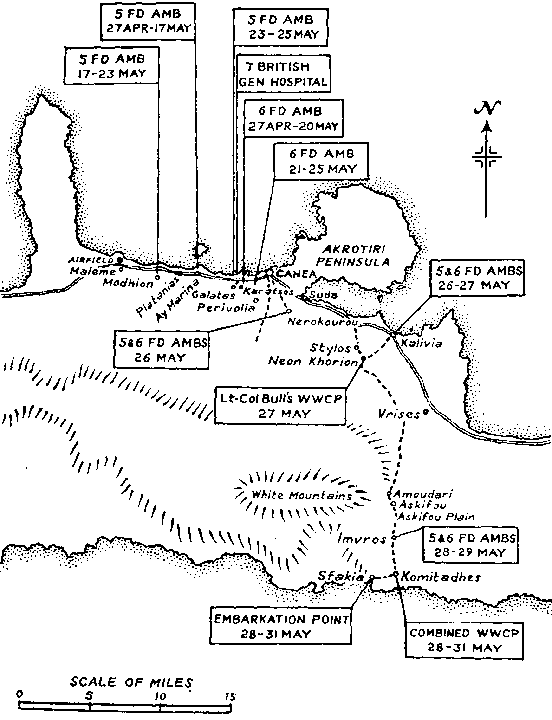
On the morning of 27 April, 5 Field Ambulance marched eight miles with 5 Brigade to positions west of Canea on the coast. On the march the men passed 7 General Hospital, where the nurses of 1 NZ General Hospital gave them a cheer as they went past. 4 Field Hygiene Section had been attached to 5 Field Ambulance, and S-Sgt Ashworth and 18 orderlies from 1 General Hospital, who had escaped to Crete after the bulk of their unit had gone to Egypt, were also attached for the move. On the arrival of the unit at Ay Marina, where a skeleton MDS was set up, these orderlies were posted to 7 General Hospital.
B Company, 6 Field Ambulance, marched several miles westwards on 27 April to set up an ADS in an area adjoining 7 General Hospital. Here they were shortly afterwards joined by the remainder of the unit to run an MDS for 4 Brigade.
It had been decided that the retention of Crete was of vital importance to British operations in the Eastern Mediterranean and that the island was to be held at all costs. On 30 April General Freyberg was appointed to command the Allied Forces in Crete. Col Kenrick was appointed to his staff as DDMS Creforce, with Maj J. K. Elliott as his DADMS. Lt-Col Bull was made ADMS NZ Division, and Maj Plimmer took over command of 6 Field Ambulance. Available for the defence of the island were Greeks, Cretans, British, Australians, and New Zealanders, mostly of weak battalions evacuated from Greece, and all ill-equipped. RAF cover was an impossibility and it was realised that the force would have to hold on without air support. Supply, too, was an almost insuperable problem, and only a minimum of materials and supplies reached the island.
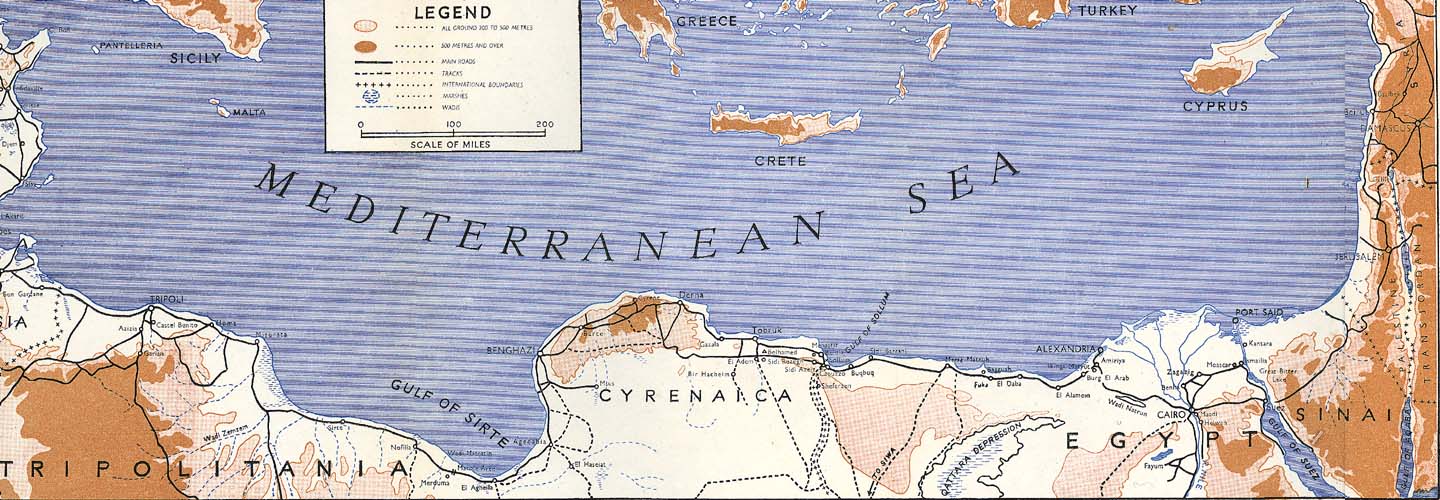
Crete is 160 miles long and 40 miles wide at its broadest part. To the south is a backbone of high mountains rising in places to 6000 feet, with the southern ports, mainly fishing villages, nestling beneath the mountain ranges. From its northern coastline the country rolls back in vineyards and olive and citrus groves to the hills and snow-capped mountains. Most of the island is hilly or mountainous.
In the western end of the island the New Zealanders were concerned mainly with the defence of Maleme airfield, the Aghya Prison valley, and the coast between Maleme and Canea. 5 Brigade was at Maleme and 4 Brigade in positions west of Canea. The troops were living in the open under the trees, with little or no kit or equipment, and armed merely with Bren guns, tommy guns, and rifles; there were only a few mortars, heavy machine guns, and vehicles.
For just over three weeks after landing in Crete, 6 Field Ambulance operated its small MDS below Galatas, treating a number of sick from 4 Brigade units and at the same time assisting 7 General Hospital, which was understaffed. One company provided 50-odd men to work in the wards and on general duties at the hospital, while the remainder of the unit ran the MDS. One runabout truck, the only vehicle, was used for all purposes at the MDS. Using open wood fires but without an axe, and with only improvised cooking utensils, petrol tins, and so on, the cook worked wonders. Rations were short, but the little Cretan children would bring around the camp brown bread, boiled eggs, and sweet, juicy oranges, which seemed to be in abundance, and which could be bought for a few drachmae or cigarettes, as long as these lasted. There was a little tentage available for the dressing station, but the men all slept out under the olives, two or three together for warmth, as it was cold at nights and they had but few blankets. Sharply conscious of their experience in Greece, they all made for themselves, with the few implements available, dugouts or slit trenches, and one or two built improvised shelters with branches, straw, or any other odd material they could pick up.
Conditions were primitive, but the weather was fine and warm during the day, the countryside attractive, and the life pleasant; comforts were little missed. While Canea had little to offer, it was possible to get leave there, and one could buy a meal at the Naafi canteen or drink dubious, coloured liquors at its café bars. It was a good walk from the camp though, with no alternative but to walk. At Galatas there was a New Zealand YMCA providing tea, biscuits, and chocolate.
Galatas, a mile or so away on the hill behind 6 MDS, was a little village with a main square and dirty, narrow streets, surmounted by a small church with a tall tower, making a prominent landmark. The more favoured resort was a tiny village a few hundred yards or so from the camp, just a small group of houses with one 'Turkish' café. This café, besides supplying wine, cognac, and some more fiery and potent concoctions, possessed a wireless round which the men would gather to hear the BBC news, their only contact with the outside world, a little music, and once the voice of Lord Haw-Haw---'New Zealanders, you are on the isle of doom '.
The operative section of 5 Field Ambulance set up a dressing station in a stream bed at Ay Marina, with A and B Companies occupying areas on its slopes, parts of which were steep and rocky. HQ Company was a short distance away on the edge of a small clearing among some very ancient olive trees, overlooking the edge of the scattered village, with glimpses of the sea and the barren Theodhoroi Island off the coast. It was also well placed to catch the first glimpse of the itinerant orange sellers. Until air activity made it imprudent, swimming was possible, but fishing was forbidden as the use of civilian craft in these waters was prohibited. In the taverns more good cheer resulted from seeing a Messerschmitt dive into the sea than from the slender local wine supply.
At Ay Marina quite an extensive private practice was carried on by the unit's medical officers. The people showed their gratitude by supplying them with milk and eggs, with crassi (wine), and by doing their laundry.
Despite minor difficulties with the deleterious effect of crassi on the discipline of the susceptible, and the enervating midday heat, morale was rapidly restored, though the unexpected calm lent a sense of unreality to preparations for the coming assault.
Medical stores were always scanty and never adequate. Even splinting had to be improvised at first, but distributions from the limited resources of British units longer established on the island permitted a resumption of technical training and the holding of minor sickness cases and injured.
Early admissions were treated in well-sited tents---in comparative comfort after the stony unit bivvies. There was a dearth of drugs even up to the time of the German landing. Later, it was to an enthusiastic band of Cretan villagers at Modhion, organised by a young Cretan woman, Frosso Parasoulioti, that the unit owed many of its larger dressings, bandages, and Red Cross signs. These volunteers worked continuously on the days before and immediately after the invasion. Once the unit's needs were made known to the villagers many other supplies were brought in: citrus fruit, sultanas, wine, oil and, what promised best of all, information as to the whereabouts of a Canea pharmacist's bulk store. Though a guide was provided early on the second morning of the invasion and the chemist's house was found, it was not possible to force an entrance to the passage in which the drugs were supposedly stored: only a few ampoules of quinine and calcium were brought back.
The New Zealand sisters, along with the other sisters from Greece, went temporarily to 7 British General Hospital near Canea when they reached Crete. This hospital was still being set up and had then been open only a week. Without a nursing staff, it had been receiving from 300 to 400 patients daily. Miss Mackay immediately assumed the duties of Matron and organised the nursing staff from English, Australian and New Zealand sisters. The surgical wards and theatres were staffed entirely by New Zealand sisters, and the officer in charge of the surgical division stated that he had never been so well served by any other theatre staff, either in civilian practice or in the Army.
Miss Mackay, with her cheerfulness, tact, and coolness at the most difficult times, set a standard which could not fail to be an inspiration to all who were associated with her. All the sisters frequently had to take shelter in crops and olive groves during air raids, but not one complained. Excellent work was done by Sister M. E. Jackson(1) while in charge of the operating theatre.
Fortunately the weather was fine; in fact, it was hot and dusty. The wind was a nuisance, for it raised the dust in the daytime and made the temperature cold at night; there seemed always to be a breeze from the sea or from the highlands. Many sisters will recall the earnestness and sincerity of the church service held in the open air on their first and only Sunday morning in Crete.
It was a blessing that it did not rain, as all meals were eaten outside, and after two nights in tents the sisters vacated them to make room for patients. They made their beds on the ground and hung their few possessions where they could.
On 28 April it was decided to move the New Zealand sisters to billets in Galatas, where the New Zealand headquarters was established at the time, about a mile and a half from the hospital. The bags and the disabled sisters went by the only available truck; the remainder straggled up the hill in the heat of the day.
The stay at Galatas was short, for the sisters were sent on to Egypt by Col Kenrick as soon as possible. At 4 a.m. on 29 April they were called and before dawn were away in trucks heading for Suda Bay. As they sat around at the Port for a few hours waiting to embark, they saw walking wounded coming down from the hills, where they had taken refuge after the Navy had brought them from Greece. At 9 a.m. they embarked, this time on the small Greek ship Ionia, about the size of New Zealand's Tamahine.
There were hundreds on board (180 sisters, 500 walking wounded, and 200 fit men), but the crew, fearful of raids, had fled to the hills, so volunteers stoked the ship. Australians were in charge and gave the sisters the few available cabins. They were resting places but proved very hot and stuffy under blackout conditions at night. The voyage was a slow one. The first night was one of apprehension for there were enemy air attacks, but later a strong naval escort was provided and the rest of the voyage was calm and quiet. Just over 48 hours after leaving Crete, the ship arrived at Alexandria on 1 May, all on board safe and glad to be back in Egypt.. Although a bit dishevelled and many of them hatless, the sisters were glad to see familiar faces on the wharf. Miss Nutsey, Matron-in-Chief, welcomed them at Alexandria, and showed her obvious relief at their return after being 'lost'.
Up to 12 May the enemy air force had concentrated its attacks on shipping to and from Crete and on Suda Bay. Then, from 13 May onwards, with the completion of new airfields in Greece and on the. island of Melos, the Germans increased the scale of their attack to include the airfields at Heraklion and Maleme. Fighter aircraft carried out low-flying attacks or provided escort for bombers and dive-bombers. Gradually our air force was eliminated, and on 19 May the few remaining pilots and planes were withdrawn from the unequal struggle and returned to Egypt.
At dusk on 13 May enemy aircraft heavily blitzed the airfield at Maleme for an hour; that evening several casualties were admitted to 5 MDS. Again next afternoon further air attacks were made on the same area. The expected invasion was drawing steadily nearer.
At first 5 Field Ambulance was situated near the coast at Ay Marina between 4 Brigade, around Canea, and 5 Brigade, in the Platanias-Malerne area to the west. Then, on 17 May, at a conference at HQ 5 Brigade, it was agreed that the location of the MDS at Ay Marina was too insecure and insufficiently protected by the troops deployed in the defensive positions, and that CO 5 Field Ambulance should reconnoitre a site near the village of Modhion, where 5 Brigade units would be between the MDS and the coast. As a pillion-rider on a motor cycle, Lt-Col Twhigg surveyed the area and chose a site on the outskirts of Modhion, near a road running south from the main Canea-Maleme road. The distance in a straight line from Maleme airfield was about two and a half miles. Towards the coast, in undulating country, Maoris and Engineers were dug in, and beyond them to the west was the rest of 5 Brigade.
A two-storied house, the local choropsolakia or gendarmerie, was taken over to accommodate the receiving and dressing stations and the more serious cases, further accommodation being made available in the basements of nearby houses and in tents. The unit moved in on the afternoon of 17 May, after a march from Ay Marina. Its transport then consisted of one 15-cwt. truck only, but vehicles of an ASC unit were also used to carry such equipment as the unit had by then gathered together.
In the main, the medical equipment was that carried out of Greece, and consisted of 15 surgical haversacks and three medical companions, supplemented by sets of surgical instruments supplied personally by various medical officers. Some supplies of dressings had been obtained on the island, but these were very limited, and an allotment of Red Cross stores, mainly bandages and dressings, had arrived from Egypt a few days previously. Only 20 stretchers had been retained, along with a proportionate quota of blankets, but these had been supplemented by 50 stretchers and 100 blankets from 7 General Hospital, which had also supplied bandages and dressings and an invaluable drum of plaster of Paris.
Upon the establishment of 5 MDS at Modhion, this equipment enabled the medical officers to do major surgery in a small room which was prepared as an operating theatre. The operating table was improvised from a door supported on boxes, and sterilisers were made from petrol tins. There were no rubber gloves and a very limited supply of antiseptics was available.
From the MDS at Modhion a long ridge extended northwards towards the sea. To the east was a steep, narrow valley carrying a good road, which turned westwards into the village above the MDS, from which it was possible to overlook the small dome of the church at Pirgos and to glimpse the sea, the beach being hidden by a fold in the ground. A portion of the ridge a short distance northwards provided gun positions for several captured Italian guns without sights. The surrounding slopes were steeply terraced, and the southern extension of the valley was occupied by a very old olive grove, whose hollow trees and recumbent lower branches afforded excellent shelter for those not immediately needed in the work of the dressing station.
The tempo and intensity of the air attack, mostly in the early mornings, increased sharply, though little damage or casualties resulted because of the excellent concealment and the haphazard nature of the bombing. The puncture of a quartermaster's treasured lilo was among the more serious results of these early-morning attacks at Modhion.
There had been a time of comparative quiet and rest for 6 Field Ambulance. Comparative quiet, for the Luftwaffe confined its operations to Suda and Maleme and left the area just west of Canea alone---and comparative rest, for the duties at 6 MDS, caring for a few cases of minor sickness, or at 7 General Hospital were not onerous and the men were spelled. A little later 6 Field Ambulance also opened a convalescent depot adjoining the MDS for men discharged from 7 General Hospital, but this did not place any great burden on the unit.
The work of the MDS went on quietly and steadily until 18 May, when a bomber pilot released his stick of bombs across 7 General Hospital lines, even though some of the buildings and the hospital area were clearly marked with Red Crosses, and killed and wounded several of the hospital staff.
On 20 May there was the usual early-morning blitz of Maleme airfield and then all was quiet, but at ten minutes to eight the bells and sirens from Canea to Maleme were ringing again and from that moment there was no quiet for our troops on Crete. The enemy air attack was heavier than anything previously experienced. Wave after wave of bombers came in, escorted by swarms of fighters. Stuka dive-bombers, with screaming sirens, and swift Messerschmitts bombed and methodically strafed the countryside from Suda to the valley running south-west of Maleme, around Canea, over the rolling hills of Galatas and down to the sea. For almost an hour the pounding of bombs and the tearing rattle of machine-gun fire continued; over the hospital and the ambulance area they came regardless of Red Crosses, first with a line of bombs which sent up great spouts of earth with a thundering blast, and then with their deadly hail of fire, setting alight hospital wards and tentage.(2) Then from the west, in groups of three, came the big Junkers 52s--group after group of them; and from underneath appeared white specks which fluttered down to earth over the olive trees. They were paratroops; hundreds of them jumped and swung to earth. Stubby, broad-winged gliders swiftly and silently floated in, and settled to earth in the Aghya Prison valley and in the valley beyond Maleme. From among the olive trees came drifts of bluish smoke and the dry rattle of Bren guns as New Zealanders opened fire on the invaders.
The invasion had caught 6 Field Ambulance at breakfast. The men took cover and, while the Luftwaffe roared incessantly overhead, lay hidden in their dugouts and slit trenches and listened to the fury that was loosed above for an hour and a half or more. Some wards and the dispensary and medical store over at 7 General Hospital were set on fire.
A member of 6 Field Ambulance, Cpl P Curtis,(3) tells the story of the next stage:
'After what seemed an eternity things relaxed a little, when suddenly a shadow slipped over our heads and I looked up to see a glider disappearing behind the olive trees, a little too low for comfort. This left no doubt of Jerry's intentions. Paratroops, too, started to appear in the sky like flowers suddenly opening.
'Shortly after this, shots were exchanged just behind us and coming nearer. Then we heard guttural voices which seemed to come from all directions. We had erected a canvas structure over our beds which was between us and a Jerry. A tommy gun chattered near at hand, and looking up 1 saw the head and shoulders of a paratrooper with his back to us firing into our bivouac. We jumped out of our trench but were immediately covered by others on the left and right. The one immediately in front swung round. . . . I felt we were for it, but he aimed a kick at my companion and motioned us to proceed to our ground flag some twenty yards away, where other members of the unit were already seated.. The round-up then began in earnest, and presently some 250 patients and staff arrived from the hospital. One gentleman appeared without any pants, but was given permission to retrieve them.
'The German officer in charge, who could speak reasonable English, then explained the position but seemed rather annoyed at a complete lack of seriousness which came over the company gathered round the flag. Photos were taken and a lunch of bully and biscuits provided, the Jerries helping themselves to the tinned peas and fruit. The officer told us that we had been blitzed because our area was wanted for a seaborne landing, and that we were to be taken during the night to the plain behind Galatas. He then produced a map of the island showing the location of every well. The deep well which some of our chaps had dug next to the cookhouse to save themselves the trouble of water-carrying was the only one not marked---hence the extra strafing of our "machine-gun nest".
Lt-Col Plimmer had been ordered by an enemy parachutist to surrender, and while getting out of his trench unarmed he was shot through the abdomen. He died within a short while.
At 7 General Hospital close by, a wounded German pilot, formerly a patient at the hospital but now armed with a tommy gun, assisted to round up the patients and staff, with whom were the ambulance men quartered at the hospital. It was a grim sight to see charred bodies of patients in some of the burnt-out ward tents, and Pte D. W. Sampson,(4) pointing to the many wounded, remonstrated with the Germans, but to no effect. The prisoners from the hospital were also herded around the Red Cross flag in the field ambulance area, although some were able to avoid capture and remained with the more seriously ill hospital patients who could not be moved.
Out in the open the captive party, several hundred in all, remained for some hours gazing into the muzzle of a spandau, with guards armed with tommy guns covering them from the sides. Padre Hopkins,(5) with a few men, was permitted to conduct the burial of Lt-Col Plimmer, and Capt Lovell, Lt Ballantyne, and two others were sent under guard to 7 General Hospital to carry out further treatment on a German with a severe chest wound. During the morning several wounded in the area were tended by the medical officers and men of the units.
In the early afternoon the whole party, under cover of the olive trees, was marched off up the valley behind the camps and up the hill ridge leading towards Galatas, carrying with them some of the wounded in blankets and with their German captors distributed along both flanks and in front and rear. In an attempt to shoot the paratroopers, a patrol from 19 Battalion opened fire on the party as they were on the ridge near the top of a hill. The German bringing up the rear of the party was hit by a burst of machinegun fire across his body, squealed loudly, and fell in his tracks.
Three men from the ambulance were killed and several others wounded, in something of a panic, many yelled to the infantrymen to stop, and they were obliged to hold their fire while the Germans hurried their captives on over the hill.
Guards and prisoners straggled across country towards Galatas, and later in the afternoon were again picked up by a 19 Battalion patrol, when near the top of a terraced hillside. Taking cover behind a low stone wall, the paratroopers, numbering about a dozen at this stage, went into action, while the patients and men of the medical units huddled on the terrace in front of them, between the opposing forces. Rifle and Bren bullets were flying directly overhead in continuous fire, uncomfortably close; too close, for a burst of Bren-gun fire which fell short into the middle of the party had fatal results. Two were killed, and the dozen or more wounded were treated with some difficulty on the spot. After an hour and a half of action the Germans were encircled, killed, or captured and the party was released.
In 19 Battalion's lines, and later behind positions held by 20 Battalion near Canea, which some eventually reached late in the night, they were given much-needed food and some water. Next day the men of 6 Field Ambulance straggled back and rejoined Capt Lovell's small party, and the men and patients from 7 General Hospital moved to where the hospital was functioning in caves on the sea coast.
After leaving the others, Capt Lovell with his party had repaired to one of the hospital tents at 7 General Hospital. Shortly afterwards men of 18 Battalion recaptured the area and provided them with an escort for their safe conduct to HQ 4 Brigade. It was, of course, vitally necessary to establish a dressing station immediately, and one was set up near the coast in a culvert which cut across the Canea-Maleme road, some two miles or so east of the previous MDS position. If they were to render any medical services to the many who would now require them, it was necessary that equipment should be obtained. With an armed escort supplied by 19 Battalion, Lt Ballantyne and two men returned to the old site and salvaged as much of the medical supplies as possible, and the new dressing station was prepared to receive and treat patients. Maj Fisher was appointed to command the unit.
At 7 General Hospital, those who had remained continued work---and the theatre was in use through the night. It was then decided to carry the remaining patients to some fishermen's caves, which provided shelter from attack but little in the way of facilities. Here the hospital carried on for some time. At nights the stall returned to the tented theatre to work, until it was eventually bombed and rendered useless.
Of the next two days Cpl Curtis of 6 Field Ambulance wrote:
'With the coming of dawn on 21 May, we found we were on the seaward side of the coast road about half a mile from the beach. Through the centre of the area, which could almost be termed a valley because of the low hills on either side which swept down to the beach, ran a deep, zigzag watercourse, dry and fairly wide. This passed under the road in a large concrete culvert, and over the greater part of the grass-covered area were the inevitable olive trees in their orderly rows. Towards the sea, at the edge of the olive grove, stood a small, two-roomed cottage, and about fifty yards nearer Maleme was a larger one on the hillside; both were occupied by Cretan civilians.
'Naturally, after our experience of the previous day, it was suspected that the Red Cross was fair game, so no effort was made to advertise our existence. The culvert was "transformed" into an operating theatre, the watercourse into a ward, using scraps of salvaged canvas for cover, camouflaged with leaves and soil.
'A camp stretcher, placed in the centre of the culvert, formed the table with just space enough on either side for the surgeons; head room was almost nil. A small fish kettle on a primus stove and an enamel plate formed the sterilising unit, and was adequate for the few instruments salvaged from the 7 General Hospital that we possessed. Anæsthetics consisted of a small stock of pentothal sodium and some Greek brandy and whisky kindly given us by 18 Battalion across the road. Blood was, of course, not available in bottles. Incredible as it may seem, successful operations of a major type were performed and the patients transported in a 15-cwt. truck to the Naval hospital on the other side of Canea. Rations were collected on the return trip. These consisted mainly of bully and biscuits, which our cooks turned into some excellent stews, and tea water being obtained from a nearby well.
'During the day other members of the unit turned up and a salvage party was despatched to our former area. Wounded arrived in small groups, but from this point of view things were quiet. Captured medical supplies were gratefully received, and with the help of some prisoners the labels were translated. The truth of this was rapidly tested by our offering to use them as guinea-pigs! A dump of blankets and stretchers also made its appearance and gradually the ghost of a field ambulance was created from literally nothing.
'However, as the day wore on our position slowly deteriorated. Trucks and a few Bren carriers passing over the culvert showered the patients with dust and grit. Their presence was too much for the attentive Jerry pilots who bombed and shot-up the road all day long. This also put an end to our ambulance ferry during the daylight hours. There was hardly a minute free from the shattering roar of their motors, the horrible bursts of machine-gun fire which brought blue smoke pouring from their noses like great dragons, and the swaying of the olives from the slipstream as they flew in from the sea, sweeping up our valley so low that one ducked instinctively to avoid collision. Strangely enough our activities seemed to pass unnoticed, as we were not attacked once on that first day in the culvert.
'The climax came on the next afternoon when a carrier, loaded with ammunition, was hit and caught fire a few yards along the road from our "theatre". We were forced to lie low while hot lead popped around all over the place. At the conclusion of this concert the Cretans in the two-roomed cottage obligingly agreed to leave for the hills in the interior, so we occupied one room as an operating theatre and the other as a post-operative ward. With the aid of some salvaged canvas the blackout regulations were observed, and operating continued by the light of a candle and a hurricane lamp.'
About the middle of the next day the area around the culvert was attacked from the air and a bomb which landed near the watercourse killed two members of the unit. After this it was decided to display Red Crosses, some of which were made from sheeting and red blankets. Two were spread on the ground and one on the roof of the cottage. The larger cottage was also taken over to accommodate patients and was similarly marked. No further air attacks were made on the MDS.
Men of the unit, besides operating the MDS and providing some assistance for the hard-pressed 7 General Hospital, were also called upon as stretcher-bearers. A party of about twenty went out to collect wounded in advance of the battalion RAPs, and although at first they were armed with rifles, they did not use them and soon replaced rifle with Red Cross armband. For some days they remained at work with the battalions.
When the invasion began in the morning of 20 May, some parachutists dropped in the vicinity of 5 Field Ambulance at Modhion, followed by parachutes bringing equipment and stores. Throughout the morning this phase continued and the members of the unit remained under cover, their only activity being to transfer the sick to the basement. A lull occurred about noon, but enemy activity was soon resumed.
No distinguishing signs identifying the site as a medical unit were displayed at first as it was considered undesirable to disclose the disposition of the fighting troops and their defensive positions. However, about two hours after the airborne landings had begun, Red Cross signs were put out---one on the roadway in front of the MDS and another on the roof of the schoolhouse. Thereafter there was no bombing or machine-gunning in the immediate vicinity, although cooking fires were in full view of enemy planes and the staff went openly about their duties, though not wearing steel helmets. This latter point was most important---captured Germans later stated that steel helmets would have been taken as evidence of fighting troops and would have given no immunity from attack.
From Modhion the events around Maleme were heard rather than seen, and it was not until later in the morning and afternoon, when subsequent waves of parachutists and troop-carriers selected more easterly areas or passed over on their way to the prison and Aghya, that members of the unit became eye-witnesses of the landing operations. Between flights of troop-carriers there was heavy machine-gunning from twin-engined aircraft but no bombing of the olive groves or of the village around 5 MDS. There were no casualties locally, but almost total interruption of road movement resulted. The wounded from forward units could not be moved back in daylight.
The first casualties to arrive were mostly German parachutists. Then casualties began coming in from nearby units only, though some stragglers, including enemy stragglers, found their way into the dressing station across the more open country to the north-west. Some of the wounded prisoners became very concerned as to what might happen if the dressing station were overrun and insisted on hanging out portions of their equipment from the room in which they were confined.
In the operating theatre, which had been the headquarters for the senior gendarmerie officer and from which the doors had been removed to facilitate movement of patients (and incidentally to use as makeshift stretchers), wounds were dressed and plaster applied while aircraft passed overhead, causing some uneasiness.
In one of many lulls a group of low-flying aircraft passed over the ridge above the gun site. A shout from the more arrogant of the wounded prisoners drew attention to rapidly-dropping parachutists on the far side of the valley. The prisoners, convinced at first that their fellows (and, they hoped, rescuers) were dropping near at hand among unarmed troops exulted prematurely. Unit records were hurriedly assembled ready for destruction if need be. Obvious sounds of a mopping-up engagement caused a return of despondency among the prisoners and a sense of quiet relief to the staff, and this was enhanced by the glimpse of a further batch of wounded prisoners on the way up the valley road escorted by New Zealand sappers.
The first convoy of wounded was evacuated by truck to 7 General Hospital at 6.30 p.m., but while the truck was en route there it was learned that German troops had captured the hospital; in fact, it had been recaptured at 1 p.m. that day by 18 Battalion. At 2 a.m. on 21 May 7 General Hospital got a message through that it could then take serious cases, but that all evacuations should be carried out during darkness. Because of the limited transport, it was possible to evacuate only four stretcher cases before daylight. In many cases preliminary operative treatment was given to patients at the MDS, as it was obvious that there would be some delay in getting them to the hospital.
Throughout 20 May hard fighting among the olive trees at Maleme and Galatas had held the German troops, although 22 Battalion's hold on the western side of Maleme airfield had been lost. Such resistance had not been expected by the enemy, but the attack from the air and the reinforcement of the parachutists continued over the next two days. A counter-attack at Maleme was unsuccessful, and towards evening on the 22nd increasing pressure from the west compelled the issue of an order for the withdrawal of 5 Brigade towards Canea. The first thought of the medical officers at the MDS was how they would get their patients away.
It was not possible to evacuate any patients from the MDS during the night of 21-22 May, and by the evening of the 22nd there were more than 130 casualties there, many of a serious nature. By this time medical supplies were very low. Throughout the 24 hours each day, unit stretcher-bearers continued to evacuate wounded from the battalions, having a particularly difficult time because of air attacks and wandering groups of paratroops, besides having to make long and strenuous hand carries over rough ground. The weather fortunately remained clear and fine. Then at 2 a.m. on 23 May an order was received that the dressing station had to be evacuated as part of 5 Brigade's withdrawal. Some stretcher cases still remained at the RAPs, and the RMOs, Captains Hetherington,(6) Longmore,(7) and Stewart,(8) stayed with them.
From Modhion some of the wounded were evacuated by ambulance car. The first party of walking wounded and some of the staff of the unit set off on foot at 3 a.m. for the former site of 6 Field Ambulance, at the junction of the Canea and Galatas roads. Transport had been arranged by HQ 5 Brigade for the stretcher cases, but as parts of the road were under fire some Cypriot drivers abandoned their trucks or else did not reach Modhion. HQ 5 Brigade, however, managed to marshal trucks by dawn, just when preparations were being made for some of the wounded to be left behind under the care of a section of the medical staff. It was then possible to clear the dressing station entirely. The convoy proceeded in broad daylight, under Red Cross flags, unmolested by enemy aircraft, which were already about in fair numbers. The walking wounded went to the caves of 7 General Hospital, while the stretcher cases were unloaded at 189 Field Ambulance hospital at Khalepa, a north-eastern suburb of Canea. This British field ambulance had established a temporary hospital to take the overflow of wounded from 7 General Hospital. By utilising a school, a convent, and a number of adjacent houses, the unit eventually held as many as 460 cases. Maj H. K. Christie was transferred from 7 General Hospital, where he had earlier been attached, to carry on with the surgical work, and he succeeded in improvising a first-class operating theatre.
Fifth Field Ambulance occupied the area used by 6 Field Ambulance before its capture on 20 May. During the morning the new site was subjected to a particularly heavy bombing and machine-gunning attack, as it was an important road junction. One man was killed. Heavy casualties were to be expected from 5 Brigade, and as it was impossible to function on this new site, a move was made at midday on 23 May to the Greek summer school building on the site of 7 General Hospital.
Casualties arrived in a steady stream throughout the afternoon and night, and before dawn the total admissions were over 200. Good work was done by the drivers of the trucks, some from 5 Field Ambulance and some from other units in the line, in carrying on unceasingly day and night bringing in the wounded, and also by the ambulance orderlies who went with the trucks. All trucks and ambulance cars were provided with Red Crosses, and drivers and patients frequently derived considerable confidence, when negotiating the open roads, from the presence of lightly wounded German prisoners who volunteered to accompany them.
Leading one party which had been ordered to pick up wounded from 23 Battalion, Lt Gray left with four stretcher-bearers in two small trucks. The country was familiar to them as they had explored much of it in the three weeks before the invasion. At a rendezvous they found several wounded on the side of the road. Taking several stretchers, they followed a guide up a dry, steep riverbed. They soon met tired troops staggering under the burden of severely wounded comrades in improvised stretchers of two poles and a blanket. No time was lost in carrying out first aid. The orderlies took over from the troops wherever assistance was needed.
Lt Gray and a corporal kept on up the stream and after some time met the rear party, who were carrying in a blanket a badly wounded man with compound fractures of both legs below the knee. Helping to carry him down the riverbed was most difficult. Already tired after four days of confused fighting and weary through lack of sleep, the party made slow, stumbling progress over boulders, across slippery shingle, gently lifting him over rocky falls every few yards, tripping and falling over trees and wood in their path, bearing the burning pull of the rolled edge of the blanket on aching fingers and hands.
In the shelter of the riverbed the strenuous work soon had them in a bath of perspiration, mouths and tongues dry from laboured breathing. It was too much for their unconscious burden and he was dead when they reached the trucks.
Both trucks were filled with wounded. Conscious and unconscious men were piled on the floor; there were as many stretchers as could be carried, and the departure of the medical party and the wounded now had to be hasty. There was no time for a second trip. The rough road back to the MDS was a nightmare for all, and too much for two of the wounded. It was well after midnight before they reached the MDS, which was already overcrowded with wounded from other units.
Valuable assistance was given by the surgical team from 7 General Hospital, which took over the operative work at 5 Field Ambulance during the night. Evacuations from the dressing station were carried on throughout the night, 60 of the more serious cases going to 189 Field Ambulance hospital and 50 serious stretcher cases and 120 walking wounded going to 7 General Hospital. Bearer parties went out after dusk to assist in the evacuation of casualties from 5 Brigade. Of the cases they collected, the lightly wounded were sent to 6 Field Ambulance, and 20 of the serious cases went to 189 Field Ambulance hospital and ten to 1 Marine Tented Hospital at Mournies, two miles south of Canea. This 60-bed naval unit had arrived on 10 May, and when 7 General Hospital was pressed for space it found accommodation for more than 400 cases, the surgical staff continuing to operate day and night in spite of enemy snipers in the neighbouring foothills.
At dawn on 24 May 5 MDS had again been cleared of all casualties, with the exception of eight wounded prisoners of war. This complete evacuation had followed a visit from Lt-Col Bull, ADMS 2 NZ Division, the previous evening with news that an attack on the area was expected. While the remainder of the staff went to caves on the foreshore for much-needed rest, a nucleus---including the CO---remained in the building during 24 May, a quiet day on which only eight casualties were admitted.
By 25 May the front line was only a few miles from the medical units, which continued to receive casualties. There were not many during the day, but towards evening both 5 and 6 Field Ambulances began to receive a steady stream of wounded from the fighting at Galatas. By evening mortar bombs were falling within a few hundred yards of 5 MDS and machine-gun bullets were spraying the vicinity of the buildings. An endeavour was made to collect abandoned trucks. Five were got together, one of them being set on fire by a passing aircraft. Preparations for a move were continuing when Lt-Col Bull arrived at 7 p.m. with instructions for both 5 Field Ambulance and 7 General Hospital to go to Nerokourou, south-east of Canea, some seven miles away, where a site had already been prepared for the reception of casualties.
The evacuation was planned so that all equipment and the stretcher cases in the dressing station would be moved by transport, which necessitated three trips in the vehicles available, but the situation was further complicated because one truck was needed to collect more wounded from forward areas. Delay also occurred because the site at Nerokourou was so well hidden that it could not he found in the dark. An alternative site in a church was selected, but when dawn broke this was found to he exactly opposite the area where the tents had been pitched. Although the tents had been hidden under olive trees and were widely dispersed, they had been strafed by enemy aircraft the previous day, and some of them had been destroyed by fire.
Through these delays the trucks made only two trips before dawn. They had left at 10.30 p.m. and were expected back for the second load at 1 a.m. on 26 May. When no trucks came, those remaining expected to be taken prisoners of war, and well they might have been had the Germans advanced during the night, as the New Zealanders withdrew from Galatas to lines to the rear of the hospital. However, three trucks returned at 3.30 a.m. and loaded all but some 20 or 30 seriously wounded cases from 5 MDS. Maj S. G. de Clive Lowe, Capt Moody, Padre Hiddlestone,(9) and 14 men decided to stay and attend them,(10) Most of the staffs of 5 Field Ambulance and 7 General Hospital and the lighter walking wounded went on foot by road and reached Nerokourou at 3 a.m. on 26 May.
At midnight CO 6 Field Ambulance (Maj Fisher) had received orders to evacuate 250 walking wounded to Nerokourou, and as the unit still possessed only a single light truck, the majority of these also had to walk. Remarkable fortitude and endurance was shown by the wounded. Their cheerfulness and courageous bearing at the dressing station at all times was deeply impressive, and many endured without a murmur most severe pain and continued discomfort. Nothing was more touching than the appreciation they showed for the attention bestowed upon them, sadly inadequate though it was.
Some 150 stretcher cases were to remain at 6 MDS in the care of a medical officer and 20 orderlies. 6 Field Ambulance moved out at 4.15 a.m., leaving Lt Ballantyne, Padre Hopkins and 20 nursing orderlies with the wounded. At 7 a.m. the unit reached the MDS which 5 Field Ambulance had already established in the church at Nerokourou.
Seventh General Hospital had had to leave 300 stretcher patients in the caves adjacent to 5 Field Ambulance and had detailed two medical officers and 20 men to look after them, but CO 5 Field Ambulance (Lt-Col Twhigg) considered that an attempt should be made to evacuate the rest of his ambulance staff and as many of the patients as possible. The three truck drivers volunteered to return, but as a result of the air activity with the coming of daylight only one truck got through. This truck, flying a Red Cross flag, was kept under observation by an enemy reconnaissance aircraft, which left it immediately it turned in to the hospital area. While preparations for departure were being made, a German patrol entered the dressing station and captured the medical staff and the wounded. The truck driver made his escape by climbing down the cliff and clambering round the rocks to get behind the New Zealanders' front line. He returned to the MDS at Nerokourou at 11 a.m.
Both 5 and 6 Field Ambulances ran an MDS at Nerokourou on 26 May. An operating theatre was rigged up in the church and 21 cases received operative treatment during the day, assistance being given by the surgical team from 7 General Hospital.
At 6 p.m. on 26 May instructions were received from Lt-Col Bull to move at dusk to Kalivia, some 15 miles to the south-east along the coast. The front-line troops were steadily falling back and a general move was being made towards the south coast, from which evacuation from the island, now decided on, was possible. For the move 5 and 6 Field Ambulances, 4 Field Hygiene Section, and 7 General Hospital were all placed under the command of Lt-Col Twhigg. The more seriously wounded were taken by transport in two trips. The walking wounded were assisted over part of the journey, but the staffs of the units all walked, arriving at Kalivia shortly before daybreak on 27 May.
As Capt G. B. Palmer, of 5 Field Ambulance, described it:
'Another night's march---this time past the stone walls of the Suda base, past the scattered dumps whose bombing had been witnessed from the higher slopes earlier in the day---and from the slopes of Nerokourou the systematic destruction of the old city of Canea was a continual background to the day's activity. On along the coast road over the promontory demolitions were being prepared; on past the embarkation point for those who were being evacuated by sea; on through the deserted and echoing streets of Kalivia into another olive-studded dispersal area. Here was a small stream, a small taverna, whose wine was quickly exhausted, and a graveyard between whose headstones so many of the living rested soundly, feeling strangely secure from most overhead annoyances. A few scattered houses lay near the road. In the early morning most refreshed and washed themselves; some endeavoured to clean or repair damaged footwear. Fortunate ones had sandshoes or spare footwear, others used any available leather to reline their worn soles and to keep sharp nails out of lacerated feet.'
During the night 2/1 Australian Field Ambulance had, on receipt of orders from DDMS Creforce, established a temporary hospital in the school buildings in the village of Kalivia. It received 100 cases from 5 Field Ambulance and stretcher cases and walking wounded from 6 Field Ambulance, as they reached the village. This Australian unit was soon coping with 530 patients.
Shortly before midnight on 27 May, leaving only a minimum of Australian staff with the patients at the dressing station, the men of the medical units set out on the first stage of the long march south across the island to the coast. Lying dispersed among the olive trees on the roadside during the day, while the Luftwaffe searched for them overhead, they moved only by night, along the road which led in a weary march through burning villages and up across the 3000-foot mountain pass over which lay the way to the south. Ten weary miles of winding hill road led to the pass, and then the road turned down again into the Askifou basin and then petered out before it got to Sfakia. Food and water were scarce; sleep during the daytime was made almost impossible by continuous air activity, and everyone suffered from fatigue, hunger, and thirst. Men straggled; many became scattered and lost their original parties, and a dense disordered mass crowded the roads by night. The road to the south was one stream of men---men with bloody bandages, airmen, sailors from ships in Suda, ambulance men. Now and then a lorry came along, jammed with wounded, and with men hanging on everywhere. All along the road were abandoned vehicles.
'It was easy going for the first few hours,' said Cpl Curtis, 'the road being good, the air cool, and our muscles fresh although the pace was fast. There was no hesitation then, and we halted only once every hour for a five-minute break and then on again. We passed other troops resting, but it was too dark to see who they were and we had to keep close together to avoid being lost. Once during the night an enemy aircraft flew over and dropped some flares near us, but by sitting against a bank with our faces averted we apparently escaped detection, as nothing further occurred. Gradually our pace slackened, our resting periods lasted a little longer, the muscles in the backs of our legs began to ache and we moved in a sort of coma, unconscious of our surroundings and dull to thought. Still we kept moving in a rhythmical motion until with the coming of day we made ourselves comfortable in the basement of a house, orders being that we were not to show ourselves outside.
'Breakfast consisted of one tin of meat and vegetables between four and water from one of the many wells dotting the countryside. After this we slept until awakened by machine-gun fire from a fighter setting fire to a nearby field of oats in the hope of finding game. He apparently didn't notice two bodies leaving rapidly on one side! These joined us shortly afterwards.
'We saw no one else during the day, and after another meal towards evening set out once again. From this point onwards the going was harder as the road gave way to a rough track, wide enough for a vehicle, which wound up into the hills in the interior.
'During the night our group broke up, possibly because the fatigue which numbed our minds made us oblivious of our surroundings, and also the fact that many other troops were also on the road. General Freyberg stopped his car near us and gave us some encouragement to keep moving. (I well remember this because his car stopped just ahead of me and I walked into him, cursing the hold-up, before I realised who it was.)
'When daylight came again there seemed to be very few of us about, all dog-tired and a bit bewildered as we had little idea of where we were or where to go. However, we kept on until forced to take cover by enemy aircraft. The country around was extremely rough and rocky with tough, scrubby bush of no great height covering most of it. Here and there trees were growing in small clumps. We followed the road over a saddle in what seemed to be a range of hills, and then when another aircraft came over we scattered again....
'About 2 p.m. we decided to go on down into the valley, skirt the houses, and continue along the road. We had gone about half a mile from the village when we came upon what seemed to he a stone church with a Red Cross painted on the roof, nestling in a sharp bend in the road. The roof was almost level with the road. An officer was standing near the entrance, and as we were still wearing arm brassards, he told us to go in and help with the wounded. We had seen no other dressing stations on our way across the island or any wounded either, although we might easily have missed them in the darkness.
'The stone floor of the church was covered with wounded on blankets and ambulance stretchers ranged all round the walls and down the centre. The altar, in an alcove at one end, was covered with shell and field dressings and a little food---cocoa, tinned milk, sugar, and biscuits. There were quite a number of medical officers and personnel there, and we set to work bandaging, applying splints, and making the patients as comfortable as possible. Some were walking cases, but many appeared to be more severely wounded and could not be moved.
'Later in the night we were split into sections, each working for two hours and then changing over and sleeping outside. In the morning we had our first wash and shave for several days there were two or three razors to go round, with a few extra blades. It worked wonders with our morale.'
On 28 May Lt-Col Twhigg, Maj Fisher, and four orderlies had established an MDS in a church half a mile north of the embarkation control post at Imvros. As more of the road parties of 5 and 6 Field Ambulances and 7 General Hospital arrived, they were added to the staff. Members of 2/2 Australian Field Ambulance located nearby gave assistance during the night. This dressing station was a good example of what could be done by improvisation. The medical equipment which had previously been gathered together was in a truck that had since completely disappeared. This loss of equipment was very serious, for when the MDS was opened the only medical supplies were two surgical haversacks, an assortment of mixed dressings, and a German medical kit containing a few items which were suitable for use. The staff of 5 and 6 Field Ambulances had, however, by a careful search in vehicles and houses over a wide area, gathered together within a few hours a variety of medical equipment, bedding, timber, and other material which fulfilled immediate needs beyond expectations. A problem that had always been of some concern, because of frequent moves, was insufficiency of rations, but a remarkable supply of these materialised from abandoned vehicles on the road. An assortment of carpenter's tools was also found in the village, and with these splints and splinting were made. It was found that arm-rests of pews, the type peculiar to Greek churches, made excellent crutches. The MDS was very soon overwhelmed with patients, both walking wounded and many more serious. All were given attention and some food.
Some of the wounded dispersed among caves and shrubs at the end of the road embarked at Sfakia on the night of 28-29 May.
As Capt Palmer relates:
'Maj Christie and I were instructed to continue down the road to a group of caves situated on a small ledge, on which was a stone-walled well. Another well lay to the south. A narrow, deep ravine lay on either flank. We were to assist in the collection of walking wounded and to take charge of those who were to proceed to the embarkation point that night.
'Near the road-end, at the head of a steep, dry valley, were several damaged RASC vehicles and two abandoned ambulances needing only some minor adjustments and replacements, but for which neither parts nor tools were to be found. A few dressings were gathered from one of the ambulances, and we continued down the slope, past a radio transmitter set up in the caves which were now Crete Force Headquarters, on to the ledge. Each of us selected one of the partly occupied caves and sought out from among the very tired medical orderlies of a British unit some trained assistants still capable of further effort.
'At dusk all wounded able to walk---and it was amazing the determination which was shown to complete the journey---were led in three columns down the steep gully, among the scattered boulders and clumps of oleander bushes, to what in winter must have been the bed of a sizeable torrent. About three miles or less from Sfakia, on level ground, the columns were halted and strong efforts made to maintain both good cheer and cohesion. An unexpected delay so close to the beach tried the remnants of the patience of men who were tired, thirsty, and hungry. All were sick to a greater or lesser degree and many were in the early stages of diarrhœa and exhaustion.
'There was little disturbance from the air. A light mist descended in the hollows. After what seemed a very long pause, parties of 50 were allowed to proceed to the boats, but there were some hitches in communication over the three miles between the beach and the waiting columns. As the night wore on an urgent message came for another 200 to go on, and then for as many as possible to get forward with all speed. The going was rough and the pace too slow. Not all could embark before dawn.'
The MDS remained at Imvros on the 29th. Casualties from the rearguard actions were brought in for treatment and parties from the medical units on the road also assembled there. From noon onwards walking wounded, some 700 in all, were taken from the MDS and the collecting posts to the end of the road in trucks flying Red Cross flags. Unfortunately, the 40 stretcher cases had to be left behind and a small staff stayed with them. As Cpl Curtis tells us:
'It was obvious that a number of the wounded would have to be left behind, so it was decided that straws should be drawn amongst the unmarried men. This was accordingly done, and one officer and an orderly were selected to stay behind.
'Lt-Col Twhigg, who was with us, explained the method of evacuation, and later in the afternoon a party was sent on ahead to contact the walking wounded who had been sent on in two trucks operating a ferry service to the end of the road. These trucks carried small Red Crosses and were unmolested from the air, although they were closely inspected by some of the aircraft which flew over.
'Later in the afternoon several of the medical personnel were despatched with each load of walking wounded, until by evening a large party had gathered near the end of the road. At one point we were halted and questioned by an armed guard on the road who finally let us pass. We then moved down on to a rough track to await the coming of darkness. The road between the aid post and this point was very narrow and winding and had a steep bank on the right with a sheer drop into the valley far below on the other side. German aircraft flew down the valley with their wings level with the road on several occasions, so close that the faces of the occupants were clearly visible, but they did not attack the wounded.
'When it was almost too dark to see, we set off as quickly as possible along the track to Sfakia. After what seemed like hours, we arrived at a steep zigzag path which went down to a little village on the very edge of a narrow beach in a small bay. Steep hills surrounded the bay and looking out to sea one could just make out the darker shadows of ships at anchor not far from the shore. Nosing into the beach were landing barges, with the Navy directing the loading and crowds of men quietly waiting in lines to embark. There seemed to be very little confusion, apart from a small mob of civilians and Greek soldiers who were attempting to clamber into the barges and appeared to be in rather hysterical mood; however, the Navy dealt with them without much trouble.
'Having assisted some of the wounded to the beach, we returned to the top of the zigzag to help others before finally being ordered aboard ourselves. At one stage a. plane dropped some flares just up the coast and it seemed certain we would be seen, but he flew on without interrupting the embarkation.'
A number of NZMC personnel, mostly belonging to 5 Field Ambulance, were embarked on the Glengyle, which had many wounded aboard. Treatment was provided for all cases requiring it on this and on other ships, and medical staff were detailed to care for patients during the voyage. Some 530 wounded were embarked that night.
On the final stages of the march to Sfakia unsuspected reserves of cheerfulness and enthusiastic energy were evoked; in blankets, in slung greatcoats, on a door which had come from no one knows where, and on improvised stretchers, many men in varying states of incapacity were assisted over the last part of the five-mile march. They had managed the steep scramble from the caves but could not complete the last stretch unaided. At least three blanket carries were made over the whole route from the most southerly group of caves.
'So we set sail from Crete in the early hours of the morning,' said Cpl Curtis, 'thankful to be with the Navy again. Strangely enough ours was the same ship in which we had left Greece about one month before. The ship was packed tight with troops---the corridors and even the deck being filled to capacity. The small cabin used for medical purposes had so many wounded that it left very little room to work in. However, this eased a bit after a while and only severe cases were treated here.
'There was so little room to move about the ship that the food was passed from the galley from hand to hand. As before, we were greeted on board with a huge sandwich and a mug of steaming hot cocoa---nothing seemed to matter after that! As it became light we were attacked by dive-bombers, who scored only one hit near the bow of one of our escort destroyers with a small bomb. Two or three other attacks were repulsed without damage, and 48 hours after leaving Crete we landed in Alexandria.'
Wounded had a priority in the embarkations, which were made on four nights, but medical staffs had to give place to fighting troops. About 1500 were embarked on the night of 30-31 May, but few were patients or staff from medical units. On the next night the 80 remaining walking wounded and a small medical group were taken aboard the ships, but a party of 50 men from the medical units, whose embarkation had been arranged and who had been chosen by ballot from the medical men assembled at the control post, were not so fortunate. At 8 p.m. they were ready to move but their movement was cancelled and their place taken by combatant troops. With the balance of the group they expected to go the next night, but further embarkations were impossible and on 1 June they became prisoners of war. Lt-Col Bull had earlier been captured.
He had established a walking wounded collecting post and dressing station at Neon Khorion, three miles from Kalivia. As the medical units withdrew it was arranged that a truck with a relief would be sent back for him. Two trucks were later sent back, but could not reach Neon Khorion because of a road demolition. Col Bull and his staff remained with 30 seriously wounded men, and on 28 May, at midday, were captured, although they had understood that there was still a rearguard between them and the enemy.
As prisoners of war the members of the Medical Corps continued their work for those who needed their help. The service of some was so notable as to gain an award. Of those captured in Crete, recipients of awards included Lt-Col Bull, OBE, Capt E. Stevenson-Wright,(11) MBE, Captain O. S. Hetherington, MBE; and of those captured in Greece, Maj G. H. Thomson,(12) OBE, Capt H. M. Foreman, MBE, Capt J. Borrie, MBE, S-Sgt H. S. King,(13) MBE. In addition a number were mentioned in despatches.
For her leadership of the nurses on Crete Miss Mackay was awarded the ARRC. Col Kenrick, DDMS Creforce, was awarded the CBE, Lt-Col Twhigg the DSO, and Pte M. H. Wells,(14) 6 Field Ambulance, the MM. From 22 to 26 May Pte Wells, as a stretcherbearer at Karatsos, had displayed great courage and leadership under enemy fire. 'At Imvros he gave valuable assistance to the sick and wounded, although weary from forced marches and lack of sleep, and on 31 May he conducted a party of 100 walking wounded from Imvros to Sfakia despite enemy attack.
No words can describe the debt of gratitude owed to the Royal Navy by the troops who fought on Crete, not only for the great task they performed in the costly evacuation, but also for the abundant and cheerful sympathy they displayed; from their own rations they provided food, hot drinks, and cigarettes; they gave up their own quarters so that the soldiers should enjoy some comfort and a place to sleep. During the crossing from Crete to Egypt some narrow escapes were experienced and some direct hits were scored by enemy bombers. The RAF, however, was in evidence, and many hostile aircraft were driven off and some shot down. It was with feelings of thankfulness and relief that Alexandria was eventually reached, the relief, however, tempered with deep regret for those who had been left behind.
A shaken and exhausted remnant of the medical units finally assembled at Helwan Camp on 2 June. 6 Field Ambulance had left in Crete seven killed and 85 as prisoners of war, 5 Field Ambulance had one killed and 65 prisoners of war, 4 Field Hygiene Section 17 prisoners of war and 1 General Hospital also 17 prisoners of war. Some had become prisoners because they could not embark; some because they volunteered to remain with the wounded.
'The great devotion to duty shown by officers and men of field ambulances and hospital units who volunteered spontaneously to remain with the wounded will always be remembered by those who took part in the campaigns in Greece and Crete.'
(Extract from GOC's address to field ambulances on parade on 15 June 1941.)
BACK in Egypt the hospitals received the casualties from the campaigns in Greece and Crete. On 23 April instructions were received by 2 General Hospital to make preparations for the possible admission of large numbers of battle casualties from Greece. Fortunately, 3 General Hospital at Helmieh was just ready to receive patients; this unit took 120 medical cases from 2 General Hospital, and with normal discharges the number of patients at Helwan was reduced to 250. On 24 April the unit took over the section behind the sisters' quarters, Gubalieh, dug in tents, and erected a tented hospital. The first casualties from Greece arrived on 23 April when 70 patients were transferred from 26 British General Hospital, Kephissia. Some of the medical officers and orderlies from 2 and 3 General Hospitals and Maadi Camp Hospital were sent off to disembarkation ports to assist with the wounded, but these cases were all accommodated at first in British hospitals, where they received their initial treatment. One hundred and thirty-one more patients from Greece were admitted to 2 General Hospital on 20 May.
Two convoys of Australians had arrived from Tobruk on 14 May. With 757 beds equipped, 2 General Hospital now had a total of 669 patients. Authority was received on the 29th for 2 General Hospital to expand to 900 beds, and the erection of extra tented wards was pushed ahead in the Gubalieh area. However, on 31 May, when the arrival of a convoy of 375 casualties next day was announced, there were only 830 beds in the hospital. To tide over the interval before new wards could be equipped, the unit found accommodation in the cinema opposite the hospital. The convoy duly arrived and the total of patients jumped to 967; 48 hours later all were transferred to actual hospital accommodation.
The first patients admitted to 3 General Hospital were 18 casualties from Greece. They arrived on 23 April. From then on patients were admitted in large numbers, both from Greece and from the Western Desert. The German Afrika Korps had made its first appearance in the desert in March, and the British troops lost the territory gained during General Wavell's offensive against the Italians.
Large convoys were admitted to 3 General Hospital during May, testing to the full the efficiency of a staff new to their duties. On the 29th 290 battle casualties were admitted from Crete, but the largest convoy was one of 302 patients from the Western Desert. This was the largest convoy admitted in the history of the unit.
Throughout this busy period developmental work continued, and at times it became difficult to find enough equipped beds to meet the influx of sick and wounded. An epidemic of influenza among the 5th Reinforcements resulted in 261 patients being admitted, and the hospital was placed in isolation for 14 days. A further complication was an epidemic of sandfly fever among the staff. Very few escaped infection, and at one stage 42 members of the unit were in hospital with this complaint. Despite all these difficulties, large numbers of patients were received and cared for, and although the hospital had begun operations by dealing mainly with medical cases, it was able, when required, to deal with large numbers of surgical cases.
The Prime Minister of New Zealand, the Rt. Hon. P. Fraser, arrived in Egypt shortly after the evacuation of Greece, and visited the wounded in the hospitals, speaking to the men individually or in small groups for a few minutes each. He also inspected the hospitals and expressed himself as very satisfied with the attention given the sick and wounded.
Not many seriously wounded came from Greece. Most of them were in hospital in Athens and had to be left behind. Those who were admitted to hospitals in Egypt seemed to suffer as much from mental stress as from physical injury. There was an airfield near one of the hospitals and aircraft sometimes flew low over the wards. On the approach of a plane some of the men, not knowing what they were doing, would take cover under their beds. Some were rather bewildered and shocked and found it hard to realise they were safe.
The wounded from Crete brought back with them harrowing tales of battle-tired men. As the sisters sponged them or dressed their wounds, the men spoke of waves of parachute troops, of enemy control of the air, and of the merciless ground strafing of individual targets. The wounded arrived at hospital tired, haggard, and unkempt, but in a surprisingly short time, with rest and good food, they had regained their normal confidence.
The more seriously wounded were invalided back to New Zealand on the Maunganui, which arrived at Port Tewfik on 22 May on her first voyage as a hospital ship, with Col D. N. W. Murray(1) in command and Miss E. M. Lewis(2) as Matron. To take most of the wounded men the ship was kept in port until 10 June, when she took on board 338 New Zealanders and 40 Australians for the journey home. Between January and April the ship had been refitted at Wellington as a floating hospital, thoroughly up-to-date in every way and fully equipped with the latest medical and surgical appliances. Her interior was as impressive as her striking outer appearance, with its gleaming whiteness relieved by a green band round the hull and huge Red Crosses on each side. The operating block---main theatre, plaster room, and X-ray department---was an object of special pride, often admired by the staffs of other hospital ships.
The patients had come from Cairo by hospital train overnight, and embarkation began early on 10 June. The system of embarkation had been well planned beforehand and in three hours all the patients were on board, including 79 stretcher cases. Surprise was expressed by the British embarkation officers that loading had been completed so quickly. During the morning General Freyberg and Brig MacCormick talked with the patients on the ambulance train and on the ship.
Whether walking or on stretchers, the patients came on board with broad grins, pleased at the thought of going home. Guides
or stretcher-bearers took them to their beds in the wards, whose cool green and cream walls were a restful contrast to the glare of the desert. The sisters ensured that the men were comfortable. The first meal on board was a revelation. An abundance of New Zealand produce kept fresh in the freezing chambers made the patients realise what they had been missing.
The Maunganui finished taking on oil and water in the afternoon and set sail on her month's voyage to New Zealand, calling at Colombo and Fremantle, where the men able to go ashore were entertained by local residents. Then came a welcome for all at Wellington, where the patients passed into the care of the Casualty Clearing Hospital at Aotea Quay. After a few days the Maunganui turned her nose again to the Middle East for the second of her steady round of voyages. On the way to Egypt the medical staff cleaned up the ship and prepared for the next intake of sick and wounded.
Before the Maunganui reached Port Tewfik again in August the Netherlands hospital ship Oranje had called there for a load of Australian and New Zealand patients. The Oranje, a magnificent new ship, large and fast, had been made available to Australia and New Zealand to bring home sick and wounded from the Middle East. Fitted out earlier in the year as a hospital ship, she had a composite Dutch, Australian, and New Zealand medical staff. The New Zealand complement remained on board throughout the war, though later the ship was mainly engaged in taking British invalids to the United Kingdom. On 7 August the Oranje embarked 199 New Zealand and 431 Australian patients.
June was a particularly busy month at 2 General Hospital, with 1127 admissions, including 360 battle casualties. In nine months the hospital had admitted 7560 patients, and in addition a large number had attended the out-patient department. Dealing with these admissions called for the co-operation of all ranks, and the quality of the work. done was of a high order. Col Spencer paid the following tribute to his staff in his monthly report to DDMS 2 NZEF :
'The medical officers, I consider, have maintained a very high clinical standard, both surgical and medical; the work of the sisters has been consistently good and thorough, as is borne out by the testimony of many hundreds of patients; but 1 should like to draw special attention to the solid and unremitting toil of the NCOs and medical orderlies. In spite of the addition of natives for the more menial tasks, the brunt of the ward work has fallen on the corporals and privates of the unit. Always understaffed in the wards, with a very big turnover of patients, they have worked on at their daily tasks with hardly even a grumble. This has called for much hard physical exertion due to the nature of the building and the carriage of patients, packs, and meals up and down two to four flights of stairs. It would be invidious to single out any special department, but I feel that equal praise should go to the cooks, clerks, orderlies in charge of linen, pack, and ordnance stores, ward and medical orderlies.'
The weather during July was very trying and showed its effects on staff and patients alike. A succession of hot and sticky nights made sleep difficult and unrefreshing. Constant war was waged against bed-bugs in all staff quarters, though fortunately the hospital itself was almost entirely free of them. In some of the new tented wards, however, the patients were particularly troubled for a few nights.
During July the unit said goodbye to ten men who were posted to the newly formed Mobile Surgical Unit. These men were carefully selected and were among the best in the unit. This was the first serious encroachment on the original staff of the hospital, which had trained and worked in harmony to such good purpose.
On its return from Greece 4 Field Ambulance went to Helwan Camp, the re-mustering camp for all New Zealand troops evacuated. Here the unit set up tentage for a camp hospital on the area previously occupied by 6 Field Ambulance. At Garawi, a mile or two. beyond Helwan, an isolation camp hospital was established by A Company for the nursing of influenza patients from the 5th Reinforcements. At the end of May 4 Field Ambulance provided a party of four medical officers and 40 men to assist in receiving wounded from Crete at the Alexandria wharves and in the adjacent. staging camps.
After the return of the medical units from Crete, a week's leave was granted to all those who had taken part in the campaign, a much-needed rest and break; and for three weeks duties or training were almost negligible and there was frequent day leave to Cairo. During this time 5 and 6 Field Ambulances moved to a camp at Garawi.
Garawi was not encouraging; it seemed like the last place on God's earth. The new CO 6 Field Ambulance, Lt-Col Speight,(3) suggested that it would be an excellent breaking-in ground as the unit, when it went into the Western Desert, would be likely to find few worse places. It was a completely tented camp, out in shelterless, blazing desert, swept each afternoon by hot winds and blinding and stinging sandstorms. The summer of 1941 was said to be the hottest Egypt had experienced for 50 years---the same was also said of later summers. There were no canteen or entertainment facilities in the area, and the nearest Naafi and cinema were at Helwan Camp, a two-mile walk, and an infrequent and unreliable bus service covered the five miles or so to Helwan township. The place seemed to; all intents and purposes completely cut off from the outside world.
The following account of life in 6 Field Ambulance by Pte A. Ashley-Jones(4) describes what was more or less common to all three field ambulances at Garawi and Helwan before the Libyan campaign:
'The life had its compensations in some small measure and, in throwing the men largely on their own resources for entertainment and in occupying their spare time, helped to mould together into a unified body again those of the original unit and the large number of reinforcements soon drafted in to build up its normal complement. A canteen was soon operating within the unit, run by representatives of the companies, and a small library started. Sports were confined to cricket and athletic training with an occasional trip to Maadi baths for swimming. Even in the heat enthusiasts would turn out for an inter-company cricket match or to train for one of the proposed athletic meetings. In the early afternoon, "siesta" period held sway and everyone lay on flimsy, cane-trellis bedsteads, completely or almost completely unclothed, and perspired through the terrific heat of the afternoon.
'Several athletic meetings were held between companies of the medical units, and finally considerable enthusiasm centred on the divisional meeting held in early August at the Farouk Stadium in Cairo, at which the unit was represented in several events.
'The training programme that had come into operation in late June was not exacting. There was little equipment of any sort so it had to take the form of physical training, lectures, and route marches, with periods of somewhat irksome parade-ground drill. But even the routine training had its lighter moments, and the dramatic presentation of Major Lovell's lectures on anatomy and physiology provided emotional as well as intellectual stimulus.
'Physical training was the early-morning routine at 6 a.m., after an early cup of tea. The sergeant who officiated usually called in vain for the older members to turn out and had to be content with a parade of reinforcements. Games and exercises frequently gave way to a short run to the showers close by. One morning the Egyptian newsvendor, a regular visitor to the lines, wishing to take part in calisthenics, removed his dirty "nighty" and displayed, to the surprise of all, not only a fine physique but also a set of immaculate underwear.
'Occasionally the monotony of camp life was broken by a minor celebration, a ceremonial parade, or a trip to Cairo, where the recently established New Zealand Forces Club, with its fine appointments, provided the enormous quantities of ice cream, fruit salad, and iced drinks needed to meet the demands of the soldier's ever-present and unquenchable thirst. On one occasion, to dispose of accumulated canteen profits, the unit indulged in a dinner of quite elaborate proportions, followed by an informal smoke concert. Some of the items would hardly have graced a drawing room. As those who preferred Bach or Beethoven to the strains of bawdy lyrics could listen at almost any time outside the sergeants' mess to Sgt Dudley Ford's pianoforte renderings of the works of the masters, and as those of a more religious turn of mind had frequent opportunity to express their devotions in informal song service, nobody could really object to the more riotous element expressing itself occasionally in a little harmless revelry.'
Replacing 4 Field Ambulance, 6 Field Ambulance in August 1941 took over the administration of Helwan Camp Hospital. With permanent hut accommodation and a YMCA hut, a Naafi, and a cinema close by, Helwan Camp seemed, after Garawi, like a return to civilisation.
The honour of presenting a cheque to the Naval Welfare Fund from the New Zealand Division fell to L-Cpl D. W. Sampson of 6 Field Ambulance. This voluntary contribution from all ranks was in recognition of the Royal Navy's assistance in the evacuation of Greece and Crete and was presented to Admiral Cunningham, Commander-in-Chief of the Mediterranean Fleet, at Alexandria.
When 1 General Hospital returned from Greece it went to Maadi Camp. The unit counted its casualties and found them to be 79 prisoners of war and two killed. It heard with pride of the good work of its small group on Crete. The fate of the unit hung in the balance for a time---it might have ceased to be a hospital---but the decision was made to re-form it. Members of the staff who had been helping other medical units were recalled, reinforcements were posted, and a search for fresh equipment began.
In August Col Stout, who had been acting CO, and Col Boyd became Consultant Surgeon and Consultant Physician, 2 NZEF, respectively, while Col Pottinger was appointed commanding officer of the hospital. On 8 September Brig MacCormick inspected the unit and expressed his pleasure at its reconstitution, making mention of Quartermaster-Sergeant Rhind's(5) good work in collecting the equipment.
Early in September the order came for the transfer of the administration of the hospital at Helwan to 1 General Hospital. It was desired to give 2 General Hospital an opportunity to take its turn as the 'mobile' general hospital of 2 NZEF, and it was felt that a change of conditions might benefit the health of the staff.
With mixed feelings the staff of 2 General Hospital prepared to leave the hospital where they had worked for nearly twelve months. Though loth to leave the institution, most welcomed the change and the possible opportunity of establishing and running a field hospital. The conditions under which they had been working were as near to those of a civilian hospital as would be possible in an army on active service, and there was a danger of becoming too set and stale. But, in the words of the. commanding officer, Col Spencer:
'The monotony of the same daily toil week after week, and the heat of the summer months, when the hospital was full to capacity and staff was short, never affected the efficiency or thoroughness of our work-calls for extra duty, night or day, were answered without exception with energy and cheerfulness. . . . For us there is none of the élan of a combatant unit. The success of a hospital is dependent on a spirit of service to one's fellows---service which is freely and cheerfully given under all circumstances. It is this spirit which has built up the name of 2 General Hospital, and I rest confident that the same spirit will enable us to answer any call made on us in the days to come for the utmost well-being of the sick and wounded who may find themselves under our care.'
On 15 September an advanced party from 1 General Hospital moved to Helwan, the change-over being completed on the 18th. The work of the hospital in its care for 530 patients continued without interruption. 1 General Hospital was to remain at Helwan until April 1944. The hospital had been expanded to 900 beds and preparations were made for emergency expansion to 1200 beds.
At this time two innovations that had a marked effect on the future of the NZANS were introduced. One was the abolition of the rank of staff nurse and the adoption of 'pips ' instead of stripes as badges of rank. The psychological effect on the masculine mind of this added prestige was both interesting and amusing.
Then, too, the first application from a sister of the NZANS for permission to marry was received. The pros and cons of such a step being taken by a sister on overseas service gave Headquarters much thought before the policy to be adopted was decided on. However, at length permission was given, and to 2 General Hospital fell the honour of the first 'mess' wedding. The reception at the Kiwi Club, Helwan, was attended by the sisters of both 1 and 2 General Hospitals and a number of friends from New Zealand units.
In the years to follow, many such functions were celebrated. A wedding in the mess could be coped with in the same easy, happy manner as all mess social functions. To all members of the NZANS, and later of the WAAC, who married overseas, went the sincerest best wishes of their fellow sisters and nurses.
By the end of July 1941 the work of 3 General Hospital at Helmieh had so increased that it was necessary to provide more accommodation, and the establishment was increased from 600 to 900 beds. The number of occupied beds remained comparatively steady, with convoys of admissions being offset to some extent by the evacuation of Grade E patients to New Zealand.
The first anniversary of 3 General Hospital on 28 October 1941 was celebrated by a dance and social evening in the Garrison Hall, Helmieh. Most of the staff there had sailed with the unit from Wellington, not many changes or additions having then taken place.
Since its arrival in Egypt in March the unit had worked hard tending sick and wounded, mainly New Zealanders, but also British and Australians, and had continued the task of developing and improving a barren site into a garden hospital. During the year over 4800 patients had been treated. Little did the unit realise that there were another 40,000 patients to follow.