 1. My three-year Odyssey in War:
Objection? Acceptance? Both? 2. The Soldier's Way in World War II 3. America and the United Nations in
the World. Partners for Peace 4. AFS Intercultural Programs --- People-to People
World-Wide 1. My three-year Odyssey in War:
Objection? Acceptance? Both? 2. The Soldier's Way in World War II 3. America and the United Nations in
the World. Partners for Peace 4. AFS Intercultural Programs --- People-to People
World-Wide |
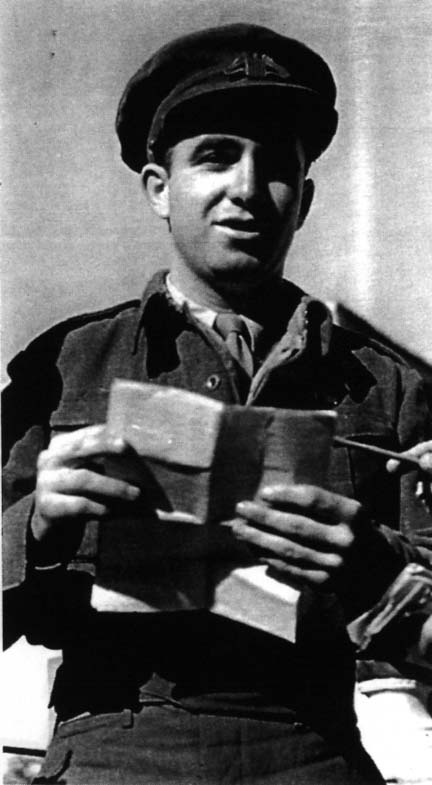
| Charles P. Edwards, born Boston Massachusetts June 24, 1919. Education completed at Milton Academy (1937), Bowdoin College (1941), Fletcher School of Law and Diplomacy (PhD 1954). AFS Driver Mideast, Africa, Italy (1942-1945). Married Licia Sargiacomo, Lanciano Italy (August 3, 1944), three children. Professor, Director of Political Studies, Westminster College Pennsylvania (1955-1962). From 1963 Foreign Service Officer, Department of State, Agency for International Development (USAID) assignments to developing nations of Africa, also participation on U.S. missions to United Nations Agencies at Rome, Geneva, New York City. Following mandatory retirement (1980) member Board of Directors, Barnstable (Cape Cod) Chapter AFS Intercultural Programs; previously founder and first President Wilmington Area (Pennsylvania) AFS Scholarship Committee. Also President, Chairman, Trustee, or Board Member various church, academic, civic, community organizations. Publications and readings, poetry. |
Repetition for the sake of emphasis is a legitimate technique practiced by the greatest authors Shakespeare included. Therefore I can claim forgiveness for having repeated below, but with more perspective and elaboration, two topics I had treated above in the final fourteen pages of Part V "Our Summer of '43." These topics were, V.4 "Reflections on Conscientious Objection to War," and V.5 "Prospects for Peace --- Allied Cooperation, Terms of Surrender."
On a pause during our dash through Wilder's Gap at the outset of the Battle for Tunisia, I had dispersed and then tucked my ambulance against a mound of crusted sand and clay, and I stretched out on the desert floor with a worn paper-back of Tolstoy's epic War and Peace. I had been reading it for months and had reached the final page when there was a whoosh and a roar as a German plane harassing the convoys came from nowhere right over the top of the car and was gone in an instant.
It was an appropriate way to complete Tolstoy's kaleidoscopic canvass of the nobility of the human spirit as well as its brutality and depravity each characteristic multiplied by the calculus of war.
I too had known at first hand during my three-year odyssey at war (1942-1945) the obscene brutality of war, such as at Cassino in Italy, and the enormity of resources human and physical it demanded to fuel the engines of its execution and destruction. On the face of it, war was abhorrent, the most destructive of human enterprise.
At Cassino, in the region of the mountainous spine of Italy midway between Naples and Rome, there took place for six-months (November 1943-May 1944) as bloody and prolonged battle as any of World War II in atrocious conditions of flood, mud, rain, ice and snow. Cassino was the anchor of the German Gustav line blocking the road to Rome. At Cassino the German Army held the high ground and flooded the river valleys below. The American 5th Army and the British 8th Army mounted four offensives, only able to break through after thousands on both sides as well as civilians had been killed, wounded, missing. So total was the annihilation of the town and its foundations that it had to be relocated in order to be rebuilt. The shining white Benedictine Abbey on its mountain top at Monte Cassino was reduced to rubble by our American heavy bombers. This had been one of the most controversial actions by our Allied forces during World War II. My poem "Cassino" (Part XI) is a statement of the horror at Cassino.
Both American Field Service "Car Companies" in Italy participated in the fighting at Cassino, my own unit in the February 1944 offensive by troops of the New Zealand, Indian and UK Divisions of the 8th Army.
There were many "Cassinos" throughout World War II in the European and the Asian theaters of war. Each one of us encountered some of them; each one of us found out that war at times was a dirty, bloody nasty business and the sooner over the better. For the foot soldier it was a game of chance, for the generals a game of chess --- to borrow an analogy by my fellow Driver Jock Cobb. Ours was not to reason why," ours was "to do and die." Such was the worst face of war. There had to be a better way.
But during my three-year odyssey I had also witnessed at first hand the nobility of the soldier in accepting duty, even at the sacrifice of his own life in war for the survival of country and the defense of freedom against a tyrant and aggression that could have been eliminated by no other way. Out of our victory and only our victory could there be a just and lasting peace.
This paradox was all the more apparent to me because of my objection to war as a matter of conscience on the one hand, and on the other hand my participation in uniform in war as an AFS Driver as well as the intimate bonding I had experienced with fighting men whom I had learned to respect, even love.
My sometime fellow Driver (and brother) in AFS "Jock" Cobb, also an objector to war, wrote of an incident when he had been tempted to help the soldiers load shells at a medium artillery battery, but then recoiled.
The perfection of the reconstruction of the Abbey at Monte Cassino is perhaps a metaphor, or omen, that a better way can found. The United Nations system given birth by the Allied forces during World War II itself, is a better way however imperfect it may be. My poem "Monte Cassino Revisited, 1984" (Part XI) concludes with the line "that peace will conquer war." This has to be the hoped for legacy of World War II.
"Odyssey" is the appropriate word to convey the magnitude of the transformations imposed upon me and my generation as we went to war in World War II. We were in Mark Twain's words "innocents abroad." We were fresh out of college or school, our young lives formed in the cocoon of an America isolated and secure behind its enveloping seas---or so we believed. All of us who somehow survived the experiences of war were transformed by this experience. We learned about the world at large and about war in all its aspects in a hurry.
My own three-year travels and travails, and those of my fellows of "Lucky 13" of AFS Mideast Unit 26, assigned to C Platoon of 485 then 567 American Field Service Ambulance Car Company, were as fraught with peril and as subject to chance as those of Odysseus and his stalwart band according to the magnificent Homerian epic. As for him and us, Deity must have intervened more than once else this story would not have been written.
It took the Japanese attack on Pearl Harbor (December 7, 1941) to arouse the American "sleeping giant" which had been bound by the twin cancers of appeasement and isolationism. Fifteen million young Americans rallied to Selective Service; as many as three million of us overseas at any one time were molded into the world's most effective and versatile fighting machine ranging across the seas, skies and in battle fields thousands of miles from home. The home-front mobilized the "arsenal of democracy" under the inspiring leadership of the American Presidency. Franklin Delano Roosevelt had been the single most towering figure and world leader of the prewar and war era 1933-1945.
When Pearl Harbor happened December 7, 1941, I was fresh out of College, knowing nothing of war except for the hatred of it. Also, I knew little of the real world, even less of the outside world except that America was supposed to be secure behind her surrounding oceans. My values had been formed by family, school, college, church and the example of the "Founding Fathers" of our nation and the heritage of their great work: the gift of freedom safeguarded by the Constitution and Bill of Rights. For me, as for Abraham Lincoln, America was the "last best hope on earth."
We were the "G.I. Generation" of the Strauss and Howe book Generations, called the "greatest generation" by the Tom Brokaw book by that name. We shared a value system that carried us into the front lines to eventual victory as soldiers-sailors-marines-pilots of the most devastating of world wars when evil and good were starkly joined in a contest for freedom. In this contest, the Soviet Union when invaded and forced to join and to cooperate with the free nations, suffered the most casualties, civilian and military, of any nation.
The principal values Brokaw extolled in his book are identified in the biographic vignettes of the lives of the soldiers, sailors, marines, pilots, women in uniform, men and women on the home front; and he brought to life in the pages of his book. These values include love of country, acceptance of duty, capacity for hard work and self-sacrifice, doing without a lot of material things, tolerance, character grounded in religious belief and formed by the nurture of united loving parents and families, a determination to strive for better things to come, and in many cases the supporting love of wives and girl friends who also strove heroically on the home front.
The great depression, touched off by the isolationist protectionism, profiteering, and stock-market crash of 1929 in the United States only strengthened our resolve. America was not prepared, but Americans were not soft. The Pearl Harbor tragedy was a titanic shock for all of us Americans. The issue facing us had become stark and clear: the defense of America and the defense of freedom was at hand, and the outcome was in our hands. The "sleeping giant" became a rampant tiger.
My generation growing up before Pearl Harbor had witnessed the wounded and gassed veterans of World War I. We were appalled by the barbarism of war as shown by the horrors, the futility of World War I.
As an alternative to military action, I had become an advocate of the doctrine of non-violent resistance formulated by Henry David Thoreau in his essay on "Civil Disobedience." This alternative had been practiced with success by Mohandes Gandhi in India. I was not alone of my generation at home and abroad to hold such views. Students at Oxford University in the 1930's had publicly declared that they would not go to war "for King and Country."
As a college student, during the march of Nazi aggression, I committed to Christian pacifism based upon my understanding of the ministry and commandments of Jesus of Nazareth and the sanctity of life exemplified by his teachings. War was killing, war was death, war was the violation of my dearest held beliefs. After college graduation in 1941 I participated in a work project of the American Friends Service Committee in Wisconsin which was also a demonstration for peace together with the Fellowship of Reconciliation, and I signed on for another six months in Mexico.
After Pearl Harbor I began to question if the methods of non-violent resistance buttressed by Christian pacifist belief would have much of a chance against Adolf Hitler. I also searched my conscience to ask myself if I could stand aside while millions of my own peers flooded the Selective Service offices to mobilize for war and to put their lives on the line if need be in the defense of country, freedom, and the future.
These thoughts, this tension within me came to boil during an interlude after Pearl Harbor and before I was subject to registration by my own Draft Board under Selective Service in June 1942. During this interlude I completed a commitment I had made to a work project in Mexico organized by the American Friends Service Committee. Here I faced opposing views and alternatives testing my own resolve, and I began to seek an honorable compromise to serve but not to kill. But somehow theological exegesis in the abstract in mid-1942 seemed irrelevant to the moment when most of the world was at war and the survival of freedom at stake.
An absolutist objection to war, as was true in some cases and among young men of the Society of Friends I knew, called for non-registration and therefore prison. I did not take this step, and my country permitted an option of alternative service on conscientious grounds. Surely there was possible compromise to an absolutist pacifist position as in St. Augustine's concept of "just war," or in the example of Jesus Christ the "Prince of Peace" when he cast out the money-changers.
The American (Ambulance) Field Service (AFS) provided such a compromise for me, and it was well known to my Draft Board. I registered in June and was classified by the Board as conscientious objector for non-combatant service in the forward areas with the Allied armies with which AFS was authorized to serve. My friend, fellow objector to war, and fellow AFS Driver to be "Jock". Cobb had registered and shown me the way to AFS.
In this option, I would serve in uniform beside the soldiers and within an army command in a unit performing a vital army function --- to save lives, yes, but of soldiers who would fight again.
This was the initial 'transformation' in my three-year odyssey in World War II. In taking this step, making this compromise, I did not feel I had violated my commitment to peace and my opposition to war. Jock Cobb supported me in this with logic masterful in its simplicity when he pointed out: "If every one drove an ambulance there would be no war." Sophistry perhaps, but unassailable on the face of it if unrealistic.
Indeed, my commitment to world peace as a pacifist and to serve this cause after the war in ways that I could, was not diminished by my experiences during the war; rather, it was reinforced.
Shortly after I had signed on with AFS I had received notice from the American University of Beirut of a faculty opening in English. In explaining that I could not in any event consider the position, I had written (August 24, 1942):
I had joined the American Field Service because it offered the best compromise between two sides of my nature which conflicted because of the war. I was classified as a conscientious objector to war by my draft-board, and as such have been given the right to non-combatant service. At the same time I felt, and do feel, that this service should be similar in privations and in element of danger to that which many combatant soldiers are asked to accept.
In going to war with AFS I confessed at the time that "I did not identify myself so much with Country and its fight for Freedom and Justice as with Humanity which had once again been sold down the river by the God of wars." I had also written that "I could not kill another man ... I could not feel hatred for the German people..." and that I "wanted to carry wounded Germans in my ambulance." I concluded "I wondered if I would grow to hate when I saw war at first hand. At least I was going to find out."
Indeed, I would "find out" and there would be other "transformations" as reported below as my odyssey progressed. In this process of "finding out" I began to make a distinction between a war to defend freedom and a war of brutal naked aggression.
Even before Pearl Harbor had brought America into the war as a fighting ally of Great Britain our two national leaders, Prime Minister Winston Churchill and President Franklin Roosevelt, had bonded and joined our countries in "special relationship" whose objectives and ideals had been announced to the world by the terms of the Atlantic Charter, August 14, 1941. This "special" Anglo-American alliance was the anvil upon which the invasions of Italy and France and defeat of Germany were forged.
On January 1, 1942 this "special relationship" had been materially advanced when 26 nations of the free world joined in Washington D.C. under Franklin Roosevelt's "Declaration by United Nations." This was the banner under which our Allied armies would advance to victory, and even before the final victory (August 1945) 50 nations had signed the Charter of the United Nations at San Francisco in June 1945. A collective security system would be in place to keep the peace. On the face of it, there would be another chance for world peace because a "war to end war" had been victorious.
These developments were reported and debated during the war at the home front and the battle front. The democracies and the Soviet Union had been forced into war by the most elemental of reasons: self defense. As the tide of war turned against the Nazi axis, the objectives of the Allies advanced from self-defense to the defense of freedom and human rights and to establish a world-wide collective security system. I could participate with the American Field Service in such a war with a clear conscience, a transformation from orthodox conscientious objection to the use of armed force in any way, shape or form.
Likewise the respect I found for the soldiers of our Allied forces, and the intimate bonding I experienced with some of them, was a genuine transformation for me from what I had expected. It embraced the young men of a score of nations from around the world with whom we AFS Drivers were associated. Also we learned to respect regular army soldiers of the other side we sometimes carried in our ambulances. This was a foundation upon which a world-wide intercultural program could be built.
This bonding was not only because of the terrible risks we shared. The soldiers I knew hated war as much as I. It had been imposed upon them, and their concern was not only the elimination of the Nazi tyranny, but that the peace settlement would be such as to eliminate the curse of war for future generations, our children, our grandchildren. I began to wonder: could World War II become as in Woodrow Wilson's dream a "war to end war" and to " make the world safe for democracy"?
As I went into action, at first in the Middle East and then in North Africa, I was amazed by the absence of animus towards the Germans I found among the British troops. They felt that the German people and soldiers were victims of Hitler, which could account for this. Even during the intense fighting in Tunisia, one of the Tommies where I was posted exclaimed: "After all, Jerry's as human as you and me."
One must remember that Field Marshal Erwin Rommel, the gallant "desert fox" in Africa and other high ranking German officers died in attempts to rid the world of Hitler.
On the other hand, as the atrocities of the Nazi psychopaths became more apparent to us in Italy, and most dramatically in the exposure of some of us to the indescribable horror of the Bergen-Belsen concentration camp, our inherent sympathy for the German people and foot soldier under the Nazi overlords became stretched to the breaking point. How could such horrors on such a scale get out of hand and go on without the German nation knowing and doing something about it? How could human beings perform such abominable acts?
In response, and in the formulations of the international peace arrangements after the War and in the diplomacy of our day, concern for human rights now takes center stage. Genocide ("ethnic cleansing") has become a crime against the law of nations.
Fortunately the temptation to impose vindictive peace upon the entire German and Japanese population was resisted; this had been done against the Germans in World War I and had helped to fuel the rise of Hitler. Instead, after unconditional surrender in 1945, the leaders were tried and executed, but our occupation of Germany and Japan promoted democratization and reconstruction. These two countries are now our allies and members of the United Nations..
My three-year odyssey and its transformations in the process of "finding out" about war had started from a different base than most of my peers; I had registered as a conscientious objector to war. Fortunately for me the process of "finding out" about war and my fellow "foot soldiers" in war was gradual and in three "stages": at first with an occupying army, then in the rear echelons of an advancing army, finally in action and at the forward areas of battle.
Although my AFS Mideast Unit 26 reached the vast El Tahag staging area of the British Army October 31, 1942 as the crucial El Alamein battle by 8th Army was under way, we were not sent into battle but instead to Palestine, Lebanon and Syria then under 9th Army occupation. Our training and medical evacuation work involved the needs of an occupying army as well as the local population. Our contacts were with soldiers who had been in action weeks or months before. It was war at second hand. In addition, I enjoyed a month of medical service with the Spears Mobile Clinics in Syria on behalf of the local Arab population.
These initial army contacts were with officers and enlisted men of the United Kingdom and Commonwealth of Nations steadfast and proud in having stood alone against Hitler and now joined in fraternal alliance with America. Many of these brave men had been at war for several years in a fight for defense of country but much more; they fought for freedom and for a better world. It was a war which General Dwight D. Eisenhower would define as "Crusade."
In this first stage of my odyssey, postings with an occupying army, I had learned to admire the British soldiers who had been in and out of combat for two years and more. Also, I began to feel that the grand alliance of our free nations was as much concern to build a collective security system after the war as it was essential collective action to hurl back and destroy the militant German and Japanese dictatorships and their crimes against humanity. My pacifist animus towards war in any way shape or form had begun to soften.
In a second stage of experience in war, my fellows of Unit 26 and I were assigned to rear echelon action with the victorious British 8th Army advancing through the Western Desert to its final encounter with Rommel's Afrika Korps in the Battle for Tunisia. Here on the Western Desert, we were exposed by night to wide-ranging German bombers. By day our evacuations involved recently wounded men at field hospitals (Casualty Clearing Stations) and evacuations by air to the base hospitals. Combat action at the front at this time was relatively light, as the Germans were fighting a rear-guard withdrawal preparatory to build up of forces and construction of fixed defensive positions at Mareth in a major effort to hold Tunisia.
Nevertheless on the Western Desert my fellows of "Lucky 13" Unit 26 and I were in action at war. We could not deny our pride in being part of a magnificent army which had turned the tide of battle against the Germans, and which paradoxically respected the enemy and its leader General Erwin Rommel. We also served with and gained affection for other soldiers of the British Commonwealth of Nations, notably those of New Zealand and Canada, also of the storied Indian Divisions. The British Commonwealth armed forces were almost of themselves a "United Nations."
Oddly enough during lulls in the action on the Western Desert, we engaged in debates organized by the Medical Officers and the "Padres" (Chaplains) at the field hospitals, these dealt with the shape of the eventual peace and the importance of Anglo-American cooperation through and after the war. The officers as well as the enlisted men, both American and British, participated keenly. Two debate topics on which I had been invited to participate on the affirmative, were "Resolved: Germany should be crushed as a great power," and "Resolved: the British Commonwealth of Nations and the United States should be joined under one government." Debate was hot and heavy, with effective arguments on both sides.
These debates as well as discussion groups and cultural and sporting activities, were conducted again during "Our Summer of '43..." (Part V. above) after the Battle for Tunisia when thousands of Commonwealth as well as some American forces were pulled back to Tripoli, Libya preparatory to the invasion of Italy. At Tripoli, Chan Keller and I were invited to lead a discussion group at "my" Regiment, the 58th Sussex with which I had served at Enfidaville. During the discussion, there was much interest in America and what America and Britain could do together to shape and maintain the peace.
During this discussion, some of the Tommies advanced the idea that American, British and German students should work and study together after the war. Here was the kernel of the idea of intercultural exchanges now successfully advanced by AFS to promote world-wide consensus. And this was an idea of foot soldiers whose lives had been at risk, whose buddies had been wounded and killed by the fathers of those German students of the next generation.
War, it seemed, could assume a human even civilized face. It had not demonized these foot soldiers. And there was manifest concern among all ranks for the formation of a sound peace settlement after the war in which the defeated nations would also participate.
Thus far my experiences of war, with an occupying army in Lebanon and Syria and in the rear echelons of the Western Desert and my contacts with soldiers in these situations, had belied the horrific stereotype upon which I had based some of my conscientious objection to war. However, my fellows and I would soon see war "close up and personal."
The third and final stage of my odyssey in war brought me and my fellows of "Lucky 13" into the forward areas and front lines of combat engagements, starting with the 8th Army offensive against the Mareth Line in Tunisia (March 20, 1943). In the two months of the Battle for Tunisia (March-May 1943) we participated in battle between two tested and heavily armed forces over difficult terrain, when Afrika Korps desperately fought to maintain its toehold in Africa. All of us served in or near the front lines of this campaign. It had been our and my "baptism of fire." It was reality. We would all be tested and some of us would not make it through. It was what we had signed on to do.
This third stage for me and my fellows continued during fighting between the opposing Anglo-American and German forces in Italy until the unconditional surrender of the German army in Italy May 2, 1945, followed by unconditional surrender of all German armies and Germany, and the declaration of V-E Day May 5, 1945. It was punctuated at times by fairly long interludes between campaigns, such as at Tripoli in the summer of 1943, at Pollutri that December or when formidable terrain in Italy frozen in winter brought action to a halt. All of my experiences through to the final victory and beyond have been detailed in the several Parts or Chapters of this story.
As detailed (Part IV. "The Battle for Tunisia") I saw plenty of action during the advance of 8th Army to Tunis and its significant victory over Afrika Korps, but nothing to compare to my experiences of the final three weeks of this battle at a place called Enfidaville when a fanatic Nazi division held on and finally surrendered through our lines (May 13, 1943). Truly, a "baptism of fire."
In brief, I had been posted at a front-line Regimental Aid Post (R.A.P.) together with my fellow Driver as the only ambulance serving a mobile Light Field Artillery Regiment, the 58th Sussex, depending upon configuration at the time disposing of at least five hundred men and officers in five batteries of four to six guns each plus supporting ordnance and armored transport for each gun and crew. We were under observation of the dug-in Germans commanding the high ground beyond our position. We were within close range of the German 88's, 105's, mortars, rockets. We ourselves were dug as best we could within groves of olive trees, and next to farm buildings although we changed locations several times.
There was constant and at times heavy shelling of our positions night and day by gun, mortar and rocket especially when our barrages supported tank and infantry action. We took casualties. Evacuations down to the A.D.S. below were on a single road across an open, parched and exposed plain.
It was during the Enfidaville experience that I had been caught out under an intense mortar barrage upon a newly taken position. I managed to flatten down as a mortar shell exploded on a slight outcrop of rock beside me. Its blast and its steel fragments passed right over my back to kill a British soldier just behind. My brush with instant death could not have been closer. I was deeply shaken. I tried to capture the trauma of this experience, and my identification with the soldier, in my poem "Soldier Calvary" Part XI below.
Again in Italy my life had been on the line during a month of action (commencing October 15, 1943) as 8th Army advanced to the Sangro River in the Battle of the Trigno-Sangro in an attempt to outflank the Germans on the Adriatic side. I was posted to an infantry unit (the Lancashire Fusiliers) working out of Car Posts and A.D.S.'s of the forward areas in a fluid rather than fixed situation. In addition to my exposure to the constant shelling, our evacuations often by night took us around mine fields as well as muddy diversions next to demolished bridges as autumn rains turned river valleys into mud. As our Drivers thinned, some casualties and others victims of a jaundice epidemic, I worked alone or with an assigned British orderly.
During the final weeks of an heroic advance by 8th Army to cross the Trigno and reach the Sangro river I had recorded in scrawled pen-and-ink notes on a scrap of yellowing paper: "hardly any sleep ten days, 36 patients one day, 60 patients 4 days, attack reached Sangro on the 9th ... lull in battle for next assault and new troops..." On November 11 I succumbed to jaundice plus exhaustion, and was evacuated to a base hospital in Naples. This would be my only prolonged hospitalization, although my health was adversely affected by this for the rest of the war.
The Trigno crossing and advance to the Sangro had been as challenging and as difficult a month of sustained action during combat situations that I would know, although I could not have as close a brush with death as at Enfidaville.
There were brushes with death for me in the advance to the Sangro, and there would be others for me as a Driver before the end of the war. During fiercely contested battle when death was all around and our own lives were on the line I had written more than once: "I have given over giving a damn about what is going to happen ... the present is quite enough to handle..." And under such conditions, I had also noted that "I haven't the energy at present to bother one jot about what is going to happen with regard to a future type of internationalism." In action at the front there was one dominant concern in the back of our minds, survival. These thoughts, in Jock Cobb's view, emphasized "how AFS Drivers, like the soldiers they worked with were forced by the horrible dangers ... to block out their hopes for the future..."
Nevertheless, during the battles for Tunisia and in Italy, I had met one of the conditions I had set for myself as conscientious objector, that "this service should be similar in privations and in element of danger to that which many combatant soldiers are asked to accept."
I had also fulfilled another of my objectives: to carry wounded Germans. We carried quite a few in Tunisia; they were treated at our field hospitals as our own; we also exchanged prisoners of war. These were junior officers or enlisted men and as far as we knew of the regular army. I carried one badly wounded tank man on a stretcher for two days during a rapid advance; we addressed each other on a first name basis --- I "Karl" he "Howard." He showed me photos of a young wife and small daughter in a locket held by a gold chain. My fellows and I did not hate these men; to the contrary. As Nazi atrocities became known, however, hatred for such actions and those who committed them became legitimate, and the determination to save future generations from such crimes against humanity.
There were other "conscientious objector" issues to put to rest, and other "transformations" to record as a result of my three-year Odyssey at war, and from the perspectives of a half-century later. One unexpected transformation resulted from contacts with men of the armed forces. Out of the maelstrom of war and its brutality, all of us, realized an incredible bonding. It was not only between and among ourselves; we experienced the same bonds of love, affection, respect with soldiers of units to which we were attached for any significant time. This attachment strengthened as the dangers we shared increased.
For me, and for my fellow Driver at Enfidaville Howard Brooke, the 58th Sussex Royal Artillery became "our beloved Regiment." Our R.A.P. "team" of Medical Officer, two orderlies, two AFS Drivers were as one. One of the signalmen and dispatch riders Alex Turner become my friend for life; others were almost as close; also a few of the officers. The professionalism, character, courage, devotion to their men of the British Officer class in the forward areas was unsurpassed. I had never anticipated or imagined that active duty in the front lines of war could solicit such respect and create such bonds of human devotion.
Such bonding as I had known with men of "my" Regiment was not limited to our British "cousins." We AFS Drivers serving units of the British Commonwealth of Nations and the Free French uniquely established bonds of friendship and devotion with the men and officers of many nations, as well as with our own fellow Americans when associated with them. All of this put a human face upon armed service, at least such as it was for us in World War II. Previously my fellow Driver in AFS Jock Cobb had observed: "You will always find out that people are human, even in uniform."
My odyssey in war had brought me close to and with respect for the soldier, and into a bonding with some I had never anticipated. In my next Section, I comment more fully on "The Soldier's Way in World War II."
There remained the matter of conscientious objection to war itself, that is, objection to resort to military force which entailed the loss of life.
In World War II good and evil were starkly joined, or to put it in simplistic terms the survival, the very existence of the "good guys" (the free nations, the democracies) was threatened by the "bad guys" (the militant, godless, ruthless dictatorships). Clearly Thoreau's and Gandhi's non-violent resistance didn't stand a chance against Hitler; clearly not everyone and especially Hitler's storm-troopers were going to turn in their tanks for ambulances. There could be no justification whatsoever for wars of aggression, wars of conquest, particularly a war to eliminate an entire race or ethnic community even if within the boundaries of a "sovereign" state.
George Washington had led our rag-tag but victorious army in a war for independence under the principles of the Declaration of Independence, Woodrow Wilson had brought America into a war to "save the world for democracy." Statesmen and philosophers throughout history had probed the possibilities for "Utopia," for "Perpetual Peace."
As reported above, inspired by Woodrow Wilson and his concept of a worldwide collective security system, a "League of Nations," President Franklin Roosevelt was determined that a Charter for a new world-wide United Nations would be drafted and signed even before the end of World War II. This was a supreme achievement of World War II following victory over Germany and Japan. The Allied victory in World War II made possible a tangible opportunity to create a just and lasting peace.
Fifty nations signed the United Nations Charter at San Francisco in June 1945 two months before the end of the War following the Japanese surrender. Instead of a vindictive peace, Germany and Japan were occupied for the reconstruction of their economies and to endow them with constitutional regimes. They are today two of our principal allies and two of some 190 member states of the United Nations.
The use of military force but only as a last resort within a framework of multilateral diplomacy under the sanctions of the United Nations Charter and Security Council is in my view a form of "police" action within the framework of an established "rule of law" when acts of aggression and "crimes against humanity" can be turned back by no other way. This does not constitute resort to the practice of war as typically waged by mankind from the beginning of historical time through the first World War of the 20th Century. The alliance of free nations in World War II and the objectives of this alliance were beginnings of this kind of collective use of force on a global scale.
In good conscience, I do not now oppose resort to military force for "peace making" and "peace keeping" after all other means have been exhausted within the framework of the United Nations Charter and decisions of its members under the Charter. In such action lives tragically will be lost. Use of force subject to these conditions is analogous to police action within states, and it is not war --- but this does not necessarily constitute peace.
For a genuine "perpetual peace" it is also essential to build a consensus of core values for democracy, for human rights and for non-violent methods of change within nations and therefore between nations. In this process of consensus building AFS Intercultural Programs shows the way. Perhaps Sir Thomas Moore's vision of utopia may yet be realized and those gods of war harnessed to the benefit of all humanity.
My conceptions about war and the soldier in war as well as the real world had undergone a sea change during my three years as an AFS Driver following my registration as a conscientious objector to war. Enlistment in AFS had been a compromise for which I am eternally grateful, and my commitment to world peace and to work on its behalf had been reinforced by my experiences during World War II.
The Soviet Union and the democracies had been forced into war by the most elemental of reasons: self-defense. The democracies, by the Atlantic Charter, the Declaration by United Nations and the United Nations Charter, had gone beyond self-defense to make of World War II a war in defense of freedom and to establish a world-wide collective security system. During the war at least, the Soviet Union had cooperated with the democracies and had signed the Charter of the United Nations. My own objection to war under any circumstance had been transformed into a conditional acceptance of armed force as collective police action under law in a collective security system composed of constitutional democracies.
As the most devastating century in world history, our 20th century, comes to an end the United States of America has become the world's one remaining super-power. In spite of elements of neo-isolationism within our body politic, and a host of problems and issues that threaten world peace, we have assumed responsibility commensurate with our power as one of the five permanent members of the U.N. Security Council to help keep the peace.
Suffice it to say that America and the world have been on a rocky road in the more than half-century since our great victory in World War II as the next millennium draws near. We have been held hostage to the threat of atomic holocaust by an aggressive Soviet Union. We have survived and won out in a long "cold war" leading to the collapse of Soviet communism. We have been plagued by atrocities of messy regional and ethnic conflicts as well as the threats of rogue states with weapons of mass destruction. And we Americans blundered into the gravest error of our history, the Vietnam war. But there has been no world war.
Throughout all of this, the United Nations organization has grown, undertaken a comprehensive range of services, helped to build democratic governments which now prevail in all continents, gained the loyalty and allegiance of most of the nations of the world. Its institutions have undertaken multilateral diplomacy and collective peacemaking and peace-keeping in scores of regional conflicts, and has provided sanction for the 19-member NATO regional alliance to contain the atrocity of "ethnic cleansing" genocide) practiced in the last decade of this century by Serbia in Bosnia and Herzegovina and in Kosovo. Such atrocity stands condemned by the world community and the bitter lessons of World War II. In Section 3 below of this Part X, I will comment more fully on "America in the World and the United Nations, Lessons of History."
In one of his many perceptive thoughts about war and peace, my fellow Driver (and brother in AFS) Jock Cobb pondered the inherent limitations of our human kind making the goal of world peace so illusive; he defined these limitations in a letter to me years after the war had ended. I quote from Jock's letter,
I do think the world has come a little way toward learning how to keep peace, but sometimes I wonder if the problem isn't inherent in the human foibles. Too much hankering for a "good" fight? Too much testosterone?
There may be an implication in this that war is inevitable, that it is built into our human psyche. This is not Jock's intent. He has advanced a scientific hypothesis against which to study modification if not elimination of violence in human behavior. This observation also highlights a basic concept which today's AFS Intercultural Programs seeks to address, the defense of peace depends upon people out of which nations and in turn our world-wide relationships are formed. That war is inevitable is a counsel of despair emphatically rejected by AFS programs since World War II. In my concluding Section 4 below I comment on the now world-wide AFS Intercultural Programs and its growth and impact since its inception following World War II.
There was for me one final transformation during my three-year odyssey in World War II, a transformation totally unexpected by me, totally to be unexpected in the midst of war. This was my marriage, August 3, 1944 almost one year before the final act of surrender by Japan that marked the end of the war.
To carry further my analogy to the Odyssey of Odysseus, my "Penelope," my war-bride Licia Sargiacomo, was waiting for me hopefully to return to her in one piece when it was all over. We had met when I had been transferred for three months as Public Health and Welfare Officer Allied Military Government (AMG) based at her home town of Lanciano in central Italy on the Adriatic coast. We had married after I had returned to my Platoon and then been given leave during a lull before the offensive against the German Gothic Line in which I participated after our wedding. From August 1944 until December 1945 there were agonizing departures and long separations for us. Opportunities to be together were few as the war ground on, and her passage to the United States had been delayed until after the war had ended.
Our love and marriage was another paradox of the many I had found in my journey through war. In retrospect, we owe our love and our marriage to the most horrendous of circumstances, total war, a war unsurpassed in the magnitude of death and destruction visited upon our planet Earth. Our love and marriage would not have happened had it not been for AFS and because two of my fellows in AFS Bob Blair and Chan Keller had arranged for my temporary transfer to AMG Lanciano.
Why should we have been so blessed when there had been so much horror and pain? In spite of the most titanic of upheavals that history and our own folly has visited upon us humans, the lives and loves of individual men and women go on in war as well as in peace strengthened by their courage to create new life, inspired with hope for something better, otherwise there would be no future for us on planet Earth.
If I would inexpertly probe the realms of religious faith and social ethics, I could find in this love and marriage in the midst of war a metaphor on the juxtaposition of the good and the bad and the vindication of soaring love when there had also been despicable hate in the lives of our human kind even more extreme in times of war.
I find myself in two camps as regards to armed force. I object to use of armed force such as our unilateral American "war" in Vietnam, and of course any aggression. I support resort to armed force as police action of last resort within the framework of the United Nations Charter, either by United Nations commissioned peace-makers and peace-keepers, or by regional arrangements or coalitions having U.N. sanction such as the North Atlantic Treaty Organization (NATO).
Towards the end of this war, when I could have faced the possibility of being drafted into the U.S Army depending upon the status of AFS demobilization, I had written (March, 1945) that "I have no more an objection to enter the army on religious grounds..." This was based upon an assumption that I would be authorized for medical service in that army as it was in World War II and in the spirit of a U.N. sanctioned peace-making action. Years later, when AFS Drivers qualified for honorable discharge United States Army, I accepted in the name of "Charles P. Edwards, American Field Service.
Thomas Jefferson warned that we humans can not take freedom for granted; it requires "eternal vigilance." He also affirmed that from time to time "The Tree of Liberty must be watered by the blood of martyrs."
Thomas Jefferson could not have imagined the amount of blood that was shed in World War II to "water" Liberty's "tree." It was the most devastating of wars ever waged. When it was over after almost six years of war by land, sea and air spanning the globe, there were millions killed, wounded, missing both soldiers and civilians victors and vanquished. The heart of Europe was a shambles, as were the great cities of Japan and to some extent England. In its final unbelievable act, two cities of Japan lay in smoldering ruins from just two bombs dropped from a single high-flying plane. Mankind now held the sun in his hands for good or for evil, with the capacity to destroy all life on his planet Earth --- an awesome responsibility and prospect.
In Jefferson's formulation above there is an implication of a state of "perpetual war" requiring the sacrifice, the "martyrdom," of the defenders of freedom no matter how destructive the process of defense may be. There is also an implication in this that a lasting peace may be an impossibility if liberty must be "watered" by bloodshed from time to time.
One deterrent to a condition of "perpetual war" is the horror of war itself. There is a "Catch 22" situation in this, however, for only those who participate in war can experience the horror of it. Furthermore, absent such experience, war can command for the uninformed excitement, glamour, heroics, the adulation of heroes. It is a siren song that has echoed down the centuries. One wonders why the search for peace has not claimed as much devotion, although there seems to be increased concern for peace as our turbulent 20th Century draws to a close.
We of AFS uniquely of any unit participating in the war served with soldiers of virtually all of the Allied nations. Most of us were posted with the armed forces of Great Britain and the British Commonwealth of Nations representing a score and more of peoples from the West and from the East. We served in forward areas with these men, bonded with some of them in the campaigns of the Middle East, North Africa, Italy and in the final weeks in Germany, also for more than two years on the India-Burma front.
We had a contingent of Drivers with the French. We had postings in Italy with Polish Corps, also with reconstructed Italian units. Our contacts with our fellow Americans were many, although postings with them few. We did not serve with the Russians.
These men did not consider themselves to be martyrs although many were wounded or killed and all put their lives on the line. Nor did they think of themselves as heroes although their deeds were heroic. What had happened to them, to us, had not been our choice. We did not want to die; we did not covet heroics. War was a dirty business and the sooner over the better.
My own generation of Americans and our peers of the tree world were called upon to stop the Hitler Axis, turn back aggression on all fronts, secure freedom, and make it possible once more for humanity to seek to build a better and more peaceful world out of the ashes of war, this time under the banner of the United Nations. This was the fundamental responsibility and mission of our young lives over one-half century ago. This was the "Soldier's Way" Allied armies, World War II
All of us of the Allied forces, volunteers, draftees, professional soldiers were subject to the authority of constitution ally elected Heads of Government of democratic nations. Constitutional democracy within states, the "rule of law," is an essential basis upon which to build peace between states, as stated by Immanuel Kant in his essay on "Perpetual Peace." There was one exception: the Soviet Union was not a constitutional democracy, but its dictator "Uncle Joe Stalin" cooperated with the democracies at least until the defeat of the German-Japanese axis.
Our generation which formed the armed forces of World War II has received the accolades of the distinguished NBC "anchor" Tom Brokaw in his book The Greatest Generation. This is high praise, and deserved, but it is not the entire story. Our generation formed by and large the "foot soldiers" --- the "G.I.'s," "Tommies," enlisted men, junior officers who manned the guns and the combat. In the words of General George Marshall, "the best damned kids in the world."
On the other hand, it was General Marshall and his generation, sometimes called the "Lost Generation" of World War I and the Great Depression, who as much as any senior officer exemplified the leadership of our Allied nations and armies without which the "greatest generation" would not have had its command and its inspiration; without which there could have been no victory. This is point is made by the historian David Kennedy in a recent book Freedom from Fear, The American People in Depression and War, 1929-1945 (Oxford, 1998).
There were many others of the "G.I.'s Generals" who led and inspired the troops; to name a few on the American side Supreme Allied Commander Europe Dwight Eisenhower and his "lieutenants" such as Omar Bradley and George Patton, and on the British side Harold Alexander, Bernard Montgomery, Maitland Wilson.
At the pinnacle of leadership of the Allied forces in World War II stood two giant figures: Winston Churchill and Franklin Roosevelt. Their deeds are legend and well known.
It was Churchill who rallied England in her "finest hour" during the darkest days when militant dictatorial Germany and Japan commanded most of the world. It was Churchill who established with Roosevelt the "special" Anglo-American alliance so essential for victory in war and to shape the peace. It was President Roosevelt who initially kept Britain and Russia in the fight, mobilized the American "arsenal of democracy," shaped the major strategies and decisions for Allied victory, and was "founding father" of the United Nations. He is the most towering figure of the decade through to his untimely death, April 1945 when victory was at hand.
We of our generation were "foot soldiers" under such leadership in a world-wide conflagration that had to be extinguished or there would be no freedom for anyone. Quite simply duty called our generation as citizen-soldiers. We were all in the "same boat" --- one for all and all for one. There was commitment to duty each to each in the bonding we experienced; also the sense of duty to nation, even to the world at large for a better world to be. Victory was imperative; our side had to win and duty was the motivation and the cement to assure victory. In William Manchester's words "America was a different country in 1941. More conscious of duty..." And I found this imperative to duty in the hearts and minds of the many soldiers of diverse nationalities with whom I had contact during my three-year odyssey in war. Such was the soldiers' way.
In brief, why then did our generation fight? The writer William Manchester answered this question in this way: "It was an act of love of the present and faith in the future," words written in his support of a national World War II memorial, "Memorial, Honor Overdue," in the Tampa Tribune, May 3, 1998.
The "love of the present" was not love for war, far from it. In this, Manchester refers to the incredible bonding we all experienced in war and especially in combat situations. To explain this kind of "love," Manchester, himself a veteran of World War II, wrote
The men in my company were my family, my home. They were closer to me than I can say, closer than any friends had been or ever would be. They never let me down....
Such was the bonding I experienced with my own fellows of AFS "Lucky 13," and with soldiers of units where I was posted. These feelings of the soldier in war were not limited to one's "buddy" and unit. We of AFS began to feel part of the victorious advances of the Allied armies against what had been invincible German power.
As I had written in my poem "Soldier Calvary" (Part XI below) "I have become a son to those who cannot shake the grime of battleground from off their boots, and I take up their cross."
No one expressed this bonding brotherhood more eloquently than our gifted and beloved Director-General, American Field Service, Stephen Galatti. Speaking at our first AFS post-war reunion, September 1946, he enumerated the many nationalities with whom we of AFS served "whether privates, generals or sergeants --- all the same kinds of people, brothers under the skin...." He concluded: "We were at your side during war ... we will remain at your side during peace because we know that it can endure only it all of us can understand each other as we understand you."
Manchester's reference to "faith in the future" of the American soldier in World War II has to do with the shape of the post-war world, a better world to be out of and after the war. The model for this world was constitutional democracy, the "rule of law" best exemplified by our own United States. Manchester wrote of the "absolute conviction that the United States was the envy of all other nations ... that all lands, given democracy and our know-how, could shine as radiantly as we did."
This "faith in the future" was equally held by our fellows of the Commonwealth units with which we served. Alex Turner of the 58th Sussex at Enfidaville Tunisia, looked to the future with hope; he told me "We die a hundred deaths for people back home to make an end to war which keeps coming back. I shall do all I can for peace ... We must help the world to walk straight."
During the interlude between the African and the Italian campaigns when troops had been pulled back to Tripoli Libya, as reported in Part V "Our Summer of '43... " there had been opportunity for British Commonwealth and American officers and men to question and express concern for the shape of the post-war world; that somehow wars of aggression could be contained if not prevented, Lectures, debates, discussion groups, articles and competitions organized by the post paper, had to do with this concern --- dramatic evidence of the mind-set of many soldiers of a variety of nationalities in World War II. Nevertheless, it was the soldier's way in World War II to affirm such hopes as the tide of war slowly turned against the Nazi axis.
World War I had been characterized by some as the war "to end war," and the war to "make the world safe for democracy." Such had been the high hopes of President Woodrow Wilson --- hopes too soon dashed. At the outset at least, there were no such claims announced for World War II. These hopes began to take shape during World War II, and Woodrow Wilson's League of Nations became the model for future world organization. President Roosevelt was determined that the Charter for the postwar world organization should be completed even before the war had ended.
Fittingly, representatives of fifty nations from all corners of the globe met at San Francisco to complete and sign the Charter of the United Nations, June 1945, a legacy of President Roosevelt's leadership and vision.
One of the first acts of the new United Nations organization was to formulate a Universal Declaration of Human Rights. The Chairman of the drafting committee of this Declaration was Eleanor Roosevelt.
This evidence of a common humanity was a good omen for the future. A consensus on a core of values could be formed, was formed, out of national diversities through people-to-people interaction. This "people-power" if you will was the foundation upon which a universal consensus has to be grounded, a nascent extension of the "rule of law" principle world-wide. To keep alive, even expand, this consensus was the role and mission of intercultural programs. Such would be the future mission of AFS as outlined in Section 4 below.
We of AFS experienced this common humanity in the bonding of soldiers in war, ourselves included. We witnessed the concern of the soldier for the peoples of the other side, the capacity of the soldier of different nationalities to work together as a unified force motivated for victory, a victory for freedom, for human rights, for a more secure future. Such was the way of the soldier, the way of so many who shared a common humanity transcending differences, of so many who set aside vindictiveness towards the other side except for the perpetuators of atrocity.
Early on in my own contact with the men of Great Britain and the Commonwealth, I was amazed by the absence of vindictiveness I found among them towards the German soldier and people. Corporal Johnny Birdsaw of the Damascus CCS, one of my first postings, was a good example. He had been wounded at Dunkirk, caught in the siege at, Tobruk, torpedoed when evacuated by sea after another wounding I however, he did not hate the regular German soldier.
The first casualties I carried when posted to a CCS on the Western Desert simply said in effect that "Jerry had given them a bit of a drubbing, but that they would get back at him next time." It was all in the day's work, a question of duty; it was the soldier's way in World War II. Even after one of the intense shellings of our position at Enfidaville in the final weeks of the Battle for Tunisia, Alex Turner dispatch-rider at the 58th Sussex Regiment, spoke up. "After all, Jerry's as human as you or me..." Others agreed; all had been "in the line" without a break since the El Alamein battle.
There was no such sympathy for the Nazis and the atrocities committed by Nazi troops. These became apparent to us during the long and bloody campaign in Italy as the Nazis committed atrocities upon the Italian people and Partisans. But it was not until Germany itself was occupied that the extent of the unimaginable horror of these atrocities became known. There were also atrocities on the Russian front, in the rape of China by the Imperial Army of Japan, and Japan's conduct of the war in the Pacific.
The Allied armies in World War II were composed of soldiers of many nations, almost literally a "United Nations" even before its creation. While sharing in common goals and devotion to duty, a common humanity, there were distinctive national "ways" in the "way of the soldier" in World War II, and we relatively few AFS Drivers uniquely experienced most of these. I for example had posts with many of the different Commonwealth nations whose troops formed Britain's 8th Army. Individual posts could be limited to a single nationality at the level of Company or Regiment. Conditions at the front made for close contact among us.
At times, we also carried wounded soldiers of German army units in our ambulances. The Battle for Tunisia was characterized by massive offensives against fixed positions followed by breakthroughs and sustained, mobile advances by the tanks cutting off German units left behind. Under these conditions both friend and foe were swept up in the medical rescue and evacuation system. This was especially true during the initial rapid advances after the German Mareth Line had been turned. I had some unusual contact with men of the regular German army.
One evacuation detailed above Part IV, "The Battle for Tunisia" merits repetition in this context of national characteristics and the soldier's way. This trip had been a study in contrasts. We (Jock Cobb and 1) carried two Tommies, a "Kiwi" (New Zealander), and an Austrian. The Kiwi was solid, sure of himself, open, quite American-like. The Tommies were for the most part reserved, although one of them cursed a bit in his pain. The other lay silently, or perused a copy of "Life" magazine I had, holding it with his one good arm. He feigned indifference, but I felt he was secretly sympathetic towards the-tall Austrian who lay on the stretcher beside him and with whom he had recently fought.
This last was the biggest man I had ever seen, and he was badly wounded. Fine Nordic features, fair, eyes dazed expression of mute acceptance instead of hostility: he was quiet in spite of his pain. It took a searching of my German lessons to understand that he wanted me to turn on the fan. And I was secretly amused when the Tommies leaned over and asked if he wanted some water. Thus it was with combat troops.
Jock Cobb, in a letter of his dated March 31, 1943 described our varied patients
We get all kinds in the ambulance: the worst are badly burned; the happiest are the Italians who get wounded --- sometimes in the back while trying to surrender. We take them all together as they come officers and men: Germans, New Zealanders, Italians, Africans, Hungarians. Mostly they are pleased to talk and joke as we bounce along. Charlie speaks Italian, and I German, so we get quite a bit from the prisoner patients. Some of them have relatives in America.
Jock's letter continued as follows:
One young German fellow who was quite a sportsman --- I say was because he lost a leg---talked a lot about skiing and boxing, and spoke enthusiastically about Joe Louis. Another who was badly hurt warmed up after a drink I gave him from our whisky ration. The wounded prisoners get the same treatment as our own men, a curious thing when you think of it, and yet natural enough the way it works out, everybody takes it as a matter of course. A couple of Italian doctors were captured, so one. of the wards was turned over to them to care for their own wounded. And the British orderlies were busy handing them instruments and joking with them in hog-Latin.
Following one of the tank engagements, and when I was alone in the ambulance and in convoy on course moving north in a fluid situation flanking the Mareth Line, I picked up a badly wounded German stretcher case from a front line Aid Post; I was then attached to a Main Dressing Station (MDS) with facilities for field operations. Given our rapid advance and the equally rapid German retreat to their next fixed line, another 30 hours would pass before the MDS could be set up and I manage to locate it. The track I had to follow, over open desert country and across deep wadis, was rough and chewed up by the advance. Fortunately after dispersing my ambulance at night, I managed to find an orderly who helped me to clean, dust the gaping hip wound with the ever ready sulphanilamide powder we used, and apply a new field dressing.
Although my high school German was limited, we managed to communicate. Soon I was "Karl" and he "Howard." We talked of music --- Beethoven, Strauss, Mozart --- and of snow and skiing. I showed him pictures of my home; he of his young wife and five year old daughter in a heart-shaped locket on a gold chain around his neck.
Howard was "Under-Officer" of one of the crack German panzer tank units. He was 27 years old, His eyes deep blue, flashing; his hair a mass of tangled gold curls. The beginnings of a blond beard enhanced his striking features handsomely chiseled. As I dressed his wound he lay helpless as a child in my arms, a human-being in pain, his home near Berlin, my enemy.
All in all he had been gone more than four days with only superficial care. As soon as I got him to the MDS the doctors operated and his life saved. They were surprised at his relatively good condition, a tribute in part to the qualities of our AFS ambulances to have gotten through such difficult terrain. I had been reported "missing" for two days as it had been impossible for me to keep up with the convoy. It had been a trying but rewarding experience for me; my immediate thought was to air out the car, and catch a bite to eat and some sleep after the most difficult days of driving I had known to date.
German soldiers in Africa under General Rommel had been brave and resourceful and had observed the rules of war. For example, as regards the Geneva Convention and the Red Cross, it had been our experience as Drivers that every effort had been made to comply and by both sides in the African campaigns. My experience with "Under-Officer" Howard and the treatment he received at the MDS, as well as our experiences with other German wounded, was further evidence of the absence of animus of the troops of the British Commonwealth towards the rank-and-file German soldier, as distinct from the Nazis and Nazified units.
Violations of the rules of war and atrocities by the Nazis became apparent in Italy, and when Germany was invaded and occupied. This made it more difficult to retain this valid distinction between the Nazis and the German people, based on a sense of fair play among our Allied forces. This represented a universal human longing for healing out of adversity. The way of the soldier in World War II magnified this longing towards friend and foe alike and regardless of national origin.
We were posted with units of the many nations of the British Commonwealth forming Britain's 8th Army in Africa and Italy; some of our choicest assignments were with the "Kiwis" of New Zealand. Our principal contacts, however, were with the men of the United Kingdom, the British "Tommy." These were the men who staffed our own workshops and canteens that kept us going through it all, and were one of us; and we were of course posted to the storied divisions and other units of the United Kingdom that formed the core of the Army and bore the brunt of much of the fighting.
I soon learned that the legendary "bull-dog" qualities of the British nation and "Tommy" are more than mere stereotype, and never more so than during their "finest hours" in World War II when at times they had been the sole guardians of the ramparts of freedom and civilization.
All in all, they helped to man these ramparts for almost six years, combining a "stiff-upper lip" capacity for stoical survival against hopeless odds with the saving grace of the driest and most understated self-deprecating humor known to man. They did not give over to despair, nor to emotional bursts of anger or hatred towards the German soldier and people as the tides of war began to turn in their favor.
Their anger was directed against the blundering politics, appeasement, isolationism that had contributed to Hitler's aggression. They hoped for something better after the war. Their hatred was reserved for the brutality of war itself, and the extremes to which both sides were reduced as the war raged on. As our Allied air raids pounded Berlin and other German cities I overheard a Tommy exclaim: "That's not war, it's bloody slaughter." This soldier doubtless felt pride in the success of his own Airforce, but his emotions were mixed and he tried to look at the humane side. That was the way of British troops. However, as Nazi atrocities were revealed their hatred for the perpetuators of these crimes had no bounds.
During the first years of war (1939-42), the British "Tommies" undermanned and outgunned had taken unbearable punishment, but their spirit had not been broken by the casualties and lost battles inflicted upon them. Their staying power had been unsurpassed. At Christmas 1942 I overheard a Tommy say "for the past three years I have looked forward to being home next Christmas --- perhaps this will come true the next time."
I wrote down my first impressions at the huge El Tahag training and staging area at Britain's Suez base (November 1, 1942): "There is of course wide interest in the good news of the present army push, but 'Jerry' (the Germans) are sort of an impersonal thing. Hatred does not run high ... this casual acceptance of the war. Morale among the men of Britain is high, and the good fellowship of this camp is evidence."
Months later on the Western Desert serving in the rear echelon area during fighting in the advance, I had noted among the United Kingdom soldiers whose lives we now shared a stoical devotion to duty ... and an incredible absence of animus towards the German soldier and people as distinct from the Nazis.
Early on in the Battle for Tunisia after a brigade of rifles had been sent in against a heavily defended wadi (riverian divide) and suffered heavily, we evacuated some of the wounded. Their comment was that "Jerry gave us a smashing, we got knocked about a bit, but we'll get him" --- the first part of this comment was masterful British under-statement and the second part reflection of a will to win against a strong opponent.
On the Western Desert in early 1943 my fellow Driver Jock Cobb was equally impressed; he had written in a rather long letter:
I have talked to the British Tommies just back or just going out to the front. They are largely older men who have been in the service two or three years; many of them are married. Their spirit is incredible. They talk of their homes being bombed, of the trials of the desert, of the next year or so of fighting as being sort of a matter of course for them in spite of the good news. ...They have been rolled into the great mill of the war, are solidly confident that they'll roll out eventually, and try not to think about it too much.
Tommy will do anything for a Yankee to show friendship: they look after us like children when it comes to dealings with the natives....
He concluded: "I think of the Tommies just doing what they had to do without much emotion, certainly not fury; and a hell of a lot of ammo whistling back and forth..."
My fellow Driver Jock Cobb had gained an imaginative insight into human nature and the nature of war, or at least the soldier's way in war on the desert sands. He wrote (March 10, 1943) that "war's a game," and that there could be a human face in war:
From the soldier's point of view it's a casual carefree existence, a gainless gambling game. We are thrown together into the boiling cauldron of war, fear is distilled off and bubbling joviality remains. Companionship counts a lot ... there is something in the desert that sets a man to thinking---I have imagined war in all it's horrible aspects, but never from this point of view. I do recall now the way I finally persuaded myself to put on the uniform of a soldier. "You'll always find people are human, even in uniform" I told myself. And it's true.
In another letter written (March 31) Jock extended his analogy of war as a game into a critical and balanced assessment of the good and the evil associated with war in any location and why wars go on. This had been written shortly after the massive attack by 8th Army at Mareth at the start of the Battle for Tunisia:
Yes, war is a game, the most human game in the world and also the most costly. It's human because of the pettiness and the nobleness, the cowardice and the bravery, the treachery and the fair dealing so characteristic of this hypocritical race called man; all these are seen in their most vivid form. And for the individual, it's a terrific game of chance. There is nothing human about a bomb once it has left the bay. Some people have the luck and others just don't. It's a gamble with everything men hold most dear at stake --- their homes, their dear ones, and even their own lives. But for the generals and admirals it's a wonderfully thought-out science, a game of chess, where men are pawns and the squares are continents and seas
And all the world loves a good game; so that's why wars go on.
Such insights out of experience in war underline the sacrifice and inherent heroism of the foot soldier in war, and the inherent difficulty and importance of achieving a lasting peace settlement and alternative to war.
In the final advance of 8th army from Cairo all the way to Tunis (1942-43) and victory over Afrika Korps these men had shown what they could do with equipment equal or superior to the German, much of it American. Theirs was quiet confidence in their own ability given correct equipment in sufficient number and in their victory they had shown respect even sympathy for a foe who had been a clean and resourceful fighter in the African campaigns.
In the final month of the Battle for Tunisia my fellow Driver Howard Brooke and I were the only "yanks" with one of the crack UK light field artillery regiments at the front during continuous and intense action. Our "isolation," only two of us Americans, and the constant danger magnified the bonding friendship we experienced with these men; it could not have been closer. Our inner selves were revealed each to each and it was one for all and all for one. This had been my first extended "baptism of fire." I doubt if I could have taken it had it not been for the example of steady courage of officers and men under fire, another characteristic of the British soldier.
The fighting in Italy was even more difficult, but by then we Drivers of the African campaigns were seasoned, and also well known and appreciated by the British units with which we worked. We also came to know, appreciate and admire these units.
During the advance to the Sangro River I had been with an infantry unit (Lancashire Fusiliers) of the 78th UK Division, which had spearheaded this advance taking many casualties. On the night before the first patrols reached the Sangro, our post in the shelter of a low stone storage barn had also been the command post of the British officer, Major Pepper, commanding this action. My fellow Driver Chan Keller and I talked easily with the Major for a good hour, in the light of a single candle during periodic shell fire.
The Major was proud and confident of his men. "They're good lads" he said in his quiet manner, "it only takes them ten minutes to get up and on the move. All I do is blow the whistle." Sure enough, just before first light next morning, the chaps had eaten and filed off, Indian style, quietly, Tommy guns, rifles, bayonets in readiness. They carry a pack for mess tin, canteen, emergency rations, blanket and ground sheet. They did reach their objective, and gained a small bridgehead across the river. The Major took off with his men, but before leaving told me he hoped we would meet again, but not in my ambulance. We would follow as the Medical Officer advanced the R.A.P. But it was the last time I saw the Major.
All in all, the many British soldiers I met in combat and out of it were reasonable, honest fellows. In their hearts they hated the job which they had to do; they did not fight for revenge. Their lives were simple. Tea, a bit of cheese, a can of bully and some biscuits kept a man fighting, and he kept clean and shaven with as much water as we let wash down the drain on "civvy street." Their pleasure was the rough joy of comradeship among men in a common fight. They strove to maintain a sound sense of values with regard to the peace that is to come and they got a great kick out of "the yanks" as they called us. They tried to find the comic side of things; they appreciated a good sense of humor. You can not blame them for occasional bitterness --towards foul play in battle, towards blundering politics partly responsible for the war, however, their admiration for Churchill and Roosevelt was boundless. Men in battle are like men anywhere else, although life is at a higher pitch and cheaper, too.
In my three years at war I came to know men and officers from many parts of the United Kingdom, at times during intense moments of fighting, also during interludes between the fighting. My respect, admiration, affection for these men of England advanced together with each advancing battle.
Much has been written of the aristocratic officer class of the British Army. Some of this is disparaging. Based on my experience, I can not say enough about the courage, skill, self-discipline, example, leadership qualities of these officers of the line, who assumed all the risks of combat to earn the respect even love of their troops. The justly famed Indian Divisions were officered by these men, as of course were their own storied UK units each with a history and tradition going back to the Norman conquest.
To be sure, there was in the British army cadre a strong sense of class, almost caste-like especially in the rear areas. This was rooted in century-old traditions, going back to the Middle Ages representing nobility and landed aristocracy on the one hand, a working class and peasants or serfs on the other. It was a class system breaking down in modern times, and also less acute in the forward areas.
The army officers were an aristocracy, the soldiers "other ranks." We American Drivers felt somewhat uncomfortable about this "divide." Accorded a "warrant officer" status, we moved with men of both "classes" officers and other ranks. We were made welcome at the officer's mess, and witnessed to their courage and leadership. As most of us were college graduates, we could relate to the British officers when we had the opportunity.
We became especially close in service and in friendship to the Medical Officers, the physicians with whom we worked. These were the finest and the bravest of men.
During my weeks with the '58th Sussex at Enfidaville, Tunisia, Regimental Adjutant Captain Geoffrey Harper had treated me with courteous respect as a sort of visiting "ambassador" to his entire unit, as well as a friend. A fine British officer, he possessed a winning smile and manner and a beautiful bride judged by photographs he showed me. There was also the hint of an invitation to visit him after the war. I regret that I never did. When he could, he would stop by at the R.A.P. for a chat and brief visit. He also took me through the Regiment and the gun-pits, nodding to an occasional soldier saying "we were at Dunkirk."
He and the junior officers who commanded each battery, had clearly earned the respect and affection of the men. While I generally kept my "tin hat" on my head, even during lulls in the action, and flinched when the enemy guns went off, Captain Harper wearing his traditional soft officer hat scarcely seemed to notice. Although I had scarcely known Major Pepper, infantry officer, he had the same qualities of easy command, unflappable ease under fire, professional competence.
At another Regiment, my fellow Jock Cobb told of an incident when one of the batteries had been hit by mortars; before Jock could get there the lieutenant in command of the battery had rushed to carry the injured man out of danger and was killed by the next bomb. This heroic act reinforced Jock's admiration and respect for the British officers.
In my commentary above on the soldier's way, I have focused upon our "cousins" the stalwart men of the United Kingdom. This comment would not be complete without reference to the ways of the soldiers of other nations of the British Commonwealth of Nations with whom we served. These men from around the world formed some of the most effective and heroic units of all the Allied forces.
Soldiers of New Zealand Corps as well as the 4th and the 8th Indian Divisions were fighting half way around the world and more from their homelands. In doing this the men of India were making a case for the independence of their own country not yet free. There were Sikhs, Punjabis, Gurkhas, Hindus, Muslims, Christians---men and some officers united for the independence of India but facing the eventual division of their country. They were some of the bravest and best. Their cultural traditions were respected.
Although far from home, the men of New Zealand equally served their national interest in the defense of freedom and for a system of collective security everywhere in the world. There were no more finer troops or men than the "Kiwis" of New Zealand who on a per capita basis suffered more casualties than any of the other armed forces. All of us hoped for postings with the Kiwis. Their Commander, General "Bernie" Freyberg, had earned the Victoria Cross in World War I and was one of the most respected, and decorated of the 8th Army generals.
During our "Summer of '43" at Tripoli, we of AFS joined with the New Zealand medical corps in a combined track team. I ran with the team, and made friends with the Kiwi orderlies, especially one "Robbie" by name. We had opportunities to socialize in "brew-ups" with these fellows in our Platoon "Fox Halls" or at invitations for Kiwi oysters in Robbie's tent. In February 1944 my Section 3 was posted with #2 NZ CCS at Cassino where Robbie was one of the orderlies at the operating theater. We renewed our friendships with Robbie and others, with opportunities to meet between ambulance runs. I wrote in one of my letters (March 3, 1994) about my impressions:
In less frivolous moments, Robbie and others told me of their country .... In many ways, New Zealanders are the closest people to us Americans... They have broken pretty cleanly with English class-consciousness ... They are big fellows, clean-cut and clean mouthed. This last is rather a contrast to the average Tommy ... an antidote for certain linguistic habits one picks up from the English, American, or Canadian soldier.
My letter continues:
The NZ government is a model, and in some things such as universal medical service, university degrees for teachers, lack of racial prejudice they are in advance of our own wonderful country. I was interested in their fair treatment of the Maori, native of New Zealand... they have passed laws to protect the Maori. The principle behind this legislation is that the Maori own the land... he can not be drafted ... nevertheless, the Maori battalion, all volunteers, is one of the finest bunch of fighting men assembled under allied command ... the Maori does not need a license to fish or to hunt ... has complete access to education facilities and representation in parliament ... Howard (Brooke) uses the words 'clean' and 'manly' when he describes the Kiwi ... That just about does the trick.
Confident, generous, steady under fire, adamant defenders of freedom, these New Zealanders are among the finest of any troops of any army. Our talks with them ranged over many issues and our hopes for the future, an example of the fine kind of fraternization between men of different nations in this most international of armies. I have talked thus with Indians, Australians, South Africans, French, Poles, Canadians, our "cousins" of the British Isles. Here was solid foundation upon which to build a world-wide intercultural program which AFS launched after the war.
Comment on the British soldier, officers and men, would not be complete without some reference to humor. It is said that an army marches on its stomach. Laughter, the ability to laugh at oneself and turn tragedy into comedy is also helpful to keep an army going, and the "Brits" possessed these qualities in abundance. For the heroic armored brigades and divisions of 8th army, the pejorative term "desert rats" became a badge of honor.
Early on in the African campaigns and all the way through Tunisia and Italy, the self-deprecating humor portrayed by Jon in his cartoons and book The Two Types represented British satiric wit at its best and entertained all ranks through thick and thin. First appearing in "Eighth Army News" the drawings and clever captions then spread to other British Army Newspaper Units such as: "Union Jack," and "Crusader," covering the desert, Tunisian and Italian campaigns. These two effete officer types sported handlebar mustaches, swagger sticks, suede desert boots, silk ascots, John Thomas leather belts, corduroy baggy pants, sheepskin coats even in the desert heat.
They were outrageous eccentrics in the best British tradition putting "pukka" spit-and-polish to shame. Just to look at them so delightfully drawn and the clever captions of each cartoon was to laugh. As the title page to the collection explained: "Being the saga of the two jaunty heroes who have given us the best laugh since the campaign began." Dry, understated, pointing fun, it was welcome relief to the stern discipline and rough conditions that often prevailed.
"Willie" and "Joe" as portrayed by cartoonist Bill Mauldin in "Yank" (US Army Magazine), subsequently collected in his book Up Front, were two totally different types. Here was satire and irony at its most brutal, depicting these two bedraggled, down-in-the mouth, unshaven, bleary-eyed "dough-boys" in the mud and snow and in the midst of rubble and ruin, each with a cigarette dangling from the mouth and a gun held close by.
The captions were as biting and as clever and the laughs as real, but from opposite ends of the spectrum of humor, humor out of depiction of the worst of all possible situations exposing the horrors and bungling in war but highlighting the capacity of "GI Joe" to grin and bear ft. The message was that the true heroes of war were the foot soldiers; also, that no matter how bad the deal handed out to you, others, the Willies and Joes of this world, had it twice as bad and in spades.
Jefferson's overriding concern for freedom and the necessity for its defense can not be questioned. World War II, initiated by the militant aggression of Germany and Japan was made all the more horrendous by the unimaginable atrocities committed by both. In response, the Allied nations mobilized in defense of freedom, for themselves and for humanity at large; not only because of the urgency of the moment, but to establish a collective security system in defense of freedom for all time. The resort to the atom bomb at the end of the war made this system all the more imperative. The United Nations organization was one of the great achievements of World War II.
Although after World War II the German and Japanese leaders were found guilty of war crimes and executed, the German and Japanese peoples were treated with concern. Under Allied occupation constitutional governments were established and economies restored. This was in part a reflection of the absence of vindictiveness and the "faith in the future" of the millions of soldiers who were demobilized after the war and determined to influence the peace that followed. America's most respected soldier-statesman, George C. Marshall gave his vision and his name to the American Plan for the reconstruction of Europe, Germany included.
World peace is more secure now because both Germany and Japan have joined the ranks of the leading democratic nations. They are members of the United Nations. Their economies are the envy of the world, qualifying them for membership in the elite "club" of the "G-7," the group of seven leading industrial powers. They are also principal donors to the United Nations Development Program and the other U.N. Agencies addressing the world's economic and social problems. Universal membership in the United Nations of all of the nations of the world except a very few excluded has been realized as the 20th Century comes to an end.
This is in sharp contrast to the vindictive peace imposed upon defeated Germany after World War I which was partly to blame for the rise of Hitler and the Nazis, and the horrendous aggression and atrocities which followed.
One of our own generation, an authentic war hero who was wounded in the Pacific and saved his crew, was the youngest American ever elected President of the United States. In his stirring Inaugural Address (January, 1960) he invoked the spirit and commitment of his and our generation, Tom Brokaw's "greatest generation":
Let the word go forth from this time and place, to friend and foe alike, that the torch has been passed to a new generation of Americans, tempered by war, disciplined by a hard and bitter peace, proud of our ancient heritage, and unwilling to permit ... the undoing of those human rights to which this nation has always been committed, and to which we are committed today at home and around the world.
As Chairman, Citizens for Kennedy, Lawrence County Pennsylvania, I was one of thousands of volunteers of our generation who campaigned for Kennedy in the 1960 election. John F. Kennedy's Presidency was the highwater mark of that "faith in the future" in which all of us who went to war with him shared. The Kennedy persona and his tangible achievements personified and inspired hope not only for America but also for the world.
When the Kennedy promise was taken from us it was the most senseless and tragic event of our history in this century compounded by the assassination of his brother Robert five years later. But the eternal flame at the Kennedy grave will continue to inspire generations yet to come for as long as there is America.
More than one-half century has gone by since the birth of the United Nations in San Francisco in 1945, and its membership is now virtually universal. Although its success can be questioned, there is no doubt that our world is better off with it than without it. World War II may well have been that elusive oxymoron "war to end war," and the equally elusive "perpetual peace" in this violent world of ours may be a bit closer to realization.
To be sure, in the half-century and more since "V-J Day" (August 15, 1945) aggression and "ethnic cleansing" has taken place in regional conflicts calling for collective action within the framework of the United Nations Charter including regional arrangements. Such action was taken by the North Atlantic Treaty Organization (NATO) to turn back the atrocities by Serbia in Bosnia and Herzegovina and Kosovo.
The lessons of history are being followed, however imperfectly. The conscience of the world community, if such there be, has emphatically affirmed that crimes against humanity will not be tolerated; that one Hitler was one too many. Section 3 which follows looks at these lessons, and the role of America as the world's super-power.
The bloodiest and quite possibly most futile single action of any of the entire war took place at the small port city of Ortona, Italy on the Adriatic at the eastern terminus of the German Gustav Line in a sector held by the heroic Canadian Division. The fighting culminated in the sacrilege of door-to-door fighting with bayonets drawn on Christmas day 1943. After this there were the silent sounds of death. The city was reduced to rubble. Almost 2,000 Canadian dead; the same number of Germans and of civilians. And as the snows of winter had covered the highest of the Apennines to the west there was no possibility that the Gustav Line could have been broken and Rome liberated by this action. When the Gustav Line was finally broken at Cassino in the following May, the Germans pulled out all along the Gustav Line including the Ortona sector, and retreated north.
This action at Ortona was for those caught up in it the epitome of Tennyson's words about what can tragically be at times the way of the soldier in war: "Theirs not to reason why, Theirs but to do and die."
Ortona is known in Italy as "little Stalingrad" and with reason. The Italian historian Giovanni Nativio, in his account of the war in Abruzzo, La Guerra in Abruzzo (1971), had noticed a flower growing out of the rubble at Ortona. For him, this was a symbol of the spiritual dimension of our common humanity upon which to build a more humane and tolerant world out of the horror of World War II, of any war. This flower, as also Tennyson's mystical "Flower in the Crannied Wall," may well be a metaphor of a United Nations in and of the world which has blossomed after war. In this regard no action of the victorious Allies in World War II was totally in vain, not even at Ortona.
Although our world during the halt century since the great Victory in 1945 has been a contentious even violent place, we are better off with the United Nations than without it. Such is the living legacy of President Roosevelt, also President Truman, vindication of the sacrifices of the soldiers and the vision of the statesmen of World War II.