 | DOWN A BLIND ALLEY |
| | DOWN A BLIND ALLEY |
IT IS strange to reflect how happy the unit was during the last weeks of the European war, and on how little any of us suspected the sudden twist General de Gaulle was going to give to the end of our service with his troops. The adventures of our hospital have made a long story, but were they compressed into a thriller, not even Agatha Christie, that past mistress of the surprising denouement, could have invented a more unexpected ending.
Letters that got lost, news that was not printed in the local press of the Riviera, a wireless that broke down and my habit of becoming absorbed in the task in hand to the exclusion of all else; everything conspired to keep me in ignorance of what was preparing. I might have guessed, I didn't. I carried on, like a blind woman, doing what it seemed I had to do, still obsessed by a sense of loyalty to the 1st Free French Division who had fought with us from the beginning and were receiving small thanks for what they had done, from the French nation. The thing was there for all to see on the Côte d'Azur. It glared from the smiling foolish shore.
We were as cut off from the outside world as shipwrecked mariners from a luxury liner on a desert island. But the liner seemed to have come ashore with us and we were still aboard her. That was the feeling of the Hotel Bristol in Beaulieu. The great caravansary adapted itself well to the needs of our hospital. The reception rooms, dining halls and card rooms made excellent wards. The first floor could accommodate all the offices, Germaine Sablon's foyer and an overflow of patients while the three floors above housed very comfortably the entire personnel, providing separate bedrooms with baths attached for almost all the girls, and a fine suite for me. But there was just enough wrong to give the whole an atmosphere dreamlike, ephemeral and slightly mad. The bathrooms were superb with white tiles and porcelain tubs, they conjured up visions of lovely ladies enveloped in scented steam; but they were void of hot water and sometimes of cold; the windows gave on a pleasant aspect of palms and blue sea, but many panes were broken, and there were no curtains to keep out the hot afternoon sun; here and there the ceiling had come down. It was, for all its grandeur, faintly reminiscent of that old derelict casino in Malo-les-Bains, Dunkirk, in 1914. Just enough so to make me feel, as I passed from bed to bed talking to one patient after another in the language I had learned so long ago, that the clock had been put back thirty years---or more exactly twenty-five---and that I was entering on my tenth year of service with the French Army. Four years in the last war, five in this, they merged into a single whole and held me bound, a prisoner of habit and associations.
So many hospitals and all of them essentially the same. A convent in Lorraine, another at Deraa in Syria, a great broken building in Tobruk, our tents at Bir Hakim, Sidi Bouali, Lake Bolsena, the battered walls or flapping canvas made no difference, there had been only one "Ambulance Hadfield-Spears." A place of refuge, a resting place, but dramatic, at a crossroads between life and death, a place of suffering and laughter that defied it, of torn bodies and trusting eyes, of death defeated by unwavering vigilance, a happy place where men felt safe.
Many wounded came to the Hotel Bristol. The great rooms were filled and emptied, filled again day after day. For the last campaign of the division in the Alpes Maritimes was very costly. It was a case of pursuing the enemy across the mountains over icebound tracks, through snowstorms, and the transport of the wounded down the slopes to our advanced unit in the hills was painfully and dangerously slow. No ambulance could reach within miles of the fighting. The stretcher-bearers had to climb and find the fallen, then bring them down; sometimes it took six hours, sometimes more to reach the road. Our patients would arrive half frozen and in the last stages of exhaustion. Such a pretty spot for picnics, one reached it by the sort of road advertised by travel agents. But the travelers who found their way to us at Beaulieu did not admire the scenery.
A heartless country. The road ran down the valley of the Var into Nice. I would leave behind me in the mountains a scene of carnage, a squalid building filled with stretchers, a dingy room where men were dying, Kelsey swaying on her feet, her eyes staring with fatigue, young Hélène Rousseau holding down a delirious man in bed, the surgeons cutting into mangled flesh , and suddenly, there was the sea grinning at me and a promenade crowded with dark sleek young men in flannels, peroxide blondes with varnished toenails, cafés filled with American troops on leave, flash sports cars tearing down the road to Cannes.
The G.I.'s. took their ease here. When they came to Nice they left the war behind. Not so the French. They were carrying on the conflict from the cafés and the villas. The cafés didn't like it. They resented the Foreign Legion, the legion couldn't pay a thousand francs a bottle for champagne. Heroes? The cafés were not interested in heroes. 'The war was a thing to be exploited. Of the four invading armies, Italian, German, American and French, which had succeeded each other on the coast since '39, the Free French were by a long way the most unpopular; they were the poorest.
I do not want to be unjust to the motley populace of the Midi. There were many people starving, I discovered, behind the palms and hydrangeas of the small neglected gardens. Anyone too poor to buy under the counter went begging. The land produced no food, only flowers. A barren country heavy with the scent of jasmine, carnations, roses, but without means of sustenance, to me it was a nightmare.
Some folk were kind. Thanks to Germaine the news got round that Beaulieu's smartest hotel, once the haunt of millionaires, was filled with wounded, and people came with flowers and fruit and wine for the patients. But a thousand aged British subjects stranded in this perfumed land were starving until the British Red Cross in Paris could send them such parcels through the harassed British consul as were sent to prisoners of war.
Camped in the middle of this cruel splendor of sunshine and blue sea, of crowded night clubs and desolate small kitchens, we carried on with our nursing but even that was unusually cruel. For no one could say what had been gained by the costly battle. Indeed there were some in the division who declared bluntly that nothing had been achieved, that the attack across the mountains had been quite unnecessary, that the enemy would have been obliged to withdraw when the British and American armies advanced through north Italy to Turin, Milan and the Brenner even if the French in our sector had not fired a shot or sacrificed a man.
To judge of this was not our business, ours was to deal as always with the backwash of battle and we were doing it as efficiently as ever. The unit had not gone back to its old compact form, that was impossible, the hospital was larger than ever, but it had settled down; the dynamo was purring, the wheels turned smoothly.
Jean to my regret had gone, taking her husband with her, and I had done a little weeding out. That had been difficult. The colonel was very bad, bless his heart, at saying "No" or "Go." We had all but quarreled on one or two occasions, but he had given way in one case, I in another, and the result if not ideal was good. I knew it when I did my morning round. The English sisters as they moved quickly and quietly from bed to bed wore their best expression of fierce concentration until, with great content, the patients were as good as gold. Upstairs Françoise and Franchette were coping valiantly with a steady stream of lightly wounded, and our new surgeons seemed to be no longer strangers but old friends. If T. W. snorts when she reads these lines, I can only tell her what I told her then, that I was satisfied. The volume of work done was enormous, the quality was high, the old spirit of the unit had survived and had leavened the new lump. The war meantime was rushing to an end.
On May the second Berlin surrendered to the Russians, and British and Russian forces linked up in the Baltic; Hamburg was captured by the British on the third; the American Army crossed the Brenner on the fourth, and on the seventh all German forces surrendered unconditionally; it was over.
We felt no uplift, only a sense of dreary anticlimax. We said, "How wonderful!" We tried to feel what women felt who were waiting for their husbands, sons and lovers to come home. We told ourselves---but it was useless. The conflict had not ended on a great surging wave of triumph. Perhaps in Paris and London it was different. Here on the Riviera we were as flat as pricked balloons, and felt about as useless., Rosie and I spent the evening of VE-Day alone in my sitting room listening to the feeble celebrations of the populace that had had no interest in the war, and longed to be back in Tobruk, some place that was alive and brave.
The colonel came next day with a pile of papers and we took stock of the unit's achievement. We had reached a total of twenty thousand patients, had never been in repose, but continually during the four years had been either at work or on our way to a new camping ground. To maintain our high standard of efficiency and end the war with an unbroken record of loyal service had been my goal for the unit; we had attained it.
What now? The staff grew restless. The colonel disappeared in his jeep to Paris on mysterious business. Michael Rowntree came to see me. How long, he asked, would it be before the unit could close down? True, the wards were still full of wounded but they could be sent to base hospitals. It would be months, in some cases years, before they were discharged as fit. He didn't wish to seem impatient, but the boys were wanted for relief work in Europe. If I could fix a date? He would like to fly to Rome next week and confer with the heads of the Friends' Ambulance Unit who were to be there. If he could know before he went how soon his staff would be free, it would help him.
I agreed that we must fix a date for closing down. I said I would discuss the matter with the colonel on his return.
He turned up bubbling over with excitement two days later. Would I go to the Far East? We were asked for. He showed me papers. He had seen the people at the Ministère des Colonies. The hospital was wanted, we must stick together, the war was not yet over, we must still carry on. He could not contemplate going without at least a few of his English nurses. If I agreed he would call for volunteers among the staff. But when? I asked. And how and where? For me it would be, I feared, impossible. I must go back to England for the general election. I had a husband, a son, a damaged house to repair---a private life. He brushed these all aside. 'There would be time enough to go to England for the election and come back. He begged me to think it over, talk to the girls, refrain at least from saying no. In the meantime we were to move north with the division to the Paris area and take part in a military parade on the eighteenth of June.
Then General Garbet came with General Doyen, who commanded the Armée des Alpes, to inspect the hospital and thank me for the services it had rendered. I told them that almost the whole division had passed through our hands and that in many ways we would be sorry to sever our connection with it but that the day would come very soon when the hospital would no longer be needed. Would he le t me know? He said yes, but that we must on no account disperse before the eighteenth of June. The review in Paris was not to be a victory parade but a commemoration of the day on which De Gaulle in 1940 had launched his appeal from London to "Fighting France." De Gaulle wished the eighteenth of June to take its place in the annals of the nation along with the fourteenth of July. It was right and proper that my unit should appear with the division on that day. He himself attached importance to this; we would receive our orders.
The girls were all very excited when I told them, but I went to my room and wrote to B. "I don't know," I wrote, "that I want to appear in the parade, since you will not be there. Tell me what you feel about it."
I went out onto my terrace. There would have been no eighteenth of June, I reflected, had a man called General Spears not taken De Gaulle to England in '40.
We had received our movement orders and were packing up when the fighting broke out in Syria at the end of May. The fact was mentioned briefly in the local press. Rachel had a wireless and told me. It must have been on the thirtieth that the French shelled Damascus, but when I went up to her room the following evening to listen in, her battery had run down and her machine was dead.
I was interested of course, but it didn't occur to me that B. or I could be involved. How could I imagine that the fighting between the French and Arabs at the eastern end of the Mediterranean could affect my unit? When I asked the colonel what it was all about he shrugged his shoulders, said something about "une sale histoire" and rushed off shouting for Mike to come and supervise the loading of trucks.
They were being loaded on a careful plan. We had material for four hundred patients, much of it worn and shabby. By selecting the best, we could still provide the full equipment in good condition of a mobile unit of a hundred beds, and this was being packed into the most roadworthy of the trucks, the contents of each truck was listed, the list pasted inside the hood, then the load was to be sealed. I had planned it all with Michael and Bob Harper. The idea was that the trucks should not be touched until they were disembarked at a port in the Far East. I had become involved in the colonel's new venture. Jocelyn Russell, Iris Goodwin, perhaps Rachel were ready to go with me and several of the nurses.
Why I had decided to do this I cannot tell you. I didn't want to go, perhaps that was the reason. An old lesson learned in childhood from some puritanical forebear or spartan Nannie. If you hate the job, do it; if you are afraid, stand up to it. I don't know, I can't explain; but I had promised. I was booked for the Pacific war and was not looking forward to it.
Packing up in Beaulieu was distressing. Looking back I survey a scene of desolate disorder and confusion. This war at least is over and the unit is being untidily dismembered. The great rooms on the ground floor are abandoned, beds and bedding are piled in heaps, the operating room is stripped. Tin boxes, bedrolls, canvas bags are coming down the stairs on the boys' shoulders. Everyone is packing, I am packing. It is hot. It all seems so untidy, no date has yet been settled for closing down.
We might have to open up again, the colonel said, in the area of the division near Paris, but most of the British would be leaving after the eighteenth. We were traveling in convoy, it would take nearly a week. As in the old days, our destination was unknown.
It turned out to be Trieport, a village on the Marne thirty miles from Paris. There were empty villas, a café for the mess, a derelict building for the temporary hospital. I was allotted a furnished bijou villa that had housed some German officers, and moved in with Jocelyn and Iris. There was a rich but soiled pink satin quilt on my bed, I could hear the sounds of people bathing in the river from my window.
It was next day when I motored into Paris to see Duff Cooper that I was given for the first time certain facts about the Syrian crisis and learned that General de Gaulle was blaming General Spears for what had happened five months after he had gone. I didn't hear the horrid story of what had actually happened in Damascus until after I reached England. It was only much later that I was told how General Oliva-Roget had shelled the Syrian Parliament at twenty yards and how his Senegalese troops had hacked the gendarmes to death inside it with their knives. I knew nothing during those days in Paris of the shelling of the Orient Palace Hotel and the death of Major Scott-Nicholson, a friend and former member of the Spears Mission. A French N.C.O. had thrown a hand grenade into the foyer of the hotel and he had bled to death in the cellar before help could reach him. The panic in the crowded city. when General Roget's guns started shelling the narrow streets and a plane dropped bombs into the bazaars, the sadism, the ferocity and in the end the futility of the French when the Arabs turned on their attackers, and at last General Paget had to come with a British armored division to establish order and save the French from being massacred---I knew nothing of all this, nor did I read of the séance in the Chamber of Deputies on the fifteenth of June when one speaker after another laid the blame for the ugly business on "Spears" and his secret agents. We were getting ready for the parade on the fifteenth of June, the M.T.C. girls were polishing their cars, the nurses had begun to nurse again, we had one hundred patients in our makeshift hospital, I didn't read the Paris papers and don't know even now how fully they reported the debate.
I didn't go to see Duff Cooper to find out about Damascus, I went to tell him of my plans for the Far East. I had written to De Gaulle on the thirty-first of May, informing him that I was prepared to take the unit to the Pacific theater of war as requested by his Colonial Service if it was needed. The letter had been forwarded by the Embassy and acknowledged by Pavlesky, General de Gaulle's private secretary, but De Gaulle himself hadn't answered and I wanted an answer.
Duff's face wore a curious expression when I told him these things but he said little. He agreed that De Gaulle had had ample time to answer but advised me to do nothing until after the eighteenth.
He handed me a message. It was from B. and was an answer to my letter from Beaulieu about the review. B. used the words he had used in '43 after the Beirut crisis.
"What General de Gaulle thinks of me or what I think of him has nothing to do with the fact that you have served for four years with the division I was instrumental in forming. You must appear on the eighteenth."
I looked at Duff. "You must take part," he said, "in the parade, and mind you fly the British flag."
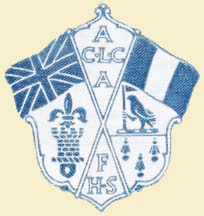
"We always do. Our badge carries the French and British flags together. I mean to do the same on the staff cars at the review. We are an Anglo-French unit after all."
Then I asked him, almost as an afterthought, what had happened to Syria. "B. hasn't written me anything about it, I haven't heard from him for weeks, there was almost nothing in the local papers in the south."
"You'd better have this," he said, and he handed me some papers. They were verbatim reports of General de Gaulle's statement to the press on June the second and Mr. Churchill's reply on the fifth in the House of Commons.
I took them back with me to Trieport and read them in my room.
It appeared from De Gaulle's statement that the British had been to blame from the beginning for the troubles in the Levant. When the French went into Syria in '41 it seemed that they had taken British troops with them and that subsequently the British had not allowed France to "sail her ship in Syria" as they had promised. There were unpleasant references to British agents who had stirred up feeling against the French among the Arabs, a statement that the British had armed the Arabs against the French, and in answer to a question De Gaulle had said yes, he had asked for General Spears's recall; if he had asked for the recall of all the undesirable British agents in the States, the list would have been interminable.
I went back to the beginning and read the report again. "When the French went into Syria they had taken British troops with them." That De Gaulle should blame the British. for all the trouble in the Levant was nothing new but that he should expect the world to believe that his single Free French Brigade had conducted the operations against the thirty-eight thousand Vichy troops in Syria with the help of a few British was surprising. But there was no mention, I noticed, of any Vichy French troops having been in Syria, nor of the good ship "Providence" that had brought so many of them home. He, De Gaulle, had apparently marched into Syria without opposition, at the head of a French Army, had there encountered some British agents who had stirred up the Arabs against him and had asked for the recall of the most dangerous of the lot, General Spears.
I turned to Winston Churchill's statement in the House of Commons:
I am assured that harm would be done by leaving some of the statements in General de Gaulle's speech to the Press unanswered. The sense of General de Gaulle's speech was to suggest that the whole trouble in the Levant was due to British interference. . . . So far from stirring up agitation, our whole influence has been used in precisely the other direction. I myself impressed upon the Syrian President in Cairo in February, the need of a peaceful settlement.... We were successful in persuading the Levant States to open negotiations. . . . They asked the French for their proposals in February. While General Bénèt was still in Paris, it became known in the Levant in April that the French intended to send reinforcements.... On the 4th of May I sent a friendly personal message to General de Gaulle.... I urged that the reinforcing of French troops at this moment would give the impression that the French were preparing a settlement to be concluded under duress. . . . On May 12th General Bénèt returned to Beirut and started his discussions. On the 17th French forces began to arrive, on account of that the Levant States broke off negotiations.... Serious fighting broke out in Hama on May 27th
I need not detail the subsequent spread of disorder.... At Homs and Hama there was shelling by the French and the situation got quite out of hand. Disorder spread to Damascus where French shelling began on the evening of 29th of May, into this open and crowded city and continued off and on until the morning of the 31st of May. The official casualty figures for Damascus are; killed gendarmes 80, civilians 400, seriously wounded 500, injured 1,000....
I hope it will be clear from the information given to the House that it is not true, as has been suggested, that we have endeavoured to stir up agitation, but that the very opposite is the truth. . . . My proposal to General de Gaulle to withdraw all our troops as soon as satisfactory arrangements were made which would prevent disorder in Syria and the Lebanon ought completely to have removed from the French mind the idea that we wished to supplant them or steal their influence. We do not intend to steal the property of anyone in this war.
My mind went back to Damascus. I could see the long wide streets leading to the city, glaring white in the hot sun, the square outside the Orient Palace Hotel where the Arab leaders at one time had used to come to see us, heard Saadullel Jabri say again, "We will have no treaty with the French," and I began to get the picture as I read. We the British had at last persuaded Chukri Quwatli to negotiate the detested treaty and the French had spoiled it all. They had ruined their chances once again. They had learned nothing and understood nothing. The only argument they believed in was that old one, a display of force. They had tried it in Beirut in '43 and it had failed, they had told De Gaulle that it had failed because of General Spears. Now they had tried it again in Syria and again it had failed, this time horribly and ignominiously, after the shelling of Damascus. The Arabs had risen against them and would have wiped them out had the British not moved in. But the fault was with the British.
Mr. Churchill's speech went on:
Finally I feel that I must answer the insinuation that my honourable and gallant friend the Member for Carlisle was recalled from his post as His Majesty's Minister at Beirut at the request of General de Gaulle. The reason for which my honourable and gallant friend wished to relinquish his post namely to return to his parliamentary duties before a General Election were fully explained in communiqués issued at the time and the suggestion that he was recalled to please General de Gaulle is entirely unfounded. I may say that my honourable and gallant friend was selected by me for the appointment in the Lebanon because among other qualifications he wears five wound stripes gained in his work as liaison officer between the French and British armies in the last war. He is the last person on whom General de Gaulle should cast reflections because he personally secured General de Gaulle's escape to England from Bordeaux in his motor and aeroplane on the 18th of June 1940,
I put the papers away in an envelope and the envelope into my haversack. My knees were shaking slightly as I sat down on the pink quilted bed. There was nowhere else to sit, the one chair was loaded with overcoats and uniforms. 'The afternoon sun was streaming in. The room was very hot. A small tawdry alien room. It was filled with my luggage; suitcase, kit bag, bedroll, haversack were stacked on the floor. They looked tired, they had traveled a long way round to get from London to this villa on the Marne. Well, they would reach their journey's end quite soon now. What General de Gaulle said about my husband was of no consequence, but I didn't think that I would drag myself and luggage after all to the Pacific.
There was one visit that I must pay before I left for England and the election in Carlisle. I think it was next day that I at last went to call on the woman I longed and feared to see. My heart thumped as I entered her familiar room. She came to me quickly, took me in her arms and said without preamble, "Tell me, what has B. done to us in Syria?" and I broke down. We talked when I had dried my eyes, almost as we used to do, not quite but almost. I didn't lie to her nor she to me, I tried to tell her the whole story. She listened, she knew I was speaking the truth as I saw it, but her mind was full of another story, she had read it in the French papers, heard it from her friends. I began to see that it was hopeless. She was kind and loving. At the sight of her, the warmth of her greeting, the old familiar feeling had come flooding back, but there was a hidden barrier; she asked questions there was no time to answer. There was too much she didn't know. It was the same with me.
We would talk again, I said, and then again. I would come back. We had so much to say. But not about the war, not yet, some day perhaps, not now. No, it wasn't as it had been. The past was dark behind her level eyes as I came away.
Jocelyn's alarm clock was set for four o'clock on the morning of the eighteenth and we were in our cars outside the mess at five. Our orders were explicit and were accompanied by a drawing of the Avenue de la Grande Armée, the Champs Elysées and the Place de la Concorde. Twelve vehicles were to take part in the parade, plus the colonel's jeep, two rows six abreast. We were part of the division's medical battalion. The colonel would lead alone with Nocitto carrying the unit's flag. Four staff cars would follow driven by four M.T.C. drivers and carrying the personnel féminin French and British, the four flanked on either side by a jeep carrying officers. Behind us would come six trucks driven by Michael Rowntree's boys and filled with French N.C.O.'s and orderlies. The vehicles had all been polished till they shone and each bore of course the unit badge painted on the body. The four staff cars carried in addition two small pennants, one British and one French.
The girls were nervous about keeping in line six abreast as they had had no practice but I knew they would come through in fine style and of course they did. T. W. drove me with Rachel beside her; Edith sat with me. Rosie drove the staff car on my right, Jocelyn and Iris the two on my left. We were to divide at the bottom of the Champs Elysées in front of the grandstand and sweep round it in two columns. Each driver had a plan of the route with arrows, and the pavement was clearly marked.
It was ten o'clock when we took our places in the long column of vehicles in the Avenue de la Grande Armée and there we had to wait until noon. It was a cloudless day, there was a fine display of aircraft overhead and I visited about among the girls. They all looked very smart, drivers in khaki, nurses in gray and navy blue. The orderlies too were unbelievably spick-and-span in their newly painted trucks. The modest pennants on the four staff cars fluttered in the breeze. The unit flag was very grand in white satin, Nocitto held it high behind the colonel's head as we moved off.
The pace was fast. It was exciting. Dividing behind the Arc de Triomphe I had a glimpse of Iris' face set like grim death as our two lots came smoothly together and we swept down the Champs Elysées at forty miles an hour between cheering crowds.
It was all over in a flash. But I had time to feel a sudden surge of high emotion as we entered the Place de la Concorde and bore down on General Koenig. He was standing on the pavement well forward in front of the grandstand like the figure on the prow of a ship. As the cavalcade swept down upon him it looked as if it would submerge him, but it divided in two waves. He was a ship's emblem dividing a sea of iron. De Gaulle was high behind him on the grandstand with the white-robed Sultan of Morocco beside him. I had a fleeting vision of a crowd of faces, and suddenly another vision of a barracks square in England in 1940 with the Foreign Legion on parade, and the King of England walking through the sun with De Gaulle and General Spears. I realized in one intense lightning moment all that had been achieved since that day when the governor of Paris and the head of the French state were Captain Koenig and De Gaulle, an exile, almost unknown to his own people, and I was wonderfully glad.
It was at this moment, I learned afterwards, that De Gaulle caught sight of our small pennants and summoned Koenig, who came running up the steps, and asked him what unit it was that had passed carrying the British flag. When Koenig told him it was Lady Spears's hospital, he turned to the Minister of War who stood behind him and gave orders then and there that the unit was to be closed down immediately and its British members repatriated without delay. There was a group of our old patients standing at the end of the Champs Elysées opposite the grandstand. They had brought themselves from the Val de Grace, some on crutches, some with arms in plaster, some with bandaged hands, to see the division pass, and when they recognized the girls and their own English nurses they shouted, "Voilà Spears, Vive Spears." People said that De Gaulle must have heard their voices and that the sound added to his anger. I don't know, I didn't hear or see them, they were on the left, my car swept round to the right, but Jocelyn and Iris saw and heard them and the nurses in their cars with Germaine Sablon and Françoise and Franchette all waved to them as they flew past.
I didn't know what had happened until the twentieth. I had moved into the Hotel Vendôme in Paris and had arranged to go with the colonel that morning to the Ministère des Colonies to see the medical inspector about the proposed expedition to the Pacific. I had nerved myself to tell the colonel that the equipment of the hospital was his to dispose of or take with him but that I could not go myself. The effort wasn't necessary. "Everything is changed," he said abruptly as he came in. "'There's no point in going to the Ministry. The Far East is off, I shan't go."
"What has happened?" He told me.
The Minister of War, Monsieur Diethelm, had acted immediately on his instructions and had written a letter to the Divisional Staff which was received at his headquarters on the nineteenth. It said that General de Gaulle had been very disagreeably surprised at seeing the British flag on the cars of H.C.M. 3, Ambulance Hadfield-Spears, and ordered the hospital to be closed down on the twenty-first and the British personnel sent home without delay. I was not given a copy of this letter and never saw it. I merely received a military order on the twentieth stating that the hospital was to close down the next day. The reaction of our doctors and surgeons went some way to comfort me. They declared that had they known what was going to happen they would have insisted on carrying the British flag on their jeeps and on the trucks, and the division rallied to us. They were shocked in the division at the way we had been treated, a good many officers were very angry when they heard the news. Three Fusiliers Marins who were great friends rushed in that same afternoon to General de Gaulle's private office to protest, and the regiment gave us a farewell party at the French Officers' Club on the twenty-second the night before we left.
There were other protests, from divisional headquarters, from the legion, from the diplomatic corps. Duff Cooper said when I informed him of what had happened that he was not at all surprised. It seemed that some thirty high-ranking British officers had been invited by De Gaulle to come down from Germany and Belgium to attend the review and receive French decorations. He had withdrawn the invitation the week before and had since refused to allow a similar group of French officers, among whom General Catroux was one, to receive the British decorations that the Ambassador was to have conferred on them. It was even rumored that De Gaulle had not wanted to invite the British Ambassador himself to the review and had only done so after a sharp clash with General Koenig on the subject. It was clear that the rude action to my unit and myself was but a part of a wider gesture against Great Britain. A pitiable business when a great man suddenly becomes small.
It was of course impossible to carry out our sudden orders and close down the day after we received them. Kelsey and the French nurses arranged to stay on with the colonel and see to the orderly evacuation of the patients. Jocelyn would remain as my representative and hand over the equipment. I gave it to the colonel to be used as he thought best for the division. We left on Saturday the twenty-third. The bulk of the unit were going by road to Dieppe and the Legion saw them off at Trilport at seven in the morning. They sent a military band and many officers came to say good-by to "Spears." I left alone by air as I was already a week late for the election campaign in England and proceeded straight to Carlisle. I had written to De Gaulle on the twenty-first in Paris, protesting against his action, not on my behalf or that of the British volunteers, but on behalf of our French officers, who took the sudden closing of the hospital as a punishment and were actually being punished for having collaborated loyally with me for many arduous months; with some our association had lasted indeed for four years. It was in Carlisle that I received the following letter from General de Gaulle. It is dated the twenty-seventh and was given on the twenty-seventh to the press, but I received it only on the Fourth of July.
Dear Madame,
The dissolution of the Hadfield-Spears Ambulance was announced as the result of a decision taken on the 6th of last June and which applies to six of the nine mobile surgical units belonging to the Army Medical Service.
It is in no sense the result of facts cited in your letter of the 21st of June and I am astonished that you could have attributed to it a discourtesy on my part.
On numerous occasions I myself and the authorities on whom you depended have publicly recognized the value of the services rendered by your Unit.
Once more I make it a pleasure to state the importance and the quality of these services and beg you to transmit the expression of my lively gratitude to the personnel which under your orders, has gained the most solid titles to the friendship of the French army.
I beg you dear Madame to accept my respectful compliments.
(Signed) C. de Gaulle
My answer closes this story.
Crown and Mitre Hotel, Carlisle July 5, 1945
General de Gaulle
General,
I will be glad to inform my staff of your expression of gratitude for the services they rendered your troops.
I must remind you, however, that at the request of your medical authorities I agreed to take my unit to the Far East with your Expeditionary Force, and informed you of this offer in a letter delivered to your office on May 31st by His Majesty's Minister in Paris. Receipt of my letter was acknowledged by your Secretary, M. Pavlesky, but I heard nothing further until suddenly on June 20th I received a military order dated June 19 closing my unit on the 22nd.
We had reopened our hospital in the area of the 1st Free French Division at the orders of our Divisional Commander, and having heard nothing of the decision, which you say was taken on June 6, to disband our unit, were looking after 100 patients. To evacuate these patients and close down in two days was a physical impossibility and an unheard of procedure. Indeed the order was one of such brutality that it was in the nature of a punishment to our French officers and required an explanation.
The explanation given was as I stated in my letter of June 21, and was to the effect that you had been displeased at seeing the British flag flying with the French flag on my cars in the parade. The statement was made, according to my information, by your Minister of War in a letter to our Divisional Commander, and the fact of your displeasure is corroborated in a message from Paris that has appeared in the British press accusing my unit of unfurling the Union Jack as we passed your stand and shouting "Vive Spears, vive les Anglais."
We unfurled no British flag. We passed before you in silence. The shout "Vive Spears" came from a group of our old patients who had arranged to come on their crutches from their Paris hospital to see the parade. It was a spontaneous expression of the gratitude and devotion to their English nurses, for it is by the name of Spears that the unit is known and loved in the Division.
I would add finally that the gratitude of the Division and the affection of our 20,000 patients is a sufficient recompense to us for the service we were able to render to your troops.
From you I have had no recognition since February, 1941, when you inspected the unit on its departure for the Middle East, until today, but I know that I am speaking for my entire British staff when I say that our four years with the 1st Free French Division has bound us to the officers and men of that division with bonds that can never be broken.