 |  |  |
 | ||
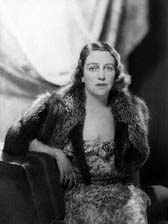
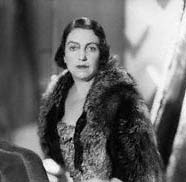
The 'Spearettes' [...] were the girls who worked for Lady Spears, the extraordinary American wife of Louis Spears, then the British representative with the Free French in Lebanon and Syria. We often forget that, although wars tend to be run by great state machines, a huge amount of private enterprise activity has also to be mobilised. Lady Spears had funded and run her own hospital during the First World War and, although she had lost her personal fortune during the Wall Street crash, she was determined to run another hospital in the Second. Securing some money from Lady Hadfield, who lived in a villa in the south of France, she established her Hospital, first in Lorraine and then in Syria.
Lady Spears has already told her own story of life running a hospital in the desert in Journey Down a Blind Alley(under her maiden name Mary Borden), but Rachel Millet's tales come from a different perspective, often from behind the wheel. She worked as a nurse, but she was also a driver, steering through traffic while Lady Spears sat in the back reading detective stories.
The private enterprise hospital lived a charmed life, yet the dramas were manifold. Lady Spears and the staff liked to have British nurses, but the authorities thought otherwise, endlessly dumping unsuitable French women upon them. General de Gaulle maintained a personal vendetta against General Spears which often seemed to extend to the hospital and its directrice. When 'l'Ambulance Spears' turned up at the victory parade in Paris, and was applauded by a crowd of wounded men, de Gaulle ordered the entire unit to be closed down, and the British personnel to be repatriated immediately. It was a strange form of gratitude for a freelance operation of inestimable value to the Free French.
| | | |
| | ||
Mary Borden, the daughter of the wealthy businessman, William Borden, was born in Chicago in 1886. She graduated from Vassar College in 1907. Her first marriage to George D. Turner ended in divorce.
On the outbreak of the First World War in 1914, Borden she set up a hospital unit on the Western Front. Borden, awarded the Croix de Guerre by the French government, remained with the unit until 1918.
During the war Borden met Edward Spears, the head of the British Military Mission in France. The couple married in March, 1918, and Spears later became a member of the House of Commons (1922-24 and 1931-45).
In 1928 Borden published the novel Flamingo. She followed this with The Forbidden Zone, an account of her experiences during the First World War. A novel about a nurse on the Western Front, Sarah Gay, appeared in 1931.
Borden also wrote the controversial The Techniques of Marriage (1933), a collection of short-stories, Passport for a Girl (1939), Mary of Nazareth (1933), The King of the Jews (1935), For the Record (1950) and Martin Merriedew (1952) about a pacifist tried for treason.
Mary Borden died in 1968.

Edward Spears was born on 7th August, 1886. On the outbreak of the First World War he joined the British Army. He served as captain in the 11th Hussars and by 1917 had reached the rank of lieutenant colonel.
In 1917 Spears was appointed head of the British Military Mission in Paris. The following year he married the American nurse, Mary Borden, who was later to become the author of books such as Flamingo (1928), The Forbidden Zone (1929) and Sarah Gay (1931).
Spears retired from the British Army in 1920 and in November, 1922, stood as the National Liberal candidate for Loughborough. Elected to the House of Commons he served until defeated in October, 1924. The following year he joined the Conservative Party and was elected for Carlisle in October, 1931 and held the seat for fourteen years.
In 1940 Winston Churchill appointed Spears as his personal representative in France. Later he served as head of the British Mission to General Charles De Gaulle.
Spears retired from politics after losing his seat in the 1945 General Election. He became involved in business and was President of the Institute of Directors (1953-54).