
SON of Frederick A. and Mary E. (Fuller) Law, of Longmeadow, Mass.; was born at New London, Conn., Dec. 14, 1892. He was educated at the Springfield Technical High School, Springfield, Mass., and at the Throop Polytechnic Academy, Pasadena, Cal. He enlisted at Ludlow, Mass., Oct. 6, 1917, and was assigned to Camp Devens, Ayer, Mass., where he remained until Dec. 13, 1917. He attended the Ground School at Princeton, N.J., from Dec. 13, 1917, to March 2, 1918. He was trained at Camp Dick, Dallas, Tex., from March 2 to April 23, and at Carlstrom Field, Arcadia, Fla., from April 23 to June 29. On June 29, 1918, he was commissioned 2d Lieut., and was ordered to return to Camp Dick, where he remained until July 20. He was stationed at Brooks Field, San Antonio, Tex., from July 20 to Sept. 6, and at Call Field, Wichita Falls, Tex., from Sept. 6 to Dec. 19, 1918. At Call Field he acted as Flying Instructor, and made some cross-country flights in the interests of the United War Work Campaign. He was released from the Service at Call Field, Dec. 16, 1918.
FIRST LIEUTENANT, A.S.A., U.S.A., FIFTIETH AERO SQUADRON, FIRST OBSERVATION GROUP
SON of Samuel and Arexzine A. (Wood) Upton; was born at Boston, Mass., Sept. 4, 1893. He was educated in the public schools of Somerville, and at Tufts College, where he spent three years in the Engineering School; he was an excellent athlete and a member of the Tufts College Glee Club.
He enlisted on June 16, 1917, at Cambridge, Mass., and entered the Ground School at M.I.T., where, after completing his course, he was selected as one of the honor men to be sent overseas to Foggia, Italy, for further training. There he won the Golden Eagle of the Royal Italian Flying Corps. He was commissioned 1st Lieut. March 2, 1918, and was given his choice of remaining to pilot Caproni planes or being transferred to France. He chose the latter course, and was ordered to Issoudun for advanced training, and then to Tours, where he was stationed for several months. He was then sent to the front attached to the 50th Aero Squadron.
On Aug. 28, 1918, Lieut. Upton, with his observer, went up for target practice; there was a very strong wind blowing, and in the process of shooting at the target an unexpected cross current of air threw the machine into a very slow "spin," which at two hundred metres altitude is often fatal. Just as Lieut. Upton was getting his machine under control again, it crashed to the ground, killing him almost instantly.
He was buried with full military honors on Aug. 29, 1918, at Gondrecourt, France. The final request in Lieut. Upton's will was that if there were services over his remains, to tell his friends to bring nothing but violets, the flowers he loved best. This request was carried out, and his grave was covered with violets. A memorial service was held for him on Oct. 6, 1918, at the Winter Hill Baptist church, at Somerville, Mass.
Lieut. Upton had a distinct literary gift; he had published some stories before he went abroad, and extracts from his inspiring letters have also been in print. A week before his death he wrote:
I must tell you that this thing we are working for has become so much a part of our lives, that it is our life. By that I mean there is nothing I have ever done in this world which has given me a greater degree of contentment and satisfaction. The chance to serve, oh, you know what it is, you are one of those who saw the big Ideal, who gave up things that he might serve that Ideal .... My chance is coming now! I am stationed temporarily twenty-five miles back of the front expecting to move up to another airdrome before long. Then our work will begin .... Never was much of a church man, or even a believer in prayer, yet our Big Ideal has brought something greater than many of us ever had. How else could our chance to serve come to mean what it does? It is not fear of death, or of a possible Hell; simply a full realization that there is a God whom we serve through our Big Ideal.
A few weeks earlier he wrote:
There is something more awe inspiring about an airplane crash than any other accident that may cause death .... I thought I had become hardened to death --- I am not --- my desire to fly is still with me. I do not fear my own death; there is too much beyond; but I fear to see my brothers go. And from all these accidents, sometimes fatal and sometimes not, a chap, even while seeing the injustice of it, gains a greater faith in what before may have seemed an intangible Supreme Being. It is paradoxical to have a greater faith in a Supreme Being who allows men to be killed, but it works that way.
Who can stand beside the open grave of a comrade, hear the volleys fired, and the sweet notes of "Taps," see the airplanes swoop down to drop garlands over the spot, without feeling that there is something Greater? As the last note of "Taps" sounds out over the spot, one has, a vision, if you like, of a soul gone to a well-earned rest and to happiness.
And so through it all, we have our Grand Ideal, which tells us we have the glorious chance to grasp the opportunity of our lives, and if we come through, something to remember all our remaining days. For my part, I have never prepared to do anything comparable. to what my service offers, I have never experienced anything of equal exaltation; in a word, service in a cause like ours becomes so absorbing, so impersonal, it grips one until there is nothing too great to give, no sacrifice too great to make for that which is now sacred to us. I hope I have given you something of the spirit of the boys over here, for we are all in the same situation, all in the same cause, all with the same Big Ideal. It's the greatest experience of our lives. I don't think we will hose the vision .... How could one lose his vision at the front, where if men are winged over the Biggest Top, they have gone with their Grand Ideal locked in their hearts.

SON of Charles and Mary Wharton (Sinkler) Stevens, was born at Pinopolis, S.C., May 23, 189e. He was educated at the Charleston and Episcopal High Schools, the University of Virginia, and the Eastman Business College. He was a member of the 'Varsity track team at the University of Virginia.
He enlisted from Providence, R.I., on May 13, 1917, at the Officers' Training Camp at Plattsburg. From Plattsburg he was sent to Toronto, Can., to train for the Aviation Service under the Royal Flying Corps. He trained at Long Branch, Camp Rathbun, and at Armour Heights, Can., and was later transferred to Taliaferro Field, Fort Worth, Tex., attached to the 22d Squadron. He sailed overseas with the 139th Squadron, on Feb. 24, 1918, and continued his training at Tours, France, where he was made Commanding Officer of a construction squadron, at 2d A.I.C., being urged to retain this position for duration of the war.
At his own request he was transferred back to active service and trained at Tours and Issoudun for reconnaissance pilot. He was commissioned 1st Lieut. on Sept. 8, 1918. On Sept. 9 he was sent to Bar-le-Duc with the 50th Squadron, and on the morning of the St.-Mihiel drive, Sept. 12, he was despatched on a dangerous reconnaissance mission, in D.H. 4 Liberty plane. Four hours later he was shot down in flames at Pont-à-Mousson, back of the German lines, and instantly killed. His mission was to see whether the Germans were withdrawing or reinforcing their lines at a very important point. As Lieut. Stevens had been up four hours before he was shot down, it was believed that he had accomplished his mission and had subsequently been lost in the heavy rain and low hanging clouds. He was buried at the military cemetery at Thiaucourt.
Married, June 27, 1917, Mary Elizabeth Carpenter.
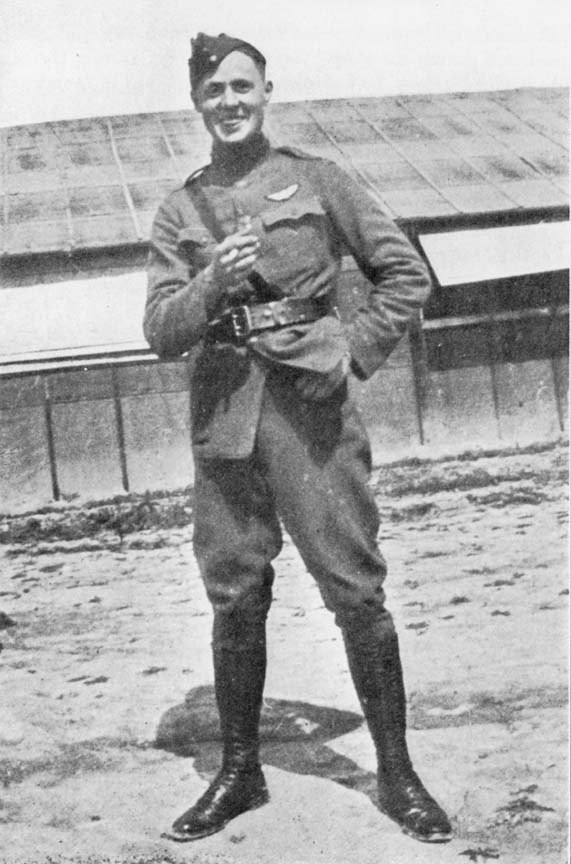
SON of John Richard and Harriet (DeWolfe) Edwards, of Bristol, R.I.; was born in Washington, D.C., Oct. 21, 1896. He was educated at the public schools of Portsmouth, N.H., Episcopal Academy, Philadelphia, Friends School, Washington, D.C., and Bowdoin College to the second semester of his junior year.
He completed the course of military instruction at the Plattsburg Camp of 1916. Later that year he enrolled for naval instruction and served on the U.S.S. Virginia during the months of Sept. and Oct.
In Jan., 1917, he volunteered for duty as an ambulance driver on the French front. Early in Feb., 1917, he enrolled in that service, took passage for France, and served for six months in the Verdun and Champagne sectors.
After completing the period for which he volunteered as an ambulance driver, he enlisted in Paris as a private in the American Aviation Service. He was a member of the first section of American aviators that was trained in France, this camp having been established at Tours. He was assigned to the French Aviation Camp at Issoudun, where he was trained to operate the various machines used by the French aviators.
In Nov., 1917, he was given the Brevet d'Aviateur Militaire by the French Minister of War. Dec. 10, 1917, he was commissioned as a 1st Lieut. in the Air Service, U.S. Signal Reserve Corps.
In Feb., 1918, Lieut. Edwards was assigned as a member of Observation Squadron U.S. No. 99. This Squadron, from March, 1918, to the signing of the Armistice, located enemy installations by observations and photographs, distributed propaganda literature beyond the battle line, located hostile munition and infantry positions, adjusted the artillery fire of the U.S. forces, performed réglage service, made repeated reconnaissances to the enemy's territory, and was likewise assigned to various special missions. This American Squadron served for a time with a French Escadrille.
While operating within the Frapelle sector, Lieut. Edwards was cited with other members of the Squadron, and Major-General O. P. Summerall especially cited the work of the 99th and 104th Squadrons, during the closing days of the War. During the St.- Mihiel salient attack he was continually employed in connection with the work performed by this Squadron.
Aero Squadron 99 and 104 for faithful and untiring service in obtaining useful and valuable information, often under great difficulty, and in aiding the advance of the ground forces throughout the Meuse-Argonne offensive of Sept. 26 to Nov. 11, 1918.
Among other individual citations received by Lieut. Edwards, are the following:
The Air Service Commander, First Army, cites the following officers and men for exceptional devotion to duty:
1. Par. 5. First Lieutenant JOHN R. EDWARDS, A.S., U.S.A., Pilot, 99th Aero Squadron, executed exceptional mission on Sept. 14th, 1918, over Conflans, twenty kilometres behind enemy lines. His formation was attacked by twenty-five enemy pursuit planes. During combat his gas pump was shot away. Pumping gas by hand, he piloted machine free of the enemy and reached own lines. The plane landed without a crash despite the damage done to it by the enemy fire.
By order of Colonel MILLING
Brother in Service ---
Allen R. Edwards, Lieut.-Col., U.S. Coast Artillery.
Father in Service---
John R. Edwards (Rear Admiral U.S. Navy) (Retired).
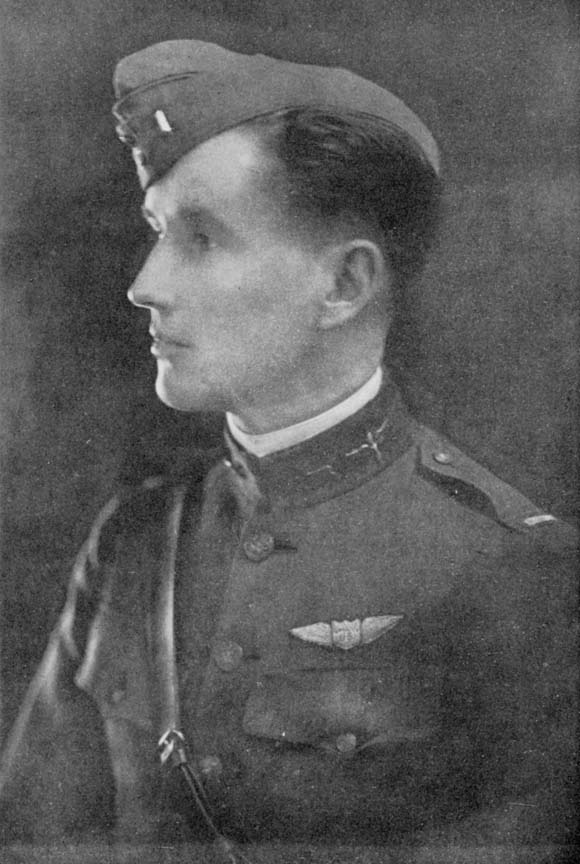
SON of Charles Henry and Cora M. (Eaton) Heywood; was born in Springfield, Mass., Jan. 20, 1889. 11e graduated from Lake Forest College, Lake Forest, Ill.
In 1915 he attended the 1st Plattsburg Camp, and that same year organized the Worcester Rifle Club, having previously qualified as an expert rifleman in the U.S. Revolver Association. In 1916 he enlisted for 30 days with the 2d U.S. Cavalry, and took examinations for a volunteer commission. On March 17, 1917, he sailed for Bordeaux, attached to the 97th Division Infantry, French Army, as Ambulancier.
The day America entered the war he took part in the French Celebration at Paris, and was one of eighty Americans to march to Lafayette's monument. At the front, near Verdun, he was assigned to S.S.U. 17, with which he had strenuous evacuation work. He was in two offensives in the Ayocourt-Esnes sector. Heywood and Stephen P. Lewis, as brancardiers went into the first-line trenches the evening preceding the German offensive near Hill 304. They remained dug in for six hours, through a terrible barrage of 77's, and went over the top with the 59th Chasseur Division, each rescuing a blessé. Heywood's Section was cited "for courage and calmness under desperate circumstances, especially during June, July, and Aug., 1917."
His enlistment in the French Army having expired on Sept. 17, he enlisted as a private in the U.S. Air Service, at Paris, and was sent to Tours for instruction, receiving his Brevet d'Aviateur Militaire on Nov. 30, 1917; he was sent to the American Chasse School at Issoudun on Dec. 3, where he remained until March 17, 1918. He was commissioned 1st Lieut. on March 6, 1918, Aviation Section, S.O.R.C., R.M.A., and assigned to the 99th Aero Squadron. On March 25, the 99th, consisting of eighteen pilots, flew their new Sopwith planes out of Le Bourget Aerodrome, Paris, under the fire of the German long-range gun.
Early in Oct., 1918, Lieut. Heywood was recalled, because of nervous breakdown, and assigned to the Technical Section of the Air Service in Paris, for a two months' rest.
He was honorably discharged at Garden City, N.Y., on Dec. 31, 1918.
Citations The volunteer HEYWOOD came in the 17th Section on the 9th of April. During all the time he has been in the Section he did his work as well as possible. He is a very good mechanic and a very good driver; he always showed the most intelligent devotion and the highest courage, and I noted many times his calm and cool blood during the hard shelling we had in the Verdun battle (June, July, Aug., 1917). I give for Heywood my best recommendation, and I wish for him, for the good character he always shows, the best luck for anything he will undertake.
Le Sous-Lieut. Com. S.S.U. 17
(Signed) D'HALLEYCroix de Guerre with Star General Legaille, Commander of the 97th Division Infantry, cites at the Division's Order, the S.S.U. 17, attached to the Division, for the following reason. Under the Command of Sub-Lieutenant d'Halley and an American Lieutenant, Neftel, the young volunteers of the S.S.U. 17 have given proof, on dangerous, often critical occasions --- notably a series of combats in June, July, and Aug., 1917 --- of a calm and thoughtful courage and of most lofty sentiment of devotion. Without thought of danger, they have given themselves to go in search of, rescue, and bring back the wounded, under the enemy's fire; and have rendered to the 97th Division and to the French Cause services the value of which cannot be exaggerated.
(Signed) General LEGAILLE
The undersigned, commanding the S.S.U. 17 certifies that Mr. VINCENT E. HEYWOOD was a member of the Section at the time of the above citation.
(Signed) D'HALLEY
Nov. 22, 1918
To Lieut. V. Heywood:
The Administrative Officers, Technical Section, wish to express to you. their appreciation for your work in connection with the Division in which you have been associated. The results obtained have been due to the fact that each officer has performed to the best of his ability the duties entrusted to him. The organization has grown rapidly from the start, and was, at the time the Armistice was declared, in splendid shape for future functioning. Your individual part in bringing about the development of this organization is much appreciated.
(Signed) E. J. HALL
Lieut .-Col. Air Service
Chief Technical Section

FIRST LIEUTENANT, A.S.A., U.S.A.; ADJUTANT TO C.O., FIFTH ARMY CORPS; CHIEF PHOTOGRAPHIC OFFICER, NINETY-NINTH AERO SQUADRON, FIFTH ARMY CORPS
SON of Henry P. and Mary J. (Noble) Estey; was born in Waterbury, Conn., Oct. 29, 1886. He was educated in the public schools of Waterbury, later taking up newspaper work. He became interested in aviation in 1909, and made his first flight as a member of the American Press Association at Belmont Park, in 1911. In 1913 he brought the first Curtiss Flying Boat to Providence. While he was connected with the Providence Tribune he formed the First Aeronautical Division of the Rhode Island State Militia, which when the U.S. declared war comprised about 100 partly trained men. On April 6, 1917, the members of the Division were taken over into the regular Navy, and soon after transferred to Marblehead. Here they remained until July 13, 1917. At this time Estey applied for and received honorable discharge from the Navy, joined the Lafayette Escadrille in New York City, and sailed for France on July 23, 1917. On Aug. 27 Lieut. Estey transferred to the Air Service of the U.S., in Paris. On Sept. 1 he was sent to Tours for training, and in Feb., 1918, to Issoudun, completing the course in March. He was then assigned to the 99th Observation Squadron, and on March 18 left Issoudun for the front. Toward the end of Aug. the Squadron was shifted to Souilly, arriving two days before the beginning of the St.-Mihiel drive. During the entire offensive the Squadron operated over the sector, photographing and carrying on artillery réglage work. There were times when it was impossible to string up telephones fast enough to keep up with the infantry, and when runners carrying messages were shot down before they could reach General Headquarters. At such times the observation planes were the only communication between the front lines and the Post Command. At the beginning of the Argonne offensive Lieut. Estey was made Adjutant by Lieut.-Col. Christie, who was then Chief of the Air Service of the Fifth Army Corps, to which the 99th Squadron was attached. After the Armistice he was ordered home, arriving at Hoboken on Feb. 17, 1919. He was honorably discharged June 5, 1919, and accepted a commission in the Reserve Corps.

SON of Harford W. Hare and Marion C. H. Powel, of Newport, R.I.; was born at Chestnut Hill, Philadelphia, Pa., Jan. 7, 1891. He attended St. George's School, Newport, R.I., and entered Harvard College in the class of 1914, withdrawing on account of illness in his sophomore year. He played football and took prizes in English and French in school and college.
On June 15, 1911, he enlisted as a private in Battery A, M.V.M., with which he served until honorably discharged, Dec. 13, 1913. He volunteered in the American Ambulance Field Service, Feb. 12, 1916, and during the great German drive against Verdun saw hard service with his section, "S.S.U. No. 2," which was twice cited for bravery. He was honorably discharged on Oct. 19, 1916, and in Nov. returned to the U.S.
He enlisted at Boston in May, 1917, and graduated with the first class of cadet aviators at M.I.T. He was then ordered to Mineola, N.Y., for practical flying, graduated there as a pilot, and was commissioned 1st Lieut. A.S., S.C., Officers' Reserve Corps, U.S.A., on Aug. 28, 1917. He was assigned for further advanced instruction to Kelly Field, San Antonio, Tex., where he later acted as instructor. Subsequently he was transferred to Toronto, Can.; to Taliaferro Field, Fort Worth, Tex., where he was attached to the 27th Squadron; to Toronto again; and to Kelly Field, No. 2, San Antonio, Tex.
He went overseas in command of the 183d Aero Squadron. As a member of the A.E.F. he was trained at various British flying schools, and commissioned Capt. (temp.) in the Signal Corps, U.S.A., on Feb. 19, 1918. He was attached to the 85th Squadron, R.A.F., with which he saw much active service during July, Aug., and Sept., 1918. In Sept. he was taken ill; upon recovery was given leave. He returned to the Supply Dépôt, Nov. 5, and arrived in Boston, Mass., on Jan. 22, 1919.
Captain Powel is still in the Service, stationed at Kelly Field, San Antonio, Tex. He took part in the Mid-West Flight of the Flying Circus engaged in selling Victory Loan Bonds.
Captain Powel comes of a family prominent for three centuries in the Army and Navy of Great Britain.

SON of Mr. and Mrs. George D. Howell, of Boston, Mass.; was born at Uniontown, Fayette, Co. Pa., Feb. 25, 1891. He was educated at St. Mark's School, Southboro, Mass.; at Trinity College, Hartford, Conn., and at Balliol, Oxford, and Christ's, Cambridge, Eng.
In Sept., 1915, while a student at Oxford, he enlisted in the Royal Flying Corps. He was commissioned 2d Lieut., Dec. 13, 1915; and in July, 1916, was one of a large group of flyers that accompanied Gen. Haig in his campaign on the Somme, for some nine months continuously. Lieut. Howell was then given a rest in England, and was later in service in the Coast Defence against raids, and was in charge of anti-aircraft gun crews. He gained his first promotion from successful bombing in the Somme drive.
He trained in England at Brooklands, No. 2, Res. Squadron, and at Croydon, No. 17, Res. Squadron. In France he was attached to 12th and 13th Squadrons, and to Headquarters. In England he served as instructor to the 49th and 44th Squadrons, at No. 2, Auxiliary School of Aerial Gunnery; also to the 45th, 61st, and 39th Squadrons, at Grantham.
He was commissioned 1st Lieut. July 1, 1917; Capt., Sept. 1, 1918. On Jan. 95, 1919, he was demobilized at Thetford, Eng.
His commanding officer, R.A.F., wrote in Sept., 1918, in recommending him for promotion:
I have known Lieut. C. H. Howell for the past two and three-quarters years, first as Pilot in England, and later in France where he did splendid work in an artillery observation and long-range bombing Squadron. He can fly almost any type of machine, and is an excellent instructor. Altogether, to my knowledge, he has had that varied experience which fits him to lead formations in the Field, or command Instructional Flights at home.
(Signed) Lieut.-Col. (A.) R.A.F.
Capt. Howell was mentioned in the Victory Despatches from Eng. in Nov., 1919, for his "splendid service during the war."
Married, Dec. 19, 1916, Margaret Russell.
Brother in Service --
G. Dawson Howell, Lieut., U.S. Navy.
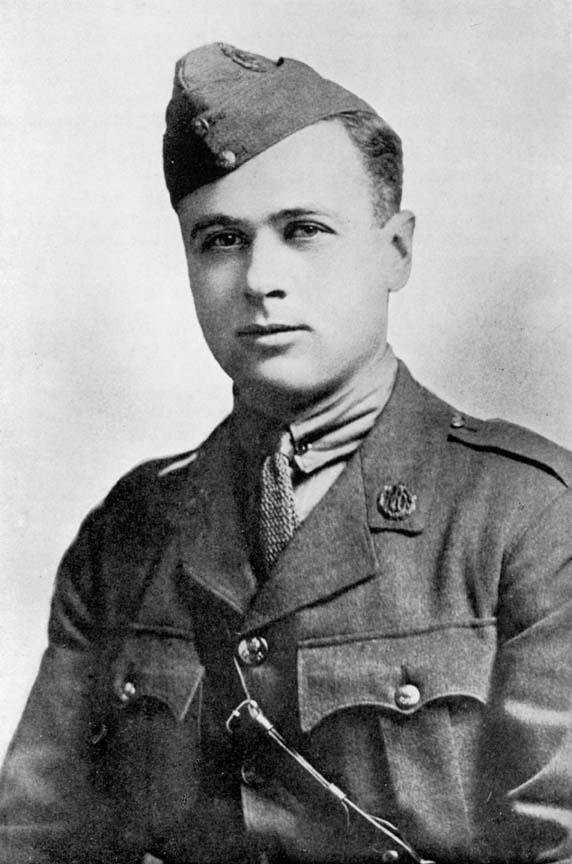
SON of John and Marietta Reece (Now Mrs. J. B. Thomas); was born in Brookline, Mass., Aug. 30, 1888. He prepared for college at the Noble and Greenough School and entered Harvard College in the class of 1911.
In Oct., 1916, he joined the Royal Flying Corps and received his aviation training in England. During the following year he was one of thirty-five chosen from his Squadron to be sent to the Ypres front, attached to the first Royal Flying Corps bombing squadron used in France. In Oct., 1917, he was attached to the Handley-Page Squadron, R.N.A.S., as navigating officer for long-distance night-bombing raids into Germany. The following Feb. he was granted six months leave and sailed for America on the S.S. Andania, which was torpedoed off the Irish coast. All on board were rescued by trawlers and returned to England; Lieut. Reece's leave was extended and his next voyage was uninterrupted.
In April, 1918, he returned to his Squadron in France, known as "The Bedouin Squadron." Among the places bombed by this Squadron during the following months were Metz, Mannheim, Konz, Pforzheim, Thionville, Saarbrucken, Lumez, Vahl Eberzing, Stuttgart, and Frankfort, the raid at the last place being carried out during three thunderstorms.
On July 7, 1918, Lieut. Reece was awarded the "Distinguished Flying Cross," and in Sept. 1918, he was sent to England as A.D.C. to the Inspector General of the Royal Air Force.
The D.F.C. is personally bestowed upon the recipients by King George at Buckingham Palace, and Lieut. Reece was one of five Americans to receive this honor.
Lieut. Reece was early convinced that the aeroplane would become an effective fighting machine, and during his term in the British Army he saw the development in the Air Service from the use of small machines for observation only, into a great offensive arm of warfare. This is all graphically described in the first chapter of his book, "Night Bombing with the Bedouins." This chapter he has aptly named "Per Ardua Ad Astra" which was the motto of the Royal Flying Corps. To quote his words:
What would the past generation have said of a man who had prophesied great armies fighting in the air? Even in the early months of the war there were but few who realized what an important part of the war was to he carried on in the newly conquered element. When the infantry saw an occasional box-kite-looking machine drifting slowly over the lines, struggling to keep itself aloft, how many, I wonder, foresaw that in a few months these machines would be swooping down on them like swallows, raking them with machine guns by day and bombing them by night? How many artillery officers laughed at the suggestion that a day was coming when thousands of great guns would be directed from the air? Yet in a few short months two great blind fighting giants, their arms stretching from the Belgian coast to the Swiss border, learned to see each other; and their eyes were in the air.
It was not until 1916 that the full powers of the aeroplane as an offensive weapon began to be realized. Bombing was done, but it was of a desultory nature, and although the number of machines engaged in this work steadily increased, and the work itself became more and more diversified and specialized, it was not until 1918 that the possibilities of the aeroplane as a purely offensive weapon were appreciated.
An aeroplane can operate far back of the enemy lines, both in the day and at night.; enemy troops in transport can be bombed; railway stations, sidings, etc., damaged; transports of all kinds delayed; and ammunition dumps, when located, can be blown up. In fact, military targets of all sorts can be attacked from the air that cannot be reached in any other way. The very foundation of a nation's strength in war, its industry, can be attacked from the air and, if attacked on a large enough scale, can be destroyed.
The hundreds of bombing machines which the English aeroplane factories were turning out at the time hostilities ceased, and the thousands of men being trained for bombing, make one wonder what would have happened to the German industries if the war had continued through the spring of 1919.
Besides these hundreds of aeroplanes under construction and the thousands of men in training, the Royal Air Force had in operation, Nov. 11, 1918, over twenty thousand aeroplanes, over thirty thousand aviators, and over two hundred thousand mechanics and other personnel.
. . . . . . . . . . .
The name of Lieut. Robert Reece is next to the top on the Honor List at the Air Ministry, a record of those who did night bombing in Germany. He resigned from the Service to resume his business career in the spring of 1919.
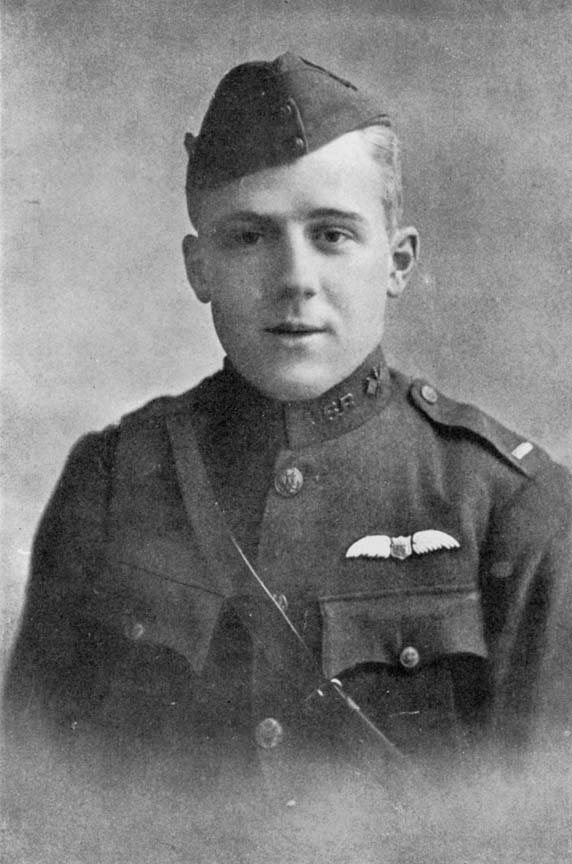
FIRST LIEUTENANT, A.S.A., U.S.A., ONE HUNDRED SIXTY-SIXTH AERO SQUADRON, A.E.F. ATTACHED TO FIFTY-FIFTH SQUADRON, R.A.F.
SON of Mr. and Mrs. Charles H. Payson; was born in Portland, Me., Aug. 9, 1892. He was educated at St. Paul's School Concord, N.H., and at Williams College. At St. Paul's School he played football and hockey, and was a member of the crew. At college he was captain of the football team in 1914. He served with the Ohio Cavalry at the Mexican Border for ten months.
He enlisted at Boston, Mass., in June, 1917. He received his training with the Royal Air Force at various English schools; attended the Ground School at Oxford University, and the Machine-Gun School at Grantham, Eng. He was trained in night flying with the 30th Squadron, at Newcastle, and had experience in day flying at Amesbury, Eng., and Turnberry, Scotland. Ordered to France, he served at the front with the 55th Squadron, R.A.F., from June to Oct., 1918, making fourteen long-distance raids on the Rhine towns. His day raids with the R.A.F. included Cologne, Coblenz, Frankfort, Mannheim, Stuttgart, Trier, and Offenburg. He was then transferred to the U.S. Air Service, attached to the 166th Aero Squadron, A.E.F., with which he served from Oct. to Nov., 1918, and made seven raids during the Argonne offensive. From Nov., 1918, to March, 1919, he was with the 166th Aero Squadron, Army of Occupation. He was honorably discharged from the Air Service at Garden City, N.Y., on March 29, 1919.
He was commissioned 1st Lieut. on April 7, 1918. He was recommended for promotion, and a letter from his superior officer Major Gen. M. M. Patrick, dated Nov. 26, 1918, expressed regret that instructions from the War Dept. had discontinued all promotions after Nov. 11, as the recommendation for Payson's promotion had been approved by the Air Service.
Lieut. Payson was also recommended for the D.S.C. The official text, signed by Victor Parks, Jr., Capt.; Inf. att'd. A.S., and dated Nov. 12, 1918, follows:
Lieut. Payson is English trained, having been with an R.A.F. Independent Force for several months before coming to the American Forces.
He is now Flight Commander in the 166th Aero Squadron, and is a very cool-headed and efficient officer. On one raid over the lines with this Squadron, his plane was attacked in force by the enemy, and he fought them until far back of our own lines. Lieut. Payson skilfully manoeuvred his ship and evaded the German planes, time and time again. Several times he turned upon his pursuers and fired into them with his forward guns. He outmanoeuvred his opponents at every stage of the battle, and with his Observer fought off five enemy planes, who seemed determined to bring him down. He landed near Révigny and his ship was salvaged, having been literally shot to pieces. The landing wires were shot away, the planes riddled, and his gas tank shot through.
A letter from the Office of the Secretary of the Air Ministry, Strand, London, Eng., dated May 23, 1919, states:
Lieutenant P. M. Payson, United States Air Service, was attached to the Royal Flying Corps and Royal Air Force from 20th Oct., 1917, until 30th Sept., 1918.
He graduated as a Pilot in April, 1918, and had completed approximately 212 hours in the air.
He served with No. 55 Squadron, R.A.F., which formed part of the Independent Air Force, from 30th June, 1918, to 30th Sept., 1918, during which period he took part in 14 successful bombing raids, and at all times displayed great ability and keenness. He was a thoroughly efficient officer and a good pilot, and on the termination of his attachment to No. 55 Squadron, the Squadron Commander reported that he should make a very satisfactory Flight Commander.
Citation The Army Air Service Commander, First Army, cites the following officers and men for exceptional devotion to duty:
24. First Lieutenant P. M. PAYSON, A.S.,U.S.A., as Pilot of the 166th Aero Squadron, performed efficient and hazardous work in the Argonne-Meuse sector, Oct.-Nov., 1918, during operations of the First Day Bombardment Group.
By order of Colonel MILLING
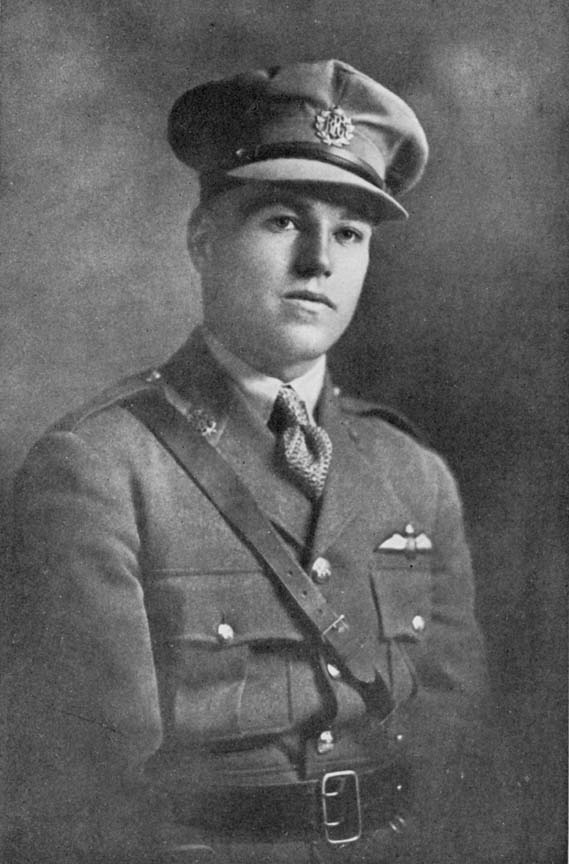
SON of John and Maud C. (Birtwell) Stafford; was born at Fall River, Mass., May 5, 1898. He was educated at Westminster Preparatory School, Simsbury, Conn., where he was prominent in athletics, playing three years on the football team and three years on the baseball team.
In Oct., 1917, he enlisted in the Canadian Air Service, at New York, being then nineteen years old. He was immediately sent to Canada, and trained at Camp Leaside, Camp Mohawk, and Camp Borden successively. He also attended the University of Toronto; and then went to the School of Aerial Gunnery, at Camp Hicks, Fort Worth, Tex., where he was commissioned 2d Lieut. in April, 1918. He left about the middle of May, for England, and was at the Royal Air Force Training Establishment in Cranwell, Sleaford, Lincolnshire, and later at Camp Freiston, Boston, Eng., attached to the 210th Squadron, R.A.F. At the latter gunnery school he made the best record ever held for aerial gunnery --- that is, target practice from the air upon real-sized target aeroplanes, and also upon the target suspended from the pit balloon. Lieut. Stafford trained in England from June until Sept., 1918, when he was ordered to France, and stationed near Dunkirk. On Sept. 29 he left Dunkirk in a Camel Sopwith fighting scout machine, and was last seen in aerial combat with a German airplane on that date. He was reported missing by the British Air Ministry, who have been unable to obtain further information, and the presumption is that he was killed. There was a report that he had passed through Berne, Switzerland, on Dec. 9; but his family have had no further reassurance, and have given up hope of his return.

SON of Edward Steere, and Elma Sophia (Brown) Bowen; was born at Providence, R.I., April 15, 1891. He was educated in the public schools of Pawtucket, R.I., graduated from Brown University in 1915, and in June, 1917, received from Yale the degree of Master of Forestry.
On July 21, 1917, he volunteered for the Air Service and trained at Princeton, and with the Royal Air Force at Fort Worth, Tex. He was commissioned 2d Lieut., Feb. 19, 1918, and went overseas with the 148th Aero Squadron, A.E.F. On reaching England he was detached for special instruction in scout fighting, a tribute to his skill, since only the most promising aviators were chosen to fly combat planes. This training completed, the Royal Flying Corps wished to retain him as a permanent staff officer, but permission was refused and he was assigned to active duty with the 32d Aero Squadron, Royal Air Force, being one of the few American officers attached to British squadrons. During late July, and through Aug., 1918, he was in the heavy fighting in the vicinity of Cambrai, Château-Thierry, Fismes, and Douai.
His letters related violent encounters with Richthofen's "circus," from one of which he returned with twenty-two bullet holes in his plane. Of another fight he wrote: "I think I got a Hun in the scrap, but was too busy to see what happened to him."
On Sept. 7, 1918, volunteers were asked for a special patrol and Lieut. Bowen offered to go, and, as his flight-book shows, it was not the first time that he had chosen to do more than duty required. That evening he was posted as missing. Later, it was ascertained that he had been killed in the air, while engaged on the Allied side of the lines, in single combat with a Fokker scout. He was buried near the village of Pronville, west of Bourlon Wood and Cambrai. Above his grave his Squadron placed a cross made from the broken propeller of his plane, inscribed to his memory.
Lieut. Bowen was of Puritan descent; from Dr. Richard Bowen who landed in Weymouth in 1639, through six generations of doctors, including Col. Joseph Bowen of Revolutionary fame. His mother's ancestry returns to Roger Williams.
Lieut. Bowen was passionately fond of outdoor life and of the trees, which he meant to make his profession; his enthusiasm for the freedom of the outdoor world made him more prompt to respond to the call of Liberty and his attitude toward his work in aviation is set forth in his own words written to his family:
It is true that the aviator's job is dangerous, but death has never held any dread for me. In fact, I think I have a philosopher's point of view, and I can look upon it as an interesting experience that will come sooner or later. I am not married and therefore should go at once, but even if I had a wife and children, I should consider it my duty to go if the war lasts much longer, for it is a plain case of doing the fighting abroad while the loved ones at home are in safety. It does not matter when a man dies, but how."
Brother in Service -
Harold Clovis Bowen, A.S., U.S.A., 810th Aero Squadron.
SON of Francis and Susan S. Whitten; was born at Malden, Mass., March 25, 1897. He was educated at the Malden High School, and at the Mass. Institute of Technology. He was a member of the sophomore relay team at M.I.T. in 1917. He enlisted at Boston, Mass., Nov. 3, 1917, and on Dec. 8 reported at the U.S. School of Military Aeronautics at Princeton, N. J. He was transferred to Camp Dick, Dallas, Tex., on Feb. 22, 1918, and to Taliaferro Field, Hicks, Tex., on March 13, 1918. On June 3 he was ordered back to Camp Dick, and on July 5 assigned to Ellington Field, Houston, Tex. He was commissioned 2d Lieut. on May 23, 1918, and honorably discharged at Ellington Field, Houston, Tex., Jan. 6, 1919.
Brother in Service --
Louis Osborne Whitten, Private, M.E.R.C., Base Hospital No. 44, Mesves, France.
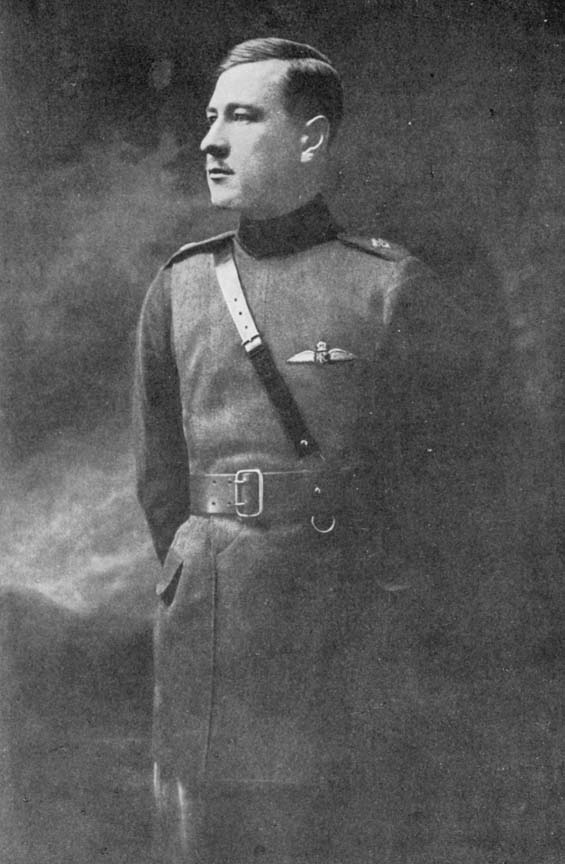
SON of James R. and Edna (Havelock) Rudolf, of Boston, Mass.; was born in Canada, July 20, 1891. He attended the Brookline High School, and graduated from M.I.T., S.B., 1915. He was president of the rifle club, M.I.T., and capt. of the rifle team. He spent a year experimenting in the laboratories of Thomas A. Edison, and later entered the ammunition plant of the Bartlett-Haywood Co., Baltimore, Md., as inventor and head of several departments of production.
He enlisted on Aug. 7, 1917, in the Royal Flying Corps, and was ordered to Toronto, Can., where he trained at Long Branch, Ontario; at the University of Toronto; and at Camp Mohawk. In Nov., 1917, he was sent to Camp Everman, Tex., and then to Camp Hicks, where he was commissioned 2d Lieut., R.F.C., on .Jan. 29, 1918. He was sent overseas in Feb., 1918, and completed his final training at Hooten Park, Cheshire, Eng., where he graduated with distinction as scout pilot and was commissioned 1st Lieut., R.A.F., April 1, 1918. After additional courses in aerial gunnery at Turnberry, and at Gulane, Scotland, he was ordered to France on Aug. 14, attached to the 41st Squadron, with the 2d Army, B.E.F. From then until the end of the war this scout squadron did patrol work around Ypres and as far south as Arras. The fighting was all well over the lines, and seldom below 12,000 feet, which made it difficult to determine the exact results. This Squadron succeeded in keeping the Germans on their own side, but paid heavily for it, as in three months the personnel changed three times.
Lieut. Rudolf is credited with three Fokker biplanes out of control (confirmed). On one occasion he and two others were attacked by fifteen Fokkers that came down on them through the clouds. After losing his two companions, one of them being shot down in flames, Lieut. Rudolf fought his way back alone, and on landing found that there were fifty-seven bullet holes in his machine. On another occasion he was alone watching a flight of Bristol Fighters manoeuvring toward a flight of Fokkers. Two of the British machines collided, and one crashed. The other gained control near the ground with one wing badly damaged, but was attacked by a German two-seater. To help him, Lieut. Rudolf was obliged to go down under the Fokker; he drove the German plane off and flew home ahead of the crippled Bristol, diving on the machine guns in his path. For this exploit he was mentioned by the second Brigade at the request of the 48th Squadron.
At another time he was congratulated by the British 2d Army for his part in a duel which they observed from the front line. In the midst of the fight, Lieut. Rudolf shot off one blade of his own propeller. At the same time the German went into a spin. Rudolf was forced to stop his engine but followed him down 6000 feet, getting in bursts as he came out of his spin, and left his enemy out of control, himself landing safely just across his own lines on a narrow road among the shell craters east of Ypres.
The principal work of Squadron 41 was to furnish offensive patrols and escorts for bombers, but on all patrols they dropped twenty-five pound bombs at railroads and bridges, besides doing some ground-strafing. On Aug. 27, at dawn, they dropped down on the Linselles aerodrome, some twelve miles over the lines, and flying low, bombed and shot up the hangars, leaving all in flames.
On Sept. 8, during the great offensive in front of Ypres, they swept the roads in front of the advance, which took place in a driving rain storm. All the squadrons of the 11th Wing took part. Ten went out from the 41st Squadron, but only five of them returned. King Albert of Belgium was in personal command, and sent his congratulations to the aviators.
On July 15, 1919, Lieut. Rudolf was placed on the unemployed list, R.A.F., retaining rank.

SON of Robert Sidney and Catharine Sinclair (Fenton) Bowen: was born at Allston, Mass., Oct. 4, 1900. He was educated in the public schools of Newton, Mass., and was prominent in track athletics at the Newton High School. He went overseas as an ambulance driver in the American Field Service, and was serving in France when the U.S. took over this organization, and returned him to this country as under military age.
He enlisted with the Royal Flying Corps (British) in New York City, in Oct., 1917. He received his training at Toronto University; at Camp Mohawk, Deseronto, Can.; at Camp Leaside, Beamsville, Can.; and at Camp Taliaferro, Fort Worth, Tex. He was ordered overseas in July, 1918, and trained at Herts, Eng., until called into active service as scout Pilot in France, where he joined the 84th Squadron a short time before the Armistice was signed. He was commissioned 2d Lieut. in the Royal Air Force in July, 1918. Since the Armistice, Lieut. Bowen has been on special service in England; in active service in France and Belgium; also attached to the 80th Squadron serving in France and Egypt.
On Nov. 12, the day after the signing of the Armistice, Lieut. Bowen sent home a vivid account of his unofficial downing of two enemy machines a few days previous to that date; his letter closed with the words:
I reported my flight, but it was hard lines for me because I have no idea where the German planes went down and therefore they can't be credited as official .... My bus has 33 bullet holes in it and three in my flying suit. which shows I was in some close action.
Grandfather in. Service ---
Charles F. Bowen, served in 5th Mass. Regiment in Civil War.
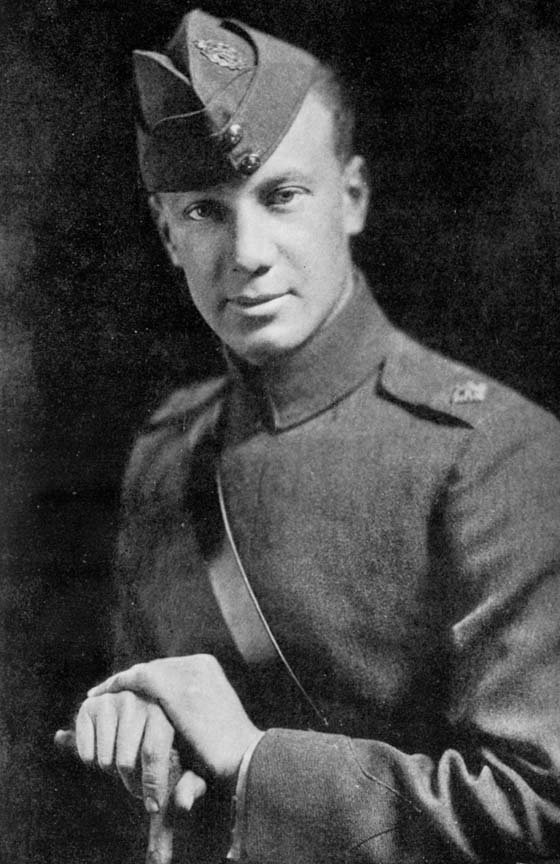
SON of Alfred A. and Flora M. Wyman; was born at Fitchburg, Mass., Dec. 28, 1892. He was educated at the Fitchburg High School, and at M.I.T., from which he graduated with the degree B.S. in June, 1916. He was a member of the class relay team at M.I.T., class treasurer in 1913; class president in 1914, and a member of the Delta Upsilon Fraternity, Osiris, the Institute Committee, and the Architectural Society. In June, 1916, he received the Medal of the American Institute of Architects for General Excellence in Architecture, and the Rotch Prize of two hundred dollars.
He enlisted in the Royal Flying Corps, at Toronto, Can., from Fitchburg, Mass., in Sept., 1917. He received provisional appointment as 2d Lieut., Cavalry, U.S.A., as a result of the examination which he passed earlier in Sept., but did not accept because he was already a member of the R.F.C. He was trained as a cadet at various flying schools in Canada, and at Fort Worth, Tex. He received sailing orders and proceeded overseas to England, where he received further training outside London. He was commissioned 2d Lieut. in the Royal Air Force, on April 1, 1918. On May 7, 1918, just after he had completed his training, Lieut. Wyman was killed as the result of an airplane crash at Chichester, Eng. He was buried at Chichester, Sussex County, Eng.
Brothers in Service ---
Philip Wyman, Capt., A.S.A., U.S.A.
Franklin Wyman, 1st Lieut., A.S.A., U.S.A.
Kendall Wyman, 2d Lieut., Infantry, U.S.A.
Donald Wyman, 2d Lieut., Royal Air Force.
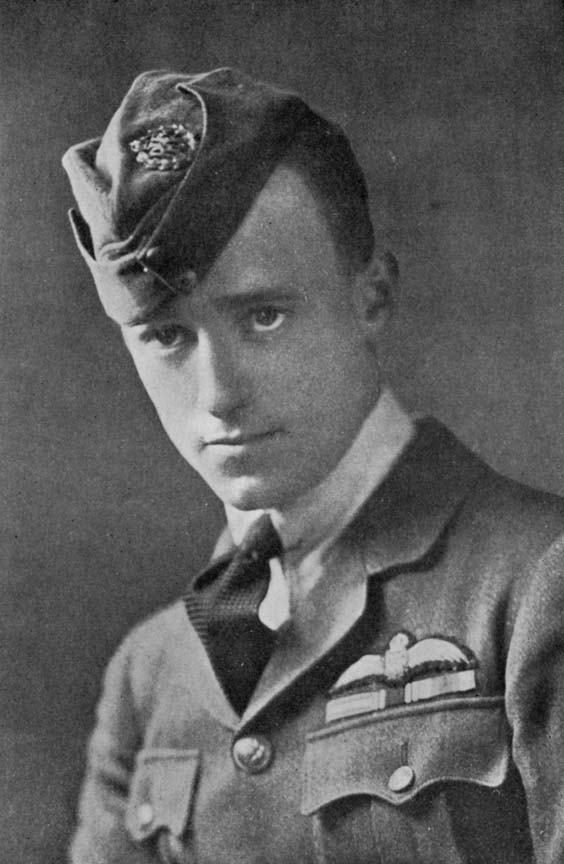
SON of Charles A. and Hilda (Streed) Kullberg; was born at Somerville, Mass., Sept. 10, 1896. He attended the public schools of Concord and Somerville, and the Wentworth Institute, Boston.
On Aug. 7, 1917, he enlisted in the Royal Flying Corps, at Toronto, Can., having been pronounced too short to pass the requirements of the U.S. Air Service. He attended the School of Military Aeronautics in Toronto; trained at Deseronto, and Camp Borden, Can.; and also at Camp Hicks, Fort Worth, Tex. He was commissioned 2d Lieut., Dec. 1, 1917. He sailed overseas to England, in Jan., 1918, and was assigned to a scout squadron in the Surrey district, and stationed at Stockbridge and Tangmore. He was commissioned 1st Lieut., April 1, 1918. In May he was sent to France, attached to Squadron 1, of the R.A.F., and was in action on several fronts. He was officially credited with fourteen Hun planes and two balloons, and was awarded the Distinguished Flying Cross by King George. The victory for which Lieut. Kullberg was decorated, was an encounter alone with ten enemy planes, during which he brought down two and routed the others.
His last experience was to be shot down in Germany, two months before the Armistice was signed. He spent six months in the Prince of Wales Hospital recovering from his wounds. On July 1, 1919. he was demobilized in England.
Distinguished Flying Cross This officer has destroyed six enemy aeroplanes and has taken part in seven engagements when others have been destroyed by members of this patrol. A bold and keen officer who possesses fine fighting spirit.
R.A.F. Communiqué No. 22 Lieut. H. A. KULLBERG. No. 1. Squadron, dived on a Fokker biplane which was attacking a D.H. 9, and, after a long burst of fire, saw its wings break off in the air. A little later he attacked another Fokker biplane, which was seen to go down and crash.
He was also awarded the Diploma of Aerial League of America.
Brother in Service --
Frank O. Kullberg, Sergeant, U.S. Signal Corps, A.E.F.
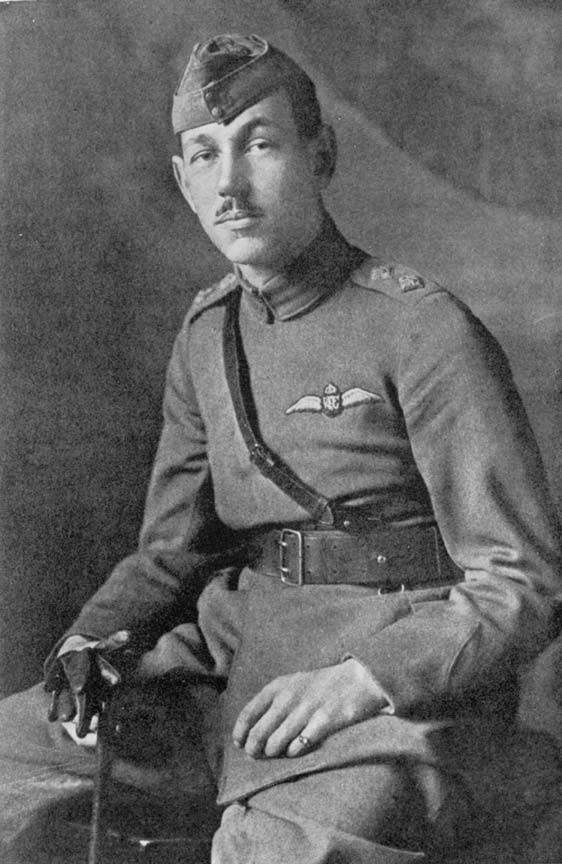
SON of Mr. and Mrs. Henry B. Copland; was born in Cambridge, Mass., April 17, 1896. He was educated in the schools of Detroit, Mich., and Cambridge, Mass., graduating from the Rindge Technical School in Cambridge, in 1915. He early became interested in aviation. In 1908 he made flights at Franklin Field, Boston, and in 1911 conducted experiments with a power-driven airplane of the Curtiss type at Detroit. During 1915 and 1916 he made several trips to England and France, and was wireless operator on board British munition ships.
In the spring of 1917 he endeavored to enlist in the U.S. Naval Aviation, but was rejected because he was under weight. In Aug., 1917, he joined the Royal Flying Corps in Boston, Mass., and proceeded to Toronto, Can., where he was trained as pilot. In Nov., 1917, he was transferred to Taliaferro Field, Fort Worth, Tex., where he completed a course in aerial gunnery. On Dec. 18, 1917, he was commissioned 2d Lieut., R.F.C., and given an appointment as Flying Instructor at the School of Aerial Gunnery in Texas. From that date until April he trained British and American cadets in aerial gunnery. On April 1, 1918, he was commissioned 1st Lieut., R.A.F., and assigned to the Aerial Fighting School at Beamsville, Ontario, Can., as Instructor. In July, 1918, he was appointed Flight Commander of B Flight No. 1, Aerial Fighting Squadron, which he instructed until Oct. 1. From the time of his appointment as instructor up to Oct. 1, he made over 1500 flights and carried over 800 cadets without accident.
In Oct., 1918, Lieut. Copland was sent overseas, and attached to the Felixstowe Air Station. Here he did patrol duty in the North Sea and on the coasts of Germany, Belgium, and France, for submarines. After the Armistice was signed, he patrolled the North Sea in large flying boats in search of floating mines which menaced shipping. These patrols lasted from four to six hours. On Nov. 21, 1918, he escorted the surrendered German submarines into Harwich Harbor. In May, 1919, he was ordered to No. 4 Communication Squadron from No. 31 Squadron. The new Squadron carried passengers and mail between England and Holland across the North Sea. Lieut. Copland sailed for the U.S. on June 29, 1919.

SON of George H. and Marion L. Blair; was born in Boston, Mass., May 8, 1894. He attended the Mechanic Arts High School, Boston, from which he graduated in 1912.
On July 15, 1917, he enlisted in the Royal Flying Corps at Toronto, Ont., having four cousins with the Canadian Expeditionary Forces. On July 6 he was assigned to the Cadet Wing, R.F.C., and sent to the Toronto University School of Military Aeronautics for training. He attended successively the flying school at Armour Heights (Y Squadron, C.T.S.), from Aug. 20, 1917; Leaside, from Oct. 23 (90th Squadron, C.T.S.), for bombing, photography, artillery, and observation; Camp Hicks, Tex., from Nov. 25, 1917, for aerial gunnery; and Camp Everman, Tex., from Dec. 13, where he was instructor to the 80th Squadron. He was commissioned 2d Lieut. in Dec., 1917, and 1st Lieut. in April, 1918.
On April 9 he sailed overseas, and was stationed with the 3d Squadron at Shoreham-by-the-Sea, Eng., on April 29, 1918. He was later transferred to Turnberry, Scotland, for aerial fighting. He was ordered to France in June, and served there with the 56th Squadron, encamped a few miles south of Doullens, until just before the Armistice. During this time Lieut. Blair was flying a single scout machine, S.A. 5, and was engaged in patrol work. He was in numerous air fights, "ground-strafing" expeditions and balloon hunts. He was shot down three times while ground-strafing, but managed to get back to the British lines, being twice forced to land among the trenches and shell-holes. He was with the British advance on the Cambrai front from the beginning of his active service.
He was still with the Royal Air Force at Todcaster, Yorkshire, Eng., on June 12, 1919.
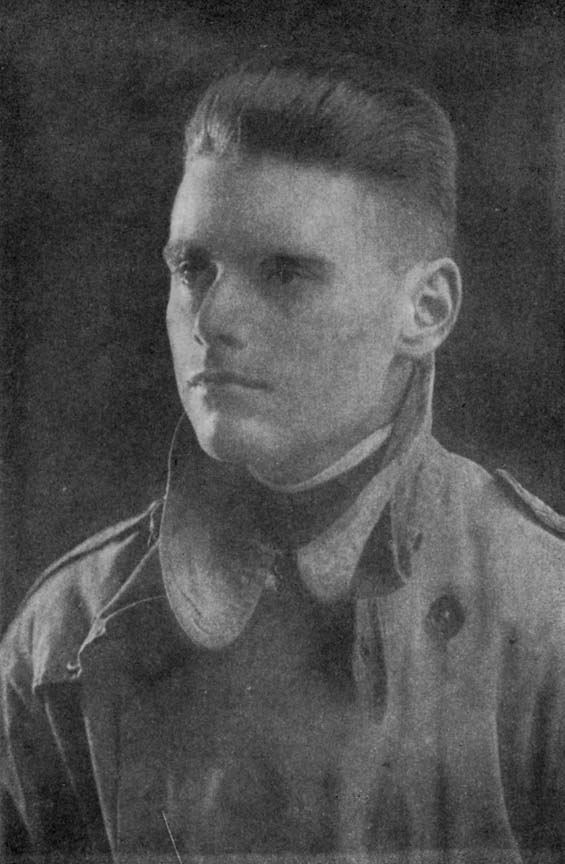
SON of Davis Campbell and Elizabeth (Sheen) Hale, of Cambridge, Mass.; was born in Longmont, Col., Aug. 18, 1894. He graduated from Phillips Andover Academy in 1913, and from Amherst College, S.B., 1917. He belonged to the track team at school and college.
He enlisted in the U.S.N. Air Service at Boston, Mass., on June 5, 1917, and was assigned to the Ground School of Naval Aviation at M.I.T. He transferred to the Royal Flying Corps at Taliaferro Field, No. 1, Fort Worth, Tex., and was sent overseas to England, on March 1, 1918.
He completed his training in night bombing at the R.A.F. Officers' Night Flying School at Stonehenge, Salisbury Plain, where he passed a thirty-two days' course on May 7, 1918. He was later ordered to London, and attached to the 214th Squadron, R.A.F., one of the R.A.F. Independent Air Squadrons, which was shortly ordered to St.-Inglevert, France. He qualified as Sub-Lieut., R.A.F., and Observer on June 26, 1918.
He saw service at the French front from July 9, 1918, flying Handley-Page bombing machines, and taking part in raids on Ostend, Bruges, Zeebrugge, and the various German aerodromes in Belgium, during the summer. On Aug. 15, 1918, while attached to an American Squadron, he was observer in the first (official) American night bombing plane to cross the lines on the western front, en route to a raid on the Ostend docks. While he was carrying out a similar raid on Zeebrugge on Aug. 22, Observer Hale's machine crashed and he was slightly wounded. During the autumn of 1918 the 214th Squadron made a number of closely concentrated raids in connection with army operations in the lines, bombing railroad junctions and ammunition dumps during the retreat from Belgium. At the time of the Armistice, Hale was stationed at Maria Aeltre, Belgium. From there he wrote that the most interesting experience of all was entering the city of Ghent on the day of its release from the Germans, and receiving the welcome of the people of all ages and conditions.
He was honorably discharged on Jan. 8, 1919, at Hampton Roads, Va.
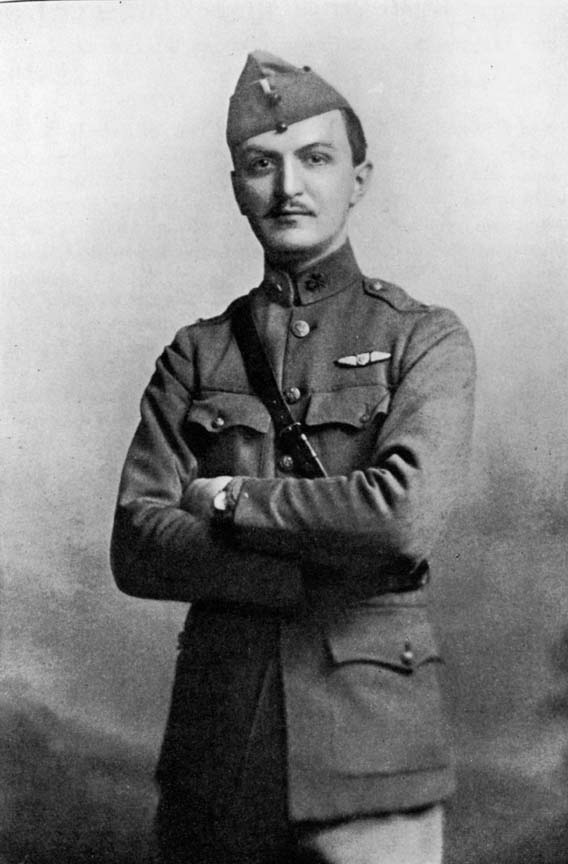
FIRST LIEUTENANT, A.S., U.S.A., FORTY-THIRD PURSUIT SQUADRON, R.A.F.; ONE HUNDRED FORTY-EIGHTH PURSUIT SQUADRON, U.S.; FLIGHT COMMANDER
SON of Walter Rogers and Gertrude (Clarke) Whiting; was born in Boston, Mass., Jan. 28, 1894. He was educated at the Stone School, Boston, and Harvard University, class of 1917. He rowed on the crew at school and at college, and was a member of the Union Boat Club crew. In 1916 he was instrumental in forming the "Harvard Flying Corps," with the result that twenty undergraduates and two members of the graduate committee received training at flying schools and became licensed aviators.
On April 17, 1917, he enlisted in the Aviation Section, Signal Corps, at New York, and trained at Miami, Fla., and Ground School, Austin, Tex. On Aug. 17, 1917, he sailed overseas with one of the first detachments of forty-eight aviators, picked from American flying schools for training in the foreign fighting schools. He arrived in England Sept. 1, and was attached to the Royal Flying School at Oxford; then at Croyden, 43 T.S., for scout training. In Dec. he trained at Turnberry, Scotland, after which he had a course at the Aerial Fighting School, Ayr, Scotland.
On March , 1918, he was commissioned 1st Lieut., and on March 12 crossed to France, attached to the 43d Squadron, R.A.F., as flying officer, one of the first three to cross from English schools. He remained with the 43d until July 1, 1918, operating from the aerodromes of La Gorge, Avesnes, Le Compt, Fouquerelle, Liètre.
On July 1 Lieut. Whiting was transferred to the 148th American Air Squadron at Dunkirk, acting as Flight Commander, and operating successively from Dunkirk, Allonville, Ramasmill, and Albert. This was a Pursuit Squadron which acted in cooperation with the R.A.F. and was under British command. Lieut. Whiting was in active service with this Squadron until Oct. 4, 1918, when be was shot down, and was admitted to General Hospital No. 14, at Boulogne. From the General Hospital he went to Issoudun for the Medical Board, and inspected the school while there. He then received orders to return to the U.S. On Feb. 4, 1919, he was honorably discharged at Washington, D.C.
Married, Oct. 4, 1917, Martha Clay.

SON of Edmund and Margaret (McNab) Tart, of Everett, Mass.: was born in Montreal, P.Q., Nov. 28, 18992. He was educated in the public schools of Chelsea, and graduated from the Wentworth Institute, Boston, with a fine record in mathematics. In athletics he took two running prizes, for 200 and for 400 yards. He had acted as assistant commissioner of the Everett and Chelsea Boy Scouts. He was in business as an electrical engineer at the time of his enlistment.
He enlisted at Boston, Mass., in the spring of 1917, during Col. Guthrie's recruiting mission, and left Boston on June 12, 1917, for Frederickton, N.B.; he then trained at Camps Gordon and Rathbun, at Toronto University, Camp Borden, and Leaside, Can. He was commissioned 2d Lieut., R.A.F., in Nov., 1917, and sailed overseas. In April, 1918, he was commissioned 1st Lieut., and attached to the 85th Squadron, Group 9. It was said by his Major that he was a very keen pilot, and that "he could go to crashes blindfolded." He had made a special study of map-reading.
Lieut. Tart was accidentally killed during a flight with his bombing squad, in England, on May 31, 1918, and was buried in Bebington Cemetery, England.
Brother in Service ---
Harry Tart, Royal Air Force.

SON of George C. and Gertrude (Smith) Wilcox; was born at Winsted, Conn., July 14, 1896. He was educated at the Winsted public schools, Gilbert High School, and Sheffield Scientific School, Yale University. He was made a member of Sigma Chi, at Yale. He trained with the Yale S.A.T.C., April-June, 1917.
On June 1, 1917, he enlisted at New Haven. In eight weeks he completed a course in Military Aeronautics at M.I.T., and was ordered overseas, sailing Aug. 18, 1917. He was a member of the 1st American Detachment attached to the Royal Flying Corps for training in England as pilot. He trained at Oxford, Stamford (flying a Curtiss machine); Lincoln (advanced flying), where he nearly lost his life when his engine failed at the height of 3000 feet, and he fell on a concealed embankment, destroying his de Haviland machine; he was slightly wounded, and was in a hospital for five weeks. During July, 1918, he was trained in aerial gunnery at Marske, Yorkshire, and was ready for the front. But he had further training in wireless telephony at Salisbury Plain, England. On May 13, 1918, he was commissioned 1st Lieut. Having trained from Sept. 4, 1917, to Aug. 5, 1918, Lieut. Wilcox served one month as ferry pilot in England, then as ferry pilot in France for the Independent Force, Royal Air Force, employed in bombing. He was sent to Courban, an aircraft dépôt, eleven miles behind the lines, which supplied machines for bombing squadrons, and it was then his duty to take machines to the front to replace casualties. The machines used for bombing trips were de Haviland 4's with the Rolls-Royce engine, de Haviland 9's and de Haviland 9 A's, equipped with the Liberty motor.
On reaching France, Lieut. Wilcox applied to go to the front, but was sent there only a week before the war ended, with the 99th Squadron, R.A.F. He had, however, 150 hours in the air to his credit before sailing for America, on Jan. 28, 1919. He was honorably discharged at Garden City, N.Y., on Feb. 14, 1919.
SON of Arthur Mailland and Harriet F. (Kellam) Tylee, of Quincy, Mass.; was born in Lennoxville, P.Q., Can., April 24, 1887. He attended the Brookline public schools, and graduated from M.I.T., B.S., 1907.
On Aug. 4, 1915, he enlisted in the R.F.C., at Toronto, Can., and was commissioned 2d Lieut. in the Canadian Expeditionary Forces, on Nov. 18, 1915, and was stationed at Toronto until Dec., 1915. On Dec. 7, 1915, he was commissioned 1st Lieut., Royal Flying Corps, and ordered overseas. He was stationed at Thetford, Eng., until April, 1916; first attached to the 12th then to the 35th Squadron, R.F.C. Ordered to France, he was attached to the 23d Squadron until Aug., 1916. From then until Jan., 1917, he was attached to the 65th Squadron in England. On Jan. 1, 1917, he was commissioned Captain, and transferred to the 48th Squadron in England, remaining until Feb., 1917. During the next six months he was with the 81st Squadron in England and Canada, being commissioned Major on March 21, 1917. He was attached to the 42d Wing, in Canada, until Nov., 1917, and was in Texas from Nov. to Jan., 1918. From Jan. to April, 1918, he was with the Training Division in England.
On April 1, 1918, he was commissioned Lieut.-Col., and attached to Headquarters, R.A.F., Canada, as Inspector of Training, until the close of the war.
On Jan. 1, 1919, Lieut.-Col. Tylee was made Officer of the British Empire (O.B.E.). In March, 1919, he was still in the British Service.
SON of Michael J. and Marcella L. (Aiken) Kirwan; was born at Oswego, N.Y., March 12, 1892. He attended the high school at Oswego, N.Y.; Columbia University, class of 1914 (two years); and the University of Pennsylvania (two years, special course).
In March, 1915, he enlisted in Battery A, 1st Mass. F.A., and served on the Mexican Border in 1916 as private. He was elected 2d Lieut., June 14, 1917, and sailed with Battery A, 101st F.A., for France, Sept. 9, 1917. He was commissioned 1st Lieut., Nov. 16, 1917, and on Nov. 28 transferred to the Air Service as Observer; trained for six weeks at Camp Valdahon, France, and returned to his regiment, with which he went to the front in the Chemin des Dames sector. He was then attached to French Escadrille 55, which was located at Mont de Soissons, and assigned to the 26th Division, for aerial observation and for photography. When the 6th Division left the Chemin des Dames sector he was sent to French Escadrille 51, in the Reims sector. After two months' training he was ordered to report to the 88th Squadron and, on its arrival at the Toul sector, was appointed Chief Observer of the squadron. In July, 1918, the squadron took part in the Château-Thierry offensive, and on July 15 Capt. Kirwan was made Operations Officer of the Fourth Observation Group. This group performed the aerial observations for the divisions which came into the Toul sector. Shortly before the St.- Mihiel drive Capt. Kirwan was promoted to Operations Officer of the Air Service, Fourth Army Corps, and took an active part in assigning the squadrons and balloons to the divisions in the corps. Following this offensive the Fourth Army Corps remained in this sector as part of the Second American Army, and after the Armistice went into Germany as part of the Army of Occupation.
Capt. Kirwan spent three months in Trier and Coblenz, and served for a month as Commandant of the University of Rennes. At his request he was relieved, and sailed for the U.S., March 28, 1919. He was honorably discharged, April 19, 1919.
Capt. Kirwan was awarded a citation signed by Gen. Pershing, for "exceptionally meritorious and conspicuous services as Aerial Observer, Fourth Army Corps."
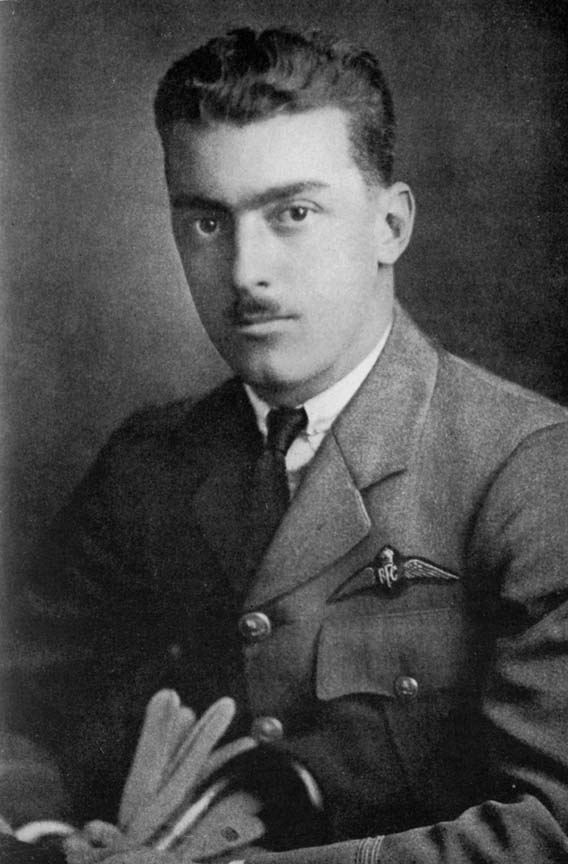
SON of Charles Emerson and Ada Menzies (Dailey) Stone; was born in Andover, Mass., Sept. 14, 1893. He was educated at Phillips Andover Academy, graduating in 1912.
On Aug. 11, 1917, he enlisted in the Royal Flying Corps, and was sent for training successively to Long Branch, Ontario, Toronto University, and Camp Mohawk, Deseronto, Can. On Nov. 15, 1917, he was commissioned 2d Lieut., and attached as instructor in turn to Camps Benbrook and Hicks, Fort Worth, Tex. He was commissioned 1st Lieut. in Feb., 1918, and made Flight Commander at Camp Leaside, Toronto. He was sent overseas and stationed at the Central Flying School, Upavon, Wilts, Eng., where, owing to his efficiency as Instructor, the War Office retained him until the end of the war.
Lieut. Stone was honorably discharged from the Royal Flying Corps and has returned to the U.S.
The following "Tribute to the Phillips Andover Boys in the War," by Charles Emerson Stone, father of Lieut. Stone, seems worthy of inclusion here:
I was thinking only the other day of the more than two thousand boys of our alumni and students who have been in this great war, and what a poignant regret it would always be that we had failed to see, in the years before it was certainly upon us, that the spirit of daring and the thirst for action was put in them in actual preparation for this awful event. How blind we are after all our research and years of study and thought, that we should not have seen it, and have had a little more charity and greater love for the rare souls that were given into our keeping! But ten years ago who could have foretold it all? Still the regret is there all the same. And we mourn the loss of eighty-three of earth's noblemen. R.I.P.
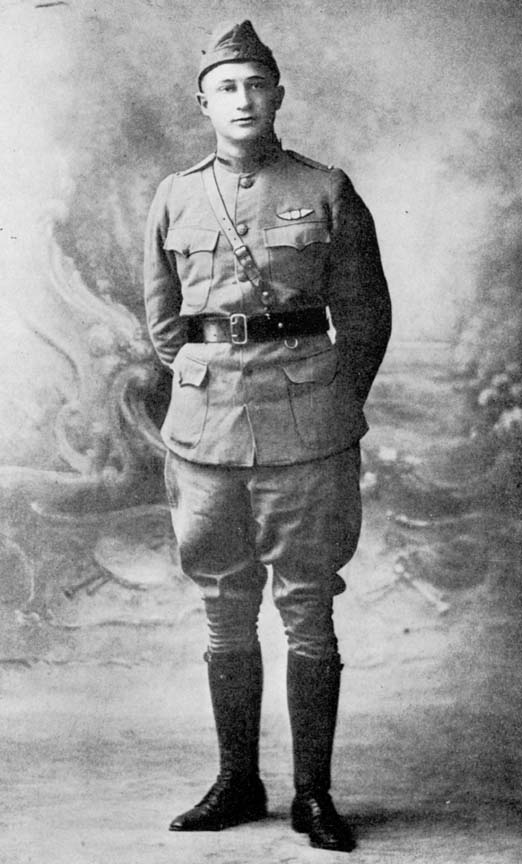
SON of Lorenz and Louisa (Ebert) Muther, of Newton, Mass.; was born at Oak Park, Ill., March 1, 1890. He attended the Mass. Institute of Technology, graduating in 1913. On June 2, 1917, he enlisted at Cambridge, Mass., and trained at the M.I.T. Ground School and at the Flying School at Essington, Pa. He was commissioned 1st Lieut., Air Service, Nov. 8, 1917. He sailed overseas from New York, Nov. 2, 1917, and continued his training at the 3d A.LC., Issoudun, France, Dec. 4, 1917, to April 15, 1918, and at the American Aviation Acceptance Park, Orly, Seine, April 15 to July 24, 1918. Lieut. Muther was then attached to the 147th Aero Squadron, 1st Pursuit Group, with which he remained until Dec. 4, 1918. With this Squadron, which did notable work at the front, he was in action at Château-Thierry, St.-Mihiel, and in the Argonne Forest. Lieut. Muther was honorably discharged, Feb. 17, 1919.
SON of Dr. Walter and Anna A. (Woodbury) Tuttle; was born at Exeter, N.H., April 10, 1894. He was educated at Phillips Exeter Academy and at the Mass. Institute of Technology. He won scholarships at Exeter, and at M.I.T. for the entire course. He enlisted in U.S. Army School of Military Aeronautics, and trained at U.S.A.S., Mineola, N.Y. He was commissioned 2d Lieut., July 18, 1918, and assigned to the 48th Aero Squadron, 1st Prov. Wing, at Mineola, N.Y.; then to the 3d Prov. Squadron, Armorers' School, Wilbur Wright Field, Fairfield, Ohio. He was transferred to the U.S. Army Aviation School, Payne Field, West Point, Miss., where he was stationed until the end of the war. He was honorably discharged on Dec. 5, 1918, at Hoboken, N.J.
Married, April 29, 1918, Edith Pelletier.
Father in Service---
Dr. Walter Tuttle, examining physician, Rockingham County, N.H.
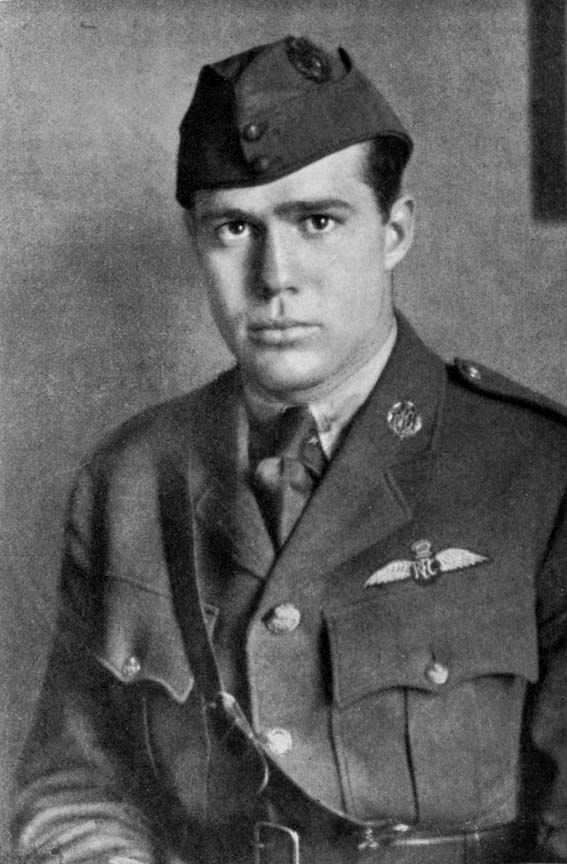
SON of Edmund Pike and Mary Warner (Caldwell) Graves; was born in Newburyport, Mass., March 13, 1891. He was educated at St. George's College, Buenos Ayres; Middlesex School; and Harvard College, A.B. 1913. He enlisted in the Royal Air Force at Toronto, Can., July 9, 1917. In Oct. he was commissioned 2d Lieut., "winning his wings." He instructed in the School of Aerial Gunnery at Fort Worth, Tex., until March, 1918, when he was appointed Instructor of Acrobatics in the new School of Special Flying at Armour Heights, Toronto; where he was commissioned 1st Lieut. He went overseas in Oct., 1918, and was stationed at London Colney, until honorably discharged in July, 1919. His failure to get to the front was such a disappointment to him that he enlisted in the Kosciuszko Squadron of the Polish Army, to fight the Bolsheviki, in Sept., 1919, and was engaged in operations against them just previous to his death. He was killed while taking part in a Polish celebration at Lemberg, on Nov. 22, 1919. After the squadron had flown over the town, he flew down the main street, performing the "double roll." During the manoeuvre the right wing broke. He coolly cleared himself and jumped, but was too near the ground for his parachute to be effective.
While in England he had agreed to pilot a machine in a trans-Atlantic attempt when Alcock's success intervened. Of the Bolsheviki he wrote:
We entertained a Bolshevik Squadron Commander who deserted to the Poles with all his squadron, officers and men. They had been forced into the Red Army by threats that otherwise their families would be shot. When the territory occupied by these families had been taken, he and his squadron deserted. The Bolsheviki have few planes and pilots, all flying under compulsion, and they never venture within forty kilometres of the lines. Also, each officer has attached to him a true blue or "red" Bolshevik who, if suspicious, has him shot, or shoots him himself. It all seems incredible.
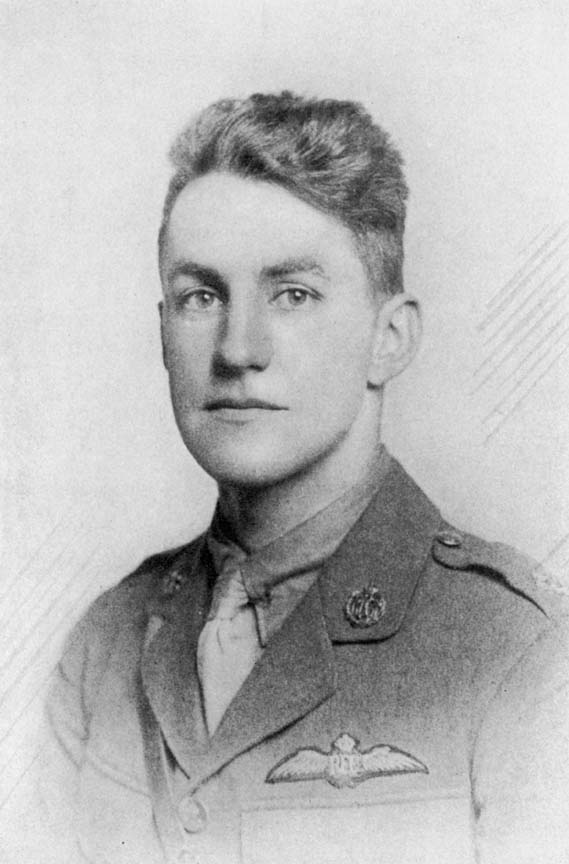
SON of Henry and Cora (Holmes) Leavitt, of Auburn, Me.; was born at Sanford, Me., Oct. 4, 1892. He was educated at the Sanford High School, the Tennessee Military Institute, and the Northeastern College, Boston, graduating in the class of 1915.
He enlisted in the Royal Flying Corps, in July, 1917. He received his training at Toronto University; Camp Deseronto; Camp Mohawk; and Camp Leaside, Ontario; and subsequently at Camp Taliaferro, Fort Worth, Tex. In Jan., 1918, he sailed overseas and completed his training at Montrose, Scotland. He was commissioned 2d Lieut., Dec. 19, 1917, in the British Land Force. In April, 1918, he was assigned to the 65th Squadron, R.A.F., and went to the front. Lieut. Leavitt was a skilful and daring flyer, but owing to a mishap to his machine while flying over German territory, on May 17, 1918, he was forced to land between the German trenches, and was captured by the enemy. From then until Dec. 13, 1918, he was confined in German prison camps, at Karlsruhe, Rastadt, and Stralsund. From the last camp he wrote:
Only a fellow who is unfortunate enough to be a prisoner can know how cruel the Hun really is. Our camp is on an island some twenty yards from the shore, a barbed wire fence runs around it. On the inside of the fence are armed sentries; outside the wire is a dog patrol. These dogs are trained to jump on any man wearing khaki. We used to watch them sometimes when the keeper taught them to attack a well padded man in khaki. One day he was leading three dogs through the camp on a rope; an officer was walking along minding his own business when the Hun let them go. If a crowd of British officers had not hurried to the scene with clubs the dogs would have killed him. As it was the poor fellow will wear the teeth marks of the dogs in his face for life.
On his release Lieut. Leavitt was given a two months' furlough and was then assigned to another squadron on Feb. 26, 1919. He returned to the U.S. in July, 1919.
Brother in Service ---
Harold E. Leavitt, U.S.N.
Previous war records of family show one uncle and three granduncles in Civil War; great-grandfather, David Chase, in War of 1812; great-great-grandfather in Revolutionary War.

SON of Copley and Mary (Russell) Amory; was born at Walpole, NH., in June, 1899. He attended the Groton School, Groton, Mass., and in Aug., 1917, soon after passing his 18th birthday, enlisted in the Royal Air Force, Canada, being too young to enter the U.S. Air Service. He passed his examinations successfully and was sent to Fort Worth, Tex., where he was kept as Instructor until March, 1918. He was commissioned 2d Lieut. in Jan., 1918, and in April was commissioned 1st Lieut. and given his wings.
He sailed overseas in April, 1918, and continued his training in England, being in a serious crash in June, which disabled him for over two months. Upon his recovery in Sept., 1918, he was sent to France attached to the 4th Squadron, R.A.F., and entered active service at the front. On Oct. 30 he flew over the enemy's lines, after a skirmish in which one of his friends was shot; in a vain endeavor to aid his friend, Lieut. Amory was himself wounded in the leg, and his machine brought down in Belgium, where he was captured.
He was reported "missing" on Nov. 7, but two weeks later his family received word, through the British Red Cross, that he was alive and in a hospital. His recovery was retarded as his wounded leg was neglected and dressed in paper bandages while he was with the Germans, at Aix. After the Armistice he was taken to a British hospital, and late in Dec. carried to England, where he is waiting to recuperate before returning overseas.
Brothers in Service ---
Copley Amory, Jr., Lieut., U.S.A.
John Forbes Amory, Private, U.S.A.,
(Both in active fighting, severely wounded, Sept. 28, 1918.)

SON of Francis Peabody and Jeanne (Bartholow) Magoun, of Cambridge, Mass.; was born in New York City, Jan. 6, 1895. He attended the Noble and Greenough School, Boston, and graduated from Harvard College in 1916. In Feb., 1916, he joined the American Ambulance Field Service, and sailed overseas; he served as volunteer driver with S.S.U. No. 1, from March 3 to Aug. 3, 1916, during which time this section was cited in French divisional Orders, July 15, 1916.
He returned to the U.S., and in Feb., 1917, again went overseas, enlisting in London, in March, with the Royal Flying Corps. He attended the School of Military Aeronautics at Oxford, Eng., and trained in elementary flying at the R.N.A.S. School, Vendôme, France. He trained at Catterick, Yorks, in advanced flying, and at the School of Aerial Gunnery at Turnberry, Scotland. On July 4, 1917, he was commissioned 2d Lieut. R.A.F.; and on Aug. 1, 1918, 1st Lieut., R.A.F.; "wings" gazetted Sept. 3, 1917.
Lieut. Magoun was attached to No. 1 Squadron, R.A.F., B.E.F., and served in France from Nov. 15, 1917, to April 10, 1918, when he was wounded while ground-strafing. On April 9 he was awarded the British Military Cross. In the summer of 1918 he returned to the U.S. on a furlough, but on Oct. 9 rejoined his Squadron and was again at the front, remaining in active service until the first of Jan., 1919. He was demobilized at Folkestone, Eng., Jan. 10, 1919, and enrolled for graduate work at Trinity College, Cambridge, Eng. In the summer of 1919 Lieut. Magoun returned to the U.S.

SON of Judge Robert and Amy Gordon (Galt) Grant; was born at Boston, Mass., April 30, 1886. He was educated at the Roxbury Latin School, Roxbury, Mass., and at the Noble and Greenough School, Boston; he graduated from Harvard College, A.B., 1908. He was a member of the Harvard 'Varsity football team.
He attended the First Officers' Training Camp at Plattsburg in Aug., 1915.
On Nov. 1, 1917, he enlisted at Philadelphia, Pa., as Ensign, U.S.N.R.F. He resigned on April 21, 1918, to enter the Royal Air Force, Canada, April 25, 1918. He trained at Ontario, Can., and at Camp Borden, Squadron 88, Flight C.
He was honorably discharged at Camp Borden, Ontario, Can., after Nov. 11, 1918.
Married, Sept. 7, 1912, Marie S. Diston.
Brothers in Service --
Alexander Galt Grant, 2d Lieut., U.S.A. Field Artillery.
Gordon Grant, Capt., U.S.A., A.E.F., Field Artillery.
BORN at Lynn, Mass., Oct. 3, 1892. He was educated in the public schools of Lynn, and at the Stone School, Boston. He enlisted in the U.S. Marine Corps, and was commissioned 2d Lieut., Sept. 17, 1917. He trained at the Curtiss School, at Newport News, Va., and was then stationed at the Philadelphia Navy Yard, with Aeronautic Co., Advanced Base Force, U.S. Marine Corps. He was transferred to the 1st Marine Aeronautic Co., Cape May, N.J., and then sent to the Cape May Naval Coastal Air Station. He was next ordered to Naval Base 13, at the Azores, and subsequently returned to the Marine Aviation detachment at Miami, Fla. He was commissioned 1st Lieut., Marine Corps, June 10, 1918. Discharged at his own request, at Miami, Fla., Nov. 5, 1918.
Brother in Service ---
Charles Raymond Boynton, Sergeant, Supply Co. 311, Q.M.C., Bordeaux, France.

SON of William A. and May L. (Lockwood) Gaston; was born in Boston, Nov. 12, 1896. He was educated at La Villa, Ouchy, Switzerland; at St. Mark's School, Southboro, Mass.; and graduated, Harvard College, class of 1919.
He enlisted in the U.S. Navy in April, 1917. In May he was transferred to the Naval Aviation Squad at Squantum, Mass., where he was commissioned Ensign on Jan. 2, 1918, and received a pilot's license. He was ordered to the Aviation Detachment, Naval Operating Base, Hampton Roads, Va., on Oct. 18, 1917, and served there as an instructor. On Feb. 6, 1918, he was assigned to the Royal Flying Corps, at Fort Worth, Tex., for a course in Aerial Gunnery. He sailed for Europe on March 22, 1918.
On his arrival in England he patrolled the North Sea and English Channel, and later was attached to the R.N.A.S. at Hornsea, Yorkshire, in April, 1918. He was sent in May to No. 1 School of Navigation and Bomb Dropping at Stonehenge Mills, Salisbury, and remained there as instructor for one month. He was then assigned to the U.S. Northern Bombing Squadron with headquarters at St.-Nylevert, France, in July, 1918; in Aug. he was attached to the U.S. Air Service at Milan, Italy. Subsequently, from Sept. to Dec., 1918, he was with No. 214 Squadron, R.A.F., in France, and was in command of a Handley-Page bombing plane. He was promoted to the rank of Lieut. (j.g.), Dec. 12, 1918. Ordered home to the U.S. in Dec., 1918, and relieved from active duty in Feb., 1919. He returned to Harvard, and graduated with the class of 1919.
Brother in Service ---
John Gaston, Lieut., U.S. Marines, 18th Co., 5th Division, Army of Occupation, Germany.
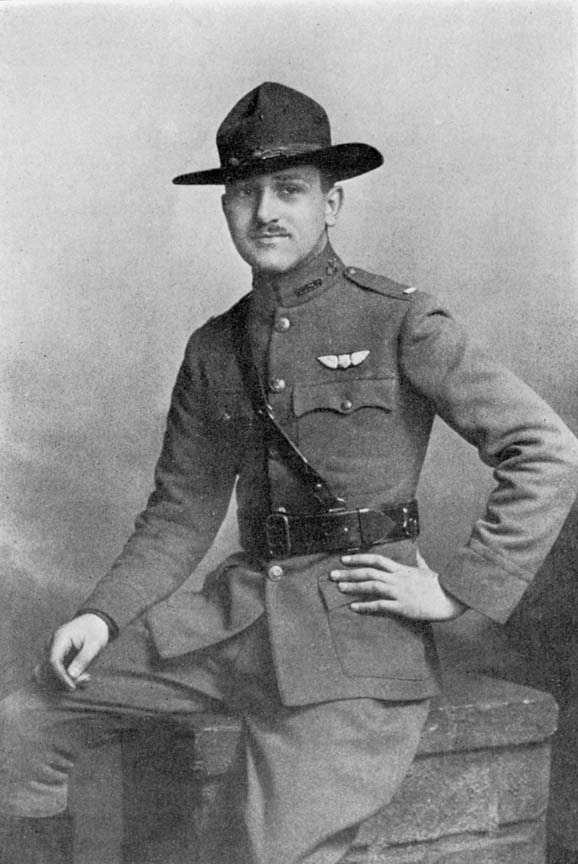
SON of Dr. John A. and Jennie B. (Andrews) Hamilton, of Burlington, Vt.; was born at Troy, N.Y., June 13, 1894. He graduated from the Pittsfield High School with honors in 1911; there he was president of his class and captain of the school track team. In 1912 he graduated from the Jacob Tome Institute in Maryland. He was valedictorian of the class, was awarded the school's scholarship prize, elected to Alpha Delta Tau for "meritorious attainments," associate editor of The Trail publication, member of the debating team, and of the track team and football squad.
He graduated from Syracuse University, A.B., 1916. He was a member of the freshman football and track teams, the 'Varsity football and track squads, and member of the Psi Upsilon Fraternity. He was awarded Phi Beta Kappa honor, and Liberal Arts honor, in the Department of Economics, and graduated Magna cum Laude.
In the fall of 1916 Lieut. Hamilton entered the School of Business Administration in Harvard University. Following the declaration of war he enlisted, April 23, 1917, and on May 12 was sent to the R.O.T.C. at Plattsburg. On July 12 he signed for Aviation and was transferred to the M.I.T. for ground-school work. He left Mineola, Sept. 18, with 150 others, for England. Further ground-school work was taken at Oxford University, and Grantham Gun School. His first flying was at Tadcaster, and was continued at South Carlton aerodrome, and at Turnberry and Ayr, Scotland.
He was commissioned 1st Lieut. March 2, 1918, and at once sent to the front in France, attached to the famous British Third Aero Squadron. He had the distinction of being the first American officer to fight with the Royal Flying Corps, and was the first of the 150 of his Squad to bring down an enemy machine. While with the R.F.C. he was under the well-known Capt. Bell, of Australia, who was credited with twenty-three machines, and who, because of his dash and skill, was called "Ginger Bell." Lieut. Hamilton was with Capt. Bell in the air when the latter was shot down by a German explosive shell, and at once avenged his Captain's death by shooting down the enemy observer and pilot in their machine. The day before the well-known Von Richthofen was killed Lieut. Hamilton was in the flight that fought the famous "flying circus" and engaged Von Richthofen himself for a few minutes, but later engaged another and sent him down.
On June 20 he was transferred to the U.S. Air Service and made Flight Commander in the 17th Aero Squadron. This he helped to form and train. He was one of three recommended for commanding officer of the Squadron, but an older man of more military experience was chosen. His operations throughout his work at the front were from Amiens north to the coast. On Aug. 24 he was returning from an attack ten miles over the lines when he saw an enemy kite balloon and dove on it, causing the observer to jump, and then shot the balloon down in flames. But before getting away he was hit by enemy machine guns from the ground and fell about three miles over the lines and near Langecourt. Ten months later his grave was found and the body removed and buried at Bomy, France.
Lieut. Hamilton was awarded the British Distinguished Flying Cross before he was killed. This is the highest decoration awarded an Aviator by that nation. This citation reads:
Lieut. L. A. HAMILTON is an excellent Patrol Leader, and his dash and skill materially helped in the success of the operations.
In company with four others he received the award for bringing down seventy-five machines in one month.
He was also awarded the U.S. Distinguished Service Cross through citation by General Pershing. The citation is as follows:
Lieut. LLOYD ANDREWS HAMILTON is cited for extraordinary heroism in action at Varssenaer, Belgium, on Aug. 13, 1918. Leading a low bombing attack on a German aerodrome thirty miles behind the lines he descended and destroyed the hangars on the north side of the aerodrome and then attacked a row of enemy machines, flying as low as twenty feet from the ground despite intense machine-gun fire, burning five German planes. He then turned and fired bursts through the windows of the château in which the German pilots were quartered, twenty-six of whom were afterward reported killed.
This destruction was made without the loss of a man or a machine making the attack.
Lieut. Hamilton was rated as a Military Aviator Aug. 3, 1918, by order of the Secretary of War at Auxi-le-Château. He is credited with at least seven German planes, some reports making the number twelve. Six other machines were brought down for which official credit was not given. He brought down six observation balloons, one upon the day of his death and one the day before. While training in England he is said to have perfected a stunt not before used at the front and that most of his victories in the air resulted from its use. Among his effects was found a snap-shot of his Sopwith Camel machine, giving a tail view, and on the back of the picture he had written, "This is a view no Hun ever had of my bus." Often he wrote that he had no fear of any machine the enemy might send up, but that in low flying upon transportation and balloons it was mere chance if one escaped machine-gun nests. It was in this work that he finally lost his life.
An officer wrote:
Ham and his fighting partner, Tipton, were known as the first and finest American pilots on the front when they were with the British, and had the reputation of never "letting any one down," as the expression is, in a tight corner.
The only officer who, from another machine, saw him shot down, wrote:
Ham was one of the most popular fellows out here. He was most fearless in the face of danger and as stout a pilot as ever flew in France; he was a very capable Flight Commander and we all felt safe when behind him.
His Major, Commander of the Squadron, wrote:
"Ham," as he was endearingly known to us all, has been a great help in training our new men and in developing our organization. His lovable personality, steadfast purpose and remarkable ability as a flyer have set an example that we all are striving to emulate.
His great-great-grandfather, Ebenezer Andrews, was in the Vermont Militia, served in the Revolutionary War under Ethan Allen, and with some sixty men captured Ticonderoga. He also fought at Bennington.