
LAUSANNE was heavenly after the hell of Smyrna, Scutari, Macronissi, Salonica and other refugee centers. The Peace Conference was in session at Ouchy, on the lakeside. The grounds of the great hotels near-by seemed like the wildwoods of Elysium, with spreading trees, shrubs of exquisite foliage, fragrance of mignonette, faint music of stringed instruments and stately swans moving upon a crystal lake.
The subtle influence of this earthly paradise would surely facilitate peace parleys. The conferences were held behind closed doors, but I met some of the American observers and delegates from other countries, including M. Venizelos. The "Convention Concerning the Exchange of Greek and Turkish Populations" had already been arranged, but nothing could be done under its provisions until the Treaty of Peace was signed.
In the interest of historical truth, the exodus of the Christian people from Turkey should not be confused with what is known as the "Exchange of Populations." This was a plan of adjustment arranged at Lausanne afterward to mitigate the distressing conditions in Greece and Turkey, resulting from the enormous dislocation of population. With the exception of the men of military age, who had been "detained" in Anatolia by the Turkish Command, the expulsion of the Christian minorities from Turkey was practically accomplished months before the machinery for the "compulsory exchange" was put into action.
Greece was swamped with refugees and in need of space---besides, she was anxious to get the surviving young men belonging to the refugee families, who were still "detained" in Anatolia. Turkey was depopulated and in need of people. The land had been left tenantless by the flight of the Christian population following the holocaust at Smyrna and the Conference at Mudania in the early part of October, 1922, at which time the determination of the new Turkish Government to be rid of the troublesome Christian minorities was given world-wide publicity.
The desperate needs of both countries resulting from this unprecedented exodus brought about the "Convention Concerning the Exchange of Greek and Turkish Populations," which was signed at Lausanne on January 30, 1923. This "exchange" was to begin on May 1, but the Treaty of Peace was not signed until July 24, 1923, and the plan was not in operation much before the beginning of 1924. The American Red Cross did an enormous work feeding the outcasts from Anatolia during the maximum stage of the refugee emergency, and that organization withdrew from the field on June 30, 1923, at which date the American Women's Hospitals closed Macronissi Island Quarantine Station, for the reason that the influx was practically over.
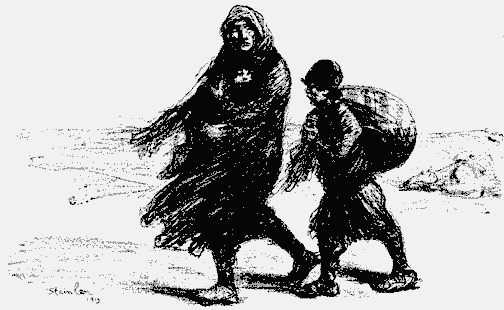
The "Convention Concerning the Exchange of Greek and Turkish Populations" covers a multitude of sins. This misleading instrument has been used extensively, even in churches, to smooth over the tragic end of the Christian minorities in Turkey, and make it appear that a peaceful exchange of populations has been effected. Here are a few of the provisions of this portentous document:
Article 1 As from the 1st May, 1923, there shall take place a compulsory exchange of Turkish nationals of the Greek Orthodox religion established in Turkish territory, and of Greek nationals of the Moslem religion established in Greek territory.
These persons shall not return to live in Turkey or Greece, respectively, without the authorization of the Turkish Government or of the Greek Government, respectively.
Article 3 Those Greeks and Moslems who have already, and since the 18th of October, 1912, left the territories the Greek and Turkish inhabitants of which are to be respectively exchanged, shall be considered as included in the exchange provided for in Article 1.
* * * * * * * Article 4 All able-bodied men belonging to the Greek population whose families have already left Turkish territory, and who are now detained in Turkey, shall constitute the first installment of Greeks sent to Greece in accordance with the present Convention.
Article 7 The emigrants as have already left one or other of the two countries and have not yet acquired their new nationality, shall acquire that nationality on the date of the signature of the present Convention.
To a reader unacquainted with the facts, these articles would indicate that a peaceful exchange had been effected. Article 4 was easy to write in Lausanne, but putting it into practice in Turkey was quite another matter. Article 3 provides that the Greeks and Moslems who have already left the territories affected by the exchange shall be considered as included in the first article of the convention. These few mild words disposed of the Christian minorities (1,500,000) who fled from Turkey, after the burning of Smyrna. One step farther in that direction and this article might have provided that those who died (estimated at about 300,000) should be considered alive and well.
 |
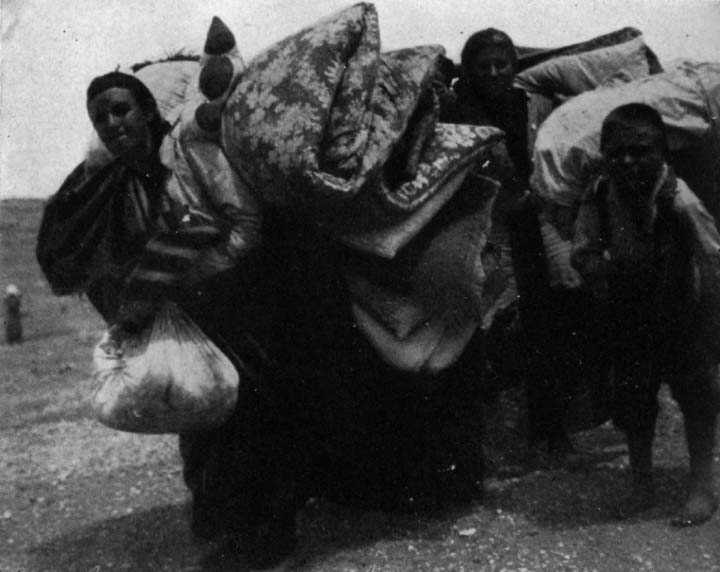 EVERY PART OF GREECE. |
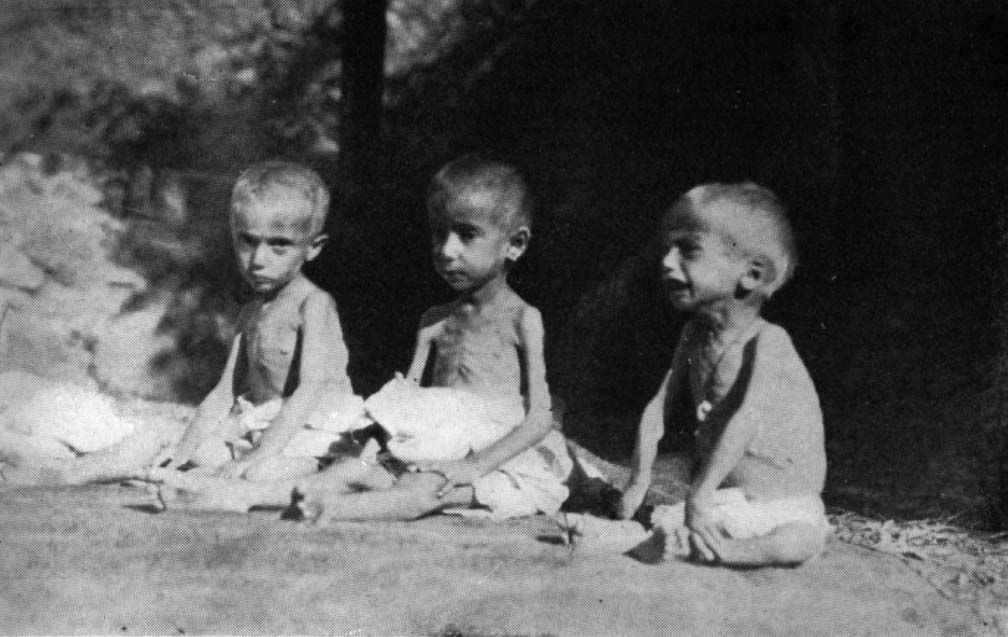 |
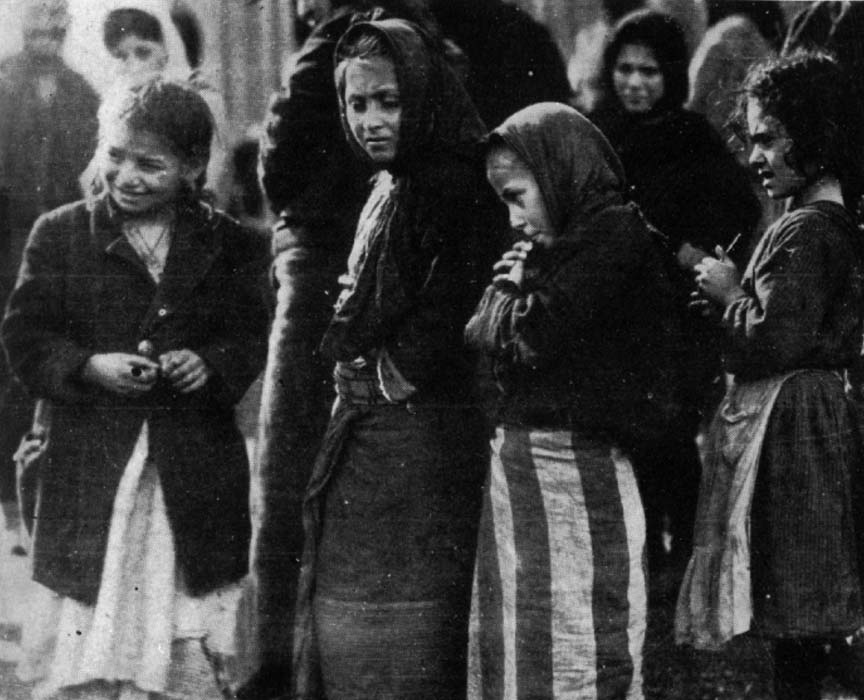 DETAIL OF THE BREAD LINE ON THE A. W. H. QUARANTINE ISLAND. |
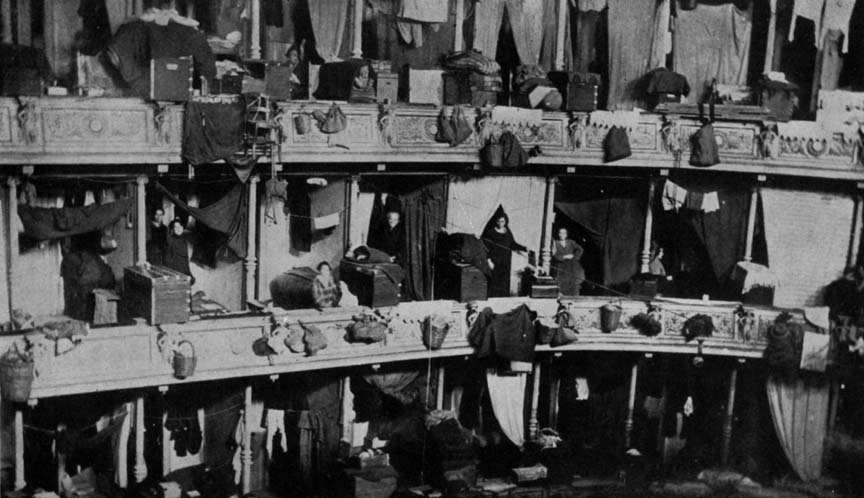
The benign tone of this instrument in view of what it covers, is an astounding achievement. The only fault to be found with the retroactive provisions for the liquidation of immovable property and the reimbursement of refugees for losses sustained, is that the plan did not work. More people were affected by this "exchange" than the combined populations of Oregon, Idaho and Montana. The Turkish nationals belonging to the Orthodox Church were frequently referred to as "Unredeemed Greeks." About 1,500,000 of these people, who fled from Turkey, were "redeemed" and became citizens of Greece, without their knowledge or consent, on the signing of the Treaty of Lausanne.
This "compulsory exchange" of populations based on religion, is a startling precedent in international procedure. A great many people, not personally affected, are enthusiastic over the outlook for both Greece and Turkey with "homogeneous" populations, which make for the peace of the world. Time will prove the value of the plan, and if it works well, perhaps it can be applied to other countries with unassimilable populations and incompatible religions.
Approximately 450,000 Mohammedans were evicted from Greece under the terms of the "Convention Concerning the Exchange of Greek and Turkish Populations." Many of these people were loath to quit their native country, with the mother tongue, the land of their forefathers. It was hard to leave their homes, where they had lived all their lives with friendly Christian neighbors, and go to a strange place where they would be obliged to make new connections and learn another language in their declining years. However, the lure of a fertile country mitigated the hardship somewhat. "A Land Flowing with Milk and Honey" never fails to catch the imagination of man---besides, was it not written in the "Convention" that they should not lose by the "Exchange"? Turkey is a fertile country, with vast resources, five times larger than Greece, and has a comparatively small population. Therefore, with fair treatment, the Moslem people moving from Greece were bound to be benefited in the end.
Reports to the effect that the "Exchange" would begin on May 1, 1923, resulted in large agricultural losses in Greece, for the reason that the Moslem population did not cultivate their fields with the usual care that year. Valuable property had been abandoned in Turkey by the Christian refugees, and many of the Mohammedans in Greece affected by the "Exchange," after liquidating their holdings as far as was possible, moved to Salonica or other ports in order to catch the first ships and stake the first claims in the promised land. Thousands of them were ready and waiting by April, 1923, and under the ægis of the Mixed Commission, appointed to facilitate the "Exchange," the movement of the Moslem people from Greece into Turkey began the following November and finished about a year later.
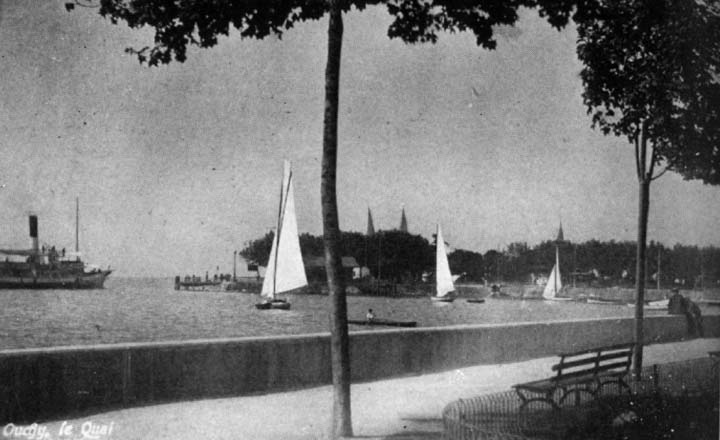
Basking on the shore of Lake Geneva, under the budding trees, on May 1, 1923, the very day nominated in the bond for the "Exchange of Populations" to begin, the mild-reading provisions of this "Convention" suggested a pleasant excursion from Ouchy to Montreux on the passing steamers. The day was delightful. Swans were gliding over the water, doves cooing on the greensward, birds twittering overhead, and it was hard to realize what the "Exchange of Populations" really meant.
Better a day on Lake Geneva than a cycle at the haunts of misery, where some of my associates in the service of the American Women's Hospitals were stationed. Lausanne was a haven of rest and delight. Such a temptation! Under the circumstances, lusting after the place was an evil to be resisted. My begging ground was in the United States, and it was necessary to move fast in order to cover my Eastern schedule and reach San Francisco in time for the meeting of the Medical Women's National Association. By cutting my Lausanne visit to one day, I could run over to Prague, complete my business there, catch the Berengaria at Cherbourg, and loaf and indulge my soul by dreaming of Lake Geneva during the voyage across the ocean.
It was easy to get into Prague, but hard to get out. An international conference was in session, and all outbound sleeping compartments engaged for a week in advance. It was a case of sitting up for over thirty hours or flying to Paris, and I was glad of an excuse to fly.
Away we sailed over the city of Prague, and the fields, hills, dales, forests, mountains, lakes and rivers of the country beyond. Springtime! The morning sun was flooding the earth, awakening life in the seeded fields and wild places under our eyes. The prevailing colors were green and brown, plowed land, pastures, the dark expanse of the Bohmer Wald, and the red-roofed cities, towns and villages---Nuremberg, Stuttgart and many others, all of which, even the largest, seemed like small red flower beds on the great brown and green plain of the world.
Strassburg, on the Rhine, where we came down for a change of planes and pilots, is an impressive city from above on account of its highways and waterways. My first impression on landing was that the Gold Dust twins had preceded me, and my second thought was that most of the cities of the world would be benefited by a thorough cleaning under the direction of the force which had done so much for Strassburg. If order is heaven's first law, and cleanliness is next to Godliness, Strassburg was nothing less than heavenly.
With a new plane and pilot, we arose spirally out of Strassburg an hour later and turned toward Paris. There was something vital the matter with that machine. I have no knowledge whatever of man-made motors, but I had studied the functional action of the heart, the best machine ever made, and I knew that there was something wrong with the heart of that airplane. Its pulse seemed labored, tense and irregular from the beginning, strongly indicating the immediate need of a hypodermic stimulant. When we were up about five or ten thousand feet, the heart of the thing stopped beating altogether and, guided by the hand of the pilot, it began circling earthward, grazed the red top of a house and landed in the field from which we started.
The passengers breathed a sigh of relief. Our lives were saved. After a careful examination, it was announced that the plane needed repairing and would not be ready for some time.
"Same plane?" I inquired solicitously.
"Oui," answered the man in charge.
"No, thank you!!!"
I was not alone in quitting that plane. An American fellow passenger also decided to take the next train for Paris. Luck was with us, for when that diseased aeroplane went up again it fell and killed everybody aboard.
Having escaped with our lives, we rejoiced exceedingly, and both claimed exclusive credit for knowing when to quit. The gentleman's clothes were checkered and pronouncedly English in more than one way, but the tone of his voice was comforting in time of trouble. According to his card, he hailed from Burma.
"Burma?" I questioned, involuntarily, "you didn't get that tone of voice in Burma."
"No," said he, "I got it in Oregon. I used to run a goat farm down in Douglas County, near Drain."---And our mutual adventures in the unprofitable business of goat farming in Douglas County immediately took precedence of our thrilling air glide over Strassburg as a subject of conversation.
The Berengaria, minimum rate first class, was sold out. Accommodation was available from three hundred dollars up, first class, or second class, inside room with another passenger.
"How about third class?" I inquired. Fair sailing followed this question.
"You can have an outside room alone for eighty-five dollars," answered the third-class agent cordially, "with the privilege of attending religious services in the first-class saloon on Saturdays or Sundays."
My bargain counter instincts were aroused. I doubted the quality of the goods. There was a trick in the deal somewhere.
"Show me the steerage," I countered casually, after the manner of a lawyer who once examined me on the witness stand and asked seemingly irrelevant questions carefully calculated to elicit the truth.
"This is the steerage," admitted the salesman with a caught-in-the-act expression, "but we call it third class on account of the feelings of passengers."
The psychology of selling tickets was involved in this remark. The population of our country is based upon "steerage." It is a hateful word, and the nearer we stand to it lineally, the worse it seems. In a revulsion of feeling, I was almost stampeded into paying over two hundred dollars for the use of the compound word "first-class" for six days. Fortunately, I analyzed this impulse and found that it was due to an inferiority complex in time to save the money.
Many a time and oft I had crossed the ocean as a first-class passenger, but never had I received such service. Wires were sent and letters written to the steamship representative at Cherbourg, to insure my every comfort. When I arrived at the station, an agent was waiting to receive me. This gentleman looked after the details connected with embarkation and personally conducted me aboard the ship, while the first and second-class passengers stood in line waiting to attend to their own baggage and passports.
Innocent of information regarding the affect of recent immigration laws on third-class travel, I was amazed and delighted. These unexpected courtesies were accepted as personal tributes. Later I learned that it was merely a case of supply and demand. The first- and second-class sections of the ship were overcrowded, but in the third-class they were glad to get a passenger. I had a comfortable outside stateroom, which had formerly accommodated at least four persons on west-bound trips.
When the immigration law limiting the quota of immigrants went into effect, "third" became a liability, a byword and a hissing at the meetings of the stockholders of the great liners. All the members of the staff employed to serve that unremunerative class were anxious about their jobs, and on learning that I had voluntarily chosen "third," their gratitude was boundless, bountiful, and expressed in tit-bits which must have been cribbed from the diet kitchen maintained for affluent invalids.
That trip was a success in several respects. My conscience was comforted when I thought of Dr. Parmelee with her refugees in Salonica, and Dr. Stastny in that pesthole on Macronissi Island. I was also mindful of the discouraging affect of inexpensive travel upon the few persons in our service, unashamed of extravagant expense accounts. My baggage was passed without inspection, on the assumption, perhaps, that a third-class passenger could not possibly have any loot.
But the great reward was yet to come. Speaking at a meeting in Brooklyn, a few days later, about the work of the American Women's Hospitals for the mitigation of suffering among refugees, I mentioned the trip across the ocean. A newspaper woman came in hot haste for the story of that "steerage" trip. She was so insistent on a tale of martyrdom that in self-defense I made the best of a pleasant experience. Her story, with a flattering photograph, got a prominent place, and the next day it appeared as telegraphic news in many parts of the United States. Economy is appreciated by contributors. Kindly letters and generous checks flowed into our little headquarters for weeks. That "steerage" trip was worth thousands of dollars to the American Women's Hospitals, and there is a twinge of chagrin in the reflection that its greatest possibility did not occur to me in advance. This was a Simon-pure stroke of luck!

THE American Women's Hospitals conducted a medical relief service in Russia in coöperation with the American Friends Service Committee from 1922 to 1926. Dr. Lucy MacMillan Elliott of Flint, Michigan, was at the head of this work in the beginning, but owing to ill health she was obliged to return to the United States. She was replaced by Dr. Elfie Richards Graff, assisted by Dr. Katherine Dodd and Miss Mabelle Phillips of Plainfield, New Jersey.
For four years, Dr. Graff and Miss Phillips had worked together in Constantinople and the Caucasus. They were natural-born pioneers and seasoned workers with no white feathers in their crests. The famine districts of Russia "called" them insistently. Typhus, smallpox, cholera and cannibalism on a large scale had been reported and they were "dying" to get into the country.
Dr. Elliott's illness was their opportunity. They were sent to Sorochinskoe, Buzuluk district, Province of Samara, the worse place on the famine map. At the time of my visit in October, 1923, they were all smiles but a little hard to understand. In less than one year they had seemingly forgotten all about dollars, bushels, districts, boards and committees, and were talking quite naturally about chervonets, poods, uzdravs, ooyezds and narkomzdravs.
Buzuluk and Sorochinskoe have a far-away sound but the people who live there are not nearly so "foreign" in appearance and spirit, as our neighbors in Mexico and some of our neighbors in New York City. Perhaps we all wandered together in the wilderness of Asiatic Russia a long time ago, and our immediate forebears migrated to the countries of western Europe and theirs remained in the East. It takes three days on the International Train from Moscow to reach these districts lying one day's travel beyond the Volga River, whence come the Volga songs and Russian caviare.
With the exception of a narrow strip on the western border, the Baku Oil Fields on the Caspian Sea, and Vladivostock on the eastern coast, Russia is an undiscovered country of enormous extent, stretching across Europe and Asia from salt water on the Atlantic side to salt water on the Pacific side. There are all kinds and shades of people within its borders, 130,000,000 of them, just awakening to the possibilities of life, and wealth beyond dreams of avarice waiting to be released.
The rich steppes of Russia cultivated in the most primitive manner provided the barbaric splendor and extravagance of anterevolutionary generations. The ruling classes enslaved the peasants, but they did not rob their national banks---they did not exploit the natural resources of the country and waste its substance, because they did not know how. Therefore, the future generations of Russians have these resources to draw upon. The chances are that they will have oil to burn within their own borders, when the present masters, lords and rulers of the earth are scurrying around the world looking for new energy to drive their motors.
Fortunately, we had oil from Baku to burn, for our clinics were conducted at widely separated villages, which we visited by automobile. Along the way there were great patches of wild mushrooms. Boxes, buckets and pans were filled in short order, and the next morning when we passed the same places, there the mushrooms were again, like manna falling or rising overnight.
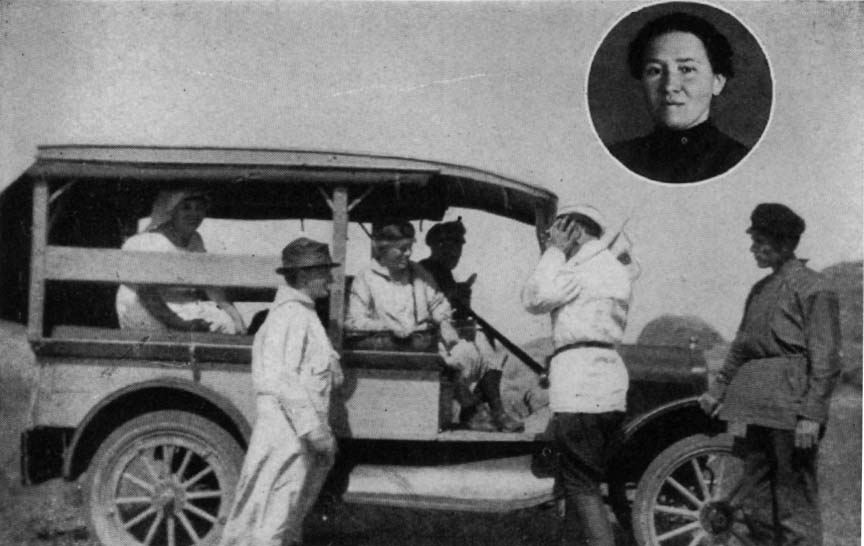 Dr. Elfie Richards Graff and Miss Mabelle Phillips, of the American Women's Hospitals, in the Wellesley Camion near Buzuluk, Russia, 1923. (Inset) Dr. Lebedeva, head of the Department for the Protection of Motherhood and Childhood for all the Russias. |
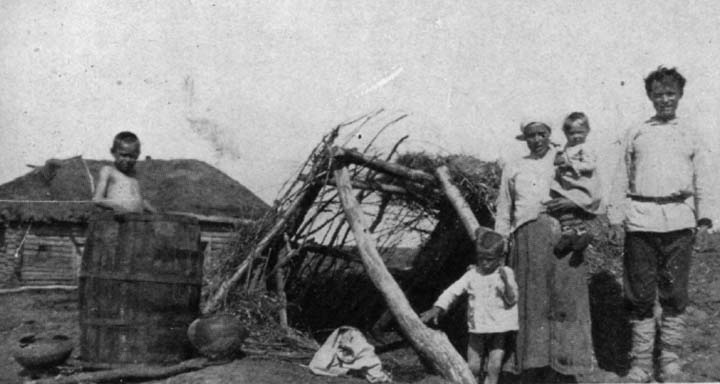 Family of Russian peasants, famine district, Buzuluk, Russia. |
The wolves and jackals of the Russian steppes have scented and followed travelers, with or without horses, until it has become a habit with them. They don't understand the smell of the Ford, but they follow it betimes instinctively until their tongues hang out from exhaustion. After dark in the evening, we sometimes had canine traveling companions, their glowing eyes appearing and disappearing in the low growth at the side of the road.
Dr. Graff had a staff of Russian physicians, felchers (medical students) and nurses, and worked under the authority of the Moscow Health Bureau in close association with Dr. Lebedeva, the woman physician at the head of the Department for the Protection of Motherhood and Childhood. The following data is taken from the 1924-25 report of Dr. Graff and Miss Phillips:
1. There are 25 Malaria Clinics caring for 3033 people. During April, 1924, 16,348 patients were treated.
2. In the clinics for the protection of motherhood and childhood, 200 expectant mothers and 1363 children were under supervision.
3. Thirteen centers for mothers and children registered 10,383 examinations. 25,226 people called at these centers for help and 195 clinics were conducted. All personnel connected with the medical service, both American and Russian, are on the payroll of the American Women's Hospitals.
My visit in Russia was cut short by an emergency call from another field. The weekly International Train had just passed, but I caught the "Maxim Gorki" which took four days and nights to Moscow, and tried out Communism on a small and intimate scale en route. The sleeping car was full, save one compartment for four persons. There was a reason why this compartment was empty, which I did not recognize at once. The window, when open, glided downward behind the woodwork out of sight. The glass of this window had been broken out, thin boards nailed on the frame, and when the window was closed, the compartment was in utter darkness.
Naturally, I thanked my lucky stars, and set my compartment in order, depending upon the fresh breeze from the steppe to maintain special privilege and privacy. A draft in Russia is nothing less than a national abomination, and nobody came into that compartment until every other place was taken. Then two men came and took the bunks, one above the other on the opposite side of the coop. There were no real seats in the sleeping car. The passengers sat on these stationary bunks, upper or lower, which were sold as "soft seats" or "hard seats" according to whether they were bare boards or cushioned. The newcomers promptly closed the window shutting out the breeze, light and landscape. I needed air and wanted to see the country, so I opened the window after a few minutes, and this was the beginning of a game of opening and closing that window, carried on politely with many smiles and bows for about four hours, when petty capitalism won.
It was time to eat. Those men looked famished. They had tea and black bread without butter---no wonder they shivered, while I had a basketful of chicken, cheese and other luxuries. Foreign plutocrats naturally traveled on the International Train and my companions had been unable to place me up to that moment. By my food they knew me. I was the kind of a person they most despised. The gross abundance revealed when I raised the lid of that basket was bad form in Russia, and very embarrassing in the presence of malnutrition. Scorn and covetousness struggled in their hungry eyes, but they declined to accept favors from the enemy. They spoke together in a low tone, conspired against me, and went on a hunger, strike.
In vain I passed the tempting basket. There they sat with their mouths watering, resolutely sticking to their standard, while coveting my chicken and breaking the Tenth Commandment. Something had to be done. With the ignominious cunning of a strike breaker, I sized up the situation. I could not speak a word of Russian, but I was not without a smattering of the histrionic art. By registering deep distress, I finally made them understand that I was dying of thirst and desperately in need of some of their tea. Ah, that was different. They had failed in hospitality to a stranger in their midst. They would make amends. I should have fresh tea. And they rushed out at the station, where samovars of hot water are always kept for the convenience of travelers, and came back with their pot of steaming tea.
From that moment the government of our compartment was communistic. We ate everything in my basket within a few hours, and at each station my comrades hustled for food, the best available in Russia, and I paid for it. In addition to this service, they left the window open, and furnished tea, hot and fresh, for every meal.
When I took my after dinner quinine, they held out their hands and I noticed for the first time that one of them needed it a great deal worse than I did, so I divided my supply between them, keeping just enough to last me to Moscow, where I could get more and they could not because of the price. Malaria was a new bond between us. They were good comrades and added enormously to the pleasure and educational value of that trip. We understood one another's sign language and entered into an uncommunistic conspiracy to keep the window open and discourage newcomers in order that we might avoid sharing the advantages of that compartment with the traveling public.
This scheme of life was too good to last. During the dark hours of the second night, our lodge was invaded by two persons and there they were in the morning on the bunk above my head. They must have closed the window when they came in. When I opened it at the break of day, they lifted their heads simultaneously at the opposite ends of the bunk, sat up, and hung their feet over the edge. From that time on whenever they were awake their feet were dangling down by my face---the hairy man's on one side, and his mate's on the other. He had evidently been in the habit of hibernating on the top of the oven during the winter months. Naturally, he insisted upon keeping the window closed, but when I tapped upon his boots and turned my face away in deep distress, he smiled comprehensively, took off his boots and hung his bare feet down instead.
Our party was ruined. The communistic, give and take, scheme of life in that compartment did not work with "Ivan the Terrible." He shared our chicken, but Bruin himself could not have been more averse to letting light and air into his den. "Ivan" had a well-shaped head and a benign expression of countenance, but his feet were hopelessly proletarian. Both he and his spouse were overweight. They had evidently been hoarding and eating on the sly during the famine years in spite of the Soviet. After thirty-one stifling hours of darkness, with brief respite now and then, they reached their destination, took their feet out of my face, bowed peasantly and departed. My comrades across the way had opened the window to capacity and we all drew a deep breath and heaved a heartfelt sigh of relief.
That was the most oppressive thirty-one hours of my life. The Cheka could not have been much worse. Sitting on the edge of my bunk, hour after hour, feet by jowl, finally affected my mind and I began to mumble broken snatches of The Man with the Hoe.
What gulfs between him and the seraphim!
. . . what to him
Are Plato and the swing of Pleiades?
The rift of dawn, the reddening of the rose?
But this poem did not exactly fit the case of "Ivan the Terrible." Staring into the darkness of that compartment, and holding tight to my handbag, he appeared to me in a vision over and over again, but not with a hoe---that delightful implement of recreation. As I visualized "Ivan" he was always yoked with a water-buffalo pulling a plow. He was the product of generations of darkest Russia. His father had probably been a serf, and under the old régime he, himself, as securely bound to the land as the other farm animals. Why was he so far from home? Where was he going? He was not quite sure of the way. As he crossed the station square, he paused, lifted his head and gazed around. A gleam of light and color touched the sky---"the rift of dawn" in Russia.
That journey from Buzuluk to Moscow was rich in original experiences and thoroughly enjoyable except for "Ivan" and the nights. I am a slave to the habit of undressing for bed, and four nights in full dress was a hardship. I had been advised to keep my clothes on and watch my step while traveling on that train, and my comrades never left me to forage for food without pointing a warning finger at the bag where I kept the money to pay for our daily chicken. Before going to sleep I concealed my handbag on my person, put my suitcase under my head for a pillow, and fastened my shoes on my feet securely. This plan was far from comfortable, but I arrived at Moscow without loss, while a trustful Quaker from another car reached headquarters in his bare feet, sans garments save a blanket and a thin pair of B.V.D.'s, with his faith in mankind unshaken.
The details of that trip grow brighter and better in memory as the months go by, especially when compared with the tiresome journey from the Russian border to Warsaw on the luxurious International Train, a few days later. The weak sister who occupied the other sleeper in the coupe to which I was assigned, was addicted to strong drink. He was a convivial soul. Every time he took a drink, he offered me one, and between drinks he counted the pink rats, in German, running around the compartment, which were wholly invisible to me: "einz, zwei, drei"---donnerwetter! It seemed like old times in the ward for alcoholic mania. There was no other space in the car, so I stayed awake and served as special nurse to this wayfarer on the borderland of delirium tremens.
DURING the war, I had heard a lot about "Huns" in and out of their cups. I had seen them in pictures, and here was one of those monsters in my compartment. He weighed at least two hundred pounds and I had a hard time boosting him into the upper berth, where he fell asleep and snored with his breath coming in strong gusts causing his lips to vibrate and spray like those of a snorting horse. But all things are relative, and five years later I remembered him gratefully while crossing Siberia---fourteen long days and nights in a small railway compartment with an English lady from Shanghai, who was "distressed" because circumstances prevented her from traveling first class. Manifestly, she felt demoted in my company, and we were equally uncomfortable until an understanding "Tommy" told me not to mind "'er hairs" that such "'igh and moighty loidies from the Heast are small beer at 'ome."
Food was plentiful and cheap except in the dining car. The Russian Five Year Plan was not yet in operation, and anyway Siberia is a long distance from Moscow. There were boilers of "boarst"---a Moscovite "Mulligan" containing curdled milk, meat, vegetables and bread, all in one dish---to be had at every station, and fat, clean, wholesome looking peasant women offered sections of roast suckling pig, boiled eggs and other luxuries at a small price. Those who had hobnobbed with refugees and could eat without plates, knives, forks or napkins, thanked their lucky stars, but the fastidious lost weight daily. Hustling for food involved hazards to strangers unfamiliar with the Russian railroad signals. There was always the danger of the train pulling out, and nobody wanted to be left in Siberia, although that vast country with great forests and big rivers running to the north was lovely in June.
Following the 1923 earthquake in Japan, the American Women's Hospitals had established a medical relief center at Tokyo, and, year after year, requests for similar service had been received from other parts of the Far East. After a trip around the world, Judge Payne of the American Red Cross had written us as follows:
In my trip around the world I came in contact with the American Women's Hospitals and was very much impressed with the work. The real service which can be rendered by the American people to the people of the Near and Far East is in the line of medical relief and sanitation-health service. And your institutions are of great value in this way.
Our Board was interested, and in 1928 I made a hasty visit to several of the hospitals carried on by American and British women physicians in India, China, Japan and Chosen---old Korea, Chosen by Japan. Harbin, a new town in Manchuria, was particularly attractive from an A.W.H. standpoint. The population was made up of white refugees and red bolsheviks from Russia, Japanese soldiers and civilians, all sorts of Chinese and a sprinkling of other nationalities, including American. The place felt explosive. It seemed like the center of trouble and a good location for a hospital.
To save a week and avoid hot weather on the Red Sea, I flew from Egypt to the head of the Persian Gulf. It took about two hours to cross the Peninsula of Sinai, where the Children of Israel wandered for forty years. At Gaza, Delilah's home town, we came down for breakfast. Naturally, the immortal misbehavior of that lady was the subject of conversation, suddenly interrupted by the pilot's "all aboard."
A storm was brewing. Clouds gathered and the wind beat upon the ship. Shuddering convulsively, she rocked and righted, swerved, dipped, fell into air holes, fluttered for an instant in the hand of the elements---escaped, and flew away through the heavens like a frightened bird.
There were ten passengers---all sick. The picture is not fit to print in detail. Crouched in their cushioned seats, grappling big cuspidors to their abdominal walls,---huge, brass receptacles shaped like hourglasses and easy to grapple---those birds of passage destroyed the romantic possibilities of the flight. Who could think of the Arabian Nights on such a day and in such company? Sailing into Bagdad on a magic carpet might easily be imagined in fair weather. But, saving the pilots, there was nothing romantic or heroic about that trip, except the incidental treatment for chronic biliousness. That treatment was heroic: eight hundred miles of distressing, phlegmatic activity. I felt better and lighter for weeks after we came down.
A hurricane on the Greek line was a pleasanter experience. My vanity case was in Portland, Oregon, and I don't know how I looked, but the other female passenger's face had a queer greenish tint. Neither of us were in the least like Amy or Amelia. That pair of aces were still in the chrysalis stage, and had not yet spread their shining wings over the desert or ocean. We did not belong to their generation, and if we could have been glad of anything, we should have been glad of it. Through a rift in the clouds, I caught a fleeting glimpse of the Dead Sea---my last view of the world during that swift flight. It was a dizzy, nauseating view, and I wondered hazily why Lot's wife ever took a backward glance at Sodom or any town in the neighborhood.
Cosmic glories were nothing to me for the next few hours. Chaos reigned in the universe outside our fragile shell. The pilots were God-like in their quiet control, but the passengers were subhuman. In a helpless heap the other woman was lying in the aisle of the plane. This was the last straw. To escape the realities of the picture, I faded out, and when I came to we were bumping along the earth's surface. We had reached Bagdad.
Valuable work is carried on in the Far East by American and British women physicians. Most of the Americans are missionaries, but Great Britain supports a medical service in India and employs women doctors for the reason that it is still considered bad form among many of the natives of that populous country for women to be treated by men physicians. Barracks are provided at some of these health centers for the families of patients. These people come and live on the grounds while their sick are being cared for at the hospitals. The Lady Hardinge Hospital and Medical School for Women, at Delhi, is an outstanding institution conducted by women physicians. In addition to all the usual conveniences, bicycles are used in the long corridors to save the strength of doctors and nurses, and bicycle boys are employed to keep these vehicles waiting at the right doors.
Bubonic plague was raging around one of the American centers which I visited. The district was infested with fleas---bubonic fleas, perhaps, and they were evidently pleased with a change of diet. A circle of flea-bites indicated the high point of my stockings, but I was not without comfort. Every two years regularly I had been vaccinated against the deadly virus carried by bubonic fleas, and this was the first time I had actually felt the need of protection. So far as I was concerned, the bubonic flea had lost her fangs. She was just like a common flea to me.
American women traveling in India usually travel first class and employ bearers, therefore I did not meet many. A bearer is a native parasite who fastens himself to a traveler and rides all over the country. By subtly terrifying his host, the bearer increases his own power, dictates the program, hires other natives to carry the baggage, secretly collects percentage on purchases, sleeps outside my lady's door and peeps through the keyhole, prevents any possibility of free action, and the chances are he is head and front of all conspiracies to extort petty tribute from his patron. I had trouble enough without being bothered with a bearer, and my economical plan of travel was, as usual, rewarded by interesting company.
A lone American entered my inexpensive railroad compartment at one of the stations on the Ganges. Forlorn and disheveled, he cast a hopeless eye at the occupants until he came to me and knew me for a friend and compatriot in a foreign land. There was little need for words. I looked like home and mother to that poor old man. At last he spoke: "Lady," he said, in a pitiful tone, "can you tell me why I'm here?"
"No," I answered, sympathetically, after a moment's reflection, "I haven't the slightest idea."
"Neither have I," he replied. "I am a man of means in my own country. I have a good home in Pittsburgh. After a long and successful career, I retired from business in order to enjoy the remaining years of my life.---And then I came here."
"Alone?"' I inquired, politely.
"Oh, no," he answered. "I came in a party with my wife, and although we employed a special bearer to take care of us, I somehow got on the train going in the wrong direction. I am a lost man. I haven't so much as a tooth brush, or enough money to take me to Calcutta. And lady," he continued earnestly as though he would save me from his dire mistakes, "I have seen enough ga-hats to last me all my life, and if I ever have the luck to get home I'll have sense enough to stay there."
Here was a man after my own heart. I, too, had seen enough ghats to last me all my life. Single-handed and alone, I had clung to my suitcase, fought off the bearers, and personally haggled with the racketeers running the sight-seeing boats at Benares. It was a thrilling game. Seated upon the high poop of a queer-looking galley above a pair of economic galley slaves at the oars, I had moved with peculiar dignity from ghat to ghat on the current of the sacred river.---Such sights for forty cents!
The burning ghats were glutted. So many people die in India and fuel is scarce. It is a religious privilege to have one's ashes and other remains cast upon the Ganges, besides it is handy and cheap for the survivors. For these reasons, prohibition is only partially successful. John Bull is fairly well informed on worldly matters, but what does he know about the transmigration of souls?
A funeral pyre has a fine sound in the distance, but at close range the proceedings involve a personal question of æsthetics. It is not so easy to reduce the human body to ashes without modern conveniences, and the details of this traditional custom at the Ghats of the Ganges would naturally drive a lost soul from Pittsburgh straight back to that city of wondrous furnaces.
Atmosphere---a dominant, distinctive atmosphere hung over the river at Benares. A penetrating odor was in the smoke, and it was not the odor of sanctity. The stokers with long stoking irons were doing their best with limited fuel, but combustion was incomplete, and the surface of the water through which my barge moved majestically was covered with ashes and bone cinders. This débris and other refuse floated with the current to the bathing ghats where hundreds of people were floundering fanatically and drinking the water for the purpose of purification.
No wonder the soil of the delta at the mouth of the Ganges is rich. The river has been well fed for thousands of years. When I reached the hotel at Calcutta, I turned on the bath water. It was cloudy with silt. Then I sat down and wrote letters. Three hours passed. My bath was clear. The silt had sunk to the bottom of the tub.-Awful thought! Reluctantly, I forced my hand down, down through the water in one of those mammoth English bathtubs and drew my finger through the soft sediment: ashes!
 |
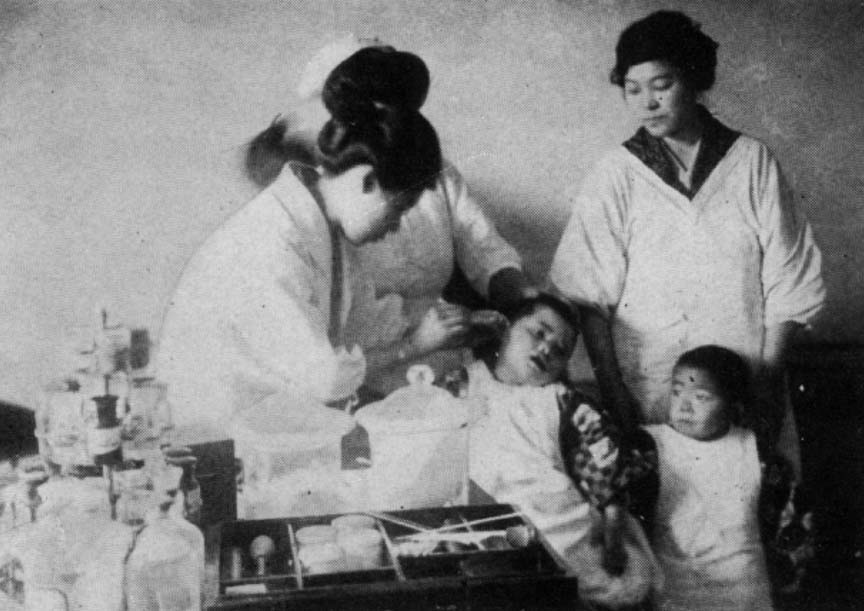 |
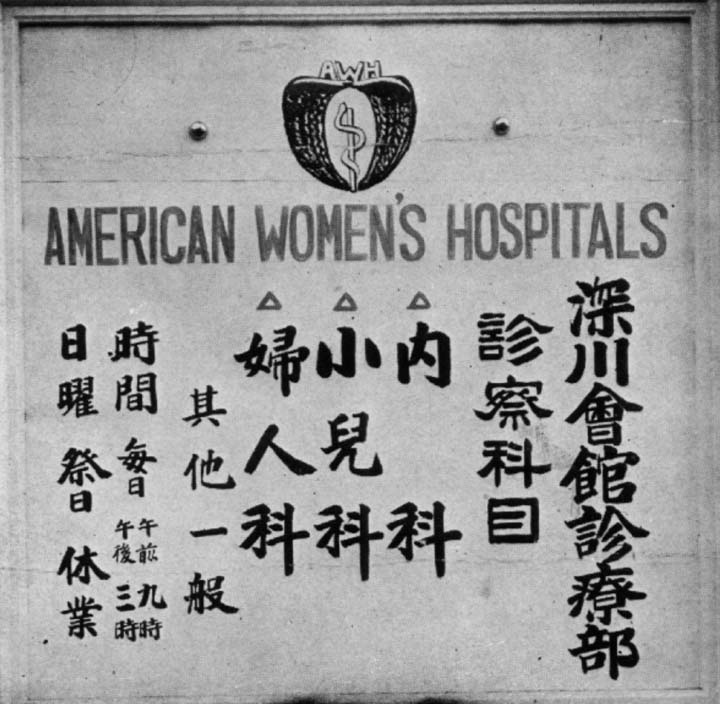
The American Women's Hospitals' service in Japan was conducted in coöperation with the Baptist Mission at Fukagawa, an impoverished section of Tokyo. Japanese women physicians were in charge of this work, which increased in value from year to year. Her Majesty, the Empress, participated in the annual health demonstration by sending a representative with a special gift from the Imperial Household.
There are a large number of Japanese women physicians, practically all graduated from a private school under government control. The National Society with about a thousand members recently joined the Medical Women's International Association. Through this connection, women physicians have clasped hands around the world. My professional sisters, in the Land of the Mikado, took me to their hospitals and colleges, and entertained me occidentally and orientally.
On my feet, I got along comparatively well, but on all fours I was at a great disadvantage from a social standpoint. A new system of locomotion is hard to acquire after fifty. The individual dining tables were about fifteen inches high, and at those Japanese dinner parties, I squatted uncomfortably in one place, while my colleagues skidded around gracefully on their hands and haunches, exchanging customary courtesies and touching their foreheads to the immaculated matted floor with the ease of established usage.
The big parade was on. Amid great enthusiasm, troops were leaving daily for Manchuria and other parts of China. They were formidable looking troops: stocky men, and much larger on the average than the mental picture I carried of Japanese soldiers. Among Americans in the Far East, I had noticed the same attitude which we had observed years before among our personnel in near eastern lands. My countrymen in China were for China, and those who had spent years in Japan were for Japan. A Christian missionary in Tokyo told me that it was absolutely necessary to expand---and necessity is law.
The Japanese, he said, were scientific. Modern science had preserved child life, and the population had increased so rapidly that there was not room in which to live. Here was a demonstration involving an important question. Were these soldiers of the militant little island going out to kill their neighbors in order to make room for their own people?
Wherever I had stopped in India and China, the need for medical service had overwhelmed my imagination. At best, we could do so little amid those teeming millions, and the conservation of life is of doubtful value in countries where people breed so fast that the land cannot feed them. Shut off this menacing overflow at its source is inevitably suggested, and women physicians in India, China and Japan are thinking along this line.