FOR HER FATHER, Mary's death brought an irreparable loss but created a spiritual certification. His first public utterance after her death proved that he was now certified by her death to declare the reality of the spiritual life as he had never before taught it. To the House of Churchwomen in Grace Cathedral Chapel, San Francisco, February 6, 1919, he delivered an address, which a little later, in expanded form, he repeated on Memorial Sunday, May 25, in Grace Cathedral. For his subject he chose, "Some Lessons of the War." The address, really, was a development of the ideas in that penciled poem which was quoted toward the close of the last chapter. After speaking of the valiant young men and young women who had given their lives for their country, his voice anguished by the memory of Mary's sacrifice, he declared:
If there be no assurance of spiritual indestructibility, of supermundane triumph and enfranchised activity for the magnanimous souls that were,---if there be no such solace for the bereaved and bewildered that are;---life is not worth living: chaos, chance, futility reign.
Out of agony has been born a humbler and a nobler and holier, irrefragable, conviction of a rulership of love and of a life beyond the grave.... A new spirit, a new religion, a new mysticism now sweep the old incredulous world of frailty and loss irreparable.... The youths who returned from the front have learned the lesson: they have dealt with the elemental facts, have encompassed the immensities, have seen the verities. Subjected to the stern and unyielding laws and penalties of mortal existence and physical limitation, they have realized as never before the freedom of moral choice; they have divined and grasped the assurance of vital personality,---of the soul unextinguished and inextinguishable.
Cleanness of heart, singleness of will, deepening and widening of human sympathy, copartnership of spiritual effort in the achievement of splendors ever on before in the eternal circle run by life; realization that our associates in righteous endeavor and in love are not those only who are garbed in human form, but the whole company of the sanctified---the spirits of those who are gone, who live still in the embrace of the Father of all Spirits: these are some of the lessons of sacrifice.
From such convictions and lessons sprang his belief that the proposed League of Nations was a visible sign of the yearning of hearts for a moral and spiritual rearmament of the nations. The fervor with which from now on he supported the League, to be properly understood, must be seen as a fountain rising from these spiritual convictions. At the close of this Memorial Day address he clearly stated his belief that the idea of the League was born of the spiritual and moral renaissance he had described. Though the Covenant of the League is a counsel of perfection and therefore humanly imperfect and necessarily tentative, yet it contains within itself, he asserted, the potentialities of amendment and of progressive adequacy.
But it was the defeat of all such hope and confidence by the shortsighted selfishness of Versailles and by all the attendant and consequent sordid worldliness, or 'realism,' that brought to civilization not a spiritual renaissance but an unhappy influenza of skepticism, futility, and physical hedonism.
The hope of a great good about to be accomplished proved a delusion. Young men and women felt that they had been cheated by a mirage of holiness. Today, tragic conflict again begets that noble solution---the union of peoples, without respect of creed or color---in which Gayley, like so many others, put his faith, and for which, like him, they fought a seemingly losing fight. But perhaps, after all, the measure of moral and spiritual progress is not so much the policies of nations as the resolve and practice of individuals. In a Millennium, morality would disappear into a static virtue, for its essence is the dynamic endeavor on the steppingstones of our failures to rise to our higher selves. The mistakes of nations are the moral opportunities of individuals.
In four addresses, some of which were delivered to more than one audience, Gayley ardently argued for the Paris Covenant for a League of Nations, and prophesied the tragically absurd failure of an emasculated League. For example, speaking on "The Higher Victory," he again maintained that the victory in the field of war should lead to a higher victory in the field of peace; and that the League Covenant, with its aim of reordering the world in justice, amity, and peace, represented this higher victory.
The preparation and delivery of these speeches were an effort, because of the grief under which he labored. But he felt the call to contribute his share to what seemed to him a discussion of paramount importance, and he gave splendid service, though he could hardly rise again to the fiery pitch of his war speeches.
Meanwhile the duties of the deanship grew yet more onerous. There were many adjustments to be made after the war, for the University had been placed upon a war footing and now the old order, with necessary modifications, had to be restored. The tedious details of this transition need not be rehearsed; but they made a hard demand on his strength and patience. Besides, the ambitions, not always purely cultural, of various communities throughout the State to set up local junior Colleges, increased the problems of the executives at Berkeley; and the plans for creating a division of the University in Los Angeles, to which an immense amount of careful and constructive thought was given, came to successful conclusion during this period. In all these questions Gayley's attitude was especially commendable for impartiality, for friendly and far-sighted consideration. Deserving of praise, too, was his success in increasing the salaries of the members of the faculties, in preference to extending the program for new buildings. President Wheeler retired in July, 1919. The regents, unable to select a new president by that time, appointed an ad interim Administrative Board, consisting of Gayley, William Carey Jones, and Ralph Palmer Merritt, comptroller of the University. Jones was named chairman by reason of academic seniority. Gayley himself was prominently suggested for the presidency, but the regents were looking for a younger man, and, certainly, he had no heart in such an appointment. The tasks of the Administrative Board, the constant calls for him as a public lecturer, and his work in his own department, were taking a heavy toll of a strength already diminished.
But on the evening of August 25 an event in which his heart was concerned to the uttermost did come to pass. A reunion of the University Ambulance Corps was held at his home---the first reunion of the Corps since it had disbanded, November, 1917, at the close of the original term of enlistment, when all the men had volunteered in various services for the duration of the war. Since the Armistice the men had gradually been finding their way home. Again to see 'his boys, face to face, to listen to their experiences, to partake of their spirit refined in the crucible of the war, to receive their generous and affectionate admiration, and to remember with them the two of their number who had died in the war, was an occasion of singular happiness and solemnity. They elected him their honorary and beloved president. William B. Bourn and W. H. Crocker, who had supported the Unit so generously and wholeheartedly, were made honorary members. Paul Cadman, not an original member of the Corps but their appointed leader when they joined the Mallet Reserve, was made president; and John B. Whitton, now professor of international law at Princeton University, was elected secretary. From this time on, to the end of his life, Gayley's personal relationships with these men, both as individuals and as a group, grew more and more intimate. Many of them were frequent visitors at his home. He followed their fortunes with paternal interest, always supporting them with his influence whenever and wherever possible. Reunions were held each year. Since his death the reunions have continued, and it is amazing to see how these annual meetings are dedicated to his memory and are dominated by his spirit. By the warmth of their devotion he seems almost conjured back to life. "Do you remember that time the Chief...," someone begins. Then the well-known reminiscences, each alive with love and gratitude, are told again. At last, there is a standing, silent toast. Then they sit a moment, silently, until Paul Cadman opens his old college copy of Kipling and reads them the poem their 'Chief' had by his repeated readings made so memorable, "The Palace." How Gayley read and interpreted the poem has been described in a previous chapter. Today the 'boys' of the Corps have become men of middle age, and they are leaders, men of prominence, in various walks of life, business and professional. But as the poem is read again, each remembers the youthful dream of a new and fairer 'Palace' to which years ago in war and in peace he dedicated his strength; each reviews the accomplishment; knows how far short the race and he have fallen, in one way or another, from materializing the dream; knows, too, that this is the fate of all Builders, and that what he and his fellows have wrought will also have to be "abandoned to the faith of the faithless years"; and sees himself, at the last, like the Mason-King, carving on timber and stone the legend,
Then each man understands what the Dean had tried to tell them so many years before, realizes the full meaning of the words he had written as with fire on their hearts.
In September, two meetings of welcome were held in the Greek Theatre. On the 3d of the month, Josephus Daniels, Secretary of the Navy, and Admiral Hugh Rodman, in command of the newly constituted Pacific Fleet, were given a warm reception. Shortly before, the fleet had steamed into San Francisco Bay. The peoples of the Bay region had been roused not only by the presence of the fleet, but even more by the significance for the Western Coast, and for the future of the Pacific, of the government's determination to keep a complete naval armament in the Pacific. Ten thousand people crowded the Theatre and the adjacent hills. The speeches of Gayley and Daniels were conceived in the high mood of America's entry into the war, and in each speech this high mood was focused, in turn, upon the hopes for a higher victory for peace to be gained by America's adherence to the League of Nations. The response of the audience was immediate and electric. The popular voice spoke for the League.
But already the intransigent Senators, some in sincerity, some in a spirit of jealousy and political opportunism, some with a curious mixture of provincial sincerity and political demagoguery, were having their destructive way with the League. Some of them were following President Wilson's cross-country tour of popular education and appeal in the interest of the League, and were doggedly intent upon counteracting his speeches with their diatribes. A sick man, mortally tired by his efforts for the League, first at Versailles against the greed and hidden commitments of the Allies, and then in his own country against the insularity and shortsightedness of the opposition, the President came at last to Berkeley, September 18, to speak in the Greek Theatre. William Carey Jones, chairman of the Administrative Board, presided. Gayley, acting as Mrs. Wilson's personal escort, had the pleasure of hearing the author of the League explain and defend its purpose, even as he himself had so often argued for it. Again, a vast audience expressed its approval of the great humanitarian proposal.
Side by side with opposition to the League had circulated for some time outrageous stories concerning the morale of the French "poilus," the attitude of the French people toward American soldiers, the French peasant's lack in hospitality, a general overcharging for supplies, and all manner of disgraceful actions on the part of the French. Similar stories were whispered against the British army and peoples. These tales were attributed to the American veterans. The American public, long since nursed by a large part of the country's press in a habit of regarding anything disgraceful as probably true, lent a far too credulous ear to these defamations. Gayley was indignant at this whispering campaign against our Allies, and was properly alarmed by its subtle tendency to destroy international good-will and amity. If he was indignant, the members of the Ambulance Corps were outraged. Scarcely one American soldier in ten had had so wide an experience of the French army and the French people as had fallen to the lot of this little American vanguard in the field. They had seen and known "poilu" and peasant, had lived and suffered with them. And they loved and admired them. Hence they were eager to refute these canards with their own direct testimony. To give them the opportunity, Gayley invited three of them to address the University Meeting of November 7, 1919, at which he presided. Paul Cadman, John B. Whitton, and Whitney B. Wright spoke. How they spoke! Could higher praise be given them than to say that that morning in Berkeley, as so often before in France, they proved themselves true sons of Gayley's magnanimous spirit? All that they said can be found in the University of California Chronicle (Vol. XXII, No. 1).
In December the heavy burden of executive work was gladly relinquished. The regents chose as president an alumnus of Berkeley and a member of the faculty, David Prescott Barrows, Professor of Political Science and formerly Dean of the Faculties. Gayley was delighted with the choice. He at once wrote his resignation of the deanship, and it was accepted to become effective January 13, 1920. The new president recommended, and the regents approved, that in view of the worthy services rendered by him as a member of the Administrative Board and of his past services to the University, the rate of salary he had been receiving as professor and dean should be continued until June 30, 1920.
At the formal inauguration of President Barrows, on Charter Day, March 23, 1920, Gayley welcomed him on behalf of the faculty. His brief salutation, wise and witty, sympathetic and audacious, with his definition of the ideal qualifications for the presidency, is so expressive of his own allegiance to the best he knew and thought and felt, that more than half of it is printed here.
DR. BARROWS: it is my privilege and very great honor, as representative of the Faculty of the University of California, to welcome you as their President.
The qualifications requisite for the successful administration of the affairs of a great state university are many, distinct, and distinguished, and hard to find in full or proportionate combination in any one man.
A president must be a friend and leader of youth, a moulder of character. He must be a scholar, up to date and productive in, at any rate, one field of study. He must be no mere specialist, but broad in his interests and sympathetic with all adventures in history, science, and the arts, and with the professional disciplines and activities of his university.
He must be not only an educator, but the soul of encouragement to those who are associated with him in the noble task of education; impartial in his judgment of those whom he finds about him; discriminative in his selection of those who shall be added to their number. He must be wise to know who is a soldier and who is just "soldiering." He must plant and he must uproot, and still make two good professors grow where but one poor professor grew before. He must not only welcome suggestion from his associates of the faculty but invite it, and have grace to know when to seem to take it, and when to take it, and when to leave it.
He must foster the reasonable, harmonious, and effective participation of his faculty in the furtherance of the larger interests of the university. He must coöperate and still decide and try to rule. He must devote unbiased attention to the manifold and bewildering demands of the several departments of his university, and come as near as is proper to satisfying each claimant, with due respect to the coördination of all outlays for the welfare of the organism as a whole. He must bestow this care not alone at the great heart and center of the concern, but wherever the university spreads its network of activity, in whatsoever powerhouse it focuses its academic influence, even to the uttermost corner of the state. He must have the shrewdness and the foresight of a railway mogul or a bank president, or he must borrow such endowments from his regents---with whom they are a divine and inalienable birthright, predestined without price to the service of the alma mater.
In season and out he must proclaim the services rendered by his university to the state and the impecuniosity of his university crying unto heaven.
To his professors and instructors, he must be a present help in time of trouble, kindly, reassuring, brotherly, fatherly---that, always even unto the end of their journeyings---but now and at once, he must be more. He must be a magician to them. In the wilderness, in the torrid noon of prices, high, glowing, glaring, shriveling, he must be a sudden shade as of the threescore and ten palm trees of Elim. In the pinch of hunger, when they murmur for the $10,000 fleshpots of Columbia, he must evoke bread from heaven at sunrise and quails---maybe hot quails---at eventide. In the thirsty barrens, he must find and smite with his rod some bounteous rock of Horeb, that his people may drink sweet draughts of living wage, be greatly refreshed, hold up their heads, and acquit themselves somewhat like other men.
August, 1919, was the thirtieth anniversary of Gayley's coming to Berkeley. The occasion was marked in the following October by a dinner given in San Francisco by the members and former members of the English department, in honor of their 'Chief'; and by the presentation of the manuscript for a memorial volume, the various papers of which were contributed by some of his colleagues and former students. This collection was published, under the title, The Charles Mills Gayley Anniversary Papers, in 1922, by the University of California Press. In the Preface, the following tribute appears:
This volume is now presented to Professor Gayley as an inadequate symbol of the widespread appreciation of his distinguished service as a scholar and a trainer of scholars; as a brilliant lecturer who has taught thousands of men and women to know and to love the best that is in literature; as an eloquent speaker for a true Americanism; and as a wise counselor and constant friend.
In the spring semester of 1920 he came back completely to the life he loved best, that of intimate association with the students of the University. Some degree of professional leisure was restored to him. His executive duties were eased, his campaigns for participation in the war and in the League were over, his hitherto exhausting engagements in public speaking were diminished. From this time to that of his retirement his story is once more primarily that of a beneficent influence upon the lives of his students. But it was a man sorely worn who came back to them---a man whom they found venerable and whom they venerated.
During his last years of teaching, departing from a lifelong practice of appointing only men as his 'Readers' and personal assistants, he availed himself of the devoted help of two young women, Mildred L. Bradford and Elizabeth Balderston, the former as Reader, the latter as Teaching Assistant. As a matter of fact, no two daughters could have looked after his comfort with more affectionate assiduity. In one of his characteristic, intimate notes, written with his own hand (he dictated to a stenographer only with difficulty) on a small scrap of paper, he said, "I shall never forget how you two children spoiled me during the last two years of my pedagogic career." They, in turn, regarded him as the outstanding influence in their lives. Miss Bradford, now Mrs. Sidney W. Angelman, testifies: "If I had to sacrifice my complete college education with both degrees, or my fairly close association with Professor Gayley, I would not hesitate a second. It would be the latter that I would keep."
From Mrs. Angelman, too, comes a letter that affords glimpses of Gayley in his classes during these last years. His seminars were always most informal. His doctor had told him he must eat something every few hours; so he always depended on her to bring a few bars of chocolate to class for him. After a while, she and Miss Balderston told him he was consuming too much chocolate. Then he brought sandwiches. Occasionally he had tea sent over from the cafeteria. Everybody who wished to, smoked. Here he was at his best in firing students with a desire to seek after facts, in inspiring them with an enthusiasm for the subject under discussion. He was always glad to give credit where credit was due. If a student brought forth an idea which to himself seemed new, even though to the dean it was an old story, Gayley would say, "Oh! that's a good idea. I hadn't thought of it. I must remember that." Vastly encouraged, the student would redouble his efforts, feeling that the instructor and he were jointly engaged in an intellectual adventure. Gayley understood the incapacities of his students, and he could 'open up' a human oyster. In the large courses this kindly consideration frequently took the form of listening patiently and earnestly to trivial and foolish questions brought to the desk at the close of a lecture. In particular, there was one very old gentlewoman in a rusty black dress and hat who faithfully audited all his lectures. She sat in the front row with her hand behind her ear, listening intently to every word, except for the few times when age and weariness mastered determination and the poor old head nodded rather obviously. After class she never failed to come to the desk with a question, almost invariably a rather foolish one. Gayley was always kind and gentle. Once she brought two huge Bibles, one Catholic, the other Protestant, and asked him please to read them through and tell her which was the better. Gravely he took the tomes, and after she had left directed his two helpers to put them in his office. At the end of a fortnight he returned the Bibles with the kindly explanation that he hadn't had time to study them thoroughly and that if he had studied them it would have been impossible for him to pass judgment. This anecdote belongs to his course, The Bible in English Literature, which to him, as to his students, was a never-ending source of delight. Always they applauded at the end of a lecture. Frequently they applauded, as in his other lecture courses, when he entered the room. It was a way of expressing their love for him. In turn, he met them on their own ground, and rollicked with them in impromptu jokes and execrable puns. He impressed Shimei, who "cursed as he went," upon their memories by asserting that he was the greatest curser in the Bible; or, reading of the Queen of Sheba coming with her camels to Jerusalem, he would look at the class apologetically and explain that that was the first mention of the Campbells in the Bible. It was known to his students that he could find fun in his work as well as deep inspiration for living. In his lectures he was a man, not a book; not 'cultured,' but culture itself.
He loved to throw a jolly, mischievous cloak over things of such local importance as University rules. Hearing that his Bible course was in the way of being considered an easy mark for grade hunters, he concocted a stiff mid-term examination and told his two assistants to grade the papers severely. Half the class failed, and he was besieged by a frenzied mob clamoring for explanations, and for changes in grades. He escaped through the door, with a parting remark: "You'll have to see Miss Balderston and Miss Bradford about your grades. I'd give you all 'A,' but they are very stern with me, and I couldn't possibly go against their decisions." Another time, when Miss Bradford had finished his graduate seminar, and he found that because she was not a graduate student she was not eligible for credit for the course, he went to infinite pains to "beat the Recorder around the stump," as he called it, and secure credit for her under the head of an 'Honors' course. Poor Recorder! For years and years Gayley's "beating him around the stump" in favor of this or that student was an annoyance to him. Or he would use his ingenuity to get stack privileges in the Library for some serious undergraduate, because he "could see no reason why an earnest student shouldn't have the privilege of browsing among the books." When the elevator lock in Wheeler Hall was changed and the Readers could no longer use the elevator, he was indignant. He told Miss Bradford she needed a key to the new lock far more than he did, because whereas he had to go to the fourth floor only twice a week, she had to go three or four times a day. He insisted upon giving her his key. When he came on the Campus he would say to her, with a whimsical twinkle in his eyes, "Miss Bradford, would you please disobey the University rule and let me use your key? Maybe when I get to be a Reader, I shall have a key of my own." Later he even went so far as surreptitiously to have a duplicate key made for Miss Balderston, having playfully announced his intention in one of his "scrappy notes": "I am ready at any time to commit bigamy for your benefit if it may ease your ascent to Heaven in Wheeler Hall. Savez, what I mean? I know where I can have the ceremony performed easy and cheap!"
As he loved to give praise, he loved to receive it. Both experiences warmed his loving and lovable heart. His desire for approval arose from his desire to please. It was the measure of his success in entertaining, helping, instructing his fellows. Yet, apparently, he was always surprised by praise, and gratified by it. After many a lecture he would ask his assistants, "Do you think they really liked the lecture? Did they really enjoy the jokes?" When they reassured him, he would say, "Well, well, I didn't feel in very good form today." When he returned to Berkeley after his series of lectures at Johns Hopkins, someone asked him how the lectures went and did he have large and appreciative audiences. He fairly beamed. "They seemed to like them. Why, the hall was so crowded people had to sit on the stage!" He always displayed keen pleasure in his successes. He never pretended to be blasé. This complete naturalness was one of his most engaging and infectious qualities.
These details may seem trivial. But, multiplied as they were in daily contact with his students, they had an extraordinary, cumulative effect: one of the first scholars of the University, one of its ablest and most searching lecturers, one of its foremost executives, the most audacious of its war crusaders, was also to students one of the most human, most fun-loving, most tender-hearted and intimate of friends. A very young pupil once said of him, wonderingly, "I think he must be a really great man, because he seems to understand everyone."
Now, too, he could give more of his time to those suppers and fireside chats, with his 'boys' gathered about him in a natural and easy fellowship, now jovial, now eager in discussions political, literary, religious, philosophical. His mind moved with theirs, mercurially in fun or ardently in argument---a many-sided mind, so that often it was difficult to put a finger upon his thought and say, "This is the part he takes." Yet there was never any doubt when his ideals were involved. To grasp the man and define him was beyond most in that ever-changing fellowship. One boy tried it, and confessed, "I could no more put him into words than I could draw a picture of a spirit." Another, who had entered the University late, a raw recruit from Iowa, heard him for the first time in Harmon Gymnasium when he was calling for volunteers for the Ambulance Corps. "We are not neutral," thundered Gayley. "You will choose your parts in this war." Then and there the boy answered, "That man speaks the truth, and I will follow him." To have known Gayley, he said later, was the greatest experience in his life. Yet another of the Corps, after his first evening in Gayley's home, which was subsequent to the war, said: "There's a man. He impressed everyone at the very first contact. But it is a mystery to me why he takes so much interest in us. What could he get from us that made the effort worth while for such a man?" The answer is indicated in what Gayley said to a young stranger who had come to the house for the first time. "Come," he said, drawing the stranger aside, "let us talk, you and I, about your life and mine, and so about mankind. I am the past. You are the future---the great, unfathomable future." An editor of the Daily Californian summed up the effect of these evenings somewhat as follows: These evenings with the Dean were prized by all the students who shared them as the fondest memories of their college days, for in those symposia they were lifted above the ordinary plane of superficial and materialistic activities to a consideration of the finest things in life, achievement, and service.
The Dean loved to go where young men unbent jovially, to their dinners and 'talk-fests,' to their clubs, to his own fraternity. Nor was his voice missing in the larger gatherings of students, as when even at a rally he spoke to them on the cultural importance of reading the Bible, or at a University Meeting sounded again his call to read the world's great books, or at a Varsity Smoker before the 'Big Game' of 1919 recited Stanford's recent acts of vandalism on the Berkeley Campus with a volley of sustained metaphor that brought down the house. And always he was vividly conducting his huge course in Great Books, making such indelible impressions that years afterward this or that man or woman who formerly had listened to him is heard to say: "I remember that lecture as though I had heard it yesterday!"
In 1920 he was elected Trustee for the American Field Service Fellowships in France Association (New York), and gave much of his time to promoting its affairs. And he felt he must accept any invitation to speak on matters connected with his activities during the war. Then he lifted his voice once again, amid the contemporary welter of isolationist opinion and of denigration of the War, to praise the volunteer American soldiery who fought to save their souls and the soul of America. The reactionary and myopic nationalism which had succeeded the war, and the failure of the United States to enter the League, was the antithesis of all that he held dear in national and international policy.
The English-Speaking Union also attracted his enthusiastic support. On July 4, 1918, when things were going very badly for the Allies, a few Britons and Americans in London had met at lunch to do honor to America's national birthday. One of them, Major (later, Sir) Evelyn Wrench, commented upon the fact that the Americans and the British invariably found themselves on the same side in any argument among the Allies, and remarked that it was a pity that such natural and involuntary coöperation should end with the war. From these remarks and before the lunch was ended, the English-Speaking Union was born. Soon after, at the instance of Mr. T. A. Rickard, a California Branch was founded and Gayley was elected its President (1919). One part of the aim of the Union was well stated, in personal terms, by Balfour when he addressed the New York Branch at the time of the Washington Conference: "Never have I desired anything more in a long public career than that Americans and Englishmen, men speaking the same language, men inheriting the same literature, men living under the same laws, men loving the same liberty, should understand each other, should believe in each other, and should follow in harmonious coöperation all the great and unselfish international ends which only coöperation can adequately pursue." These words might well have been Gayley's own, so perfectly do they combine his elevated conception of the interacting union for good of language, literature, law, and liberty---the heritage of the English-speaking peoples.
But the California Branch had languished. In 1921 there were only twenty-eight members. The Hon. Mrs. Alfred Lyttleton, G.B.E., wrote from London to Miss Julie Heyneman in San Francisco, imploring her to endeavor to bring the Branch into more active participation with the Union. The only member of the Branch mentioned in the letter was Dean Gayley. Miss Heyneman, therefore, wrote to him, asking what could be done. His response was immediate and enthusiastic. Gathering such members as could be discovered, the Branch held a meeting to discuss ways and means, and Miss Heyneman was formally invited to reorganize the Chapter. Funds were subscribed, and 274 new members were added between February and October, 1921.
The Union was so close to Gayley's heart that he could never speak quite calmly of its purposes. His convictions were often expressed with almost disconcerting vigor. Neutrality in reference to a liberal civilization was not in his blood. He reached his convictions "with the pulse of the heart as well as with the eyes of the mind," to use a Chinese expression. For his own exposition of the purpose of the Union, the reader may consult his article, "The English-Speaking Union for the Promotion of Peace," published in the San Francisco News-Letter for July 5, 1924. He continued as president of the California Branch until his resignation of the office in 1927. Mr. T. A. Rickard then became president, and Gayley was appointed honorary president.
Mr. John Daniels, the national secretary of the Union, sent the following letter when Gayley resigned:
DEAR DEAN GAYLEY: Understanding that you have felt it was necessary, on account of the many demands upon your time, to give up the active Presidency of the California Branch, I wish to convey to you, speaking not only for myself but for our national organization, the deep gratitude and indebtedness which we all feel that we owe you for your splendid leadership in the cause to which the Union is devoted. No one has voiced more fully and admirably than you the broad and high ideals which have animated and must always inspire and guide our work, nor has anyone been more successful in giving to those ideals practical and useful expression. We are very glad that you will continue as honorary President to give your Branch the benefit of your wise and well-ripened counsel, and I hope you will also give our National Headquarters the privilege of consulting you from time to time as matters of sufficient importance warrant.
The highest honor that can be conferred by the Berkeley faculty upon one of its own members is an invitation to deliver the annual Faculty Research Lecture. Gayley was thus honored, and on March 22, 1921, he spoke on "The British Poetry of the War." Declaring that war as presented by the poets of a nation supplies the clearest insight into national feelings connected with war, he traced British poetry of the World War through its successive stages: at the beginning, communal enthusiasm; then, the ardors and endurances in the early years; the period of gloom, horror, and faith; the prayers for strength against weariness and weakening, in 1917; and the final story of victory.
Close upon the request to give the Faculty Research Lecture, he received from Johns Hopkins University the signal honor of being invited to deliver the Turnbull Memorial Lectures for 1921. The true measure of this honor is indicated by the fame of the previous Turnbull lecturers, such scholars of world-wide reputation as Edmund C. Stedman, Richard C. Jebb, Charles Eliot Norton, Ferdinand Brunetière, Charles R. Lanman, Charles H. Herford, Angelo de Gubernatis, George E. Woodberry, R. Menéndez Pidal, Paul Shorey, George Lyman Kittredge, Sir Walter Raleigh, Paul Elmore More. Gayley delivered, April 11-22, six lectures on "Contemporary English Poetry." How well these lectures were received and by what large audiences, has been suggested in a little anecdote some pages back.
Soon after the last Turnbull lecture, he received one of the public honors he valued highest. This was the decoration of the Cross of the Chevalier de l'Ordre National de la Légion d'Honneur, conferred in recognition of his services during the war to the cause of France. The appointment was made on the 1st of March, 1921, by President Millerand. The insignia were bestowed on the 7th of May by the French ambassador, J. J. Jusserand, at the French embassy in Washington, after a luncheon given by the ambassador in honor of Gayley.
Two books also belong to these last years. The first is the second volume of the Methods and Materials of Literary Criticism. The first volume, it will be remembered, had for its subtitle The Bases in Aesthetics, was written in collaboration with Fred Newton Scott, and appeared in 1899. This second volume bears the subtitle Lyric, Epic, and Allied Forms of Poetry. It was prepared in collaboration with a younger colleague and was published in 1920. Gayley, while preparing the first volume, had composed some forty or fifty pages for the second, outlining the arrangement of materials and sketching some of the chapters. His collaborator completed the gathering of materials, modified the original plan in some degree and added to it many subsections, and otherwise extended the scope of the original plan. Gayley's final work was one of revision of the manuscript. Thus the book grew to more than nine hundred pages.
It was received with most cordial reviews and personal letters from men as wide apart as Brander Matthews and A. V. W. Jackson, Salomon Reinach and W. A. Craigie, Edmund Gosse and Carleton Brown, and many others. The tenor of reviews and letters alike is well represented by the following words from Sir A. W. Ward, Master of Peterhouse:
The method is that of comprehensiveness, from which springs completeness, in whatever direction you apply it.... It is a work of incomparable fulness and of balance equally rare. Its value to the teacher who never ceases to be a learner is almost beyond estimate; and in many universities, old or new, it might materially aid in the formation of a library of Literary Criticism, both aesthetic and historical, so far as concerns two species which, notwithstanding their points of contact, are in essential contrast to each other.
To the same year, 1920, belongs the second, revised and enlarged edition of the Principles and Progress of English Poetry (first edition, 1904, already noticed). In preparing this edition the editors of the former editions, Gayley and Clement C. Young, at this time lieutenant-governor of California, availed themselves of the aid of a collaborator. Gayley rewrote, in briefer and simpler form, his Introduction on the nature and kinds of poetry and criticism, making it available for the student, whereas the more comprehensive Introduction to the first edition had been intended primarily for the teacher. This brief simplified compendium of poetic theory, handicapped though it is by its pedagogical purpose, is one of the most successful attempts at condensation in its field. It is, indeed, a condensed poetics, clear in plan, definite in statement, sensitive in taste, catholic in knowledge and judgment.
On the Berkeley campus, March 16, 1923, the Henry Morse Stephens Memorial Hall was dedicated. Stephens Union, as it is usually called, was the remote and collateral descendant of Gayley's suggestion, in 1899 after his return from Oxford, that something on the model of the Oxford Union should be started at Berkeley. The proposal was revived in 1916, when it was decided to demolish old North Hall and the need of a new social center for the students was felt. Gayley's original suggestion was then reprinted, and new plans and efforts were undertaken. But again the project languished. Again, early in 1919, the proposal was revised in the form of a Student Union to be erected as a memorial to the University's war heroes. On the 16th of April the much beloved professor of history, Henry Morse Stephens, suddenly died. Immediately it was felt that the Student Union should also be a memorial to this man whom the students had idolized. A state-wide campaign was started. With the help of the Alumni Association, the students on the campus, the regents, and previous contributions, the necessary amount was finally provided, and the Stephens Memorial Union was begun. At its dedication, Gayley, in recognition both of his initial suggestion twenty-four years before and of his close friendship and executive association with Stephens during the war, was asked to make the address. His words were an eloquent and heartfelt tribute to Stephens as a man, scholar, teacher, and lover and leader of youth.
A week later, on Charter Day, March, 23, in the Greek Theatre, President Barrows conferred upon Gayley the degree of Doctor of Laws, using the following salutation: "Charles Mills Gayley: eloquent teacher; critic and composer of the finer types of literature; ardent champion of the traditional ties of our American stock; inspiring companion of men younger in years."
During the Commencement Exercises of May 16, Gayley, sitting upon the stage and listening to the addresses of three students and the president, jotted down on a commencement program the notes for the last speech he was to make before his official retirement. This speech, "More Idols of Education," was delivered the same day at the annual alumni luncheon, which was held in Stephens Union. Taking for his text President David Starr Jordan's parody of the sow's ear and the silk purse, "You cannot fasten a $20,000 education on a $20 boy," he delivered a constructive criticism of educational practice in state-supported universities, with immediate reference to the University of California. The speech was a quite informal and almost impromptu statement of that for which he had always stood; paramount emphasis upon the ardent pursuit of worthwhile learning, and careful selection of the fittest for such a pursuit. The vigorous and picturesque phrases of the speech 'made the front page' of papers throughout the country, and caused repercussions of comment, favorable and unfavorable. 'Idols of Education' is a phrase he made current in educational discussion.
On February 22, 1923, he was sixty-five, the age of retirement for professors of his class of service. Formal retirement was reached at the end of the University's fiscal year, June 30. He then became professor emeritus. His department elected him its honorary chairman.
Of the many tributes paid to him at the time of his retirement from active work in the University, the following words printed by the California A Alumni Monthly (May, 1923) under his photograph have been selected for quotation:
What we say about those who deeply compel our affections is in no way adequate to convey the measure of our love. Dean Gayley through his books and his devoted service in international relations belongs not only to us but to the world. As a teacher, however, we may claim him, by virtue of his thirty-four years as head of the department of English, as our own. A teacher is not made; an inspired teacher is rare among men. He opens the gateway, not to facts and figures, not even, alone, to logic and reason, but to a capacity for spiritual exaltation. Receiving at Commencement in recognition of his many and varied services to the University the greatest distinction which she has to offer, the degree of Doctor of Laws, Professor Gayley relinquishes one career to continue, as he says, two others: authorship, and the "furtherance of friendly relations of the United States, the British Empire, and France." He loves young people, and he is not lost to us.
Upon his retirement, President Barrows wished to give him the title Professor of Poetry, and the privilege of lecturing from time to time at the University. But the Carnegie Foundation for the Advancement of Teaching objected on the ground that the pension it contributed would then become in part a payment for active service, which would be contrary to the declared principles of the Foundation.
Gayley eagerly anticipated and happily welcomed retirement, not because he was tired of teaching, but because he was tired in mind and body. The last three years had not given him the complete rest he needed. Continually he had had to drive himself to undertake tasks too many and too onerous for an exhausted nervous system. Now, he hoped, he could settle down, first to the completion of the long-delayed fourth volume of his Representative English Comedies, later to the writing of several other books his publishers had asked him to prepare, including a work on poetry. But the needed rest was not yet.
Toward the end of 1923 he became a Fellowship Member of the Shakespeare Association of America, and was elected one of its vice-presidents. This honor did not entail obligations of work. But in May, 1924, at the annual dinner of the American University Union at the refectory of University College, London, it was announced that he had been appointed Director of the British Division of the Union for the year 1924-1925. This appointment did involve obligations of work---of very onerous effort, as time proved. The announcement was received with enthusiasm. His many friends and acquaintances in England were delighted at the prospect of having with them again a man who had so eminently proved himself a scholar, a friend of Great Britain during the war, and a publicist of international interests and activities.
This Union, of which the more important American universities are members, serves as a connecting link between American students and professors, and European scholars. The Director of its British Division may be regarded as the academic ambassador of the United States to Great Britain. Gayley was an ideal choice for the directorship. Again he was a popular and stimulating member of the Athenaeum and Savile clubs. He was made an honorary member of Brooke's. Repeatedly he was in request for addresses, familiar and formal, diplomatic, scholarly, and patriotic. Constantly be was giving his energies not only to the routine of work expected of a director, but also to forwarding new policies which his practised mind evolved. He was elected an honorary member of the Standing Committee of Vice-Chancellors of Great Britain and Ireland, and was Unofficial Attaché of the American Embassy and of the American Consulate General. As chairman of the American Shakespeare Association's Committee on Coöperation, he frequently conferred with Sir Israel Gollancz, president of the English Shakespeare Association. He was appointed to the Christopher Marlowe Memorial Committee, to the Central Committee of the English-Speaking Union, and to the editorial committee of the Union's monthly publication, The Landmark. And he enjoyed many other official relations with various organizations international in scope.
He was no mere figurehead for the Union. He plunged into its work with an energy he could ill afford. Several of his representative efforts may be indicated briefly. He gave much thought and time to an attempt to institute in the British Isles a Summer School modeled on the American plan. Arrangements were made to open such a school at Dublin. But the general strike of 1926 interfered with the realization of these plans. In another direction his efforts were crowned with success. At his initiative some eight representative British and American members of Phi Beta Kappa served as a committee to sponsor the establishment of the first international chapter of this society. Lord Balfour was elected president and Dean Gayley and Mr. J. A. Baratt, K.C., became vice-presidents. An account of the dinner at which the chapter was inaugurated is given below. Under Gayley, again, the University Union was of assistance in the organization of a most important foundation for British students intending to study in American universities. This is the Commonwealth Fund Fellowships Foundation, donated by Mrs. Stephen K. Harkness of New York, consisting of forty scholarships with allowances of not less than $3,000 a year each. He was also interested in recommending the extension of the American University Union to Berlin, Geneva, and Rome. Most of these efforts had as their common aim the promotion of an international contact between the English-speaking peoples on the basis of scholarship, thus increasing mutual understanding and coöperation. Other matters, not of international moment, including a campaign for new quarters for the University Union in London, also engaged his attention.
In his social duties he found not a little pleasure, for they brought him into touch with prominent and interesting men, including many in the offices of the government. He attended the annual dinners of University College, King's College, and the Imperial College of Science. At the luncheons of the English-Speaking Union, and particularly at the dinners of the Pilgrims, the company was always distinguished. He was admitted a member of the Pilgrims.
Mr. Clare M. Torrey, Captain, U. S. Army, 1917-1919, Director of the American Relief Administration, Vienna, 1918-1919, has kindly contributed an account of two of the most memorable of these social occasions, the inaugural dinner of the British Chapter of the Phi Beta Kappa Society, and the Pilgrims' farewell dinner to the American ambassador, Frank B. Kellogg. Both dinners were held in the Hotel Victoria, London, on the same evening, January 30, 1925. At the Phi Beta Kappa dinner the Earl of Balfour was honorary chairman, and Gayley presided. Arrangements had been made for Balfour, Gayley, and his guests to attend the Pilgrims' dinner after the adjournment of the Society's banquet.
I remember vividly the Phi Beta Kappa dinner in the Victoria Hotel in London in 1925. My recollection is that Viscount Grey of Fallodon had been made a member of Phi Beta Kappa by the William and Mary Chapter of the Society during his brief tenure as British Ambassador to the United States. The inauguration of a British Chapter of the Phi Beta Kappa was Dean Gayley's idea and he very fittingly chose an evening for the event when Lord Grey could be present. Dean Gayley presided and Lord Grey spoke briefly, in his speech praising the activities of Dean Gayley as head of the American University Union in London. The dinner was held at an early hour to permit those who desired to attend the Pilgrims' dinner being held in the same hotel to enjoy both occasions. I do not mean by this that Dean Gayley or myself was in the fortunate position of eating two dinners, but rather that the Phi Beta Kappa dinner adjourned at an early hour. We then walked down a corridor and found ourselves in a much larger dining hall where the Pilgrims' dinner was in progress.
John Simpson (California, 1913) and I had the very great pleasure of being Dean Gayley's guests at the Pilgrims' dinner and we attended the Phi Beta Kappa gathering as members of the California Chapter. When Balfour, and Dean Gayley with Simpson and myself in tow, entered the Pilgrims' dinner an usher rushed up to us and piloted us through a maze of tables until we reached three chairs at the speakers' table directly opposite the Prince of Wales, later King Edward VIII, Mr. Winston Churchill, and the Chairman of the evening, Lord Desborough. Ambassador Kellogg was on Lord Desborough's right as the guest of honor. Proceedings were arrested as we marched to our places, which caused us some embarrassment. The Prince of Wales and Mr. Churchill seemed to be enjoying the genial pastime of swapping stories. When we were seated, the toastmaster (who in England is a glorified butler in a red coat) shouted in a commanding voice "Your Royal Highness, My Lords, and gentlemen, pray silence for your Chairman, Lord Desborough," and the speeches began. I remember comparing some of them unfavorably with the really stirring talks which Dean Gayley was so experienced in delivering. The prize address of the evening was given by Lord Hewart, then, as now, Lord Chief Justice of England. After the dinner practically all the Englishmen at the speakers' table greeted Dean Gayley as an old friend and he, with that charm of manner so characteristic of him, presented Simpson and myself to these gentlemen. It was a delightful evening and one which I shall never forget. Dean Gayley had put himself to a good deal of trouble to obtain invitations for Simpson and myself and he escorted us through the evening as if we had been two of the younger signers of the Declaration of Independence.
I am sure that the United States has never had in London a more effective or a more distinguished ambassador of good will than Dean Gayley. He made it his business to become thoroughly acquainted with the British academic world and he managed the affairs of the University Union with rare ability. More than this, however, he stood out in London as an eminent American scholar earnestly seeking to unite more closely on the intellectual plane the two great Anglo-Saxon countries. I lived in London until 1929 and I am glad to say that Dean Gayley's memory at that time was green in the hearts of numberless Englishmen. During his stay he enjoyed the companionship of his gracious wife and of his daughter, Elizabeth, who were greatly liked and respected.
At the close of the speechmaking at the Kellogg dinner, Lord Desborough suggested to Gayley that he meet the Prince. Gayley was formally introduced, and after a few interchanges said, "I've a favor to ask of you. Will you accept an honorary membership in Phi Beta Kappa?"
The Prince replied, "Does it have anything to do with young people?"
"Yes," said Gayley, "Indeed it does."
"Why, I think I'd like it immensely, But, you know, I cannot do anything without asking my Dad."
Then the Prince said he would have to leave, since his "nurses were waiting for him."
At the Phi Beta Kappa dinner Gayley spoke briefly, on the history and aims of the Society. He spoke again at the annual banquet of the American University Union, which was held in the refectory of University College, Gower Street, London. In November, 1924, he delivered a Thanksgiving Day address at Corpus Christi College, Cambridge. Before the Annual Conference of British Universities, at King's College, London, May 9, 1925, he made two speeches, "Physical Training at American Universities," and "The American University Union." At a meeting of the Norwich Branch of the English-Speaking Union, given in his honor, June 30, he spoke on the subject, "One Tongue Unites Us for Humanity."
Mrs. Gayley and Betty enjoyed English society and the many diversions incident to the stay in London. The family put up at Brown's Hotel; later they had an apartment at Queen Anne's Mansions. In May, 1925, Betty was presented at Court.
But Gayley was really a sick man when he arrived in London, September 18, 1924; and his energetic devotion to his various duties was the cause of a definite change for the worse. He suffered greatly from general debility and weakness. Then a severe siege of carbuncles, an operation, an unhappy seclusion in an uncomfortable nursing home, and three weeks in bed at Queen Anne's Mansions, further impaired his resistance. In 1925 a three months' vacation became necessary, and he took it---in France, Italy, and Sicily. Finally, on account of his health, he resigned the directorship in September, 1925.
He returned home a sick man, and immediately went under a physician's care. His doctor forbade public appearances and excitements of any kind, including research and writing. Again plans for completing the fourth volume of the Comedies had to be postponed. After a while, he was allowed three hours each day for literary work. But he lived in complete seclusion, tenderly cared for by his wife and daughter. He still went to the Claremont Country Club, but he had to forego his golf. His old friend, Theodore Swift, and he used to meet at the club for games of dominoes, and it is said that after each bout the two of them would jokingly retire to the shower room---all that was left to them of the much regretted, ancient, and noble game of golf. Each day he walked a short distance in the neighborhood of his home, a practice he kept up to the last though the walks gradually grew shorter and shorter. Always he was accompanied sedately by his now ancient Aberdeen terrier, "Bobs." And on these walks he kept up his old practice of greeting students, known to him or not, engaging them in friendly conversation. It was a common sight to see him standing at the corner outside his home, talking easily and happily with some acquaintance or stranger he had picked up in the course of his walk. His affection for students knew no diminution or eclipse. In 1927 hardening of the arteries set in, with ever-increasing physical weakness. But his mind was never in the least affected, and he retained his sparkling humor and affectionate good nature to the very end.
In 1924, as a result of the efforts of a number of men personally devoted to him, the Charles Mills Gayley Fellowship had been established. He took great pride and delight in this honor, and as long as he was able he personally superintended the annual appointment of a Gayley Fellow, who must be a graduate of the University of California though he may pursue his graduate studies at any university. The first Fellow was Louis ("Pat") O'Brien, who held the fellowship for two years, 1924-1926, while studying for the doctorate at Berkeley and at Columbia University. Later he became an assistant professor of history and assistant dean of undergraduates at Berkeley. He was one of the most promising and most beloved members of the faculty, and his untimely death in 1935 was mourned by many. Up to the year 1939, nine men had held the fellowship.
In 1928, friends and admirers contributed a fund for a marble chair to be installed in Gayley's honor in the Greek Theatre. The chair was dedicated in the spring of 1929. It bears the following inscription:
In the fall of 1928 his doctor ordered him to leave Berkeley for a complete rest. The family enjoyed a month's vacation in Victoria, British Columbia. After his return, a group of his 'boys' gave him a dinner, December 19, in San Francisco. The deep affection and boundless admiration displayed by the men was a marvelous tonic. The tone of the reunion is revealed in an extract from a letter sent at this time to Joe G. Sweet by Mr. Morse A. Cartwright, Director of the American Association for Adult Education, New York. Cartwright had been Assistant to the President at the time Gayley was Dean of the Faculties and Member of the Administrative Board.
Have I a message for the Chief? Bless his dear heart, indeed I have! He looks down at me from the wall as I write, neatly framed in gold, and my soul is warmed by the kindly smile and the tolerant friendly twinkle which only enhances his direct, forthright gaze, the symbol of a great intellectual honesty. And down in the left corner is the inscription in his own handwriting---a handwriting as distinctive and distinguished as he is himself---the inscription which is a source of pride to me and mine: "To Morse A. Cartwright, from his affectionate friend, Charles Mills Gayley." Only you men who know him well can appreciate how I prize that simple statement. Affection and friendship! It's the equivalent of the company of the very gods on Mount Olympus whom he has made live for so many of us.
Think back with me and you'll see I'm not exaggerating, for this is in a sense my certificate of graduation---you all have yours in other forms from his generous thoughtfulness. I first came to the Gayley fireside almost eighteen years ago, a college junior who had only just begun to think and to whom standards of culture in life were just beginning to appeal. I'll admit there had been a tradition of culture in my family---possibly that's to be assumed from a plentiful supply of ministerial antecedents---but it had been pretty well submerged by the hurly-burly of undergraduate existence, of fraternity-house life, and all the hodgepodge of a university curriculum which puts a premium on grades and courses and quite negates that intellectual enjoyment which forms the very essence of education. I came to that fireside, and through the consummate skill and overpowering charm of the man who presided at it I gained a new set of university ideals. That was great teaching! It was inspired teaching! We all experienced it and we know.
I shall never forget one evening---the talk had ranged from Confucius to the political issues of the day---when the Chief and Dr. Badè became involved in a particularly subtle bit of Biblical interpretation so deep in the hidden lore of the Old Testament that I was barely able to keep afloat. And then the Chief, in the simplicity of his heart, turned to me for my opinion. I hadn't possessed one theretofore, but I concocted one on the spot, and treasure of treasures, it turned out to be the one with which the Chief eventually agreed! I was saved for the moment, but when I went home that night I dug out the one Bible in Chi Psi Lodge, and I studied it diligently. Did the Chief value my opinion? He did not. But he did know what effect his question would have on me? He most certainly did.
I wonder if it isn't true of most of us---as I know it is of me ---that a large part indeed of that which came out of our college courses and can be termed cultural education, came from that dear gentleman with the blessedly youthful mind to whom we now pay all honor.
The intimacy of that fireside during my two years at the University after graduation and for a later period of seven years remains a cherished memory with me. It was not always a happy fireside, for sadness came its way, but it was ever a brave, dear place. I went away from it for three years, but returned at the he time of the stress and strain of the great war venture, when the very fireside itself crackled with the war energy of the keen fighter who presided over it. Later I remember when he was called to serve the University administratively as no other man at that time could. It was a privilege to serve with him then and to watch him perform duties that his poet's soul abhorred, for the good of the University and for the cause to which he had delivered himself so wholeheartedly. Do you wonder that I treasure those words, "From his affectionate friend"? I am profoundly thankful to him for all that he has meant and will ever mean in my life.
And now my message for the Chief. Tell him that I love him---I know he'll understand.
On December 31, 1930, he was surprised and gratified to be elected a fellow of the American Association for the Advancement of Science. In the following year the Council of the American Association of University Professors, in view of his retirement from active service in the University, and in recognition of his "distinguished achievements in teaching [and] research," invited him to become an Honorary Member of the Association.
By the beginning of 1932 he was so weak that it was difficult for him even to get into his clothes. He had to be helped. But his courage and patience triumphed over all difficulty and pain. Each day, he used to make fun of his efforts to tie his tie and to manage his peregrination from room to room with the assistance of a cane. Near the middle of July he fell and fractured his hip. He was too weak to recover from the shock. He lingered a week, happy and cheery and affectionate and full of spiritual faith. Some of his devoted 'boys' visited him to the last. But he worried about the unfinished volume of his Comedies. His former colleague, Professor Alwin Thaler, had taken over the task of getting the manuscript ready for the printer. Among his last words were, "Tell Thaler, tell Thaler..." He was too weak to finish. He died peacefully, in the evening, July 25, 1932, at the age of seventy-four.
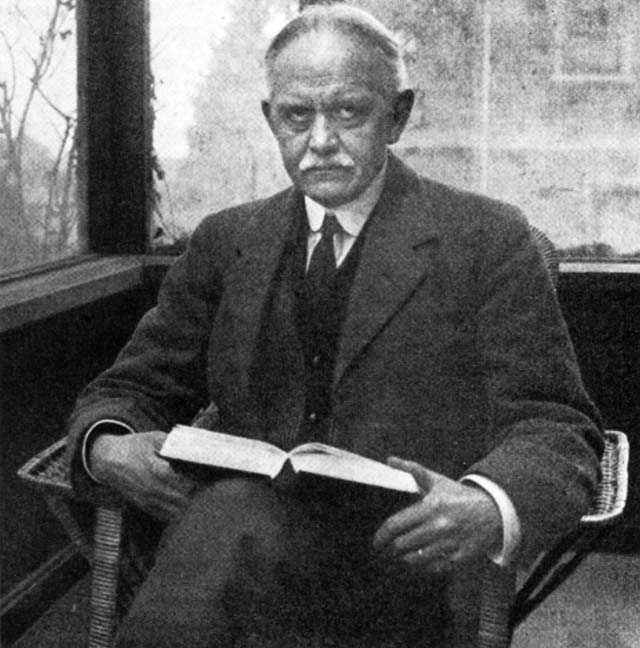
So passed, in firm certitude of the reality of the spiritual life, Charles Mills Gayley, a man made in the grand and generous style, who for thirty-four years had been a vital and shaping force in the history of the University of California and of his adopted State, and in wider circles both in America and England. His life of service was one of international contact. He was the recipient of many distinguished honors for his services in teaching, in scholarly contributions to knowledge, in a noble and patriotic publicism. By further services he returned these honors to the world. His influence lives in his many literary works, the measures he initiated and fostered at home and abroad, and the special groups of his fellows which he founded, or to which he belonged as a loved leader. But it lives yet more powerfully in the hearts of thousands to whom he revealed the glory of the higher life, the nobler pursuits, and, by personal example, the white magic of greatmindedness.
His chief pleasure was in his family life, into which he brought by friendly adoption hundreds of students. He believed thoroughly in youth; he was not censorious of its shortcomings. He had a genius for friendship and good counsel. He had an unfailing sense of humor. He hoped that his student friends would remember some of the funny things he had done and said. He could be a good hater. He was mighty in righteous indignation. He detested cynicism. His vocation, informing all else in his affections, was to the 'Great Books' of the world, wherein his spirit was profoundly tutored. He read poetry aloud with a golden voice. He interpreted it eloquently. He believed that great poetry is a man's business. He loved great books for their humane messages of and to noble lives. "For after all," he said, "the goal of all study is service to humanity." Part and parcel of this devotion to noble literature was his leadership in the war, by which he exalted the patience, endurance, and sacrifice of that disaster to the level of the best that has been known and thought in the noblest literature of the past. To his fellows he was a revelation of "the glory of a lighted mind."
The funeral was held at his home, July 27. White lilies and the doctorate's hood of Glasgow lay on the casket. As Bishop Parsons read the service, the afternoon sun suddenly came through the west window and touched the tips of the white flowers, and spread slowly over them until they were effulgent. Then one ray touched the blood red of the hood, another the crimson; and, as the service ended, there shone for a little while above the flowers and the hood a brilliant, glowing crown of light.
AMONG THE MANY helpful letters that have been received during the preparation of this biography, the following description of Dean Gayley in his family life is unique; and it is printed here in its entirety. The writer is Miss Rowena Beans, a lifelong, intimate friend of the family.
His gift of friendship was all-embracing; the humblest to the most exalted could claim him as a friend. To the servants in the house he was an idol: they all worshiped him. I think especially of old Jack, the Chinese cook, who had lived with them for years. He would have laid down his life for Mr. Gayley.
Jack had an enormous family and Mr. Gayley knew them all and helped them in many ways. Very often when he was breakfasting or lunching alone they would have long conversations about many things. I can see Jack now with a dishcloth thrown over his shoulder standing near the table talking. At one time they carried on a conversation for weeks about a hummingbird they were watching as she built her nest. They discussed her habits and why she did this and that.
He was always ready to listen and to learn from anyone. It was a great privilege to talk to him upon any subject because of his innate respect for another person's point of view. Very often he would say, "I hadn't thought of that. I believe you are right." The true humility of a great mind!
We had only glimpses of him during the day. Sometimes when having a late luncheon by himself he would hail us with a friendly greeting, and always, "I must get back to my work." Very often it was fourteen hours with intervals for meals and perhaps a nap. His capacity for work was tremendous.
One time when Mrs. Gayley arrived from an eastern trip after an absence of many weeks, he was just starting upstairs to his study as she entered the front door. He turned to see who it was and said in the most casual way, "How do you do, my dear?" (all the while ascending). "I will see you later---I am very busy now." He had a most understanding wife, with a keen sense of humor. He was usually too tired to join the family circle after dinner and would sit alone in his library reading and smoking until bedtime---rather a late hour, as a rule.
But at dinner he relaxed and was often in a gay mood and ready to be amused and to enter with zest into the table talk. His greatest joy was to get a rise out of anyone who was foolish enough to bite. When his children were young he would invent the greatest cock-and-bull stories, which they always fell for, to his great delight.
His breakfast hour was very uncertain---anywhere from seven to eleven. One morning I came down at half-past eight, the usual hour for the family, and found him there alone, deep in the morning paper. Like most men, he disliked being disturbed when reading the paper and enjoying his coffeecup after cup (usually four), with cream and lots of sugar. Before I could speak, he looked up from under stormy brows and flashed his luminous brown eyes at me and remarked very crisply indeed, "Good morning. I want to read my paper." 1 answered just as crisply, "So do I," and picked up the other half of the Chronicle and retired behind it. Presently a soft, delightful voice said, "There is something very interesting here that I want to read to you, Rowena." The rest of the breakfast was one of my most delightful experiences.
Mr. Gayley was always great fun at Christmas and he entered heartily into the spirit of it. He loved to help the children trim the tree the night before. We had our presents in the living room after breakfast, Christmas morning. The children could never wait for him. But after a leisurely breakfast he would saunter in when all the excitement of opening our presents was over, and put on such a show, to the delight and torment of his children and the rest of us, too! He would sit in his chair near a table piled with his presents and before he would even commence to untie the ribbon he would speculate as to the giver and the gift. Then he would read the attached card. Perhaps it would say "Daddy from dear Betty." "Now, I wonder what it is" (feeling it and turning it about); "it must be a necktie." Finally, in desperation, Betty would exclaim, "Oh, Daddy, hurry up and find out! " But no amount of urging would hasten him. Carefully he would untie the ribbon and wind it up; then remove the paper and neatly fold it; and at last discover the present, always with exclamations of pleasure: "Just the color I like!" or "I shall enjoy reading this book," etc.
We always sat down ten or twelve to Christmas dinner, relatives and friends; his gay mood continuing: teasing, laughing and joking. After dinner we often played charades, he the leader and principal actor. He always did his part with delicious humor. The evening usually ended with the singing of Christmas hymns and songs, at his suggestion.
It was an interesting and delightful experience to be with the Gayleys in London in 1925 when Mr. Gayley was the head of the American Universities Union. He never spared himself and worked hard and beyond his strength and often declined interesting invitations for the sake of his job. But I am sure the distinguished recognition that he got as one of the outstanding scholars of his time must have been gratifying. He was one of the literary figures that year in London. He had delightful connections with the Athenaeum and Savile clubs as an honorary member and often told us of the interesting and distinguished men whom he met there.
We lived at Queen Anne's Mansions and he enjoyed frequent walks in near-by St. James's Park. He would often regale us with tales of the many waterfowl that he saw there, and their antics. At one time he was especially interested in a Mallard duck and her brood that were always accompanied by a Brant goose---the duck sailing ahead followed closely by her ducklings, and "Miss Brant Goose," as he called her, solemnly bringing up the rear like a sedate nurse. He was intrigued and mystified as to the reason of her devotion. "Or was it devotion? Or had she been hired as a nurse?" She was a stately creature with great dignity and a certain primness in her demeanor, quite like an English Nanny, even to the stiff white feather collar around her neck. One afternoon I saw them swimming slowly toward the bank. Mrs. Mallard went ashore, followed by her family, but "Miss Brant Goose" stayed in the water, patroling back and forth with watchful eyes to see that they were undisturbed while they took a nap. There was more speculation; and where was Mr. Mallard? The mystery was never solved.
Mr. Gayley could seldom be persuaded to go to the theater, but when Mrs. Gayley and I came back enthusiastic over Marie Tempest in Noel Coward's Hayfever, he succumbed and we all went and had a hilarious evening together. His hearty, unrestrained laughter was highly contagious. However, when Sir Philip Ben Greet, an old and devoted friend, invited and urged him to go to see him in As You Like It, which he was playing that summer in London, he replied, "No, thanks, my dear fellow; I don't like to see Shakespeare acted!"
The sense of the dramatic was very strong in him; sometimes it was quite unconscious, but often it was just playacting, which he enjoyed as much as the rest of us. I shall never forget when we were together in Florence in 1906, taking a walk with him, Mrs. Gayley, Betty (aged four), and the French nurse. As we were strolling across the Ponte Vecchio, Betty's little red silk umbrella, which was her most prized possession, was suddenly turned inside out by a gust of wind and she proceeded to have a tantrum accompanied by loud screams that spoiled the afternoon for him. He turned on us and exclaimed, "Good God, take her away! I can't enjoy my walk with that child making such a row."
However, his children were never afraid of him. They doted on him. Sometimes they put him in his place, but he never really resented it and was very often amused, and sometimes he returned the compliment.
Betty had a bad habit of taking his particular shears from his desk to cut paper dolls. It was an unwritten law that they should never be touched. One evening she was sitting on the sofa in the living room with her back to the door into the library, when her father came in and said in stentorian tones, "Who has my shears?"---appealing to the room in general. "Everybody knows that they are never to be taken from my desk." With a most casual air Betty handed them to him over the back of the sofa without even looking up, and murmured, "Blue Beard!" He took them without a word, but there was a twinkle in his eye which she did not see.
His recreations were golf, cards, and his garden. He loved his garden and for years took a very active interest in it. He had the gardener's touch that made plants grow. He was especially proud of the fruit trees that yielded abundantly, even in Berkeley's foggy climate.
He greatly enjoyed a game of bridge. He could not bear to lose, and he rarely did. He always held good cards; and he was a skillful player, although he didn't bother much with all the new rules that people liked to spring on him.
Here is one of Mrs. Gayley's best stories about her husband. Mr. and Mrs. B., friends and neighbors who often played with them, were having a game at the Gayley's one evening; everything was going smoothly (that is, Mr. Gayley was winning), when Mrs. B., his partner, trumped his ace and they lost the game. He threw down his cards and said, "I can't play with anyone who trumps her partner's ace!" That finished the evening. After they had gone, Mrs. Gayley said, "Charlie, you have disgraced us." By that time he was very contrite. Reduced to a state of abject remorse, he replied, "What can I do about it?" She said, "You must go over and apologize on your knees!" And he did.
He was nervous and high-strung. He hated to be disturbed when he was at work. He hated being awakened at night by screaming college boys or barking dogs. Yet he never minded if anyone was ill and needed watching or nursing. Then he was as patient and tender as a. woman and knew instinctively what to do to make the sick person comfortable. When his wife was desperately ill and not expected to live, he slept on a cot at the foot of her bed in the hospital until she was out of danger.
I could go on indefinitely, but I hope that what I have told you has given you some idea of Mr. Gayley in his private life in daily contact with his family and friends. His charm and lovableness, his humor, his sense of justice, his charity toward all, his generosity, his fearlessness, his loyalty: these are the attributes that made friendship with him a priceless thing for anyone who was fortunate enough to possess it.