JOINED the U.S.N.R.F. in Feb., 1917, as a Quartermaster of the 2nd class, and went on active service Apr. 6. Served on a patrol boat until July, 1917, and was transferred to U.S.S. Columbia, which did transatlantic convoy duty until the signing of the armistice. Commissioned Ensign, U.S.N.R.F., in June, 1917; Ensign, U.S. Navy, in Nov.; and Lieutenant (j.g.) U.S. Navy, in June, 1918. Resigned Feb. 12, 1919.
1ST Lieutenant, 71st N.Y. Infantry, mobilized to guard bridges, etc., from March to May, 1917. At the 1st Plattsburg Camp from May to August, 1917; commissioned Captain, Ordnance Department, Aug. 15, 1917; Student Officer, Watervliet Arsenal, in Sept.; Commanding Officer, Ordnance Depot Co. 5 at Watervliet and for the journey overseas until Dec., 1917, when the company was disbanded at Nevers, France. Student Officer, Army Schools, Langres, France, from Dec., 1917, to March, 1918. Assigned to duty with 2nd Section, General Staff, A.E.F., at General Hq., Chaumont, from March until Dec., 1918. With the American Section, Interallied Armistice Commission, Spa, Belgium, in Dec., 1918. Returned to America in Jan., 1919, and was discharged Feb. 18, 1919.
VOLUNTEERED in Aug., 1918, and was called to active duty Oct. 21. Served on Bumkin Island and at the U.S. Naval Training Station at Hingham. The men here were selected and permitted to take examinations which, if passed, would entitle them to a commission, usually as Ensign. Prevented from taking this examination by the armistice. Honorably discharged Dec. 21, 1918.
ENLISTED as a Boatswain, U.S.N.R.F., 5th Naval District, in June, 1917. Promoted to Ensign, U.S.N.R.F., July 1; Ensign, U.S. Navy (temporary commission) Sept. 15; Lieutenant (j.g.) U.S. Navy, (temporary commission) June 1, 1918; Lieutenant (senior grade) U.S. Navy (temporary commission), Sept. 21. Served from July to Sept., 1917, in 1st Reserve Officers' Class, U.S. Naval Academy; from Sept., 1917, to Jan., 1919, on U.S. Battleship Utah off the U.S. and Irish coasts; from March, 1919, to June, 1919, on U.S.S. Agamemnon, a transport running between New York and Brest. Resignation accepted June 25, 1919.
ENTERED the service Feb. 5, 1917. Served with the following organizations: 1st Aero Squadron, as Flight Commander; 12th Aero Squadron, as Commanding officer; 5th Corps Observation Group, Commanding Officer; Corps Observation Group, 1st Army, Commanding Officer. Received the following promotions: Sergeant, Feb. 5, 1917, Aviation Section, S.E.R.C.; 1st Lieutenant, May 10, 1917, Aviation Section, S.O.R.C.; Captain, Aug. 1, 1918, A.S.; Major, Apr. 23, 1919, A.S. Discharged May 27, 1919. Was awarded the Distinguished Service Cross and the Croix de Guerre. Took part in the following engagements: Marne-Aisne, St. Mihiel, Argonne-Meuse. The citations follow.
The Distinguished Service Cross:
"For extraordinary heroism in action near Châtel Chéhéry, France, Oct. 16, 1918. Capt. Noyes volunteered under the most adverse weather conditions to stake the advance lines of the 82nd Division. Disregarding the fact that darkness would set in before he and his observer could complete their mission, and at the extremely low altitude of 150 feet, Capt. Noyes proceeded, amid heavy aircraft and ground machine-gun fire, until the necessary information was secured. On the return, due to darkness, he was forced to land on a shell-torn field, and proceeded on foot to Headquarters with valuable information."
For the Croix de Guerre:
"Pilote de premier ordre, calme et brave, modèle de devoir pour son escadrille. Le 6 juillet 1918, attaqué une première fois par une patrouille ennemie, la dispersa par sa manoeuvre hardie et permit à son observateur de prendre les photographies désirées. Attaqué une deuxième fois, a abattu un de ses adversaires au cours d'un sévère combat; a terminé son vol par une reconnaissance à 500 mètres d'altitude dans les lignes allemandes."
ENLISTED in the Regular army May 16, 1918, and was assigned to the 4th O.T.C., Camp Devens, Mass. Transferred to the F.A., O.T.C., Camp Zachary Taylor, Ky., June 29. Commissioned 2nd Lieutenant, F.A., and assigned as Instructor to the F.A., C.O.T.S., Camp Zachary Taylor, Aug. 16. Discharged Dec. 21, 1918.
MEMBER of the Illinois State Council of Defence. In July, 1918, ordered before the U.S. Army Examining Board, Central Department, Chicago. Took and passed examinations for the Major Adjutant General's Department and the Inspector General's Department. Commissioned Major in the Adjutant General's Department, U.S. Ill. N.G., and was later transferred to the Inspector General's Department, with rank of Major. Not called to active service before the armistice.
Post of actual service in Regular army, C.O.T.S., Camp Lee, Va., from Sept. to Dec., 1918. Discharged after the signing of the armistice, before receiving reserve commission. With various Plattsburg and R.O.T.C. camps, etc.
ENLISTED in the Navy for aviation in Apr., 1917. During the summer trained in a corps with twelve others at Mastic, L.I. Called to active service in Sept., and sent to the Ground School at the Massachusetts Institute of Technology. Thence assigned to the Naval Air Station at Hampton Roads, Va. Commissioned Ensign at Pensacola, Fla., in Feb., 1918, and returned to Hampton Roads. Made Lieutenant (j.g) in May, 1918, and Lieutenant (s.g.) in Oct. Had received foreign orders when the armistice was signed. Ordered to inactive duty in Dec., 1918.
WITH the Harvard R.O.T.C. from Apr., 1917, to June, 1918; as Cadet Captain from June, 1917, to June, 1918. Enlisted as a Private in the U.S. Marine Corps, June 23, 1918, and was assigned to the 192nd Recruit Company, Paris Island, S.C. Transferred July 29th to the Balloon Company, Heavy Artillery Force, U.S. Marine Corps, at Quantico, Va. Assigned to the Marine O.T.C. at Quantico Aug. 20, and commissioned 2nd Lieutenant in the Marine Corps Reserve Dec. 16. Assigned as Instructor, 3rd Marine O.T.C. at Quantico, Jan. 2, 1919. Discharged as 2nd Lieutenant, Marine Corps Reserve, Jan. 29, 1919.
WITH the Harvard R.O.T.C. from May 14 to Aug. 15, 1917; the 2nd Plattsburg O.T.C. from Aug. 27 to Nov. 27; and commissioned Captain of Infantry, U.S.R., Nov. 27. Reported at Camp Devens, Dec. 15, and was assigned to the 304th Infantry. Left Camp Devens for overseas July 8, 1918. Served with the 3rd Depot Division from July 28 to Nov. 8, and in the replacement camp at St. Aignan from Nov. 8 to Jan. 8, 1919. With the 320th Infantry from Jan. 8 to May 30. Arrived in the U.S. May 30. Discharged at Camp Sherman, O., June 9, 1919.
COMMISSIONED 2nd Lieutenant of Infantry, Aug. 15, 1917, at the 1st Plattsburg Camp, and Sept. 4 assigned to the M.G. Company, 167th Infantry, 42nd Division. June 1, 1918, assigned as Liaison Officer at 843rd Brigade Hq. July 31, 1919, wounded in action near Sergy, France, and returned from the hospital to the M.G. Company, 167th Infantry, Dec. 20, 1918. Took part in the following battles and engagements: Luneville sector, Feb. 22 to March 24, 1918; Baccarat sector, March 27 to June 28; Aisne-Marne defensive, July 14 to 18; Aisne-Marne offensive, July 26 to 31, 1918. With the Army of Occupation from Dec. 20, 1918, to Apr. 5, 1919. Honorably discharged May 2, 1919, at Camp Upton, L.I.
JOINED the Norton-Harjes Volunteer Ambulance (later the A.R.C. Ambulance), June 21, 1917, as a Volontaire, and served in the Lorraine sector, Hq. at Baccarat, until Oct. Joined the A.R.C. in Oct., with the rank of 1st Lieutenant, and was promoted to Captain in May, 1918. Served as Assistant to the Chief, Home Communication Service, until Jan. 12, 1919.
SERVED in the A.A.F.S. during the summer of 1916. Called to active duty as 1st Lieutenant, Med. C., Apr. 16, 1917, examining recruits in New York. Sailed for France with Base Hospital 2 May 14, which unit took over General Hospital 1, B.E.F., at Etretat. Served with this unit until May, 1918, except for two months in Flanders and near Bapaume while detached for duty with casualty clearing stations.. Detached from the B.E.F. in May, 1918, and attached to Mobile Hospital 2, A.E.F. The mobile hospital functioned in the Champagne defensive July 14-15, and the Château-Thierry, St. Mihiel and Argonne offensives. After the armistice it was ordered into Germany with the Army of Occupation, but soon ordered to return to the U.S. Promoted to Captain in Aug., 1918. Mustered out of the service Feb. 13, 1919.
FROM June 1, 1917, to Aug. 15, with the Harvard R.O.T.C.; Aug. 21 to Nov. 27, 2nd O.T.C., Fort Oglethorpe, Ga.; Dec. 1 to Dec. 18, 321st Infantry M.G. Co., Camp Jackson, Columbia, S.C., as 1st Lieutenant of Infantry; Dec. 18 to Feb. 10, 1918, 2nd Motor Mechanics Regiment, S.C., Camp Hancock, Ga.; March 20 to Apr. 15, Assistant M.G. Instructor, A.S., S.C., Issoudun, France; May 1, Company A, 4th M.G, Battalion, 2nd Division, from June 14 to Oct. 14 commanding Company A. Oct. 14, ordered to the U.S. as M.G. Instructor, with rank of Captain. From Nov. 9 to Dec. 1, on sick leave. From Dec. 1 to 21, M.G. Instructor, Camp Hancock, Ga. Dec. 21, 1918, ordered to inactive duty with reserve. Took part in the following battles and engagements: May 1-18, Verdun, training sector; June 3-21, Bois de Mariette, between the Paris-Metz road and Château-Thierry; June 21-July 6, Bois de Belleau; July 18-19, surprise attack south of Soissons-Vierzy; Sept. 12-14, St. Mihiel, Limey-Thiaucourt sector; Oct. 6-12, Blanc Mont Ridge. Received the following decorations: Croix de Guerre, Bronze Star, Bois de Belleau; Croix de Guerre, Silver Star, Vierzy; Croix de Guerre, Palm, Blanc Mont Ridge. The 4th M.G. Battalion was cited several times. The citations for the Croix de Guerre follow.
"On July 18 and 19, 1918, near Vierzy gave proof of courage and initiative in commanding his company which was under enemy artillery and machine gun fire."
"He led his men during the engagement of October 8, 1918, to within a kilometer in front of the Medeah farm, under violent machine gun and artillery fire, without losing a single man. He inspected without discontinuing the arrangement of his troops under heavy artillery fire, displaying the greatest disregard of danger."
"During the operations in the Belleau Woods, he commanded his company with much coolness and ability."
RE-ENTERED the service Oct. 8, 1917, as a Major in, the Inspector General's Department. Served six months as Assistant to the Department Inspector, Northeastern Department. Transferred to New York, and served six months as Assistant to the Department Inspector, Eastern Department. Ordered overseas, and assigned as Inspector General, 5th Division (Regular) and served with them two months. Ordered to hospitals in the south of France on account of illness, and was in them three months. Arrived home Apr. 2, 1919, and was assigned to duty in command of the Northeastern District, representing the Office of the Assistant to the Secretary of War, Service and Information Branch, coordinating the different agencies that are securing positions for returning enlisted men of all services. Still in the service, Nov. 1, 1919.
APPOINTED Midshipman in the U.S. Navy in June, 1908; commissioned Ensign in July, 1912; Lieutenant (j.g.) in July, 1915; Lieutenant (temporary) in Aug., 1917; Lieutenant in June, 1918; and Lieutenant Commander (temporary) in Sept., 1918. Engaged in destroyer anti-submarine offensive and convoy escort operations in the Eastern Atlantic and the Bay of Biscay during the war.
BENJAMIN FRANKLIN PEPPER, the son of the late Dr. William Pepper and Frances Sergeant (Perry) Pepper, was born on the twenty-first of January, 1879, in Philadelphia. He attended Forsyth's School until 1892, when he entered St. Mark's in the Third Form. He played on two baseball teams, and was a monitor. He graduated from the University of Pennsylvania in 1901, and after a course in the Law School, engaged in the practice of law with George Wharton Pepper. He served in Battery A of the Philadelphia Volunteers during the Spanish War. After training at the Plattsburg Camps in 1915 and 1916, he attended the Reserve Officers' Training Camp at Fort Niagara; and when the United States entered the war he received his commission as Major, was assigned to Camp Meade as Commander of the Second Battalion, 313th Infantry, and in the early spring went overseas. He had been married to Miss Rebecca Willing of Philadelphia, and one of their three children, the oldest son, is a member of the School.
Pepper was killed in his first big engagement, the taking of Montfaucon by the 313th Infantry. Warning had been sent back to the Battalion Headquarters that the position was all but impregnable, because the soldiers had come upon an open tract surrounded by trees in which the enemy were posted with machineguns. But Pepper accepted the challenge, and himself went forward and led his men in the front line. In crossing the open space he was killed by a sniper. The following is a citation sent and signed by General Pershing: "For gallantry in action near Montfaucon, France, September twenty-sixth, 1918, and for his brilliant leadership. Major Benjamin F. Pepper (deceased) 313th Infantry, for efficient handling of his battalion in action September twenty-sixth, 1918, and for disregard of his personal safety in exposing himself, thereby setting an example to the men of his battalion until he was killed in action in the approach to Montfaucon, September twenty-sixth, 1918." He is buried at Romagne, the American cemetery in the Argonne.
Two years before the United States entered the war Franklin Pepper had read the signs; and at the age of thirty-eight, leaving his family, laying aside a career of enviable prominence at the bar, and later refusing an opportunity for promotion because it meant assignment to service at home, he gave himself up to his duty. The formal account of his work is brief: his natural, mature ability as a leader quickly raised him from the ranks, sent him at once to the front, and brought him immediately face to face with the supreme test of the soldier, the alternative of a sheltered position or the pure courage to advance against unknown odds at any personal risk for the sake of his duty. He chose the latter, of course, and he died; but he had done his work.
St. Mark's has among both her living and her dead many whose military careers were longer and more varied than his; but of spontaneous patriotism and pure bravery she has no grander example than Franklin Pepper. Neither has America a more splendid example of the eternal, unconquerable spirit which generation after generation rings true, and calls her young men to arms and victory in a just cause, than this descendant of Commodore Perry and Benjamin Franklin. It was men of the quality of Franklin Pepper who proved at once and conclusively that an irresistible force, a power whose essence was all that is true and just and devoted, had been aroused to decide the issue then and forever. And in this crisis he was a pioneer and a leader as surely as when he led his men against the hidden machine-guns of Montfaucon. For in such as he, grievous as his loss is to his friends and to the community he honored, the wise foresight and reason of the man were combined with the inextinguishable ideals of youth which we knew at school; and through them American manhood came into its own.
JOINED the Med. R.C., U.S. Army, Apr. 12, 1916, and was commissioned 1st Lieutenant. March 21, 1917, automatically transferred to the Medical Section, O.R.C., as 1st Lieutenant. Kept from active service by teaching position in the Medical School, University of Pennsylvania, until towards the end of the 1917-18 session. Ordered to active duty at Base Hospital, Camp Meade, Apr. 22, 1918, and there acted as Assistant Chief of Medical Service. July 3, transferred to Base Hospital 69 forming at Camp Meade for overseas; July 18 commissioned as Captain, Med. C. August 20 commissioned as Major in the Med. C.; and Aug. 22 sailed for France ahead of Base Hospital 69. From Sept. 20 to Oct. 31 acted as Chief of Medical Service, Base Hospital 34, at Nantes; and from Nov. 1, 1918, to June 6, 1919, acted in the same capacity at Base Hospital 69, at Savenay, Loire Inférieure. May 2, 1919, commissioned as Lieutenant-Colonel in the Med. C. June 29 arrived in the U.S., and was honorably discharged July 3, 1919.
ENTERED the service as a Private at Camp Meade, Md., Jan. 2, 1918. Organization, Company A, 310th M.G. Battalion, 79th Division, N.A. Left the U.S. for foreign service July 8, 1918; was appointed Corporal Dec. 1, 1918; arrived in the U.S. from France May 26, 1919; and was honorably discharged from the U.S. military service at Camp Dix, N.J., May 29, 1919. Took part in the following engagements, etc.: Sector 304, Sept. 15 to 25, 1918; Meuse-Argonne, Sept. 26 to 30; Troyon sector, Oct. 7 to 22; Meuse-Argonne offensive, Nov. 1 to 11, 1918.
WENT to France Feb. 9, 1918, as a Y.M.C.A. Secretary,. and for seven months worked in "Les Foyers du Soldat," stationed with the French 6th Army at the front. Commissioned 2nd Lieutenant of Infantry in Oct., 1918, in Paris. Detailed for work in the Liaison Service, and stationed at Bourges until Dec. 1, 1918, and then at Paris until March 4, 1919, when discharged.
ENLISTED in the Naval Militia of Mass, in March, 1916, as a Seaman, and was promoted to Ensign in March, 1917. Called out March 31 for active duty on U.S.S. Rodgers as Navigating Officer. In May, 1917, commissioned Ensign, U.S.N.R.F. Jan. 1, 1918, detached from the Rodgers and assigned to duty on the Examining Board of the 1st Naval District Enrolling Office. Feb. 11 assigned to U.S.S. Lakewood as Watch Officer, and later as Navigating Officer: mines and mine supplies from Norfolk to Scotland. From Aug. 30 to Feb. 1, 1919, served in the office of the Supervisor, 5th District, Naval Overseas Transportation Service. In June, promoted to Lieutenant (j.g). From Feb. 1 to May 10, served as Navigating Officer on U.S.S. Canton, and from May 16 to June 16 as Captain on U.S. Trawler George Burton. Commissioned Lieutenant (s.g.) (temporary) June 23. Released from active duty July 22, 1919.
JOINED the Harjes-Norton Ambulance Corps, A.R.C., at the end of Feb., 1916, and was sent to the front at Verdun March 4 for duty with S.S.U. 5, "Formation Harjes." Served as Volunteer Driver five months, and in command of the section nine months. Transferred in May, 1917, to the command of Section 21, A.R.C. Left the A.R.C. in July, 1917, and returned to the U.S. Entered the Second Plattsburg Training Camp, graduated as 1st Lieutenant, and was assigned to Camp Dix, N.J. Sent to the Balloon School, Fort Omaha, Neb., for special training; was recalled at the end of May, 1918; and proceeded to foreign service with the 308th F.A., May 26. Trained at Camp de Meucon, Brittany, three months. Returned to the U.S. in the middle of Aug., 1918, for duty with new troops; was promoted to the rank of Captain, and assigned to Leon Springs, Tex., for duty with the 44th, F.A. Discharged Dec. 24, 1918.
SAILED for France Sept. 2, 1916, and joined section 5 of the Norton-Harjes Ambulance Corps. Returned to the U.S. Nov. 11, 1917, and joined the Royal Flying Corps in Canada Jan. 2, 1918. Instructed in aerial fighting and high manoeuvering at Beamsville, Ont. Took part in the following battles: Verdun, Nov. and Dec., 1916; Champagne, Apr., 1917; Somme, June, July and Aug., 1917; Chemin des Dames, in the vicinity of Vailly and Fort Malmaison, Sept. and Oct., 1917.
ENLISTED in the U.S. Marine Corps in the spring of 1917; commissioned 2nd Lieutenant in Oct. Stationed at Quantico, Va., from Oct. to March, 1918. Sent overseas in March with the 6th Regiment of Marines; landed in France in Apr. Fought at Belleau Woods, 2nd Lieutenant, 76th Company, 6th Regiment of Marines, from May 30 to June 12, and was seriously wounded on the latter date by a fragment of a high explosive shell. In the hospital at Chaumont for several months. Subsequently transferred to London, and assigned to the staff of Admiral William S. Sims, serving from Nov. 1, 1918, to Jan. 10, 1919. Returned to the U.S. at the end of Jan., and was assigned to the staff of Vice-Admiral Albert Gleaves, who was in charge of the Cruiser and Transport Forces, with Hq. at Hoboken, N.J. In March, 1919, given six months' sick leave; and at the expiration of this leave assigned to U.S.S. South Dakota, Flagship of the Asiatic Fleet, as second in command of Marines on board the Flagship. Present rank [Jan. 6, 1920], 1st Lieutenant, U.S. Marine Corps. [Report by Edgar Allan Poe.]
ENTERED the U.S. Naval Academy as a Midshipman June 30, 1913, and graduated June 7, 1918, as Ensign. Served on board U.S.S. Wyoming as a Midshipman during the summer of 1917. Upon graduation from the U.S. Naval Academy was ordered abroad to U.S.S. New York, flagship of the 6th Battle Squadron, British Grand Fleet. Served with that vessel in the North Sea, taking part in the surrender of the German High Seas Fleet. Still attached to the New York [Nov. 9, 1919]. Promoted to Lieutenant (j.g.) Sept. 21, 1918.
IN the Aviation Service at the Training Camp, Kelly Field, San Antonio, Tex.; at Atlanta, Ga.; Commanding Officer, 83rd Aero Squadron, Rantoul, Ill.; Commanding Officer, 83rd Aero Squadron, Langley Field, Hampton, Va.; and Adjutant, Brindley Field, Commack, L.I., N.Y. Left the service Dec. 15, 1919, with the rank of 2nd Lieutenant.
ENLISTED May 28, 1917, in the C.A.C. at Fortress Monroe. Transferred to the First Trench Mortar Battery, 1st Division, June 23, 1917, and left the U.S. Aug. 7. Made Corporal in Aug. In the Somervillier sector Oct. 27; the Toul sector Jan. 19, 1918; the Montdidier sector in Apr.; Cantigny May 28; Soissons July 18; Ansauville sector in Aug.; St. Mihiel Sept. 12; Argonne-Meuse in Oct.; and at the Saumur Artillery School Nov. 1. Returned to the U.S. May 1, 1919, and was commissioned 2nd Lieutenant, F.A., May 23. Discharged May 23, 1919. [Is not sure of all the above dates.] Was twice wounded, once on the Montdidier sector and once at Soissons.
SERVED with the American Ambulance at Neuilly-sur-Seine: Driver, Nov., 1914; Squad Director, Dec., 1914; Section Director Adjutant, Feb., 1915. Resigned May 1, 1916. Served with the A.R.C. in Italy: Sergeant Major, Dec., 1917; Captain, Jan. 1, 1918. Stationed at Milano, Italy, in charge of accounts, office management, ambulance supplies, and as Censor. Honorably discharged Jan. 3, 1919. Decorated with the Service Medal of Italy. Knight Officer of the Crown of Italy.
"To the Italian Committee of the American Red Cross: I am very happy to convey to you the information that as the result of an army citation, dated Jan. 5, 1919, Mr. Régis Post, a captain of your highly benevolent organization, was nominated an officer of the Order of the Crown of Italy, notice of which will be officially communicated to him. The nomination was the result of his unwavering and highly successful work as an organizer in the distribution of Red Cross aid to the army, refugees, or wherever it was needed. This aid had an unqualified effect on the morale of the army and the people, and helped immeasurably to strengthen the ties of friendship already existing between Italy and the United States. In transmitting this information will you be good enough to convey to Captain Post my most hearty congratulations on his winning of a distinguished honor. Sincerely,
"The Lieutenant .General Commanding the
Army Headquarters,"CAMERANA."
"Royal Italian Army Minister of War. Captain Régis H. Post, of the Italian Commission of the American Red Cross is entitled to carry the insignia established by the Royal decree of the 21st of May, 1916, number 641. Rome, 17 Nov., 1818.
"Signed for the Minister of War, "F. QUPELLI."
SERVED in the Infantry at the Plattsburg Camp in 1916, and in the Cavalry afterwards. Attended the Harvard R.O.T.C. in 1916 and 1917. At West Point in 1917 and 1918. U.S.M.A. Instructor, F.A., at the Training School at Camp Taylor, Ky. Present rank, Lieutenant, F.A., R.C.
ENTERED the service in Apr., 1917. Chief Petty Officer, U.S. Navy, attached to U.S.S. Tingey. Put on the inactive list in Aug., 1919.
ENLISTED in the U.S. Navy as a Seaman June 2, 1917, and was discharged Sept. 22. Commissioned 1st Lieutenant in the U.S. Army Sept. 15, and Oct. 9 placed in command of the 59th Aero Squadron. Commissioned Captain, A.E.F., Jan. 15, 1918. Transferred to Commanding General B.S. 3 as Aide-de-Camp, Aug. 1. Discharged Apr. 21, 1919. Made a member of the Victorian Order by H.R.H. the Prince of Wales on board H.M.S. Renown in New York, Nov. 22, 1919.
ENTERED Plattsburg in May, 1917. Commissioned 2nd Lieutenant, Infantry, in Aug.; 1st Lieutenant, A.S., in Nov.; Captain, A.S., in Feb., 1918; and Major, A.S., in Nov., 1918.
WENT to the Plattsburg Training Camp in May, 1917. Made Captain of Infantry Aug. 15, and assigned to the 307th Infantry, 77th Division, in Sept. Apr. 6, 1918, went abroad with the 77th Division. Served in the Lorraine sector in July; Marne-Vesle in Aug.; Argonne in Sept. and Oct. Made Major of Infantry, Oct. 12. Wounded by a machine-gun bullet Nov. 4, 1918. Received the following citation:
"Major John H. Prentice, 307th Infantry, for gallant and meritorious services when in command of the Second Battalion of the regiment at Oches, on November 4, where he exposed himself regardless of the enemy's fire to make changes in the disposition of his battalion then under heavy enemy fire, and was wounded."
ATTENDED the Saumur Artillery School from Dec., 1917, to Feb., 1918, and there commissioned 2nd Lieutenant, F.A., in Feb. Served with the Tank Corps in England and France; as Aide-de-Camp to Major-General M. Bailey; and from Aug. to Dec., 1918, at Hq., 81st Division. At the front near Verdun Oct.-Nov., 1918. Returned home in Dec., 1918, and was demobilized in Jan., 1919. [Report by William T. Preston.]
TRIED unsuccessfully for active military service with the Infantry. Commissioned Captain in the S.C., and assigned to the Finance Division. There organized and was in charge of the War Credits Department. Temporarily assigned to the General Staff in connection with the consolidation of all Finance Departments of the War Department. Promoted to the rank of Major, A.S (Production), and made Assistant to the Head of the Division of Purchases for all raw materials for the Bureau of Aircraft Production. After the armistice, made a Director of the Commercial Solvents Corporation, a company owned jointly by the British and U.S. Governments, as a Representative of the U.S. Government, and was for six or eight months actively engaged in liquidating contracts which had been entered into jointly by the U.S. and British Governments.
SERVED with the Harjes Ambulance Unit from March, 1915, to Sept. At the 1st Plattsburg Camp from May, 1917, to Aug. Commissioned 2nd Lieutenant, F.A., Aug. 15, 1917. At the Saumur, France, Artillery School from Oct., 1917, to Jan., 1918. Attached to the French General Staff College as Instructor in English from Jan. to March, 1918. In the Chief of Staff's Office at General Hq., A.E.F., from March to July, 1918. At Hq., 165th Infantry, 42nd Division, during July and Aug. Promoted to 1st Lieutenant, F.A., Aug. 10. At Hq., 63rd Infantry Brigade, 32nd Division, serving as Aide-de-Camp to Brigadier-General F. R. McCoy, in Sept., Oct., and Nov. At Hq., S.O.S., Tours, still as Aide-de-Camp to Brigadier-General McCoy, from Dec., 1918, to Feb., 1919. Returned to the U.S. and was discharged March 6, 1919. Served in the following actions: Champagne, Château-Thierry and Ourcq, Oise and Aisne, Argonne and Meuse.
ENTERED the U.S. Naval A.S. in July, 1917, as a Seaman of the 2nd class, and trained at the Mass. Institute of Technology and at the Air Station, Key West. Commissioned Ensign, and ordered to the Air Station at Miami; Squadron Commander there. Ordered to the Air Station at Pensacola for advanced training. Went abroad in July, 1918, and served at the air stations at Panillac, Moutchic, La Caneau and Brest in France. Promoted to Lieutenant (j.g.) at Brest. Ordered home in January, 1919, and put on inactive duty at Key West in March. Total number of hours flying, 615.
ENROLLED in Naval Aviation as Quartermaster in Aug., 1918, for training as a Ground Officer. Trained at the Great Lakes Naval Training Station, and at the Hampton Roads, Va., Aviation Station. Commissioned as Ensign. Left the service in Dec., 1918.
ENLISTED in the U.S. Naval Reserve July 25, 1917, with the rank of Lieutenant (j.g.). Commanded a patrol boat operating off Block Island, R.I., until Jan., 1918, and was then transferred to U.S.S. Roanoke. In Feb. transferred to duty in the Office of Naval Intelligence, New York Branch, and remained there until Dec. 1, 1918, when placed on the inactive list.
ENLISTED at Norfolk, Va., in the U.S.N.R.F. as a Seaman of the 2nd class, June 3, 1917. Promoted to Ensign, U.S.N.R.F., Oct. 8, and sent to the U.S. Naval Academy. Graduated from the Reserve Officers' Class Feb. 1, 1918, with the rank of Ensign (temporary), U.S.N., and was ordered to U.S.S. Cincinnati. Promoted to Lieutenant (j.g.) Sept. 21, 1918. Resignation accepted June 3, 1919.
ENLISTED as a Private, U.S.A.A.S., Aug. 15, 1917. Transferred March 6, 1918, to the S.C., Aircraft Production. Promoted to Sergeant June 1, and to Master Signal Electrician July 1. Commissioned as 2nd Lieutenant, A.S., Aircraft Production, Nov. 5. Discharged Dec. 17, 1918.
ENLISTED in the U.S. Naval Reserve Apr. 22, 1917, as a 1st class Seaman, and was immediately assigned to duty on U.S.S. Harvard, a converted yacht. The Harvard sailed for Brest early in June, 1917, and did convoy and patrol work off the coast of France and in the mouth of the English Channel until the signing of the armistice. Remained on the Harvard until May, 1918; was then transferred to aid the Paymaster's force in unloading ships at Brest. Later sent to Marseilles, and thence home to be given a commission. Being too young to be given a commission, was released from active service in Sept., 1918, to return to college. Rating upon leaving, 1st class Boatswain's Mate.
ENLISTED May 3, 1917, as Quartermaster of the 2nd class, U.S.N.R.F. Was made Chief Quartermaster July 15; Ensign Oct. 4; Ensign in the U.S.N. Feb. 1, 1918; Lieutenant (j.g.) July 26, 1918. From May 3 to July 15, attached to U.S.S. S.P. 56, commanded by H. S. Vanderbilt, St. Mark's '03, and then until Oct. 4 was Aide to Lieutenant Vanderbilt on Block Island. From Oct. 4 until Feb. 1, attended the officers' class at Annapolis, Md. Feb. 1, attached to the new destroyer U.S.S. Gregory, building at Fore River, Mass. June 22, 1918, sailed from New York and arrived at Brest July 5. Arrived at Gibraltar July 12, and from then until Dec. 5 was engaged in escorting cargo transports from Gibraltar to Marseilles, except for time engaged in barrage work across the Straits of Gibraltar, Nov. 3 to Nov. 11. Sailed for the U.S. Dec. 5, on U.S.A. Cargo Transport Black Arrow. Resignation from service accepted Feb. 12, 1919.
RECEIVED a commission as 2nd Lieutenant of Infantry (provisional) at the 1st O.T.C. at Plattsburg in 1917, and sailed for overseas with the 9th U.S. Infantry in Sept. Made 1st Lieutenant Oct. 24, 1917, and Captain Oct. 24, 1918. Took part in the following major engagements: St. Mihiel Salient; Blanc Mont Ridge; Meuse-Argonne. Wounded at the Meuse-Argonne Nov. 3, 1918. Received the Croix de Guerre (Div. citation). With the Army of Occupation from Feb. to Aug., 1919. Arrived in the U.S. in Aug., 1919. Served during the entire period with the 9th Infantry, 2nd Division. Resigned commission and received discharge in Sept., 1919. The citation follows.
"Du 3 au 9 octobre 1918, près du Blanc Mont, par son sang-froid, sa bravoure, son courage, a su inspirer à ses hommes de l'élan pour l'attaque et de la tenacité pour conserver les positions conquises."
ENTERED the U.S. Navy May 24, 1917, with the rank of Coxswain. Sent with provisional rank of Ensign to Annapolis July 5, as member of the 1st Officers' Reserve Class from the 4th Naval District. Upon completion of the ten weeks' course there, the provisional rank of Ensign was confirmed. Ordered to report to U.S.S. Wyoming. U.S.S. Wyoming sailed for Scotland Nov. 21, and returned Dec. 9, 1918. She was one of five ships which comprised the 6th Battle Squadron of the British Grand Fleet. Was present at the surrender of the German High Seas Fleet. Received promotion to Lieutenant (j.g.) March 4, 1918, and was honorably discharged Mar. 3, 1919.
AT the Plattsburg Junior Camp in the summer of 1916, and the Harvard R.O.T.C. in the summer of 1918. Was to have gone to Camp Dix Nov. 12, the day after the armistice was signed.
ENLISTED in the Aviation Service Apr. 16, 1917, and trained in the 1st Government Aviation Class, at Mineola, N.Y. July 16, commissioned 1st Lieutenant, Reserve Military Aviator, A.S.S.R.C., and stationed as Instructor and Supply Officer, 9th Aero Squadron, at Selfridge Field, Mt. Clemens, Mich. Nov. 20, sailed for England, and there organized and commanded two American Aviation sections of several squadrons each, serving in conjunction with the R.A.F., at Grantham and at Spittlegate. After five months of service at these fields, transferred to the American A.S. Hq. at London, in charge of the technical training of all enlisted men in the American Army A.S. in Great Britain. In July, 1918, ordered to Scotland to command all American Army Aviation units there; directed the training of squadrons for service at the front. Recommended three times for promotion to a captaincy, but the promotion did not go through. [In one of the recommendations for promotion, Captain H.S. Lees-Smith, of the Royal Flying Corps, notes that he never had to take disciplinary action against any of the N.C.O.'s or men under Richards' administration.] Honorably discharged at Garden City, N.Y., Dec. 23, 1918. [Report by Mrs. C. F. Aldrich.]
ENLISTED as a Sergeant, S.E.R.C., Key West Barracks, Fla., March 1, 1917, and was commissioned 1st Lieutenant, A.S., S.O.R.C., June 25, at Miami, Fla. Stationed as Instructor at Kelly Field, San Antonio, Tex., from July 12 to Aug. 9. Commanding Officer, 22nd Aero Squadron, stationed at Leaside, Toronto, Canada, from Aug. 13 to Oct. 22. Stationed as Instructor at Scott Field, Belleville, Ill., from Oct. 22 to Dec. 24; and at Park Field, Memphis, Tenn., from Dec. 26 to Oct. 15, 1918, serving as Officer in Charge of Flying. Commissioned Captain, S.C., Regular army, Feb. 18, 1918. Ordered to the Port of Embarkation, Hoboken, N.J., Oct. 15, and remained there until Nov. 11, when ordered to sail. Turned back Nov. 12, and was discharged at Hoboken Dec. 9, 1918.
WITH the Harvard R.O.T.C. from June to Aug., 1917; at the 2nd Plattsburg Camp from Aug. to Dec., 1917, and commissioned 2nd Lieutenant of Infantry. Attached to the 313th Infantry, Camp Meade, Md., in Dec., 1917, and assigned to the Military Intelligence Division, Washington, in May, 1918. Commissioned 1st Lieutenant of Infantry in Aug., 1918, and assigned to the staff of the Commanding Officer, A.E.F., Siberia, as Assistant Intelligence Officer, Aug. 10. Made Military Control Officer, Port of Vladivostok, in Dec., 1918. Discharged at San Francisco, March 26, 1919.
1ST Lieutenant, 308th F.A., 78th Division. Entered the 2nd Training Camp at Plattsburg Barracks, N.Y., in 1917. Commissioned 1st Lieutenant, F.A.R.C., and assigned to the 308th F.A. at Camp Dix. Did overseas duty from May 8, 1918, but did not get to the front. Instructor in Firing, F.A., School of Instruction, Camp Meucon, France. Returned to the U.S. May 16, 1919, and was mustered out May 20, at Camp Dix.
ENTERED Troop D, Squadron A Cavalry, N.Y.N.G., June 25, 1917, and was taken into the Federal service Aug. 5. Transferred to Company B, 105th M.G., from the Cavalry, and then to the Interpreters' Corps, Nov. 22, 1917, to report at Fort Jay, Governor's Island, to sail abroad. Left Fort Jay Jan. 4, 1918, for France; landed Jan. 18; was sent to Blois, and put in liaison service between the French and Americans for three months. Transferred to the Labor Bureau, Paris; stayed two weeks; and was then sent to Toulouse until Feb. 3, 1919, and acted as Assistant in procuring civilian laborers for the U.S. Army. This branch was called the Army Service Corps. Transferred in March, 1919, to the Department of Criminal Investigation as a Detective. Worked in Bordeaux until departure for the U.S., July 24, 1919. Discharged Aug. 11.
ENLISTED March 17, 1917, in the U.S.N.R.F., as a Seaman of the 2nd class, and was put on active duty Apr. 6. Served on U.S.S. Aloha from July 5 to Sept. 15, and was then released from active duty to go to Harvard. In 1917 and 1918 took naval courses under Lieutenant-Commander Howell, and June 8 reported for active duty on U.S.S. Gregory, a torpedo-boat destroyer, and left Boston for New York June 12. June 23 sailed from New York for Brest, and arrived July 5. From July 12 to Nov. 26 did escort duty from Gibraltar to Marseilles. Dec. 2, went to Venice. Jan. 1, 1919, was made a Quartermaster of the third class, and Jan. 16 transferred to London, and there released from active duty Feb. 5.
ENTERED the Naval Academy Sept. 7, 1900, and graduated Feb. 2, 1904. Commissioned Ensign Feb. 2, 1906; Lieutenant Feb. 2, 1909; Lieutenant Commander Aug. 29, 1916; and Commander Feb. 1, 1918. Served from the beginning of the war against Germany until Jan., 1918, as Navigator, U.S.S. Virginia, and from that time until after the armistice as Executive Officer, U.S.S. Nebraska, convoying troops to Europe.
ENTERED the Federal service June 28, 1916, as Captain, 12th N.Y. Infantry; served on the Mexican border; and was discharged March 10, 1917. Again entered the Federal service in May, 1917, as Major, with duties as Brigade Adjutant, 53rd Infantry. Sailed for France in May, 1918. Served in Flanders and France with the 27th Division. Graduated from the A.E.F. Line School, and the A.E.F. General Staff College. Transferred to the 82nd Division as Assistant Chief of Staff G-3, and was promoted to Lieutenant-Colonel and assigned as Chief of Staff, 82nd Division. Returned as Chief of Staff, 82nd Division, and was discharged in May, 1919.
IN June, 1917, commissioned 1st Lieutenant, S.O.R.C., and resigned in Feb., 1918, never having been called to active service. In March, commissioned Ensign, U.S.N.R.F., Class 5, for general service, and placed on active service. Promoted to Lieutenant (j.g.). From March to Jan., 1919, attached to the office of the Superintending Constructor of Aircraft, U.S.N., New York, and for some time detailed as Production Inspector on flying boats N.C. 1, 2, 3, 4. Relieved from active service in Jan., 1919.
FROM Apr. 12 to Aug. 15, 1917, 1st Lieutenant in the A.S. Training Section, office of the Chief Signal Officer, War Department, Washington, D.C. From Aug. 15, 1917, to Feb. 21, 1919, Captain in the A.S. Sailed for overseas duty Oct. 29, 1917, arriving in France Nov. 11. Adjutant, St. Maixent A.S. Concentration Camp, from Nov. 29 to Jan. 5, 1918; Adjutant, 1st Pursuit Group, A.S., Jan. 5 to May 30; Operations Officer, 1st Pursuit, May 30 to Aug. 10, and received the Croix de Guerre with Palm. Operations Officer, A.S., 1st Army, from Aug. 10 to Aug. 26; Operations Officer, 1st Pursuit Wing, A.S., from Aug. 26 to Dec. 23 (General Hq., A.E.F. citation, citation Hq. Group of American Armies, A.S.); General Hq., A.E.F., from Dec. 23 to Feb. 20, 1919. Major, A.S., Feb. 21. Sailed for the U.S. Feb. 25, and was discharged March 31, 1919. Took part in the following actions: Champagne sector (quiet), from Jan. 5 to Apr. 30, 1918; Toul sector (quiet), from Apr. 30 to June 28; Château-Thierry sector (active), from June 30 to Aug. 12; St. Mihiel sector, from Aug. 26 to Sept. 20; Argonne-Meuse sector, from Sept. 20 to Nov. 11, 1919. The citations follow.
"As Operations Officer, Pursuit Wing, First Army, this officer, by his untiring efforts, combined with his remarkably tactical conception, rendered exceptionally meritorious service. By his splendid enthusiasm and energy, he inspired his subordinates and gave to the units of the First Army a splendid ESPRIT DE CORPS."
"Officier d'un dévouement et d'une conscience militaire admirables. Successivement au 1st Pursuit Group, puis l'Aéronautique de la première Armée américaine, a rendu les plus signalés services, a largement contribué au magnifique rendement de l'Aviation américaine dans les batailles de la Marne et de l'Aisne."
"For exceptionally meritorious and conspicuous services with Pursuit Wing, 1st Army, France, A.E.F."
ENLISTED in the Regular army Aug. 9, 1917, as a Private, and was assigned to the 38th Infantry. Made Corporal in Sept., and Sergeant about the end of Oct. In Dec., assigned to the 7 M.G. Battalion, 3rd Division. Left for France in Feb., 1918, and was later assigned to D Company, 9th M.G. Battalion. First engaged in action in the early part of June, and was wounded July 16 in the second battle of the Marne. Discharged March 25, 1919, with the rank of Sergeant.
ENLISTED in the Yale Naval Training Service in Aug., 1918, and was discharged in Jan., 1919. [Report by John Sanford.]
RALPH SANGER was born in Cambridge on the thirty-first of May, 1882. He was the son of Ellen Horswell and the late William T. Sanger. His grandfather was Judge George P. Sanger of the Supreme Court of Massachusetts, and his great-grandfather, after whom he was named, the Rev. Ralph Sanger, Unitarian clergyman, of Salem, Massachusetts. Sanger entered St. Marks in 1897 in the Fourth Form, and graduated in 1900. He graduated from Harvard four years later, just 100 years after his great-grandfather Zedekiah Sanger, whose portrait hangs in Memorial Hall. He engaged in several business enterprises after graduating from college, and was connected with the Morris Plan Banking Company just before entering military service.
In August, 1917, he volunteered at Plattsburg; graduated in November as Captain of Infantry; and in December was transferred to the Air Service, United States Army. He then went to the Aviation Fields at Austin and San Diego, Texas, and then to Mineola, where he got his "wings" as Captain in the Air Service, under Major Hitchcock. He went to France in Aug., 1918, and was there promoted to Third in Command of the Flying Field at Orly. He was accidentally killed while on flying duty on the twenty-ninth of August, 1918. He is survived by his wife, who was Miss Virginia Sturges Osborn. They were married on the sixteenth of November, 1904. Their only son, Fairfield Osborn Sanger, died in June, 1917, at the age of ten.
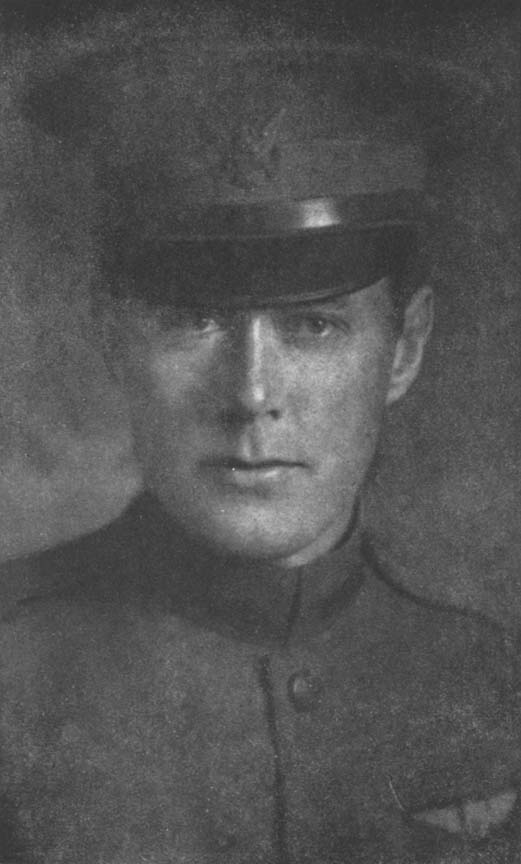
Ralph Sanger's strong personality at school can be analyzed into quiet industry, hearty and sincere friendliness, and a poise very unusual in his age. His toleration and self-reliance, free from egotism, made him one of the pillars of the school in his day, and brought him a respect and esteem which he never failed to justify. He was invariably and essentially a gentleman, and could have been nothing else under any circumstances of life. He had to a great degree the rare faculty of keeping his own counsel, and accepting the tasks of life as he did the rewards, with a calm, confident bearing, and without question or comment. The friendliness which he so freely extended to others therefore embraced a dignity and grace which at once won their confidence. His sense of humor was perhaps his basic mental quality, and is the key to his cheerful, even disposition and breadth of character.
His mature judgment and intelligent sympathies were invaluable in France, and were at once discovered and utilized. When made third in command at Orly, he was warned by a friend that he would meet with great difficulties; the Colonel in command was a very strict disciplinarian, and the pilots had been found to be somewhat at loose ends. Sanger saw them; saw as he expressed it, that they were "a fine lot of young college graduates"; instantly analyzed the difficulty as all work and no play, and set about constructing some sort of amusement centre for them, and establishing reasonable control over their Paris leave. There had been nothing for them to do when not flying, and the reaction in the city had been unwholesome. Purely of his own will, and further to command the respect of his men, he learned to fly every kind of machine himself, for he could not stand by in security while his subordinates took the personal risks. The inevitable result was not only better discipline and work, but the warmest affection and deepest respect and obedience from those under him. The testimony to this affection in letters received at his death is touching; and when the Colonel, who was putting up a building at Orly, allowed Mrs. Sanger to furnish it as a club, they at once asked that it should be named Sanger Hall.
Sanger was naturally endowed for responsibility and command. His own splendid balance never deserted him, and his judgment was invariably true and wise; but neither of these could have availed without the most conspicuous and pervasive of all: his boundless belief in his fellow-men, and his unfailing readiness to serve them.
FROM Dec., 1916, to May, 1917, Ambulance Driver in France, A.A.F.S. From Aug. 27 to Nov. 27, 1917, at the O.T.C. at Fort Niagara, N.Y., and there commissioned 1st Lieutenant on the latter date. From Dec. 15, 1917, to May 7, 1918, with the 165th Depot Brigade, Camp Travis, Tex. From May 10 to May 31, with the Military Intelligence Branch, Executive Division, General Staff, Washington, D.C. Sailed for France June 7. From June 20 to Oct. 20, Assistant to the Military Attaché, American Embassy, Paris, France. From Oct. 23 to May 29, 1919, with the 131st Infantry, 33rd Division, A.E.F., and from Nov. 6 to 11 in the line with them at Woel, France. During the winter of 1918-19, served with the 131st Infantry in Belgium and Luxembourg. Sailed for the U.S.A. May 14. Mustered out of service at Camp Upton, L.I., N.Y., May 31, 1919.
ENTERED the Office of Naval Intelligence about Oct. 1, 1917, as a Voluntary Aide. In Dec., made Executive Aide of the Office of Naval Intelligence, and received a Lieutenant's (U.S.N.R.F.) commission in the R.F. Dec. 26. Served until Aug., 1918, and then upon application was transferred to Naval Aviation in Aug., and ordered to Hampton Roads for a course of training. After a short period of training in the duties of Intelligence Officer and Communication Officer, involving sea patrol work, was ordered abroad and sailed Sept. 12, 1918. Attached to Admiral Sims' staff in London. Duty involved work in England, France and Belgium. Returned to this country early in Dec., and was placed on the inactive list in Jan., 1919. Resignation from the R.F. was accepted as of Apr. 21, 1919. Promotion to Lieutenant-Commander went through as of Apr. 1, 1919, after transfer to the Naval Reserve Flying Corps.
ENLISTED May 10, 1917, as a Private in the N.Y. Regiment of the O.T.C. at Plattsburg, and was commissioned 2nd Lieutenant of Infantry Aug. 15, and assigned to Camp Upton. There served on Cantonment Hq. Staff under Major-General J. Franklin Bell until Aug., 1918, and was appointed 1st Lieutenant in Jan., 1918, and Captain of Infantry in June. In Aug., 1918, transferred to the 12th Division at Camp Devens, and stationed there with varied duties until honorably discharged in Dec., 1918.
ENLISTED in the Regular army at Camp Lee, Va., Oct. 18, 1917, and was immediately transferred to the N.A. and assigned as a Private to Company F, 317th Infantry, serving as Company Clerk. Made Corporal Nov. 17, and Jan. 5, 1918, entered the Division O.T.C.; but because of ill health was transferred from the Infantry to the S.C. Feb. 8, 1918, followed the prescribed course of two months' training at Columbus, O., and was commissioned 2nd Lieutenant in the S.C. From Columbus assigned to Waco, Tex.; later to Camp Greene, N.C.; Garden City, L.I.; and finally to Fort Wayne, Detroit, Mich. Discharged at Fort Wayne Dec. 6, 1918.
ENLISTED in the U.S.A. Oct. 11, 1918. Corporal in the Harvard S.A.T.C., U.S.A. Discharged from the U.S.A. Dec. 10, 1918.
ENTERED the C.A.C. Oct. 12, 1918, as a Private. Discharged Jan. 3, 1919, and at the same time received commission as 2nd Lieutenant in the C.A.R.C.
APPLIED for active duty in the N.R.F., and was assigned to the Naval Radio Station, Torpedo Station, Newport, R.I., March 28, 1917. Enrolled as an Electrician, 2nd class, Radio; and was promoted to Electrician, 1st class, Radio, July 13, 1917, while serving at sea on board U.S.S. Vesuvius. Promoted to Chief Electrician, Radio, while serving on Torpedo Testing Barge 2, March 2, 1919. Promoted to Ensign, U.S.N.R.F., while serving at the U.S. Naval Experimental Station, New London, Aug. 8, 1918, and held this rank until released from active duty June 24, 1919. At the time of discharge was serving in the Machinery Division, Boston Navy Yard, as Officer in Charge of radio compass work of the 1st Naval District, and Assistant to the Radio Material Officer.
FROM June to Dec., 1916, served with the A.A.F.S., sections 3 and 8. Oct. 26, 1917, made 2nd Lieutenant (provisional), 22nd Infantry; and June 11, 1918, 1st Lieutenant (temporary), 22nd Infantry. Resignation accepted Dec. 27, 1918.
AT Plattsburg from May 14 to Aug. 14, 1917. Commissioned 2nd Lieutenant, and assigned to duty at the Remount Depot from Aug. 29 to Apr. 13, 1918. Promoted to 1st Lieutenant Feb. 9. Apr. 13, assigned to Field Remount Squadron 308. Adjutant of Provisionary Battalion Remount Squadrons 305, 306, 307, 308. Sailed June 29. Remained on duty with Remount Squadron 308, Seine et Marne. Transferred and permanently assigned to Hq., Remount Division, Tours, Sept. 9, and promoted to Captain Oct. 2, 1918. Demobilized in France May 9, 1919.
[Does not answer. Captain, Remounts.]
APPOINTED 1st Lieutenant, A.S.A., Supply Division, Traffic and Storage Branch, Division of Military Aeronautics, on duty at Washington, D.C., in June, 1917; at Newport News, Va., in Sept.; at Arcadia, Fla., in Nov.; at Dayton, O., in May, 1918; and at Baltimore, Md., in June. Appointed Aviation Officer, Port of Embarkation, Baltimore, Md., in July, 1918, Commanding Officer, 814th Depot Aero Squadron (detachment). Captain, A.S., in March, 1919.
ENTERED Battery C, 1st Pa. F.A., N.G., U.S., in June, 1916, with the rank of Private, and left May 9, 1917, recommended for the R.O.T.C. During this period, performed five months' border service. From May 11, to Aug. 15, 1917, served in the 3rd Battery, 1st R.O.T.C., Fort Niagara, N.Y., as a Cadet, and was commissioned 2nd Lieutenant, F.A. From Aug. 15, served with the 312th F.A., 79th Division, as 2nd Lieutenant; from Dec. 31, 1917, to May 6, 1919, as 1st Lieutenant; and from May 6 to Aug. 31, 1919, 1st Lieutenant with the 12th F.A., 2nd Division. Saw overseas service from July 14, 1918, to Aug. 6, 1919. Promoted to Cadet in May, 1917; to 2nd Lieutenant in Aug., 1917; and to 1st Lieutenant in Dec., 1917. Honorably discharged Aug. 31, 191.9, at Fort D. A. Russe1, Wyo.
ENTERED the Plattsburg Training Camp in May, 1917, and was commissioned 2nd Lieutenant, Q.M.C., in Aug. In Oct., assigned to the Supply Company, Q.M.C. 306. Sailed for France in Jan., 1918, and commanded the Supply Company, Q.M.C. 306, from Jan., 1918, until May, 1919. Promoted to 1st Lieutenant in Oct., 1918, and discharged in May, 1919.
IN Feb., 1916, served as a Volunteer Ambulance Driver in France, in the Section Sanitaire Américaine No. 5 (Formation Harjes). In Aug., 1917, was appointed Section Leader, S.S.U. 59, Harjes-Norton service. In Nov., 1917, commissioned 1st Lieutenant, U.S.A. Ambulance Service with the French Army, and assigned to the command of S.S.U. 649. In Apr.-May, 1918, completed and passed the course of the "Centre d'Instruction Automobile de Meaux" (French Army School for officers of the automobile service). In June, 1918, assigned to the command of S.S.U. 501. In Nov. assigned to duty at Paris. From Feb., 1916, until the armistice, saw service with the above units in different sectors of the front from Belfort to the North Sea. In March, 1919, assigned to duty as Diplomatic Courier for the Peace Commission, and as such visited Belgium, Holland, Denmark, Sweden, Finland, Germany, Poland, Lithuania, Latvia, Austria-Hungary, Switzerland, Italy, Serbia, Roumania, Bulgaria, and Turkey. Returned to the U.S. in Sept., 1919, and was honorably discharged in Oct., 1919. Received the following citations:
CROIX DE GUERRE. "Engagé volontaire américain; n'a cessé depuis 10 mois de déployer la plus grande activité dans son service qu'il accomplit avec un inlassable dévouement, toujours prêt à partir dans les missions les plus périlleuses, sait conserver un calme complet dans les circonstances les plus difficiles, s'est particulièrement distingué dans les attaques de mars, décembre, 1916, janvier, 1917, dans un secteur très exposé."
MÉDAILLE D'HONNEUR. "A prêté son dévoué concours au Service de Santé français et s'est particulièrement distingué lors de l'explosion de la Courneuve. M. le Lieutenant Simonds est autorisé à porter cette Médaille suspendue à la boutonnière par un ruban tricolore également divisé. Ce diplôme lui a été délivré afin de perpetuer dans sa famille et au milieu de ses concitoyens le souvenir de son honorable et courageuse conduite."
ENLISTED in the F.A., Mass. Volunteer Militia, in May, 1914. Private, Corporal, Battalion Sergeant Major; Regimental Sergeant-Major on Mexican border service from July 3 to Oct. 19, 1916. 1st Lieutenant, Hq. Company, May 9, 1917. Captain, Hq. Company, 2nd Mass. F.A., May 25. This was drafted into Federal service Aug. 5 as the 102nd F.A., 51st Brigade, 26th Division. Sailed for foreign service with the A.E.F., Sept. 23. Continuous service as Regimental Intelligence Officer, Munitions Officer, Operations Officer, and Commander of Hq. Company, 102nd F.A., during eighteen months' active duty, being 220 days engaged with the enemy. Served in the following sectors: Feb. 3, 1918, to March 20, Chemin des Dames; Apr. 3 to June 26, Toul sector; July 5 to Aug. 4, Château-Thierry (Pas Fini sector) ; Sept. 13 to Oct. 12, Troyon (St. Mihiel) ; Oct. 16 to Nov. 11, 1918, Neptune (Verdun). Took part in the following engagements and battles: Seicheprey, Apr. 20-21, 1918; Xivray-Marvoisin, June 16-17; Aisne-Marne offensive, July 18Aug. 4; St. Mihiel offensive, Sept. 13-15; Meuse-Argonne offensive, Oct. 16-Nov. 11, 1918. Sailed for the U.S. March 31, 1919; arrived Apr. 14. Honorably discharged as Captain, F.A., U.S.A., Apr. 29, 1919.
NATHANIEL STONE SIMPKINS, JR., the eldest son of Nathaniel Stone Simpkins and Mabel Kingsley Jenks Simpkins, was born in New York on the fourteenth of December, 1885. He lived abroad for several years, entered St. Mark's as a member of the Third Form in 1901, and Harvard College in the class of 1909. Upon leaving college he went into the business of insurance in Boston. He was married in 1911 to Miss Olivia Thorndike, of Boston, who survives him with their two sons, Nathaniel Stone Simpkins 3rd, born in 1912, and Oliver Thorndike Simpkins, born in 1917. Simpkins' father, two uncles, and two brothers were graduates of St. Mark's, and his youngest brother is now a member of the School.
In February, 1916, he enlisted as a Private in Battery F, First Regiment of Field Artillery, and went to Texas in June with the National Guard as Battalion Quartermaster. He was stationed at El Paso, and served five months on the border. While there he was elected Second Lieutenant of Battery D, and in May, 1917, First Lieutenant. On May first he was detailed as Aide-de-Camp to General Clarence R. Edwards, then commanding the Northeastern Department, and in September he accompanied Major-General Edwards, Commander of the Twenty-Sixth Division, to France. In January, 1918, he was promoted to the rank of Captain as the result of examinations. He served at the front from February, 1918, until his death from pneumonia on the twenty-second of October, 1918, at Souilly. He took part in the battles of Seicheprey, Château-Thierry, and St. Mihiel.
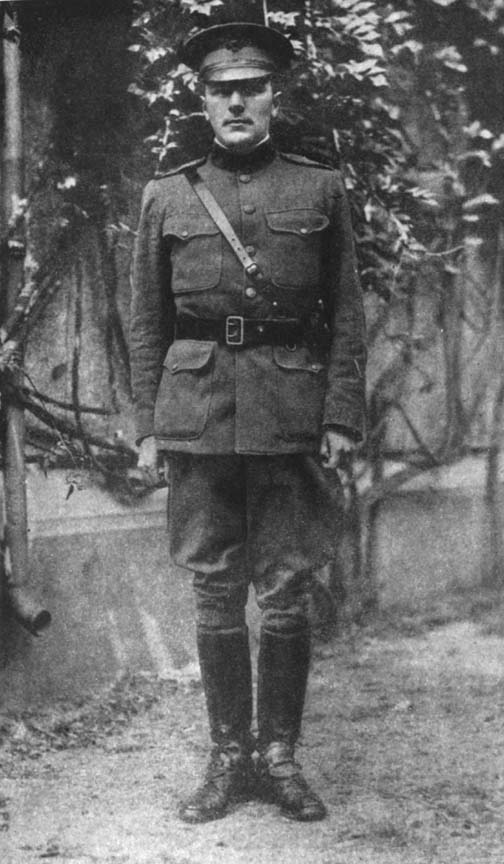
As known to his comrades at St. Mark's, Simpkins was quiet and modest. This modesty, combined with an intensely sympathetic disposition, at first masked his deep moral force from his fellows; but as responsibilities multiplied, and his simple acceptance of every duty that came to him was evident, his character began to he properly appreciated, as his courteous personality had always been. Under the almost feminine sympathy, which never needed appeal, a moral bravery far beyond that of most men had quietly developed, until, when he entered the Army, no truer example of the gentleman ever represented St. Mark's. Testimony of his devotion to his comrades in the war and of his military services adds nothing to his School's estimate of him, for kindness, gentleness and bravery were always the motives of his character. Nothing could better show the quality of his faith than the following, from an address he delivered to his Company at a religious service: "Christ will always listen to you, no matter how humble your petition. If you have asked a reasonable favor of Him; and if you have done everything in your earthly power to carry out what you want, provided it is good for you, it has always been my belief that it will be granted to you. I say this, for it has been the case in my own personal life. You have had ten years' teaching of Christ the Pacifist. It is now that you must, face to face with death, see Christ as he truly is: Christ the Soldier; Christ the Fighter; and Christ the greatest leader of men that ever walked this earth." The following extracts from resolutions adopted at a meeting of the Rector, Wardens and Vestrymen of St. John's Church, Beverly Farms, Mass., of which he was a Vestryman at the time of his death, offer striking proof of promise fulfilled:
"Next to his family the two things that he held most dear were the Army and the Church. The worship at St. John's appealed to him, and his love for her was great. She owes him much for work done, for genial comradeship, and for the good feeling in Church and Vestry which came from his presence among us. But it was in the Army that Captain Simpkins came into his own. He was in the thick of the fight at Château-Thierry and at St. Mihiel, and to those who knew him his rapid promotion was no surprise, for they knew what manner of man he was, and what measure of soldier he had become. He loved his fellow-men as it is given to few men to do, and his influence for good upon those with whom he came in close contact is not to be measured in words. He was a Christian, a gentleman, and a good soldier."
ENTERED the service as 2nd Lieutenant, 102nd F.A., July 25, 1917. Made 2nd Lieutenant in the Regular army, and detailed as Aide-de-Camp to Brigadier-General G. H. Shelton, commanding the 51st Infantry Brigade, 26th Division, July 18, 1918. As such, completed active service in France Dec. 12, 1918. Made 1st Lieutenant in the Regular army Feb. 4, 1919. Invalided home, and later detailed as Aide-de-Camp to Major-General C. R. Edwards, March 1, 1919. Resigned from the service Aug. 8, 1919. Took part in the following battles: Château-Thierry, or second Marne offensive, July 18, 1918; St. Mihiel drive, Sept. 12; Meuse-Argonne offensive, Oct. 10, 1918.
ENTERED the 133rd F.A., 36th Division, as a Major, Aug. 4, 1917. Trained at Camp Bowie; graduated from the Fort Sill School of Fire; and was promoted to Lieutenant-Colonel in the 133rd F.A., July 24, 1918. Sailed for France July 31, and was assigned as Chief of Staff, 61st F.A. Brigade, about Sept. 1, 1918. Returned to the U.S. Apr. 2, 1919; on duty with the General Staff in Washington until Aug. 15; and was mustered out of the service Aug. 24, 1919.
ENLISTED in May, 1917, in Base Hospital No. 8 (Post Graduate Hospital, N.Y.) as a Private. Sailed July 30 on S.S. Saratoga, which was sunk off Staten Island. Sailed Aug. 7 on S.S. Finland, and arrived at St. Nazaire Aug. 20. With Base Hospital No. 8 at Savenay (Loire Inférieure) until July 31, 1918. Transferred to the Gasoline and Oil Department, Q.M.C. service, between Château-Thierry and Soissons. Performed service in Paris from Aug. 25 to Jan. 22, 1919, as French-American Liaison of Gasoline and Oil. Passed examination for 2nd Lieutenant, Q.M.C., Nov. 8, 1919, but the commission was withheld because of the armistice. Discharged Feb. 20, 1919.
COMMISSIONED 2nd Lieutenant Dec. 15, 1917, Ordnance R.C., U.S.A.; promoted to 1st Lieutenant, Ordnance, U.S.A., Sept. 11, 1918; discharged Dec. 24, 1918.
ENROLLED in the U.S.N.R.F. at Newport, R.I., May 15, 1917. Made Quartermaster of the 3rd class, U.S.S. Alcada, stationed at Newport and New London, patrol off Block Island and Montauk. Made Quartermaster of the 2nd class, New London, in July, 1917, and Storekeeper of the 2nd class, New London, in Oct. On duty receiving a submarine net destined for the English Channel. This net was forty-one miles long. Storekeeper of the 1st class, New London, in March, 1918. Commissioned Ensign, Pay Corps, Newport, May 25, and at Annapolis June 10. Reported Aug. 1 at Manitowoc, Wis., as Supply Officer, U.S.S. Blue Ridge, troop transport for the English Channel. Released from active service Jan. 29, 1919, at the Boston Navy Yard.
STARTED training on seaplanes as a civilian in the winter of 1916-17. Flew seaplanes and instructed, still as a civilian, during the spring and summer of 1917. Entered the U.S. Naval Reserve Flying Corps with the rank of Ensign in Oct., 1917, and sailed for France Oct. 14. Promoted to Lieutenant (j.g.) in the spring of 1918, and to Lieutenant in the fall.
COMMISSIONED 2nd Lieutenant of Infantry, R.C., Fort Myer, Va., Nov. 27, 1917, and reported for duty at Leon Springs Training Camp, Camp Stanley, Tex., Dec. 19. Relieved from duty at Camp Stanley, May 18, 1918, and reported at Camp Lee, Petersburg, Va., June 2. Sailed from Newport News, Va., Aug. 5, with the 31st Provisional Company, July Automatic Infantry Replacement draft; landed at Brest, France, Aug. 18; and was assigned to the 331st Infantry Aug. 27. Sailed from Brest with the 331st Infantry Jan. 17, 1919; landed at New York Jan. 26; and was discharged Feb. 6 by special order No. 37, Hq. Camp Upton, New York, Feb. 6, 1919.
APPOINTED Captain July 10, 1917, and assigned to duty in the office of Chief Signal Officer during the initial organization of the A.S., handling receipt of applications for commissions and assignments to schools of military aeronautics. Upon application for foreign or at least field service, assigned to Kelly Field, San Antonio, Tex., the largest A.S. mobilization camp in the U.S.; placed in charged of all organization of squadrons and detachments in the 1st Training Brigade for overseas and other stations, Dec. 7, 1917. Detailed as Adjutant, Flying Department, Kelly Field No. 2, Feb. 12, 1918. Reported for special duty at the A.S. Flying School, Rockwell Field, San Diego, Cal., March 10. Assigned to March Field, Riverside, Cal., Apr. 13. Acting Commanding at this post during its organization until June 13, 1918. Detailed as Adjutant, March Field, and later as Executive Officer. Qualified as pilot, and rated as Reserve Military Aviator. Recommended three times for promotion. Honorably discharged Jan. 10, 1919, and re-commissioned Major in the A.S., S.R.C. (flying status), Feb. 3, 1919.
ENTERED the F.A., C.O.T.S., at Camp Taylor, Ky., Oct. 23, 1918, and left Nov. 30, 1918. Rank on enlisting, Private.
ADMITTED to the F.A., C.O.T.S., at Camp Zachary Taylor, Louisville, Ky., Aug. 30, 1918, and enlisted in the U.S. Army the following day. Served with the War Trade Board, New York City, from Sept., 1917, to Sept., 1918, as Department Chief. Attended the Artillery School at Camp Zachary Taylor until Dec. 28, 1918. Commissioned Captain Dec. 28, and discharged on the same day.
ENLISTED Jan. 5, 1918, in the O.T.S., Camp Upton, and was made Sergeant, Company A, 308th Infantry, Apr. 2. Landed in France Apr. 24, and served in the Arras sector from May 26 to 31, and the Vosges sector from June 16 to July 14. Commissioned 2nd Lieutenant, Infantry, July 14. Assigned to the 9th Infantry July 26. In the Marbache sector from Aug. 4 to Aug. 16; the St. Mihiel offensive from Sept. 12 to 15; and the Champagne offensive (Blanc Mont) from Oct. 2 to 10. Made 1st Lieutenant Oct. 28. In the Meuse-Argonne offensive from Nov. 1 to 11. Served with the Regiment in Germany. Landed in the U.S. June 1, 1919, and was discharged June 6, 1919. Received the Croix de Guerre with Palm, and a citation by General Hq. of the A.E.F.; both "for gallantry" in Champagne.
ENTERED the service Aug. 27, 1917, as Officer Candidate at Plattsburg Barracks, N.Y. Commissioned as Captain of Infantry Nov. 27. Attached to the 314th Infantry, Camp Meade, Md., Nov. 27. Assigned to duty with casuals at Camp Merritt, N.J., Apr. 6, 1918. Discharged Feb. 10, 1919.
ACCEPTED for enlistment in the U.S. Marine Corps at New York, July 8, 1918; sworn in at Paris Island July 14, and underwent training there. Transferred to Quantico, Va., Aug. 31, and attached to Company A, 11th Regiment. Sailed for France from Philadelphia Sept. 30, and arrived at Brest Oct. 13. Went to Marseilles Oct. 23, and did guard duty there. Promoted to Private of the 1st class Apr. 1, 1919. Editor of the Company newspaper. Left Marseilles for Brest June 8, to go on an expedition to Silesia; but the expedition did not materialize. Sailed from Brest July 29 for the U.S. on U.S.S. Orizaba, and landed at Hampton Roads, Va., Aug. 6. Discharged Aug. 11, 1919.
WENT abroad with the A.R.C. in June, 1918. Assigned to the 35th Division, and remained with it until Sept. 12, when transferred to the 78th Division. Remained with the latter until the armistice, and returned in Dec., 1918.
ENLISTED in the 74th Regiment, N.Y. State Guard. Commissioned a Lieutenant, and served until the spring of 1919.
ENLISTED at Washington Barracks, D.C., June 4, 1918, and served as a Private in the 31st Service Company, S.C., College Park, Md., from June to Aug., and in the 13th Service Company, S.C., Camp Alfred Vail, N.J., from Aug. to Nov. Commissioned 2nd Lieutenant, S.C., Nov. 5, 1918, and honorably discharged at Camp Alfred Vail, Dec. 7, 1918.
[Address unknown.] From a previous report, dated March 4, 1919: "Branch of Service, Infantry. Rank, Private. Post, 1st Canadian Reserve Battalion. Still in service in England." The Harvard War Records Office adds, on the authority of Mrs. Richard S. Stearns, that on May 17, 1919, Stearns was at Camp Seaford, Sussex, England.
INTENSIVE training in the Harvard R.O.T.C. from May 8 to Aug. 15, 1917. Enlisted in the Aviation Section, U.S.S.C., Sept. 18, as a Private of the 1st class. Commissioned 2nd Lieutenant, Reserve Military Aviator, at San Antonio, June 5, 1918. Discharged at Garden City, N.Y., Dec. 11, 1918.
COMMISSIONED Major in the Judge Advocate General's Section of the O.R.C., June 22, 1918, and held offices in organizations as follows: July 11 to Sept. 18, 1918, Assistant Camp Judge Advocate, Camp Funston, Kan.; Sept. 18 to Jan. 23, 1919, Assistant Division Judge Advocate, 10th Division, Camp Funston; Jan. 23 to Feb. 18, Division Judge Advocate, 10th Division, Camp Funston; Feb. 18 to Oct. 14, Camp Judge Advocate, Camp Funston; Oct. 14, to date [Oct. 29,1919] Division Judge Advocate, 7h Division, Camp Funston. Although an applicant for immediate discharge from the service and a commission in the O.R.C., was placed on the list of officers to be retained in the service after Nov. 1, 1919.
WENT to the Plattsburg O.T.C. in May, 1917, as "recommended but not yet commissioned" in the O.R.C. In July, commissioned 2nd Lieutenant of Infantry, R.C. In Aug. recommissioned Captain of Infantry, R.C., and ordered to the 76th Division at Camp Devens. There assigned to the 303rd M.G. Battalion. In March, 1918, sent to take the M.G. course at the Infantry School of Arms, Fort Sill, Okla. Upon return to Camp Devens, transferred to Camp Hancock, Ga., to the M.G. Training Centre, and there assigned to the M.G. School. Appointed Adjutant in June, 1918, and remained as such until discharged in Dec., 1918.
WITH the 1st Penn. Cavalry in Aug., 1917, and 2nd Lieutenant in the Remount Service in July, 1918. Attached to G-4, General Staff, at Tours, France, from July to Dec., 1918.Discharged Jan. 11, 1919.
SERVED with the Y.M.C.A. from Dec., 1917, to Feb., 1919. On duty during the first month at the A.S. camp at Issoudun, France, and the rest of the time managing the Officers' Hotel at Tours.
VOLUNTEER member of the Norton-Harjes Ambulance Service, Section 7, from July to Dec., 1917. With the Rolling Canteen on the Italian Front, Red Cross, from May to Dec., 1918, with the rank of Lieutenant. Made a Lieutenant of the Italian Army, complimentary, for services rendered. Cited for bravery, with the Italian War Cross. The citation follows.
"For bravery displayed in the performance of his duties, Lieutenant Stiilman voluntarily entered the front lines to effect his usual distribution of comforts to the soldiers and accomplished his task in an admirable manner even during the violent fire of an artillery duel." [Report by Mrs. C. S. Stiliman.]
MEMBER of the British R.A.F., with rank of Flight Cadet, from Apr. to Dec., 1918, training in Canada when the armistice was signed. [Report by Mrs. C. S. Stiliman.]
MEMBER of the British R.A.F. from Apr. to Dec., 1918, training in Canada when the armistice was signed. [Report by Mrs. C. S. Stiliman.]
[Does not answer. Private, Royal Artillery.]
ENROLLED in the U.S.N.R.F. as a Quartermaster of the 3rd class, March 24, 1917. Went into active service Apr. 14, and was on the Coast Patrol at Newport, R.I., during the summer of 1917. Commissioned Ensign, U.S.N.R.F., Sept. 18. Attended the 2nd R.O.T.S. at the Naval Academy from Oct. 11 to Jan. 31, 1918, and was then commissioned Ensign for temporary service in the U.S. Navy, and ordered to the destroyer Gregory. U.S.S. Gregory arrived overseas July 5, and was attached to the patrol squadrons based on Gibraltar, doing escort duty in the Mediterranean. Commissioned temporary Lieutenant (j.g.) Aug. 15. After the signing of the armistice the Gregory was ordered to Venice, and spent six months in the Adriatic, principally around Fiume and the Dalmatian coast. During May, 1919, went to Smyrna, Constantinople and Batum, Russia. Returned to the U.S. in June, reaching New York June 13. Resignation from the service accepted July 15, 1919.
ENLISTED Aug. 21, 1917, in the U.S.N.R., Class 4 for service in Class 5, as a 2nd class Seaman. Called to active duty and entered the Aviation Ground School at the Mass. Institute of Technology, Cambridge, Sept. 17. Graduated from the Ground School, and was transferred to the training camp at Hampton Roads, U.S. Naval Air Station, Nov. 10. Transferred Jan. 9, 1918, for further flight training, to the U.S. Naval Aeronautic Station, Pensacola, Fia. Qualified as Naval Aviator Feb. 5. Commissioned Ensign, U.S.N.R.F., Class 5, Feb. 25, to rank from Feb. 14, and transferred to the U.S. Naval Air Station, Hampton Roads, Va., March 5. Performed various duties, from Instructor to Assistant Squadron Commander. Promoted to Lieutenant (j.g.) June 15, to rank from May 1, 1918. Performed duties of Flight Officer and Patrol Squadron Commander. Promoted to Lieutenant Dec. 3, to rank from Oct. 1, 1918. Performed duties of Aide for operations, in which capacity had charge of and was responsible to the Commanding Officer for all flying activities of the station. Placed on inactive duty status Jan. 15, 1919. Still provisional Lieutenant, U.S.N.R.F., Class 5, on inactive duty. Had about 225 hours of flying in all types of naval seaplanes, of which about 100 hours consisted of patrol work off shore.
Park Battery of the 4th Corps Artillery Park. From Nov. 11 to Apr. 20, 1919, with the Army of Occupation, Germany. May 27, 1919, honorably discharged from the service at Camp Meade, Md.