
EDWIN AUSTIN ABBEY, 2ND, the son of William B. and Katharine E. Abbey, was born in Mount Holly, New Jersey, on September twenty-second, 1888. Until he was twelve years old he attended the Mount Holly schools, and in 1901 entered St. Mark's, where he remained until his graduation in 1907. He then entered the Civil Engineering Department of the University of Pennsylvania as a member of the class of 1911, but a serious illness in his Sophomore year caused him to lose a year out of his course. He spent the fall of 1909 as a Master at Kent School, and then returned to the University to complete his Sophomore year. After graduating in June, 1912, he went in the employ of an Engineer on valuation work for the Canadian Pacific Railroad, and at the end of that summer entered the service of the railroad, on the regular staff as transit man. Here he remained, except for a few months, until his enlistment with the Canadian Engineers for overseas service as a member of the Second Canadian Pioneer Battalion.
After preliminary training in Guelph and Quebec the Battalion sailed from Halifax, December sixth, 1915, and remained in the training camp at Hazeley Down, near Winchester, England, until March seventh, 1916, reaching the Canadian front in Flanders on March eleventh, Ash Wednesday. Abbey was wounded at Ypres early on Easter Day, April twenty-third, and sent to England, where he made a good recovery. At this time he was a Lance Corporal, and while in England was Acting Sergeant and Instructor. On the first of July he was put on a return draft for service at the Somme, but was withdrawn at the last moment and recommended by his Commanding Officer for a commission. After some delay he was sent to the Officers' Training School at Shorncliffe, and returned to the front on the first of December, 1916, one of a picked class as Lieutenant in the Fourth Canadian Mounted Rifles. He was at the front continuously until the middle of February, when the regiment was sent back to a rest billet, which included constant drill and training. He returned to the front about March seventeenth, and was killed in action at Vimy Ridge on Tuesday, April tenth, 1917. The following circumstances of his death are related in the letters of his brother officers.
He was in charge of one of the most dangerous posts, a strong point in front of the trench, at a little distance over the crest of Vimy Ridge. It was necessary to hold it in order to deny to the enemy the approach up the hill. Because of losses suffered in the post it had almost been decided to withdraw from it during the day, but Abbey came and argued that he ought to continue to hold it because of its importance; thus showing his devotion to duty and disregard of danger. On the ninth of April he took forward a party of men to reinforce the garrisons of some advanced posts, and successfully effected the relief under heavy rifle fire at very close range. In one of them he found the officer in charge, Lieutenant W. J. Butson, Senior Subaltern of his company, seriously wounded, and realized that he could not live without immediate medical attention. He therefore took some of his men and decided to attempt to get Butson out. By every law in the world the thing seemed impossible; but apparently impossible things are done by some men, as this one was done by Abbey over absolutely open ground, in broad daylight, and in full view of the enemy at very close range. The ground the party had to cover was only about three hundred yards, but it was up a very steep and exposed slope. It took four hours to cover this ground by jumping from shell hole to shell hole with the wounded man. At the expiration of that time Abbey and one other man in the party, the others all casualties, carried Butson into the front line, all in a state of complete exhaustion. Abbey was then ordered to get some rest and not go forward again. He apparently stayed in the front line for a few hours, and then, in the early morning of the tenth of April, with four scouts, again started out for the advanced posts to see that all was well with his men. It was still dark, and he seems to have mistaken his bearings. It was all new ground and very difficult to locate, so he halted his men and went forward alone to find the post. The dawn was breaking, and he must have come right upon the line of German snipers. It is reported that he rose up suddenly from the ground and shouted to his men to get back to the lines; gave the information as to where he had found the German line; and then pitched forward and dropped. When later the enemy line had been forced farther back his body was found, and was buried practically where he fell.
In the library at St. Mark's is a volume entitled "An American Soldier." To those who know what part of our School is beyond price and beyond praise this book will always be one of its proudest possessions. It shows, all unconsciously to the writer himself, the development of one we knew and loved into not merely an American Soldier, but a Soldier of that World which shall some day make wrong and injustice impossible. In these letters to his parents, beginning when he was working at his engineering in Canada, Abbey suffers at what seems the apathy of his Country towards the wrongs done to the world by Germany; yet he strives to suspend judgment, lest he may not understand. His own personal duty is as clear to him as are his own holy ideals; yet he will not move without his parents' approval, nor will his love let him venture so much as a word to influence their decision. When at length he may go to his duty, his joy knows no bounds: the flood-gates of youth and enthusiasm seem to burst, and, as in the old athletic days at school and college, he girds up his loins heartily for the fray. It is now his chosen battle, because it is for good against evil: no particle of self-interest is in him. We begin to see more clearly than ever before how the miracle of crushing that evil was wrought; and with this boy's heart before us we know with triumphant joy and gratitude that wrong can never again hope to conquer. And then we think of him as he was in school --- slender, quiet, smiling, modest and persistent; or engaged with his whole soul in the mimic battles on the athletic field; and pray that our St. Mark's boys in the future may be in some degree like this man.
As has happened in other cases, his school and college life was a prophecy which was fulfilled when opportunity came. Inheriting an artistic temperament, he understood the joy of work well done, and therefore excelled both in athletics and his favorite study of English for their own sakes, as he did later in engineering. After he went away his mother found prizes he had won in college athletics which he had never so much as mentioned. To him the world, though a beautiful place, was a field for the duty which alone could justify man's life; and he was found worthy to see this duty performed.
IN Oct., 1918, went to Camp Zachary Taylor, F.A., C.O.T.S., and joined the 52nd Training Battery. The term of service was about six weeks.
PRIVATE in the 1st Troop, Philadelphia City Cavalry, from July 15 to Aug. 23, 1917. Candidate at the R.O.T.C., Fort Oglethorpe, Ga., from Aug. 26 to Nov. 26. Commissioned 2nd Lieutenant Nov. 26, and served as such in M.G. Company, 39th Infantry, 4th Division at Camp Greene, Charlotte, N.C., from Dec. 15 to May 1, 1918. Took part in the Aisne-Marne offensive, July 18 to Aug. 11; Meuse-Argonne, Sept. 26 to Oct. 21. Commissioned 1st Lieutenant Nov. 16, and was with the 4th Division in the Army of Occupation from Dec., 1918, until Aug., 1919. Discharged Aug. 28, 1919, with rank of 1st Lieutenant.
ENTERED the S.A.T.C., University of Pennsylvania, in Sept., 1918, and was discharged in Dec. No permanent ranking was received by anybody there.
WITH the A.F.S. from Jan. 8, 1917, to Oct. 8, went to the 3rd O.T.S., Camp Meade, Md., Jan. 5, 1918, and resigned from this March 31. Private in the Hq. Company, 310 F.A., 79th Division, Camp Meade, Apr. 1, 1918; Corporal Apr. 15; Sergeant May 2; Acting 1st Sergeant May 15; and 1st Sergeant May 30. Sailed for overseas July 14. Attended the Saumur Artillery School, France, from Sept. 1 to Nov. 23, when the course was successfully completed; but no promotions were given because of Secretary of War Baker's order concerning promotions after the armistice was signed. Made 2nd Lieutenant Apr. 16, 1919; returned to the U.S. May 27; and was discharged at Camp Dix June 3, 1919, as 2nd Lieutenant.
OLIVER AMES, JR., the son of Oliver and Elise Alger (West) Ames, was born in Boston on the eighth of April, 1895. He first attended Noble's School, and entered St. Mark's in the First Form in 1907. He was a leader in scholarship, being a St. Mark's Scholar for three successive years; and very prominent as an athlete, playing in his last two years on the football, baseball, hockey and fives teams. He was also a monitor. He entered Harvard with the class of 1917, and on May the eleventh of that year left for Plattsburg. He was married on the sixth of October to Miss Caroline Fessenden, of Boston, who, with a young daughter, survives him.
Upon receiving his commission at the Reserve Officers' Training Camp at Plattsburg he was sent to Camp Devens as an officer in the 151st Depot Brigade. He was soon transferred to the Rainbow Division at Mineola, Long Island, and went overseas with that division. He became Acting Battalion Adjutant of his regiment, serving under Major Donovan, and then took a special course at an officers' training camp. Upon the completion of this course he returned to his regiment, and at once went with it into action. He was killed in an attack on Bois Brûlé, at Meurcy Farm.
The reports of his fellow-officers state that Major Donovan had advanced into the open, under a storm of machine-gun and shell fire. Ames had been told to remain behind; but his solicitude for his Major would not allow him to do so, and he ran out to join him. They took shelter beside the bank of a brook; but had no sooner got there than a sniper's bullet, probably intended for Major Donovan, struck Ames in the head, killing him instantly. The Distinguished Service Cross was awarded to him in the following terms: "During the fighting at Meurcy farm, near Villiers-sur-Fère, France, July 27-28, 1918, his heroic leadership was an inspiration to his command. He fought gallantly until on the last day he was killed while going forward voluntarily through machine-gun and snipers' fire to the assistance of his battalion commander."
The testimony of officers and men associated with Ames gives equal emphasis to his efficiency as a soldier and his devotion as a man. Untiring, cheerful, open-hearted as when he was a boy at school, he was bitterly mourned by everybody who had come in contact with him, from his superior officer for whom he gave his life to the common soldier, whom he cared for as for a younger brother. A tablet has been erected to his memory in the church at North Easton, bearing the inscription: "In loving memory of a gallant soldier and high-minded gentleman . . . pure in heart, unfailing in duty, he died as he lived, without fear and without reproach." The following has been said of him by one of his friends:
Not in his noble death, but in his way of life will our memory live and be always green. The summer of 1918 was rich with sacrifice, as if God walked with men upon the battlefield to make them smile at death. To many a man this sudden giving of all he had was a peak, unexpectedly revealed at the end of life, high ground in his being, the existence of which neither he nor those nearest him dreamed; it was the flowering of a supposedly barren soul, the momentary filling of life. But it was not so with Ames. His death beside the Ourcq was the summing up in the briefest moment of time of all that had gone before.
His Commanding Officer, who had hurried forward to steady a bitterly engaged group of his battalion, wrote:
"Ames came running up behind me to look out for me. I ordered him back; but he just smiled and said he was going to stay with me. He came up and lay beside me. . . I half turned, and as I did, a sniper's bullet struck Ames in the ear. He died instantly."
There is much more than devoted bravery in this death; like Sidney's act upon the field of Zutphen, it epitomizes the entire life of which it was the perfect end. As Ames died, he had lived. He had an instinct for the true things of life, and kept his simplicity untarnished; at twenty-two he was as sincere, as earnest, as devoid of false views and values as when he was a child. To the soldiers who served under him he was "a good scout, as white as a white man should be"; they who had daily, contact with him appreciated his natural sincerity.
But perhaps only those who knew him best realized the quality of his ideals. He practised a true, straight life; he did not preach. Never imposing his opinion or his will on others, in a subtler way, though quite unconsciously, be benefited us all. He played fairly and squarely. He loved games, and with typical earnestness loved to win; but, above this, every stroke was a true stroke, every effort an honest effort. Neither fortune nor desire could bend his honor to act meanly. His delight in life, his zest for the sun and fresh wind of out of doors, were a fine expression of his soundness of spirit.
As his heart was clear and fair, so it was tender. He was a gentle judge and a devoted friend. With the means to be generous in worldly things, to those he loved he was generous of his heart. If his friends grieved, he grieved; their joys were his, and, his understanding sympathy went out to meet them. And thus imperceptibly he made himself a part of many lives. Some of his simple faith, some of his unflinching honor, some of his cleanliness, no German bullet could strike down in the Ourcq valley; some of it is planted to endure the weathering of time in other hearts.
ENLISTED May 7, 1918, at Camp Devens as a Private in the 303rd Infantry, 76th Division. Went to France July 7, and was at the O.T.S. at Langres Nov. 11, the day of the armistice. Returned to America July 9, 1919. [Report by Mrs. O. Ames.]
SERVED with the U.S. Navy Intelligence at relief work in Syria from Feb. 1, 1919, to July 1, 1919.
VOLUNTEERED for the U.S.N.R.F. as a Seaman of the 2nd class, Jan. 7, 1918, and was called to active service at Pelham Bay Jan. 11. In the ranks at first, then made Petty Officer, and afterwards Captain of a company. The work consisted largely of drilling and guard duty. Sent to the O.T.S. with Station rating of Boatswain's Mate of the 1st class. Released by request from active service Dec. 11, 1918.
ENLISTED in the U.S.N.R.F. May 2, 1917. Transferred to Naval Aviation in Oct., and stationed at the Mass. Institute of Technology; then Bayshore, L.I., and finally Pensacola, Fla. Commissioned Ensign, Naval Aviation. Relieved from active duty March 3, 1919.
ENLISTED Sept. 15, 1917, and entered the S.M.A., Ohio State University, Columbus, 0., Jan. 26, 1918, as a Private, candidate for a commission. Completed the eight weeks' course of training March 25, and was commissioned 2nd Lieutenant, A.S.A. First assigned to Gerstner Field, Lake Charles, La., and there stationed until May 24, when relieved and transferred to Camp Dick, Dallas, Tex. Oct. 8, ordered to Hazelhurst Field, Mineola, L.I., and there assigned to the Casual Detachment as Adjutant, continuing as such until honorably discharged Dec. 13, 1918.
SERVED in France with the A.R.C., Purchasing Department of Hospital Supplies, from Oct. 31, 1917, to Sept. 8, 1918. Resigned to accept a commission as 2nd Lieutenant, Q.M.C., Remount Division, U.S. Army. At Hq., Paris, until Dec. 2. Stationed at La Rochelle Remount Depot 4. Made Summary Court Officer and Adjutant in March, 1919. Closed the Depot in June, and was honorably discharged in France July 15, 1919.
ENTERED the service as 2nd Lieutenant of Cavalry Aug. 15, 1917, and was assigned to the 184th Brigade, Jan. 3, 1918, promoted to 1st Lieutenant, F.A., and appointed Aide-de-Camp to the Commanding General. Nov. 2, promoted to Captain of F.A. Oct. 22, transferred to the 28th Division as Aide-de-Camp to the Commanding General. Was engaged in the following sectors: Vosges, July and Aug., 1918; Argonne, Sept. and Oct., 1918; Woevre, Oct. and Nov., 1918. Discharged as Captain, F.A., Aug. 24, 1919.
LEFT St. Mark's in June, 1913, to enter West Point. Served with the 9th M.G. Battalion, 3rd Division, Regular, as 2nd Lieutenant and then as 1st Lieutenant, and was promoted to Captain Sept. 8, 1918, after the battle of the Marne, July 15. Took part in the Marne defensive July 15-18, 1918; the Marne offensive, July 19-21; the Vesle offensive, Aug. 8-14; and the battle at St. Mihiel, in Sept. Received the Distinguished Service Cross; the Légion d'Honneur; and the Croix de Guerre with Palm. At present 1st Lieutenant of Infantry (M.G.) U.S.A. [Oct., 1919.] The only citation at present accessible is the following for the Distinguished Service Cross:
"For extraordinary heroism in action near Moulins, France, July 14-15, 1918. Seeing his right flank badly exposed to the enemy's advance across the Marne, Lieutenant Barber changed the position of two of his guns to meet this emergency, performing this task during terrific enemy fire. He then ran a distance of 150 yards in the open to stop the fire of our own infantry on our troops. Going forward to the aid of a wounded soldier, Lieutenant Barber administered first aid and was carrying the wounded man to safety when the latter died. Picking up the one remaining undamaged gun, he opened fire on the enemy, who were crossing the river, sinking one boat, killing many, and causing the others to abandon their boats."
NOT accepted, for physical reasons, for the Army, and entered the A.R.C. Ambulance Service in Italy in March, 1918. Attached to the Italian 4th Army in the Mt. Grappa section. Took part against the Austrian offensive in June and July, 1918, and in the Italian offensive in Oct. and Nov., 1918. Was awarded the Italian War Cross in Nov., 1918. Discharged in Dec., 1918. The citation follows:
"Con fraterno interessamento contribuirono efficacemente al transporto ai primi luoghi di cura dei numerosi feriti delle azioni militari dello scorso Ottobre gareggiando per zelo, abnegazione e sprezzo del pericolo nel disimpegno del loro servizio."
ENLISTED as a Private in the Q.M.C. Sept. 23, 1918, and was assigned to the O.T.S. at Camp Jos. E. Johnston, Fla. Commissioned 2nd Lieutenant in the Q.M.R.C. Dec. 7, 1918, and discharged the same day.
AT Plattsburg Camp, May-June, 1917, and at Fort Monroe Camp, June-Aug. Commissioned Captain, Coast Artillery R.C., Aug. 15; commanding 5th Company, S.N.Y. (regulars) at Fort Wadsworth, N.Y., from Aug. 29 to June 1, 1918. In France with the 70th Coast Artillery Regiment, 1st Army, from July 22 to Feb. 12, 1919; commanding the 1st Battalion of the 70th Coast Artillery after the armistice. Honorably discharged at Camp Upton, N.Y., March 12, 1919.
COMMISSIONED Captain of F.A. at the First O.T.C., Plattsburg Barracks, N.Y., Aug. 15, 1917. Assigned to the 302nd F.A. and joined it on the date of its formation early in Sept., 1917. Served with the same regiment in the U.S. and in France until discharged at Camp Devens, May 8, 1919. In action with the regiment east of the Meuse in the St. Hilaire offensive, St. Mihiel sector.
FROM May to Dec., 1917, Assistant Manager and Head of the Bureau of Development in the N.E. Division of the A.R.C. Dec. 1 to Jan. 20, 1918, associated with the War Trade Board in Washington. Jan. 23, commissioned 1st Lieutenant in the Chemical Warfare service. Jan. 28, ordered for duty to the Gas Defence Plant, Long Island City, and remained there until Feb. 1, 1919. Oct. 31, promoted to the rank of Captain. Feb. 1, 1919, to Feb. 28, on duty in the Gas Defence Hq., New York City. Discharged Feb. 28, 1919.
ENLISTED in June, 1917, at Boston, as a Private in Company B, 101st Engineers, and received the rank of Corporal in July. Commissioned 2nd Lieutenant of Infantry after attending the Army Candidate School at Langres, France, in March, 1918, attached to the 35th Division, 137th Infantry. In June, 1918, assigned to Company L, 132nd Infantry, 33rd Division. Received rank as 1st Lieutenant of Infantry in Aug., 1918. Attached to Division Hq. as Assistant G-3 in Aug. Received discharge at Camp Devens, Ayer, Mass., in June, 1919. Took part in the following battles: Chipilly Ridge (British Front) and Argonne-Meuse (American Front).
JOINED the Med. R.C., U.S. Army, receiving the commission of 1st Lieutenant in Apr., 1916. In Aug., attended the M.R.C. Camp at Plattsburg. Ordered to active service May 5, 1917, and attached to the 11th Engineers, U.S.A., as Medical Officer. Sailed for overseas July 14, arriving in England July 26 and in France Aug. 6. Served on the British Somme front, the Regiment being attached to the 3rd British Army, from July 6 to Jan. 29, 1918, taking part in the battle of Cambrai Nov. 20 to Dec. 31, 1917. In Feb. and March, with Regiment railway construction in the centre of France. March 6, became Regimental Surgeon. Apr. 11, promoted to Captain, Med. C. In Apr., May and June, with the Regiment at the British Arras front, being part of the British 1st Army, which had the defence of Arras during this period. June 26, detached from the 11th Engineers and attached to Base Hospital 2, U.S.A., which was serving with the British at Etretat. Arrived home from overseas Feb. 3, 1919, and was honorably discharged Feb. 26. Received a citation from the Commander-in-Chief, A.E.F., "for exceptionally Meritorious and Conspicuous Services at Cambrai, France, Nov. 20 to Dec. 1, 1917."
ENLISTED in the S.E.R.C. Oct. 5, 1917. Commissioned 2nd Lieutenant, A.S., S. R.C., Dec. 27. In overseas service from Feb. 25, 1918, to Jan. 25, 1919, and was promoted to 1st Lieutenant, A.S.A., Oct. 15, 1918.
Discharged Jan. 27, 1919.
COMMISSIONED 2nd Lieutenant of Cavalry, U.S.R., Aug. 15, 1917. Attached to the 311th Infantry Sept. 1-15, 1917; to the 309th M.G. Battalion Sept. 15-20; and assigned to Hq. Troop, 78th Division, Sept. 20. Served with this organization until demobilized June 12, 1919. Commissioned 1st Lieutenant, F.A., Feb. 8, 1918, and Captain, F.A., March 28, 1919. Served in the St. Mihiel operations, Limey sector, Sept. 14 to Oct. 3, 1918; the Meuse-Argonne operations, Grandpré, Oct. 16 to Nov. 8, 1918. Served in the A.E.F. from May 20, 1918, to June 3, 1919.
ENLISTED as a Private of the 1st class in the A.S., S.R.C., Nov. 12, 1917, and reported for a course of training to the S.C., Aviation School for Non-flying Officers, at Kelly Field, San Antonio, Tex., Nov. 24. Graduated Jan. 12, 1918, and was assigned to duty in the office of the Department Aeronautical Officer, Southern Department, Fort Sam Houston, Tex. Honorably discharged as a Private Jan. 19, 1918; accepted a commission as 1st Lieutenant in the A.S., S.R.C. Jan. 20; and was ordered to report to the Department Aeronautical Officer of the Eastern Department, New York City, Jan. 26. Ordered May 2 to Pittsburgh, Pa., to take command of the A.S. Mechanics Training School at the Carnegie Institute of Technology. Ordered June 26 to report to the Department Aeronautical Officer, Eastern Department, New York City, upon the completion of duties with the above mentioned school. Ordered Aug. 2 to report at Hazelhurst Field, Mineola, L.I., for duty with the 1st Reserve Wing. Ordered Aug. 15 to report to the Director of Military Aeronautics, Washington, D.C., and was assigned to duty in the Mechanical Instruction Branch of the Training Section. Honorably discharged Dec. 2, 1918.
CAPTAIN in the 3rd U.S. Cavalry when war was declared. From Apr. 6, 1917, to Apr. 25, at Fort Sam Houston, Tex., and Apr. 26 to May 6 recruiting at Houston for the 1st O.T.C. From then until July 23, continued in various services at Fort Sam Houston, and embarked on the transport Saratoga at Hoboken July 28. The Saratoga was run into and sunk in New York Harbor July 30. Left the U.S. on the transport Lenope Aug. 7, and arrived at St. Nazaire, France, Aug. 20. Stayed at St. Nazaire until Nov. 7, and at Nevers from Nov. 22 until June 12, 1918, commanding the 1st Division Supply Train (wagon). From June 13 to 21 at Hq., Intermediate Section, S.O.S. June 22, assigned to the 77th Division. June 27 to Aug. 29, Lieutenant-Colonel of the 307th Infantry. With the Regiment at the front in the Baccarat sector from June 28 to July 15; at Hq., 77th Division, Baccarat, to Aug. 4. In charge of animal-drawn trains of the 77th Division on the march from Coulommiers to Vesle, Aug. 10 to 14. With the Regiment on the Vesle front from Aug. 14 to 28, commanding it from Aug. 21 to 27. Aug. 30, 1918, to March 17, 1919, Lieutenant-Colonel, 306th Infantry. With the Regiment on the Vesle front and the advance to the Aisne (Oise-Aisne offensive) ; on the march to the Argonne; and in the Meuse-Argonne offensive, Sept. 26 to Nov. 11, commanding it from Oct. 20 to 25, and Nov. 2 to 4. Performed various duties until July 14, 1919; then sailed from Brest on S.S. Rotterdam, and arrived in the U.S. July 22. Aug. 2 assigned to the 14th Cavalry. At Fort Sam Houston since Aug. 22. [Dec., 1919. Discharged as Lieutenant-Colonel, only, Oct. 16.
Major-General Robert Alexander records in the General Orders of the Division (No. 41) a tribute to Lieutenant-Colonel Benjamin "for gallant and inspiring conduct in the advance on the town of La Besace, by preceding his own troops into the town, taking with him only his Orderly. This officer was the first American soldier to enter the town of La Besace, signifying deliverance to an imprisoned population of 5,000 French civilians. He further displayed courage by leading a mounted patrol one kilometer beyond the town, developing heavy machine-gun fire. His coolness and efficient leadership enabled the patrol to successfully complete its mission and return with valuable information. This officer's orders of advance terminated in the successful capture of La Besace, and his voluntary leading of mounted patrol was a further inspiration to our troops in pursuing the enemy."
ATTENDED the Plattsburg O.T.C. from May 12, 1917, to Aug. 14. Captain of Infantry, U.S.A., Camp Upton, N.Y. Discharged Dec. 24, 1918. Previous military experience, Private, Troop A, N.Y. Volunteers, May 2 to Nov. 28, 1898, expedition to Porto Rico.
WENT to the Plattsburg O.T.C. Aug. 23, 1917, and was made Captain in the S.C. Nov. 8. Detailed to the Liaison Service, and sailed for France March 3, 1918. Served as Liaison Officer on the staffs of Generals Jérome Le Grand and Le Conte with the Trente-troisième Corps d'Armée near Verdun in Oct. Executive Officer, G-3, Hq. 1st Army, A.E.F. in Sept. and Oct. Took part in the battles of St. Mihiel and Argonne-Meuse. Arrived home Apr. 3, and was discharged Apr. 6, 1919. Decorated Chevalier of the Legion of Honor. Previous military experience, Captain, 12th N.Y. Volunteers, 1898-99 in Cuba.
PRIVATE in the 153rd Depot Brigade, Camp Dix, N.J., June 26, 1918, the date of entering the service by draft. From July 15 to Oct. 15, Private of the 1st Class, 9th Company C.O.T.S., Camp Lee, Va. From Oct. 17 to Jan. 28, 1919, 2nd Lieutenant of Infantry, 11th Battalion, Military Police, 152nd Depot Brigade, Camp Upton, N.Y. Discharged from the service, Jan. 28, 1919.
ENTERED the Plattsburg Training Camp May 12, 1917; was commissioned 2nd Lieutenant Aug. 15, 1917, and assigned to the 101st Infantry, 26th Division, Aug. 31, on duty with Company G. Transferred to Company F, sailing from New York Sept. 7, and to Company M Dec. 27. Served in the Chemin des Dames sector from Feb. 7 to March 21, 1918, and in the Toul sector from March 31 to June 26. Wounded (gas) May 31. Transferred to 2nd Officer, 3rd Battalion, 101st Infantry, July 5. Served in the Pas Fini sector, eight kilometers west of Château-Thierry, from July 5 to 20, and at the second battle of the Marne July 20-26. Promoted to 1st Lieutenant Aug. 13. Appointed to the Summary Court, 3rd Battalion, 101st Infantry, about Aug. 30. Present at the reduction of the St. Mihiel salient Sept. 12-13; in the Troyon sector, twenty-five kilometers north of St. Mihiel, from Sept. 16 to 30; and transferred to Company M, 101st Infantry, Oct. 10. Served in the Meuse-Argonne offensive, Oct. 23-25, and was wounded Oct. 25. Appointed Judge Advocate, Special Court Martial, Dec. 12, and Judge Advocate, General Court Martial, Dec. 21. Ordered on special duty to command Labor Detachment 2, Hq. 26th Division, Jan. 18, 1919. Returned to Company M, 101st Infantry, March 22. Arrived in Boston Apr. 5, and was discharged from the service Apr. 28, 1919.
ENTERED the service in Aug., 1917, and was commissioned Captain, F.A., Nov. 27. Commanding Officer of the 312th Trench Mortar Battery, 87th Division, to Oct., 1918. At Hq., 151st F.A. Brigade as Operations Officer from Oct., 1918, to Feb., 1919. Overseas from Aug., 1918, to Feb., 1919. Took part in the Toul offensive, Nov. 8 to 11, 1918. Discharged Feb. 20, 1919.
FROM May 8 to Aug. 15, 1917, at the O.T.C., Fort Myer, Va., 4th Company, 2nd Battery. Graduated as Captain, F.A., and from Sept. 1 to March 1, 1918, was at Camp Lee, Va. Assigned to the 314th F.A. as 2nd Battalion Adjutant, then 1st Battalion Adjutant, commanding the 2nd Battalion, and Commanding Officer of Battery C. From March 1 to Sept., Aide-de-Camp to Major-General Biddle, Commanding General, Base Section No. 2, A.E.F. From Sept. to Dec., at the Saumur Artillery School, A.E.F., and from Dec. to June, 1919, with the Ammunition Train, 88th Division, and Assistant G-1, 88th Division, A.E.F.
JULIAN CORNELL BIDDLE, the son of Arthur Biddle and Julia Biddle, was born in Philadelphia on the nineteenth of April, 1890. When about eight years old he spent some time in Dresden, Germany; and upon his return went to school in Philadelphia. He entered the Second Form at St. Mark's in 1903, and worked with characteristic zeal at both studies and athletics, making a good record in both, particularly the former. In his Sixth Form year he was made a monitor. He entered Yale College; and after receiving his degree in 1912, took a secretaryship under Colonel O'Brian, the United States Minister to Japan. He was immediately interested in the Japanese as a race, and seems to have been convinced that the popular judgment of them as shallow and lacking in fundamentals is erroneous; and this opinion is the more interesting as coming from one unusually skilful and prompt at character analysis. In 1914, when the war broke out, he at once perceived that America would have to enter the struggle sooner or later; and consequently in the summer of 1915 he spent his vacation in the Curtiss Aeroplane Works, near Buffalo, and gained the experience which stood him in such good stead later in France.
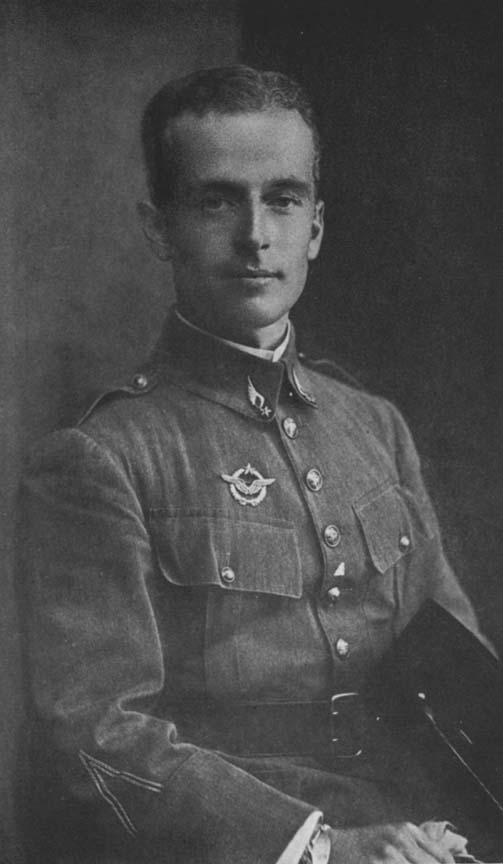
In the summer of 1916 he received his Pilot's license at Essington. He was accepted for enlistment in the Foreign Legion, and was sent to the French Military Aviation School at Avord, where he received his brevet and graduated in a very short time. He was then sent to Pau for acrobatics, and on the thirty-first of July he was ordered to Plessis-Belleville for assignment as a battle pilot. On the seventh of August he was sent to Souilly, and afterwards to Dunkirk, where he was assigned to Escadrille Number 73, Groupe de Combat Number 12. On the eighteenth of August, while he was on a practice flight, his plane fell into the North Sea, from an unknown cause. Eight days later his body was washed ashore at Egmond-aan-Zee, North Holland, where the civil authorities reported that it appeared torn by shot. He was buried in the village churchyard at this place. Biddle appears to have been the first American who volunteered after the United States entered the war to be killed at the front. In January, 1918, he was awarded the Aero Club of America medal "for valor and distinguished services"; and he also received the ribbon of the Lafayette Flying Corps. His citation is in the Journal Officiel of July the seventh, 1919.
Biddle's letters from France indicate wide powers of observation, and draw unusually clear pictures of the feverish action and changing circumstances of Paris during the trying months of hurry and distress. He does not conceal the dangers of his task, but thereby proves his superiority to them; and his interest and enthusiasm for his work pervade everything that he writes. Throughout these letters run also the self-reliance and frankness which are so familiar to his friends, whether in facing strange situations or applying himself to his own training. He was able to enjoy whatever social distractions circumstances offered, and dwells with great interest on the chance meetings with friends and fellow-soldiers from home.
Julian Biddle was conspicuous among his schoolmates at St. Mark's for his two characteristics of fearlessness and determination. He, like Mandell, was unaffected by popular opinion as such: he saw clearly beyond the external shows of school spirit and loyalty, and worked hard and impersonally to justify them.
Difficulties meant nothing to him, and whatever opposition he encountered in his straightforward course not only failed to turn him, but did not even disturb him. Such strength of purpose might have been perplexing if it had ever been used capriciously; but it was not. He seems to have had from his early boyhood a solid basis of right thinking, entirely detached from considerations of self, and dedicated to pure principle. When this loyalty was transferred, or rather enlarged, to embrace the duty to his country, it flowered into extraordinary activity and practical efficiency. Five hours of flying won him his Pilot's license, and upon arriving at the flying school at Avord he received his commission in record time. The exact circumstances of his death are not known; but those who know him know that whatever they were, he encountered them as he had encountered everything in his brave life, without a disturbing thought or an instant's hesitation. In his will he showed his love and devotion to his School by leaving to her everything that he had earned in his business since his graduation; but in his life he left St. Mark's far more than money can ever buy: an example of clean loyalty, service, and unfailing sincerity and love.
AT the Harvard R.O.T.C. in 1917 and 1918, and the C.O.T.S., Camp Lee, Va., from Oct. to Jan., 1918, with the rank of Private.
COMMISSIONED 1st Lieutenant in the Med. C. in Aug., 1917, and first assigned to the Rockefeller Institute, N.Y., for the month of Nov. From Dec., 1917, to July, 1918, served at the Department Laboratory, Fort Sam Houston, Texas; then at Camp Wadsworth, Spartanburg, S.C., where Base Hospital 56 was organizing. Aug. 29 sailed from Hoboken with Base Hospital 56, which was sent to the Hospital Centre, Allerey, Saône et Loire, France. Here detached for service at the Base Laboratory. Returned through St. Nazaire, landing Apr. 31, and was discharged from the service May 4, 1919. Received a Captain's commission in Feb., 1919.
ENLISTED May 5, 1917, as a Private in the 101st U.S. Engineers, C Company, and served with it throughout until discharged Apr. 28, 1919. Made Corporal July 10, 1917; Sergeant Apr. 19, 1918; and Sergeant of the 1st class Apr. 10, 1919. The following battles, engagements, etc., are copied from the Service Records: Toul sector, Apr. 1, 1918, to June 26; Xivray defensive, June 16; Pas Fini sector, July 7 to July 15; Champagne-Marne defensive, July 15 to July 18; Aisne-Marne offensive, July 18 to Aug. 3; Rupt sector, Sept. 2 to Sept. 12; St. Mihiel offensive, Sept. 12 to Sept. 16; Troyon sector, Sept. 16 to Oct. 8; Meuse-Argonne offensive, Sept. 26 to Nov. 11, 1918.
MAY 7, 1917, entered the U.S. Army Med. R.C. with the rank of Captain, attached to the U.S. Army Base Hospital No. 5. Served in France with this unit from May 31, 1917, to Apr. 7, 1919, as Ward Surgeon, and from Aug., 1917, as Chief of Surgical Service. Promoted to Major Nov. 13, 1917, and to Lieutenant-Colonel Feb. 17, 1919. Discharged from the service Apr. 29, 1919.
ENTERED the service Sept. 9, 1917, as a Private, 77th Division, N.A. Appointed Sergeant, Ordnance Department, Oct. 25. Transferred from Camp Upton, Yaphank, L.I., to Washington, Sept. 25, 1917, reporting to the Chief of Ordnance. Transferred to the Production Section under Brigadier-General Charles E. Jamieson, and put in charge of procurement of machine tool equipment for plants manufacturing field artillery. Transferred to the United States Midvale Gun Plant, Nicetown, Philadelphia, Pa., July 22, 1918, as Assistant to Captain H. L. Cox in charge of the construction of a plant for the manufacture of 62-16" howitzers. Recommended for a captaincy in Aug., 1918, but the commission was held up by the armistice in Nov. Honorably discharged Jan. 4, 1919. Did not apply for a commission in the reserve. Most recent rank, 1st Lieutenant, so commissioned Dec. 15, 1917.
WITH the 1st Provisional Training Regiment, 6th Company, 1st Battery, New England, 1st Plattsburg Camp, May-Aug., 1917. Made 1st Lieutenant, F.A.R.C., Aug 15. With the 301st F.A., Camp Devens, Mass., from Aug. 20 to Dec. 20; Acting Regimental Adjutant, Nov.-Dec. With the 1st Army Hq. Regiment, Company B, Camp Greene, N.C., from Dec. 25 to Feb. 10, 1918; Hq. 4th F.A. Brigade, Camp Greene, from Feb. 10 to May; at Camp de Songe, France, June-July; detailed for instruction at Hq., 32nd Corps, Artillery (French), July; and served in the Ourcq-Vesle operation July 25 to Aug. 8. At Hq., 4th Division, and served at St. Mihiel, from Sept. 12 to 15, and Argonne-Meuse from Sept. 25 to Oct. 20. At 2nd Army Artillery Hq., Toul, from Oct. 21 to Dec. 1; 2nd Army Hq., from Dec. 1 to 15; and Advanced General Hq., Treves, from Dec. 15 to Jan. 28, 1919. Demobilized in France with promotion to Captain, F.A., recommended.
COMMISSIONED Major in the Infantry, O.R.C., Jan. 5, 1917. Ordered on active service May 8, and reported to the Commanding Officer of the 1st O.T.C. at Fort McPherson on the same day, as Assistant to the Senior Instructor. Later appointed Range Officer. Sept. 5, on its organization, joined the 327th Infantry, 82nd Division, Camp Gordon, Atlanta, Ga., and was assigned to the command of the 2nd Battalion. Sailed from New York Apr. 25, 1918. Arrived at Liverpool May 7, and at Le Havre May 10. Trained under the British on the Somme for five weeks. The Battalion was billeted in Franleu and Frireulles, Somme. The Division took over the Toul sector June 28; remained six weeks there, then at Pagny-sur-Meuse for ten days, then took over the Marbache sector, and took part in the St. Mihiel offensive. The Division was moved in trucks to the Argonne forest, and was there Corps Reserve of the 1st Corps until Sept. 30. It occupied Baulny Ridge until Oct. 1, and was engaged in the Argonne-Meuse offensive without relief until Oct. 30, longer than any Division in the A.E.F., as later stated by General Pershing. The 327th Infantry was the first regiment of the Allied Armies to pierce the "Kriemhilde Stellung," which it did near Sommerance, Oct. 11, 1918. Evacuated Oct. 21, and remained at Base Hospital 44 at Pougues-les-Eaux, Nievre, until rejoining the Regiment at Champlitte, Haute Saône, Nov. 30. Transferred to the 307th Ammunition Train as its Commanding Officer, March 11. Promoted to Lieutenant-Colonel Apr. 17, and sailed from Bordeaux Apr. 26. Landed at Brooklyn May 12, and was honorably discharged at Camp Upton, N.Y., May 19, 1919. Received the following decorations: Distinguished Service Cross (American) ; Chevalier, Légion d'Honneur (French); Croix de Guerre with Palm (French). The citations follow.
The Distinguished Service Cross: "For extraordinary heroism in action during the Meuse-Argonne offensive, 7-21 October, 1918. During fourteen days of severe fighting, Major Blanchard was constantly on duty with his battalion, although suffering severely with bronchitis, the result of being gassed. He personally took command of a company, after all the officers had become casualties, and led them through a heavy artillery barrage and machine-gun fire, gaining his objective. Immediately after his battalion was relieved he collapsed from the severe strain.
"The Commanding General takes particular pride in announcing to the Command these fine examples of courage and self-sacrifice. Such deeds are evidence of that spirit of heroism which is innate in the highest type of the American soldier and responds unfailingly to the call of duty, wherever or whenever it may come.
"This order will be read to all organizations at the first formation after its receipt."
"Officier qui a toujours été un modèle de courage et d'entrain. Quoique malade, est resté 14 jours à la tête de son Bataillon qu'il conduisit à l'assaut de positions ennemies très fortement défendues dont il parvint à s'emparer."
ADDISON LEECH BLISS, the son of Chester W. and Isadora (Leech) Bliss, was born in Springfield, Massachusetts, on the twenty-first of November, 1891. After attending the Fay School from September, 1901, to 1904, he entered St. Mark's in the autumn as a member of the First Form, with the class of 1910. He was active in athletics, and attained success and distinction as a member of the eleven for two years, and as a player on the nine for two years and Captain for one. He was the President of his class, and a monitor. He entered Harvard with the class of 1914; studied at Haverford from the fall of 1911 until the spring of 1912; and in the fall of the latter year returned to Harvard. Upon leaving college in December he went to Pittsburgh to enter the employ of the Union Collieries Company at Ellsworth, Pennsylvania. He was there during the development of the mine, and was elected a Director.
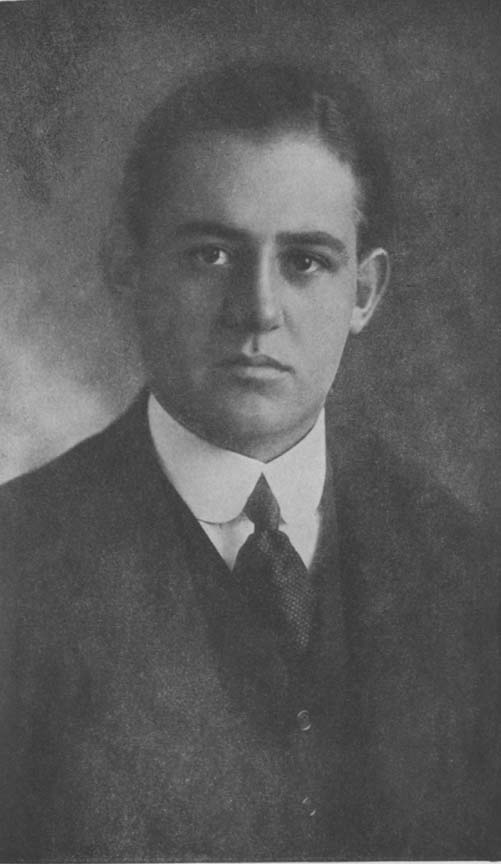
At the beginning of the war he felt very strongly that he had a duty to perform, and giving up his business temporarily, he enlisted in the American Field Ambulance Service. He sailed for France on the twenty-seventh of January, 1917; but soon after his arrival in Paris he was stricken with pneumonia, and died at the American Hospital at Neuilly on the twenty-second of February, 1917. His funeral services were held two days later in the American Church at Paris.
Bliss's record is in one sense a short one, for he was not granted the time in which to accomplish the work for which he went to France; but this bare fact, though cruel to him, makes little difference to his friends, and none in the honor and love in which they hold him. Before his country entered the war he left his home and his business, volunteered from pure sense of personal duty, and died in the service. Such a record needs no longer life in which to emphasize it, however bitterly his friends may grieve that he could not have lived and had his reward. But St. Mark's needs no evidence from the war of the stuff that was in Addison Bliss: no manlier boy, no simpler, more straightforward character ever entered her gates. He made no pretensions, and the existence in the world of such a quality as affectation must have been unknown to him. His strength lay largely in the attributes to which athletics especially appeal, and accompanying it and developing from it were the pure chivalry, honor, and reliability as a friend which have marked the ideal athlete at all times and in all places. A brave, steady eye; no excuses for failure and no elation at success; the courtesy and toleration which mark the born gentleman that he always was: this is Addison Bliss as we knew him. And one thing else, a thing that he may not have been conscious of himself: a heart that knew no object but to help those weaker than he. This it was that drew him away to France before the call came, to do what he could against the kind of wrong that a nature like his abhorred the most. He abhorred it because his own courage and sportsmanship were without a flaw; and as some men leave behind them brave records of achievement and success, Bliss leaves the no less precious one of a free and perfect sacrifice to his country's ideals.
WILLIAM VERNON BOOTH, JR., was born in Chicago on the eighth of October, 1889, the son of William Vernon Booth and Nellie (Lester) Booth. He entered the First Form at St. Mark's from the Fay School in 1903, and while here took a distinguished part in athletics, playing for two years on the football, hockey and baseball teams, and being made Captain of the baseball team in his Sixth Form year. He was a good scholar, and was appointed a monitor. He entered Harvard in the class of 1913, and upon graduating went to the New York Law School. After completing the course there he entered the law firm of Platt and Field.
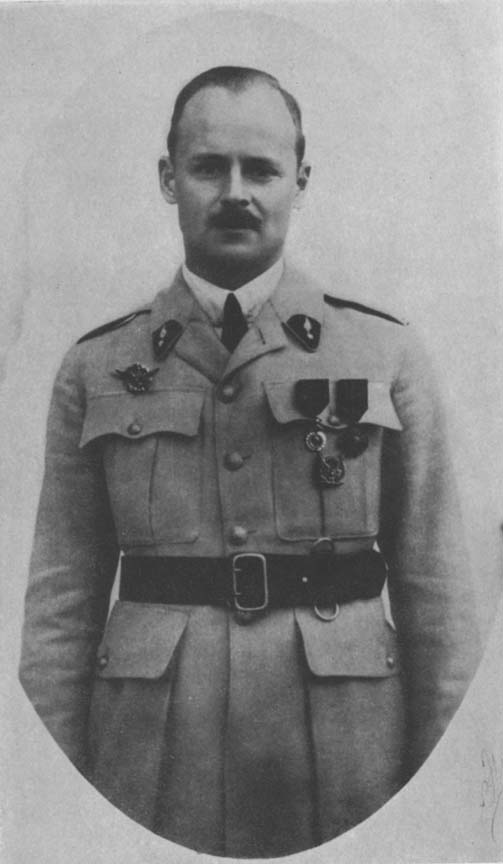
On the nineteenth of May he sailed from New York for France, where he joined the Lafayette Flying Corps. He remained in the French service throughout his career, and did not transfer to the American Expeditionary Force, although a commission in it was offered to him. At the time of his last engagement he held the rank of Sergeant, and was recommended for a lieutenancy. He went to Avord on the thirteenth of June, 1917, for training, and finished at Pau on the twenty-ninth of November, 1917. From the first week in January until his death he was at the front practically all the time excepting two weeks in the spring, when he had leave, and was married to Miss Ethel Forgan, in Paris, on the twenty-seventh of April. After their wedding trip to Cannes he returned to the front on the fourteenth of May, 1918. On June twenty-fifth, while flying over the enemy lines, he was attacked by German planes. He and his companions were outnumbered eighteen to five, and a bullet shattered his leg, while another set fire to his machine. He fainted, and his machine started to fall; but the flames were extinguished by the rush of air, and he regained consciousness sufficiently to right his machine in time to effect a landing in No Man's Land. Then, after setting fire to his plane to prevent it from falling into enemy hands, he dragged himself through No Man's Land until rescued by a Frenchman, who carried him into the French front trenches. He was taken to the Scottish Woman's Hospital, at Royaumont, where he died on the tenth of July, 1918. He was buried at Royaumont-Asnières-sur-Oise, France. He was decorated with the Médaille Militaire and the Croix de Guerre with Palm, at the hospital on the fourth of July. After his death he was given the Légion d'Honneur. The citations follow.
En vertu des pouvoirs qui lui sont conférés par la Décision Ministérielle No. 12285K du 8 Août 1914, le Général Commandant en Chef a fait, à la date du 27 juillet 1918, dans l'ordre de la Légion d'Honneur, les nominations suivantes, etc.
En outre, le Général Commandant en Chef a conféré la Médaille Militaire aux militaires dont noms suivants: à la date du 4 juillet 1918, Booth, Vernon, MIe 41494, active, Sergent en 1er Régiment de la Légion Etrangère, Pilote Aviateur, Esc. Spa. 96:
"Pilote d'un splendide courage. Au cours d'un combat contre avions a été grièvement blessé, son appareil ayant pris feu en l'air, a pu, grâce à sa présence d'esprit et malgré de fortes brûlures éteindre l'incendie et atterrir normalement entre les lignes à quarante mètres des tranchées ennemies, et a regagné les positions françaises malgré un feu violent de canons et de mitrailleuses."
Les nominations ci-dessus comportent l'attribution de la Croix de Guerre avec palme.
At school Vernon Booth's physical build could not account for his efficiency in athletics and apparent immunity from injury. Usually it was he who at a decisive point in a contest, and often a discouraging point, applied that extra ounce of fight which neither he nor his companions knew existed in the team, and which won victory or staved off defeat. The spirit, stronger than the body and stronger than pain, was beyond all estimate and check; the ordinary measures of morale and courage could not explain it, for the greater the need, the more surely he met it. And in the class-room, shy, quiet and observant, with shining eyes, he made and maintained high rank without the self-complacency which so often attends it, assimilating as he learned. In his letters from France we see both sides of his character focussed into the soldier, who studied and worked at his dangerous flying almost to the point of exhaustion, would not leave his decimated French comrades, regarded hardship and incessant danger as simply part of his day's work, and when at last attacked by overwhelming numbers, wounded and fainting in mid-air, somehow extricated himself from destruction, balked his enemies, and entered dying into his own lines. The spirit of Vernon Booth, as untouched and strong during the terrible days at the hospital as when fighting under the open sky, is not a thing that can be known or estimated; but those who have seen it know that it is deathless, and are proud and thankful that we can claim as one of us this soldier who could never be conquered.
Loyalty, consummate manliness, sweet friendship, and a kindness that could never say or think an unpleasant thing of others were what he gave to his school before he gave his all to his country; and he gave them as he gave his life, because his ideal was to serve.
ENTERED the service of Company D, 2nd Conn. Infantry, N.G., May 20, 1917. Sailed for France Sept. 5. Transferred to the 101st S.C. Battalion as a Private, Dec. 3, and made Sergeant of the 1st Class, S.C., Feb. 16, 1918. Commissioned 2nd Lieutenant of Infantry, U.S.A., Sept. 25. Took part in the following battles: Seicheprey, Bois Brûlé, Chemin des Dames, Marne defensive, and Château-Thierry offensive! Gassed slightly twice and wounded once. Landed in the U.S. Nov. 28, 1919.
ENLISTED in aviation, and started training at the Princeton Ground School, but was honorably discharged after a month's time as being unqualified for that branch of the service. Enlisted Aug. 7, 1918, in the Marine Corps. Took all preliminary training at Paris Island, S.C., was transferred to an overseas company, and went to Quantico, Va., the Overseas Depot of the Marines, and awaited orders to sail. With the Company two weeks awaiting the outcome of the armistice, and when it was signed, and the chances of going across were gone, made application for discharge. Honorably discharged Jan. 13, 1919.
JOINED the A.R.C. Nov. 4, 1918. Sent to Camp Merritt for ten days; then to Debarkation Hospital No. 3, of 4000 beds, and remained there until May 20, 1919.
[DOES not answer. Attended the Yale S.A.T.C.]
ATTENDED the Provisional O.T.S. at Fort Leavenworth, Kan., from Nov. 22, 1917, to Feb. 26, 1918. Commissioned Provisional 2nd Lieutenant, U.S. Regular Army, in Feb., 1918, and assigned to the 22nd U.S. Infantry. Stationed at Governor's Island, N.Y., and East Potomac Park, Washington, D.C. Resignation accepted in Dec., 1918.
ENLISTED in Oct., 1918, in the Harvard Marine Unit. Discharged in Dec., 1918.
MAJOR, Q.M.C., Reserve of Officers, Jan. 5, 1917. Ordered to active service Apr. 26. Lieutenant-Colonel, Q.M.C., U.S. Army, Oct. 17, 1918. Honorably discharged March 17, 1919.
IN Jan., 1918, entered the Office of Naval Intelligence, Navy Department, Washington, D.C., as a Civilian Employee. Apr. 12, commissioned Lieutenant (j.g.), U.S.N.R.F., and ordered to the Office of Naval Intelligence. Remained there until ordered to Rome, Italy, as Assistant Naval Attaché, Sept. 10, 1918. Arrived and took up duties in Rome Oct. 16. These duties led to various parts of Italy, but headquarters were at Rome. July 6, 1919, detached, ordered home, and relieved of all active duty on arrival, Aug. 17, 1919.
ENLISTED Apr. 8, 1917, in the U.S.N.R.F., and was assigned to duty as a Seaman aboard U.S.S. Harvard, a converted yacht. Arrived at Brest, France, July 4, and was promoted to Coxswain during the summer of 1917, and to Boatswain's Mate of the 2nd class in the following spring. The duty of the Harvard was, at first, to patrol the Bay of Biscay for submarines, and later to act as convoy for Allied shipping from Wolf Rock, England, to Bordeaux, France. Detached from U.S.S. Harvard in July, 1918, and ordered to Rochefort to report for examination for Ensign, but was declared physically unfit. Then ordered aboard the Marthe Solange, a French station-ship anchored at the mouth of the Gironde River, and remained there from July, 1918, to March, 1919, as Liaison Officer between the French Commandant of the 6th French Patrol Squadron and the U.S. District Commander's office at Rochefort. In Sept., appointed Chief Quartermaster. In March, 1919, detached and ordered to Bordeaux to be Chief Non-commissioned Officer of Operations. After a severe illness, sailed from Bordeaux Apr. 20, 1919, and was discharged from active service May 9, 1919.
SERVED with the 1st N.J. Squadron of Cavalry as a Private during the border trouble in Arizona, in 1916. Discharged in March, 1917, to receive commission. Went to the 1st Fort Myer O.T.C., and was there commissioned a 2nd Lieutenant, and assigned to the Depot Brigade, 80th Division, Camp Lee, Va. In Dec., 1917, transferred to the 313th M.G. Battalion, Company C (Captain John Kean, a St. Mark's graduate, commanding). Dec. 31, promoted to 1st Lieutenant, and became Adjutant about Feb., 1918. Went overseas with the 80th Division as above, and stayed with this unit as Adjutant until all were discharged at Camp Dix, June 12, 1919. Promoted to Captain in March, 1919. Took part in the following battles: south of Arras, with the New Zealanders, Couin, Gommecourt, Hebuterne, Serre Ridge, July-Aug., 1918, the Somme offensive; Meuse-Argonne, Sept. 26-Nov. 8, Cuisy, Septsarges; Montfaucon, Fayel Farm, Nantillois, Cunel, Bois des Ogons, St. Juvin, Imécourt, Sivry, Buzancy, Sommauthe.
COMMISSIONED Captain in the U. S. Army, and attached to the Intelligence Division, General Staff, Washington, May 13, 1918. Appointed American Military Attaché on the Staff of General Sir Edmund H. H. Allenby, now Field Marshal Lord Allenby, Commander-in-Chief of the Egyptian Expeditionary Force in Palestine in June, 1918. Reached Palestine in the middle of July, 1918, and participated throughout General Allenby's offensive, which started Sept. 19 and ended with the capture of Aleppo Oct. 21, and which forced Turkey to sign the armistice. Ordered to Cairo after the armistice, and there remained as American Military Attaché at the American Diplomatic Agency until June 25, when relieved and ordered to Washington. Received discharge from the army July 19, 1919. Was awarded the British General Service Medal by General Allenby. Auxiliary service: appointed by the Secretary of State American Consular Agent in Syria in 1915, and remained as such during the entire period of the Armenian massacres, until ordered home in 1917 at the time of the entrance of the U.S. into the war. This period was spent in taking care of Allied interests, and in endeavoring, as far as the Turks would permit, to distribute relief among the Armenians from funds raised and transmitted from the U.S.
ENLISTED Apr. 5, 1917, as a Seaman in the U.S.N.R. at the Charlestown Navy Yard, and did service on a submarine-chaser for six months. Received commission as Ensign, U.S.N.R.F., Sept. 20, 1917. Took the four months' intensive course at Annapolis, Md., and received a commission as Ensign in the U.S.N. Feb. 1, 1918. Did service for two months and a half on U.S.S. Maine, and was then transferred to U.S.S. Shawmut. Laid the North Sea mine barrage during the summer of 1918 with Mine Squadron 1. Transferred to U.S.S. Canonicus, another mine layer, and returned to the U.S. after seven months' service in the North Sea. Transferred to U.S.S. Robinson, a destroyer, which acted as a station ship in the transatlantic flight. Received commission as Lieutenant (j.g), U.S.N., Oct. 20, 1918, and was discharged from the U.S.N. June 1, 1919.
ENLISTED as a Private of the 1st class, in the S.E.R.C., June 27, 1917. Sailed for England Sept. 15 as a Cadet in the Aviation Section, S.E.R.C. Trained with the R.A.F., England, (attached), from Oct. 1 to July 1, 1918. Commissioned 1st Lieutenant in the A.S., U.S. Army, May 30, 1918. Trained further and awaited assignment from July 1 to Aug 7, and was then sent to A.S. Production Centre No. 2, Romorantin, France. Served there as Ferry Pilot until Dec. 25. Arrived in the U.S.A. Feb. 5, 1919. Discharged Feb. 8, 1919.
COMMISSIONED Captain in the Airplane Spruce Aircraft Production May 14, 1918, and ordered to Vancouver Barracks, Washington. Assigned to the 1st Provisional Regiment, May 24; made Treasurer of the Loyal Legion of Loggers and Lumbermen, June 12; Disciplinary Officer, Vancouver Barracks Officers' School, Sept. 1; and Instructor in Military Map Making Oct. 1. Commanding Officer, 116th Squadron, from Oct. 31 to Dec. 7. Discharged Dec. 11, 1918.
CHIEF ENGINEER of the Naval Militia of the State of Washington when the U.S. declared war upon Germany, and immediately enrolled in the U.S. Navy as an Engineer Officer. At that time, held the rank of Lieutenant. During the first month of service with the Navy, took part in the repairs of an interned German ship of the Hamburg-American Line, the Saxonia. Then ordered to U.S.S. San Diego, and joined her at San Diego, Cal., July 13, 1917, as 1st Assistant Engineer Officer. From San Diego sailed to New York via the Panama Canal. Cruised for some weeks off the Atlantic coast, and subsequently convoyed troopships to France. Detached from U.S.S. San Diego in New York Oct. 16, and Oct. 18 was ordered to Brest, France, via Liverpool and London. Reported to the Commander of the U.S. Forces in France Nov. 12, and was ordered to report to Commander H. C. Dinger, U.S.N., as his Assistant. Relieved Commander Dinger in Jan., 1918, as Repair Officer ashore at Brest. From this time until Apr., 1919, had charge of all repairs ashore done for the American fleet at this base. Also acted as Liaison Officer for the French in all matters pertaining to engineering, discussions, consultations, etc. In Apr., 1919, requested to be ordered to U.S.S. Westbridge as Chief Engineer. This ship had received two torpedoes simultaneously. In addition to duties as Chief Engineer of the vessel, had entire charge of her repairs. On completion of the repairs, was ordered home and put on inactive duty Sept. 2, 1919. Still a Lieutenant. [Dec., 1919.] Received from the French Government the decoration of the Légion d'Honneur.
FROM May 14 to June 20, 1917, Candidate for a commission at the R.O.T.C., Plattsburg, N.Y.; from June 21 to July 14, Candidate at the Engineer O.T.C., Camp American University, Washington, D.C.; and from July 14 to Sept. 9, Captain, Regimental Supply Officer, Tenth Engineers (Forest), Camp American University. Sept. 10, 1917, sailed for France from New York on S.S. Carpathia; Oct. 2 arrived at Glasgow; Oct. 8 arrived at Le Havre; and from Oct. 18 to Nov. 20 was stationed at Nevers. From Nov. 20 to Feb. 28, 1918, stationed at Gievres, and then relieved as Regimental Supply Officer. March 1, 1918, District Acquisition of Timber Officer at Besançon, Doubs, under Major Chapman, 2nd Battalion, 10th Engineers, until relieved about Aug. 20. From Aug. 20 to Nov. 4 Acquisition of Timber Officer, 1st Army, reporting to the Chief Engineer, 1st Army, in the St. Mihiel and Argonne drives. From Nov. 4 to Feb. 13, 1919, District Acquisition of Timber Officer under Major Spencer, 20th Engineers, at Eclaron, and, for the last few days, at St. Dizier, Haute Marne. From Feb. 14 to Feb. 19, 1919, under Lieutenant-Colonel Chapman, 20th Engineers, Paris, Peace Commission, Damage to Allied Countries, --- Forests. Feb. 20 ordered to Hq., 20th Engineers, Tours, and from Feb. 22 to March 11 was on leave in Tours, Paris and England. March 16, at Casual Knotty Ash Camp, Liverpool; March 20, commanding Liverpool Casual Company 1017, sailed on S.S. Aquitania, via Brest; and March 30 arrived at New York and Camp Merritt. Discharged as Captain of Engineers at Camp Devens, Mass., Apr. 10, 1919.
COMMISSIONED Captain of Infantry Apr. 30, 1917, and ordered to duty May 9 as Assistant Instructor, 7th Company, N.Y. Regiment, O.T.C., Plattsburg, N.Y. Assigned to the 308th Infantry, 77th Division, Aug. 29. Commissioned Major of Infantry Jan. 1, 1918, in command of the 2nd Battalion, 308th Infantry. Sailed from New York Apr. 6, in command of this battalion and of all troops on S.S. Cretic. Landed at Liverpool Apr. 20, and at Calais Apr. 21. Trained and remained in reserve with the British in Flanders. Took part in the following actions: Baccarat sector (Vosges) ; Oise-Aisne offensive (the Vesle) ; Argonne (Meuse offensive). Was gassed at Villesavoye (the Vesle), Aug. 18. Graduated from the Army General Staff College, Langres, Jan. 1, 1919. Was awarded the Distinguished Service Cross March 1, 1919, the Croix de Guerre (with Palm), an Army citation Apr. 13, 1919; and the Légion d'Honneur, Chevalier, May 5, 1919. Honorably discharged Feb. 13, 1919. The citation for the Distinguished Service Cross follows.
"For extraordinary heroism near Villesavoye, France, August 16, 1918. Although Major Budd's post of command was subject to continuous and concentrated gas attacks, and despite the fact that he was severely gassed during the bombardment, he refused to be evacuated, remaining for three days to superintend personally the relief of his battalion and the removal to the rear of the men who had been gassed."
WILLIAM MORTON BUNTING, son of the late Colonel William Morton and Mary (Alexander) Bunting, was born in Philadelphia on the ninth of October, 1882. He attended the Prince School, in Boston, and entered St. Mark's in the Third Form in 1897. He played for two years on the football team, and in his last year was a monitor. He entered Harvard with the class of 1905, and upon graduating joined the Penn Mutual Life Insurance Company, at the office in Boston of Plympton and Bunting, General Managers, of which firm his father was a partner. On September the twenty-fifth, 1907, he married Miss Alice Mary Nelson, of Maiden. In January, 1910, he was admitted to partnership in his father's firm, and in February, 1912, at the death of his father, who was the surviving partner, he became General Manager for the Company in Massachusetts. In 1915 he admitted Clarence C. Miller to partnership, and they conducted the business together under the firm name of Plympton and Bunting.
He enlisted in the Coast Artillery, at Boston, on the sixth of December, 1917. He was appointed Battalion Sergeant-Major, and transferred to the Insurance Department, Northeast Department, Boston. On May the twenty-second, 1918, he was commissioned First Lieutenant in the National Army, and appointed Assistant Insurance Officer, Northeast Department, Boston. He was commissioned Captain on the twentieth of August and transferred to Camp Devens, where he was attached to the Twelfth Division as Personnel Officer. He died of pneumonia at Camp Devens on the twenty-eighth of September, 1918. His wife and four children survive him.
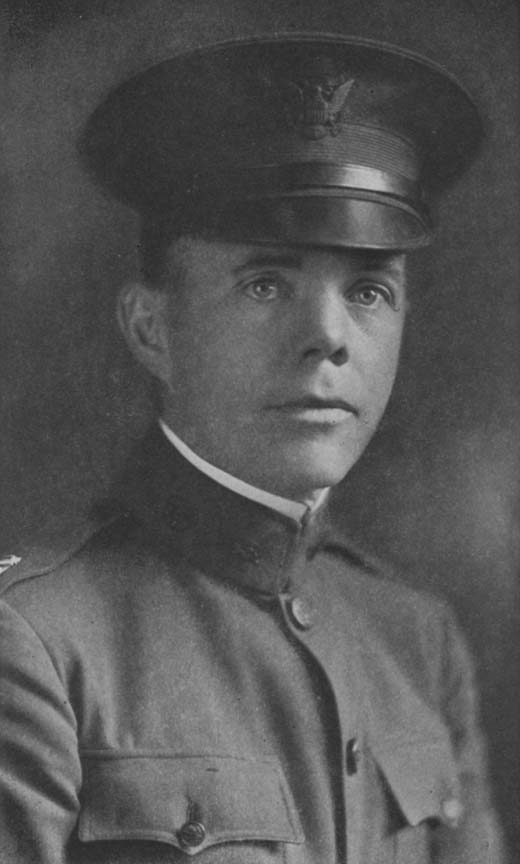
Bunting's development into the finest type of business man, who conserves his ideals of uprightness and community spirit untarnished, were clearly prophesied by his career at school. Unostentatious and industrious, unvarying in disposition, he discharged his duties and graced his honors with fidelity and dignity, regarding them as parts of a whole in which all were equally interested and responsible. But this sense of corporate responsibility was tempered with a ready kindness which made him tolerant and lenient towards others, and an invaluable and unselfish friend. His own solid abilities set him in a position to be of service to others; and of this service he was prodigal to a degree not known to any but his intimate friends, because with him generosity seemed to be a matter of course. It is not hard, therefore, to picture the quality of his service at his country's call for war, nor to imagine what it would have been if a longer life of usefulness had been granted him. He was preëminently one of those who dignify and strengthen the work to which they are called, and leave the community the better for their efforts and the world kindlier because they lived in it. But the number of his friends, and their grief at his untimely death, testify even better than his life and his work to the loss which the School has suffered in Morton Bunting.
ENROLLED in the U.S.N.R.F. Apr. 19, 1917, as a Seaman of the 2nd class. Went on active duty on U.S.S. Tarantula (S.P. 124) May 1. At the U.S. Naval Training Camp, Pelham Bay, N.Y. Gunner, Feb. 23, 1918. Released from active duty at Pelham, Apr. 3, 1919. While at Pelham, served as Ordnance Officer of the Camp part of the time, and also an Instructor in the O.T.S.
ENROLLED as Lieutenant (j.g.) in the Med. C., U.S.N.R.F., July 11, 1918. July 31 received orders to report for duty to the Commandant of the 1st Naval District; was sworn in Aug. 3, and ordered to the U.S. Naval Hospital, Chelsea, Mass. Assigned there the next day to the Laboratory of the Hospital. The work consisted largely of examining specimens. Had an opportunity to study the pathology of influenza, and reported investigations. Several weeks after the armistice was declared, applied for release from active duty, and received papers Jan. 21, 1919.
ENTERED the Plattsburg O.T.C. May 14, 1917, and was commissioned 2nd Lieutenant in the U.S. Army Aug. 15. Assigned to Camp Devens Aug. 29, 1917, and received first drafted man at Camp Devens. Appointed Aide-de-Camp to Brigadier General Weigel, Oct. 22; promoted to 1st Lieutenant, U.S. Army, Dec. 31; and was ordered to the 28th Division (Penn. N.G.), March 23, 1918. Sailed from New York May 5; landed in England May 12, and in France May 13. Went into training with British and French divisions from May 17 to July 2. In action with the 28th Division in the following major operations: Champagne-Marne defensive; Marne-Aisne offensive; Aisne-Oise offensive. Received two citations. Transferred to the 88th Division Sept. 7; occupied the trench sector, Haute Alsace, Oct. 12. Promoted to Captain of Infantry, U.S.A., Nov. 12. Sailed from St. Nazaire on U.S.S. Pocahontas May 22, 1919; landed at Newport News June 1 ; was ordered to Camp Dodge, Ia., June 5; relieved as Aide-de-Camp to Major-General William Weigel June 14; and discharged from the U.S. Army June 19, 1919. The citations follow.
"On August 20, 1918, at Montaon Farm, France, Captain Burnett being on duty as A.D.C. to G.G. 56 Infantry Brigade, 28th Division A.E.F., while under heavy artillery bombardment with entire disregard to his personal safety, did see that the men of the detachment were sent to cover and did carry two badly wounded men to safety; and remained on duty in the open directing runners and signal men to safety."
"On September 6, 1918, near Villette, France, Captain Burnett did deliver extremely important messages to the forward elements of the 111th Infantry operating across the Vesle River, northeast of Villette, at a time when the area was so badly shelled that it was necessary to use a number of side cars with duplicate messages in order to insure one message getting through."
OFFICER in the Regular Army, with the 5th F.A., when war was declared. June 13, 1917, assigned to the 13th F.A., and served with this regiment as part of the 4th F.A. Brigade, 4th Division (Reg.) throughout. Left the U. S. Apr. 30, 1918, and arrived in France May 12. Returning, left France July 18, 1919, and reached the U. 5. July 31. Took part in the following battles: Aisne-Marne offensive, Aug. 1-7; Vesle sector, Aug. 7-17; St. Mihiel offensive, Sept. 12-15; Meuse-Argonne offensive, Sept. 24-Nov. 11, 1918. Rank was as follows: 1st Lieutenant, May 31, 1916; Captain, May 15, 1917; Major, July 6, 1918. Recommended for Lieutenant-Colonel, Nov. 10, 1918.
Still in service. [Dec., 1919.]
ENLISTED Apr. 2, 1917, in the U.S.N.R. as Gunner's Mate of the 3rd class, and served until Sept. 2. Then transferred to the U.S.Naval Intelligence Service, and served until March 22, 1918, when discharged as physically unfit for active duty on account of eyesight. Enlisted Apr. 4 as a Private in the British Army, and was sent to Nova Scotia. There promoted as follows: Corporal, Sergeant, and Company Sergeant-Major. Sent to England July 11, 1918, as Company Sergeant-Major. Served in the Inns of Court O.T.C. at Berkhamsted, Hertfordshire, until Jan. 9, 1919. Then transferred to the Officers' Cadet Battalion No. 11. Released Feb. 8, 1919, as 2nd Lieutenant, Infantry, General List.
GRADUATED from West Point in 1914, and was commissioned 2nd Lieutenant, F.A., June 12, 1914. Promoted to 1st Lieutenant, F.A., in Oct., 1916; to Captain, F.A., in May, 1917; to Major, F.A., in July, 1918; and to Lieutenant-Colonel, F.A., in May, 1919. Sailed overseas with the 2nd Division, 17th F.A., in Dec., 1917, and trained with the Regiment at Valdahon, France, from Jan. to March, 1918. Served as Regimental Adjutant with the Regiment on the following fronts: Verdun, March 15 to May 12, 1918; Château-Thierry (Belleau Woods, Vaux, etc.), June 1 to July 9, 1918. Transferred July 9 to the 2nd F.A. Brigade Hq. as Adjutant (2nd Division). Served in that capacity until the Division returned home in Aug., 1919, and on the following fronts: Soissons, July 18 to 25, 1918; Marbache sector (north of Nancy) Aug. 8 to 21; St. Mihiel offensive, Sept. 12 to 22; Champagne (Blanc Mont), Oct. 1 to 27; Meuse-Argonne, Nov. 1 to 11; march to the Rhine, Nov. 18 to Dec. 13; Army of Occupation, Dec. 13 to July 20, 1919. Entire service was in the 17th F.A. and 2nd F.A. Brigade Hq. Served with the 2nd Division, and participated in all its engagements. Was awarded the Croix de Guerre (Army Corps citation) for service in the Blanc Mont attack, Oct. 2 to 8, 1918; cited by the Commanding General, A.E.F., for service with the 17th F.A., and by the Commanding General of the 2nd Division for service with the 2nd F.A. Brigade at St. Mihiel; and awarded the decoration of Chevalier of the Legion of Honor. The citations follow.
"Le 3 octobre, 1918, à Blanc Mont, a fait preuve d'un zèle infatigable dans l'organisation des détails de la préparation et de l'appui fournis par l'artillerie. Ses services ont coöpéré à l'obtention de la victoire des 3 octobre et jour suivants. Son exemple fut un stimulant pour tout son entourage."
"This officer rendered energetic and efficient service prior to and during the attack at St. Mihiel. He was untiring in his work in the preparation of the plans for the artillery support and rendered valuable services during the attack."
The decoration of the Legion of Honor was awarded "for distinguished and exceptional gallantry at Blanc Mont, France, on October 6, 1918, in the operations of the American -Expeditionary Forces."
IN the U.S.N.R. from Apr. to Aug., 1917, but was discharged because of poor eyesight. In the 1st or Grenadier Regiment of Foot Guards, B.E.F., May, 1918, to Feb., 1919, with rank of Guardsman. Stationed in London.
MADE 1st Lieutenant in the Ordnance Department in Sept., 1917. Sailed for France March 26, 1918. Promoted to Captain Feb. 17, 1919. Sailed for home March 20, 1919, and was discharged from the service in Apr.
ENLISTED in Squadron A, N.Y., May 7, 1917, as a Private. Transferred to the Ammunition Train, 27th Division, in Aug., 1917, and promoted to Sergeant in Sept. Transferred to the Field Ordnance in Feb., 1918, as a Private, and promoted to Sergeant of the 1st Class in May. Went overseas May 26. Served with the Ammunition Depots in France, and in Aviation. Service in France, eleven months. Arrived in New York Apr. 26, 1919.
BEGINNING Jan. 12, 1917, served six months in the A.F.S., sections 13 and 8. March 12, 1918, entered the Foreign Legion as a Private, attached to the 32nd Régiment d'Artillerie, and was sent to the Artillery School at Fontainebleau. Graduated July 11 as an Aspirant. Sent to the 13th Régiment d'Artillerie Groupe cheval. Wounded Oct. 25, at Bethancourt. Invalided home in Dec. Returned to the Regiment in March, 1919; was promoted to Sous-Lieutenant, March 15; and was discharged Aug. 22, 1919. Received the Croix de Guerre (ordre de la Division) ; Croix de Guerre (ordre de l'Armée) ; and the Médaille Militaire. The citation for the last follows.
"Ancien Officier de l'Armée fédérale des Etats Unis, engagé pour la durée de la Guerre. Fait preuve d'un allant et d'un courage exceptionnels. Blessé grièvement le 25 octobre 1918 ne s'est laissé soigner qu' après plusieurs hommes blessés en même temps que lui; ne voulait pas être évacué. A fait preuve d'autant de mépris pour la souffrance que pour le danger."
ENTERED the F.A. training school at Louisville, Ky., in Oct., 1918, as a Candidate for an officer's commission. Discharged Dec. 1, 1918.
ATTENDED the 2nd Plattsburg Camp in 1917, and graduated with a recommendation for lieutenancy in the Q.M.C. Before obtaining this commission, had an opportunity for immediate service abroad in the Y.M.C.A., and sailed for Bordeaux Jan. 10, 1918. Served in France with the 1st Division, Hq. Company of the 26th Infantry, from about Feb. 1 to Aug. 1. Was then put in charge of the Officers' Y.M.C.A. Club in Toul, Lorraine, and remained there until about Dec. 16, 1918. Then applied for leave to return to the U.S., and arrived in New York Jan. 7, 1919.
COMMISSIONED 1st Lieutenant in the Ordnance Department Aug. 22, 1917, and ordered to report for active duty with the American Ordnance Base Depot in France, then organizing at Washington, Sept. 22. Sent after a few weeks to Rock Island Arsenal; thence on recruiting service; thence on a board of officers to examine recruits at various camps in the West and South; and thence to the duty of organizing and training ordnance units at camps in the South. March 25, transferred to the S.C., Aviation Section; attached to the textile section; and put in charge of experimental and development work in textiles for the A.S. Upon the organization of the Engineering Division, was commissioned Captain, put in charge of textile engineering for the A.S., with headquarters at Dayton, O., and was serving in that capacity when discharged.