
FIVE months ---April to October 1864 --elapsed before the arrival of a new pastor. Doubtless excellent men ministered from Sunday to Sunday, but their names have not been preserved in the scanty records.
The congregation, and, indeed the entire American Colony, were, however, aroused to the highest pitch of excitement by an event occurring almost within gunshot of Paris. On June 19 the United States warship "Kearsarge" engaged the Confederate cruiser "Alabama" and sunk her after an hour's conflict in the Channel off Cherbourg. The "Alabama", built in Liverpool for the Confederacy, had been for a year a serious menace to American shipping, having succeeded in sinking or capturing over sixty vessels.
The day after the battle was Sunday. The thrilling news had reached Paris. Everyone now knew that neither France nor England would recognise the Southern cause. It was a great day for the little band of worshippers in the American Chapel.
"I well remember Mr. Emmett, one of the oldest members of the church, after the service, reading out the dispatch of the naval battle of the 'Alabama' and the 'Kearsarge'. I can yet feel the thrill coursing through my veins at the thought that the 'Kearsage' was victorious."(10)
On September 3, while still awaiting the new pastor, the Committee held a meeting to consider the applications by the Rev. J. Armand-Delille, pastor of the French Free Church, and by the Rev. Richard Arnold of the Church of England for the use of the American Chapel. "It was agreed that both applications could not be entertained, in the impossibility of six services being held on Sabbath days, as would be required to accommodate ourselves and to meet the applications; that it seemed desirable to make every effort to meet the wishes of the French society.
"Resolved that, in view of the daily expected arrival of the Rev. Dr. Sunderland, no decision in the matter should be taken with reference to Monsieur Delille's request; and that Mr. Arnold be informed that we were unable to entertain his application."
Let us here record how the other English-speaking religious groups had fared in the meantime. The English Wesleyans had left their hall at 23 rue Royale for their present commodious church at 4 rue Roquépine. The rue Royale Chapel had been immediately thereafter occupied by the English and Welsh Congregationalists who had shared, under pastor Mark Wilks, the Chapelle Taitbout with the Americans who later went to the rue de Berri. The Congregationalists subsequently moved to a rented hall in the Faubourg St Honoré, while the Church of Scotland occupied the "Upper Room" formerly used for the "American Meetings" in the Oratoire in 1821.
Dr. Byron Sunderland, appointed in June 1864, was unable to assume the duties of pastor of the American Chapel until September 19. He had come from the First Presbyterian Church of Washington, D. C., bringing with him "a well-earned reputation for pulpit eloquence, patriotic fervor and pastoral zeal." Coming as" Lincoln's pastor," the choice of such a man indicated the importance with which the post was regarded by the New York Committee at a time of national crisis.
Coincident with the arrival of Dr. Sunderland the Chapel authorities were faced with the problem of sharing their new house of worship with less fortunate brethren in the faith. The French had extended Christian hospitality to the Americans as early as 1818. The time had now come for the people of the rue de Berri chapel to repay a little of this debt.
Outstanding leaders of the "Awakening" among the French Protestants were the families Monod, de Gasparin and Armand-Delille. The Oratoire and the Chapelle Taitbout were the geographical centers of this movement, which sought to infuse spiritual courage and missionary zeal into a church weakened by hundreds of years of political and religious disability. The forward-looking leaders of the Reformed faith challenged this "complex of inferiority" and boldly asserted that duty and opportunity demanded a restatement of gospel truth and the "putting on of the whole armour of God". The "Church under the Cross" must now carry that cross as a conquering symbol. Though few in numbers, with the power of the Spirit, "one shall chase a thousand."
Pastor Armand-Delile was the embodiment of this spirit. He had grown up in the Wilder-Wilks group of missionary enthusiasts and was in all the newer activities---Bible and Tract societies, Temperance and Sabbath observance, Primary schools and Relief work---heart and soul.
But the Paris flock of Armand-Delille was without a fold. He called his church "L'OEuvre des Affligés." His little" churchless" groups were scattered through France. Would the comfortable Americans give Armand-Delille temporary shelter ? Or would they say "Go in peace; be warmed and fed"?
The first act of the Prudential Committee on the arrival of Dr. Sunderland was to accord the Armand-Delille congregation the use of the chapel for a late Sunday afternoon meeting.
While this dauntless soul sought the lost day and night in cafés and music-halls and the lowest haunts of Paris, attended meetings of the religious "oeuvres" and pursued his heavy pastoral labors, he turned, on the Sabbath day, to the warm hospitality of the American chapel where he held French worship for five years. Later he moved his flock back to the rue Royale chapel where his work continued as "l'OEuvre de la rue Royale." Among the Free Churches it was known as the "Evangelical Reformed."
The work of Armand-Delille had a direct bearing on the founding of the McAll Mission in the early '70s. He engaged with Miss Howard, a Scotch lady, in the first Protestant effort to reach English-speaking students in the Latin Quarter in '73.(11)
Dr. Sunderland followed the example of the American pastors from 1820--- Jonas King, Summerfield, Robert Baird, Dr. Kirk and Mr. Seeley---in active participation with the French in their diversified religious and philanthropic activities. This relationship has continued through succeeding pastorates until today.
Mr. Edward Tuck, the "dean" of the American colony, recalls the pastorate of Dr. Sunderland. "It was the only American Church in the town and everybody went there, including all the United States officials and the society people of the colony, the Munroes, the Posts, the Richards, et al. As vice-Consul and acting Consul, it was fitting that I should have my name engraved on the plate of a small pew."
The large place of the American Chapel in the life of the colony of that day can be appraised when it is recalled that the total number of American residents was less than a thousand. In those early years and, indeed, long before, the American pulpit in Paris was "as a city set on a hill."
Dr. Sunderland could not long withstand the urgent pleadings of his church in Washington to resume his pastorate. He left Paris in October 1865 to return to his commanding position as leading Presbyterian minister in the capital city where he served not only his devoted people but was for several terms Chaplain both of the Senate and the House of Representatives.
The Chapel had thus far enjoyed the ministrations of Congregational, Presbyterian and Methodist clergymen and now was to have a Baptist, one of the best known and highly esteemed ministers of that denomination, the Rev. Dr. Burlingham of St. Louis. It was a short term of service, lasting only from November '65 to May '66. His own impressions after the lapse of years are well worth recording
"My ministry was undertaken in response to an invitation given me by Dr. Sunderland, seconded by the local committee of the chapel, and to bridge over the time intervening between Dr. Sunderland's retiring and the arrival of another regular appointee. Regarding my stay there as only temporary, I sought to do little except to preach as well as I could, and by pastoral and social visitation to bring to the services all I could influence. I enjoyed my labors there very much. It was a sunny episode in my ministry, coming as it did unexpectedly and bringing me into fraternity with a crowd of choice Christian people. A noble company of men and women they were, most of whom are absent now. Some are dead ; some have returned to America. Messrs. Richards, Munroe and Curtis are no more of earth. The Hoes, Farnams, Putnams, Thompsons, Emersons, Emmetts, Roses and hosts of others are away. I did dream once that some time I might, by some kind providence, go back and labor a few months in the dear old place again. "
Dr. Burlingham, in the kindness of his heart, makes no reference to an untoward incident which fortunately was soon forgotten. "Someone had blundered." The American and Foreign Christian Union, charged with the appointment of incumbents subject to the approval of the local organization, had apparently not been apprised of the selection of a temporary supply. If they had they probably assumed that he would retire on the arrival of their appointee.
The Rev. Dr. Abram Van Nest, of the Dutch Reformed Church in New York arrived on the scene to produce an ecclesiastical embarrassment of riches. A paragraph from a letter written by Mr. Edward Emerson, a member of the local committee to Mr. Geo. T. Richards, treasurer of the Chapel, indicates the position of affairs:
"I was informed last evening by Mr Woods that Dr. Van Nest had called upon him and urged an immediate meeting of the Committee for the purpose of placing him in exclusive possession of the pulpit."
The happy result is delicately described by Dr. Hitchcock : "The work was progressing so pleasantly and successfully that it was deemed wisest and best for Dr. Van Nest to proceed to Florence, where, for a number of years, his efforts both in ministering to his countrymen and in aiding the cause of Italian evangelization, were greatly blessed."
Scarcely a month elapsed between the departure of Dr. Burlingham and the arrival of his successor, the Rev. Dr. Azariah Eldridge of the Fort Street Presbyterian Church of Detroit, Michigan, who began his ministry in Paris June 3, 1866, remaining until April 1868(12). Dr. Eldridge wrote a brief account of his short pastorate as follows:
"I found the church without a prayer meeting, with an income less than the running expenses, and under a mortgage for an old debt of sixty thousand francs. We paid the debt, repaired the chapel, frescoed it, introduced water, a new furnace and a rubber carpet. We organized a Sunday School, got together a Sunday School library, purchased the book case for it, several churches in America contributing towards it through my solicitation, while I personally donated to it the books which the Tract Society gave me for looking after their interest at the Great Exposition of 1868. We started the Sunday School concert and prayer meeting, buying with money specially solicited for the purpose the small organ now used at these meetings and the Sunday School. So you see we had a busy time and our labors were not without practical results."
Dr. Eldridge died in his native town of Yarmouth, Massachusetts, October 1, 1888.
ON the first Sunday in May 1868, only a month after the leave-taking of his predecessor, a servant of God occupied the pulpit, who was destined to effect far-reaching changes in the work and worship. This was Dr. Charles Seymour Robinson who had relinquished the important pastorate of the First Presbyterian Church of Brooklyn.
The American colony had increased in considerable number since the chapel had been built and the American and Foreign Christian Union, believing the time had arrived for the organization of a regular church with a settled pastor, suggested to Dr. Robinson that his first task would be the difficult one of organizing a Union Evangelical church with its own constitution, officers, statement of faith, and forms for the administration of the Sacraments and admission of members.

The radical changes proposed did not meet with unanimous approval. As is usual in such cases Dr. Robinson was looked upon by some as a dangerous "innovator." Feeling ran high, as the pastor intimates : "For awhile the execution of the difficult and delicate task seemed almost impossible, so numerous were the diversities disclosed." But Christian forbearance, tact and courage won the day. "On the second sabbath of November 1868 we were able to organize a church of forty-nine members, twenty-two of whom were Presbyterians, eleven Congregationalists, five Dutch Reformed, three Episcopalians and one German Reformed. On the evening of the thirtieth the Constitution was finally adopted and within a fortnight thereafter the official committees were chosen."
On the evening of December 6, 1868, Dr. Robinson was unanimously elected as first pastor of the "Church of the American Chapel in Paris." Two weeks later he formally announced his acceptance of the call. It was during the latter part of Dr. Robinson's pastorate that a clear definition of the respective relationships between the congregation, the pastor and the American and Foreign Christian Union was arrived at. This took the form of a "Deliverance" from the latter-named body and is of sufficient importance to include in this narrative
"The Board, being in no sense an ecclesiastical body, has never claimed or exercised any spiritual jurisdiction over the church nor any authoritative supervision over the internal financial affairs of the congregation. Neither the Church Committee nor the Prudential Committee is held to any special responsibility to this Board. The only relations which your Committee can sustain to the Board are such as may belong to them as the authorized and instructed representatives of the Congregation.
"The Board is represented in Paris by the minister, who is in charge of the Congregation. When the Rev. Dr. Robinson was sent out, he was empowered to manage such interests as the Board is bound to secure and control. Those interests include the property which is held by the Board in trust for a special purpose. It seems right and expedient that the control of the property shall be committed, under special instructions, to the minister in charge. For his integrity and prudence in the exercise of such important powers, he is, of course, responsible to the Board."
A portion of a letter published in the New York Evangelist of September 2, 1869, gives a vivid picture of Dr. Robinson's field in Paris:
"To see the American Chapel filled on the Sabbath with a most attentive congregation, to sit down with more than a hundred communicants at the Lord's Table while Dr. Robinson, Professor Boyd of Geneva and Dr. [afterwards Bishop] Foss of the Methodist Church speak to us most fitting words of soul-cheering exhortation; to go to the prayer meeting on Wednesday evening and meet from sixty to one hundred, who find this the most attractive point in this gay city to enter the Sunday School and look at just such gathering of classes and teachers as in a living Church at home, with Dr. J. G. Holland the essayist and poet for superintendent, and the pastor with an adult class of forty to sixty ; this to me was much more than the Pantheon or the Madeleine, or even St. Cloud or Fontainebleau."
At the annual congregational meeting in January 1870 the Church was faced with a deficit of ten thousand francs. On his own volition Dr. Robinson relinquished twenty-five hundred francs of his salary of twenty five thousand francs, and asked for a three months leave of absence in travel in Egypt and Palestine. During this period the pulpit was supplied by the Reverend Dr. William C. Cattell, President of Lafayette College.
Dreadful days were fast approaching for Paris the Beautiful. In July' 70 war was declared between France and Germany, and, on September 2, France went down to defeat and surrender at Sedan. Two days later the third Republic was proclaimed, followed by the siege of Paris and the horrors of the Commune. Americans fled the city. The sexton padlocked the iron gates of the meeting house. For nearly a year the Chapel was closed. Under date of July 26, 1871, the minutes of the Prudential Committee begin as follows
"The meetings of the Committee, after being interrupted for nearly a year by the Prussian War and afterwards by the bloody reign of the Commune, met at the office of Mr. Tucker, Messrs. Stebbins, Woods, Turner and Herrick being present."
To the profound regret of a devoted people Dr. Robinson severed his relationship with the Church in July 1871 He had achieved his purpose in leading the congregation into a new era.
Returning to New York Dr. Robinson became pastor of the Madison Avenue Presbyterian Church, where he labored for seventeen years. His next charge was the New York Presbyterian Church. He was the father of modern American hymnology, compiling and editing twenty-one hymn books. The American Church of Paris used his "Spiritual Songs" for years, a supply of which he presented to his Paris flock. He died Feb. 1, 1899.
During the four months of the siege of Paris by the Germans and the seventy days of the Commune several Americans associated with the rue de Berri Chapel rendered distinguished civilian service in Paris. Among them was our Minister to France, the Hon. Elihu B. Washburne, who from January 1876 to June 1877, was an active member of the Prudential Committee of the Church, never missing a single meeting.
The last official dinner at the ill-fated palace of the Tuileries was given on June 7, 1870, in honour of Mr. Washburne. After the first serious reverse to the French arms, the Empress Eugénie sent for Washburne, beseeching his counsel and protection. At the same time the German Government entrusted the safety of forty thousand Germans to our American Minister. He also acted as intermediary in behalf of the English refugees. All letters from outside of Paris came through the American diplomatic pouch.
Washburne was disturbed over the fact that so many Americans decided to remain in Paris, there being, on October 3, two hundred and fifty of our citizens within the walls. The following month he was able to effect the departure of forty-eight Americans, men, women and children. He found it increasingly difficult to obtain Laissez-passer for them, but his threats of international complications were respected. It was at this time that Washburne called a meeting of Americans in Paris, at the Washington Club, now extinct, to raise relief funds for the City of Chicago which had been destroyed by fire. Even at this critical time, six thousand pounds were subscribed.
During the awful days of the Commune from March 18, 1871, until May 28, Washburne was the only person clothed with absolute authority in the stricken city. Through his influence American passports were respected. Everywhere the Stars and Stripes were the symbol of safety and protection.
When the National Assembly withdrew to Versailles, Washburne opened the American Legation in a room on a side street of that city, in which room he slept and ate and performed his diplomatic duties. His family, driven by shell-fire from his town house, took refuge in the little village of Vieille-Eglise, near Rambouillet.
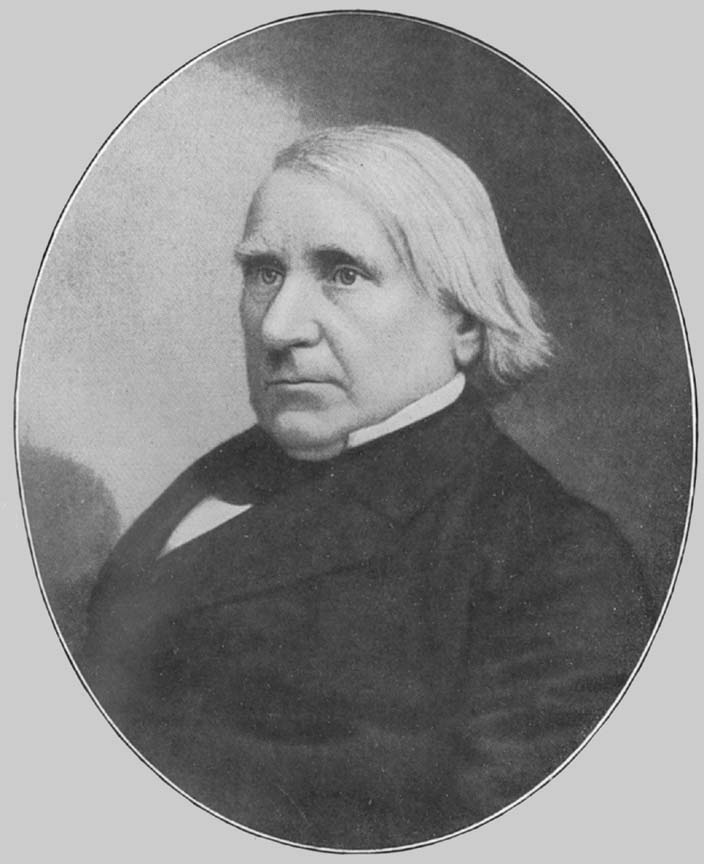
Another public-spirited American was James W. Tucker, the banker, one of the founders of the Chapel in 1857, and Chairman of the Prudential Committee until 1870. At this time he was among the foremost in the organization of the first American Ambulance in France. The headquarters were a tent hospital in the Bois de Boulogne. The service of the American Ambulance was cited in the English Army reports as the finest example of war sanitation. The famous surgeon, Dr. J. Marion Sims, was the head of the Ambulance.
Another devoted American during the siege of Paris was Miss Emma Bullet, who, with her mother, kept an all night coffee shack through the siege and the Commune in Montmartre, being associated with, the famed Louise Michel. Miss Bullet, who was the brilliant correspondent of the Brooklyn Daily Eagle, was buried from the American Church in 1910.
Our particular interest in the career of Dr. Thomas W. Evans lies in the fact that he was the active agent in Paris for the purchase of a site for the American Chapel and the leading layman in its initial activities. But to the world, Dr. Evans played a far different and much more dramatic role. For eighteen years Dr. Evans had been a warm personal friend of Louis Napoleon and his gracious Empress. Whether he actually had a part in the first meeting of Napoléon with the beautiful Eugénie Montijo is open to question. But the royal pair did repose the utmost confidence in Dr. Evans's loyalty and judgment. He was accustomed to draw up lists of Americans to whom invitations to the Court ceremonies might properly be sent. The thrilling and successful adventure by which the Court dentist succeeded in effecting the escape of the Empress from the Tuileries on the Fall of the Empire, September 4, 1870, is too well known to warrant description here. Through hardship and danger he succeeded in seeing the Empress safely landed on English soil. When the Prince Imperial's mangled body was brought back from Zululand, it was Dr. Evans who was able to identify the dead son of the afflicted ex-sovereign.
The only American to lose his life in Paris through the violence of the Commune was an art student named Swager from Louisville, Kentucky. He had gone through the struggles of the Civil War and had come to Paris to study at the Ecole des Beaux-Arts. As he retired for the night a shell entered his room and fractured his leg, the wound proving fatal.
If the patient reader of this none too colorful story of the growth of an American undertaking on foreign soil has persevered up to this point he may be impressed with the fact that it is not a story of "America for the Americans." It is a story of two nationalities, not one, two spiritual streams---Huguenot and Puritan---meeting and mingling. The religious fervor of the Americans who made their simple meeting house a signal tower to light their own souls saw to it that the friendly beams shone far and wide, illuminating dark areas far beyond the borders of their own needs.
The man who next came to minister brought into bold relief this missionary impulse. He came from the heart of the largest city in the United States, from down-town New York, where the tides of foreign immigration were beginning to surge. He had not given up that vital work in the Fourteenth Street Presbyterian Church to accept a soft berth. He came as the Apostle Paul was drawn to Macedonia. He heard the call of the lost and dying. The Rev. Edward W. Hitchock, D. D., inaugurated his work in March 1872, but insisted that the church should ratify the appointment of the American and Foreign Christian Union by issuing to him a formal call, which was done the following November. The first task was to raise the debt of several thousand dollars and secure subscriptions for current expenses sufficient to carry the church through the year without a deficit. From that time until the close of his ministry the church was actually self-supporting.
This accomplished, he organized the church into a missionary society. It was called the "American Chapel Missionary Association." He realized the danger confronting a people selfishly intent on their own well-being. The "go ye" of the Great Commission was emblazoned upon his heart. The object of the Association was "to cultivate the missionary spirit among its members, to gather and impart information concerning the work of Christian evangelization, especially in Europe; to contribute, collect and disburse money for its promotion and by personal effort, consecration and prayer to advance the interests of true religion and the triumphs of Christ's kingdom in the world."
That this was no paper organization or discussion club is evident from the fact that an average of $1744 was raised for every year of Dr. Hitchock's eleven year's pastorate. Three stations of the McAll Mission were sustained; the salaries of a Bible reader and a woman superintendent of the Children's Mission were paid, the women of the Church conducted and supported the "Model Industrial School." Besides this intensive cultivation of the mission field Dr. Hitchcock found time to be a leading spirit in the following French societies : 'La mission Intérieure', 'La Société Evangélique', 'La Société Centrale', 'L'alliance Evangélique', 'La Société du Dimanche', and the 'Société Populaire Evangélique' (McAll Mission).
In September 1881 a Medical Mission was opened at 59 rue Letellier, Grenelle, with Dr. Henry R. Darcus in charge. His staff consisted of a visiting evangelist and voluntary workers. Dr. Darcus had a free Dispensary twice a week, prescribing for three or four hundred cases monthly. All the sick were visited in their homes, and dealt with religiously both at home and at the Dispensary. This valuable work, prosecuted with great zeal even through the heat of summer, was closed after Dr. Hitchcock left.
Never was the American Church so full of evangelistic and missionary fervor. Never has it been since that time. The Sunday School had a larger membership than it has today. The spirit of giving was in the air. "The people were willing in the day of His power." They accepted with alacrity the suggestion of their pastor in 1881 that extensive repairs and improvements be made to the chapel. Thus the organ was rebuilt, the new furnace installed, the stone façade redressed and the interior thoroughly overhauled and redecorated, at a cost of fourteen thousand dollars. On the reopening of the Church September , 1881, Dr Hitchcock preached an historical sermon from Psalms XCIII 5, "Holiness becometh Thine house O Lord, forever." This eloquent message was printed and is one of the most valuable documents in the archives of the Church. He notes : "An average of about thirty-five a year have been added to the membership of the church---from the church of England, the church of Scotland, the English Independent, the Presbyterian Churches of Canada and the United States both North and South, the Reformed churches, the American Episcopal Church, the Methodist and the Baptist."
Dr. Hitchcock had the distinction of having on his governing board two heads of the diplomatic service, the Hon. E. B. Washburne and General R. F. Noyes, the latter accepting membership in the Prudential Committee upon the retirement of Washburne from his post in 1877. General Noyes was an active member of the Prudential Committee during his term as American Minister. On the occasion of President Grant's visit to Paris, while on his world tour, General Noyes tendered the hero of Appomattox a magnificent reception in his spacious apartment in the Avenue Marceau, formerly occupied by the de Montpensier family: Marshal MacMahon, then President of the French Republic, attended this notable gathering.
After his retirement, General Noyes became a law partner in Cincinnati, Ohio, of Alonzo Taft, father of President Taft.
Lorado Taft, the eminent American sculptor, while studying at the Beaux Arts at this time, was active in the church and a close friend of Dr. Hitchcock. He was superintendent of the Sunday School in Dr. Beard's pastorate.
Clergymen are not often acknowledged as good business men, but in Dr. Hitchcock's pastorate there came to Paris a minister who left a deep and abiding impression upon the business section of the American community. This was the Rev. Dr. Stephen Higginson Tyng Jr. of New York, the son of a famous Episcopal rector, who had assisted his father, Dr. Stephen H. Tyng, at Saint George's. The younger Tyng was afterward pastor of the Church of the Mediator. Resigning this work in 1881 he came to Paris as manager of the Paris office of the Equitable Life Assurance Company. Dr. Tyng with his scholarship, culture and sympathies, in addition to his business genius, became an outstanding figure in the colony. Shortly after his arrival he accepted membership on the Prudential Committee of the American Church, and, at the first meeting he attended, moved that an immediate effort be made to raise subscriptions to clear off the debt of 14.000 francs accruing from the repairing and improvement of the chapel. Dr. Tyng prepared a statement for the congregation and had much to do with the clearing off of the indebtedness.
Dr. Tyng was a finished speaker and was in constant demand on all public occasions. In 1894, with the assistance of Mr. Henry Peartree, he founded the American Chamber of Commerce of Paris and became its first President.
The following account of the Moody and Sankey meetings is taken from Dr. Thurber's historical sermon preached on the Fiftieth Anniversary:
"Mr. Dwight L. Moody and Mr. Ira D. Sankey visited Paris in October 1882. The burden of preparing for the meetings to be held and securing funds for the expenses of these services fell upon Dr. Hitchcock and the American Chapel. The preliminary meetings for prayer and conference were well attended and an earnest spirit was manifested. One petition of Dr. McAll's was :"O God, lead Mr. Moody to reach the French." Hand bills were distributed in hotels and large posters placarded the streets. The announcement ran as follows : 'Mr. Moody and Mr. Sankey, the American evangelists, will hold a series of religious services in Paris from October 8 to October 22. A Bible lecture in the afternoon, in the American Chapel and a religious address in the evening , in Pastor Bersier's church. The singing will be led by Mr. Sankey, assisted by a chorus choir. All are cordially invited.' At the first service on Sunday afternoon, the American chapel was crowded to its utmost capacity. Dr. McAll offered the first prayer. Mr. Moody began by saying: 'More than twenty years ago in the city of Boston, I used to hear my pastor, Dr. Kirk, pray every Sabbath for the American Chapel in Paris. You can therefore understand the feelings with which I stand here to-day. Many of these prayers have been answered in the years past, and God is ready to answer them to-day.'
"In response to the earnest request that meetings might be held for the French people, Mr. Moody gave notice that on Monday and Tuesday evenings, October 16 and 17, services would be held in the Oratoire, where his address would be interpreted by Pastor Theodore Monod. This grand old church was crowded. History points back to the time when Massillon and other celebrated men preached in the Oratoire. For years this had been given for use to the Reformed Church of France and now the Gospel with new emphasis and power was preached to throngs of French people who crowded this great edifice.
"The increase of interest during these two nights intensified the general desire that these services should be continued. Mr. Moody, in response to this request announced on Tuesday evening that meetings would be held on Wednesday, Thursday and Friday evenings. Mr. Moody said 'In all our experience Mr Sankey and I have found no more promising field of labor than Paris. Instead of the two weeks we wish we could stay here two months.' Dr. Hitchcock, speaking of the visit, said : 'Their presence proved a benediction to many; their influence remains not only with our English-speaking congregations, but with the churches of France and those who lead and mould her moral and religious life'."
On Sunday January 12, 1883 Dr. Hitchcock preached his farewell sermon. The published text, with resolutions passed by the church, has unfortunately not been preserved. An ovation was given to Dr. and Mrs. Hitchcock and their three sons on visiting Paris in 1896. They made their home in Philadelphia where the Doctor was in constant demand for preaching engagements and service on important church boards. He died in Saratoga Springs September 17, 1901.
THE formidable title of "Minister in Charge of the American Chapel and Resident Secretary of the American and Foreign Christian Union in Paris " was bestowed upon the successor to Dr. Hitchcock. Perhaps long titles conduce to longevity, for the Rev. Augustus F. Beard D. D. is living at a green old age in full possession of his physical powers and mental faculties at his home in Norwalk, Connecticut, in his ninety-eighth year.
Dr. Beard, a college classmate of Dr. Hitchcock, arrived in Paris March 18, 1883, having resigned his important pastorate in the Plymouth Congregational church of Syracuse, N.Y. He had for years been in close touch with missionary efforts in France. He had organized the tour through the United States of M. Eugène Reveillaud and the Rev. G. Theophilus Dodds, representing the Société Centrale, Société Evangélique and the Mission Intérieure of France. Miss E. B. Beach, the McAll Mission worker, had also received valuable help in her visits to the United States. It was largely due to his efforts that many thousands of dollars had been contributed for these causes.
And now this able and earnest executive was to devote his entire energies to foreign service. During his pastorate he visited many mission stations in France, Belgium, Switzerland, Waldensian Italy, Algeria and Corsica, and sat on the Boards of Direction of them all, including the McAll Mission. Since the Republic had removed the restriction against the use of the term "Church" by the Protestants he had the name "Church" substituted for "Chapel" on the records of the rue de Berri enterprise. The official name remains to this day "The American Church in Paris."
Dr. Beard kept the people at home well informed through numerous articles in the religious press and magazines, notably the Andover Review, and the Religious World, the organ of the American and Foreign Christian Union which, under the devoted efforts of the Rev. Leander T. Chamberlain, was giving large attention to the Paris work.
Shortly after Dr Beard's coming, an organization to relieve the pecuniary difficulties of destitute Americans in France was organized (June 25, 1883) with the Hon. Levi P. Morton, American Minister, honorary President, and Mr. John Munroe Treasurer. It was known as the "Relief Society of the United States of America in Paris". Dr. Beard and Dr. J. B. Morgan of the American Church of the Holy Trinity were placed on the Executive Committee.
Following the World War the "American Aid Society" has continued the work of relief.
Dr. Hitchcock's success in putting the Church on a self-supporting basis was but temporary. Dr. Beard went to the States to place before churches the importance of providing a more adequate income. His plan was that churches and individuals in America should take pews in the Paris Church, at the rate of $80 a pew. A plate affixed would bear the name of the donor. In this manner the pastor aroused a deeper interest and secured a substantial yearly sum. Some of these subscriptions are maintained to the present time.
After serving nearly two years Dr. Beard in December 1885 relinquished his post to the great regret of his parishioners and became associate Secretary of the American Missionary Association with headquarters in New York City. He has until recently gone to his desk several times a week from his home in Norwalk, the "Grand Old Man" of American Protestant missions.
No break in the chain of pastoral service occurred, for the Rev. Jesse W. Hough, a life long friend of Dr. Hitchcock's was traveling in Europe at the time of Dr. Beard's going and consented to assume charge. His ministry continued from December 1885 to November 1888. He had sustained a deep personal sorrow, and his pastoral duties in Paris were a blessing to him and his people by reason of his enriched spiritual experience. Dr. Hough went to the States in May 1886 and returned to Paris the following October. Dr. Thurber speaks of him as "a man of culture, refinement and lovely spirit." He left for Santa Barbara, California, in December 1887 on account of the illness of his son who died shortly thereafter. Dr. Hough thereupon resigned the pastorate. He died in Santa Barbara, October 29, 1895.
During the succeeding months, while the church awaited a regular pastor, two ministers supplied the pulpit most acceptably. The Rev. William W. Newell who had been assisting at the McAll Mission for ten years, took the pulpit, subsequently becoming the pioneer in the work for American Students in the Latin Quarter.(13) He gave at his home two notable church receptions to the widow of President James A. Garfield and to Mrs. Oscar Folsom, mother of Mrs. Grover Cleveland. Again we quote from Dr. Thurber : "His ready sympathy, interest in, and unusual attraction for young people won him a place of large regard and usefulness as the students' friend."
He was followed by the Rev. Alfred H. Kellogg who later on contributed his services to the church during the absence of the pastor in America. "His talents, gifts as a preacher, personal qualities and generosity have reared a memorial in our hearts of large appreciation and gratitude."
We now come to a period in the Church's life which marks the high water mark of spiritual power and beauty. Other pastors had been loved. The coming pastor through sixteen years of uninterrupted service was so to knit himself into the lives of his people as to become part of their very soul's substance. His saintly, gentle character was a constant benediction not only to his own adoring people, but to the entire American Colony and the brethren of the French churches and missionary societies. It was indeed the "perfect pastorate."
Rev. Edward G. Thurber D. D. was called from the Park Central Presbyterian Church of Syracuse, New York, where he had spent nineteen years among a people whose affection and hearty cooperation in the varied work of a large church had been constant and unstinted.
He entered upon his pastorate in Paris Sunday February 17, 1889, preaching at the morning service from the text : "And I will make them and the places round about my hill a blessing and I will cause the shower to come down in his season; there shall be showers of blessing." Ezek. 34: 36.
Dr. Thurber brought to the work not only his own magnificent endowment of Christ-like personality, but a wife who by her charm of manner, her gracious tact and large-hearted hospitality, doubled the effectiveness of the pastoral relation. Under her leadership the "Ladies' Benevolent Association" was reorganized and became the strongest society in the church, a standing which has been maintained until the present time.
Lest he might inadvertently omit any feature of this delightful period which otherwise would be a cherished record for those who still remember, the author has decided to include the full account as Dr. Thurber wrote it for the Fiftieth Anniversary, October 27, 1907, three years after he had closed his work here.

Dr. and Mrs. Thurber had been invited to make the voyage from New York as the Church's guests of honor. Every possible mark of affection and esteem were showered upon them during their visit. The historical sermon produced a profound impression and was printed by order of the Church officers.
"Mrs Thurber and I sailed on 'La Bretagne' of the French Line, February 2, 1889, and reached Paris on Sunday, February 10. Mr. William Herrick, who for many years had been the honored and faithful Treasurer of the congregation, met us at Gare Saint-Lazare and took us to Hotel Campbell on Ave. Friedland, where Dr. Kellogg gave us a cordial welcome. The services at the church for the day had closed on this first Sunday of our stay in France. On Wednesday, February 1, we dined with Mr. and Mrs. Herrick, meeting the Church and Prudential Committees,---Mr. A. A. Anderson, Mr. Charles Curran, Mr. Canton C. Chapman, Mr. William Whittemore, Mr. Eugene C. Savidge, Mr. Edward Henry and Mr. Alexander Donaldson. Several members of these committees were studying art in Paris and are now living and doing successful work in New York City. Mr. Herrick and Mr. Donaldson have passed to their heavenly home. My first service was on Sunday, February 17. The subject of the sermon was 'The Christian Church, its Mission and Power'. After the service many remained to welcome us.
"On Wednesday evening, February 20, the Church gave a reception at Hotel Campbell. The young men of the congregation acted as ushers. The invitation was extended to the clergymen of the English-speaking churches, the President of the Young Men's Christian Association, Dr. and Mrs. McAll, members of the congregation and of the American colony. Words of welcome were spoken and an appreciative response was made.
"There were many things to do. Threads to pick up for the fabric to which they belonged and into which they were to be woven. The cordial cooperation of the people brought about an atmosphere of hope and a spirit of service.
"On May 1, 1889, interesting services were held in this church commemorating the Centennial of Washington's Inauguration. President Harrison's proclamation was read. Introductory words were spoken by the pastor and the Hon. Robert McLane, United States Minister to France, made an address. Monsieur Widor presided at the organ and the choir rendered appropriate musical selections. The church was thronged by members of the American colony. The Legation and Consulate were represented and Commissioners of the International Exposition of 1889 were present. It was one of those occasions which give emphasis and new impulse to patriotic feeling. The Exposition called to Paris a very large number of our countrymen and the church felt the benefit of the increase in its congregation. Its work and influence were extended and it availed itself of this larger opportunity for service.
"On September 27 the Sunday Congress was held. The pastor as a delegate of the General Assembly of the Presbyterian Church participated in the meetings. At this Congress the discussions centered upon the benefits which might be secured by the observance of the weekly day of rest from a hygienic, social and industrial point of view. Interesting papers were read followed by general discussion and such action was taken as was formulated in the resolutions adopted. The Christian people did not feel that the good step forward was sufficient expression of their view of the claims and benefits which might come from a better observance of the day. In their view the religious significance of the day was most important. Supplementary meetings were in the Eglise St. Esprit, the Reformed Church in the rue Roqupine, for the purpose of considering the religious aspects of the day.
"During the Exposition many responded to the invitation to the 'At Homes' on Wednesdays, given by the pastor and Mrs. Thurber, Here at 13 Ave. MacMahon, our first home in the city, we met friends and visitors from nearly every country and felt that the good influences of the church were flowing to many people. In Feb. 1890, the Prudential Committee, in examining the condition of the edifice, found such defects in the roof, floor, mortuary chapel, pastor's room and organ, that they felt it was necessary to make extensive repairs. Much of that which was to be done was not visible to casual observation. Visitors could not look upon the roof nor underneath the carpet. An English visitor who corresponded with the Press, wrote to his home paper some very appreciative words concerning the church and its services and added the following: 'Want of finances however, is as chronic in Paris as in England, and a special appeal was made for funds to repair the church. A sum of $4.000 or 800 pounds could be expended upon a building which to our casual observation seemed to be in such very capital condition.' It is true that defects often lie deeper than the surface, but they are eventually bound to appear on the surface if they are not remedied. Our friend was not aware how skillfully our good sexton of so many years was accustomed to cover up defects and blemishes. Let us speak a word for humble and faithful service. When I was preparing to come to Paris I was told that I would find a helper in a competent sexton, who for many years had served the church. I was not disappointed, but felt all through the years of my ministry I could depend upon John Hauen as one who reverenced the House of God and felt it his duty to the Master to make the place of worship attractive and comfortable. He has rendered many other services of great value.
"The inadequate support which came to the church from the sources already mentioned, led to the formation of a plan to secure an Endowment Fund, the income of which might supplement the annual receipts. This plan had the earnest endorsement of the Committee of the Church and of the Directors of the American and Foreign Christian Union. To further this movement it was thought best that the pastor should go to America and seek to interest friends in securing the endowment.
"I left Paris for New York by way of Liverpool on the Steamer "Austrel" Nov. 3, 1890. Dr. A. H. Kellogg gave, as his contribution to the Fund, his services from Nov. 9, 1890 to March 15, 1891.
"The first gift of one hundred pounds for this fund was from our friend, Lord Overtoun, who frequently worshiped with us when in Paris. This came voluntarily and so unexpectedly that I took it as a good foreword of encouragement.
"The times however were not propitious. While I was on the sea a great failure in London took place which affected the financial world and seemed to have reached the feelings and purses of men who had been liberal givers. However as a result of this effort a little more than ten thousand dollars were secured, which was invested in America by the Rev. Dr. Leander T. Chamberlain, so long the honored and efficient Secretary and Treasurer of the American and Foreign Christian Union. He has been and is the invaluable and constant friend of this church, devising for its welfare, concerned for its interests in times of emergency as well as when the tide of its life was flowing strongly and with promise.
"For thirty-six years the only facility which this church possessed for the varied work it sought to do, was the audience room and the pastor's waiting room. The Sunday School, the prayer meetings and religious gatherings large and small, were held in this room. The Ladies' Benevolent Association for a time made use of the pastor's small room. These handicaps were felt constantly and when the Ladies' Society grew in numbers and increasing influence it became necessary to rent rooms elsewhere for their meetings. So great was the need of facilities that a good chapel might give that the Committee of the church felt that the time had come to make an effort to secure a Church House. The Directors of the Union were in cordial and active sympathy with this movement. It was felt that if a sufficient sum could be raised for the purchase of such a house and its support, it would greatly enlarge the work and usefulness of this church.
"We were absent in America from April 29th to July 16, 1893. During this time there was an encouraging response to the plea of the church and through this and subsequent efforts, more than $20.000 were paid to the Treasurer of the Union and several additional thousands were subscribed upon the condition that the entire amount needed should be secured.
"The halt which came to this effort was due to the fact that the property desired, 23 rue de Berri, was placed beyond our reach. This church now for fifty years has been without the facilities which a well equipped chapel might provide and it has consequently been hampered in much good work it would do. We trust that the day is not far distant when we will rejoice in the fulfilment of the hope deferred.
"It has been the good fortune of this church to have the services of three eminent clergymen in exchange with the pastor. These ministers have brought to us their rich experience and devotion, increasing their and our interest in the work to be done here.
"On March 3, 1895, the Rev. Dr Charles Wood, then of the First Presbyterian Church of Germantown, Pennsylvania, preached his first sermon in this church. Dr. Wood's ministry continued for four months. The church and congregation felt the new quickening and increasing interest which came to them through his message and service. Dr. Wood inaugurated the evening service for students in the Latin Quarter which has been sustained continuously ever since with great benefit to the large number of American young men and women who come to Paris for the advantages which may be secured here in art, music and literature.
"Dr. Wood has been welcomed to this pulpit during the years which followed. His interest in and friendship for the church have been a valuable factor in our work.
"The pastor's services in Germantown and in America during this period helped to make known the claims of this church upon the sympathies and cooperation of the churches in America. The courtesy and kindness of the people of the First Church in Germantown cannot be forgotten. Their interest has been manifested in sustaining a pew here for many years. It was one of the items in their budget.
"In 1897 the Rev. Dr. Stealy B. Rossiter, the pastor of the North Presbyterian church of New York City, an esteemed, active and influential member of the Presbytery of that city, a most useful and successful minister, came to Paris in exchange with the pastor. He was with you for the months of June, July and August. Dr. and Mrs. Rossiter extended their hospitality at No 59 rue Galilée on Wednesdays and at once won their way to the regard of the people. Dr. Rossiter became conversant with the conditions of the religious life in France and afterward gave the benefit of his knowledge and experience to the friends of French evangelization in America. He is now pastor of the Presbyterian Church in Manila, Philippine Islands. The North Church in New York was a center of large and busy activities and the cordiality and kindness of the people greatly assisted your pastor in the work he would do.
"The third exchange during my pastorate was made with the pastor, then of the Second Presbyterian Church of Germantown. We sailed for New York on April 20, 1899. Dr. and Mrs. Nason occupied the pastor's apartment and gave their earnest service and hospitality with unstinted devotion. Dr. Nason wrote as follows concerning his coming to you : 'On our first Sunday, April 30, we were met and welcomed by many of the church officers and people, and though the order of services and the surroundings were new and strange, it was not long before we felt that heart was beating to heart touched by the same spirit, moved by the common word of truth, and accentuated in measure by the language of a common nationality. Hearty greetings followed. Not a few old friends were present even some from Germantown with their cordial words.' These words bring to our attention two notable things in our church life. The meetings of friends in the church who may not have known of one another's presence in the city, and the observance of a custom to respond to the pastor's invitation to meet him immediately after the service in the aisle in front of the pulpit. Referring to this feature in our church life Rev. Dr. J. R. Miller wrote in a letter to the New York Evangelist, August 6, 1896, as follows : 'At the close of the service last Sunday morning, Dr. Thurber was kept before the pulpit for nearly half an hour, speaking to those who lingered to receive his salutation. The Sabbath was made a sweeter and a better day for all who enjoyed the privilege of this visit.'
In 1901 the pastor, through the kind permission of the congregation, went to Naples to join the party led by the Rev. Dr. James S. Riggs. a Professor in Auburn Theological Seminary, for a tour through Egypt and Palestine, of seventy days from March 4 to May 14.
Through the years of the history of this church an earnest interest has been taken in the children and young people. The Sunday School, although at no time large in numbers, has been a definite part of the work of the Church. The Primary, Intermediate and Adult Bible teaching has been maintained through the autumn, winter and spring months. Superintendent and teachers have rendered a great service, the results of which are incorporated in the character of many whom they have not seen again after the separation in Paris.

"A most successful Society of Christian Endeavor was organized through the initiative of Mr. William Lewis, Secretary to Justice Harlan, a member of the Behring Sea Commission which met in Paris in the spring of 1893. The enthusiasm and devotion of Mr. Lewis among the young people found a ready response and his influence was felt long after his departure from the city. A gracious feature of the work of this society was the custom of furnishing flowers for the services every Sunday. These flowers were sent afterwards to persons who were sick or as an expression of appreciation or sympathy, to visitors. It must be borne in mind that all church organizations here are qualified by the constant fluctuations of the constituency which composes our congregation. There cannot be a feeling of stability to ever-flowing waves, and it is remarkable that so much has been accomplished by a congregation which is like a continuous procession.
"The devotional meetings held weekly, while not largely attended, have been a distinct source of strength and help to the spiritual life of the church.
"The Ladies' Benevolent Association was not vigorous early in 1889. Mrs. Thurber, at the first meeting in the pastor's room, found seven ladies present. Their hearts were stout and true in devotion and this made promising beginning. As the years went on their interest increased. The meetings were held in the homes of the ladies of the society for some time until, the numbers increasing from forty to one hundred and twenty five, made it necessary to rent a hall. For years more than six hundred garments were made or furnished for the Christmas Fêtes held in the halls of the McAll Mission for the Sunday School and Mothers' meetings. The effort that was made to have the meeting attractive was very successful. Often the literary and musical features of the gatherings were of a very high order.
"On Tuesday, April 7, 1903, the Association was called to mourn the death of Mrs. Horace Porter, the wife of the American Ambassador. Mrs. Porter was a lady of rare character and endeared herself to the American colony by her affability and kindness and to the church by her devotion to her convictions, her fidelity to the services, her Christian example and her hearty cooperation in good works.
"At the service Easter Sunday, April 7, 1901, the church expressed through the officiating minister its large appreciation and gratitude for the beautiful memorial windows placed above the pulpit by Mr. Rodman Wanamaker who also paid for the installment of the electric light. The window facing the street was given by the Countess von Linden in memory of her brother, and the bronze tablet near the pulpit in memory of Rev. Edward W. Hitchcock, D. D., was the gift of Hon. John Wanamaker. The Lectern is a memorial gift made by Mrs. Fidèle Koenig for her father, and the Hymnal now in use was given in memory of Mrs Alexander W. Shepard of Brooklyn, by her daughters.
"During these fifty years the musical part of our services has been of an unusually high order. Devotional feeling and artistic culture have united in helping a spirit of worship. Some who have been members of the choir have rendered consecutive service for more than twenty-five years.
"The last funeral I attended before my departure for New York was that of Mr. Fidèle Koenig who had charge of the organ for more than a quarter of a century. His musical ability and sympathy with our worship won for him the regard of pastors and congregation.
"The church has been favored in the character of its committees and treasurers. Men of ability and standing have been willing to assist in forwarding its spiritual and financial interests.
"Mr. William Herrick was for many years the honored and efficient treasurer. After his death and during part of my pastorate, Mr. L. P. Twyeffort rendered a very important service as treasurer. His business ability and love for the church gave us a feeling of comfort and security. He also has gone from us.
"We cannot refrain from mentioning a marked social feature in our church life. The pastors have been accustomed to give from the pulpit a general invitation to their homes at stated hours on Wednesdays. For thirteen years a record was made from 1891 of the attendance upon these informal "at homes" and over twenty-two thousand entries were made upon the books kept for that purpose; the names dates and addresses were recorded. While the larger number of those present were Americans there were with us frequently representatives of seven or eight nationalities.
"Often the musical and literary entertainments given by young men and women studying in Paris and by artists were a notable feature of these gatherings. We believe that the influence of this part of our church life was wholesome and also helpful in attracting friends to the work of the church.
"The church has always been closely affiliated with the evangelistic work carried on in France by the Home Missionary societies of the French Protestant Churches and the McAll Mission. One of our members, Mrs. Charles Le Gay, for many years until her death, October 1904, gave her devoted and valuable services and contributions to the good work among the women of Salle Rivoli. She was ably assisted by ladies of this congregation. The monthly missionary meetings on Sunday afternoons were addressed frequently by representatives of the societies mentioned and by missionaries on their way to and from their fields of labor.
"The church was an early as well as a constant friend of Dr. McAll and for many years the American contribution to this organization flowed through the treasury of our Missionary Society. In this way the influence of the church extended and radiated through many channels and to many peoples.
"During the last year of my ministry the Committee invited the Rev. Sylvester W. Beach to act as my assistant. His services were most helpful.
"It was my privilege to serve this church for nearly sixteen years. During this, the longest pastorate, nearly one third of the fifty years we celebrate today, I found there was abundant opportunity to invest all the strength one may possess to fulfil in any adequate measure a high ideal of service. There were circumstances and conditions when one might wish for such increase of ability and power as would be commensurate with all that needed to be done.
"As the years went on I became aware that there were limitations to physical strength and the warning came to us that in order to prolong health, I ought to be released from the responsibilities and demands of this pastorate. Accordingly after mature and thoughtful consideration I felt it a duty to offer my resignation, which was given on April 22nd, 1904, to take effect after the last Sunday in September. Your kind words at this time were gratefully appreciated and are cherished as the voicing of a friendship sacred and enduring. During the years that have followed, our hearts have turned to this church with abiding interest and in all the good work and progress you have made we rejoice.
"Before I left Paris it was my privilege to introduce your present pastor the Rev. Chauncey W. Goodrich. For the past three years he has carried forward the work with zeal, wisdom and devotion, completing with his service, and that of Mrs. Goodrich, the history of these fifty years. Through his initiative and energy you rejoice today in the possession of a new organ. Its superior quality is a most valuable help to the musical part of our service. I congratulate you in having these good friends with you, in that which has been accomplished under their leadership and in your good prospect of growth and enlarging influence."
In his sermon on the occasion of the celebration of the Church's Seventieth Anniversary, Dr. Goodrich pays the following tribute to Dr. Thurber:
"Someone remembering Dr. Thurber's earlier years near the White Mountains, has said that he always reminded him of the granite hills of New Hampshire when the sun lay broad upon them. That was Dr. Thurber-granite in character, but always with gladness on his face. That solidity of nature befitted the one who for sixteen years wrought to solidify the church and all its interests into a foundation upon which all since has rested secure. It was a work of unflagging self-giving.
"Dr. Thurber was the first to realize intensely the need of more adequate quarters for church activities. In two visits to America he secured sufficient to purchase a house near by, no. 19 rue de Berri, which was to be transformed for the uses of the church, only to learn upon landing, with his great aim almost achieved, that, despite guarantees, the building had been withdrawn from the market. This was thirty-four years ago."